How to Choose the Best Cosmetic Surgery Clinic in Istanbul: A 2026 Checklist
Quick answer (updated August 2026): The best plastic surgery clinic in Turkey — for most patients, the best cosmetic surgery clinic in Istanbul — is the one that passes ten verifiable checks — accredited hospital setting, a named board-certified surgeon you can look up, a written all-inclusive quote, a real complication protocol and structured aftercare — not the one with the lowest package price or the loudest social media. Turkey hosts some of the world’s highest-volume, most experienced aesthetic surgery teams alongside operators who cut corners; this checklist is how you tell them apart in one consultation.
Choosing a clinic at a glance
| The rule | Ten verifiable checks beat any price tag or Instagram following |
|---|---|
| Non-negotiables | Accredited hospital with ICU · named board-certified surgeon · written all-inclusive quote · complication protocol · structured aftercare |
| Watch for | No named surgeon before deposit, guaranteed results, countdown discounts, quotes far below market |
| 2026 cost anchors | Tummy tuck $2,500–$5,500 · mommy makeover £5,000–£8,500 · BBL £3,400–£6,400 (all-inclusive Istanbul packages) |
| Turkey-specific check | Health Ministry international health tourism authorization |
| The test | Ask the eight questions below — and expect written answers |
Why clinic choice matters more than price in medical tourism
Every clinic in Istanbul will quote you a price within days; only some can show you an accredited hospital, a named surgeon and a plan for the day something does not go to script — and those are the things that decide your outcome.
The price spread between Istanbul clinics for the same procedure is often just 20–40%, while the difference in what that price buys — who operates, where, with what safeguards — is enormous. Choosing on price alone therefore risks everything to save relatively little. The good news is that quality is checkable from your sofa: Turkish surgeons’ board certifications are public, hospital accreditations are published, review platforms are open, and any serious clinic will answer every question below in writing. A clinic that will not is answering a different way.
One distinction to make before anything else: are you talking to a clinic or to a broker? A meaningful share of the “clinics” advertising to international patients are agencies that resell surgery to whichever provider has capacity — which is why they cannot name your surgeon and why the price can be strangely flexible. Brokers are not automatically bad, but you deserve to know which you are dealing with, because every checklist item below ultimately has to be answered by the people actually holding the scalpel. Ask directly: “Are you the treating clinic, and will my contract be with you?” The answer reorganizes the whole conversation.
The 10-point checklist
Put every clinic on your shortlist — including us — through all ten. A serious provider passes without flinching, and the whole exercise takes an evening: shortlist three clinics, send each the same questions, and compare written answers side by side.
- Accredited hospital setting. Surgery should happen in a full hospital aligned with international standards (JCI-accredited or equivalent), with an intensive care unit on site — not in an office-block operating room. Ask which hospital, then look it up.
- A named, board-certified surgeon. You should know exactly who operates before you pay a deposit, and be able to verify them: Turkish Society of Plastic, Reconstructive and Aesthetic Surgeons (TSAPS/TPRECD) membership, ISAPS or EBOPRAS affiliations, and a checkable professional history. “Our surgical team” with no name is a red flag dressed as an answer.
- The named surgeon actually operates. Confirm in writing that the surgeon you consulted performs your procedure — not a junior, not a technician. In Turkey as anywhere, delegation is where cheap packages hide their savings.
- Procedure-specific experience. High volume in שֶׁלְךָ operation, with standardized before/after cases resembling your starting point. A brilliant rhinoplasty surgeon is not automatically the right choice for a body lift.
- A written, all-inclusive quote. Fixed price, listing what is included (hospital nights, anesthesia, hotel, transfers, garments, medications, follow-ups) and what is not (flights, revisions, extended stays). Vague quotes grow after you arrive.
- A real complication protocol. Who manages an emergency, where, at whose cost? Serious clinics answer with specifics: anesthesiology team, ICU access, complication insurance or written cost coverage, and a revision policy you can read.
- Honest candidacy screening. A good clinic asks about BMI, smoking, medications and medical history before quoting — and sometimes says no or not yet. A clinic that approves everyone instantly is selling packages, not surgery.
- Structured aftercare, both sides of the flight. Nursing checks and surgeon reviews while you are in Istanbul; a defined remote follow-up path — photo reviews, reachable medical contact — after you fly home. Ask what happens on day 30, not just day 3.
- Verifiable patient evidence. Independent review platforms (Trustpilot, Google), consented before/after galleries with consistent lighting and angles, and video testimonials that match the clinic’s claimed caseload. Stock photos and watermark-free “results” from other clinics are disqualifying.
- Professional communication without pressure. A named patient coordinator, contracts and consents in a language you fully understand, and zero countdown-timer discounts. Pressure to pay today is pressure to skip this list.
How to compare two quotes side by side
Once your shortlist answers the checklist, quotes become comparable — but only if you normalize them first, because Istanbul quotes fail the comparison test more often through what they omit than what they charge.
Do it in three passes. First, itemize both quotes into the same rows: surgeon fee, anesthesia, hospital nights, hotel nights, transfers, garments and medications, follow-ups, and the revision policy. Anything one quote includes and the other leaves blank gets priced in — a hotel week and private transfers are several hundred pounds if you buy them yourself, and an excluded revision policy is an open-ended liability, not a zero. Second, attach the quality facts to each number: which named surgeon, which hospital, what accreditation — a £400 saving means nothing across that gap. Third, check the fine print for the two clauses that cause real disputes: what happens if the surgeon’s in-person exam changes the plan (does the fixed price hold?), and what any deposit commits you to if you postpone. Ten minutes of this converts “cheaper” into “cheaper for what” — which is the only version of the question worth answering.
Red flags that should end the conversation
Some signals are not points deducted — they are exits: a package priced far below every serious competitor, because operating theatres, anesthesiologists and implants have real costs that only corner-cutting removes; no named surgeon before deposit; “results” photography that is inconsistent, filtered or traceably stock; guaranteed outcomes (medicine cannot guarantee, only manage); a quote that quietly excludes anesthesia, the hospital stay or aftercare; and any reluctance to put answers in writing. One of these is a warning; two is a pattern; either way, there are enough good clinics in Istanbul that you never need to gamble on a doubtful one.
Sales mechanics deserve their own paragraph, because they are designed to beat the checklist by beating the clock: discount prices that “expire tonight”, deposits demanded before the surgeon has seen your photos, coordinators who answer medical questions themselves rather than relaying the surgeon’s answer, and social media accounts that block or delete critical comments. None of these prove a clinic is unsafe — they prove it is optimized for closing, and clinics optimized for closing are the ones whose corners you cannot see. The clinics worth flying to behave the opposite way: they slow you down, put answers in writing, and let the checklist sell for them.
Questions to ask in your first consultation
Copy this list into your notes and ask it verbatim — the answers, and the willingness to give them in writing, are the consultation:
- Who exactly will perform my surgery, and what are their board certifications?
- In which hospital will I be operated on, and what accreditation does it hold?
- What does the quoted price include and exclude — and is it fixed?
- Am I a good candidate, and what would make you decline or postpone me?
- What is your complication protocol, and who covers the costs if one occurs?
- What is your revision policy, in writing?
- What does aftercare look like while I’m in Istanbul — and after I fly home?
- Can I see standardized before/after cases like mine, and speak to a past patient?
Best plastic surgery clinic in Turkey: Istanbul vs Antalya and Izmir
All three cities host legitimate clinics; Istanbul’s advantage is depth — the country’s largest pool of board-certified plastic surgeons, its major university and JCI-accredited hospitals, and direct flights from almost everywhere.
Antalya has built a strong resort-recovery model, pairing surgery with a seafront convalescence, and suits patients who want the trip to feel like a holiday; Izmir is smaller and quieter with a handful of excellent practitioners. The honest guidance is that the checklist outranks the city: a ten-for-ten clinic in Antalya beats a six-for-ten clinic in Istanbul every time — the best plastic surgery clinic in Turkey is simply the one that passes the checklist, wherever it operates. Istanbul simply gives you the most ten-for-ten candidates to choose from — and the deepest hospital infrastructure behind them, which is what matters if item six on the list is ever needed.
Whichever city you choose, one Turkish-specific check applies everywhere: providers treating international patients should hold the Health Ministry’s international health tourism authorization, the license that legally permits treating foreign patients. Serious clinics volunteer it; asking for it costs one sentence and filters the informal operators instantly.
Where Vivid Clinic stands on each point
We built this checklist because we clear it, and we would rather be compared on it than on price.
Surgery at מרפאת ויויד takes place in a JCI-aligned partner hospital in Istanbul with intensive care on site. Procedures are led by named, board-certified surgeons — starting with פרופ' ד"ר אוזגור פילאנצ'י, whose credentials are public and checkable. Quotes are fixed and all-inclusive, itemized in writing before you book, across body, חָזֶה, face, השתלת שיער ו שיניים treatments. Candidacy is screened before pricing; aftercare runs from in-hotel nursing visits to structured remote follow-up after you fly. Our results are documented in a consented before & after gallery, and our patients speak independently on טראסטפיילוט. For patients who need enhanced privacy, our VIP and discreet care arrangements extend the same standards further. Ask us the eight questions above — you will get written answers.
Frequently asked questions
Is cosmetic surgery in Turkey safe?
At accredited hospitals with board-certified surgeons, outcomes in Turkey stand alongside Western Europe — the country performs among the highest volumes of aesthetic surgery in the world, and volume builds expertise. The risk is not the country but the operator: safety lives in the checklist (hospital accreditation, named surgeon, complication protocol, aftercare), which is exactly what a minority of cut-price providers fail.
What does a Turkish all-inclusive package usually include?
A typical package covers the surgery itself, surgeon and anesthesia fees, one to two hospital nights, a recovery hotel, airport and clinic transfers, medications and garments, and scheduled follow-ups. Flights are almost always separate, and revision surgery usually is too — confirm both, in writing, before booking.
How do I verify a Turkish surgeon’s credentials?
Ask for their full name and check: TSAPS/TPRECD membership (the Turkish plastic surgery board), international affiliations such as ISAPS or EBOPRAS, and their hospital affiliation. Cross-reference the name against the clinic’s site, the hospital, and independent reviews. A legitimate clinic gives you the name unprompted; needing to ask twice is your answer.
כמה עולה ניתוח קוסמטי באיסטנבול?
As working 2026 anchors from our own published guides: a tummy tuck runs $2,500–$5,500, a full mommy makeover £5,000–£8,500 all-inclusive, and a BBL £3,400–£6,400 — typically 50–70% below UK and US prices for the same procedures, with hospital, hotel and transfers included. Be more suspicious of quotes far below these ranges than of ones inside them.
How far in advance should I book?
Four to eight weeks is comfortable for most procedures: enough time for the remote consultation, quote comparison, medical clearances and sensible flight prices, without losing momentum. Good clinics can move faster when your dates demand it — but if a clinic pressures you to book surgery within days of first contact, that speed is a sales tactic, not a service.
Keep reading
- VIP & discreet cosmetic surgery in Istanbul: how high-profile patients stay private
- Post-pregnancy body sculpting in Istanbul: the complete mommy makeover guide
- Vivid Clinic before & after gallery
Before and After Results
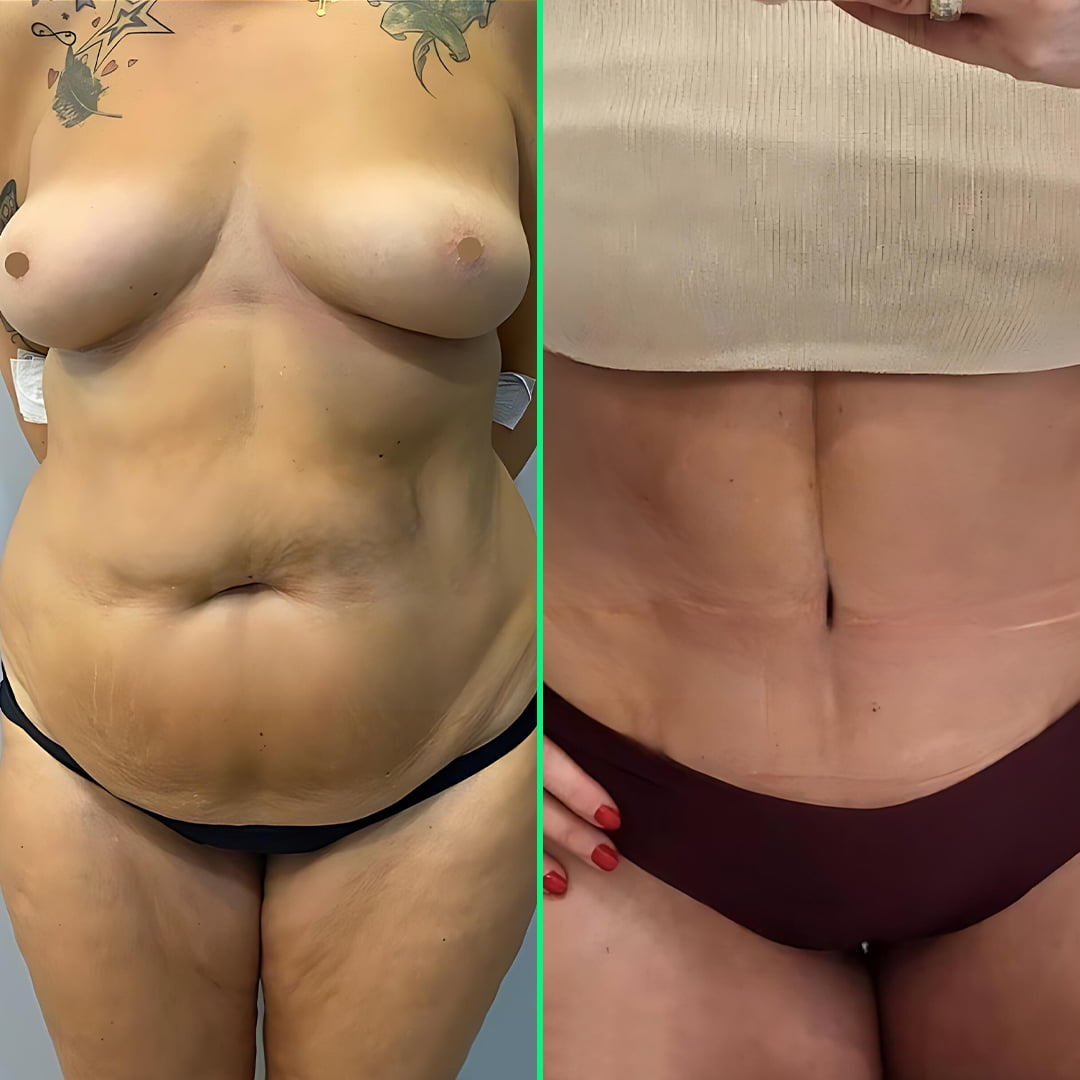


Checklist item nine in practice: consented, standardized cases in the Vivid Clinic before & after gallery.
Request your free consultation
Put us through the checklist. Send your questions — all eight if you like — through a free online consultation, and Vivid Clinic will answer in writing along with a fixed quote and a surgical opinion on your candidacy. Message us on וואטסאפ, call +90 545 749 3565, or use the form below for a ייעוץ חינם עם מנתח פלסטי.
Sources
Medical information disclaimer: This guide is general information for international patients, not medical advice, and accreditations, regulations and prices change — always verify a provider’s current credentials and authorizations directly. Every surgical procedure carries risks, results vary from patient to patient, and suitability can only be confirmed after medical evaluation. If you have surgery, your treating surgeon’s instructions always override general guidance you read online — including this page. Seek urgent medical help for warning signs such as chest pain, shortness of breath, heavy bleeding, spreading redness or fever after any operation.