
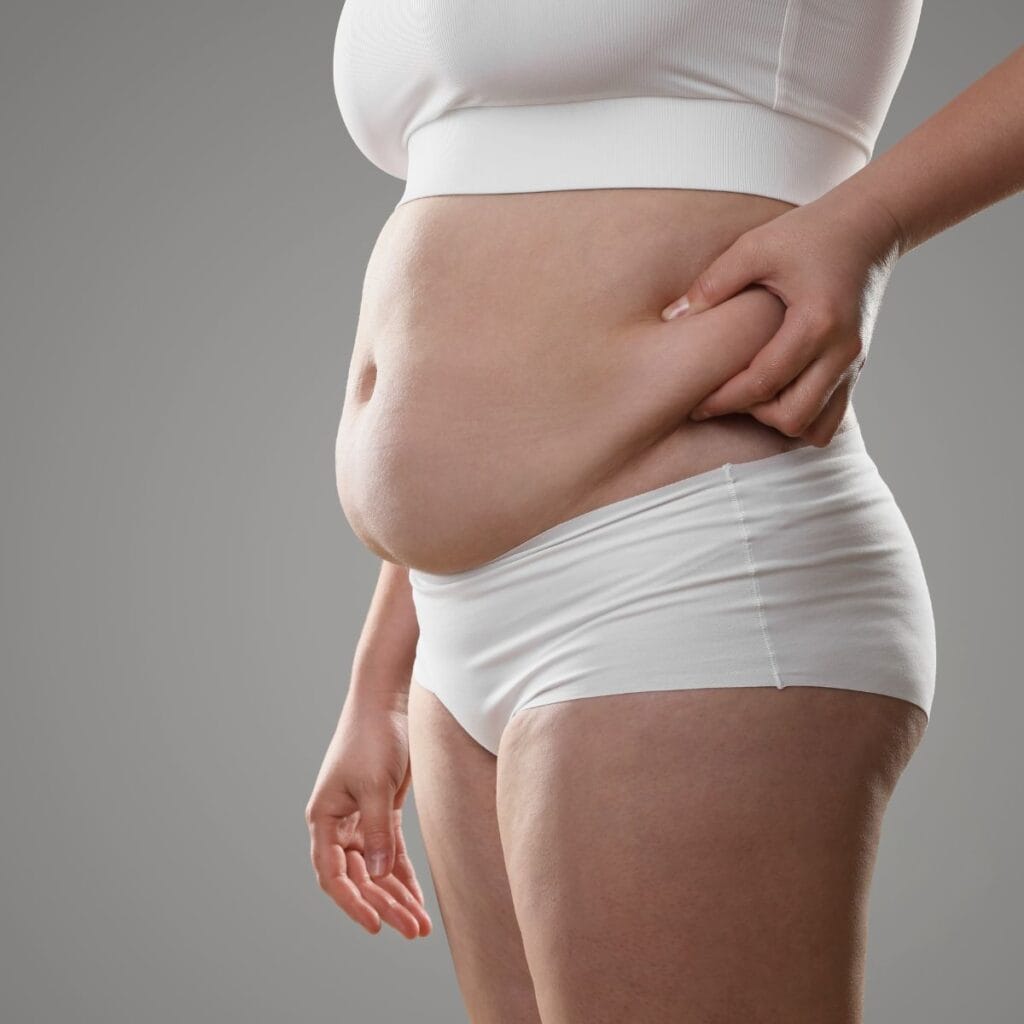
А висячий живіт після кесаревого розтину is the soft fold of skin and fat that sits over your incision and refuses to flatten, no matter how carefully you eat. Mothers describe it in many ways: a C-section shelf, a belly overhang, an apron belly, a mummy tummy, a hanging stomach or simply a belly that hangs. It is one of the most common postpartum body changes and one of the least talked about.
The good news: a hanging tummy after a caesarean is rarely permanent, and it is almost always improvable. This guide explains why the belly hangs, what you can fix at home, what needs a clinical treatment, and how long each option realistically takes.
What Is a Hanging Belly After a C-Section?
A hanging belly (also called a hanging stomach, hanging tummy or hanging abdomen) is loose skin, stretched connective tissue and fat that no longer sits flat against the abdominal wall. After a caesarean it tends to fold forward over the scar line, which is why so many women search for c-section belly overhang або c-section stomach overhang rather than simply loose skin.
Three separate problems usually overlap, and telling them apart is the key to fixing them:
- Loose skin: the skin was stretched for nine months and has lost elastin, so it drapes instead of springing back.
- Muscle separation (diastasis recti): the two halves of the six-pack muscle have pulled apart, so the abdominal wall bulges outward.
- Fat: a layer of subcutaneous and sometimes visceral fat sits between the muscle and the skin, adding weight that pulls everything down.
Hanging Belly, C-Section Pooch and Belly Overhang: What Is the Difference?
- C-section pooch: a small bulge directly above the scar, caused mostly by scar tethering and swelling.
- Belly overhang or shelf: a defined fold that hangs over the incision, caused by scar adhesion plus loose skin.
- Hanging belly or apron belly: a larger flap of skin and fat that hangs down over the lower abdomen or pubic area.
A big or even huge hanging belly after a C-section is not a sign of failure. The larger the fold, the more likely it is that skin excess, rather than fat, is the main driver, and skin excess responds to different treatments than fat does.
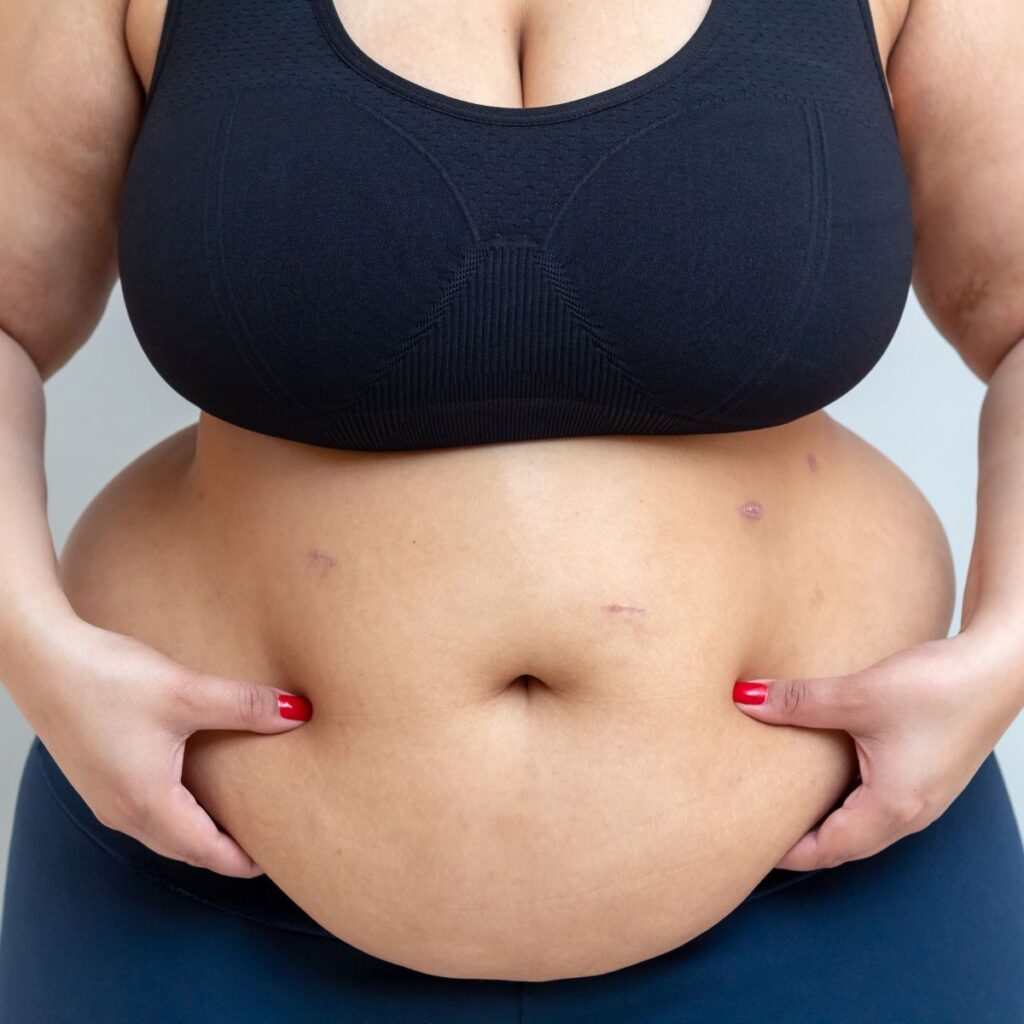
Why Does Your Belly Hang After a C-Section?
Several factors combine to create a hanging belly after a caesarean. Identifying which ones apply to you tells you which solution will actually work.
1. Stretched Skin and Lost Elasticity
- The uterus expands enormously during pregnancy, permanently stretching the skin and the collagen and elastin fibres underneath.
- Rapid weight gain, a large baby, twins, or a second and third pregnancy all reduce how much the skin can retract afterwards.
- Genetics and age influence skin elasticity more than most women expect.
2. Diastasis Recti (Abdominal Muscle Separation)
- Up to 60 percent of mothers still have some separation of the abdominal muscles at eight weeks postpartum.
- When the midline connective tissue stays slack, the belly bulges forward and no amount of fat loss will flatten it.
- This is why a stomach can hang after a C-section even in slim women.
3. The C-Section Scar Shelf
- A caesarean cuts through skin, fat, fascia and muscle layers, and the scar heals by tethering down to the deeper tissue.
- That tethered line acts like a belt: the tissue above it has nowhere to go, so it folds over the scar and creates the classic C-section scar belly overhang.
- Swelling and numbness around the incision can persist for months and make the shelf look worse than it eventually will.
4. Hormones and Fat Storage Around the Midsection
- Shifting oestrogen and progesterone levels after delivery encourage fat storage around the midsection.
- Broken sleep raises cortisol, which favours abdominal fat and slows recovery.
- Relaxin remains elevated for months while breastfeeding, keeping ligaments and connective tissue softer.
5. Lifestyle and Recovery Factors
- Six to eight weeks of enforced rest after surgery deconditions the deep core muscles.
- Poor posture, breath-holding and bearing down while lifting push the abdominal wall outward.
- A diet high in ultra-processed food and sugar makes fat loss around the belly much slower.
Is a Hanging Belly After a C-Section Normal?
Yes. A hanging stomach after a C-section is a normal stage of healing for the first three to six months, and many women see a big improvement without doing anything special. It becomes a longer-term issue when skin excess or muscle separation remains after twelve months, because neither of those resolves with diet alone.
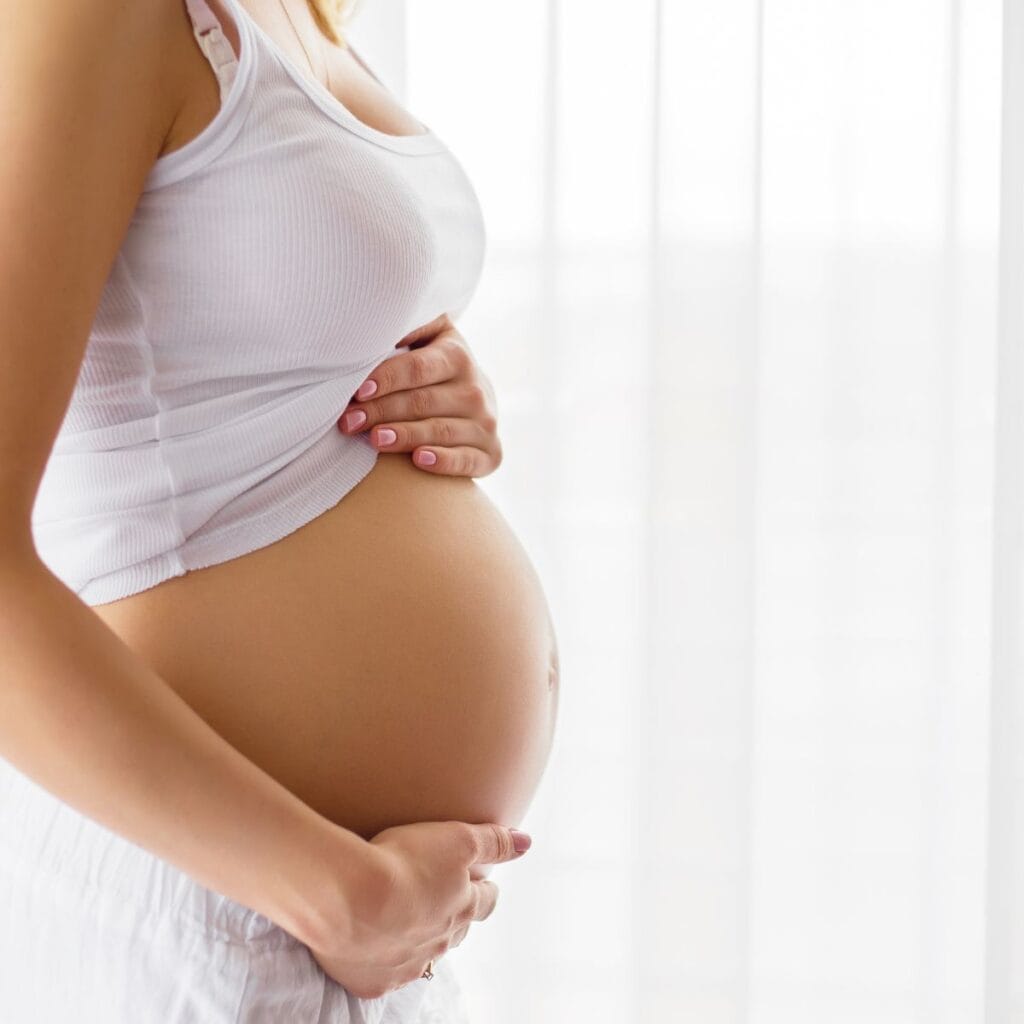
How to Get Rid of a Hanging Belly After a C-Section: 9 Proven Options
There is no single fix, because a hanging belly has up to three causes. Work through the conservative options first, then consider clinical treatment for whatever is left. Always get clearance from your doctor before starting exercise or treatment after a caesarean.
1. Core Rehabilitation Before Anything Else
Reconnecting the deep core is the foundation of every other result. Start once your doctor confirms the incision has healed, usually at six to eight weeks.
- Diaphragmatic breathing: exhale as you gently draw the lower belly in. Ten breaths, several times a day.
- Pelvic tilts and heel slides: wake up the lower abdominals without loading the midline.
- Glute bridges: restore pelvis position, which visibly reduces belly protrusion.
- Modified planks and side planks: add these only once you can hold the midline flat.
- Postpartum Pilates or yoga: excellent for breath, posture and gradual load.
Уникайте crunches, sit-ups and full planks in the early months. They increase pressure on a separated midline and can make the bulge worse. If you can feel a gap wider than two fingers above or below the navel, see a pelvic health physiotherapist.
2. Nutrition to Lose Hanging Belly Fat After a C-Section
You cannot spot-reduce, but a modest calorie deficit combined with enough protein reduces the fat layer that weighs the fold down. Aim for a slow loss of around 0.5 kg per week, and more if you are breastfeeding only with your doctor’s guidance.
- Protein at every meal: eggs, chicken, fish, lentils, Greek yoghurt and tofu protect muscle while you lose fat.
- Fibre: vegetables, whole grains, beans and berries reduce bloating and keep you full.
- Healthy fats: olive oil, avocado, nuts and oily fish support hormone balance and skin quality.
- Collagen-supporting foods: vitamin C, zinc and adequate protein help skin remodelling.
- Hydration: two to three litres of water daily reduces fluid retention and constipation, which both worsen the bulge.
3. How to Tighten Your Tummy After a C-Section at Home
These habits will not remove loose skin, but they visibly tighten the abdomen and are free.
- Progressive strength training two to three times a week, including squats, rows and carries, builds the muscle that supports the abdominal wall.
- Daily walking from twenty to forty minutes improves circulation and fat loss without straining the incision.
- Posture correction: stacking your ribs over your pelvis instantly flattens the profile and takes load off the midline.
- Moisturising and gentle massage with a firming cream keeps skin supple, though it cannot shrink significant excess.
- Sleep and stress management: the single most underrated factor in postpartum belly fat.
4. Postpartum Belly Wraps and Compression Garments
- Compression reduces swelling, supports the incision and improves comfort and posture in the first weeks.
- Choose a breathable, adjustable band and wear it for a few hours at a time rather than all day.
- A wrap supports recovery, but it does not permanently tighten skin or close a muscle separation.
5. Scar Massage and Lymphatic Drainage
- Once the scar is fully closed, gentle scar mobilisation reduces tethering and softens the shelf above the incision.
- Manual lymphatic drainage helps residual swelling and can make the lower abdomen look noticeably flatter.
- Ask your doctor or physiotherapist to show you the technique before starting.
6. Non-Surgical Skin Tightening
Best for mild to moderate laxity where the skin still has some spring, typically for women who want improvement without downtime.
- Radiofrequency skin tightening: heats the dermis to stimulate collagen and gradually firm the surface.
- Microfocused ultrasound: targets deeper support layers for a lifting effect.
- Laser and microneedling with RF: improve skin texture, stretch marks and mild sagging.
- Expect a 15 to 30 percent visual improvement over several sessions, not the result of surgery.
7. Liposuction for Stubborn Fat
- Removes localised fat when skin quality is still good and there is no significant overhang.
- High-definition or VASER techniques can also tighten the skin envelope modestly.
- Not the right choice on its own if the main problem is a hanging fold of skin, because removing fat from beneath loose skin can increase the sag.
8. Tummy Tuck (Abdominoplasty) for Loose Skin and Overhang
A tummy tuck is the only method that reliably removes a true hanging belly, and it is the definitive answer for a persistent C-section overhang.
- Excess skin and fat below the navel are removed, and the old caesarean scar is usually excised in the process.
- Separated abdominal muscles are stitched back together, correcting diastasis recti that exercise cannot close.
- A mini tummy tuck suits a small lower-abdomen fold; a full or extended tummy tuck suits a larger apron.
- Surgeons normally advise waiting at least six to twelve months after delivery, and until you have finished having children and reached a stable weight.
9. Mommy Makeover for Combined Concerns
- Combines a tummy tuck with liposuction and, if wanted, breast surgery in one operation and one recovery.
- Efficient for mothers who want the whole post-pregnancy silhouette addressed together.
At Vivid Clinic in Istanbul our surgeons assess skin laxity, muscle separation and fat distribution separately, then recommend the least invasive option that can realistically achieve your goal.
How to Flatten Your Stomach After a C-Section: A Realistic Timeline
Recovery is staged, and trying to skip a stage is the most common reason progress stalls.
- Weeks 0 to 6: rest, walk gently, use light compression, avoid lifting anything heavier than your baby. No abdominal training.
- Weeks 6 to 12: after medical clearance, begin breathing work, pelvic tilts and walking. Start scar massage once the incision is closed.
- Months 3 to 6: add progressive strength training and a moderate calorie deficit. Most of the swelling has resolved, so you can finally judge how much is skin and how much is fat.
- Months 6 to 12: skin retraction is largely complete. If a fold or bulge remains, this is when non-surgical tightening or a surgical consultation makes sense.
- Beyond 12 months: whatever remains is unlikely to change with diet and exercise alone.
Saggy, Flabby or Sagging Belly After a C-Section: What Actually Works
A saggy belly after a C-section, a flabby stomach and a hanging fold are not the same problem, and they need different treatments. Use this to work out where you fit.
- Soft and flabby, skin snaps back when pinched: mostly fat and deconditioning. Nutrition plus strength training will do it.
- Slim but the belly still bulges outward, especially by evening: likely diastasis recti. Core rehabilitation first, surgical repair if the gap persists.
- Skin wrinkles and does not retract when pinched: genuine skin laxity. Non-surgical tightening for mild cases, tummy tuck for moderate to severe.
- A defined fold that hangs over the scar: a true overhang. Only skin excision reliably removes it.
- All of the above: combination approach, usually lifestyle first and then surgery.
C-Section Belly Overhang: How to Reduce the Shelf
Belly overhang after a C-section deserves its own answer because it is caused mainly by scar tethering, not by fat.
- Soften the scar: silicone sheets or gel, plus scar massage from around eight weeks, reduce adhesion and let the tissue sit flatter.
- Reduce the fat above it: even a few kilograms lighten the fold and make it hang less.
- Strengthen underneath it: a stronger abdominal wall pulls the whole area inward.
- Keep the fold dry: skin under an overhang can become irritated, red or sore. Wash and dry the crease daily and use a barrier cream; see a doctor if there is persistent rash, odour or broken skin.
- Consider scar revision or a tummy tuck: if the shelf is still there after a year, releasing and excising the tethered tissue is the definitive fix.
Hanging Belly in Women Without a Recent C-Section
Many women reach this page with a hanging belly that is not from a recent caesarean, and the principles are the same.
- Hanging belly after pregnancy generally: vaginal deliveries also stretch skin and separate muscles, so the same staged plan applies.
- Postpartum belly overhang years later: skin will not retract further, so treatment is either non-surgical tightening or surgery.
- After significant weight loss: a large apron of skin is common and usually needs abdominoplasty or a panniculectomy.
- After abdominal or gynaecological surgery: scar tethering and reduced core activation create a similar fold; physiotherapy first, then assessment.
Результати до та після: чого очікувати?
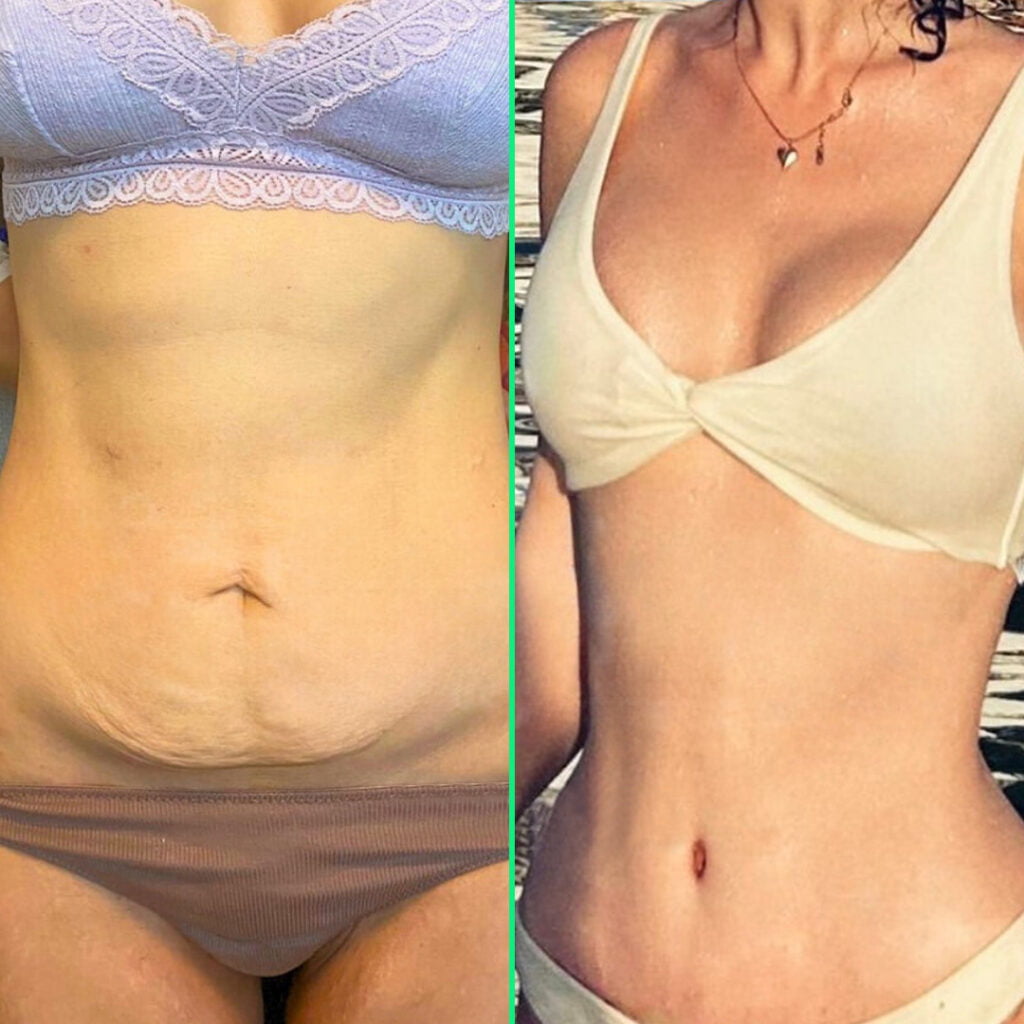
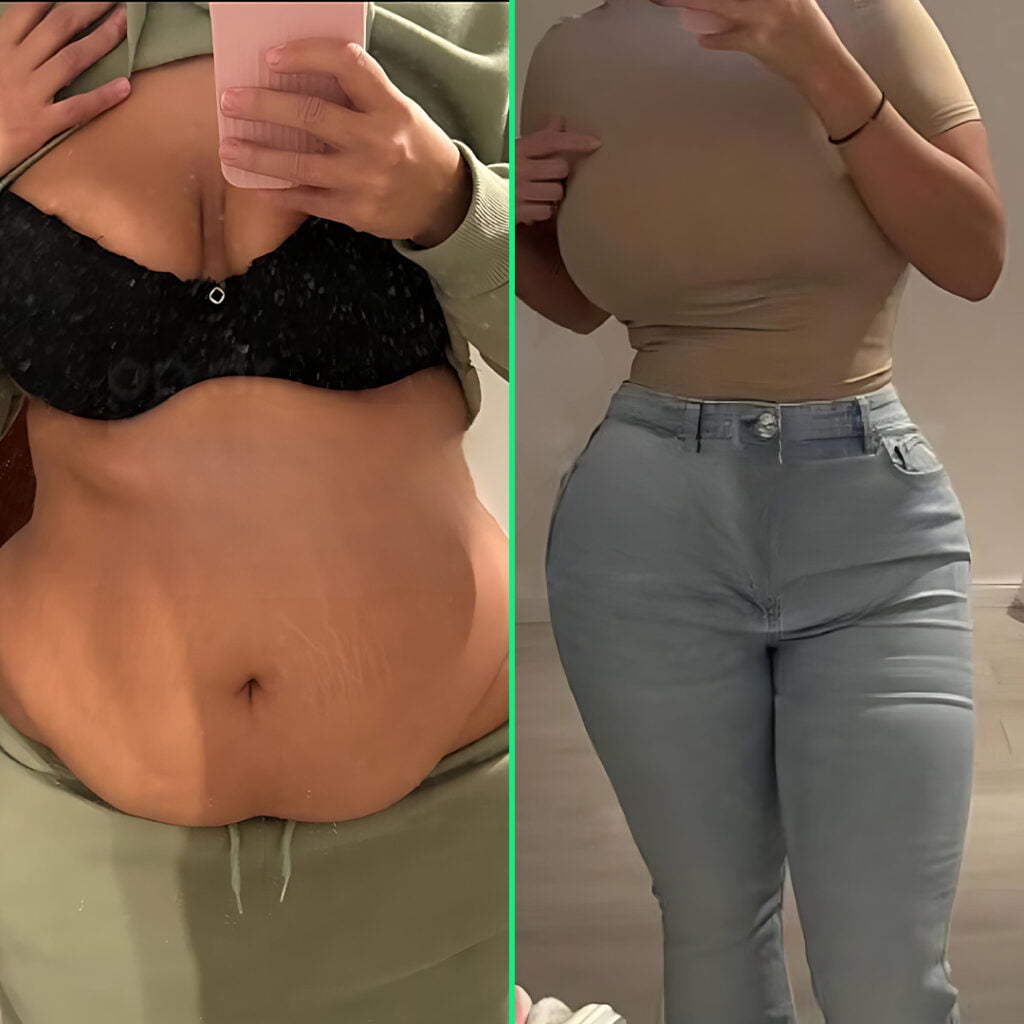
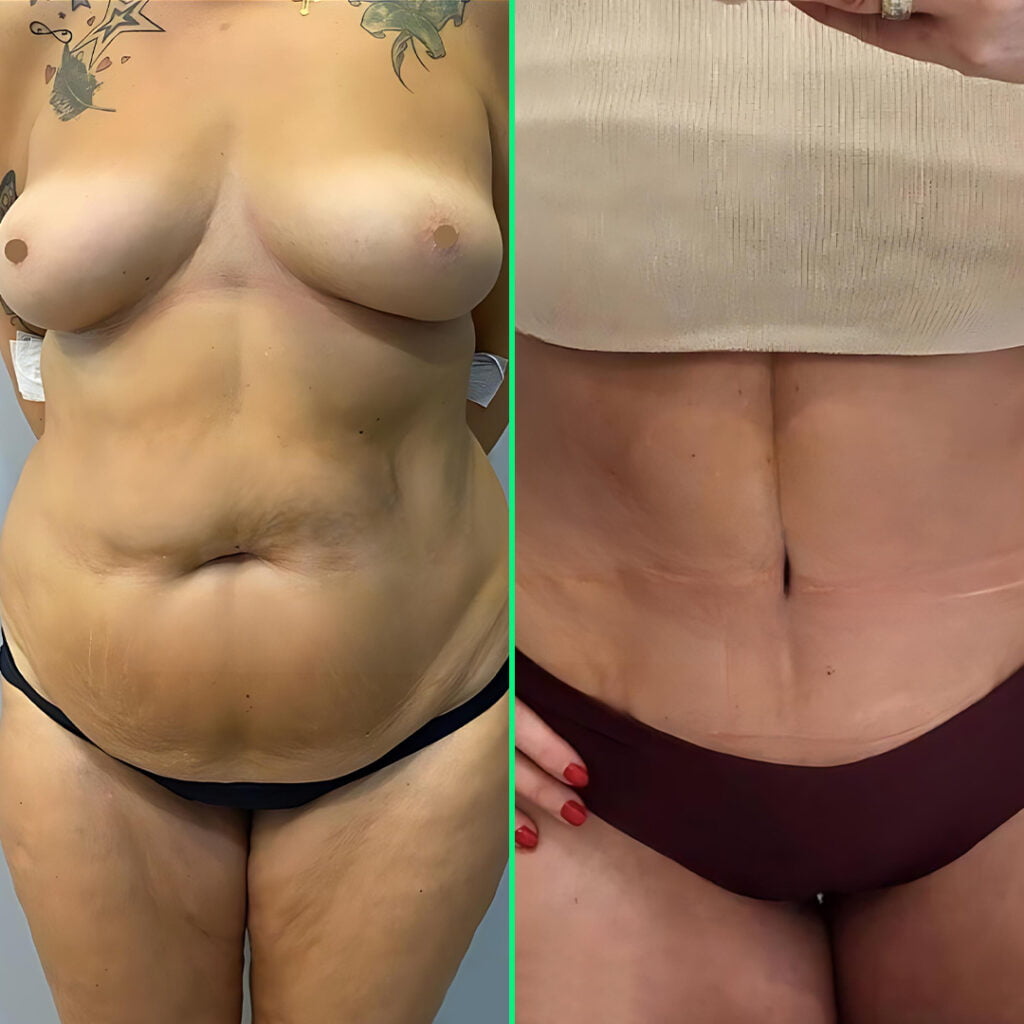
Перегляньте наш експертний посібник з Абдомінальна пластика для більш постійних рішень
Терміни відновлення
| Аспект | Тривалість |
|---|---|
| Результати вправ | 3-6 місяців |
| Підтяжка шкіри | 4-12 місяців |
| Хірургічне відновлення | 6-12 тижнів |
| Остаточний результат | 6-18 місяців |
🔹 Порада професіонала: Послідовність у харчуванні та фізичних вправах суттєво впливає на довгострокові результати!
Frequently Asked Questions About Hanging Belly After a C-Section
What should I do for a hanging belly?
Work out whether the fold is fat, loose skin or muscle separation. Fat responds to nutrition and training, muscle separation to core rehabilitation or surgical repair, and loose skin only to skin tightening treatments or a tummy tuck. Most women need a combination.
How do I get rid of a hanging belly after a C-section naturally?
Core rehabilitation, progressive strength training, a moderate calorie deficit, scar massage and good hydration will noticeably improve most hanging bellies within three to six months. What they cannot do is remove skin that has permanently lost elasticity.
Will a hanging stomach after a C-section go away on its own?
Partly. Swelling and fluid resolve in the first weeks and skin retracts for up to a year. If a fold is still there after twelve months, it is unlikely to disappear without treatment.
Why does my C-section belly hang over the scar?
The scar heals by attaching to the deeper tissue layers, creating a fixed line. Skin and fat above that line fold over it, producing the shelf. Scar massage, silicone products and, if needed, scar revision or a tummy tuck address it.
Can I flatten my C-section belly without surgery?
Often yes, if the main issues are fat, swelling and weak muscles. Exercise, nutrition and non-surgical skin tightening can give a much flatter profile. Significant loose skin, however, needs surgery.
When can I start exercising after a C-section?
Gentle walking and breathing work can usually start within days. Wait at least six to eight weeks and get your doctor’s clearance before core or resistance training, and longer if healing was complicated.
How can I tighten my tummy after a C-section?
Combine deep core training, full-body strength work twice a week, adequate protein, posture correction and scar mobilisation. Add radiofrequency or ultrasound tightening if mild laxity remains after several months.
Does a tummy tuck remove the C-section pooch permanently?
Yes. A tummy tuck removes the excess skin and fat and repairs separated muscles, and the result is long-lasting provided your weight stays stable and you are not planning another pregnancy.
How long after a C-section can I have a tummy tuck?
Most surgeons recommend waiting at least six to twelve months after delivery, until you have stopped breastfeeding and your weight has been stable for several months.
Are there natural ways to tighten loose skin after a C-section?
Hydration, adequate protein and vitamin C, strength training, avoiding rapid weight fluctuations, not smoking and daily moisturising all support skin quality. They improve mild laxity but cannot remove a true overhang.
Why does my C-section belly look worse when I stand up?
Standing lets gravity pull the loose skin and weak abdominal wall forward, so the fold becomes obvious. It usually indicates muscle separation combined with skin laxity, both of which are treatable.
Is a big hanging belly after a C-section dangerous?
It is not dangerous in itself, but a large overhang can cause skin irritation, infection in the fold, back pain and hygiene difficulties. If you have persistent rash, pain or discharge, see a doctor.
The Bottom Line
A hanging belly after a C-section is common, it is not your fault, and it is manageable. Give your body the first six months to heal, rebuild your core properly, get your nutrition consistent, and then honestly assess what is left. Loose skin and separated muscles have effective clinical solutions, and you do not have to live with a fold you are unhappy about.
At Vivid Clinic in Istanbul we specialise in postpartum body contouring, from non-surgical skin tightening to tummy tuck and mommy makeover surgery. Book a free consultation and we will tell you honestly which option fits your body and your goals.