 ChatGPT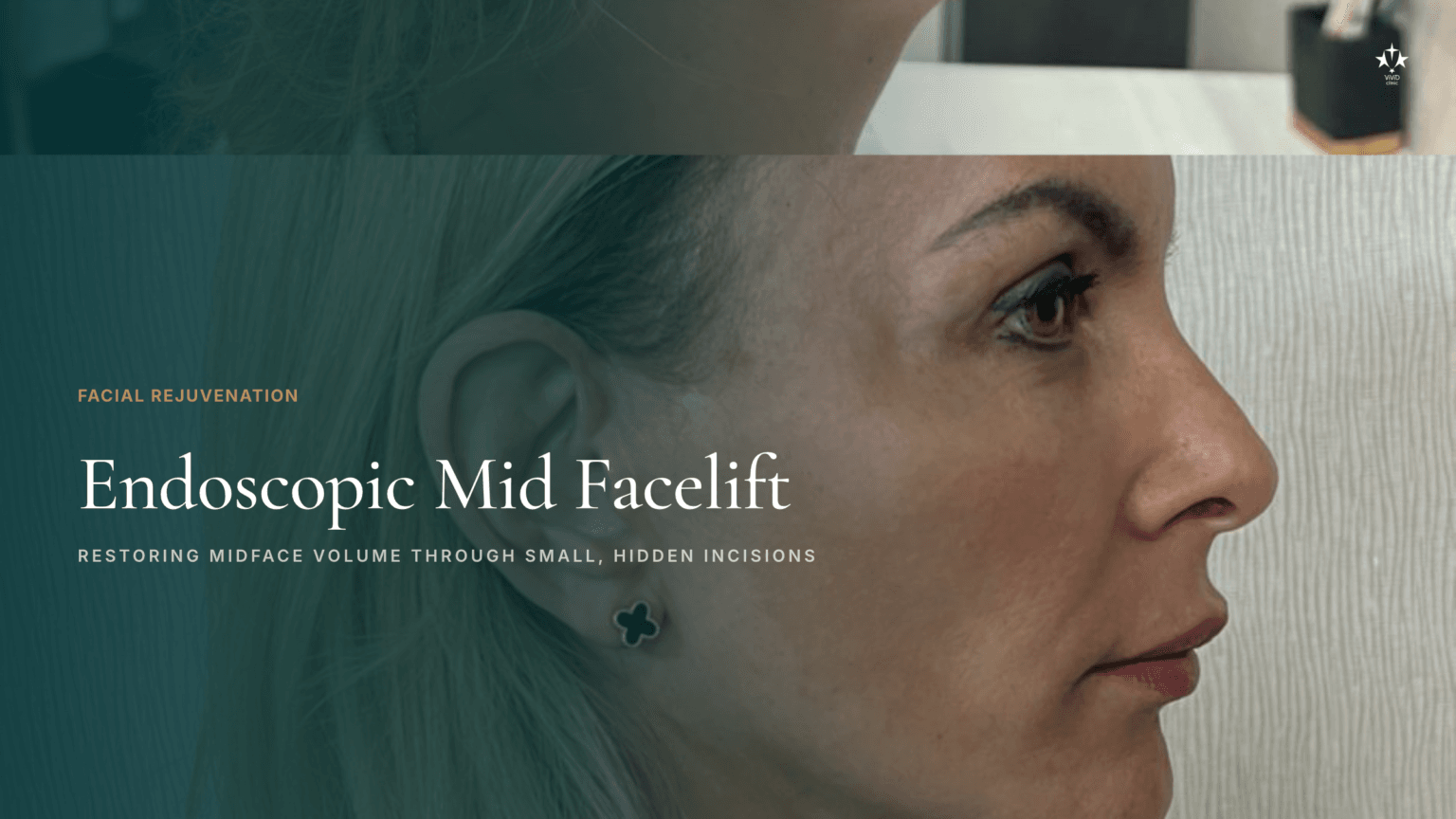
Ein endoskopisches Mittelgesichtslifting eignet sich für Patienten, die ihr Gesicht als müde, flach oder älter empfinden, weil die Wangenpartie abgesunken ist. Es geht nicht darum, Ihre Identität zu verändern, sondern darum, die Stützfunktion des Mittelgesichts wiederherzustellen, die Wangenpartie anzuheben und durch kleine, unauffällige Schnitte eine frischere Gesichtskontur zu schaffen.
In der Vivid Clinic in Istanbul, Türkei, wird das endoskopische Mittelgesichtslifting für ausgewählte Patienten angeboten, die sich eine natürlich wirkende Verjüngung des Mittelgesichts wünschen, ohne die längere, sichtbare Narbe eines traditionellen Facelifts in Kauf nehmen zu müssen. Bei dieser Technik geht es darum, das tiefer liegende Wangengewebe neu zu positionieren, anstatt lediglich vorübergehend Volumen auf die Haut aufzutragen.
Das visuelle Beispiel in diesem Artikel zeigt Patient 5, der in den Lehrvideos des Vivid Clinic-Blogs abgebildet ist. Der Fall verdeutlicht, wie sich die Gesichtsproportionen in der Seitenansicht verbessern lassen, wenn das Mittelgesicht durch ein chirurgisches Lifting wiederhergestellt wird. Wie immer sollten Vorher-Nachher-Bilder als Lehrbeispiele und nicht als Garantie für identische Ergebnisse betrachtet werden.
Medizinischer Hinweis: Dieser Artikel dient ausschließlich Informationszwecken. Um festzustellen, ob ein endoskopisches Mittelgesichtslifting für Ihre Anatomie, Ihre Ziele und Ihren Gesundheitszustand geeignet ist, ist eine persönliche Beratung mit einem qualifizierten plastischen Chirurgen erforderlich.

Die erste Stelle im Gesicht, an der das Altern beginnt
Bei vielen Menschen beginnt die Gesichtsalterung nicht an der Kieferpartie. Sie setzt schleichend im Mittelgesicht ein.
Das Mittelgesicht ist der zentrale Bereich des Gesichts, der die Wangen, die Partie unter den Augen und das Weichgewebe zwischen Unterlid und Wangenknochen umfasst. In jungen Jahren verleiht dieser Bereich dem Gesicht ein straffes, glattes und erholtes Aussehen. Mit zunehmendem Alter kann das Gesicht müde wirken, selbst wenn die Haut noch relativ gesund ist.
Deshalb sagen Patienten oft Dinge wie:
- “Auf Fotos sehe ich müde aus.”
- “Meine Wangen sehen flacher aus als vorher.”
- “Ich sehe älter aus, aber ich kann nicht genau erklären, warum.”
- “Meine Augenpartie sieht schwerer aus.”
- “Mein Gesicht hat seine weichen, jugendlichen Konturen verloren.”
In vielen Fällen geht es nicht nur um nachlassende Hautelastizität, sondern auch um ein tieferliegendes Absinken des Gewebes. Die Wangenfettpolster und die umliegenden Stützstrukturen wandern mit der Zeit allmählich nach unten. Dies kann zu Augenringen, einem Abflachen der Wangen und einem Schweregefühl im Bereich der Nasolabialfalten führen.
Ein endoskopisches Mittelgesichtslifting zielt speziell auf dieses Problem ab. Anstatt nur die Haut zu straffen, werden die Mittelgesichtsstrukturen angehoben und neu positioniert, um eine bessere Wangenstütze wiederherzustellen.
Deshalb wird dieses Verfahren oft als ein Wangenlifting in Istanbul oder eine chirurgische Form von Verjüngung des Mittelgesichts. Es zielt auf den Teil des Gesichts ab, der oft die ersten sichtbaren Anzeichen von Müdigkeit hervorruft.
Wie die endoskopische Technik funktioniert
Der Begriff “endoskopisch” bedeutet, dass der Chirurg eine kleine Kamera, ein sogenanntes Endoskop, verwendet, um durch kleine Schnitte tieferliegende Strukturen zu sehen. Endoskopische Eingriffe im Gesichtsbereich ermöglichen dem Chirurgen eine gute Sicht ins Innere und halten die äußeren Zugangspunkte kleiner als bei vielen traditionellen offenen Operationsverfahren. Medizinische Fachliteratur beschreibt endoskopische Techniken für Augenbrauen und Gesicht als Verfahren, bei denen kleine Schnitte und kameragestützte Visualisierung die Geweberepositionierung mit minimalem Zugang unterstützen. (NCBI)
Bei Vivid Clinic basiert das endoskopische Midfacelift auf einer einfachen, aber wirkungsvollen Idee: Repositionierung statt Überfüllung.
Wenn das Gesicht an Stützkraft im Mittelgesicht verliert, kann die Injektion von Fillern in bestimmten Fällen das Volumen verbessern. Filler können abgesunkenes Gewebe jedoch nicht vollständig wiederherstellen. Bei abgesunkenen Wangen kann eine alleinige Volumenzunahme das Gesicht manchmal schwerer statt frischer wirken lassen.
Das endoskopische Mittelgesichtslifting verfolgt einen anderen Ansatz. Es zielt darauf ab, die Mittelgesichtsstrukturen in eine jugendlichere Position zu bringen. Dadurch können die Wangenkonturen wiederhergestellt, der müde Blick unter den Augen gemildert und die natürliche Kurve von der Wange zum Unterlid verbessert werden.
Zwei 5 mm lange Einschnitte im Haaransatz
Einer der Hauptvorteile der endoskopischen Midfacelift-Technik der Vivid Clinic ist die Verwendung von zwei kleinen, 5 mm langen Einschnitten, die im Haaransatz versteckt werden.
Dies ist wichtig, da viele Patienten eine Gesichtsverjüngung wünschen, sich aber Sorgen um sichtbare Narben machen. Bei dieser Methode werden die Schnitte diskret gesetzt, sodass sie im Bereich des Haaransatzes verborgen bleiben.
Das bedeutet nicht, dass der Eingriff buchstäblich “narbenfrei” ist. Jeder chirurgische Schnitt hinterlässt eine Narbe. Da die Schnitte jedoch sehr klein sind und an unauffälligen Stellen platziert werden, ist das Ziel, sie nach der vollständigen Heilung kaum sichtbar zu machen.
Aus diesem Grund suchen Patienten manchmal nach Begriffen wie Narbenfreies Facelifting Istanbul. Eine medizinisch präzisere Beschreibung des Verfahrens lautet: endoskopisches Mittelgesichtslifting mit verdecktem Schnitt.
Die Unterscheidung ist wichtig. Eine ethische und ästhetische Kommunikation sollte ehrlich sein. Der Eingriff ist keine Zauberei und erfordert eine gewisse Heilungszeit. Bei geeigneten Patienten kann die Schnittführung jedoch deutlich unauffälliger sein als bei traditionellen Facelift-Verfahren mit langem Schnitt.
Endoskopisch gesteuerte Präzision
Das Endoskop ermöglicht dem Chirurgen eine vergrößerte Ansicht des Behandlungsbereichs. Dies unterstützt eine präzise Dissektion und Geweberepositionierung durch kleinere Zugangspunkte.
In der ästhetischen Gesichtschirurgie ist Präzision unerlässlich, da das Gesicht keine ebene Fläche ist. Es besteht aus mehreren Schichten: Haut, Fettgewebe, Haltebänder, Muskeln, Nerven, Blutgefäße und Knochengewebe. Ein natürliches Ergebnis setzt voraus, dass diese Schichten respektiert werden.
Die endoskopisch geführte Chirurgie ermöglicht es dem Chirurgen, mit der Anatomie zu arbeiten, anstatt gegen sie. Dies ist besonders im Mittelgesicht von Vorteil, wo bereits kleine Korrekturen sichtbare Veränderungen in der Wangenstütze, dem Übergang unter den Augen und der Gesichtsharmonie bewirken können.
Ziel ist es nicht, die Haut straff zu ziehen. Ziel ist es, die tieferliegende Stützstruktur des Mittelgesichts kontrolliert wiederherzustellen.
Neupositionierung, nicht Auffüllung
Viele Patienten ziehen Filler erst dann in Betracht, wenn sie ein Einsinken der Wangen oder Müdigkeitserscheinungen unter den Augen bemerken. Filler können bei geeigneten Patienten hilfreich sein, insbesondere wenn das Hauptproblem ein Volumenverlust ist.
Allerdings wird nicht jedes müde wirkende Mittelgesicht allein durch Volumenverlust verursacht.
Manchmal senkt sich das Wangengewebe ab. In diesem Fall kann das Hinzufügen von Fillern ohne Repositionierung des Gewebes zu Schwellungen, einem Schweregefühl oder einem unnatürlichen Aussehen führen. Deshalb ist eine sorgfältige Beratung so wichtig.
Ein endoskopisches Mittelgesichtslifting unterscheidet sich von einem herkömmlichen Mittelgesichtslifting dadurch, dass es die Wangen- und Mittelgesichtsstrukturen neu positioniert. Anstatt durch zusätzliches Volumen den abgesunkenen Bereich auszugleichen, hebt der Chirurg das vorhandene Gewebe in eine besser gestützte Position an.
Dadurch kann eine sanftere und natürlichere Verjüngung erzielt werden, da die Methode mit der körpereigenen Gesichtsstruktur des Patienten harmoniert.
Stellen Sie sich das wie das Zurechtrücken eines edlen Vorhangs vor. Wenn der Stoff nach unten gerutscht ist, reicht es möglicherweise nicht aus, einfach mehr Stoff hinzuzufügen. Besser ist es, den Stoff wieder anzuheben und an seinem Platz zu befestigen.
Das ist die Kernphilosophie der endoskopischen Mittelgesichtsverjüngung.
Ein realer Fall aus der Vivid-Klinik: Patient 5
Das visuelle Beispiel für diesen Blogbeitrag ist Patient 5, dargestellt in der Vorher-Nachher-Collage der Vivid Clinic. Das Bild konzentriert sich auf die Seitenansicht, die besonders hilfreich zur Beurteilung der Mittelgesichtsstütze ist.
Die Seitenansicht offenbart Details, die auf Fotos von vorn möglicherweise verborgen bleiben. Sie zeigt die Wangenpartie, die Gesichtskontur, die Unterstützung der unteren Augenpartie und das Verhältnis zwischen Wange und Kieferlinie. Bei einem endoskopischen Mittelgesichtslifting ist dieser Winkel besonders wichtig, da das Verfahren darauf abzielt, die Wangenkontur und das Volumen des Mittelgesichts wiederherzustellen.
Bei Patient 5 liegt der Schwerpunkt nicht auf einer übertriebenen Transformation. Vielmehr geht es um eine frischere Gesichtskontur und eine verbesserte Stützung des Mittelgesichts.
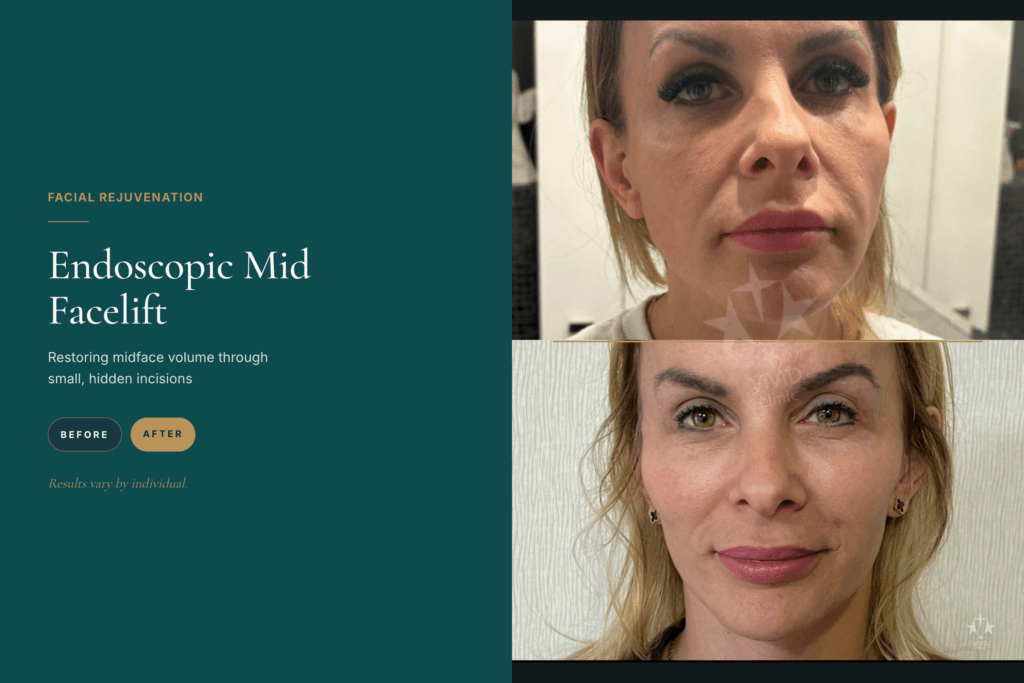
Vorher-Nachher-Bilder dürfen nur mit dokumentierter Einwilligung des Patienten veröffentlicht werden. Die Bilder werden zu Schulungszwecken geteilt. Die Ergebnisse können individuell variieren.
Was der Fall von Patient 5 erklärt
Der Fall von Patient 5 ist deshalb hilfreich, weil er zeigt, warum das Mittelgesicht bei der Gesichtsverjüngung eine so große Rolle spielt.
Eine bessere Stützung der Wangenpartie lässt das gesamte Gesicht frischer wirken. Das Ergebnis muss nicht dramatisch sein, um eine Wirkung zu erzielen. Eine dezente Verbesserung der Wangenpartie kann einen müden Blick mildern, die Gesichtsproportionen harmonisieren und eine jugendlichere Kontur wiederherstellen.
Jeder Patient ist jedoch anders. Vorher-Nachher-Fotos können aufgrund von Beleuchtung, Winkel, Gesichtsausdruck, Make-up, Kameraabstand und Heilungsstadium variieren. Daher sollten sie niemals als Garantie für ein bestimmtes Ergebnis betrachtet werden.
Eine gute Beratung sollte auch eine persönlichere Frage beantworten:
“Welche Art von Verbesserung ist für mein Gesicht realistisch?”
Die Antwort hängt von Ihrer Anatomie, Hautqualität, Ihrem Alter, der Lage des Weichgewebes, dem Gesichtsvolumen, früheren Behandlungen und Ihren Erwartungen ab.
Für wen es geeignet ist – und wer kein Kandidat ist
Ein endoskopisches Mittelgesichtslifting kann für Patienten geeignet sein, die leichte bis mittelschwere Anzeichen eines Mittelgesichtsabsinkens aufweisen und sich ein natürlich aussehendes Wangenlifting wünschen.
Sie könnten ein guter Kandidat sein, wenn Sie Folgendes bemerken:
- Wangenabflachung
- Unterstützung für müde aussehende Augenpartie
- Leichte bis mäßige Mittelgesichtsabsenkung
- Verlust der jugendlichen Wangenkontur
- Ein stärker ausgeprägterer Nasolabialfaltenbereich
- Ein Gesicht, das trotz guter Hautpflege müde aussieht
- Der Wunsch nach einer chirurgischen Neupositionierung anstelle wiederholter Füllbehandlungen
- Guter allgemeiner Gesundheitszustand
- Realistische Erwartungen
Dieses Verfahren kann insbesondere für Patienten relevant sein, die das Gefühl haben, ihr Gesicht wirke älter, weil das mittlere Gesichtsdrittel an Stützkraft verloren habe, die aber noch keine vollständige Gesichtsstraffung benötigen. tiefgreifendes Facelifting oder eine Operation im unteren Gesichtsbereich.
Ein endoskopisches Mittelgesichtslifting ist jedoch nicht für jeden geeignet.
Sie sind möglicherweise kein idealer Kandidat, wenn:
- Ihr Hauptanliegen ist die schlaffe Haut im unteren Gesichtsbereich oder am Hals.
- Sie benötigen eine umfassende Korrektur der Kieferpartie.
- Die Qualität Ihrer Haut ist das Hauptproblem, nicht die Lage des Gewebes.
- Sie erwarten ein völlig anderes Gesicht
- Du hast unrealistische Erwartungen
- Sie sind medizinisch nicht für eine Operation geeignet.
- Sie rauchen und können vor und nach der Operation nicht aufhören.
- Sie suchen ausschließlich nach einer nicht-chirurgischen Behandlung.
In manchen Fällen kann ein anderes Verfahren besser geeignet sein. Beispielsweise benötigen Patienten mit stärker ausgeprägter Erschlaffung der unteren Gesichtshälfte möglicherweise eine … tiefgreifendes Facelifting. Patienten mit Problemen im Schläfen- oder Stirnbereich könnten von einer zeitliche Anhebung. Patienten, deren Hauptanliegen die Stützung der Wangen- und Mittelgesichtsregion ist, könnten für ein endoskopisches Mittelgesichtslifting besser geeignet sein.
Deshalb rät die Vivid Clinic davon ab, eine Behandlung allein anhand von Fotos oder aktuellen Trends auszuwählen. Der richtige Behandlungsplan beginnt mit der Diagnose.
Erholung: Eine ruhigere, schnellere Rückkehr
Erholung nach einem endoskopisches Mittelgesichtslifting ist in der Regel diskreter, als viele Patienten erwarten, erfordert aber dennoch Geduld und eine angemessene Nachsorge.
Da bei diesem Eingriff kleine, unauffällige Schnitte verwendet werden, verläuft die Genesung für viele Patienten deutlich ruhiger als nach einer umfangreicheren offenen Gesichtsoperation. Dennoch können Schwellungen, Blutergüsse, Spannungsgefühle, Druckempfindlichkeit und vorübergehende Taubheitsgefühle auftreten.
Veröffentlichte Leitlinien zur Genesung nach endoskopischen Eingriffen an Stirn und Gesicht betonen häufig die Wichtigkeit von Hochlagerung des Kopfes, das Vermeiden anstrengender Aktivitäten in der frühen Heilungsphase und das Zu erwarten von Schwellungen oder Blutergüssen in den ersten Tagen bis Wochen. (Amerikanische Gesellschaft für Plastische Chirurgie)
Tag 1–3: Ruhe und Abschwellenkontrolle
Die ersten Tage stehen im Zeichen der Ruhe. Sie können ein Spannungsgefühl oder Druck im Mittelgesicht oder an den Schläfen verspüren. Schwellungen können sichtbar sein, und es können Blutergüsse im Wangen- oder Augenbereich auftreten.
Patienten wird üblicherweise geraten, den Kopf hoch zu halten, sich nicht nach vorne zu beugen, anstrengende Tätigkeiten zu vermeiden und die Anweisungen zur Medikamenteneinnahme genau zu befolgen.
Tage 4–7: Frühe Heilungsphase
Schwellungen können noch vorhanden sein, aber viele Patienten fühlen sich in diesem Stadium bereits wohler. Leichte Spaziergänge werden oft empfohlen, anstrengende körperliche Betätigung sollte jedoch vermieden werden.
Sie sollten die behandelten Bereiche nicht berühren, massieren oder Druck darauf ausüben, es sei denn, Ihr Chirurg weist Sie ausdrücklich dazu an.
Woche 1–2: Beginn der sozialen Erholung
Viele Patienten fühlen sich in der zweiten Woche deutlich besser. Blutergüsse und Schwellungen bessern sich oft allmählich, dies ist jedoch individuell unterschiedlich.
Je nach Heilungsfortschritt und Zustimmung des Chirurgen können einige Patienten wieder Bürotätigkeiten oder leichte Alltagsaufgaben aufnehmen.
Wochen 3–4: Natürlichere Bewegung
In der dritten und vierten Woche fühlt sich das Gesicht in der Regel natürlicher an. Die Schwellung geht weiter zurück und die Konturen des Mittelgesichts werden deutlicher.
Sportliche Betätigung, Hitzeeinwirkung, Gesichtsbehandlungen und Reisen sollten vor der Wiederaufnahme weiterhin mit dem Chirurgen besprochen werden.
Monate 2–3: Sichtbare Verfeinerung
Oft ist dies der Zeitpunkt, an dem Patienten das Ergebnis deutlicher erkennen. Die Wangenpartie wirkt möglicherweise besser gestützt, und das Gesicht erscheint frischer, ohne übermäßig straff zu wirken.
Monate 3–6: Fortsetzung der Eingewöhnungsphase
Die abschließende Verfeinerung erstreckt sich über mehrere Monate. Geringfügige Veränderungen in Bezug auf Schwellungen, Narbenreifung und Gewebeweichheit können während dieses Zeitraums auftreten.
Ein gutes Ergebnis sollte nicht steif wirken. Es sollte sich allmählich in den natürlichen Gesichtsausdruck des Patienten einfügen.
Übersichtstabelle zum Verfahren
| Aspekt | Details |
|---|---|
| Verfahrensname | Endoskopisches Mittelgesichts-Facelift |
| Fokus-Keyword | endoskopisches Mittelgesichtslifting |
| Behandlungsbereich | Wangen, Mittelgesicht, Unterlidbereich |
| Hauptziel | Wiederherstellung der Wangenstütze und des Mittelgesichtsvolumens durch Geweberepositionierung |
| Schnittstil | Zwei kleine, 5 mm lange Einschnitte, die im Haaransatz versteckt sind. |
| Operationsdauer | Üblicherweise 1,5–3 Stunden, abhängig vom Operationsplan |
| Anästhesie | In der Regel Vollnarkose oder vom Chirurgen empfohlene Narkose |
| Dauer des Krankenhausaufenthalts | Oft ambulant oder mit einer Übernachtung, je nach Bedarf des Patienten |
| Mobilitätsdauer | Leichte Spaziergänge sind normalerweise innerhalb von 1–2 Tagen möglich. |
| Rückkehr zu sozialen Aktivitäten | Üblicherweise etwa 7–14 Tage, abhängig von Schwellungen und Blutergüssen. |
| Vollständige Wiederherstellung | Die Gewebekonsolidierung und -verfeinerung dauert etwa 3–6 Monate. |
| Erwartetes Ergebnis | Wiederhergestellte Wangenstütze, frischere Konturen im Mittelgesicht, erholteres Aussehen |
| Beratung | Kostenlose private Beratung verfügbar bei Vivid Clinic Istanbul |
Ablaufübersicht der Vivid Clinic Istanbul
Ihre Behandlung zur endoskopischen Gesichtsstraffung in der Vivid Clinic in Istanbul, Türkei, beginnt bereits vor Ihrer Ankunft. Nachdem Sie uns Ihre Fotos, Wünsche und Ihre Krankengeschichte mitgeteilt haben, führt Sie unser Team durch eine erste Untersuchung und die Planung Ihres Behandlungstermins. Für internationale Patienten umfasst die Behandlung unter anderem die Anreise nach Istanbul, einen VIP-Flughafentransfer, den Check-in in einem 5-Sterne-Hotel und ein persönliches Beratungsgespräch mit dem OP-Team. Am OP-Tag wird der Behandlungsplan besprochen, die Markierungen für die Gesichtspartie werden vorbereitet und die endoskopische Gesichtsstraffung wird individuell an Ihre Anatomie angepasst durchgeführt. Nach der Operation konzentrieren wir uns auf die Kontrolle der Schwellung, die Wundversorgung, die Einnahme Ihrer Medikamente und eine sichere Genesung. Vor Ihrer Abreise findet eine Kontrolluntersuchung statt, und nach Ihrer Rückkehr kann die Nachsorge per Videokonferenz fortgesetzt werden, damit unser Team Ihren Heilungsfortschritt überwachen kann.
Chirurg: Prof. Dr. Özgür Pilancı
Ein endoskopisches Mittelgesichtslifting erfordert detaillierte anatomische Kenntnisse und ein ausgeprägtes ästhetisches Gespür. Der Chirurg muss nicht nur die Wangenpartie anheben können, sondern auch deren Zusammenspiel mit dem Unterlid, der Schläfe, der Nasolabialfalte und der gesamten Gesichtsproportion verstehen.
Bei Vivid Klinik, Dieses Verfahren ist geplant mit Prof. Dr. Özgür Pilancı, Prof. Dr. Pilancı ist Facharzt für Plastische, Rekonstruktive und Ästhetische Chirurgie in Istanbul. Laut dem offiziellen Arztprofil der Vivid Clinic verfügt Prof. Dr. Pilancı über mehr als 15 Jahre klinische und operative Erfahrung mit Schwerpunkt auf Gesichtsverjüngung und fortgeschrittenen ästhetischen Eingriffen. (vividclinic.net)
Während Ihres Beratungsgesprächs, Prof. Dr. Özgür Pilancı kann beurteilen:
- Ob es Ihnen nun um Gewebeabsenkung, Volumenverlust oder beides geht
- Ob ein endoskopisches Mittelgesichtslifting ausreicht oder ob ein weiterer Eingriff erforderlich ist
- Ob Ihre Hautqualität das erwartete Ergebnis unterstützt
- Wo die Einschnitte erfolgen sollten
- Wie viel Hubkraft ist angemessen?
- Ob Ihre Erwartungen realistisch sind
- Wie die Erholung im Zusammenhang mit Reisen geplant werden sollte
Dieser Schritt ist unerlässlich, denn ein natürliches Ergebnis beginnt mit der richtigen Patientenauswahl.
Warum sollten Sie sich für die Vivid Clinic für ein endoskopisches Mid-Facelift in Istanbul entscheiden?
Patienten wählen Istanbul für ästhetische Eingriffe, weil die Stadt erfahrene Chirurgen, moderne medizinische Einrichtungen, internationale Patientenbetreuung und eine umfassende Reiseorganisation vereint. Doch die wichtigste Entscheidung betrifft nie allein die Stadt. Es sind der Chirurg, die Diagnose und der Behandlungsplan.
In der Vivid Clinic wird das endoskopische Mittelgesichtslifting als Eingriff zur Verbesserung der Gesichtsstruktur betrachtet, nicht nur als Schönheitstrend. Ziel ist es, die Ursachen für ein müdes Aussehen zu verstehen und zu prüfen, ob eine Neupositionierung des Mittelgesichts tatsächlich die richtige Lösung darstellt.
Für manche Patienten kann die Lösung eine Operation sein.
Für andere mag die Lösung in Fillern, Hautbehandlungen, Lidstraffung oder Schläfenlifting liegen., tiefgreifendes Facelifting, Halsstraffung, oder gar kein Eingriff.
Deshalb ist ein vertrauliches Beratungsgespräch wichtig. Es schützt den Patienten davor, aus den falschen Gründen die falsche Behandlungsmethode zu wählen.
Ein sorgfältig durchgeführtes endoskopisches Mittelgesichtslifting sollte natürlich, weich und harmonisch wirken. Es sollte die Wangenpartie stützen, ohne das Gesicht aufgedunsen, straff oder künstlich erscheinen zu lassen. Entdecken Sie auch unsere weiteren Angebote. Vorher-Nachher-Galerie für zusätzliches Lehrmaterial.
Planen Sie Ihre private Beratung
Wenn Sie eine endoskopische Mittelgesichtsstraffung in Erwägung ziehen, ist der beste nächste Schritt eine private Beratung bei der Vivid Clinic in Istanbul.
Im Rahmen Ihres Beratungsgesprächs können Sie Folgendes besprechen:
- Ihre Gesichtsprobleme
- Ihre Wangen- und Mittelgesichtsstruktur
- Ob Sie ein guter Kandidat sind
- Platzierung des verdeckten Schnitts
- Erwartete Erholung
- Vorher-Nachher-Beispiele
- Reiseplanung
- Preisgestaltung und Verfügbarkeit
- Nachsorgeunterstützung
In der Vivid Clinic in Istanbul, Türkei, können Patienten eine kostenlose Beratung mit einem plastischen Chirurgen anfordern und erhalten eine individuelle Empfehlung, die auf ihrer Gesichtsanatomie und ihren Zielen basiert.
FAQs
1. Was ist ein endoskopisches Midfacelift?
Ein endoskopisches Mittelgesichtslifting ist ein Eingriff zur Gesichtsverjüngung, bei dem das Wangen- und Mittelgesichtsgewebe durch kleine, unauffällige Schnitte angehoben und neu positioniert wird. Anstatt lediglich mit Füllstoffen Volumen hinzuzufügen, zielt dieser Eingriff darauf ab, die Position der körpereigenen Mittelgesichtsstrukturen wiederherzustellen und so ein strafferes und frischeres Aussehen zu erzielen.
2. Wie viele Einschnitte werden bei einem endoskopischen Midfacelift in der Vivid Clinic vorgenommen?
In der Vivid Clinic wird bei diesem Eingriff die endoskopische Mittelgesichtsstraffungstechnik mit zwei kleinen, 5 mm langen Schnitten im Haaransatz angewendet. Ziel ist es, den Zugang diskret zu gestalten und dem Chirurgen gleichzeitig eine präzise endoskopische Repositionierung des Mittelgesichts zu ermöglichen.
3. Ist ein endoskopisches Mittelgesichtslifting dasselbe wie eine Wangenfiller-Behandlung?
Nein. Ein endoskopisches Mittelgesichtslifting ist nicht dasselbe wie eine Wangenunterspritzung mit Fillern. Wangenfiller füllen das Volumen auf, während ein endoskopisches Mittelgesichtslifting abgesunkenes Wangen- und Mittelgesichtsgewebe operativ neu positioniert. Für Patienten, deren Hauptanliegen die Gewebeabsenkung und nicht der reine Volumenverlust ist, kann eine operative Neupositionierung die geeignetere Option sein.
4. Wie lange dauert die Genesung nach einem endoskopischen Mittelgesichtslifting?
Die Genesung nach einem endoskopischen Mittelgesichtslifting verläuft individuell, viele Patienten benötigen jedoch etwa 7–14 Tage, um sich wieder sozial betätigen zu können. Schwellungen und Blutergüsse klingen in der Regel allmählich ab, während die endgültige Gewebeanpassung und -verfeinerung mehrere Monate andauern kann.
5. Wer ist ein guter Kandidat für ein endoskopisches Mittelgesichtslifting in Istanbul?
Ein geeigneter Kandidat für ein endoskopisches Mittelgesichtslifting ist in der Regel jemand mit einer leichten bis mäßigen Wangenabsenkung, einem müde wirkenden Mittelgesicht und realistischen Erwartungen. Das Verfahren ist möglicherweise nicht geeignet für Patienten, deren Hauptanliegen eine starke Erschlaffung der unteren Gesichtshälfte, eine schlaffe Halspartie oder eine unebene Hautstruktur ist.
Bereit, Ihre Mittelgesichtsstütze wiederherzustellen?
Sind Sie bereit, Ihre Mittelgesichtsstütze mit einem natürlich aussehenden chirurgischen Eingriff wiederherzustellen?
Vereinbaren Sie Ihren kostenlosen Beratungstermin in der Vivid Clinic in Istanbul und finden Sie heraus, ob eine endoskopische MRT-Untersuchung für Sie infrage kommt. Ein Facelifting ist der richtige Ansatz für dein Gesicht.