
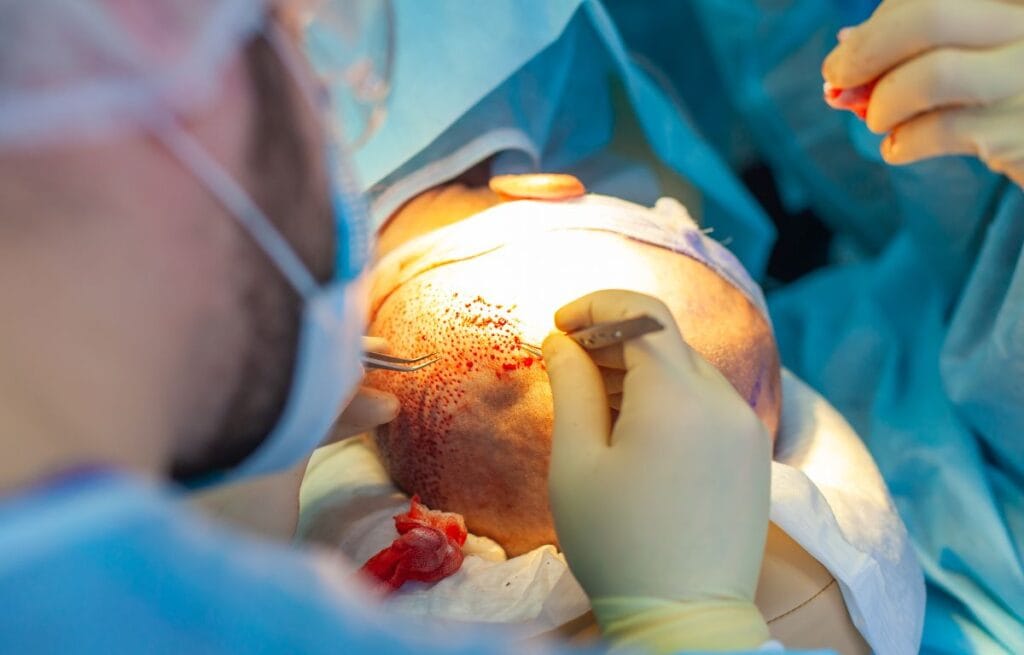
Quick answer (updated September 2026): DHI (Direct Hair Implantation) is an FUE-based hair transplant in which each graft is implanted with a Choi implanter pen, without pre-made channels — ideal for a receding hairline and dense packing. A session takes 4–8 hours depending on graft count; new growth starts around month 3 and final density shows at 12 months. In the US DHI costs $5–$9 per graft; at Vivid Clinic Istanbul the all-inclusive package is $2,500–$5,000.
Considering a DHI hair transplant in Istanbul, Turkey can be a life-changing decision. For many people this is not only about restoring hair but about reclaiming the confidence lost over years of thinning or baldness. Whether you are dealing with a receding hairline, a thinning crown or diffuse loss, DHI hair restoration is the technique most often chosen by patients who want a dense, natural hairline with the least scalp trauma. This guide explains what DHI hair treatment is, its real benefits compared with FUE and Sapphire FUE, what results to expect for a hairline or crown, how recovery unfolds and what it costs in 2026. If you already know you want the procedure, you can go straight to our DHI hair transplant in Istanbul service page for packages and booking.
What Is DHI Hair Treatment and How Does the Choi Pen Work?
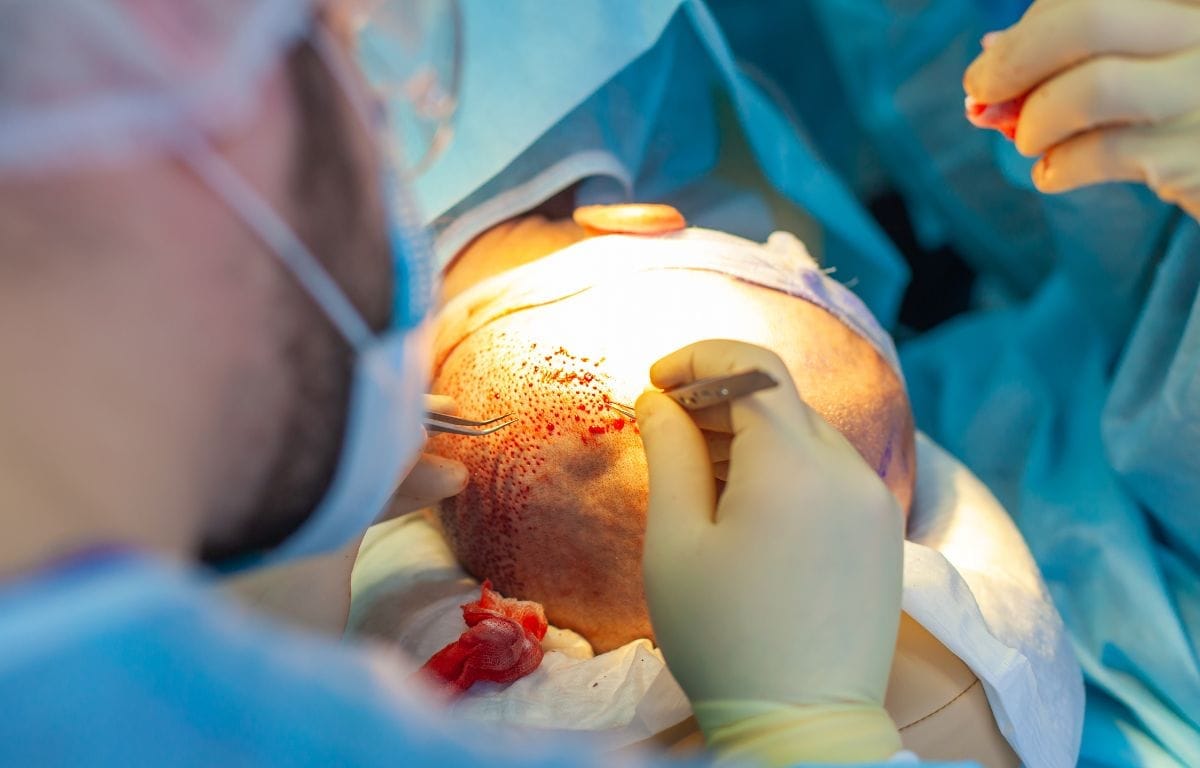
DHI stands for Direct Hair Implantation. It is a hair restoration technique in which follicles are first extracted one by one from the donor area (as in FUE), then loaded into a Choi implanter pen — a fine, hollow needle with a plunger — and placed directly into the thinning area. Because the pen creates the opening and deposits the graft in one movement, there is no separate channel-opening step, the graft spends less time outside the body, and the surgeon controls the angle, direction and depth of every single hair. The result is a natural hairline that is hard to distinguish from your original growth pattern.
The procedure is performed under local anaesthesia with your own follicles, usually taken from the back or sides of the head. Over time the transplanted hairs grow exactly like the rest of your scalp hair. DHI can also be used for beards, eyebrows and small patchy areas.
Direct Hair Implantation vs a Direct Hair Transplant: Are They the Same?
Yes. “Direct hair implantation”, “direct hair transplant” and DHI describe the same procedure: grafts are implanted directly with an implanter pen rather than placed by forceps into pre-cut channels. The word “direct” refers to that one-step placement. What differs between clinics is who holds the pen (a doctor or a technician), whether the pen has a steel or sapphire tip, and how many grafts are planned per session — the checks in our clinic checklist below.
DHI Hair Transplant Benefits vs FUE and Sapphire FUE
The DHI hair transplant benefits that matter most are precision, density and gentler healing. Here is how the three techniques Vivid Clinic offers compare, using the site’s canonical US cost figures.
| Feature | DHI (Choi implanter pen) | Classic FUE | Sapphire FUE |
|---|---|---|---|
| How grafts are placed | Implanter pen opens the site and places the graft in one step | Steel blade opens channels, grafts placed with forceps | Sapphire blade opens finer channels, grafts placed with forceps |
| Shaving needed | Donor area only; unshaven or partial-shaven DHI possible for smaller cases | Usually full shave | Usually full shave |
| Hairline density and angle control | Highest — ideal for dense packing at the hairline | Good | Very good |
| Healing time | Fastest — minimal bleeding and micro-wounds | Standard | Faster than classic FUE |
| Best use-case | Receding hairline, temples, women, beard and eyebrow work | Large areas and crowns on a budget | Large sessions needing many channels with less trauma |
| Grafts per session | Typically 2,000–5,000 depending on donor supply (more time-intensive per graft) | Up to 4,000–5,000 | Up to 4,000–5,000 |
| US cost per graft | $5–$9 | $4–$6 standard, $6–$8 physician-performed | Within the FUE range plus a premium at some clinics |
Read more about the two alternatives on our FUE hair transplant service page and in the Sapphire FUE guide. The seven benefits patients report most often with DHI:
- No channel incisions: the implanter pen places grafts directly, minimising scalp trauma.
- Higher graft survival: less handling and less time outside the body.
- Maximum control: each hair’s direction, angle and depth follows your natural pattern.
- Less bleeding and swelling: healing is smoother.
- Faster recovery: most patients are back to normal life within days.
- Partial shaving possible: the recipient area often does not need to be shaved.
- Versatile: scalp, beard, eyebrows and delicate corrections.
DHI for a Receding Hairline: Grafts, Design and Results
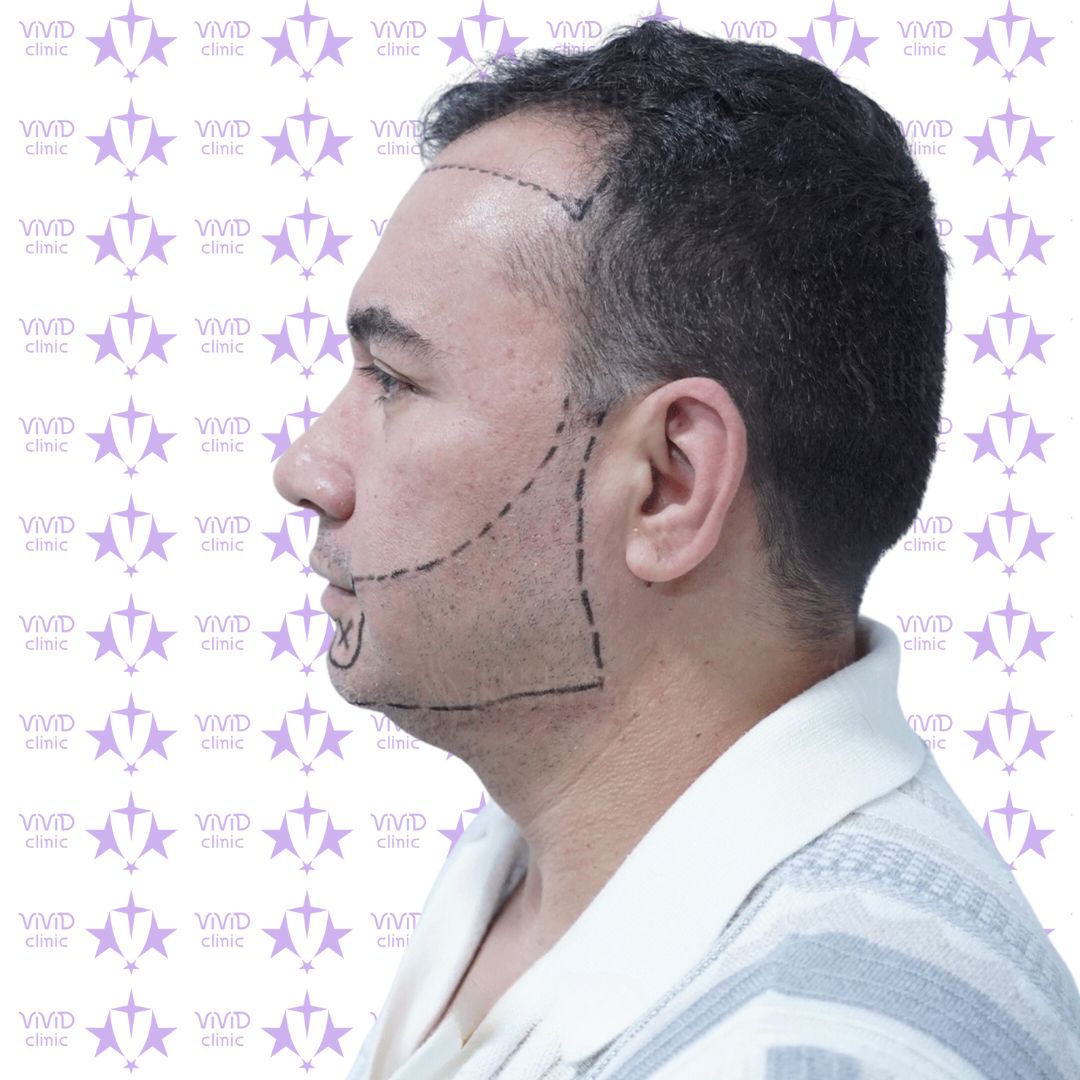
DHI for receding hairline cases is where the technique shines. A Norwood 2–3 recession — temples pulling back, an “M” shape forming — usually needs 1,500–2,500 grafts to rebuild the frontal third. The surgeon designs the new line slightly higher and softer than a teenage hairline so it still looks right at 50, places single-hair grafts along the front edge for a feathered look, and uses two- and three-hair grafts behind them for density. Because the pen controls angle precisely, the hairs lie forward and slightly to the side as natural frontal hair does. New hairs appear from month 3–4, thicken through months 6–9 and reach final density at 12 months; the same donor area can serve a second session later if the crown thins.
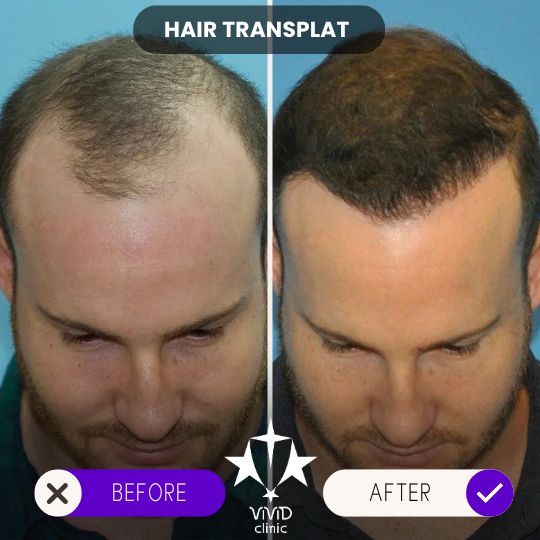
One patient who chose the DHI technique with us wrote in his Google review (published unedited on vivid.clinic):
“The DHI technique was used for my hair transplant, and thanks to this method, my recovery process was very smooth and the results look extremely natural. When I look in the mirror now, I feel much more confident and satisfied.”
— Hasan Basri Alan, Google review
DHI Hair Restoration for Thinning vs Fully Bald Areas
In areas that are thinning but not bald, DHI hair restoration adds grafts between existing hairs without shaving them — the pen can be placed between surviving follicles with little risk of damaging them. In fully bald areas the surgeon can work faster and pack more densely. Most patients have a mix of both, which is why a photo assessment before you fly matters.
Is DHI Good for the Crown?
DHI for crown restoration works well, but the crown behaves differently from the hairline: hair grows in a swirl, the area is larger than it looks, and it usually needs 1,000–2,500 grafts on its own. Because DHI is slower per graft, many surgeons combine techniques in large cases — DHI at the hairline for precision and FUE or Sapphire FUE for the crown for speed — in one session. Crown results also take longest to mature, often the full 12–18 months.
Female DHI Hair Transplant (Unshaven)
A female DHI hair transplant is usually done without shaving the recipient area, which is why women choose DHI more than any other technique. Typical female patterns — a widening parting, thinning temples or a high hairline — suit the pen’s ability to place grafts between existing hairs. Vivid Clinic’s female hair transplant page explains candidacy, and our women’s hair transplant guide covers causes, timing and expectations.
Unshaven and Partial-Shaven DHI: Who Is It For?
Vivid Clinic offers unshaven and partial-shaven DHI. In a partial-shaven session only a small strip of the donor area is trimmed and hidden under the surrounding hair; the recipient area is not shaved at all. It suits women, men with a small hairline or temple gap and anyone who needs to return to work quickly without visible signs. The trade-offs: a lower graft ceiling per session (usually up to about 1,500–2,500 grafts) and a longer procedure, because the surgeon works around existing hair.
Sapphire DHI (SDHI) vs Classic DHI
Sapphire DHI (SDHI), which Vivid Clinic offers alongside classic DHI, uses an implanter with a sapphire-tipped needle instead of steel. Sapphire is smoother and harder, so the entry point is finer and cleaner, bleeding and crusting are reduced and healing is marginally faster; the planning, graft handling and results are otherwise the same as classic DHI. It is a sensible upgrade for dense hairline work; for large crown sessions the choice matters less than surgeon skill.
Why Patients Choose DHI Hair Transplant in Istanbul, Turkey
Istanbul is one of the world’s premier destinations for hair transplants, and DHI is the technique international patients most often request. At Vivid Clinic, the expertise of the surgical team, the comfort of the patient journey and meticulously equipped facilities make the difference — and Istanbul’s hospitality makes a short recovery stay pleasant.
Who Is a Good Candidate for DHI Hair Transplant?
Most men and women with pattern hair loss or thinning are candidates. Ideal candidates have enough donor hair at the back and sides, a stable loss pattern, good general health, realistic expectations and a wish for a natural, minimally invasive result. DHI is also used for beard and eyebrow restoration and to correct previous transplants.
Who May Not Be Suitable for DHI Hair Transplant?
DHI may not be recommended if donor hair is very limited, if you have uncontrolled chronic illness (severe diabetes, clotting disorders), active scalp infection or dermatitis, or unrealistic expectations. Your free consultation at Vivid Clinic confirms suitability; occasionally a combined approach or an alternative is safer.
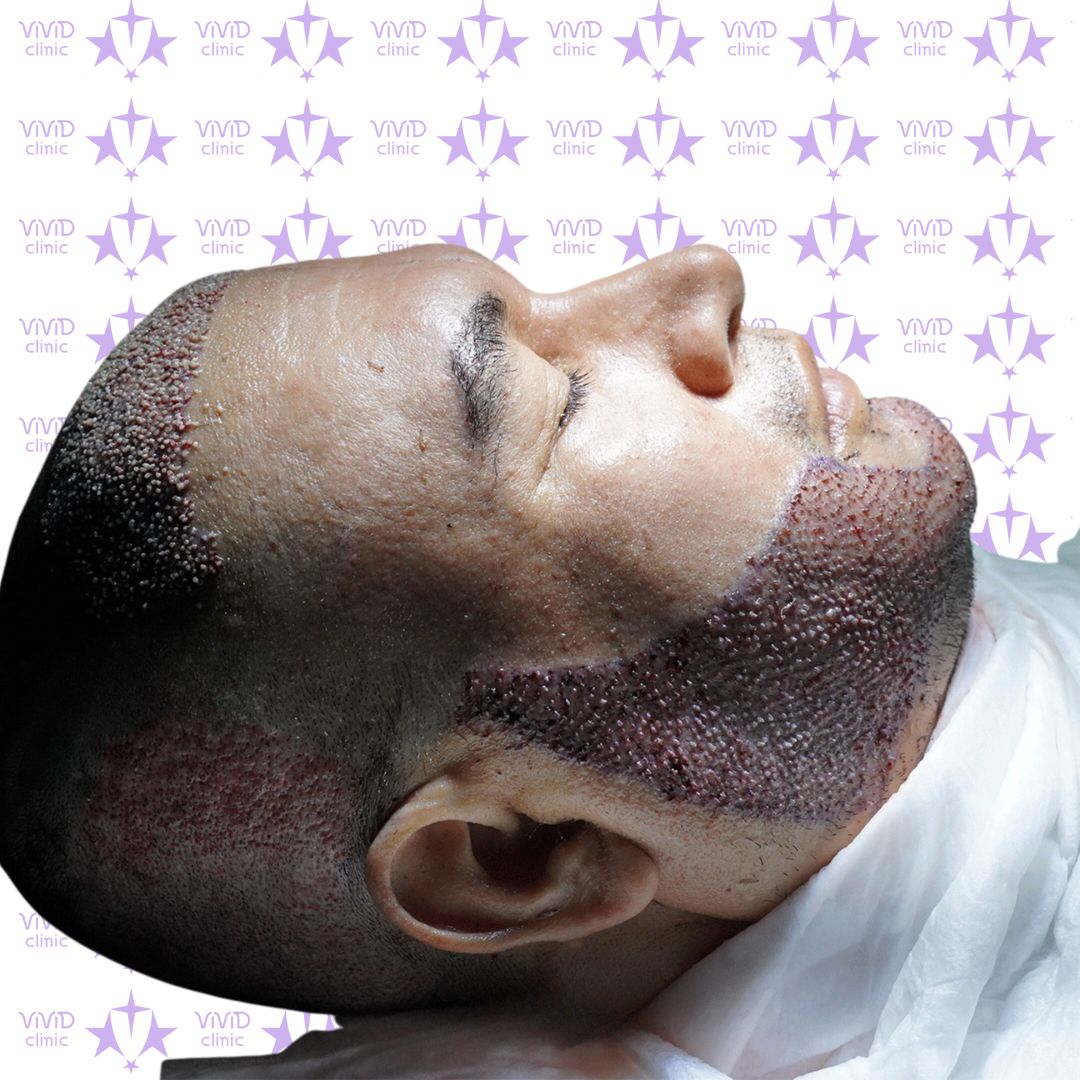
Procedure Overview: DHI Hair Transplant at a Glance
| Aspect | Details |
|---|---|
| Duration | 4–8 hours (depends on number of grafts) |
| Hospitalisation | None (outpatient) |
| Mobility | Immediately after the procedure |
| Return to activity | 2–3 days for office work, 7–10 days for vigorous activity |
| Complete recovery | 2–3 weeks for visible healing; full regrowth in 6–12 months |
| Anticipated results | Initial growth from month 3; final density at 12 months |
How the DHI Procedure Works: Step-by-Step
The full hair transplant procedure step by step is explained in our companion guide; the DHI-specific steps are:
1. Detailed Consultation and Planning
A Vivid Clinic surgeon evaluates your scalp, hair characteristics and medical history, in person or remotely. Photos and digital simulations map your hairline and estimate graft numbers.
2. Preparation and Local Anaesthesia
The donor and, where needed, recipient areas are trimmed and sterilised. Local anaesthesia keeps you comfortable; you stay awake and relaxed.
3. Extraction of Hair Follicles
Follicles are harvested individually from the back or sides of the scalp with a micro-punch, keeping each graft intact.
4. Direct Implantation with the DHI Implanter Pen
Each follicle is loaded into the implanter pen and placed directly into the scalp at the planned angle and depth — no pre-made incisions.
5. Post-Procedure Dressing and Instructions
A protective dressing is applied and you receive medicines, an aftercare kit and instructions for the vital first week.
The Vivid Clinic Operation Process Overview
Upon arrival in Istanbul you are met with a VIP airport transfer and taken to your hotel. The following day brings your consultation and digital assessment; on procedure day you are welcomed into Vivid Clinic’s operating suite. Afterwards the team monitors your healing, checks you before departure and stays reachable for remote aftercare throughout your growth journey — in English and, for patients from the Gulf, Arabic.
DHI Recovery Timeline: Day 1 to Month 12
| Stage | What happens |
|---|---|
| Day 0 (procedure day) | Mild discomfort, swelling and redness, managed with prescribed medicines |
| Days 1–3 | Dressing removed, gentle shampooing begins, most patients mobile and active |
| Week 1 | Tiny scabs form and shed naturally |
| Weeks 2–3 | Visible signs of treatment fade; back to vigorous activity after day 7–10 |
| Months 1–3 | Transplanted hairs shed (shock loss) — normal and temporary |
| Months 3–6 | New hair emerges |
| Months 6–12 | Density and coverage improve; final result at 12 months (crown up to 18) |
Good DHI recovery depends on aftercare. See our Comprehensive Guide to Hair Transplant Aftercare for washing, sleeping and exercise rules.
When Will You See Results from DHI Hair Transplant?
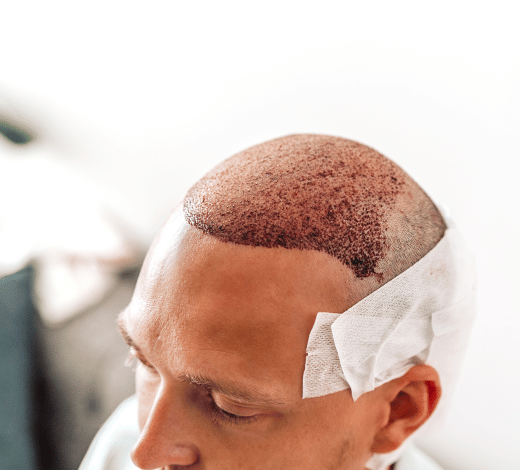
Results develop gradually: the area looks fuller immediately (those hairs shed), early regrowth begins at 3–4 months, coverage improves noticeably at 6–8 months, and the full, natural result shows at 12 months. Because DHI allows dense, precisely angled placement, the end result usually looks indistinguishable from naturally grown hair. Results vary by individual.
Risks and Safety Considerations
DHI is regarded as very safe, but like any procedure it carries risks: temporary redness, swelling, scabbing, numbness, and rarely infection or uneven growth linked to healing or aftercare lapses. At Vivid Clinic every procedure is doctor-led with advanced protocols, and every patient receives clear instructions, aftercare products and follow-up onsite and remotely. No outcome can be guaranteed for every individual; realistic goals set at consultation are part of a safe result.
DHI Hair Transplant Cost: Turkey vs UK and USA
In the USA a DHI hair transplant costs $5–$9 per graft — about $7,500–$22,500 for 1,500–2,500 grafts — versus $2,500–$5,000 all-inclusive at Vivid Clinic Istanbul. See the full breakdown in our guide to DHI cost in the US.
| Market | DHI cost | Typical 2,000-graft session | Source |
|---|---|---|---|
| USA | $5–$9 per graft | $10,000–$18,000 | vividclinic.net US hair transplant cost guide (Appendix B), 2026 |
| Vivid Clinic Istanbul | All-inclusive package | $2,500–$5,000 including hotel and transfers | Vivid Clinic, 2026 |
What moves the price: graft count, whether a doctor or technician implants, sapphire vs steel pen, and package inclusions. For Turkey-wide figures see hair transplant cost in Turkey. Every Vivid Clinic patient receives a written, all-inclusive quote after consultation.
Choosing a DHI Hair Transplant Clinic: 6 Checks
- Who implants the grafts? Ask whether a doctor or a technician holds the implanter pen, and who designs the hairline.
- Which pen and tip? Steel or sapphire (SDHI), and whether it is single-use.
- Graft count in writing. A quote should state the planned grafts and what happens if fewer are possible on the day.
- Twelve-month photos. Ask to see results at 12 months, not at 6, for hairline and crown cases like yours.
- Aftercare and follow-up. Who you contact after you fly home, and how quickly they answer.
- Guarantee and consent. Written terms, and consent forms in your language.
At Vivid Clinic, DHI and SDHI sessions are doctor-led, the surgeon designs the hairline, your planned graft number is stated in your written quote, results are shared with patient consent, coordinators support you in English and Arabic, and remote aftercare continues for the whole growth year. Explore packages on the DHI hair transplant in Istanbul page.
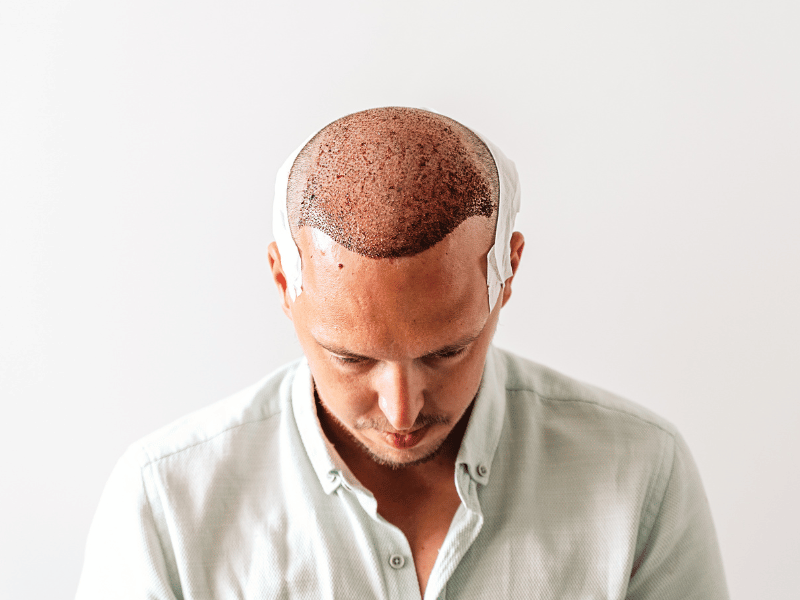
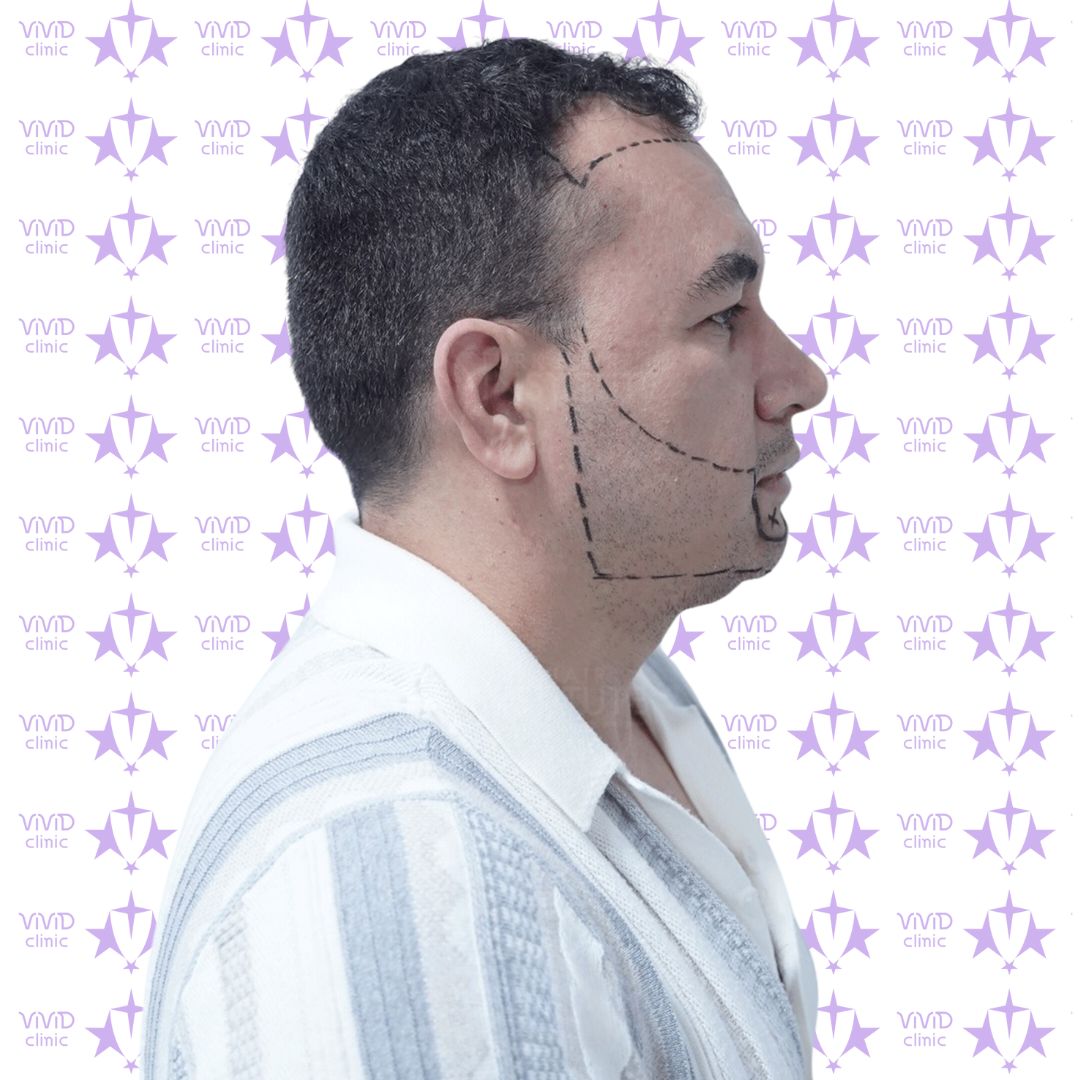
Before & After Results at Vivid Clinic
Frequently Asked Questions About DHI Hair Transplant
Is DHI hair treatment better than FUE for a receding hairline?
For a receding hairline, usually yes. DHI hair treatment lets the surgeon set the angle, direction and depth of every graft with the implanter pen and pack single-hair grafts densely along the front edge, which is exactly what a natural-looking hairline needs. FUE is faster and often preferred for large crown areas. Many Vivid Clinic patients with both a receding hairline and a thinning crown have DHI at the front and FUE behind it in one session.
How many grafts does a DHI hair transplant for the crown usually need?
A thinning crown typically needs 1,000–2,500 grafts on its own, because the swirl pattern and the true size of the area are larger than they look in the mirror. Combined hairline-plus-crown cases often run 3,000–4,500 grafts, which is why the surgeon may use DHI for the hairline and FUE for the crown to keep the session efficient. Your graft plan is confirmed from photos and a scalp examination before you travel to Istanbul.
Can women have a female DHI hair transplant without shaving?
Yes. A female DHI hair transplant is normally performed unshaven in the recipient area — the implanter pen places grafts between existing hairs — and only a small, hidden strip of the donor area is trimmed. It suits a widening parting, thinning temples or a high hairline. Unshaven sessions carry a lower graft ceiling (roughly 1,500–2,500 grafts) and take longer, which is discussed at your free assessment at Vivid Clinic.
What are the real DHI hair transplant benefits compared with Sapphire FUE?
Both are gentle, modern techniques. Sapphire FUE opens very fine channels with a sapphire blade and then places grafts with forceps; DHI skips the channel step and places each graft directly with the pen, so grafts spend less time outside the body, bleeding is minimal, partial shaving is possible and angle control at the hairline is the best of any method. Sapphire FUE is usually quicker for large sessions. Vivid Clinic also offers Sapphire DHI, which combines the sapphire tip with the implanter pen.
How much does a DHI hair transplant cost in Istanbul compared with the USA per graft?
In the USA DHI costs $5–$9 per graft, so a typical 1,500–2,500-graft session comes to about $7,500–$22,500 before anaesthesia and facility fees. At Vivid Clinic Istanbul the DHI package is $2,500–$5,000 all-inclusive — surgery, hotel, VIP transfers and aftercare kit — regardless of the per-graft maths. Your exact figure depends on graft count and is confirmed in writing after a free online assessment.
Conclusion: Ready for Your DHI Hair Transplant Transformation?
Choosing a DHI hair transplant in Istanbul is a significant step toward renewed confidence and lasting change. The technique’s precision, quick recovery and artistry make it the first choice for patients who want maximum results with minimal downtime — and Vivid Clinic’s doctor-led team supports your journey before, during and long after treatment. Take the next step: get a complimentary evaluation, ask your questions and receive a tailored plan on our DHI hair transplant in Istanbul page, or request a free consultation now.
References & Further Reading
For independent, medically reviewed background on this topic, see the International Society of Hair Restoration Surgery and the American Academy of Dermatology – Hair Loss. US price figures follow our 2026 US hair transplant cost guide.