Post-Pregnancy Body Sculpting in Istanbul: The Complete Mommy Makeover Guide
Quick answer (updated August 2026): A mommy makeover Turkey package costs £5,000–£8,500 (≈ $6,500–$11,000) as an all-inclusive Istanbul package — hospital, hotel and transfers included — compared with £12,000–£18,000 at private UK hospitals and $25,000–$35,000 in the US. The usual combination is a tummy tuck plus a breast lift or augmentation, often with liposuction, performed in one session around 6–12 months after childbirth and at least 3–6 months after breastfeeding ends. Plan for 7–10 nights in Istanbul and a return to desk work in 2–3 weeks.
 ChatGPT
Mommy makeovers at a glance
| What it is | A personalized combination of tummy tuck, breast lift and/or augmentation and liposuction, repairing the changes pregnancy leaves behind |
|---|---|
| Typical Istanbul package | £5,000–£8,500 all-inclusive (UK private: £12,000–£18,000 · US: $25,000–$35,000) |
| Timing | 6–12 months after childbirth · 3–6 months after breastfeeding ends · weight stable for ~3 months |
| Stay in Istanbul | 7–10 nights (1–2 in hospital, the rest in a recovery hotel) |
| Recovery | Desk work at 2–3 weeks · exercise from week 6 · final shape at months 3–6 |
| At Vivid Clinic | Named board-certified surgeons, JCI-aligned partner hospital, fixed all-inclusive quote before you book |
What is post-pregnancy body sculpting?
Post-pregnancy body sculpting — better known as a mommy makeover — is a personalized combination of surgical procedures that repairs the three areas pregnancy changes most: the abdominal wall, the breasts, and stubborn fat deposits around the waist and hips.
Pregnancy is not just weight gain, which is why diet and exercise so often stall short of the result mothers want. Nine months of expansion can separate the vertical abdominal muscles (a condition called diastasis recti), stretch skin past its ability to snap back, and leave the breasts deflated or lower on the chest after breastfeeding. No amount of core work rejoins separated muscle, and no cream re-tightens skin that has lost its elasticity. Surgery is the only reliable fix for those specific changes — which is exactly what a mommy makeover is designed around.
Two things it is not. It is not weight-loss surgery: you should be at or near a stable, healthy weight before considering it. And it is not one fixed operation: your surgeon builds the combination around your anatomy and goals, which is why no two mommy makeover plans — or quotes — are identical.
What a mommy makeover includes
A typical mommy makeover in Istanbul combines two or three procedures — most often a tummy tuck with breast surgery and liposuction — into a single operation with a single recovery.
Tummy tuck (abdominoplasty). The centerpiece for most mothers. A tummy tuck stitches the separated abdominal muscles back together, removes the apron of loose skin below the navel, and can revise a C-section scar within the same incision line. If your main concern is a hanging belly after a C-section, this is the procedure doing the heavy lifting.
Breast lift, augmentation — or both. Breastfeeding tends to leave one of two patterns: breasts that sit lower than before (ptosis), or breasts that kept their position but lost volume. A breast lift restores position and shape; breast augmentation restores volume with implants or your own fat. Many mothers need a degree of both, and the tummy tuck and breast lift combination is the classic mommy makeover pairing for good reason — it addresses the two most visible changes in one session.
Liposuction. Pregnancy redistributes fat to the flanks, back and outer thighs, and those deposits are famously diet-resistant. Liposuction — including ultrasound-assisted Vaser liposuction — contours these zones during the same operation, and a 360-degree approach around the waist is what makes a tummy tuck result look finished rather than flat.
Optional: Brazilian butt lift. Some patients ask for the fat removed during liposuction to be transferred to the buttocks — a Brazilian butt lift (BBL). It can be combined with a mommy makeover in selected cases, with strict safety protocols around how and where fat is injected; your surgeon will advise whether it fits your plan or is better staged.
Combining procedures means one anesthesia, one hospital stay, one trip and one recovery instead of two or three — a major practical advantage when you have children at home. The limit is operative time: responsible surgeons cap a single session (commonly at around six hours) and will recommend staging very extensive plans across two visits rather than compressing them into one long one. If a clinic promises to do everything at once regardless of scope, treat that as a warning sign, not a selling point.
Am I a candidate? Timing after childbirth and breastfeeding
The safe window opens around six months after childbirth: most plastic surgeons want you at least six months past delivery, three to six months past your last breastfeed, and at a stable weight for about three months before operating.
Each of those waits has a reason. Your abdominal wall, skin and hormones keep changing for months after birth — operate too early and the surgeon is correcting a moving target. Breast tissue changes shape and volume for months after breastfeeding ends, so a lift or augmentation planned around lactating breasts will not fit the breasts you actually keep. And because significant weight change stretches or deflates surgical results, your weight — not the calendar — is the real gate. A BMI under about 30 is where results and safety statistics are strongest.
You are likely a good candidate if you are past those milestones, in good general health, a non-smoker (or willing to stop for at least four weeks before and after surgery — smoking measurably impairs healing), and ideally finished having children: a future pregnancy will not endanger you, but it can undo the muscle repair and skin tightening you paid for.
Mothers recovering from a C-section should know the eight-week surgical-recovery mark is only the baseline for the uterus and incision — the six-to-twelve-month wait still applies before elective post-pregnancy surgery of any kind. If you are unsure where you fall, this is precisely what a consultation settles, with no commitment attached.
Why Istanbul: mommy makeover Turkey costs vs the UK and US
The combination that costs £12,000–£18,000 at a private UK hospital or $25,000–$35,000 in the US typically runs £5,000–£8,500 as an all-inclusive package in Istanbul — a saving of 50–60% with the hospital stay, hotel and transfers already included.
| Where | Typical 2026 mommy makeover cost | What the price usually covers |
|---|---|---|
| UK — private hospitals | £12,000–£18,000 (≈ €14,000–€21,000 / $15,000–$23,000) | Surgery and hospital only; consultations, garments and follow-ups often billed separately |
| US — private clinics | $25,000–$35,000 (≈ £19,500–£27,500 / €23,000–€32,000) | Surgeon fee plus separate anesthesia, facility and implant charges |
| Istanbul — all-inclusive package | £5,000–£8,500 (≈ €6,000–€10,000 / $6,500–$11,000) | Surgery, 1–2 nights in hospital, recovery hotel, VIP transfers, medications, garments and follow-ups |
Currency conversions are approximate (August 2026). Your exact price depends on which procedures your plan combines — Vivid Clinic confirms a fixed all-inclusive quote at consultation, before you book anything.
The price gap is structural, not a corner being cut. Turkey’s lower cost base — staff wages, hospital rates, the exchange rate — and the high volume of procedures performed in Istanbul mean an internationally accredited hospital and an experienced surgical team simply cost less to run than their equivalents in London or New York. The same logic is why a tummy tuck alone costs $2,500–$5,500 in Istanbul against five figures in the US. What you should compare between countries is not the number on the quote but what it includes — and who is operating.
What your mommy makeover consultation at Vivid Clinic covers
Your consultation starts online, from home: photos and a medical questionnaire first, then a video assessment with the surgical team, and a fixed all-inclusive quote before you book flights.
Here is what the process settles, step by step. First, an honest assessment of which procedures your anatomy actually needs — muscle repair or skin-only, lift or implants or both, where liposuction adds value — based on your photos and history: deliveries, breastfeeding timeline, weight history, medications and any previous surgery. Second, the surgical plan: what can safely be combined in one session and what, if anything, should be staged. Third, the exact fixed price for that plan, with the hospital nights, hotel, transfers and aftercare written into it. Fourth, the practical calendar — how long after your last breastfeed, which week to fly, how many nights to stay.
When you arrive in Istanbul, the plan is confirmed in person: a physical examination, implant sizing if relevant, blood tests and an anesthesia review the day before surgery. Nothing proceeds until the surgeon has examined you and you have signed consent on a plan you understood from home. Two questions you should always ask — of us or any clinic: who exactly performs my surgery, and what happens if I need a revision. A confident clinic answers both in writing.
Ready to find out what your plan would look like? Request a free online consultation — photos in, surgical plan and fixed quote back, no obligation.
Recovery timeline: week by week in Istanbul and at home
Plan for 7–10 nights in Istanbul, a return to desk work in 2–3 weeks, exercise from week six, and your near-final shape between months three and six.
Days 1–2 — hospital. Surgery takes roughly three to six hours depending on the combination. You wake in a compression garment and spend one to two nights in the hospital with pain management, anti-clot measures and your first assisted walk — moving early is the single best thing you can do for a safe recovery.
Days 3–7 — recovery hotel. You transfer to the partner hotel, where nursing checks, dressing changes and surgeon reviews come to you. You will walk slightly hunched at first (the tummy tuck skin is deliberately snug), stand straighter each day, and shower once your team clears it. Swelling and tiredness are normal; sharp one-sided pain, fever or a hot swollen calf are not — report them immediately.
Days 7–10 — fly home. After your final in-person check, you fly with a fit-to-fly letter, your garment, and a written aftercare plan. From home, follow-ups continue remotely — Vivid Clinic’s aftercare team stays reachable on WhatsApp with photo reviews at the milestones that matter.
Weeks 2–4. Desk work is realistic from week two or three; driving resumes when you can brake sharply without hesitation and are off prescription painkillers. Keep wearing the garment — typically six weeks total.
Weeks 4–6. Walking becomes brisk, light cardio returns around week six with your surgeon’s clearance. The strict rule for mothers: no lifting anything heavier than about 5 kg — including toddlers — for six weeks. Arrange childcare help for this window before you book; it is the most underestimated part of mommy makeover planning.
Months 3–6 and beyond. Swelling settles, the waistline sharpens and breasts soften into their final shape between month three and month six. Scars — kept low, within underwear lines — fade progressively over 12 to 18 months with silicone care. You can compare healed outcomes procedure by procedure in our before & after gallery.
Risks, safety standards and hospital accreditation
A mommy makeover is major surgery, and combining procedures extends time under anesthesia — the risks are real, managed rather than eliminated, and managing them well is exactly what separates clinics.
The complications that matter are the ones every honest surgeon discusses before you consent: bleeding, infection, fluid collection (seroma), delayed wound healing, asymmetry, and — the most serious — blood clots (DVT or pulmonary embolism), which is why you will wear compression devices, walk within hours of surgery, and in some cases receive blood thinners. Where fat transfer to the buttocks is included, it is performed with ultrasound guidance into the layer above the muscle only — the protocol that has transformed BBL safety. Revision surgery is occasionally needed even in expert hands; ask any clinic how theirs is handled before you book.
Safety abroad is not a country question — it is a checklist question. At Vivid Clinic, mommy makeover surgery is performed by board-certified plastic surgeons in a JCI-aligned partner hospital in Istanbul, with a dedicated anesthesia team, on-site intensive care, and operative-time limits that determine what gets combined and what gets staged. Wherever you ultimately choose to have surgery, verify the same four things: the hospital’s accreditation, the surgeon’s board certification and named involvement in your operation, the anesthesia and emergency arrangements, and a written aftercare path for when you are back home. A price that looks too good usually got that way by trimming one of those four.
Frequently asked questions
How soon after pregnancy can I have a mommy makeover?
Most surgeons recommend waiting at least six months after childbirth — and many mothers get their best result between six and twelve months, once weight is stable. If you breastfed, add three to six months after your last feed so breast tissue settles before a lift or augmentation is planned.
Can a tummy tuck and breast lift be combined in one surgery?
Yes — the tummy tuck and breast lift combination is the classic mommy makeover, performed under one anesthesia with one recovery. Surgeons keep the total operative time within safe limits (commonly around six hours), so very extensive plans are sometimes staged across two sessions instead.
How much does a mommy makeover cost in Turkey?
A mommy makeover in Turkey typically costs £5,000–£8,500 (≈ $6,500–$11,000 / €6,000–€10,000) as an all-inclusive Istanbul package covering surgery, hospital stay, recovery hotel and transfers — against £12,000–£18,000 privately in the UK and $25,000–$35,000 in the US. The exact figure depends on which procedures your plan combines; Vivid Clinic confirms a fixed quote at your free online consultation.
How long do I need to stay in Istanbul?
Plan for 7–10 nights: one to two nights in hospital, the remainder in a recovery hotel with nursing support, and a final surgeon check with a fit-to-fly confirmation before you go home. Follow-up then continues remotely.
Will a mommy makeover fix my C-section overhang and scar?
Usually, yes. A tummy tuck removes the fold of skin that hangs over a C-section scar and typically revises the old scar within the new, low incision line. It also repairs the muscle separation a C-section leaves behind, which flattens the lower belly in a way exercise cannot.
Is it safe to have a mommy makeover abroad?
It is as safe as the team and hospital you choose. Look for an accredited hospital (not an office operating room), a board-certified plastic surgeon who is named before you pay, clear operative-time and staging policies, and structured aftercare that continues once you fly home. Those four factors — not geography — determine your risk.
Keep reading
- Can you get a free tummy tuck?
- Tummy tuck costs in Istanbul
- Tummy tuck surgery at Vivid Clinic — procedure page
Before and After Results

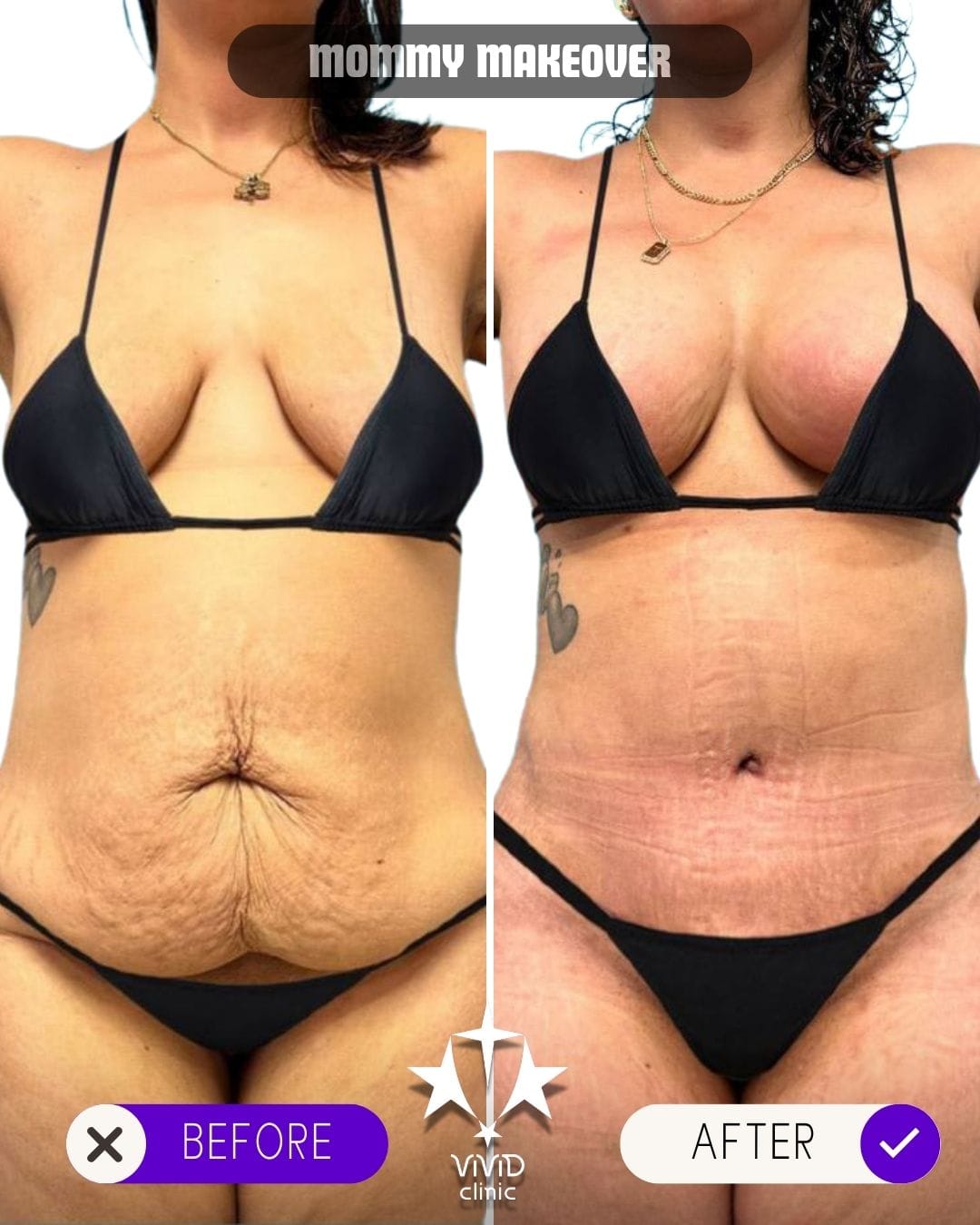

See healed mommy makeover, tummy tuck and breast surgery outcomes in the Vivid Clinic before & after gallery — ask at consultation for cases that started where you are starting.
Request your free consultation
Considering post-pregnancy body sculpting in Istanbul? Send your photos through our free online consultation and receive a personal surgical plan and fixed all-inclusive quote from Vivid Clinic’s surgical team — usually within 48 hours. Message us on WhatsApp, call +90 545 742 3565, or use the form below for a free consultation with a plastic surgeon.
Sources
Medical information disclaimer: This guide is general information for international patients, not medical advice, and it does not replace a consultation. Every surgical procedure carries risks, results vary from patient to patient, and suitability can only be confirmed after medical evaluation. If you have surgery, your treating surgeon’s instructions always override general guidance you read online — including this page. Seek urgent medical help for warning signs such as chest pain, shortness of breath, heavy bleeding, spreading redness or fever after any operation.