
Rhinoplasty and septorhinoplasty

Rhinoplasty in Istanbul breathing checked first, one hospital night and a 7–8 day plan

Rhinoplasty reshapes the nose and, when needed, improves breathing through the septum. It suits healthy adults, and older teens whose nose has finished growing, with realistic goals. Plan about 7–8 days in Istanbul.

  • 7–8 days in Istanbul
  • 1 night in hospital
  • Splint off around day 7

Free medical review within 24 hours · No obligation · ★ 5.0 from 157 Google reviews

Editorially reviewed by the Vivid Clinic Surgical Board · Last reviewed September 2026

Two mirrored portraits of a young woman with short brown hair, one with a dotted line traced along the side of her nose
At a glance

What is rhinoplasty, and what to expect

Rhinoplasty, often called a nose job, changes the shape, size or proportions of the nose. The surgeon reshapes the bone and cartilage, then lets the skin re-drape over the new framework. At Vivid Clinic, planning is breathing-first: the septum and internal airway are checked before the aesthetic plan is agreed.

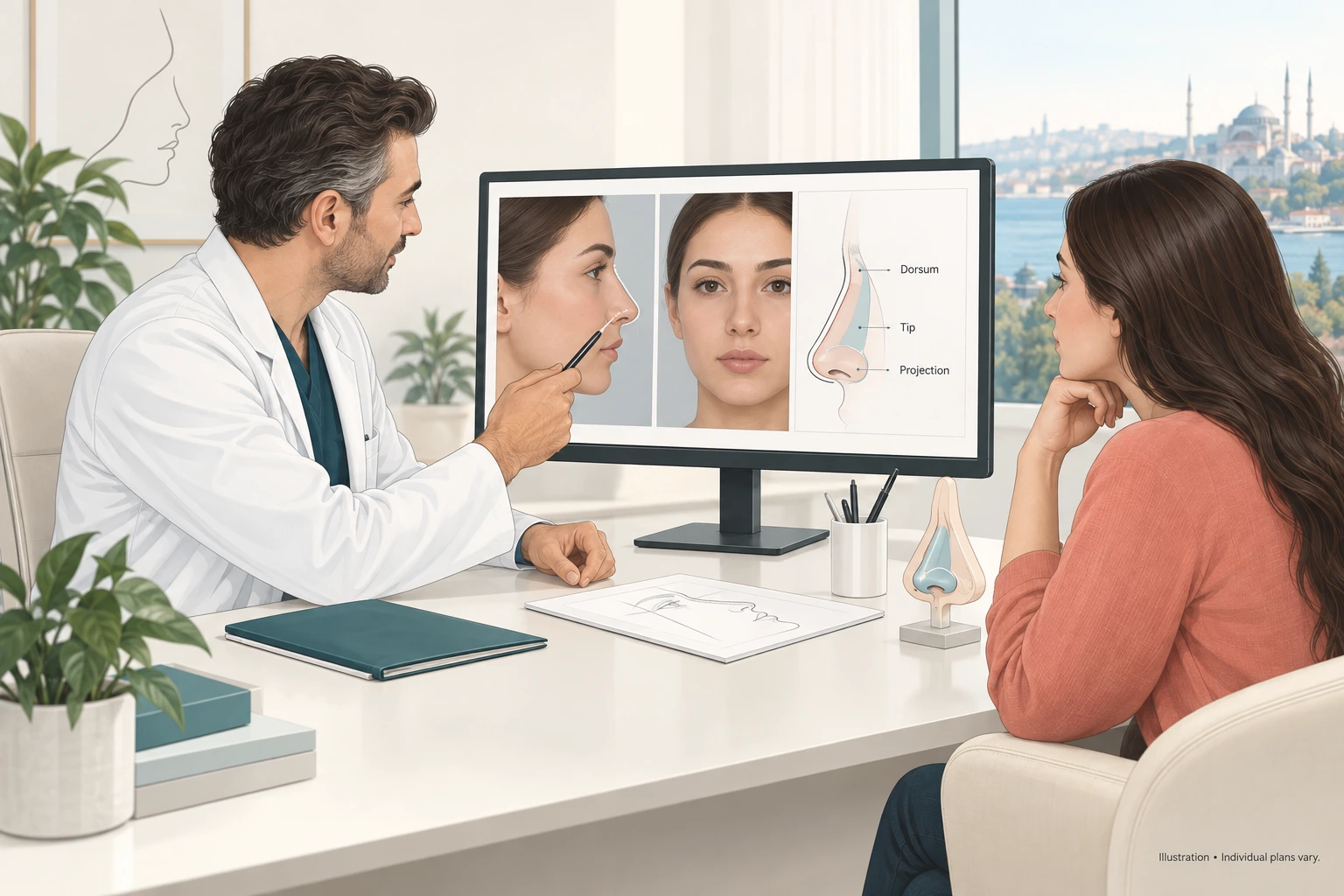
Rhinoplasty in Istanbul: illustration of a surgeon reviewing a patient's nose profile photos on screen during a rhinoplasty consultation
Your plan starts with photo analysis and a face-to-face assessment.Illustration
Procedure time
2–4 hDepending on complexity
Stay in Istanbul
7–8 days1 night in hospital
Back to desk work
7–14 daysSplint off around day 7
Gym
4–6 weeksContact sports around 8 weeks
Bridge refined
Month 3The tip still feels firm and full
Final result
About 12 monthsLonger with thick skin or revision
See all procedure details
Rhinoplasty in Istanbul at a glance
Procedure timeTypically 2–4 hours, depending on complexity
AnaesthesiaGeneral anaesthesia
Hospital stay1 night
Recommended stay in Istanbul7–8 days
Splint and stitchesRemoved around day 7
Back to desk workUsually 7–14 days
ExerciseWalking from day 1; gym at 4–6 weeks; contact sports around 8 weeks or when your surgeon clears you
GlassesResting on the nose avoided for about 4–6 weeks
Final resultAround 12 months (thicker skin can take longer)
Results lastLong term; the nose still ages naturally with the rest of the face
Real patient results

Rhinoplasty before and after

Results from Vivid Clinic patients, shared with consent. Individual results vary. 6 cases shown; each caption states what the photos show and what is not recorded.

These profile comparisons come from the clinic library; the technique (open, closed, preservation) is not recorded per case.

See the full gallery
  • Rhinoplasty · Case VC-23244
    • Left: before · Right: after
    • View: side profile
    • Follow-up interval: not recorded

    Before: Small hump, slightly drooping tip. After: Straighter bridge, lifted tip.

    Vivid Clinic patient, shared with consent. Individual results vary; this is one case, not a promise of your outcome.

  • Rhinoplasty · Case VC-19500
    • Left: before · Right: after
    • View: right side profile
    • Follow-up interval: not recorded

    Before: Convex bridge with hump. After: Straight bridge, refined tip.

    Vivid Clinic patient, shared with consent. Individual results vary; this is one case, not a promise of your outcome.

  • Rhinoplasty · Case VC-20966
    • Left: before · Right: after
    • View: side profile, smiling
    • Follow-up interval: not recorded

    Before: Prominent hump, longer nose. After: Smoother, straighter profile.

    Vivid Clinic patient, shared with consent. Individual results vary; this is one case, not a promise of your outcome.

  • Rhinoplasty · Case VC-19497
    • Left: before · Right: after
    • View: right side profile
    • Follow-up interval: not recorded

    Before: Dorsal hump, drooping tip. After: Straight bridge, lifted tip.

    Vivid Clinic patient, shared with consent. Individual results vary; this is one case, not a promise of your outcome.

  • Rhinoplasty · Case VC-20980
    • Left: before · Right: after
    • View: side profile
    • Follow-up interval: not recorded

    Before: Dorsal hump, drooping tip. After: Smoother bridge, lifted tip.

    Vivid Clinic patient, shared with consent. Individual results vary; this is one case, not a promise of your outcome.

  • Rhinoplasty · Case VC-20974
    • Left: before · Right: after
    • View: three-quarter profile
    • Follow-up interval: not recorded

    Before: Dorsal hump. After: Smoother, straighter profile.

    Vivid Clinic patient, shared with consent. Individual results vary; this is one case, not a promise of your outcome.

Photos are unedited clinic composites; before and after photos may differ in lighting, clothing and pose. Consent is on file at the clinic.

Candidacy

Who is rhinoplasty right for — and who should wait?

Rhinoplasty tends to suit you if

  • You are healthy and a non-smoker, or willing to stop for several weeks around surgery
  • Your nose has finished growing, usually from around 16–18, confirmed individually
  • You dislike a specific feature, such as a hump, a drooping or bulbous tip, asymmetry or width
  • You have blocked breathing from a deviated septum alongside a cosmetic concern

It is wiser to wait if

  • You have uncontrolled blood pressure, a bleeding disorder or an active sinus infection
  • Recent nasal trauma is still healing, or you are going through a major life upheaval
  • You had a previous nose operation less than 12 months ago

People who are persistently distressed by a feature others barely notice may be offered a supportive conversation before any surgical plan.

No one-size-fits-all

Rhinoplasty techniques at Vivid Clinic

The right approach depends on your anatomy, skin thickness and goals. These are the mainstream techniques your surgeon may discuss.

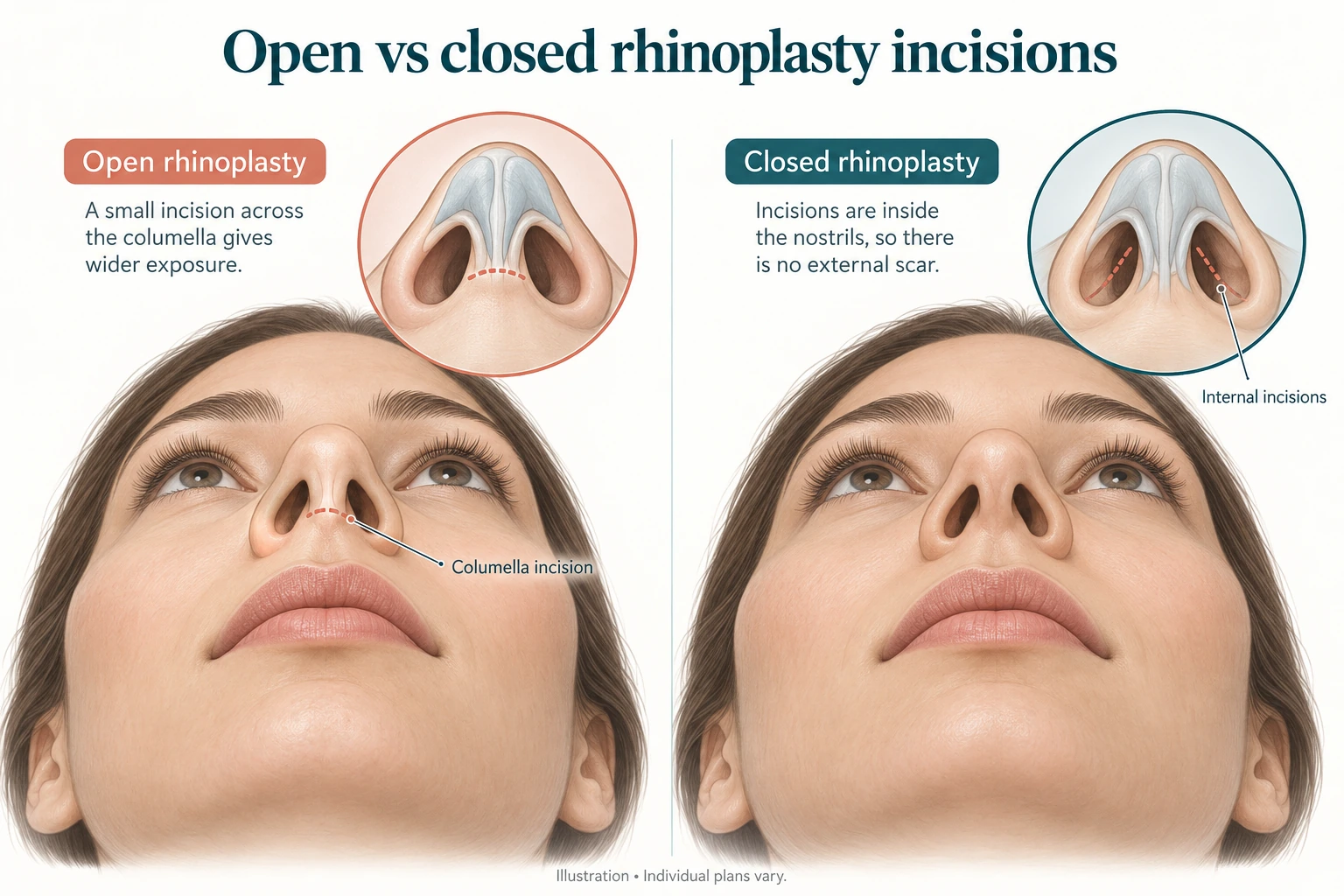
Medical illustration comparing open rhinoplasty columella incision with closed rhinoplasty internal incisions
Open and closed approaches differ in access, not in quality of care.Illustration
Full view

Open rhinoplasty

A small incision across the columella, the strip between the nostrils, lets the surgeon lift the skin and see the whole framework.

Often chosen for
Complex tips, significant asymmetry, grafting and revision
Incision
Across the columella
Scar
Usually discreet once healed
Endonasal

Closed rhinoplasty

All incisions sit inside the nostrils. Swelling may settle slightly faster, but access is more limited.

Often chosen for
Hump reduction and moderate refinements
Incisions
Inside the nostrils
Scar
No external scar
Selected noses

Preservation rhinoplasty

Instead of shaving the hump and rebuilding the bridge, the whole dorsum is lowered while its natural top surface stays intact.

Often chosen for
A fairly straight nose with a moderate hump
Not suited to
Very crooked or previously operated noses
Aim
A smooth bridge line

Your surgeon may also discuss septorhinoplasty for breathing (see our deviated septum and septoplasty guide), tip plasty for tip-only changes, and heritage-conscious rhinoplasty. Revision rhinoplasty is usually more complex and often needs extra cartilage from the septum, ear or sometimes rib.

Step by step

How rhinoplasty is done

An anaesthetist gives general anaesthesia and monitors you throughout. Afterwards you spend the night on the ward under nursing care.

  1. Final check

    Photographs, agreed goals and consent reviewed on the day.

  2. Anaesthesia

    General anaesthesia, monitored throughout by an anaesthetist.

  3. Access

    Open or closed incisions, as planned.

  4. Framework

    Hump, septum, nasal bones and tip reshaped as planned.

  5. Grafts

    Cartilage grafts support the airway and new shape where needed.

  6. Splint

    Fine stitches and a splint, then a night on the ward.

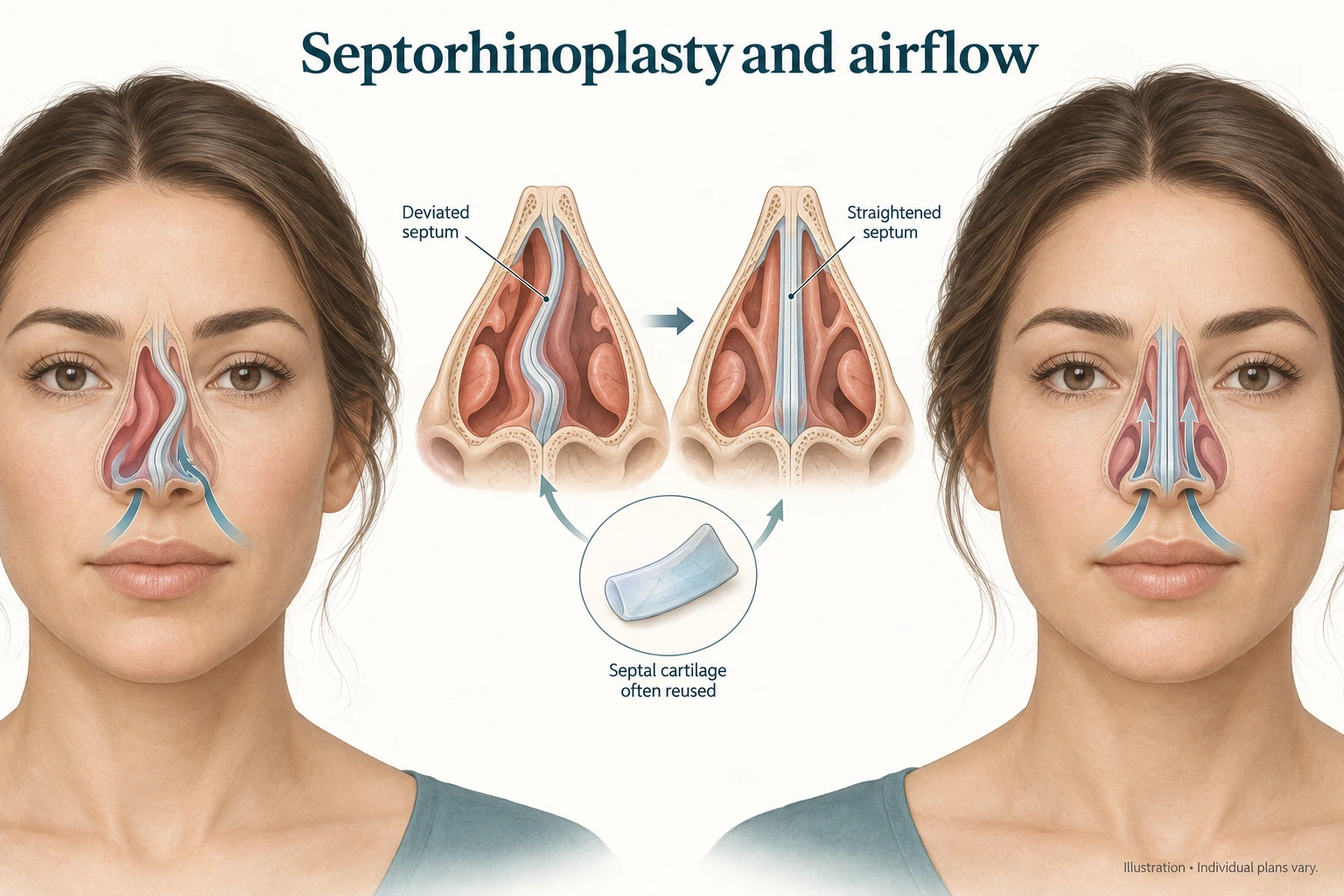
Illustration of a deviated nasal septum before and after straightening in septorhinoplasty
Step 4: straightening the septum can improve airflow alongside shape changes.Illustration
Your Istanbul journey

Seven to eight days, fully coordinated

Day 1

Arrival

A VIP transfer takes you from the airport to your hotel. Your patient coordinator stays in touch throughout, with an interpreter if needed.

Day 2

Consultation and surgery

An in-person consultation, photographs, blood tests and anaesthetic review, then surgery. You stay one night in hospital with nursing care.

Days 3–6

Rest at the hotel

Head elevated, cold compresses around the eyes and gentle walks. A dressing or wound check is arranged during this period.

Days 7–8

Splint off, fit to fly

The splint and any external stitches are removed, and you receive your written aftercare plan. After a final check you fly home.

Send your nose photos. Get an honest answer.

Front, side and three-quarter photos let a plastic surgeon on Prof. Dr. Pilancı's team review your nose and breathing. You hear which technique fits, or whether surgery is not advised. Free, no obligation.

Recovery

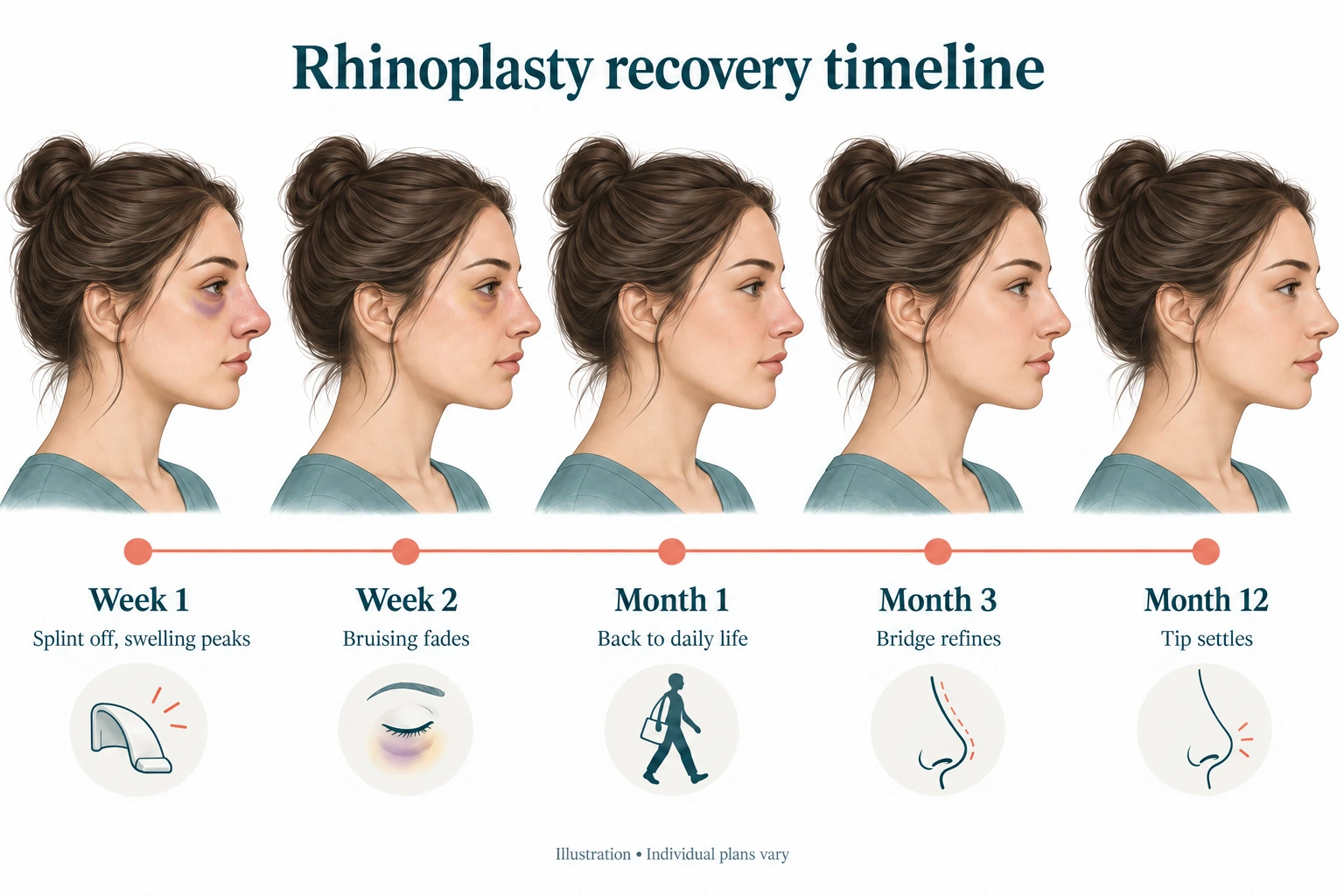
Rhinoplasty recovery timeline

Expect a nose that looks more balanced with your face and, where functional work was done, freer breathing. Early photos are not the final picture: the bridge settles first and the tip last.

  1. Week 1Stuffiness, bruising around the eyes and puffiness peak around days 2–3, then ease. Sleep with your head raised.No nose blowing
  2. Weeks 2–3Most bruising fades and you look presentable with light make-up. Many people return to desk work.
  3. Weeks 4–6Breathing through the nose improves; light gym work is usually allowed from around week 4.
  4. Months 2–3The bridge looks refined; the tip still feels firm and slightly full.
  5. Months 6–12Residual swelling, mainly in the tip, keeps settling. Thicker skin and revision cases may take longer.

How long rhinoplasty results last

The changes to bone and cartilage are long lasting, although your nose will continue to age naturally with your face.

For a closer look at the first weeks, see our rhinoplasty recovery guide. The Vivid Clinic 24/7 support line and your coordinator remain available after you leave Istanbul.

Illustrated rhinoplasty recovery stages, from peak swelling and bruising to residual tip swelling settling
Swelling fades in stages; the nasal tip settles last.Illustration
Surgical or not

Surgical rhinoplasty vs non-surgical nose reshaping

In short: filler (a “liquid rhinoplasty”) can camouflage small issues for a while. Only surgery makes lasting changes to size, structure or airflow.

CriterionSurgical rhinoplastyLiquid rhinoplasty (filler)
What it can doChange size, shape and structureCamouflage a small hump or lift a tip
Make the nose smaller?YesNo
Improve breathing?Yes, with septal or airway workNo
How long it lastsLong termTemporary
Main risksBleeding, infection, irregularities, breathing problems, revisionRare but serious vascular risks

Our natural-looking injectables guide explains where injectables fit. Still researching the destination? Our guides to rhinoplasty in Turkey and the nose job Turkey checklist cover travel planning. All options are on our face aesthetics page.

Price and packages

What determines your rhinoplasty quote

Rhinoplasty prices are given only after a surgeon has reviewed your photographs, because the operation varies so much from one nose to another. The consultation is free. For general background, see our rhinoplasty cost in Turkey article.

Your all-inclusive package

Typically covers:

  • Surgery and anaesthesia
  • The hospital night
  • Pre-operative tests
  • Medication
  • The splint
  • Hotel accommodation
  • VIP airport and clinic transfers
  • Patient coordinator, interpreter and post-operative checks

Your price depends on

  • Complexity: a tip plasty differs from a full septorhinoplasty
  • Primary or revision surgery, and whether ear or rib cartilage is needed
  • Functional work on the septum or turbinates, or combined procedures such as eyelid or chin work
  • Length of stay, extra hotel nights or companion arrangements
Why Vivid Clinic

Why patients choose Vivid Clinic for rhinoplasty in Istanbul

Meet our medical team
  • Rhinoplasty planning overseen by a plastic, reconstructive and aesthetic surgeon
  • Accredited partner hospitals with an anaesthetist present
  • Breathing checked before the aesthetic plan is agreed
  • All-inclusive coordination, multilingual coordinators and interpreters
  • 24/7 aftercare line in Istanbul and after you return home
5.0 157 Google reviewsVivid Clinic Google Business Profile · checked September 2026 Read reviews

Medical review

Rhinoplasty planning at Vivid Clinic is overseen by Prof. Dr. Özgür Pilancı, who also medically reviewed this page. His profile sets out his training so you can check it independently.

Portrait of Prof. Dr. Özgür Pilancı, plastic surgeon on the Vivid Clinic team

Prof. Dr. Özgür Pilancı

Plastic, Reconstructive & Aesthetic Surgeon

  • Plastic surgery specialist since 2006 (Cerrahpaşa, Istanbul)
  • Associate professor since 2015
  • Profile lists rhinoplasty among his clinical focus areas
View profile
Safety

Risks of rhinoplasty and how we reduce them

No surgery is without risk. Reported revision rates in the medical literature vary widely, which is why realistic planning matters.

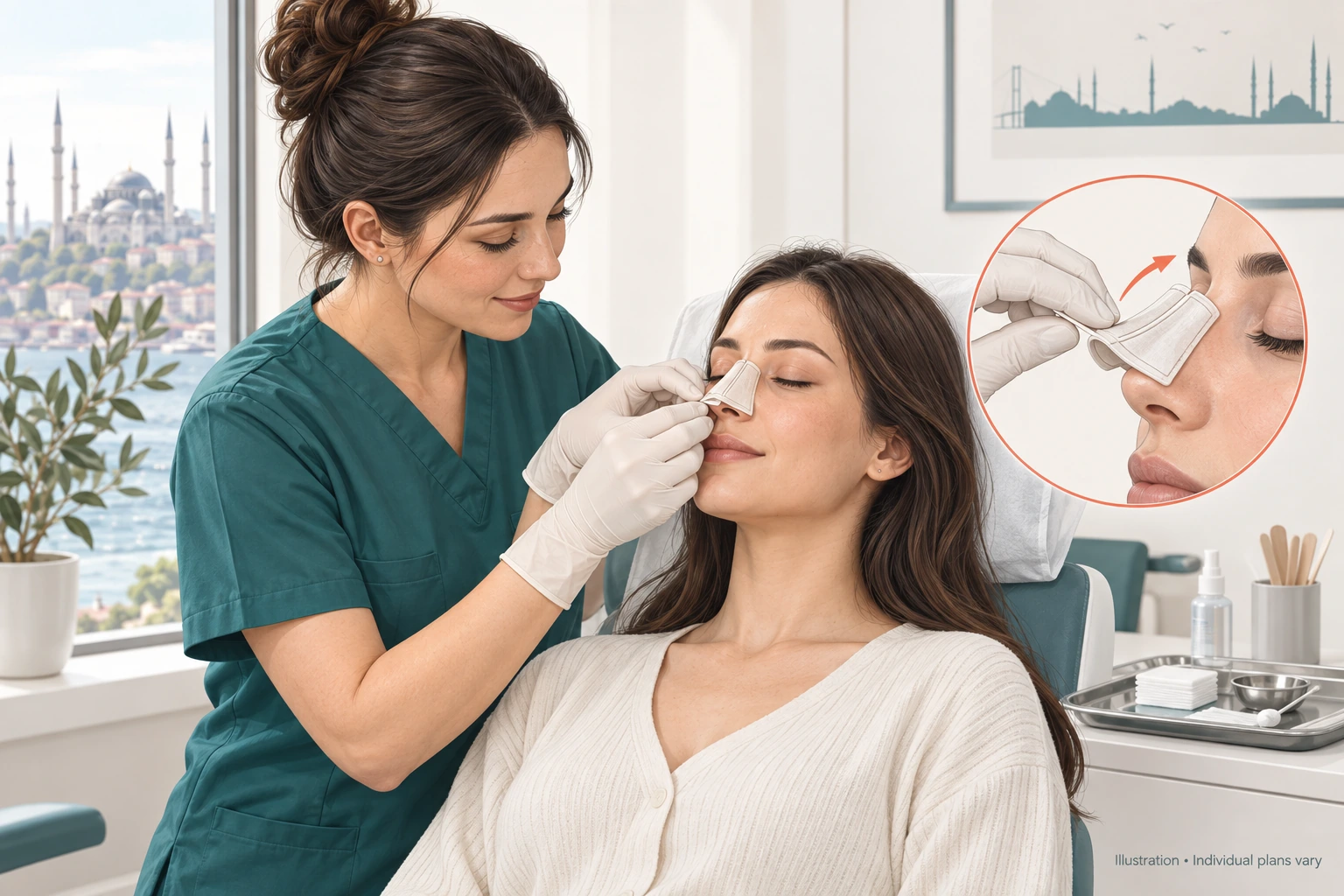
Illustration of a nurse removing a nasal splint from a patient about a week after rhinoplasty
Most patients have the splint removed about a week after surgery.Illustration

Possible effects

  • Bleeding, infection or prolonged swelling
  • Numbness of the tip, visible irregularities or asymmetry
  • Persistent breathing difficulty or septal perforation
  • Scarring
  • Dissatisfaction with the shape, sometimes needing revision

How we reduce them

  • Full medical screening and blood tests before surgery
  • Surgery in accredited partner hospitals with an anaesthetist present
  • Conservative, structure-preserving planning rather than over-reduction
  • Clear written aftercare, a check before you fly and remote follow-up
  • Honest advice not to operate when the risk outweighs the benefit

Travelling from the UK? Read the NHS guidance on cosmetic surgery abroad. The American Society of Plastic Surgeons describes the same dual purpose of appearance and airflow.

FAQ

Frequently asked questions about rhinoplasty in Istanbul

How long should I stay for rhinoplasty in Istanbul before flying home?

Plan on 7–8 days. You arrive on day 1, have your consultation, tests and surgery on day 2, spend one night in hospital, and rest at your hotel. The splint and any external stitches are removed around day 7. After a final check, you are usually cleared to fly on day 7 or 8. Flying earlier with the splint on is not recommended, because swelling and bleeding risk are highest in the first week.

Can rhinoplasty in Istanbul fix my breathing as well as the shape?

Often, yes. A deviated septum, enlarged turbinates or collapsed nasal valves can be corrected in the same operation as the cosmetic changes. This combined surgery is called septorhinoplasty. Your surgeon examines the inside of your nose at consultation and may request a scan. Breathing usually improves once internal swelling settles, typically over four to six weeks, although results depend on the underlying cause.

Is preservation rhinoplasty in Istanbul suitable for a large dorsal hump?

It depends on the hump and the nose around it. Preservation rhinoplasty works well for many moderate humps on a relatively straight nose, lowering the bridge while keeping its natural surface. Very large humps, strongly crooked noses, thick skin or previous surgery may be better served by structural techniques. Your surgeon will recommend the approach that suits your anatomy after reviewing your profile photos and examining you in person.

Can I have revision rhinoplasty in Istanbul after surgery elsewhere?

Yes, provided enough time has passed, usually at least 12 months, so swelling has settled and scar tissue has matured. Please send your previous operation notes if you have them, plus clear photos. Revision is often more complex than a first operation and may need cartilage from the ear or rib. It can also mean a longer stay and slower settling. Your surgeon will explain realistically what can and cannot be improved.

When will I see the final result of rhinoplasty in Istanbul?

You will see a clear change when the splint comes off around day 7, but that is not the final result. Most visible swelling fades within 3–6 weeks and the bridge looks refined within about three months. The tip settles last, so the final result is usually assessed at around 12 months, and sometimes later with thick skin or revision surgery. Regular photo check-ins with your Vivid Clinic coordinator help track progress.

When can I return to work and exercise after rhinoplasty in Istanbul?

Most people return to desk work after 7–14 days, once most bruising has faded; light make-up usually covers what remains by weeks 2–3. Walking is fine from day 1. Light gym work is usually allowed from around week 4, heavier training later, and contact sports around 8 weeks or when your surgeon clears you. Avoid resting glasses on your nose for about 4–6 weeks.

What photos should I send for rhinoplasty in Istanbul?

Send clear front, side and three-quarter photos of your nose through WhatsApp or our online form. A plastic surgeon on Prof. Dr. Pilancı's team at Vivid Clinic reviews them and tells you honestly which technique fits your nose and breathing. If you had surgery before, include your operation notes. You then receive a personalised treatment and travel plan for Istanbul. The consultation is free, with no obligation.

Free assessment

Plan your rhinoplasty in Istanbul

Send front, side and three-quarter photos of your nose. It is free and there is no obligation to book.

  1. Share your details and photosHere, or by WhatsApp on +90 545 742 3565.
  2. Medical review within 24 hoursHonest advice on which technique fits your nose and breathing, and your recommended plan.
  3. Your personalised Istanbul planDates, hotel, transfers and your coordinator’s contact.

Get my free rhinoplasty plan

Free · No obligation · Reply within 24 h

Vivid Clinic — Consultation Request
This site is protected by reCAPTCHA and the Google Privacy Policy and Terms of Service apply.