Full beard and cheek line
Filling patches on the cheeks and jaw, and defining the upper cheek border so the beard looks deliberate rather than uneven.
- Full beard
- 2,000–3,500 grafts
- Cheek patches / line
- 300–1,000 grafts
Your doctor moves single hair follicles, usually from the back of the scalp, into patchy areas of the beard, moustache or sideburns. It suits men with sparse facial hair or scars. The trip takes 3 days, and most people are back at work within about a week.
Free medical review within 24 hours · No obligation · ★ 5.0 from 157 Google reviews
Editorially reviewed by the Vivid Clinic Surgical Board · Last reviewed September 2026
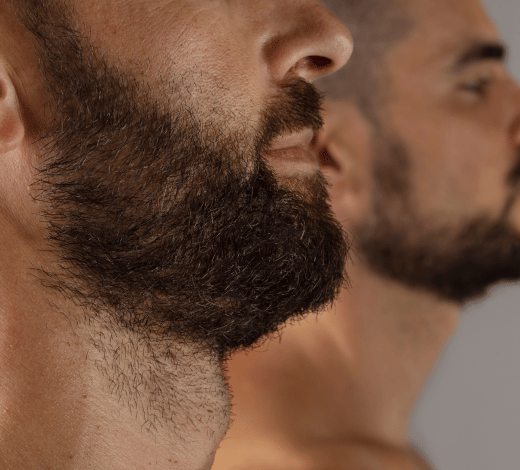
A beard transplant is a hair transplant for the face. Your doctor takes follicles one by one, most often from the back of the scalp, and implants them where facial hair is sparse. Grafts are usually single hairs, sometimes doubles, because facial hair grows as individual strands.

| Procedure time | Typically 4–7 hours, depending on graft number |
|---|---|
| Anaesthesia | Local anaesthesia |
| Hospital stay | None — same-day return to your hotel |
| Recommended stay in Istanbul | 3 days |
| Back to desk work | Usually 5–7 days |
| Shaving the treated area | Avoid for about 10–14 days; trimming as your doctor advises |
| Exercise | Light walking straight away; gym and sweating after about 1–2 weeks |
| Shedding | Weeks 2–6 |
| New growth | From about month 3 |
| Final result | 9–12 months |
| Results last | Transplanted follicles usually keep growing long term |
| Stitches | None |
Results from Vivid Clinic patients, shared with consent. Individual results vary. 6 cases shown; each caption states what the photos show and what is not recorded.
Before: Pre-operative beard-line markings with sparse growth. After: Full, dense beard along the marked line.
Vivid Clinic patient, shared with consent. Individual results vary; this is one case, not a promise of your outcome.
Before: Thin, patchy beard growth. After: Fuller, connected beard along the jaw and cheek.
Vivid Clinic patient, shared with consent. Individual results vary; this is one case, not a promise of your outcome.
Before: Sparse cheek and chin coverage. After: Full, even beard coverage.
Vivid Clinic patient, shared with consent. Individual results vary; this is one case, not a promise of your outcome.
Before: Pre-operative beard design markings on a sparse beard. After: Full, defined beard.
Vivid Clinic patient, shared with consent. Individual results vary; this is one case, not a promise of your outcome.
Before: Sparse beard. After: Fuller beard (cap worn in after photo).
Vivid Clinic patient, shared with consent. Individual results vary; this is one case, not a promise of your outcome.
Before: Sparse beard. After: Fuller beard (cap worn in after photo).
Vivid Clinic patient, shared with consent. Individual results vary; this is one case, not a promise of your outcome.
Photos are unedited clinic composites; before and after photos may differ in lighting, clothing and pose. Consent is on file at the clinic.
If you are also losing scalp hair, your doctor plans both areas together so the donor supply is used wisely.
A beard transplant can focus on one zone or several. Your doctor designs each zone so the new hair blends with your existing beard.
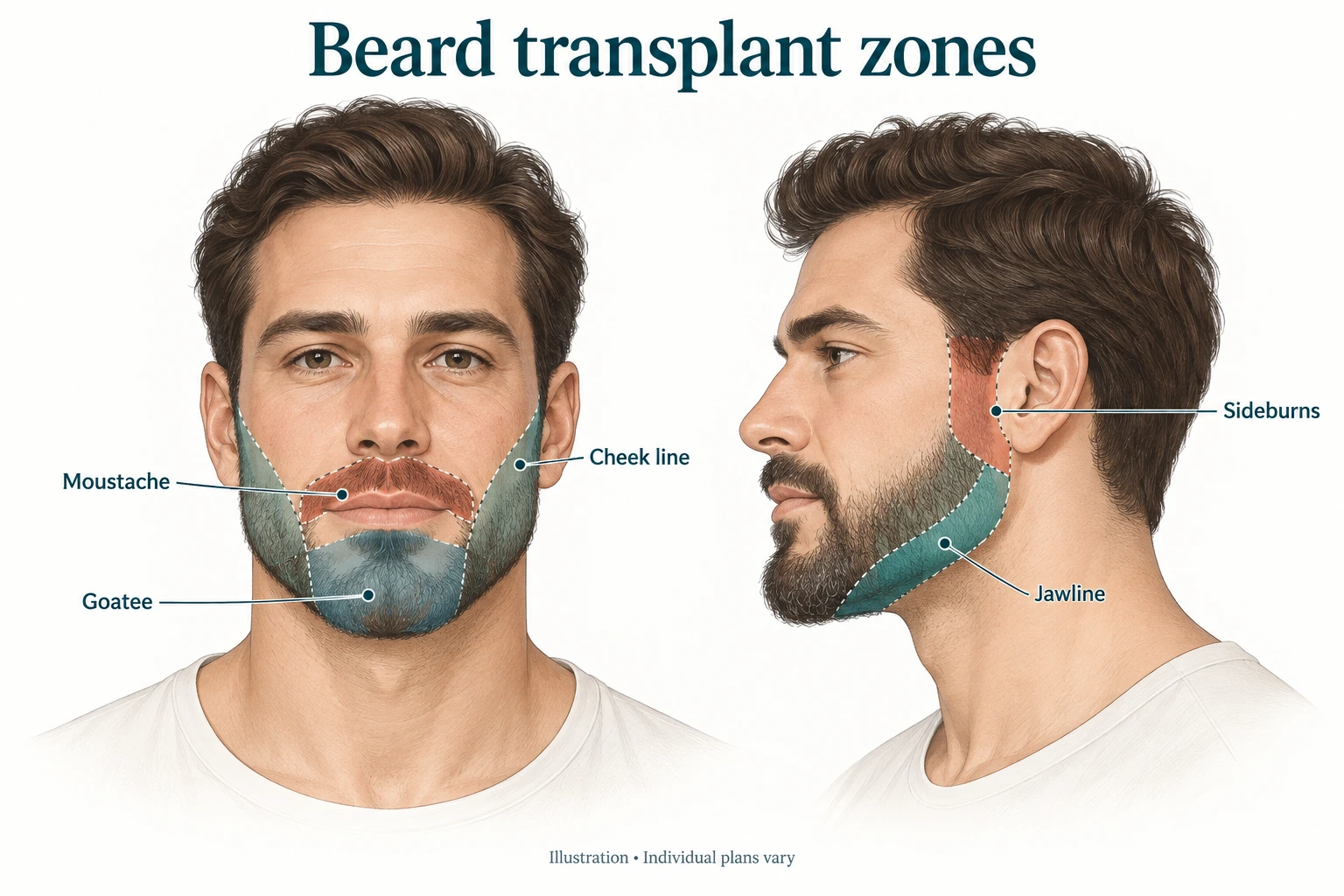
Filling patches on the cheeks and jaw, and defining the upper cheek border so the beard looks deliberate rather than uneven.
Connecting a moustache to the chin or strengthening a thin goatee — a popular choice when the rest of the beard is fairly full.
Joining sideburns to the beard, a common gap that makes a beard look disconnected.
Scars: carefully placed grafts can camouflage scars where hair has stopped growing, depending on the scar’s blood supply. Graft ranges are general guidance only. For eyebrows, see our eyebrow transplant in Turkey guide.
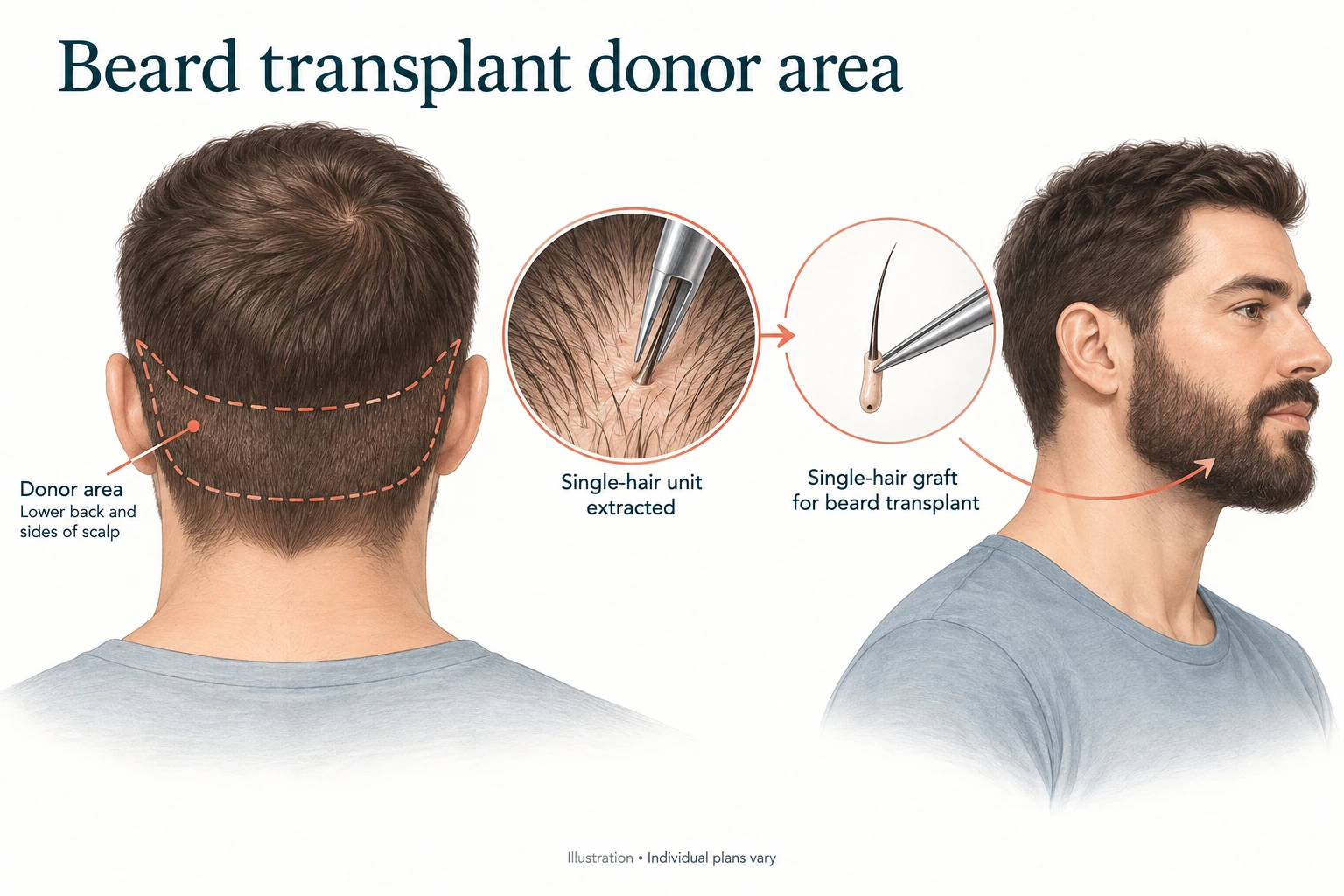
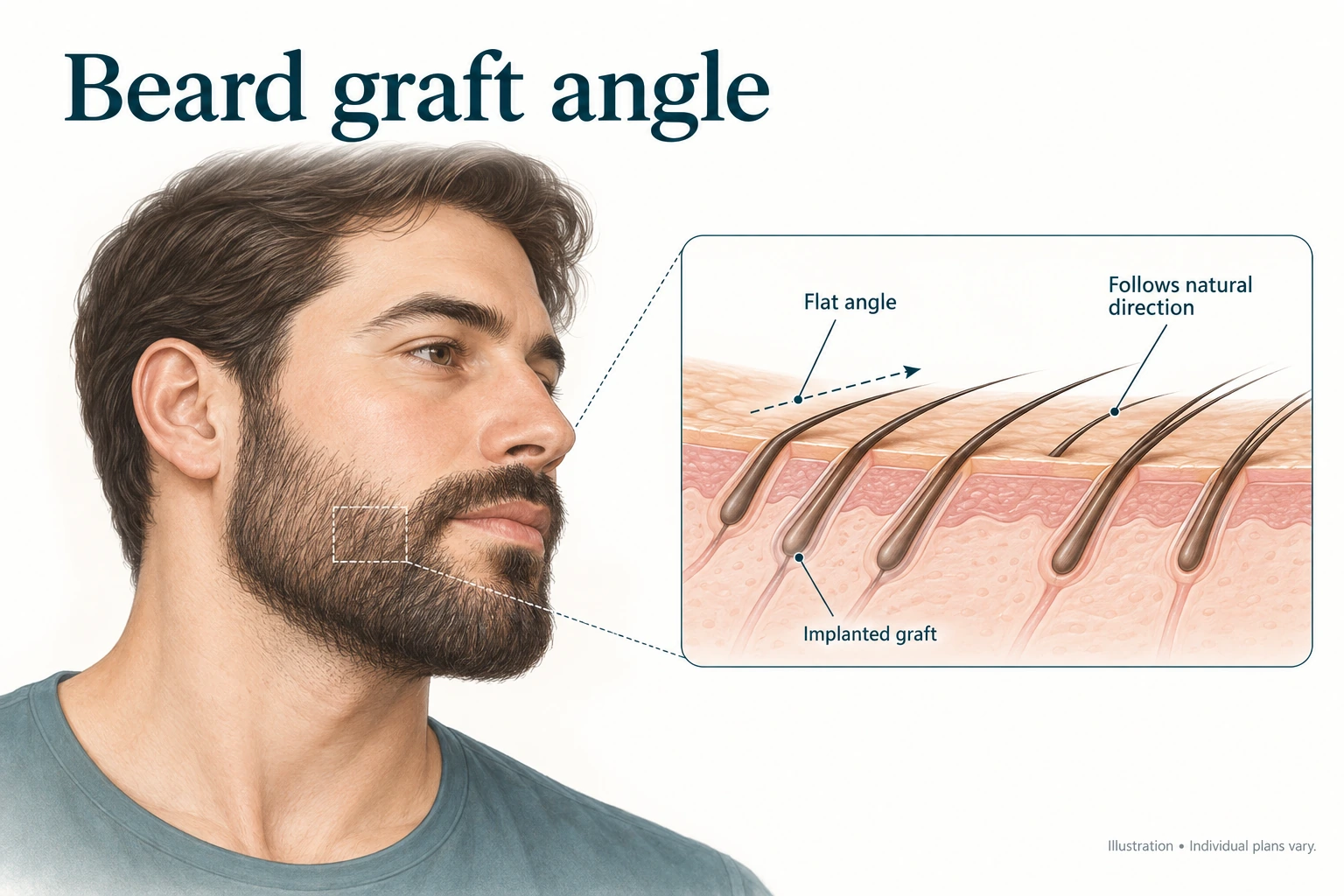
Beard hair lies very flat and changes direction: downward on the cheeks, outward on the moustache and in a swirl under the jaw. Each graft must follow that pattern, so design takes as much planning as graft counting. Fine donor hairs usually come from the lower back and sides of the scalp.
Shape, borders and density zones drawn with you at a mirror.
Donor area trimmed short; beard trimmed as advised.
Local anaesthesia numbs both the donor area and the face.
Single and double grafts removed with a fine FUE punch.
Grafts placed flat with fine blades or a DHI pen.
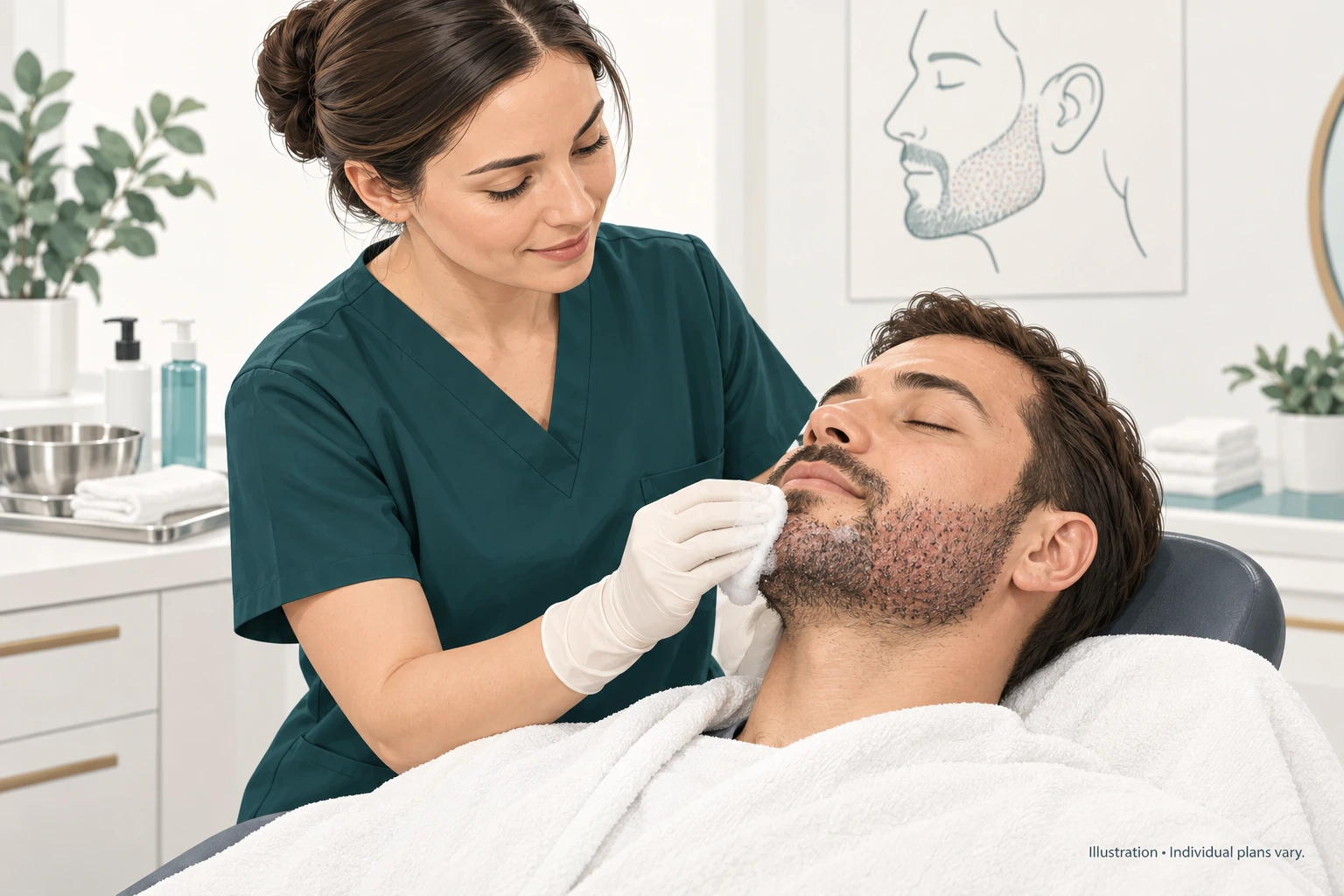
Cleansing routine, medication and a follow-up plan.
Day 1
Your patient coordinator meets you at Istanbul airport and a VIP transfer takes you to your hotel. You receive your schedule and a direct contact number.
Day 2
Meet the doctor, agree the beard design and graft plan, and have routine blood tests. The procedure takes several hours with breaks, with an interpreter or coordinator beside you. Back to the hotel in the evening.
Day 3
The team checks the grafts and donor area, carries out the first gentle cleanse and shows you how to continue at home. Most patients fly home the same day, with a 24/7 support line.
Your beard from the front and both sides, plus the back of your head. Our medical team suggests a beard design, estimates your graft range and builds your Istanbul plan. Free, no obligation.
Most visible signs settle within two weeks. Our hair transplant aftercare guide covers washing and activity advice that also applies to the donor area.
On day 3 the team gently cleanses the treated area and shows you how to repeat it safely at home.
Transplanted hairs usually keep growing long term and can be shaved, trimmed and styled like the rest of your beard. They may differ slightly in texture, which is one reason your doctor selects fine donor hairs. Results depend on graft survival, skin quality and aftercare.
In short: both use the same extraction method, but beard work uses smaller grafts, flatter angles and usually fewer grafts. If you are planning both, your doctor balances the donor supply between them.
| Beard transplant | Scalp hair transplant | |
|---|---|---|
| Extraction | FUE punch, usually from the back of the scalp | Same method |
| Grafts | Mainly single hairs, sometimes doubles | Single hairs at the hairline, two- and three-hair grafts behind |
| Implantation angle | Very flat, following each facial zone | Less flat than beard work |
| Graft number | Usually fewer | Usually more |
| Procedure time | Often shorter | Often longer |
| First few days | Face swells a little more visibly | Swelling is usually less visible |
Implantation uses fine blades (FUE) or a DHI implanter pen. See our FUE hair transplant Turkey page and DHI hair transplant in Istanbul page. For scalp hair loss, see our hair transplant Istanbul guide.
A beard transplant in Turkey is often more affordable than in the UK, US or Western Europe. We give a personal quote only after the medical team reviews your photos — the consultation is free.
Typically covers:
Your price depends on
Choose the area you would like to treat. These are general ranges only; your doctor confirms your number after reviewing your photos.
The hair transplant specialists on the Vivid Clinic team, currently at Avrasya Hospital in Istanbul.
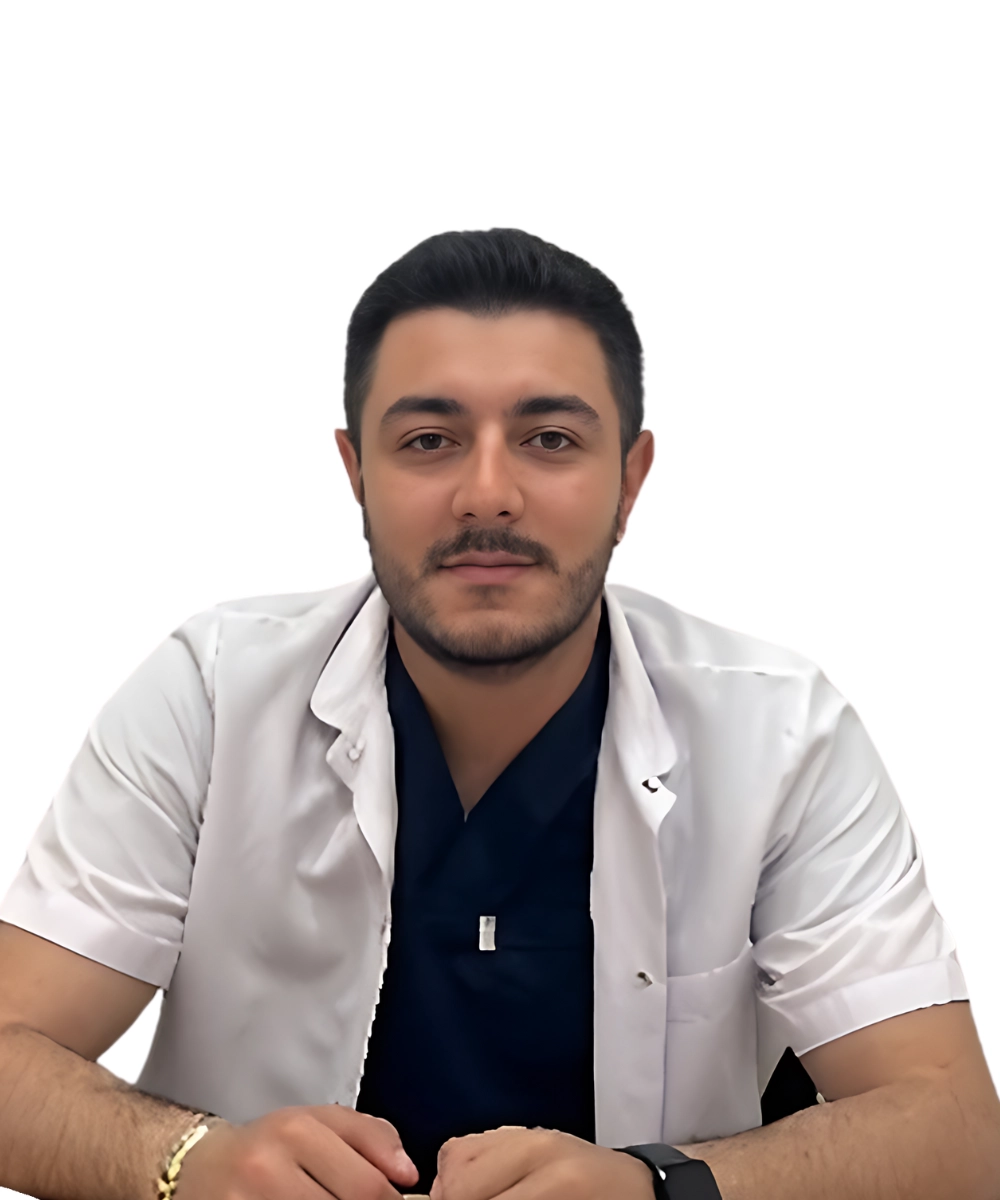
Hair Transplant Specialist
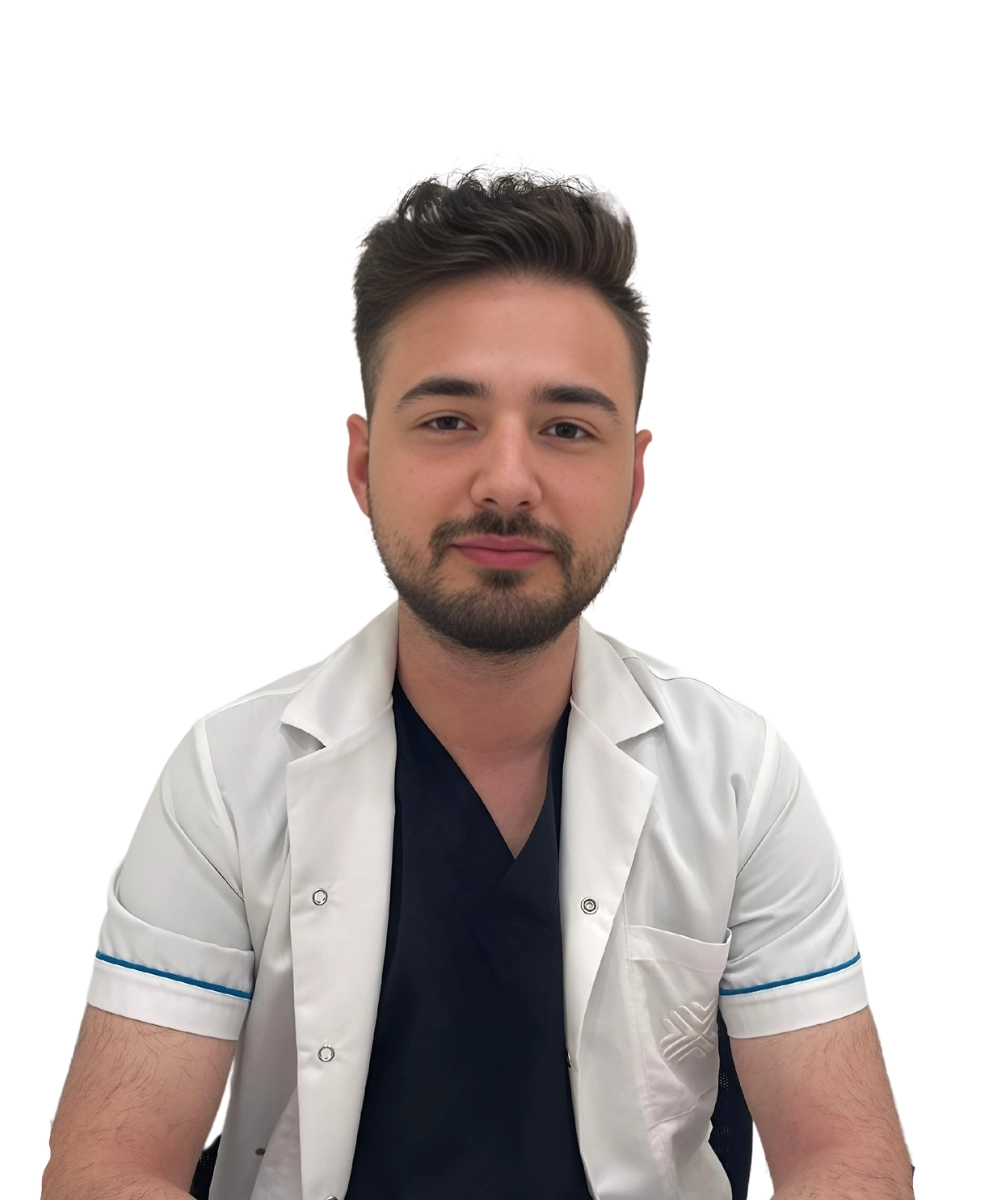
Hair Transplant Specialist
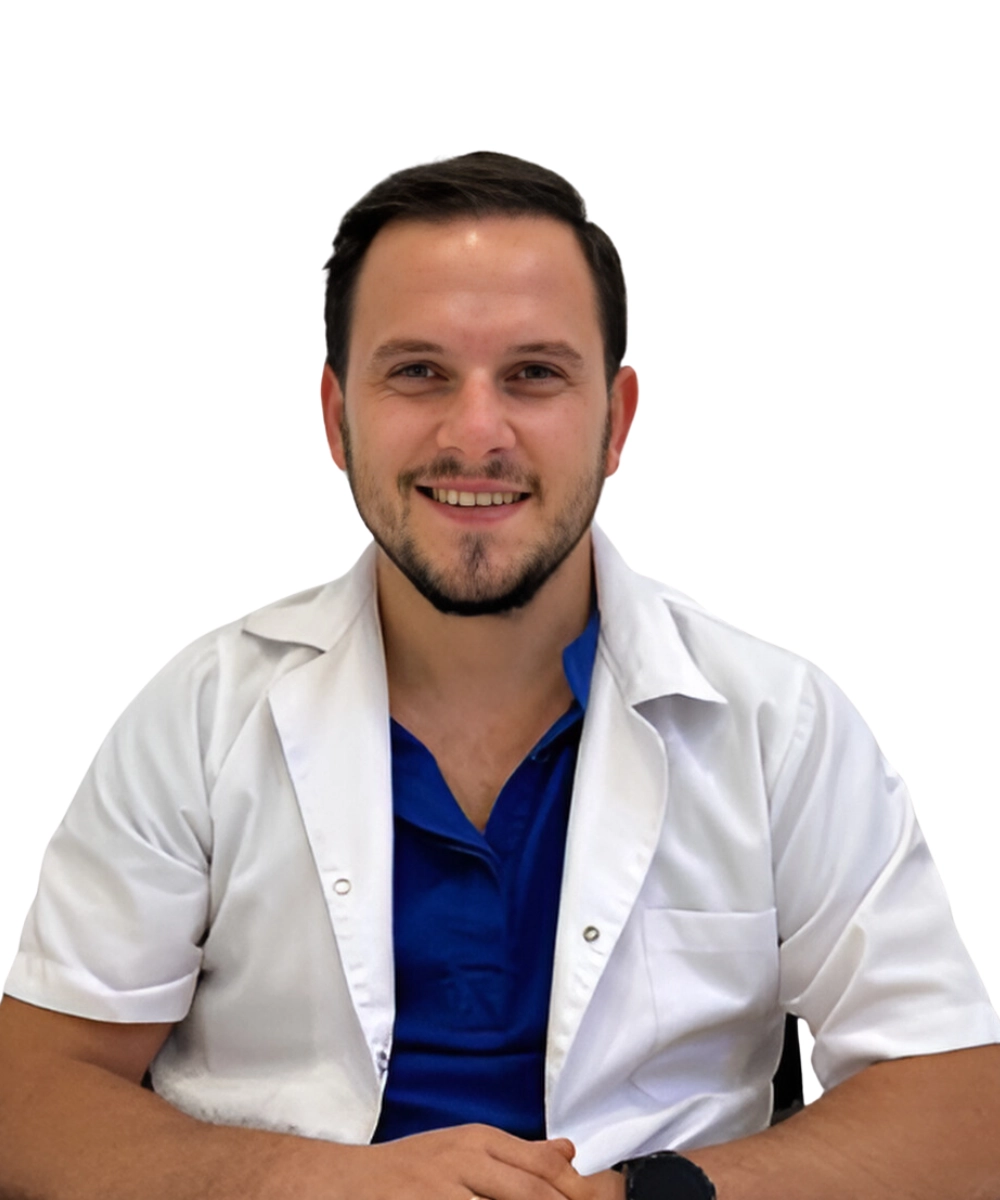
Hair Transplant Specialist
The International Society of Hair Restoration Surgery provides independent information on facial hair restoration.
A full beard usually needs around 2,000–3,500 grafts in a beard transplant Istanbul plan. Smaller zones need far fewer: roughly 300–800 for a moustache, 600–1,000 for a goatee or 200–400 per sideburn. The right number depends on gap size, the density you want and your donor area. Send photos of your face and the back of your head for a personal estimate.
Most doctors advise not shaving the treated area for about 10–14 days after a beard transplant Istanbul procedure. By then crusts have usually cleared and the grafts are secure. After that, start with scissors or an electric trimmer before returning to a razor. The transplanted hairs may shed in the following weeks, which is normal, and regrow from about the third month.
Yes. A beard transplant Istanbul procedure can focus on one or two zones, such as the moustache and sideburns, rather than the full beard. Smaller procedures need fewer grafts and usually take less time. Your doctor designs the new hair to blend with your existing beard. That way, direction, density and borders look consistent when the beard grows in.
For a beard transplant Istanbul procedure, grafts usually come from the lower back and sides of the scalp. Hairs there tend to be finer and closer to beard texture. Mainly single-hair units are chosen, and hair from under the chin can sometimes be used. The small round extraction marks heal within days and are hidden once your scalp hair grows back to a short length.
After a beard transplant Istanbul procedure, you will have tiny red dots and small crusts on your face for roughly 7–10 days. Some swelling is common in the first few days. These signs usually fade without lasting marks, and the growing beard covers the area. Following aftercare advice, including avoiding sun and heavy sweating early on, helps the skin settle smoothly.
A beard transplant Istanbul procedure typically takes 4–7 hours, depending on the number of grafts, with breaks along the way. It is done under local anaesthesia, so there is no hospital stay. An interpreter or coordinator is with you throughout, and you return to your hotel in the evening. The next day, the team checks your grafts and carries out the first gentle cleanse.
After a beard transplant Istanbul procedure, the transplanted hairs usually shed between weeks 2 and 6, which is expected. New beard hairs start to grow from about the third month, and final density and shape usually show at 9–12 months. The new hairs can then be shaved, trimmed and styled like the rest of your beard, though texture may differ slightly.
Often, yes, but it needs careful planning. A beard transplant Istanbul procedure and a scalp transplant draw on the same donor area, so your doctor balances the supply between them. Patients with very limited donor hair, for example after previous scalp transplants, need a careful assessment first. Send photos of both areas for a combined plan, or see our hair transplant Istanbul guide.
Send a few clear photos of your beard from the front and both sides, plus the back of your head. It is free and there is no obligation.
Free · No obligation · Reply within 24 h
Open a summary of this guide in your AI assistant.
 ChatGPT