Classic FUE
Recipient channels are opened with a steel micro-blade or needle, creating fine slits for the grafts.
- Channel blade
- Steel blade or needle
- Channel shape
- Fine slit
- Recovery
- Similar
Hair follicles are taken one at a time from the back of the scalp and placed into tiny channels in thinning areas. It suits pattern hair loss with a good donor area. The trip takes 3 days, and most patients return to desk work within a week.
Free medical review within 24 hours · No obligation · ★ 5.0 from 157 Google reviews
Editorially reviewed by the Vivid Clinic Surgical Board · Last reviewed September 2026
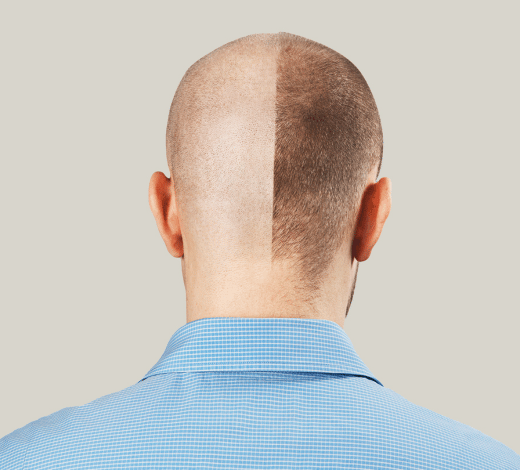
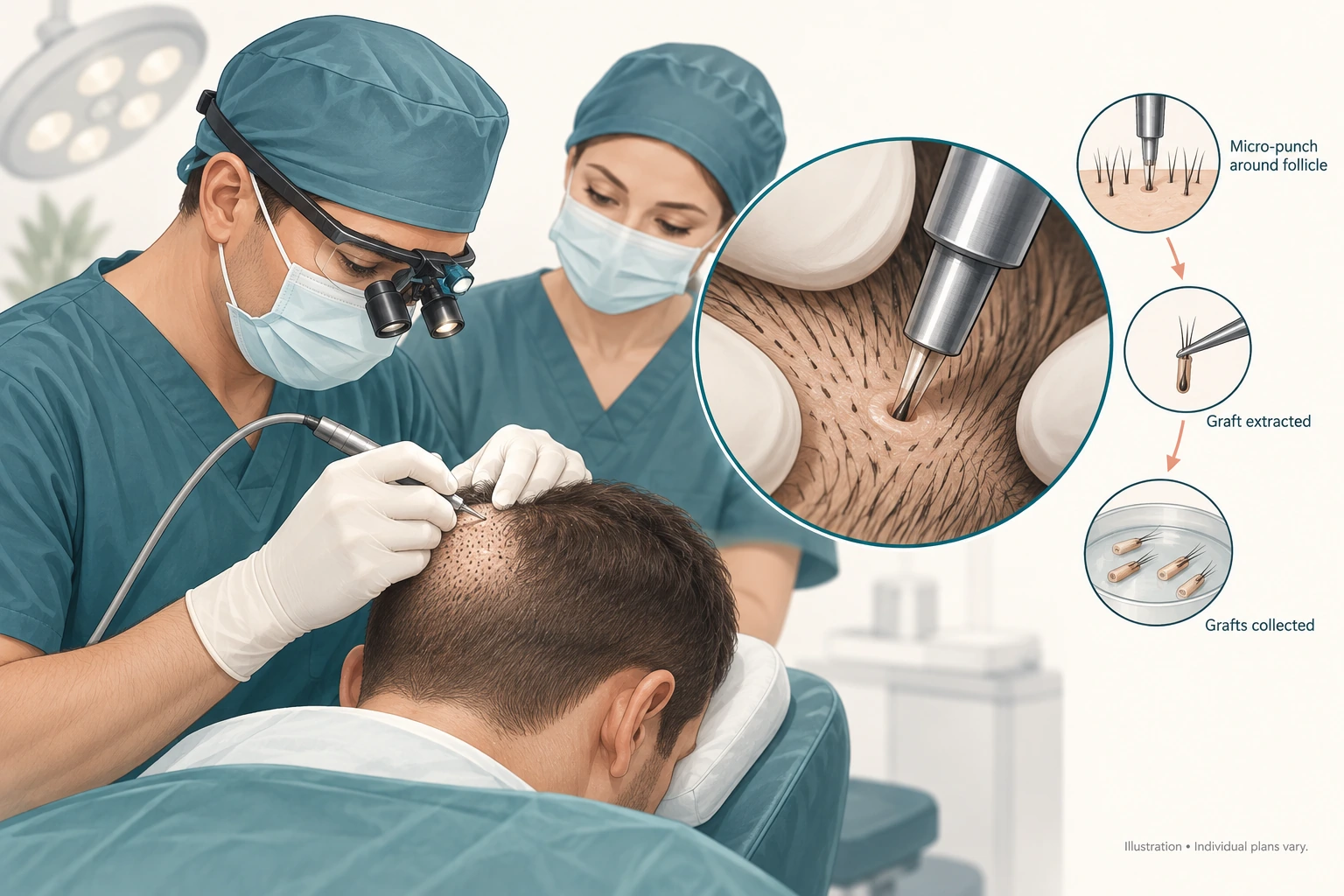
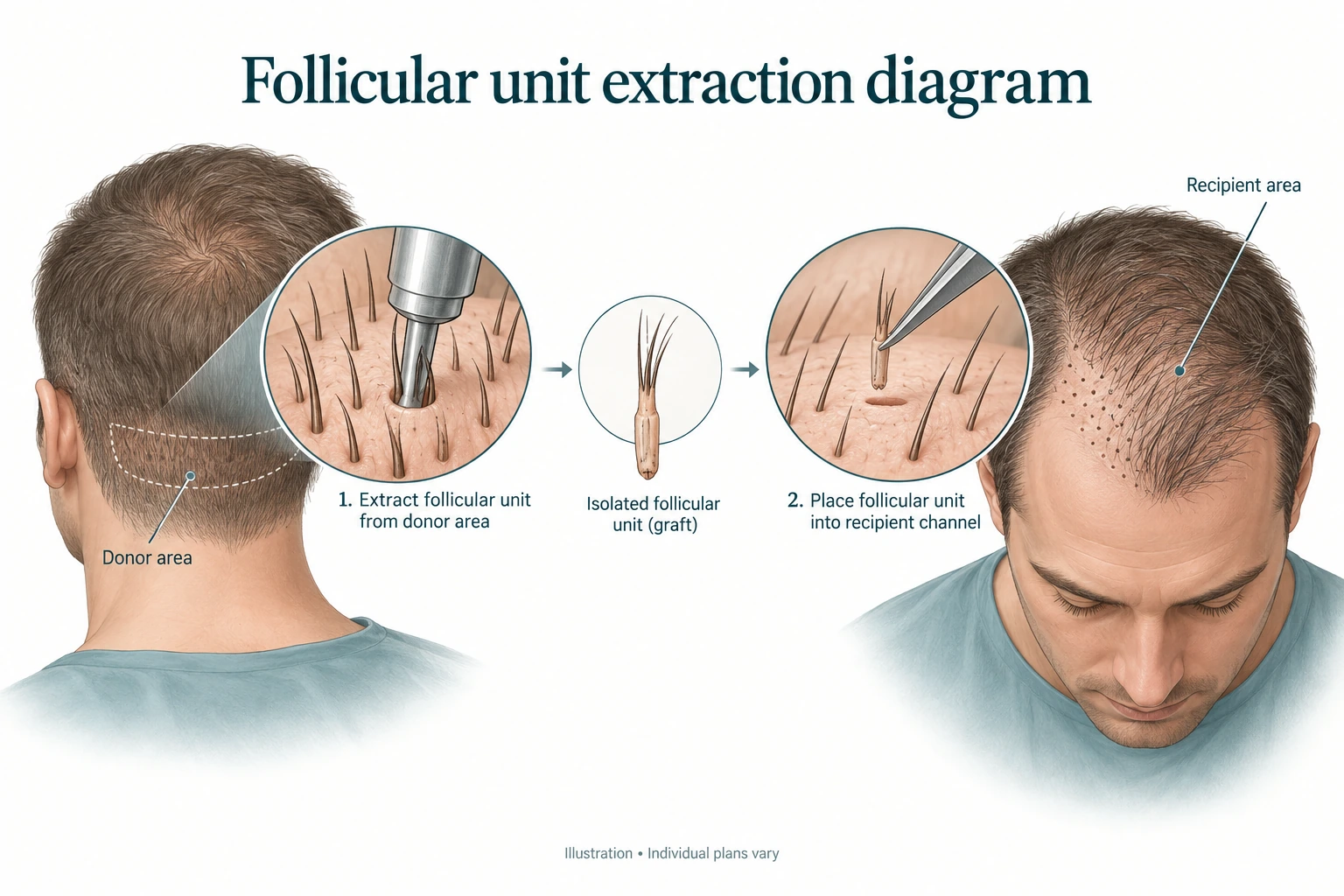
FUE stands for follicular unit extraction. Natural groups of one to four hairs are removed one at a time from the donor area with a micro-punch, typically 0.7–1.0 mm wide. They are then placed into tiny channels opened in the thinning area. For more background, read our follicular unit extraction guide.
| Procedure time | Typically 6–8 hours in one day |
|---|---|
| Anaesthesia | Local anaesthesia, with light sedation if your doctor recommends it |
| Hospital stay | None — same-day return to your hotel |
| Recommended stay in Istanbul | 3 days |
| Shaving | Donor area always; recipient area usually shaved short |
| Back to desk work | Usually 5–7 days |
| Exercise | Walking straight away; gym after about 2 weeks; swimming and contact sport after about 4 weeks |
| Shedding | Weeks 2–8 |
| New growth | From months 3–4 |
| Final result | 12–18 months |
| Results last | Transplanted follicles usually keep growing long term |
| Stitches | None — tiny round marks, no linear scar |
Results from Vivid Clinic patients, shared with consent. Individual results vary. 5 cases shown; each caption states what the photos show and what is not recorded.
The public library does not record whether each case was FUE or DHI; the technique is shown as "hair transplant" until the clinic confirms it per case.
Before: Extensive baldness. After: Full, grey-toned coverage.
Vivid Clinic patient, shared with consent. Individual results vary; this is one case, not a promise of your outcome.
Before: Advanced frontal and crown thinning. After: Dense curly coverage over the frontal and crown zones.
Vivid Clinic patient, shared with consent. Individual results vary; this is one case, not a promise of your outcome.
Before: Receded hairline. After: Restored hairline.
Vivid Clinic patient, shared with consent. Individual results vary; this is one case, not a promise of your outcome.
Before: Receded hairline with thinning crown. After: Denser hairline and frontal coverage.
Vivid Clinic patient, shared with consent. Individual results vary; this is one case, not a promise of your outcome.
Before: Thin, receded frontal hair. After: Fuller frontal coverage.
Vivid Clinic patient, shared with consent. Individual results vary; this is one case, not a promise of your outcome.
Photos are unedited clinic composites; before and after photos may differ in lighting, clothing and pose. Consent is on file at the clinic.
Your doctor may discuss finasteride or minoxidil first. Prefer not to shave? DHI may suit you better.
The difference is the blade used to open the recipient channels. Extraction is the same micro-punch in both. Your doctor recommends one for your scalp.
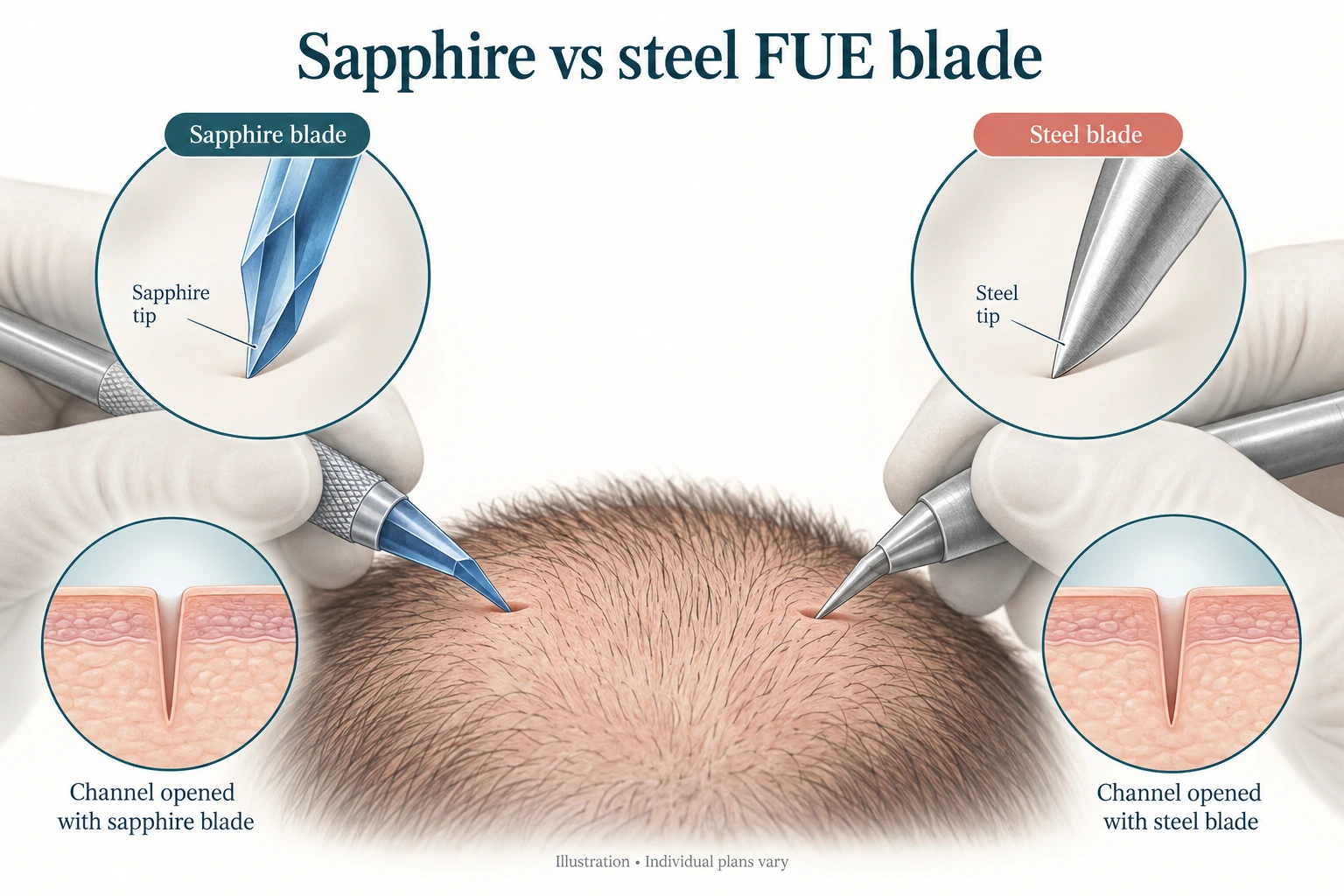
Recipient channels are opened with a steel micro-blade or needle, creating fine slits for the grafts.
A sapphire-tipped micro-blade has a very smooth, sharp edge. This allows small, precise channels and close graft spacing.
Both methods can give natural results in experienced hands. Our sapphire FUE guide explains the blade technology in more detail.
Your doctor measures donor density and balances the density you want today against hair you may lose in future. Single-hair grafts go at the front of the hairline, with multi-hair grafts behind for density.
Scalp examined; hairline and zones drawn with you.
Treated areas shaved short; local anaesthesia.
Grafts removed with a fine punch, spread across the donor zone.
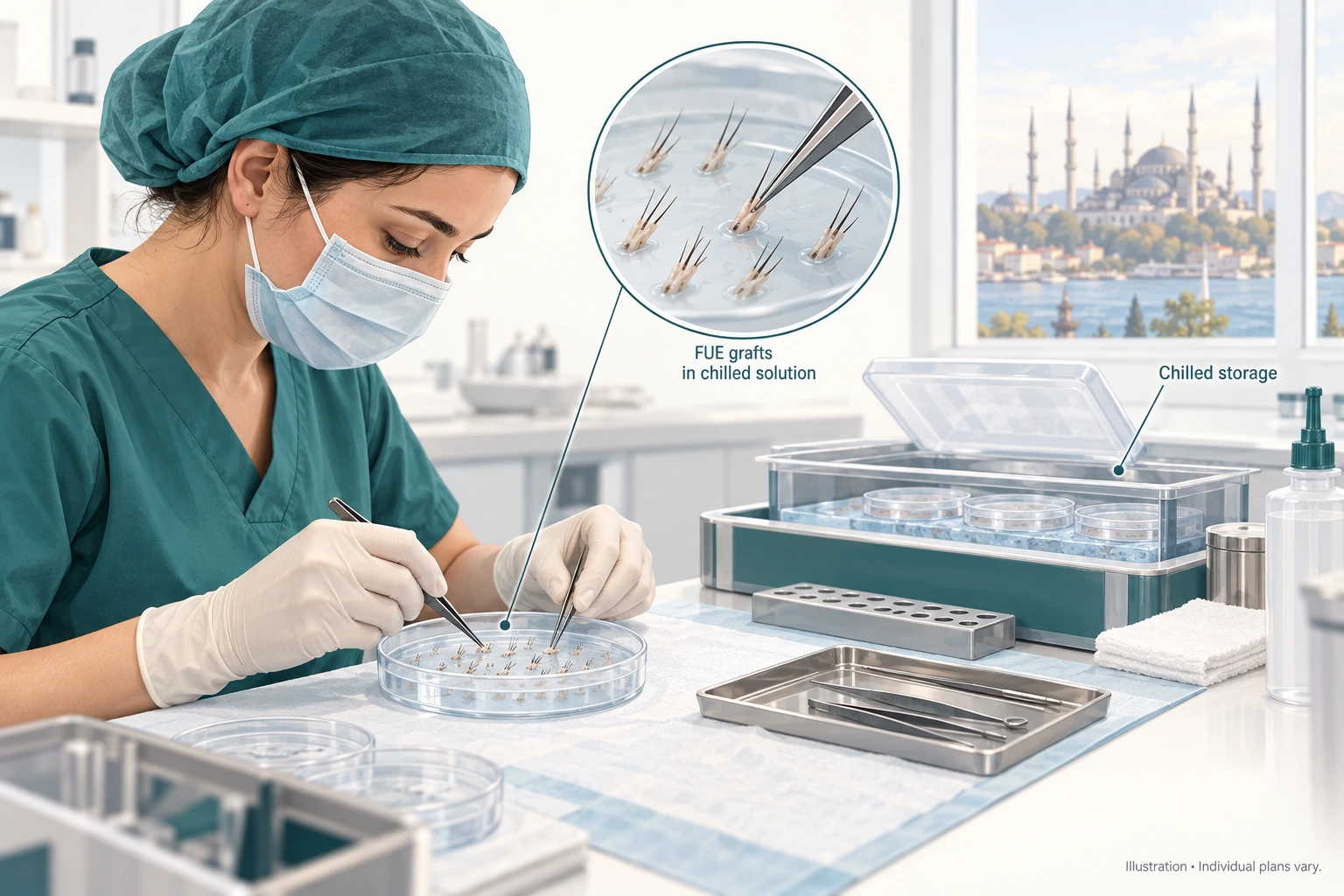
Sorted by hair count and kept in chilled solution.
Tiny channels opened at the planned angle, direction and depth.
Grafts placed with fine forceps; donor area dressed.
Day 1
A patient coordinator meets you at Istanbul airport and a VIP transfer takes you to your hotel. You receive your schedule and a direct contact number.
Day 2
Meet the doctor, finalise your hairline and graft plan, and have routine blood tests. The procedure takes most of the day, with breaks and an interpreter or coordinator available. Back to the hotel in the evening.
Day 3
The team checks the grafts and donor area, removes the dressing and carries out the first wash. Most patients fly home the same day, with the 24/7 support line afterwards.
Front, top, sides and back — our medical team recommends classic or sapphire FUE and builds your Istanbul plan. Free, no obligation.
Most visible signs settle within two weeks. Our hair transplant aftercare guide covers washing, sleeping and activity in detail.
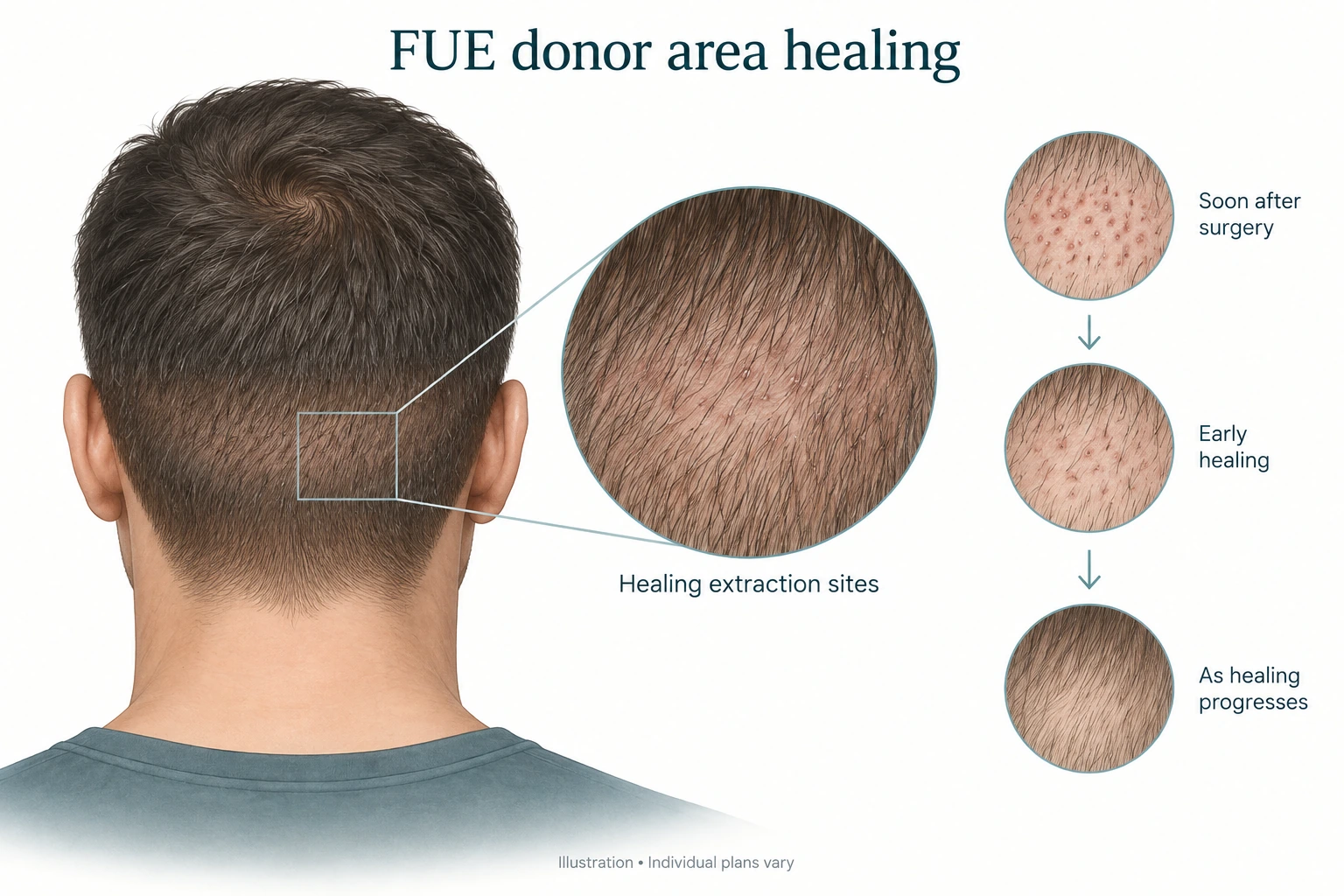
Because each graft is taken individually, the donor area heals as many tiny round marks. They usually heal within days and are hidden once hair grows to a short length.
FUE grafts usually keep growing long term. Your final look depends on graft survival, hair calibre, colour contrast with the skin and how your native hair behaves over time.
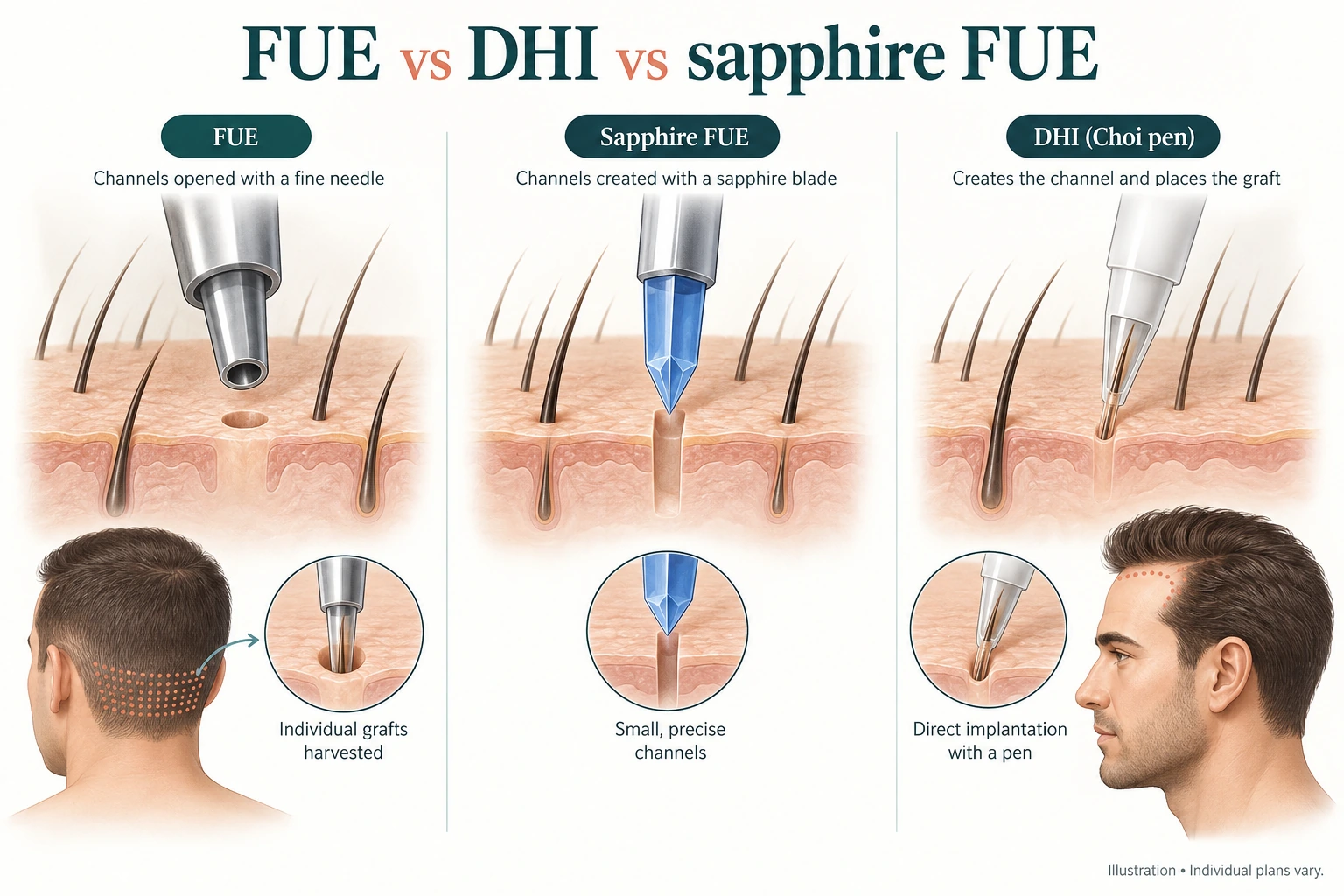
In short: FUE opens the channels first and suits large areas and the crown. DHI places each graft with an implanter pen and suits hairlines and density between existing hair.
| FUE | DHI | |
|---|---|---|
| Extraction | Individual grafts | Individual grafts |
| Implantation | Channels first, then placement | Implanter pen, channel and placement in one step |
| Donor scar | Tiny round marks | Tiny round marks |
| Shaving | Usually full shave | Full, partial or unshaven |
| Well suited to | Large areas, crown | Hairlines, density between existing hair |
FUT (strip surgery) removes a strip of scalp and leaves a linear scar. Comparing FUE with direct implantation? See our DHI hair transplant in Istanbul page, or read how the trip works in our hair transplant Istanbul guide.
An FUE hair transplant in Turkey is often more affordable than in the UK, US or Western Europe. A personal quote is given only after the medical team reviews your photos — the consultation is free.
Typically covers:
Your price depends on
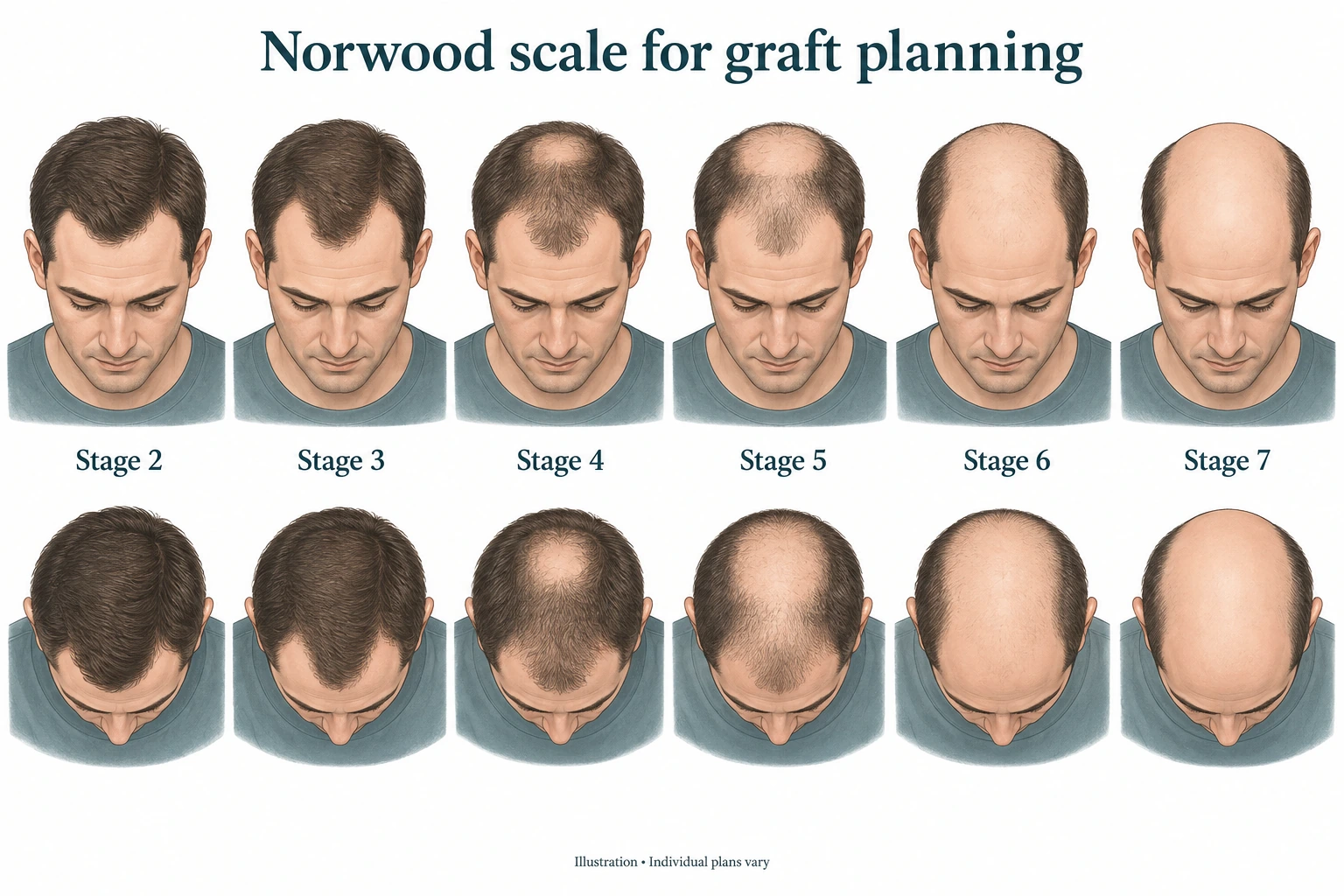
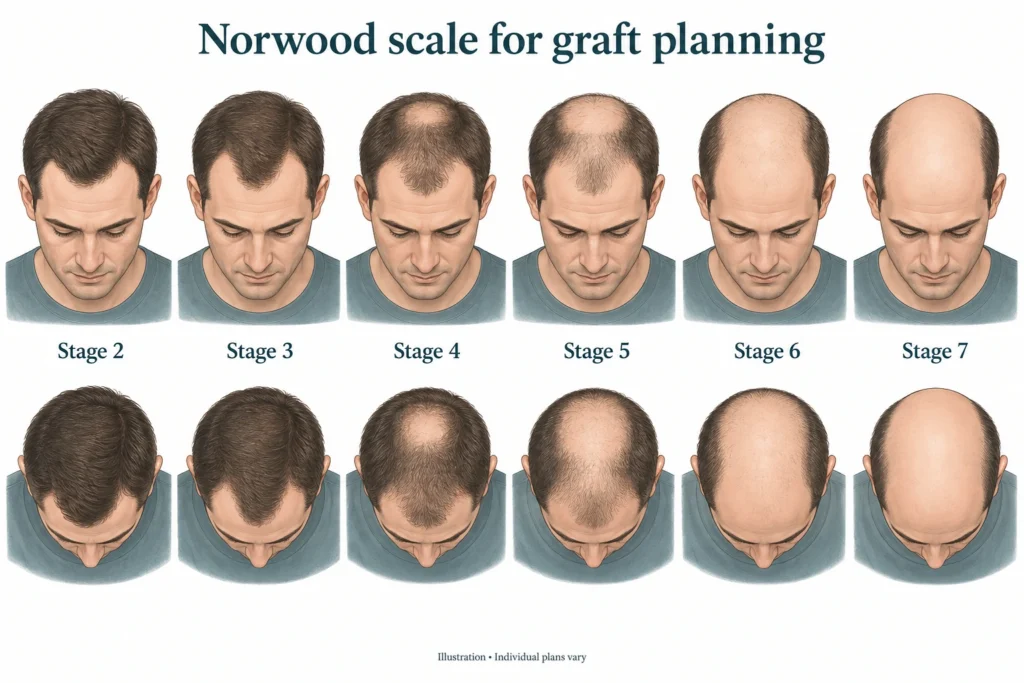
FUE usually suits Norwood stages 2–6. Find the head closest to yours: many patients need 1,500–4,000 grafts. Your donor area, not a target number, sets your safe maximum.
Tap the head that looks most like yours, or choose your Norwood stage below.
The specialists who work on DHI and FUE cases, currently at Avrasya Hospital in Istanbul.
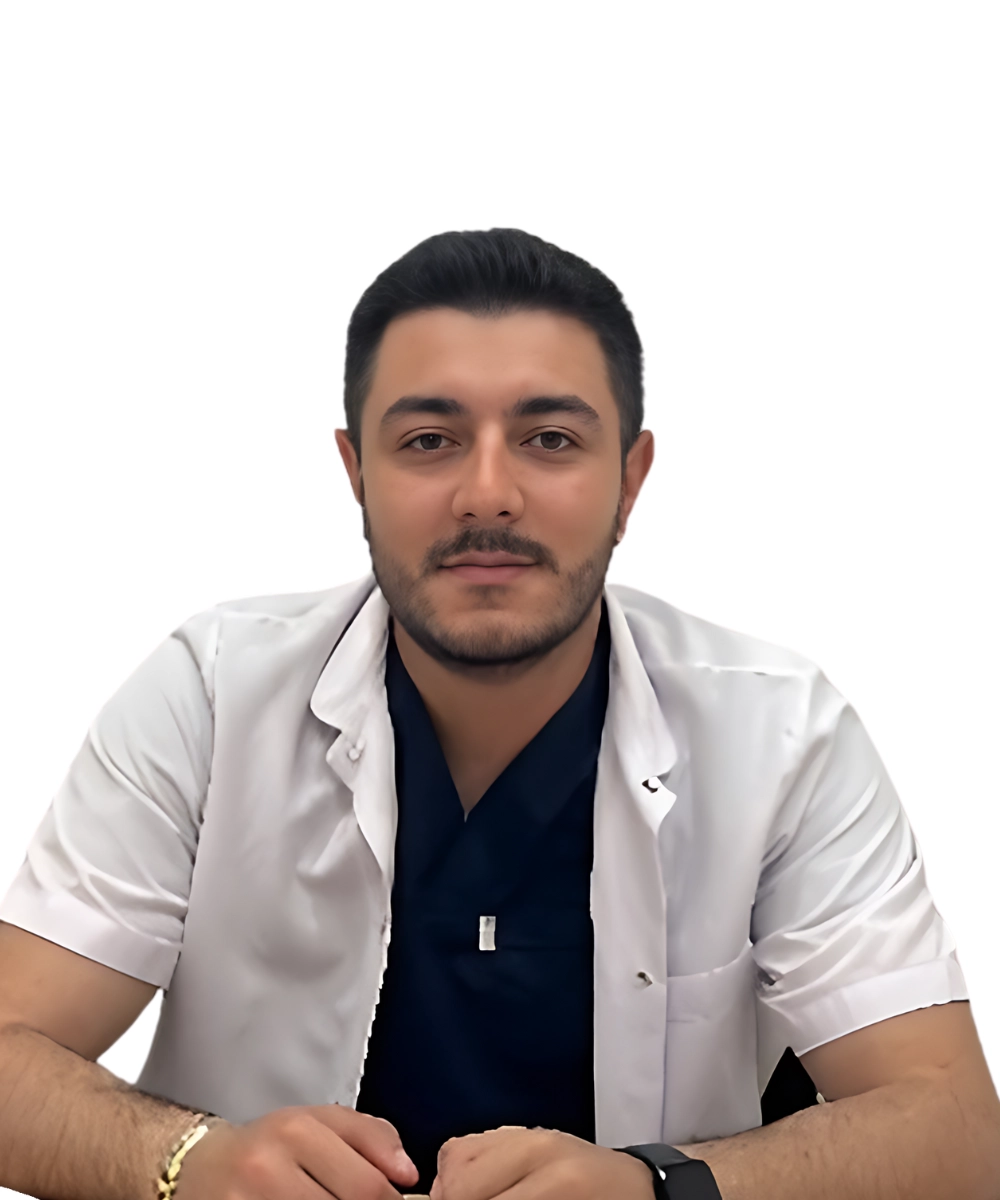
Hair Transplant Specialist
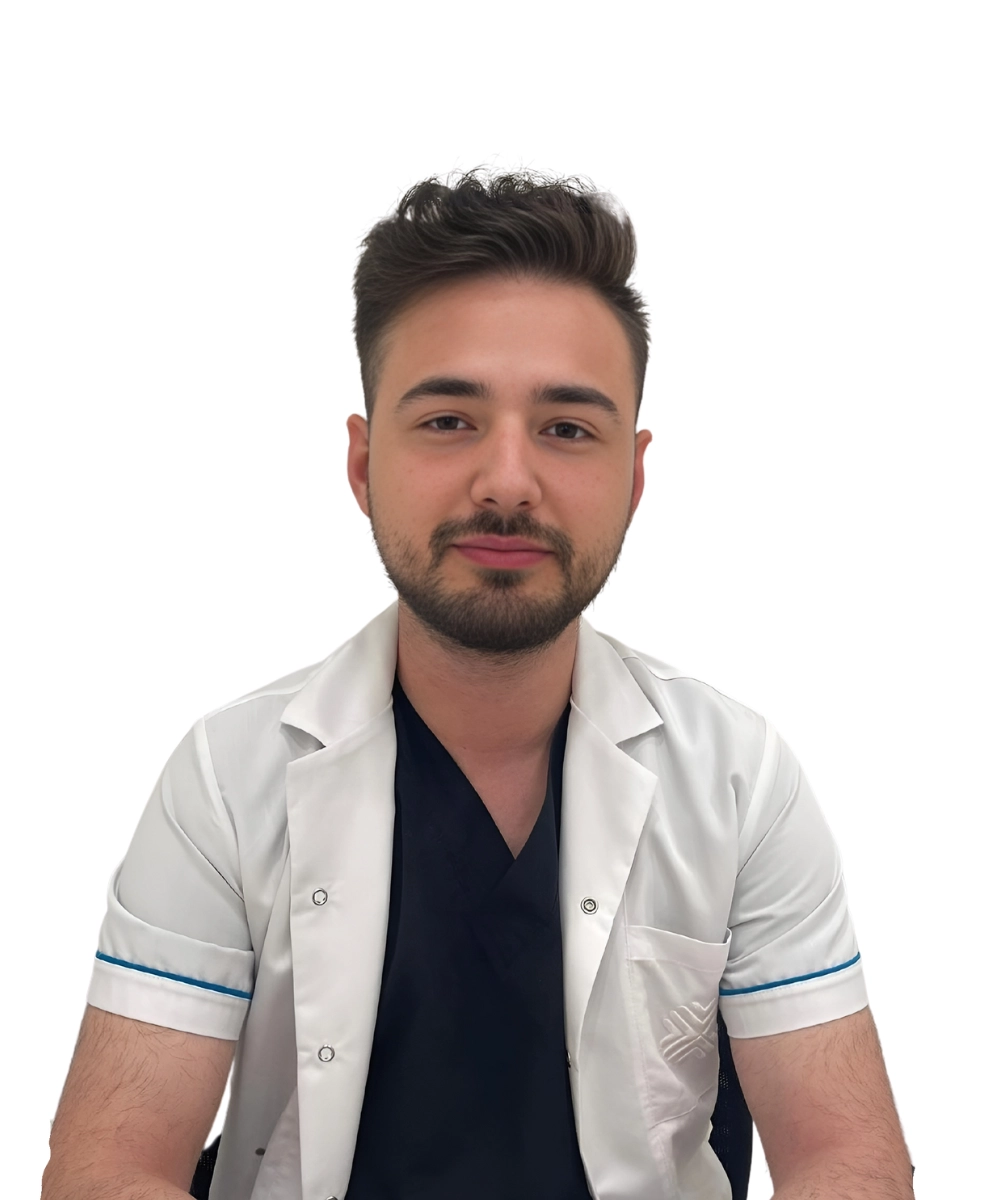
Hair Transplant Specialist
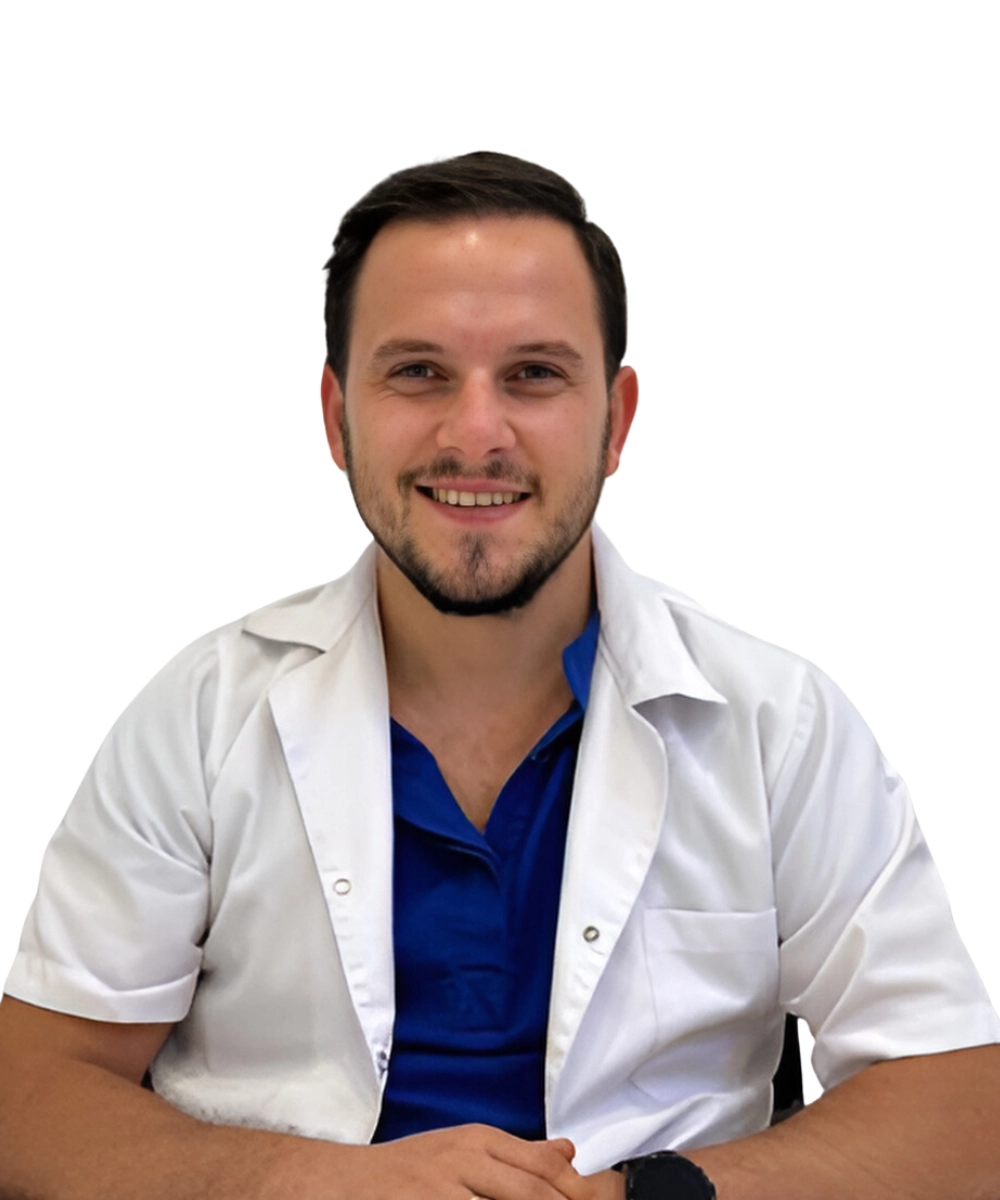
Hair Transplant Specialist
The International Society of Hair Restoration Surgery provides independent information on FUE and donor safety, and the NHS hair transplant page outlines general risks.
Many people receive between 1,500 and 4,000 grafts in one FUE hair transplant Turkey session. The right number is set by your donor area and goals, not by a headline figure. Taking too many grafts can thin the donor zone. The Vivid Clinic medical team estimates your range from photos, then confirms it after examining your scalp in person in Istanbul.
Yes. With an FUE hair transplant Istanbul package at Vivid Clinic, your doctor may recommend sapphire blades to open the recipient channels. This is particularly likely when dense packing is a priority. Extraction is the same as classic FUE. The choice between sapphire and steel blades is made for your scalp, and both are covered in your personal treatment plan.
An FUE hair transplant Turkey procedure does not leave a linear scar, because follicles are removed one at a time. It does leave many tiny round marks, which usually heal within days and are hidden once hair grows to a short length. Very close shaves may show faint dots, so tell your doctor if you plan to keep a skin fade.
For an FUE hair transplant Turkey trip, the donor area is always trimmed short and the recipient area usually is too. The surgeon needs a clear view to open channels at the right angle. If you would prefer not to shave, ask about partial-shaven or unshaven DHI, which may suit smaller areas such as the hairline. Your doctor confirms which option fits.
Before booking FUE Istanbul surgery, send clear photos from the front, top, sides and back. List any medication you take and mention previous hair procedures. Plan three days in Istanbul and avoid hats that press on the grafts for the first few days. The Vivid Clinic team confirms your graft estimate, technique and package inclusions in writing before you travel.
An FUE hair transplant Turkey procedure typically takes six to eight hours in one day, with breaks. It is done under local anaesthesia, with light sedation if your doctor recommends it. There is no hospital stay: you return to your hotel the same evening. The next day the team checks the grafts and donor area and carries out your first wash.
After an FUE hair transplant Istanbul procedure, the transplanted hairs usually shed between weeks two and eight while the follicles rest. Fine new hairs appear from months three to four, and visible density improves around months six to nine. The final result is usually seen at 12–18 months, depending on graft survival, hair calibre and how your native hair behaves.
Yes. An FUE hair transplant Turkey plan can combine classic or sapphire FUE with DHI. For example, FUE may cover larger areas and the crown, while DHI refines the hairline. For very advanced hair loss, your doctor may recommend two sessions or a combination of techniques. The Vivid Clinic medical team suggests the approach after reviewing your photos and donor area.
Send a few clear photos from the front, top, sides and back, and mention any medication or previous hair procedures. It is free and there is no obligation.
Free · No obligation · Reply within 24 h
Open a summary of this guide in your AI assistant.
 ChatGPT