Removal without capsulectomy
The implant is removed and a thin, soft, healthy capsule is left in place. The body usually absorbs or flattens it.
- Often reasonable when
- The capsule is normal
Breast implant removal, also called explant surgery, takes out breast implants and, when indicated, some or all of the scar capsule. It suits capsular contracture, rupture, implant concerns or a wish to be implant-free. Plan about 7 days in Istanbul.
Free medical review within 24 hours · No obligation · ★ 5.0 from 157 Google reviews
Editorially reviewed by the Vivid Clinic Surgical Board · Last reviewed September 2026
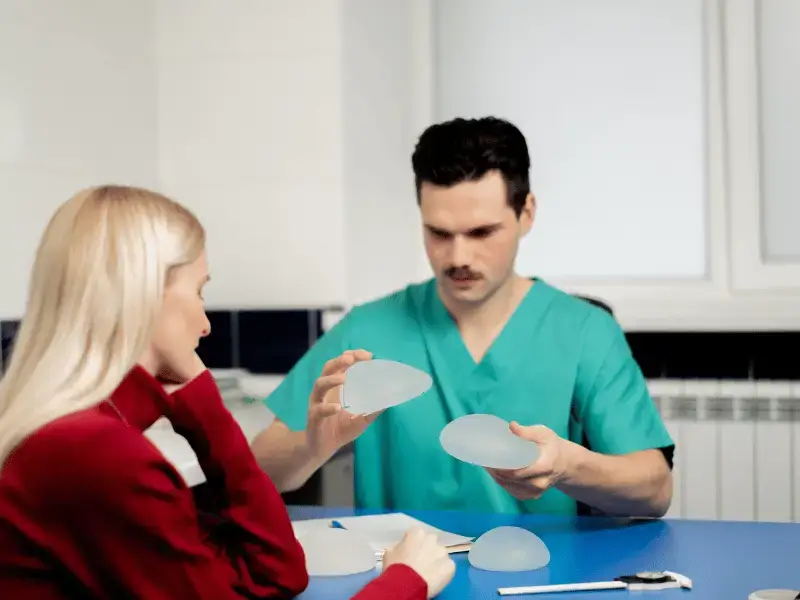
Breast implant removal is an operation to take out one or both implants. Around every implant the body forms a thin layer of scar tissue called the capsule. Your surgeon may leave it, remove part of it or remove it completely. If you want new implants rather than none, see our breast augmentation page.

| Procedure time | Typically 1–3 hours, longer with a lift or total capsulectomy |
|---|---|
| Anaesthesia | General anaesthesia |
| Hospital stay | 1 night |
| Recommended stay in Istanbul | About 7 days |
| Drains | Sometimes used after capsulectomy; removed before you fly |
| Back to desk work | 1–2 weeks |
| Exercise | Full exercise after about 4–6 weeks |
| Final shape | Breasts settle over 3–6 months; skin may retract further up to a year |
| Stitches | Usually dissolvable; wound check before flying |
| Capsule tissue | Can be sent for pathology |
Please bring your implant card, previous operation notes and any recent ultrasound or MRI. If you have no recent imaging, your surgeon may request it before surgery.
The capsule plan is one of the most important decisions in breast implant removal. These terms follow a 2024 consensus statement supported by the American Society of Plastic Surgeons. Your surgeon recommends the least extensive option that addresses your problem safely.

The implant is removed and a thin, soft, healthy capsule is left in place. The body usually absorbs or flattens it.
Part of the capsule is removed, such as a thickened or calcified section. Areas stuck to the ribs or chest wall are left to reduce risk.
The whole capsule is removed, not necessarily in one piece. It usually takes longer and may need drains.
A total intact capsulectomy removes the implant and capsule together as one unit. Strict en bloc capsulectomy also takes a margin of surrounding tissue; its only clear indication is suspected or confirmed implant-associated cancer.
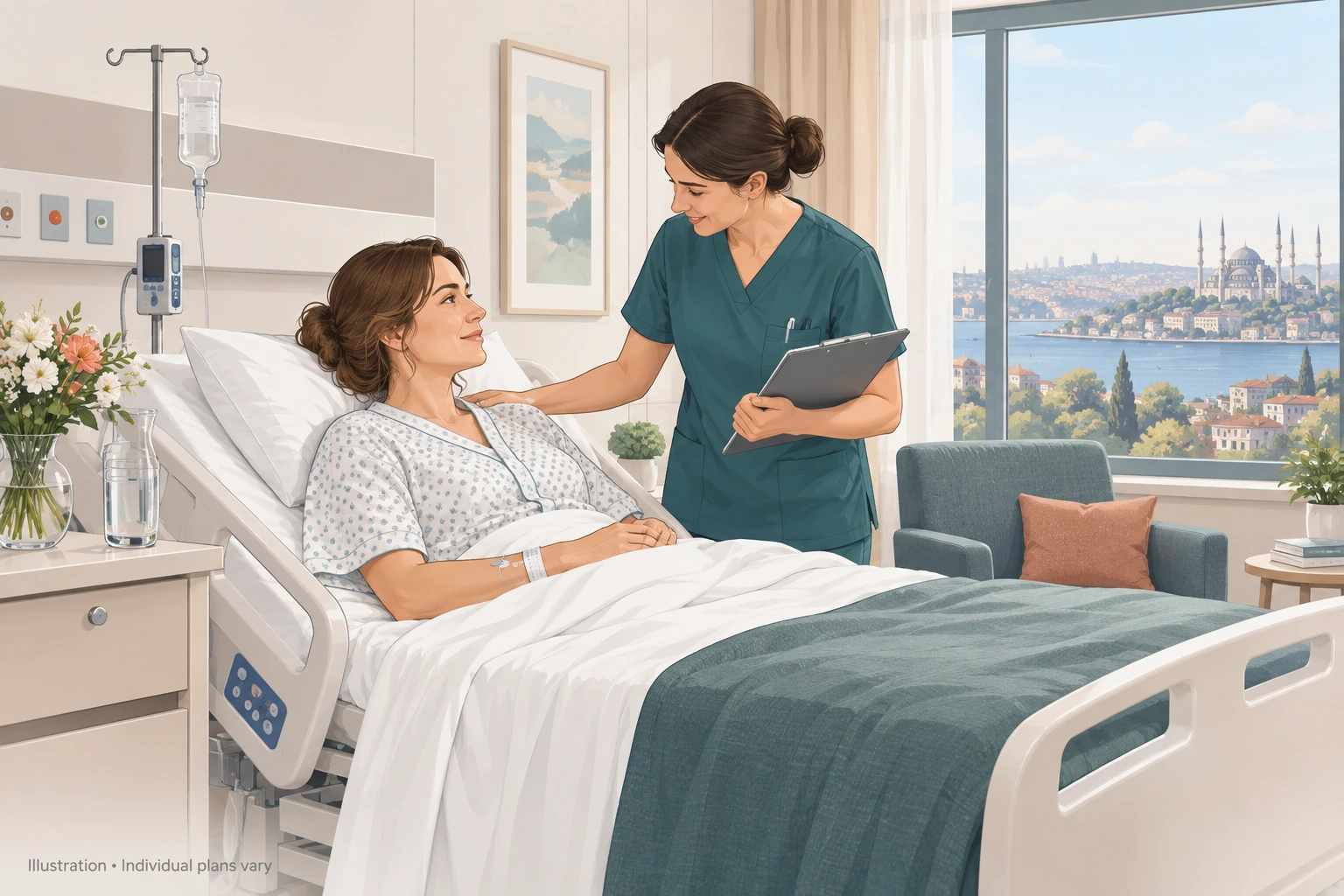
Explant surgery takes place under general anaesthesia in an accredited partner hospital in Istanbul. Access is usually through the previous fold incision. Capsule tissue can be sent for pathology.
Examination, imaging and implant records reviewed with your surgeon.
Incision and any lift lines marked while you stand.
General anaesthesia in an accredited partner hospital.
Usually the previous fold incision, lengthened for total capsulectomy.
Implant and agreed capsule removed; tissue can go to pathology.
Lift or fat transfer if planned; stitches, support bra, drains if needed.
Your exact schedule is confirmed with your plan. A combined lift may need a day or two longer.
Day 1
A VIP transfer takes you from the airport to your hotel. Your patient coordinator or interpreter meets you.
Day 2
Examination, imaging review, blood tests and anaesthetic assessment, then surgery. You stay one night in hospital and walk that evening with help.
Days 3–5
A surgeon check, then back to your hotel. Dressings are checked; drains, if used, are usually removed within a few days.
Days 6–7
A fit-to-fly assessment and written aftercare, then an airport transfer. The 24/7 support line and remote follow-up continue at home.
Photos, your implant card and any recent scan reports help a plastic surgeon plan the capsule and any reshaping. Free, confidential and without obligation.
Soreness is usually less than after the original augmentation if the implant sat above the muscle. Our article on breast augmentation surgery complications explains capsular contracture and rupture.
Results depend on implant size, how long the implants were in place, your skin quality and your breast tissue. Some people are pleased with a smaller, softer natural shape.
Others notice flattening, loose skin or rippling of the skin in the early months. Photos in our before-and-after gallery show possibilities, not promises.
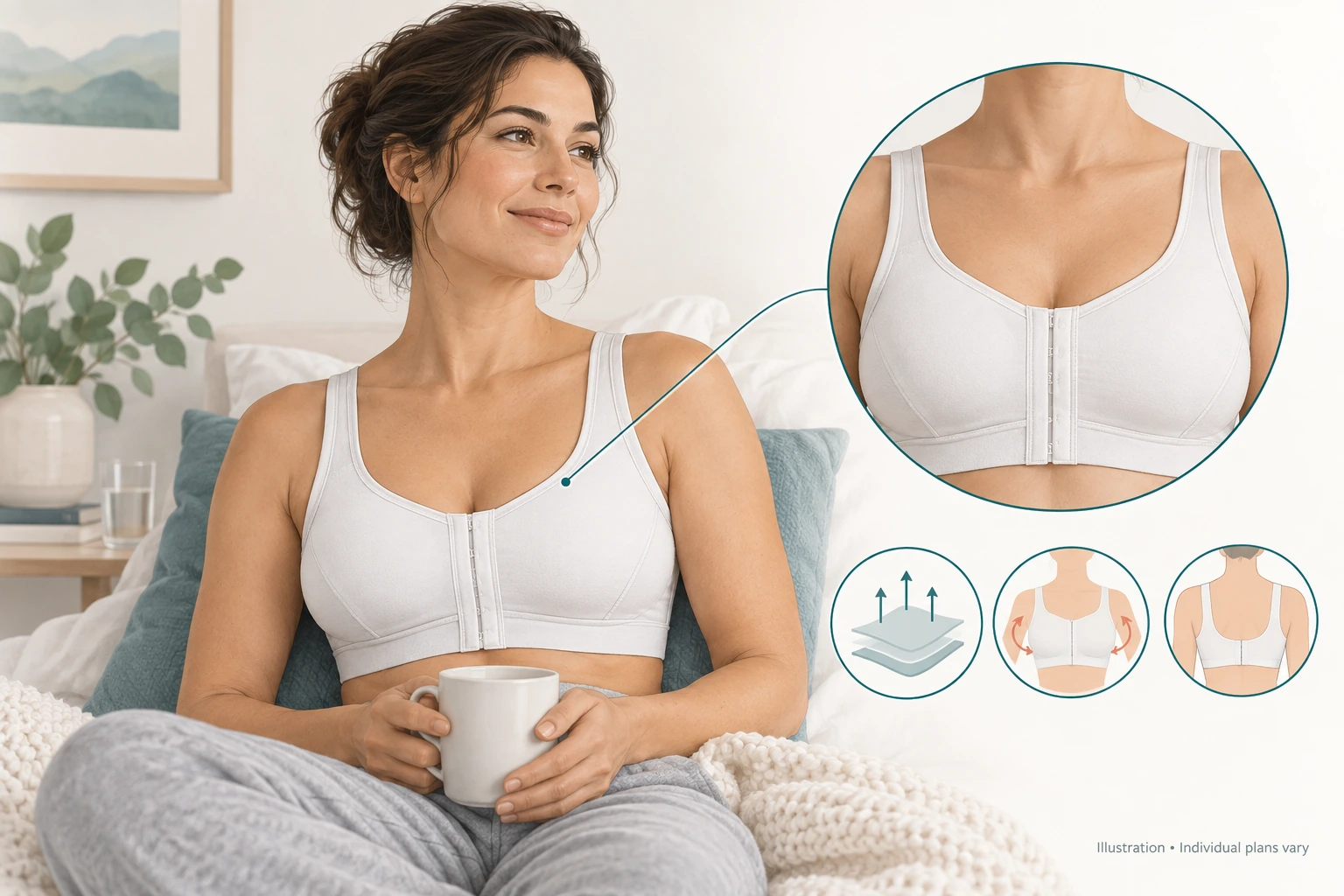
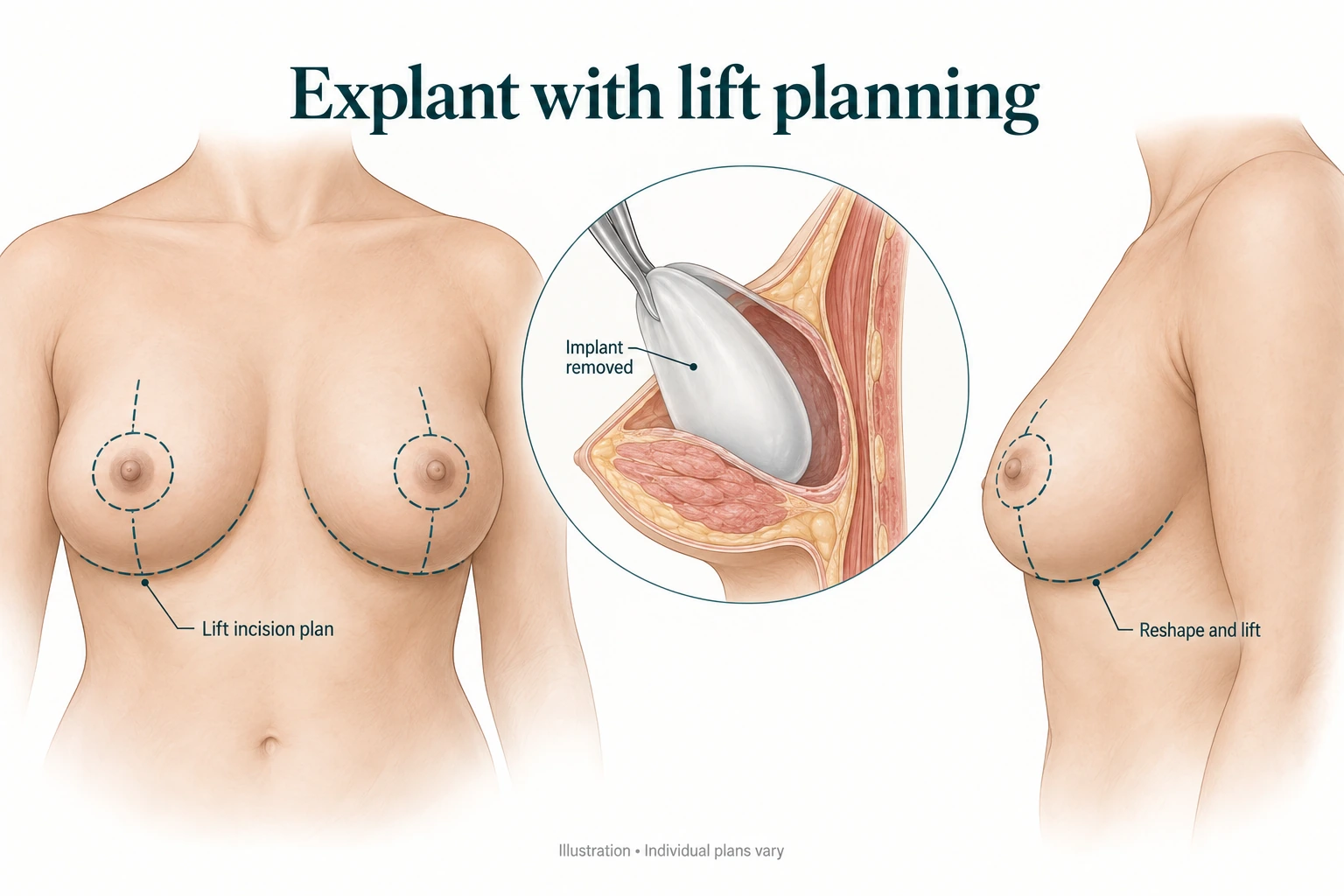
In short: removal alone suits many breasts. After large implants or many years, the skin may be stretched. A lift or fat transfer can then reshape the breast, at the same time or a few months later.
| Explant alone | Explant with a lift or fat transfer | |
|---|---|---|
| What it does | Removes the implants and the agreed amount of capsule | Also removes excess skin and raises the nipple, or adds your own fat |
| Shape afterwards | Smaller and softer; may look flatter or looser at first | Reshaped breast; fat adds a modest gain, often around half to one cup |
| Operation time | Typically 1–3 hours | Longer, depending on what is added |
| Stay in Istanbul | About 7 days | A combined lift may need a day or two longer |
| Timing choice | Skin often retracts over 3–6 months, so some wait before deciding | Done in one operation if you prefer |
Want implants again? Removal can be combined with new implants of a different type, size or pocket; see our breast implant types guide. More on a breast lift or fat transfer breast augmentation.
A responsible quote needs a surgeon's review of your photos, records and imaging first. We give a personal quote after that review, and the consultation is free.
Typically covers:
Your price depends on
This page was medically reviewed by a plastic surgeon on the Vivid Clinic team.
Plastic, Reconstructive & Aesthetic Surgeon
Breast implants are not lifetime devices, and the chance of complications grows the longer they are in place. Removal is also surgery with its own risks, which your surgeon explains before you decide.
Breast implant illness is not a formal diagnosis, and improvement after removal is not certain. BIA-ALCL is a rare lymphoma linked mainly to textured implants; the FDA's BIA-ALCL guidance does not recommend routine removal without symptoms. See also the ASPS breast implant removal guide.
Plan about seven days. You arrive on day one, have your consultation and surgery on day two, stay one night in hospital and then rest at your hotel. If drains are used, they are usually removed within a few days. Your surgeon checks your wounds and confirms you are fit to fly, typically around day six or seven. A combined lift may need a day or two longer.
Usually not. In its strict meaning, en bloc capsulectomy removes the capsule with a margin of surrounding tissue, and specialist consensus limits it to suspected or confirmed implant-associated cancer. Many patients who ask for "en bloc" actually want a total or total intact capsulectomy. Your Vivid Clinic surgeon will recommend the least extensive option that addresses your problem safely, because larger operations carry more risk.
They may look flatter or looser, especially after large implants or many years with implants. Skin often retracts over three to six months, so some patients choose to wait before deciding on a lift. Others prefer to combine breast implant removal with a breast lift or fat transfer in one operation. Your surgeon will assess your skin quality and show you which approach suits your breasts.
Not reliably, and no surgeon can honestly promise it. The FDA reports that some people with systemic symptoms feel better after explant surgery without replacement, but others do not. The cause of these symptoms is not yet understood. We recommend checking other possible medical causes with your doctor, and we discuss realistic expectations openly before you decide.
Yes, in many cases. Your surgeon can harvest fat by liposuction and inject it into the breasts during the same operation, restoring some softness and shape. The gain is modest, often around half to one cup, and some fat is reabsorbed. If your skin is very loose, a lift may also be recommended. This combination is planned case by case after examination.
Not if you have no symptoms. BIA-ALCL is a rare cancer of the immune system that usually develops years after surgery, most often with textured implants. The FDA does not recommend routine removal for people without symptoms. Persistent swelling or a new lump near an implant should first be assessed with imaging and fluid testing. Confirmed cases are treated by removing the implant and the surrounding capsule.
Please bring your implant card, previous operation notes and any recent ultrasound or MRI reports. If you do not have recent imaging, your surgeon may request it before surgery. You can send photos and records through WhatsApp or our online form before you travel. Your surgeon uses them to plan whether a capsulectomy is advisable and whether a lift or fat transfer makes sense.
Send your photos, implant card and any recent scan reports through WhatsApp or the form. A Vivid Clinic surgeon reviews them in confidence. The consultation is free and without obligation.
Free · No obligation · Reply within 24 h
Open a summary of this guide in your AI assistant.
 ChatGPT