
Liposuction only
Suitable mainly for pseudogynecomastia, where the chest is soft and fatty. Recovery is quick.
- Best for
- Pseudogynecomastia
- Incisions
- Tiny
- Removes
- Fat, not firm gland
Gynecomastia surgery removes excess gland and fat, and in advanced cases loose skin, to create a flatter, firmer male chest. It suits men whose enlargement has not improved with time, weight loss or treating the cause. Plan about five days in Istanbul.
Free medical review within 24 hours · No obligation · ★ 5.0 from 157 Google reviews
Editorially reviewed by the Vivid Clinic Surgical Board · Last reviewed September 2026
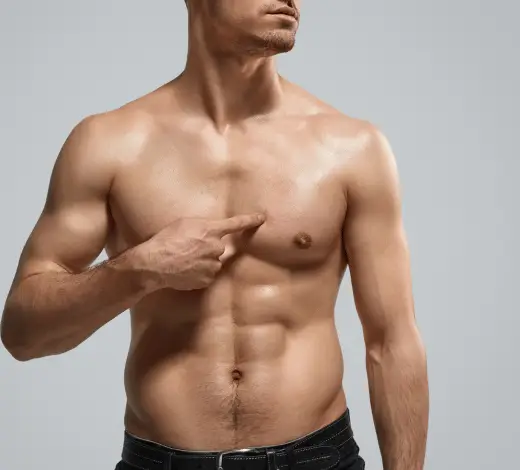
Gynecomastia (gynaecomastia in the UK, often shortened to “gyno”) is an enlargement of glandular breast tissue in men. It is common and not usually harmful, but it can affect confidence. Surgery removes the gland, excess fat and, in advanced grades, loose skin; our puffy nipples guide covers milder concerns.

| Procedure time | Typically 1–3 hours, depending on grade |
|---|---|
| Anaesthesia | General anaesthesia |
| Hospital stay | Same-day discharge or 1 night |
| Recommended stay in Istanbul | About 5 days (longer if skin is removed) |
| Back to desk work | 3–7 days for most men |
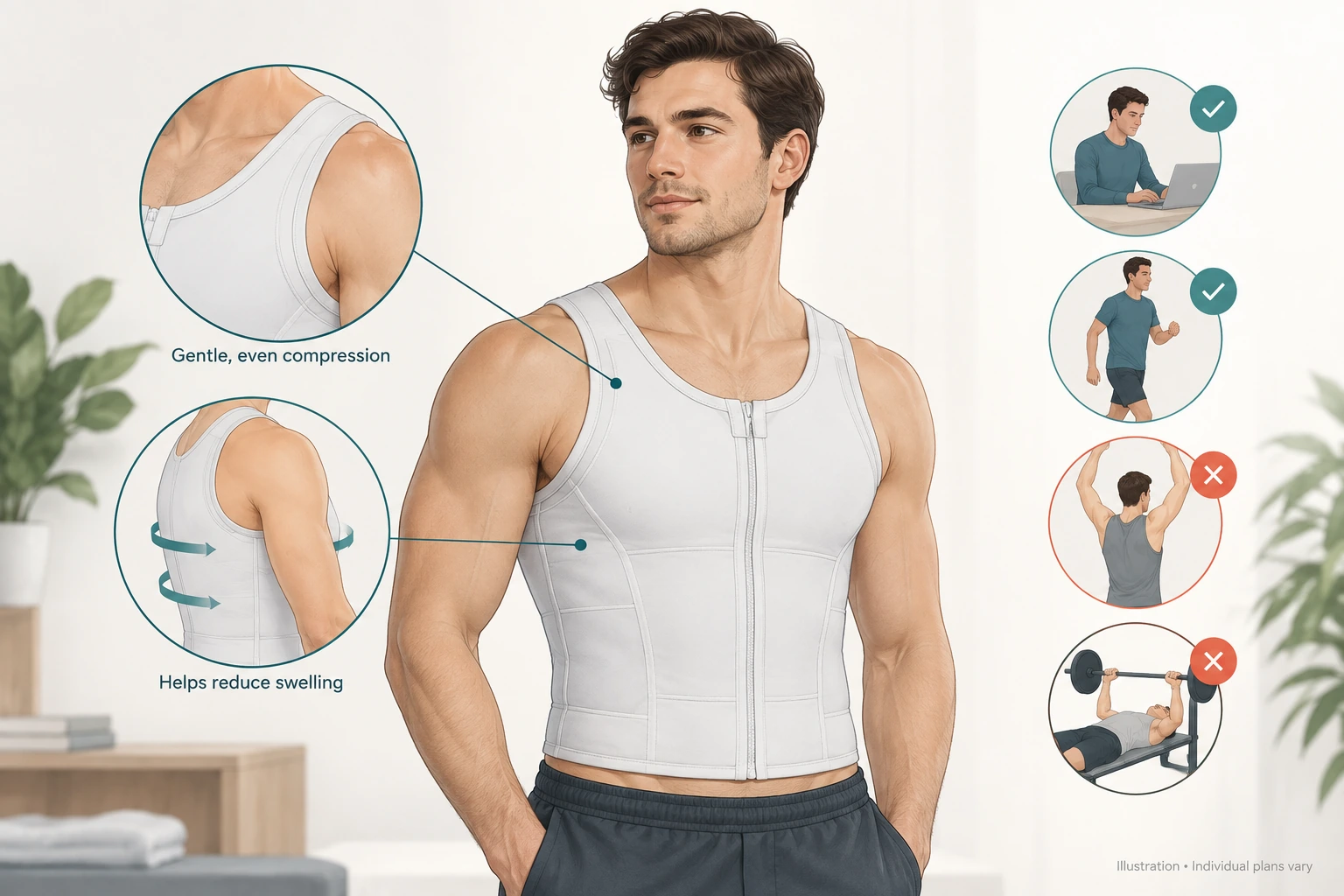
| Compression vest | Day and night for about 4 weeks, then daytime for 1–2 weeks |
| Exercise | Walking from day 1; cardio at 2–3 weeks; chest training around 6 weeks |
| Stitches | Usually dissolvable; checked before you fly |
| Final result | Chest contour settles over 3–6 months |
| Results last | Long-lasting once the cause is controlled; weight gain or steroids can bring it back |
Your surgeon asks about medicines, supplements, alcohol and cannabis use, weight changes and when the enlargement started.
Grade I is a small enlargement around the areola. Grades II and III spread across the chest, and grade III adds some excess skin. Grade IV looks like a female breast with sagging skin, and the grade guides the technique.

Suitable mainly for pseudogynecomastia, where the chest is soft and fatty. Recovery is quick.
The firm gland is removed through a short incision along the lower edge of the areola, usually with liposuction.
Loose skin is removed and the nipple is moved higher, sometimes made smaller. Scars are longer.
Considering wider male contouring? See liposuction or vaser liposuction at Vivid Clinic.
Your surgeon examines you first to tell gland from fat, because that decides the technique. Surgery takes place at a partner hospital in Istanbul under general anaesthesia.
Gland, fatty areas and chest borders marked while you stand.
General anaesthesia given by an anaesthetist.
Fatty tissue removed through small incisions.
Firm gland removed through the incision at the areola.
Both sides checked for symmetry and smoothness.
Dissolvable stitches, dressings and a compression vest fitted.

A typical five-day plan. If excess skin is removed or drains are used, a slightly longer stay may be advised.
Day 1
A VIP airport transfer takes you to your hotel. Your patient coordinator and interpreter welcome you.
Day 2
Examination and planning with your surgeon, blood tests and anaesthetic review, then surgery. Most men return to the hotel that evening or after one night.
Days 3–4
Surgeon review, vest adjustment and a pain-relief plan, then short walks and fluids. The 24/7 post-op support line is always available.
Day 5
A final wound and vest check, your written aftercare plan and the airport transfer. Keep the vest on during the flight.
Front and side photos of your chest and a short history. A surgeon reviews them in confidence and tells you your likely grade and technique. Free, no obligation.
Tightness, swelling and bruising are normal in the first week. Desk work is usually possible within three to seven days.
Most men see a flatter chest as soon as swelling settles, and it keeps improving for several months. Removed gland does not grow back, so the result is long-lasting.
Significant weight gain, anabolic steroids or certain medicines can change it. The American Society of Plastic Surgeons describes the same steps and what men can expect.
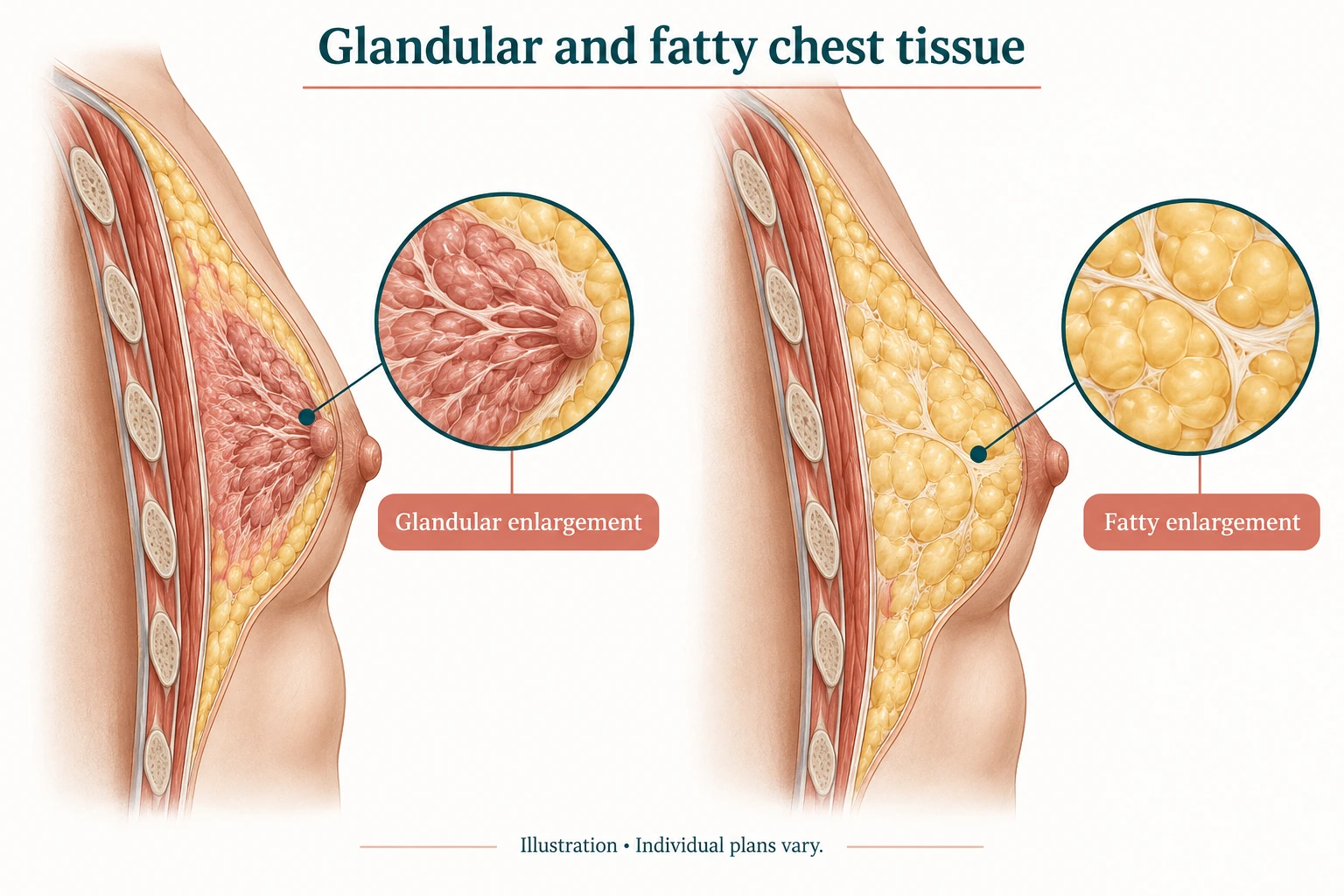
In short: fat responds to liposuction, but firm gland usually has to be removed surgically. Many men have a mix of both, so most men with true gynecomastia need both techniques.
| Liposuction only | Gland excision | |
|---|---|---|
| What it removes | Soft fatty tissue | Firm, rubbery gland behind the nipple |
| Usually suits | Pseudogynecomastia (fatty chest) | True gynecomastia, often with liposuction |
| Incisions | Tiny | Short, at the lower edge of the areola |
| If used for the wrong tissue | Gland left behind often leaves a puffy nipple | Not needed where there is little gland |
Weight loss can reduce pseudogynecomastia but cannot shrink established gland. Medication may help some recent-onset cases under a doctor, but rarely once tissue has been present for a year. Women seeking smaller breasts should see our breast reduction page.
Turkey is often more affordable than the UK, US or the Gulf. A quote is only given after a surgeon reviews your chest photos. The consultation is free. Our gynecomastia surgery cost guide explains the factors by grade.
Typically covers:
Your price depends on
This gynecomastia surgery page was medically reviewed by a plastic surgeon on the Vivid Clinic team.

Plastic, Reconstructive & Aesthetic Surgeon
Gynecomastia surgery is generally well tolerated, but it is still surgery. Male breast cancer is rare, but a new or unusual lump must be checked first.
The NHS explains the condition and its usual causes on its gynaecomastia page. Removed tissue is routinely sent for examination.
Most men need about five days in Istanbul. Surgery is usually on day two, followed by one night in hospital or same-day discharge. A wound and vest check comes before your surgeon clears you to fly, around day five. If excess skin is removed or drains are used, a slightly longer stay may be advised. Keep the compression vest on during the flight and walk regularly.
It depends on what is causing the enlargement. Soft fatty tissue can be removed with liposuction. The firm, rubbery gland behind the nipple usually needs to be cut out through a small incision at the lower edge of the areola. Most men with true gynecomastia need both. Liposuction alone for glandular tissue often leaves a puffy nipple, so your surgeon examines you before deciding.
Most surgeons advise wearing the compression vest day and night for about four weeks, removing it only to shower. You then wear it during the day for another one to two weeks. The vest reduces swelling, supports the skin as it re-drapes and lowers the risk of fluid collection. Your surgeon may adjust this plan to your grade and the technique used.
Walking starts on day one. Light cardio and lower-body work usually return after two to three weeks. Upper-body weights come back gradually from about week four. Bench press, push-ups and heavy chest training generally wait until around six weeks, once your surgeon confirms healing. Returning too early can cause bleeding or fluid build-up and affect the final contour of your chest.
Your surgeon asks about medicines, anabolic steroids, alcohol and cannabis use, weight changes and when the enlargement started. Recent, painful or one-sided swelling, a hard lump, nipple discharge or symptoms of hormonal imbalance need investigation first. This sometimes means blood tests or an ultrasound before surgery. Treating a cause first can prevent recurrence, and puberty-related gynecomastia often settles without surgery.
Removed gland does not grow back, so the result of gynecomastia surgery in Turkey is long-lasting. The chest can still change with significant weight gain, anabolic steroid use or certain medicines. That is why your surgeon looks for the cause before operating. Keeping a stable weight and avoiding known triggers is the most effective way to protect your result over the years.
For most grades, gland excision uses a short incision along the lower edge of the areola. The scar usually blends with the colour change. Liposuction needs only tiny incisions. In grade IV, or after major weight loss, loose skin is removed and the nipple is moved higher, which leaves longer scars. Your surgeon shows you these on a diagram first. Scars fade over 6 to 12 months.
Send front and side photos of your chest and a short history. A Vivid Clinic surgeon reviews them in confidence. It is free and there is no obligation.
Free · No obligation · Reply within 24 h
Open a summary of this guide in your AI assistant.
 ChatGPT