
 ChatGPT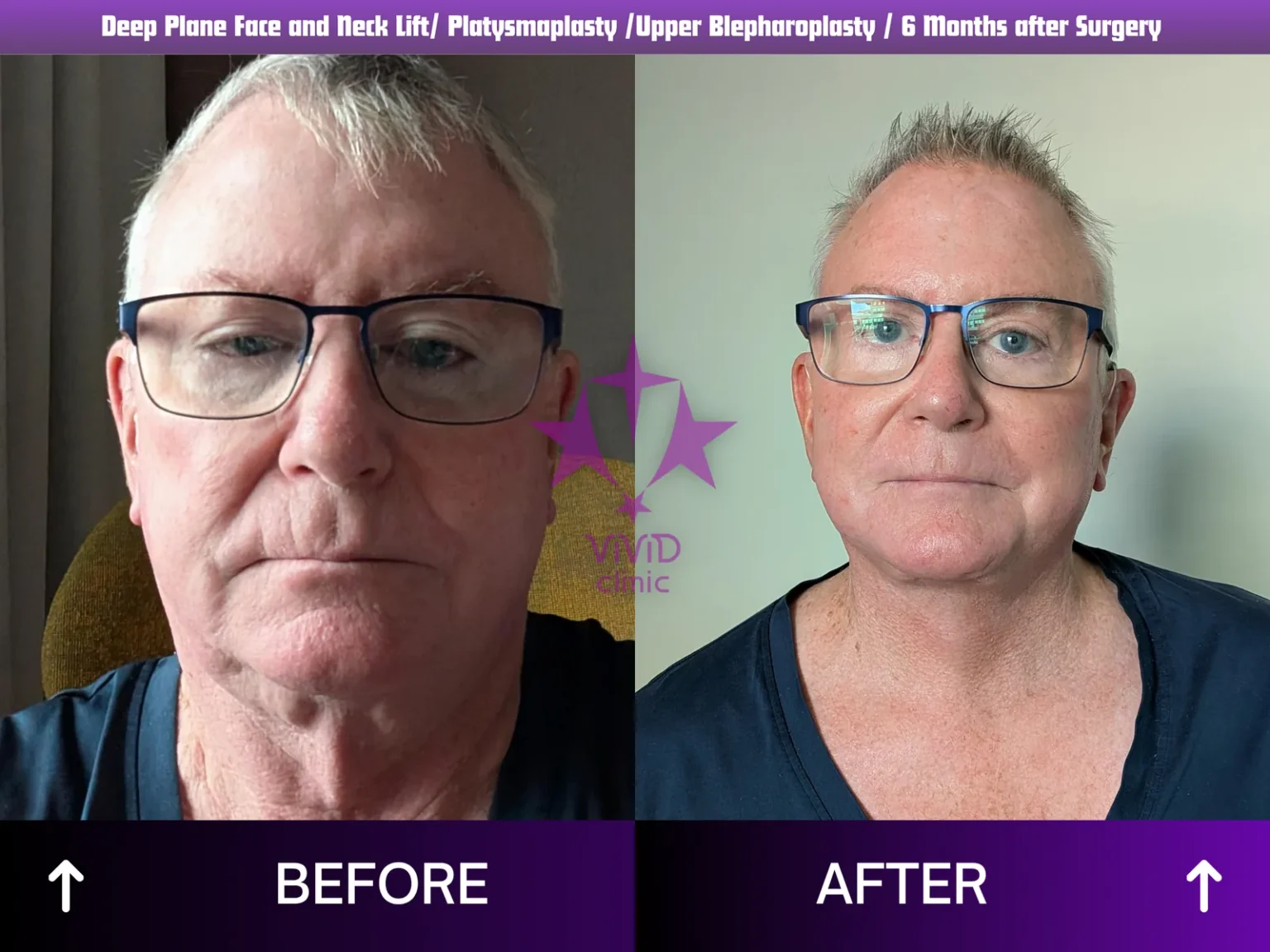
Quick answer: A male facelift is planned differently from a general facelift consultation, largely because men’s skin, hairlines, and expectations differ from those typically discussed in facelift marketing aimed at women. Men considering facial rejuvenation surgery often want a rested, less tired appearance rather than a dramatically different one, and they frequently ask practical questions about incision visibility, beard-bearing skin, and how quickly they can return to work without their colleagues asking pointed questions. This article walks through what male facelift planning involves, using one documented six-month case from Vivid Clinic in Istanbul, Turkey, to illustrate what a combined-procedure result can look like — along with the honest limitations of comparing two photographs taken under different conditions.
Male Facelift Planning: Anatomy and Personal Goals
Facial aging affects men and women in broadly similar ways — loss of skin elasticity, descent of soft tissue, and volume changes around the jawline and neck — but the surgical plan for a male facelift has to account for a few anatomical differences. Men generally have thicker, more vascular skin, a beard-bearing region that extends into the area where incisions are commonly placed, and a hairline pattern that is frequently receding or has already receded to some degree. These factors influence where an incision can be hidden, how tension is distributed, and how healing is expected to look.
Personal goals also tend to differ. Many male patients are not seeking a more “youthful” look in the way that phrase is often used in marketing; they are more often trying to correct visible signs of fatigue, jowling, or a heavy neck that don’t match how they feel internally. A thorough consultation should always start with what the individual patient wants to see change, rather than applying a one-size-fits-all template to every case.
Case M: A Six-Month Combined Procedure Follow-Up
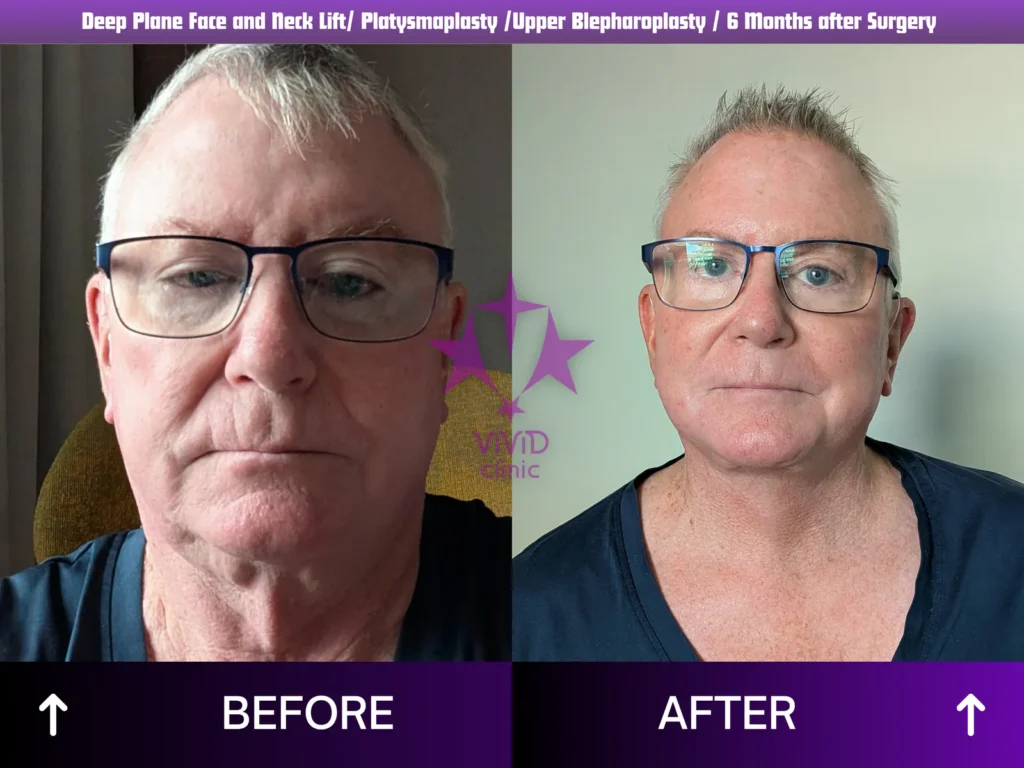
To illustrate what a male facelift outcome can look like at the six-month mark, we can look at one documented Vivid Clinic case, referred to here as Case M. This patient underwent three combined surgical procedures in a single operation: a deep plane face and neck lift, a platysmaplasty (tightening of the neck muscle band), and an upper blepharoplasty (upper eyelid surgery). It is important to state this combination every time this case is referenced, because none of the visible change shown below can be attributed to a single procedure in isolation — the frontal and profile views reflect the cumulative effect of all three surgeries performed together.
The comparison image below (M7) shows a frontal view taken before surgery alongside a frontal view taken six months after surgery. Both photographs show the patient wearing glasses, and the lighting conditions differ between the two images. These are real limitations of the photographic record, not incidental details, and they matter: differences in lighting angle and intensity can soften or exaggerate shadows around the jawline and under the eyes in ways that have nothing to do with the surgical result itself. Readers should view this comparison as a general illustration of a combined-procedure outcome, not as a controlled clinical measurement.

For a broader sense of how deep plane facelift results are typically read across a larger set of cases, our deep plane facelift before and after guide walks through how to interpret comparison photography more generally.
Hairline, Beard-Bearing Skin, and Incision Planning
Incision planning is one of the most frequently asked-about aspects of male facelift surgery, and for good reason: visible or displaced incisions are one of the more distinctive tell-tale signs of a poorly planned procedure in men. In general plastic-surgery practice, facelift incisions are typically designed to follow the natural contours of the ear and hairline — often running along or near the tragus and around the ear, with the exact path adjusted to the individual’s hairline pattern and the density of beard growth nearby.
Because men grow beard hair up to and sometimes behind the ear, incision placement has to be planned around beard-bearing skin specifically, so that hair-bearing tissue is not inadvertently repositioned into an area where hair would not naturally grow (or vice versa). This is a well-established consideration in male facial surgery generally, not a technique unique to any one case. It is not possible to state from the available records exactly which incision pattern was used for Case M; this section describes standard considerations that inform any male facelift consultation, including those at Vivid Clinic.
What Front and Profile Views Can Show
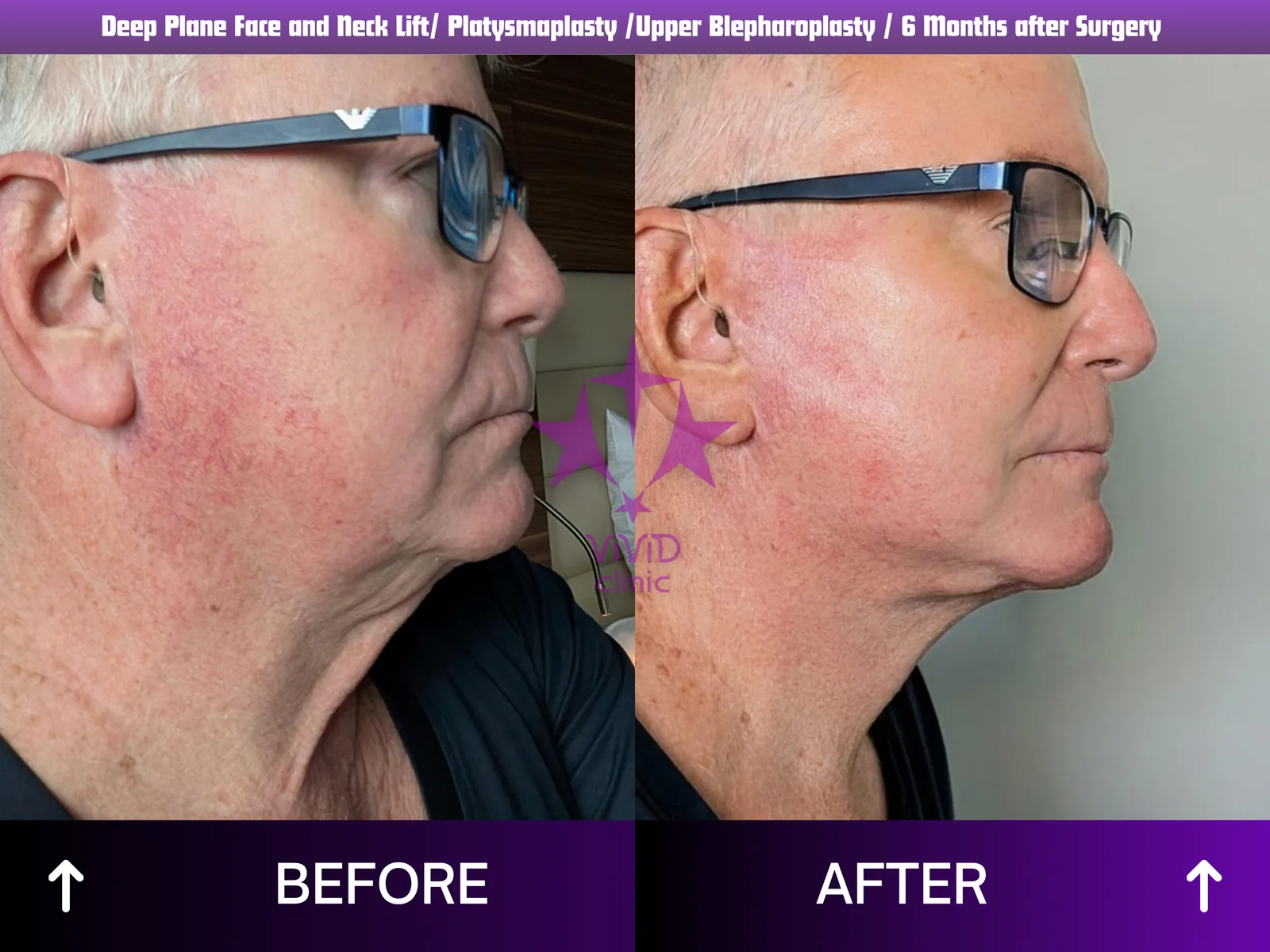
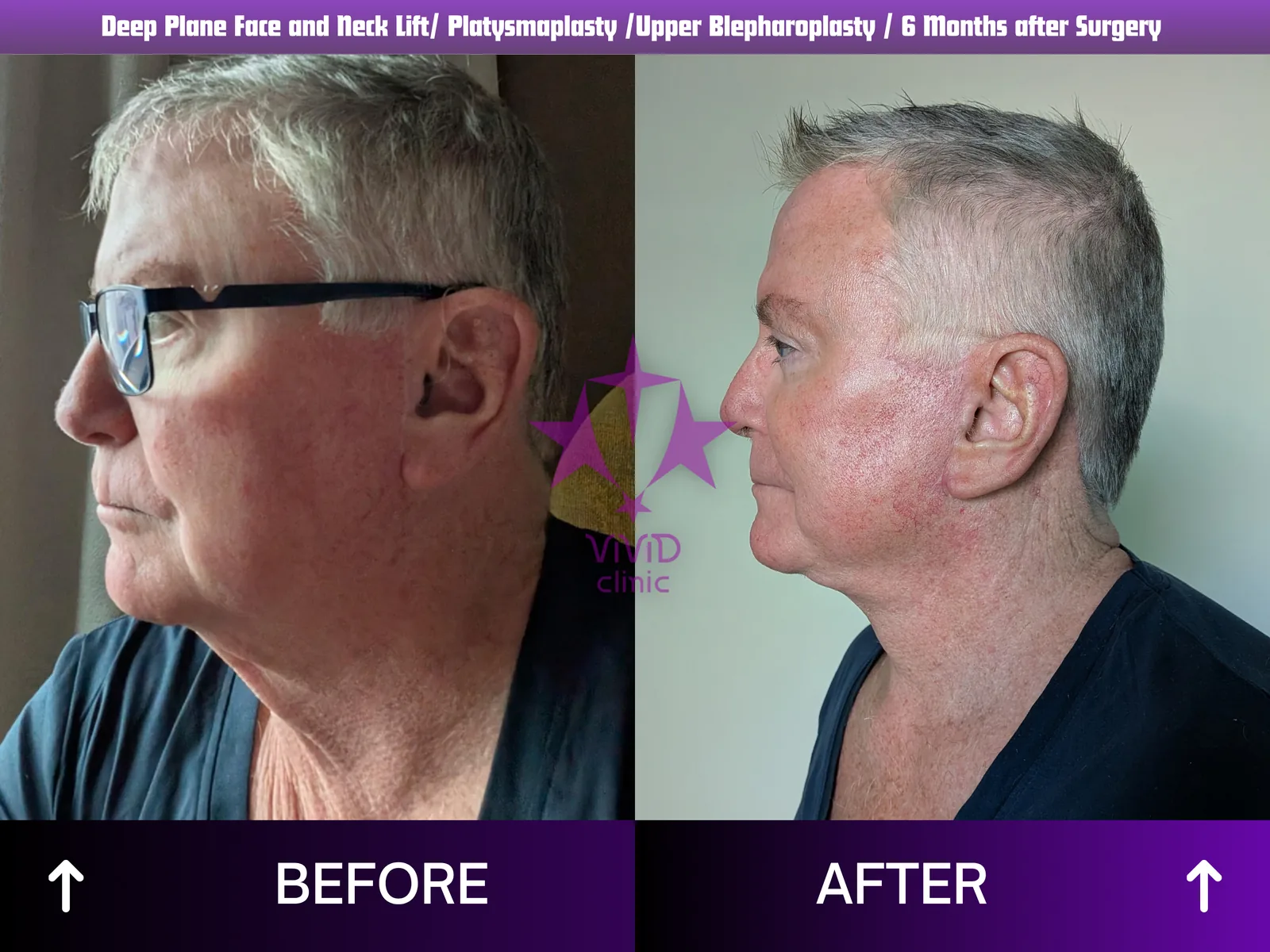
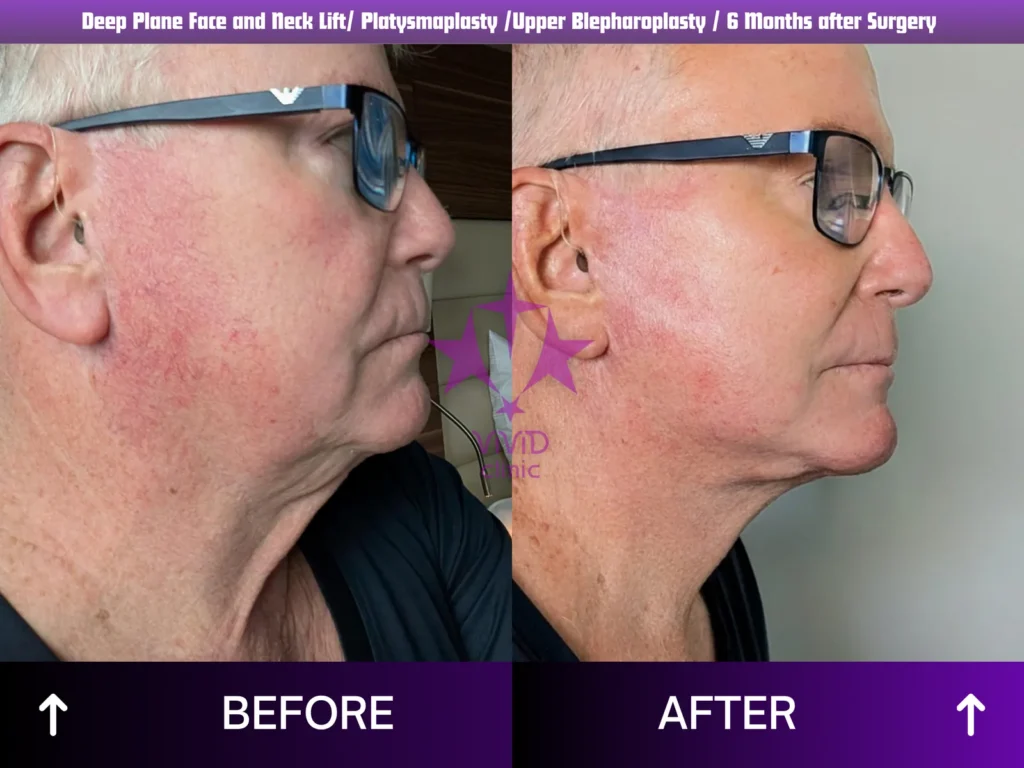
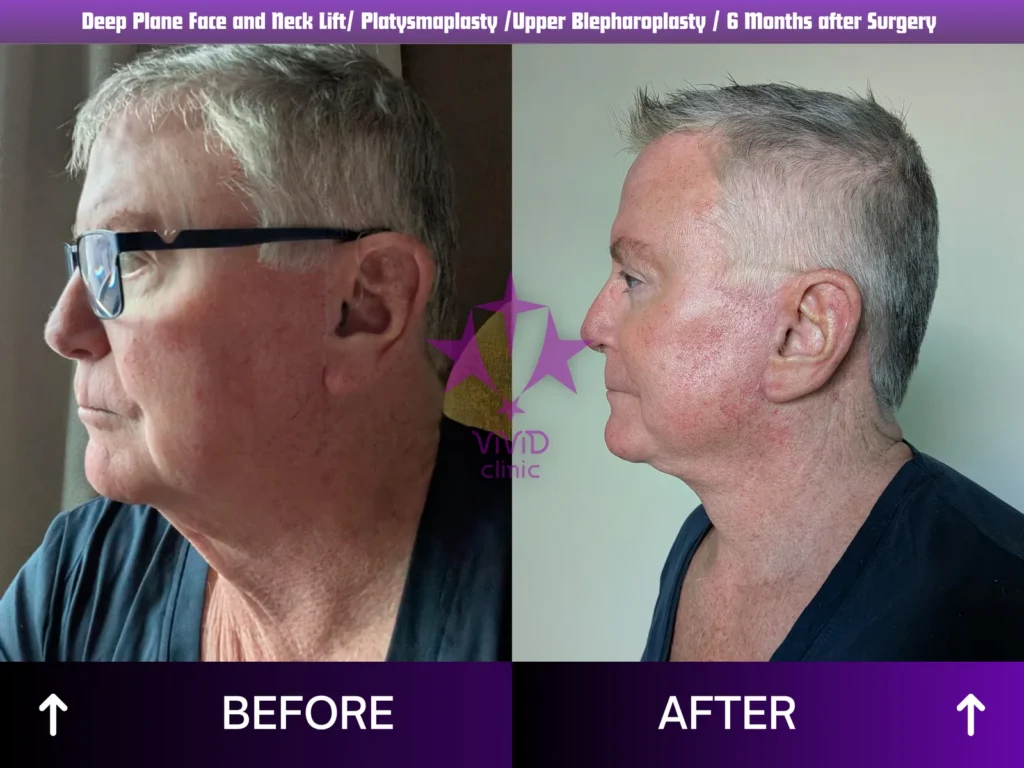
Frontal photographs are useful for assessing overall facial balance, jawline definition, and neck contour, but they can miss changes that are easier to see from the side — particularly the angle formed between the chin and neck, sometimes called the cervicomental angle, which is often a primary focus of combined face and neck lift surgery. Profile views are generally considered more informative for evaluating jawline and neck changes specifically.
The two profile comparisons below (M8 and M9) show the right-facing and left-facing views of Case M before surgery and six months after. In M8, both images show the patient wearing glasses, though the head angle differs between the two photographs. In M9, the patient is wearing glasses in one image but not the other, and the angles are not perfectly matched either. These inconsistencies are worth stating plainly: side-by-side comparison photography taken months apart, by different photographers or under different circumstances, is inherently imperfect, and readers should not interpret small differences in apparent angle, tilt, or eyewear as part of the surgical result itself.
You can review additional documented outcomes in our before-and-after gallery, where similar disclosures apply to each case shown.
Case M: Full Before-and-After Gallery
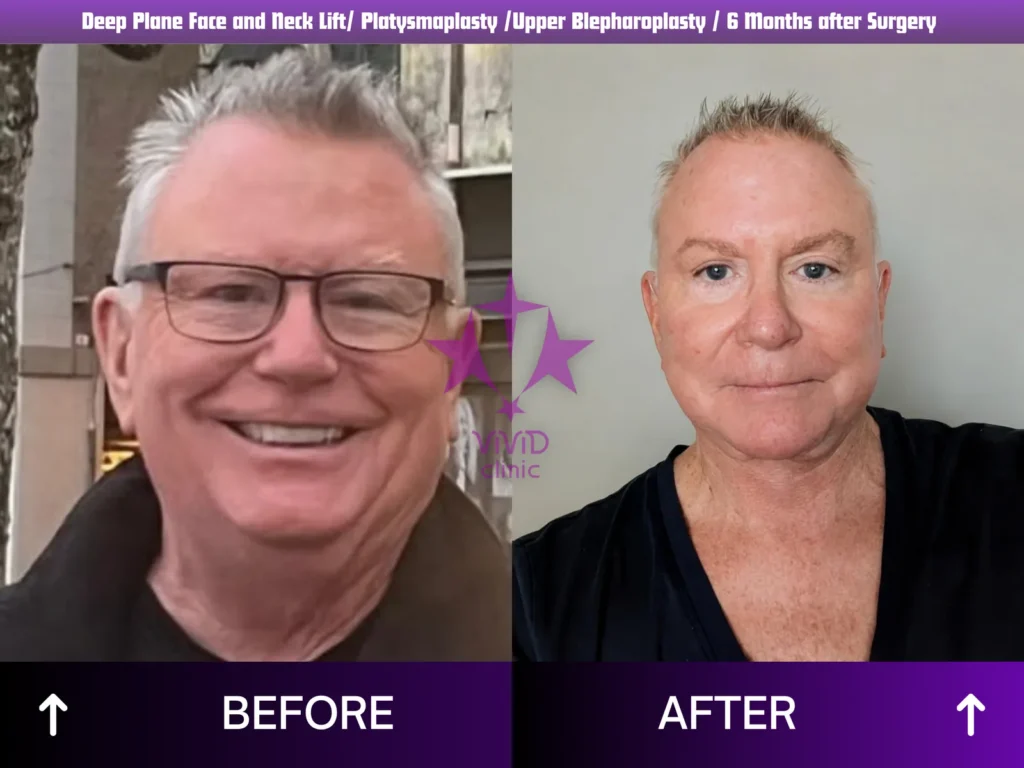
The four photographs below show the same documented Case M patient — frontal and profile views, before and six months after the combined deep plane face and neck lift, platysmaplasty and upper blepharoplasty. Lighting, glasses and expression vary between shots, so treat this as an illustrative gallery rather than a controlled measurement.
Questions Men Can Ask About Recovery and Returning to Work
Return-to-work timing is one of the most practical concerns for male patients, many of whom want a realistic answer rather than a marketing promise.
Useful questions to raise during a consultation include: how long is bruising typically visible in a beard-bearing area, where facial hair can partially mask discoloration but also complicate early wound care; what grooming restrictions apply around the incision sites in the first few weeks; and how soon shaving can safely resume near the treated area. It’s also worth asking how swelling is likely to present specifically along the jawline and under the chin, since this is often where men notice the most day-to-day change during early healing, and how that compares to the more general recovery ranges discussed later in this article.
Who May Be Suitable, and Who May Not
Candidacy Considerations
Good candidates for a male facelift are generally in stable overall health, are non-smokers or willing to stop smoking well before and after surgery (smoking significantly impairs healing), have realistic expectations about what surgery can and cannot change, and are bothered specifically by jowling, neck laxity, or upper eyelid heaviness rather than seeking an entirely different facial structure. A documented medical history and a physical examination during consultation are standard parts of determining candidacy.
Limitations and Cautions
Facelift surgery is not appropriate for everyone. Patients with certain uncontrolled medical conditions, unrealistic expectations, or active skin conditions in the treatment area may need to address those factors first or may not be suitable candidates at all. To be clear, none of these candidacy points are a diagnosis or assessment of the patient shown in Case M — no information about that individual’s health history, age, or motivations for surgery has been provided, and none is implied by their inclusion in this article.
Preparation and Consultation
Preparation for a male facelift typically begins well before surgery, with a detailed consultation covering medical history, current medications, facial analysis, and a discussion of which combination of procedures — if any — might address the patient’s specific goals. Pre-operative instructions commonly include guidance on stopping certain medications and supplements, arranging aftercare support, and, when relevant, smoking cessation. Every consultation should also cover realistic expectations, since no surgeon can guarantee a specific outcome.
Procedure Overview
The table below reflects general, combined-procedure ranges for a male facelift involving deep plane face and neck lift surgery, consistent with the scope of Case M. Combining upper eyelid or neck-focused work typically adds modestly to total surgical time without changing the overall recovery framework.
| Aspect | Typical Range |
| Duration | 3–6 hours, depending on the combination of procedures |
| Hospitalization | Typically one night for combined procedures |
| Mobility | Gentle walking encouraged the same day or next day |
| Return to Activity | Most patients feel comfortable in public settings after roughly 2–3 weeks |
| Recovery | Residual swelling can linger 3–6 months, with final settling up to about a year |
| Anticipated Results | Initial improvement visible by 4–6 weeks, continuing to refine for up to 12 months |
These are general ranges only; individual healing varies, and your surgeon will discuss what applies to your specific plan.
How the Operation Is Planned and Performed
A combined male facelift procedure, such as the one performed in Case M, is planned in stages during pre-operative consultation, with the surgical team mapping incision placement, the extent of tissue repositioning, and whether adjunct procedures like platysmaplasty or upper blepharoplasty will be performed in the same session. During surgery, deeper facial tissue layers are typically addressed rather than simply tightening skin alone, which is the general premise behind deep plane facelift techniques — this approach is discussed in more general terms in our deep plane facelift guide. When neck laxity is present, platysmaplasty may be performed to address the vertical neck bands and improve the angle under the chin as part of broader neck lift surgery.
Upper blepharoplasty, when combined, addresses hooding of the upper eyelid separately from the lower face and neck work. The exact surgical sequence and technique details for Case M beyond this general description are not part of the documented record available for this article.
Recovery and the Results Timeline
Recovery after a combined male facelift generally follows a broad pattern, though individual timelines vary considerably. In the days immediately following surgery, swelling and bruising are typically most pronounced, with gentle walking usually encouraged early to support circulation.
Over the following one to three weeks, visible bruising tends to fade, and many patients feel comfortable returning to work or social settings once makeup or, for men, simply time has reduced obvious discoloration. Swelling, however, can persist in a more subtle form for several months, with some patients reporting residual puffiness for three to six months and a final, settled result taking up to about a year to fully emerge, according to general guidance from bodies such as the American Society of Plastic Surgeons on facelift results.
It’s worth repeating that these are general recovery ranges informed by broader clinical guidance — they describe what is typical, not a day-by-day account of what Case M specifically experienced, which was not documented beyond the six-month comparison photographs shown above.
Risks and Safety Considerations
As with any surgical procedure, a male facelift carries risks that should be discussed thoroughly during consultation. These can include bleeding, infection, scarring, changes in skin sensation, asymmetry, and reactions to anesthesia, among others outlined in general facelift safety literature. When eyelid surgery is combined, additional considerations apply; the American Society of Plastic Surgeons outlines general eyelid surgery safety information relevant to patients considering blepharoplasty as part of a combined plan. No surgery is risk-free, and a candid conversation about individual risk factors — including any relevant medical history — should happen before any decision to proceed.
Cost Factors and Combination Planning
The cost of a male facelift varies significantly based on the complexity of the case, which specific procedures are combined, the surgeon’s experience, facility fees, anesthesia, and aftercare arrangements. Because Case M combined three distinct procedures, its overall scope — and therefore its cost — would differ meaningfully from a facelift performed as a standalone procedure. There is no single fixed price that applies across patients, and any quote should come from an individualized assessment during consultation rather than a generic estimate.
Your Journey at Vivid Clinic in Istanbul
When you choose Vivid Clinic for your care in Istanbul, your journey is coordinated from the moment you book. Our patient coordinators plan your visit around your surgery date, arrange a VIP airport transfer, and check you into a partner five-star hotel for your stay. You’ll meet your surgeon for an in-person consultation to confirm your plan before proceeding, have your procedure at our accredited facility, and recover under the clinical team’s aftercare protocol, with a check-up before you fly home. After you return home, Vivid Clinic’s team stays in contact for remote follow-up as you continue healing. Package inclusions can change, so confirm current details with your patient coordinator before booking.
Choosing a Surgeon and Discussing Expectations
Choosing a surgeon for a male facelift should involve reviewing their specific experience with male facial anatomy, asking to see documented cases similar to your own goals, and having a direct conversation about what surgery can realistically achieve for your face. You can review our surgical team to learn more about the clinicians involved in facelift procedures at Vivid Clinic. A good consultation should leave you with a clear, honest sense of expected outcomes — not a guarantee of a specific result, but a realistic picture grounded in your own anatomy and goals.
Frequently Asked Questions
What makes male facelift planning different from a general facelift consultation?
Male facelift planning accounts for thicker skin, beard-bearing tissue near incision sites, and hairline patterns that often differ from those typically discussed in general facelift consultations. Surgeons also tend to focus on restoring a rested appearance rather than a dramatically altered one, reflecting the goals most male patients bring to consultation.
Can a male facelift be combined with neck surgery and upper blepharoplasty?
Yes. Combining a deep plane face and neck lift with platysmaplasty and upper blepharoplasty in a single session, as in the documented Case M discussed above, is a recognized approach when a patient’s anatomy and goals call for addressing the lower face, neck, and upper eyelids together. Whether combination is appropriate depends on an individual assessment.
What can this six-month male facelift case show about the jawline?
The frontal and profile images of Case M illustrate a general jawline and neck appearance six months after combined surgery, though photographic differences — including lighting, glasses, and head angle between before and after photos — limit how precisely the images can be compared. They should be read as an illustrative example rather than a standardized measurement.
How can incision placement affect shaving and visible scars?
Because facelift incisions are generally planned around the ear and hairline, and because men have beard-bearing skin extending near this area, careful incision planning aims to avoid displacing hair-bearing tissue into non-hair-bearing zones. This is a standard consideration in male facial surgery and should be discussed specifically with your surgeon during consultation.
What should international patients discuss before travelling for a male facelift?
International patients should discuss the full scope of the planned procedure, expected recovery timeline before flying home, travel and aftercare logistics, and how follow-up care will be handled remotely once they return home. At Vivid Clinic in Istanbul, Turkey, these logistics are coordinated by patient coordinators as part of the overall treatment journey.
Planning a male facelift involves weighing anatomy, incision considerations, and realistic recovery timelines against your own goals, ideally guided by a documented case and a candid consultation rather than marketing claims alone. If you’re exploring whether a male facelift, alone or combined with neck or eyelid surgery, is right for you, our team in Istanbul, Turkey can walk through your options in detail. Get a Free Consultation with Vivid Clinic to discuss your individual plan.