
 ChatGPT

Quick answer: Anyone searching for a mid face lift before and after comparison is usually trying to answer one specific question: what does the cheek region actually look like once it has settled? A mid face lift lifts and repositions the tissue of the cheeks and under-eye area, distinct from a brow lift above it or a lower-face and neck lift below it. This guide walks through a real, documented Vivid Clinic case at nine months, explains exactly what the photographs can and cannot tell you, and outlines what a mid-face procedure generally involves — without inventing details the record doesn’t support. Each month, prospective patients in the US and UK run searches similar to this one (roughly 500–800 combined, by general keyword-research estimates), most of them trying to understand photo comparisons rather than browsing casually — which is exactly the gap this article is written to close.
Mid face lift before and after: what part of the face is involved
The mid-face is the region between the lower eyelid and the corner of the mouth — essentially the cheeks, the nasolabial folds, and the soft tissue that sits over the cheekbones. As people age, this tissue can descend, flattening the cheek and deepening the fold beside the nose and mouth. A mid face lift repositions that tissue upward and secures it, aiming to restore cheek volume and soften that transition without altering the brow or the neck.
It’s worth being precise about anatomy here, because “facelift” is often used as a catch-all term. A brow lift addresses the forehead and eyebrow position. A lower face and neck lift addresses jawline laxity and neck skin. A mid face lift sits between the two, and it’s commonly performed using an endoscopic approach — a technique that uses a camera and small instruments through limited incisions rather than a long open incision. Understanding which zone a before-and-after photo is actually showing is the first step to reading it correctly.

Case F: the endoscopic mid-face lift and accompanying procedures
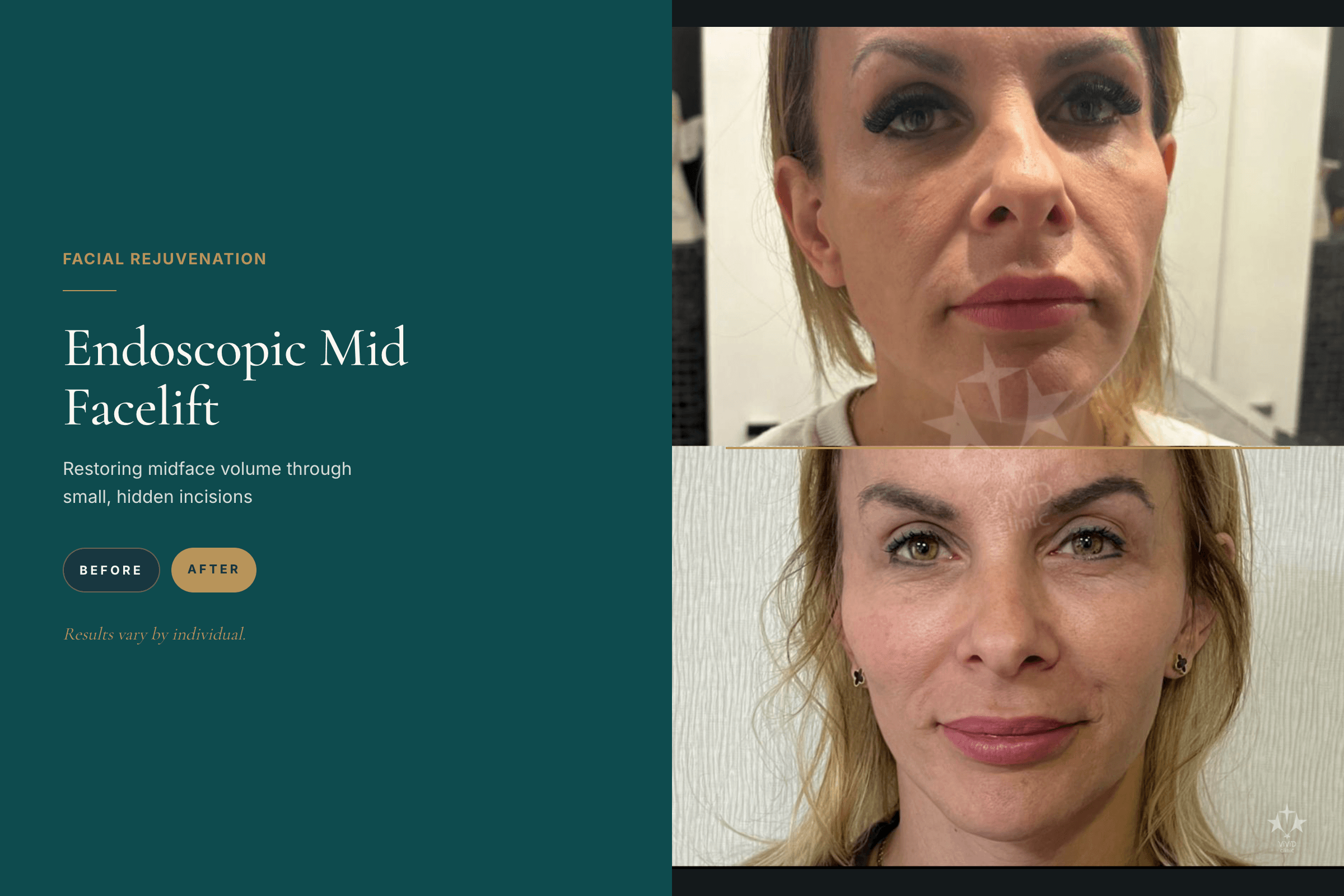
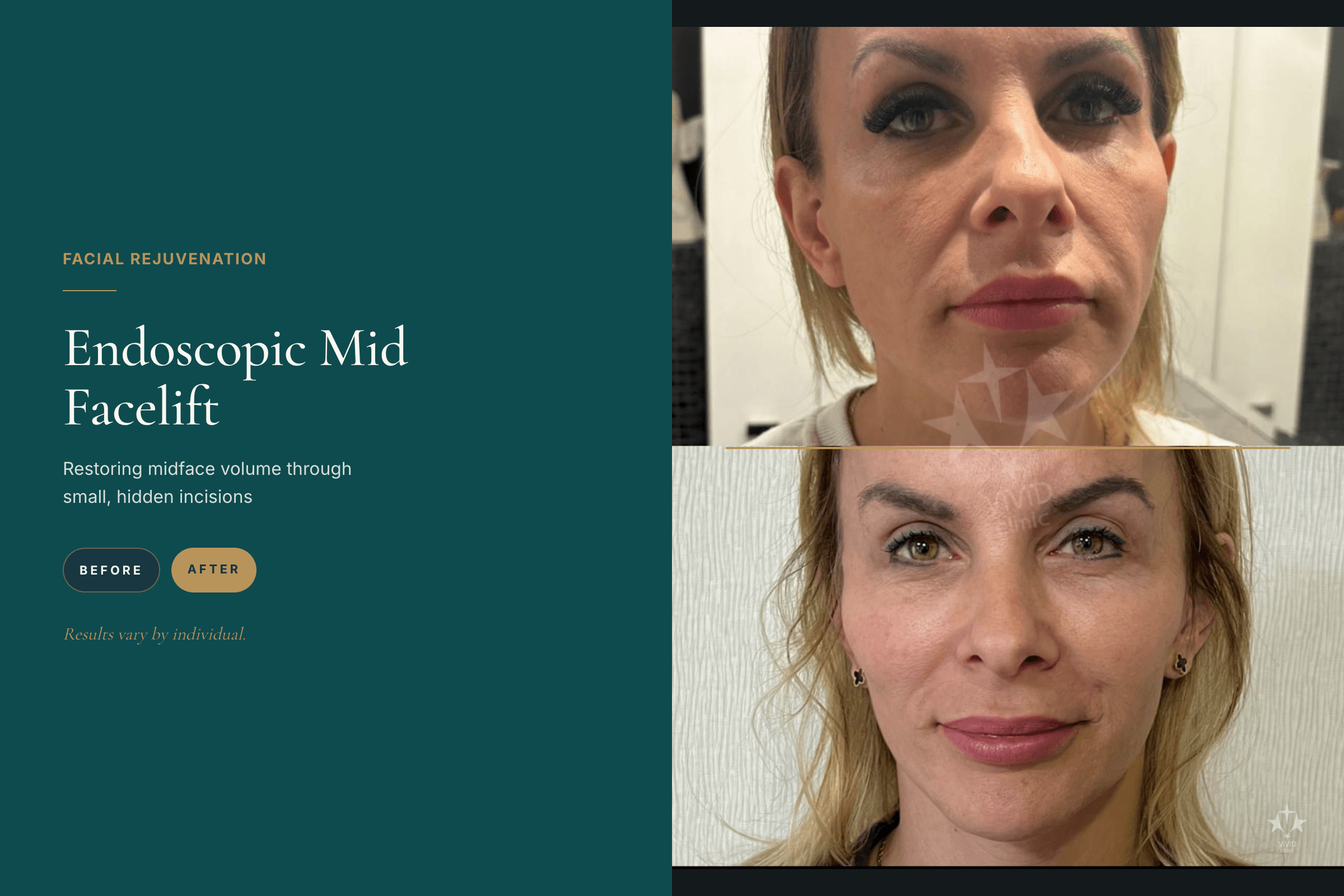
The case referenced throughout this article is a documented Vivid Clinic patient, referred to here as Case F, photographed before surgery and again at nine months afterward. It is important to state the full picture plainly: this patient underwent an endoscopic mid-face lift combined with revision rhinoplasty and a deep plane face and neck lift — three procedures performed together, not a mid-face lift in isolation. No brow lift, lower blepharoplasty, or fat transfer was part of this case, and none should be inferred from the photographs.
Because three procedures were combined, the visible change in the photos reflects all three working together — the cheek repositioning from the mid-face lift, the nasal changes from the revision rhinoplasty, and the jawline and neck refinement from the deep plane lift. That combination is exactly why this case is useful for illustration but limited as a pure teaching example of the mid-face component alone, a point covered in more detail below.
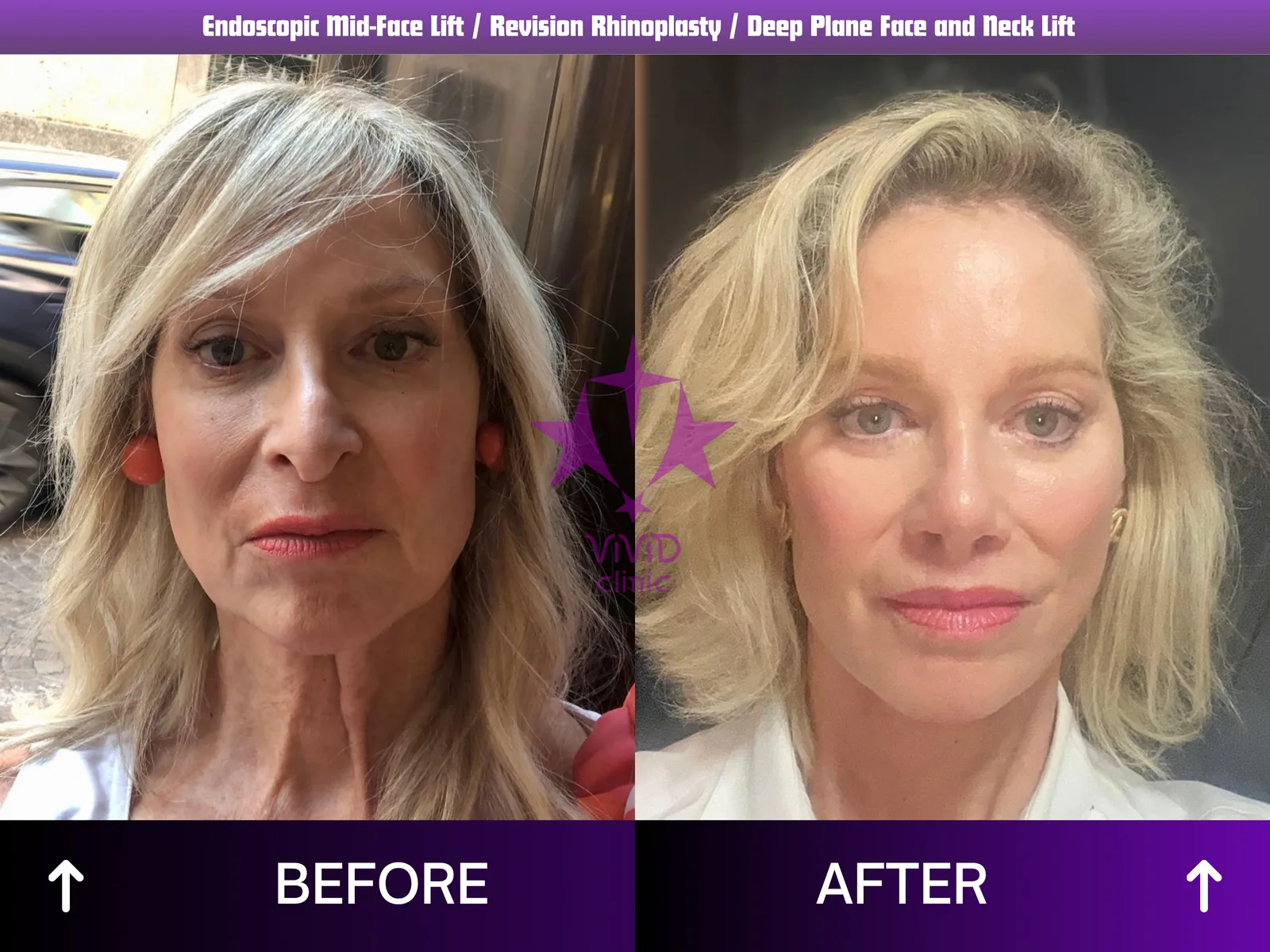
The frontal comparison above (F1) is the clearer of the two available images for a front-on view, though it comes with its own caveats, covered next.
Reading the cheek and lower-eyelid transition cautiously
A second angle of the same case (F2) offers another frontal reference point, useful for general context rather than precise measurement.
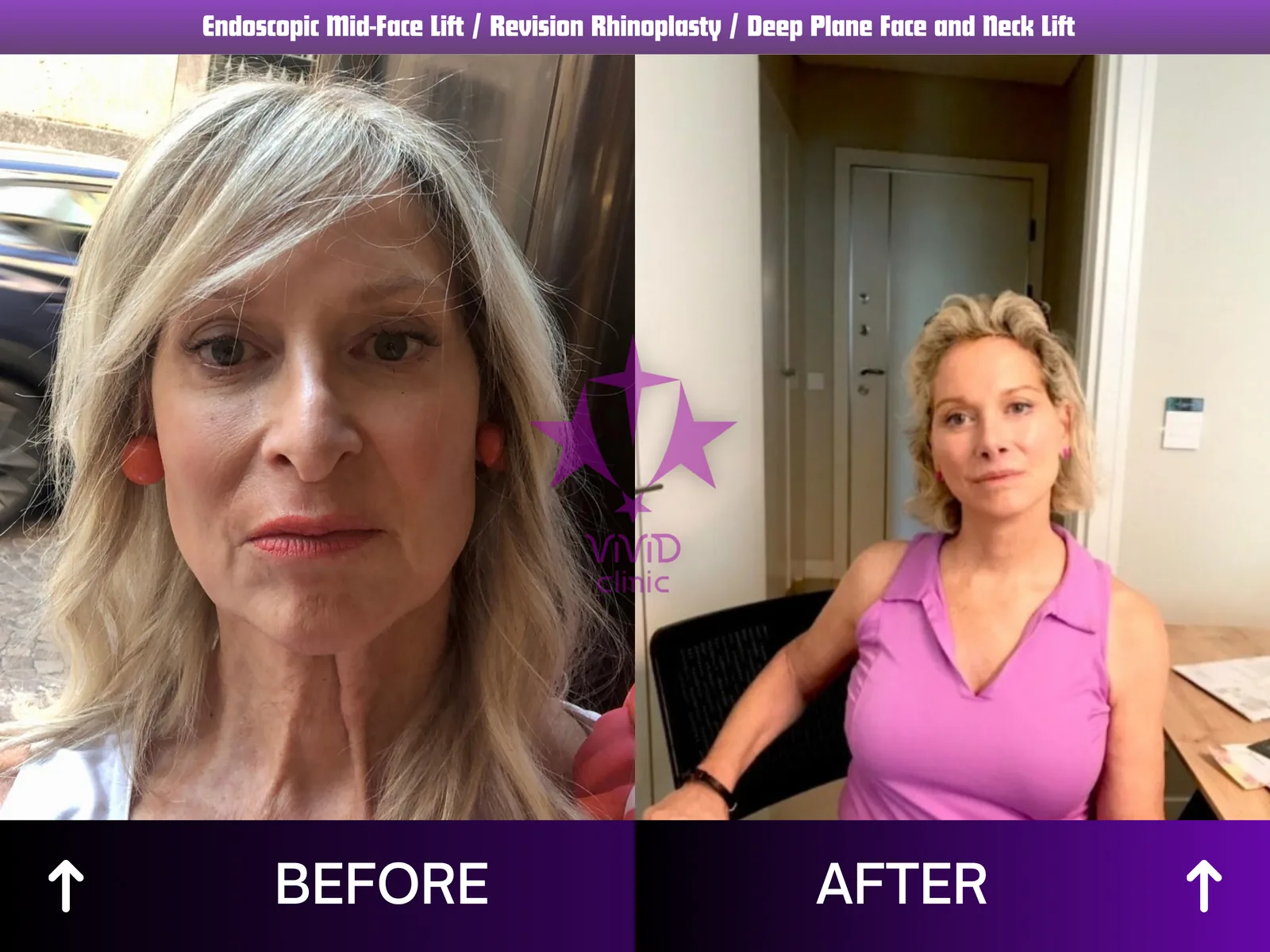
Here’s the caution that matters most when reading a mid-face case like this one: it is tempting to look at the lower-eyelid area in a before-and-after photo and assume eyelid surgery was involved. In this case, it wasn’t. No lower blepharoplasty was performed on Case F, and any change visible near the lower eyelid in these images should be attributed to the cheek tissue being repositioned upward by the mid-face lift itself, not to eyelid skin or muscle work that never occurred. A third Case F photograph exists in Vivid Clinic’s records but has been excluded from this article due to a timing inconsistency in its labeling — we’d rather leave a gap than publish a comparison we can’t stand behind.
Mid-face lift versus lower-face and neck work
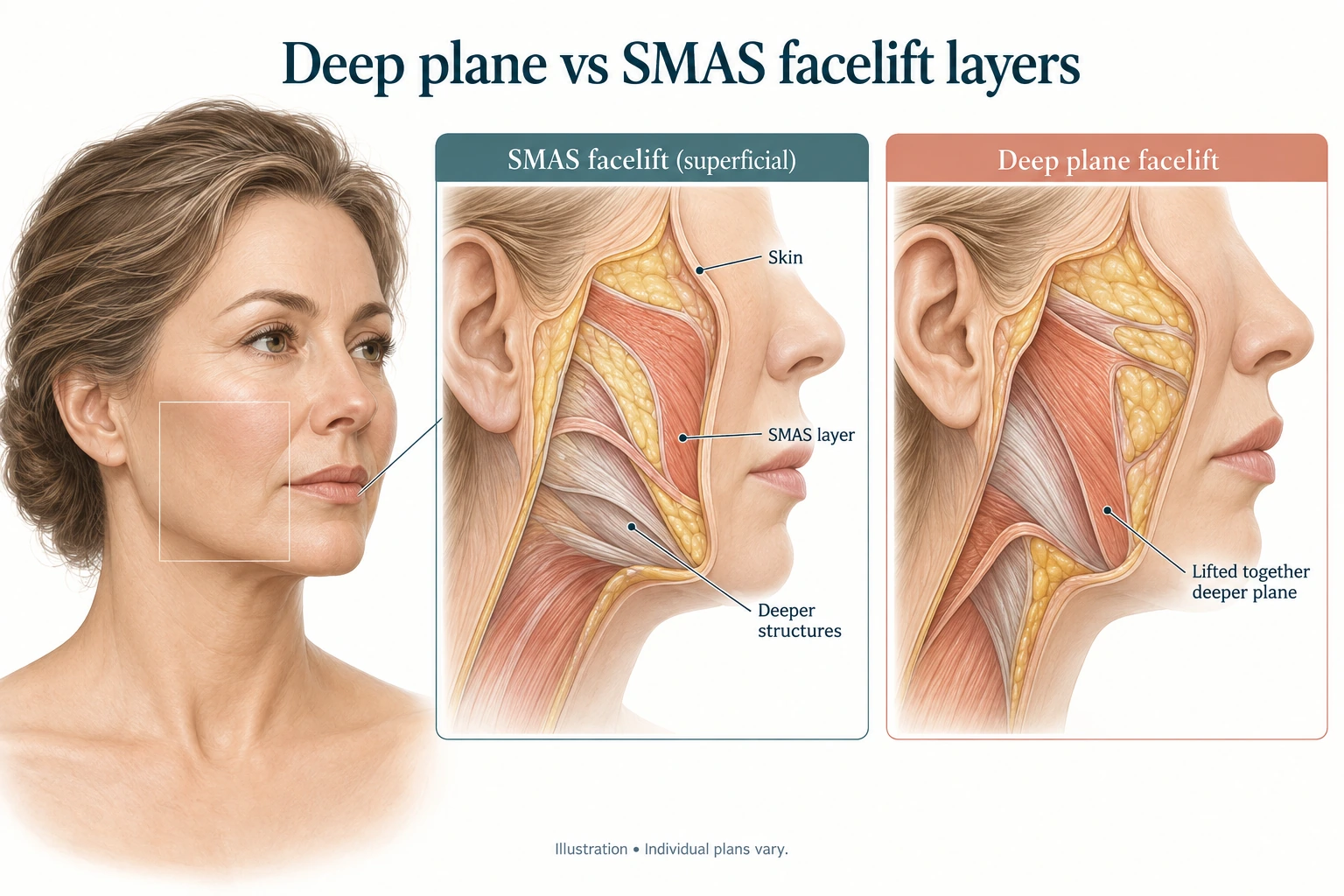
Patients frequently conflate a mid face lift with a full facelift, but the zones — and often the incision approaches — differ. A mid-face procedure targets cheek descent and the nasolabial fold; a lower face and neck lift, sometimes performed as a deep plane facelift, targets jowling, jawline definition, and loose neck skin. The two are frequently combined, as they were in Case F, because facial aging rarely respects those boundaries neatly — but they are technically distinct operations with different incision patterns, different recovery emphases, and different anatomical goals. Reviewing general facelift procedures alongside a mid-face-specific plan can help clarify which zones your own consultation should focus on.
What to ask about endoscopic access and scars
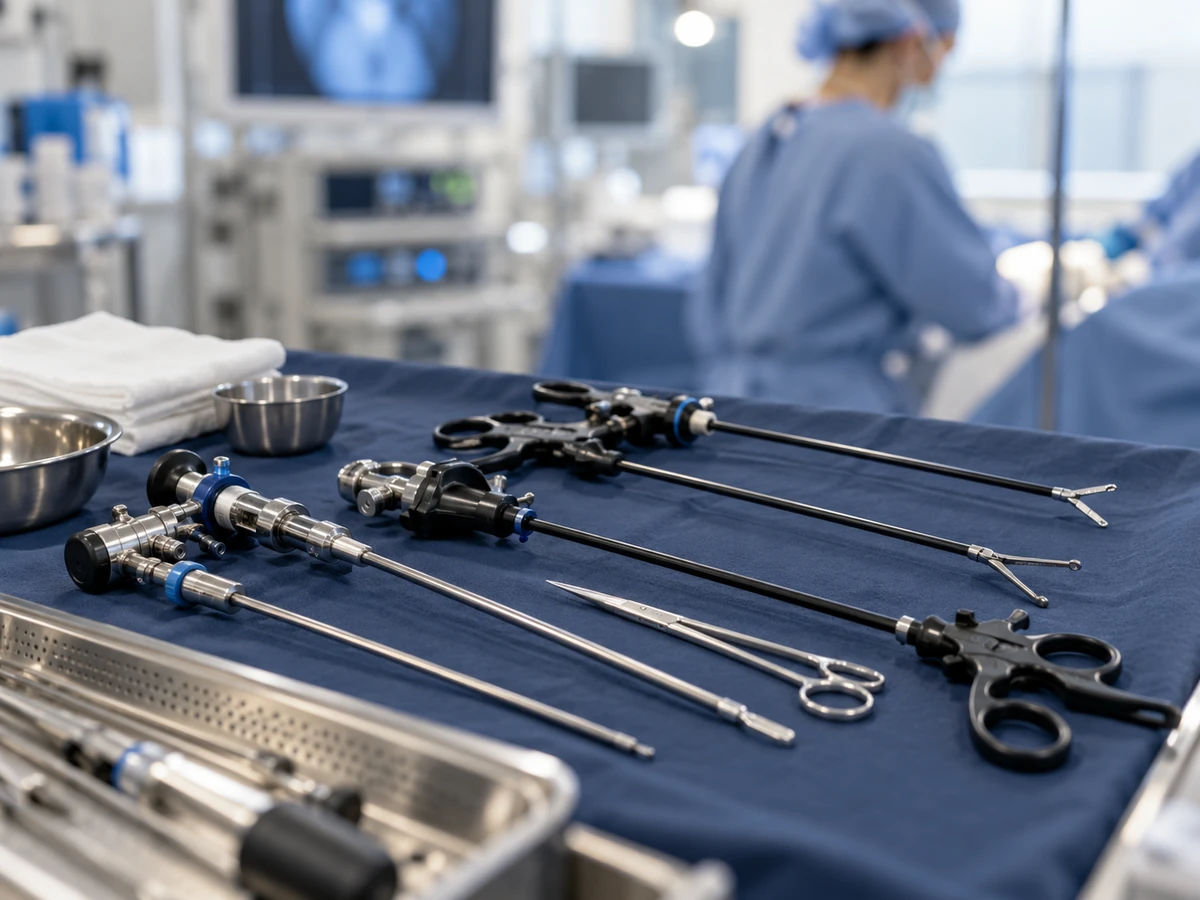
Endoscopic mid-face lift technique generally uses small, hidden incisions — typically positioned near the hairline or temporal scalp — through which a camera and fine instruments reposition the underlying tissue. This is general technique education, not a specific claim about Case F’s exact incision pattern, which isn’t detailed in the available record. If you’re comparing surgeons, it’s reasonable to ask directly where incisions are placed, how they’re closed, and what the resulting scars typically look like once healed. Our endoscopic mid-face lift technique guide covers the access approach in more depth if you want the technical side before your consultation.
Who may be suitable, and who may not
Candidacy
Good general candidates for a mid face lift tend to be people with cheek flattening or a deepening nasolabial fold, reasonable skin elasticity, stable overall health, and realistic expectations about the scope of change a mid-face procedure alone can achieve. None of this is a diagnosis of the person photographed in Case F — it’s general guidance for anyone researching the procedure.
Limitations
A mid face lift will not address a heavy jawline, significant neck laxity, or brow descent — those require different procedures, sometimes combined in the same surgical session as they were here. Smokers, people with certain bleeding disorders, and those with unrealistic expectations about a single procedure solving every sign of facial aging are generally poorer candidates, and a qualified surgeon should say so directly during consultation rather than after booking.
Preparation and consultation
Preparation typically includes a medical history review, a discussion of which facial zones actually need attention, and often blood work or imaging depending on the surgeon’s protocol and any procedures being combined. This is also the point where a surgeon should walk you through your own mid face lift before and after expectations specifically — not a generic promise, but a realistic sense of what your particular anatomy is likely to show.
Procedure Overview
The table below reflects general, typical ranges for an endoscopic mid-face lift informed by ASPS-type guidance. Case F’s actual recovery reflected the combined effect of the mid-face lift, revision rhinoplasty, and deep plane face and neck lift together, which is generally a longer process than any single component alone.
| Aspect | Typical Range |
| Duration | 1.5–3 hours alone; longer when combined with other procedures |
| Hospitalization | Typically a day case, or one night if combined with other surgery |
| Mobility | Light activity generally possible within a few days |
| Return to Activity | Visible bruising and swelling usually improve substantially by 10–14 days |
| Recovery | Numbness and tightness typically ease over several weeks; final position settles over 3–6 months |
| Anticipated Results | Cheek and mid-face lift visible early, continuing to mature over several months |
How the operation is planned and performed
Planning generally starts with mapping which tissue layers need repositioning and how much lift is realistic for the individual’s anatomy. In an endoscopic approach, the surgeon works through small incisions with camera guidance, releasing and elevating the mid-face tissue before securing it in its new position. When combined with other procedures — as in Case F, where revision rhinoplasty and a deep plane face and neck lift were performed alongside the mid-face lift — the surgical sequence and overall operative time are planned around all three components together, coordinated by the surgical team as a single combined session rather than staged separately.
Recovery and the results timeline
Early recovery typically involves swelling and bruising that peak in the first few days and improve substantially within the first two weeks. Numbness or tightness in the cheek area is common and generally eases gradually over several weeks. Full settling — where the tissue position, any residual swelling, and scar maturation reach their final state — is generally described as a 3–6 month process for the mid-face component. Case F was photographed at nine months, a point by which most of that settling process is typically well advanced, though it reflects the combined result of three procedures rather than the mid-face lift in isolation. For general, patient-facing context on how recovery timelines are typically framed, ASPS’s guidance on facelift results and rhinoplasty recovery are useful independent references.

Risks and safety considerations
As with any surgical procedure, a mid face lift carries general risks that should be discussed directly with your surgeon: bruising, swelling, temporary or, rarely, prolonged numbness, asymmetry, scarring, infection, and the anesthesia-related risks common to any operation of this kind. When procedures are combined, as in Case F, the discussion should cover the combined risk profile, not just each procedure’s risks individually. No outcome — cosmetic or functional — can be guaranteed, and a responsible consultation will say so plainly rather than promising a specific result.
Cost factors and combination planning
Cost for a mid face lift varies by surgical complexity, whether it’s combined with other procedures, the surgeon’s experience, facility fees, and the individual’s own anatomy and goals. There is no fixed, one-size-fits-all price, and any figure quoted before an in-person or documented assessment should be treated as provisional. Combining procedures, as Case F did, generally changes both the cost structure and the recovery plan compared with a single isolated surgery, which is why an individualized consultation matters more than a general price list.
Your Journey at Vivid Clinic in Istanbul
When you choose Vivid Clinic for your care in Istanbul, Turkey, your journey is coordinated from the moment you book. Our patient coordinators plan your visit around your surgery date, arrange a VIP airport transfer, and check you into a partner five-star hotel for your stay. You’ll meet your surgeon for an in-person consultation to confirm your plan before proceeding, have your procedure at our accredited facility, and recover under the clinical team’s aftercare protocol, with a check-up before you fly home. After you return home, Vivid Clinic’s team stays in contact for remote follow-up as you continue healing. Package inclusions can change, so confirm current details with your patient coordinator before booking.
Choosing a surgeon and discussing expectations
When reviewing any mid face lift before and after material — from Vivid Clinic or elsewhere — ask to see the full procedure list behind every photo, not just the headline treatment. A qualified surgeon should be willing to explain exactly which zones were addressed, what wasn’t done, and how your own anatomy compares to any case shown to you. You can review our surgical team and browse our before-and-after gallery as part of that research before your consultation.
More Mid Face Lift Before and After Results at Vivid Clinic
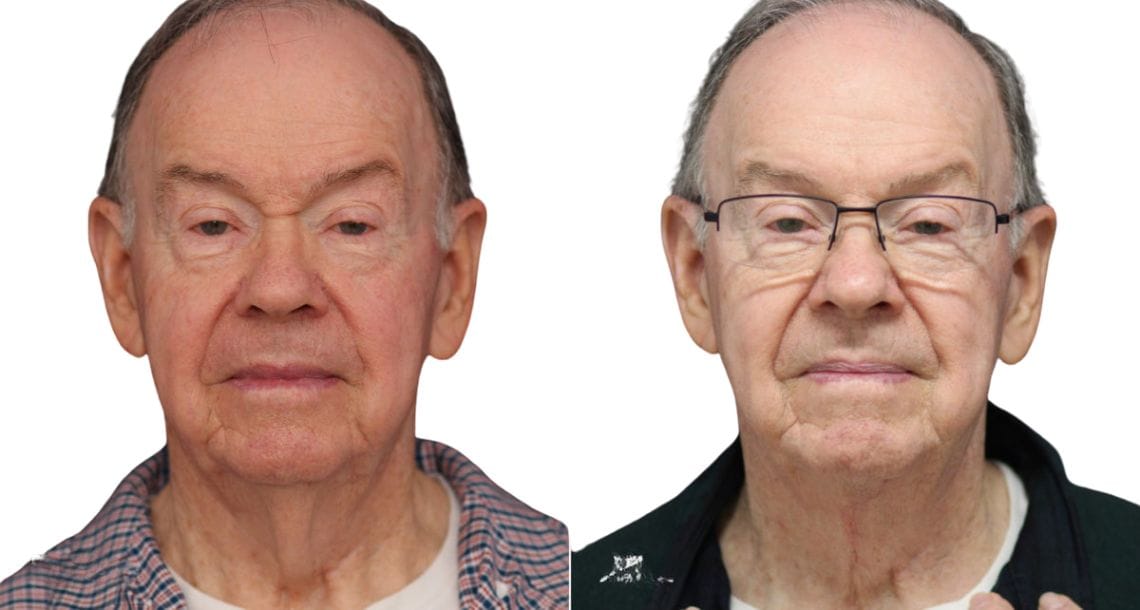
These before-and-after photos show real Vivid Clinic patients treated in Istanbul, shared with their consent. Photos are matched for angle and lighting wherever possible. Individual results vary. Browse the full Before & After Gallery.



Frequently Asked Questions
What should mid face lift before and after photographs show?
A genuinely useful mid face lift before and after comparison should show matched angles, similar lighting, and a clear disclosure of exactly which procedures were performed — not just the mid-face lift, if others were combined. It should also state the timeframe of the “after” photo and note any differences in makeup, expression, or hairstyle that could affect how the comparison reads.
How does an endoscopic mid-face lift differ from lower-face surgery?
An endoscopic mid-face lift targets cheek tissue and the nasolabial fold using small, camera-guided incisions, typically near the hairline or temple. Lower-face and neck surgery, such as a deep plane facelift, targets jowling and neck laxity instead, generally through different incision placement. The two address different anatomical zones and are often, but not always, combined in one surgical session.
Can this case isolate the effect of the mid-face lift?
No. Case F combined an endoscopic mid-face lift with revision rhinoplasty and a deep plane face and neck lift, so the visible nine-month change reflects all three procedures together. Neither available photograph (F1 or F2) can reliably isolate what the mid-face lift alone contributed, which is an honest limitation of this case rather than a shortcoming specific to Vivid Clinic’s documentation.
Does this case also document a brow lift or lower blepharoplasty?
No. The documented combination for Case F is strictly an endoscopic mid-face lift, revision rhinoplasty, and deep plane face and neck lift — no brow lift and no lower blepharoplasty were part of this case. Any change near the brow or lower eyelid area in the photographs should not be attributed to procedures that were never performed.
What should I ask my surgeon when reviewing a nine-month result?
Ask which specific procedures were combined, whether nine months represents a fully settled result or an interim point, what the photographic conditions were (lighting, expression, makeup), and whether the case is representative of your own anatomy and goals. A transparent surgeon will answer all of these directly rather than letting a single photo comparison speak for itself.
Reading a mid face lift before and after case well means understanding exactly what was done, what wasn’t, and how much a single photograph can honestly tell you — which is why Case F’s full procedure list, timing, and photographic limitations are spelled out here rather than left implied. If you’re considering a mid-face procedure for yourself, the next step is a personalized assessment, not a photo comparison alone. Get a Free Consultation with Vivid Clinic in Istanbul, Turkey to discuss your own anatomy, goals, and realistic options with our team.