
 ChatGPT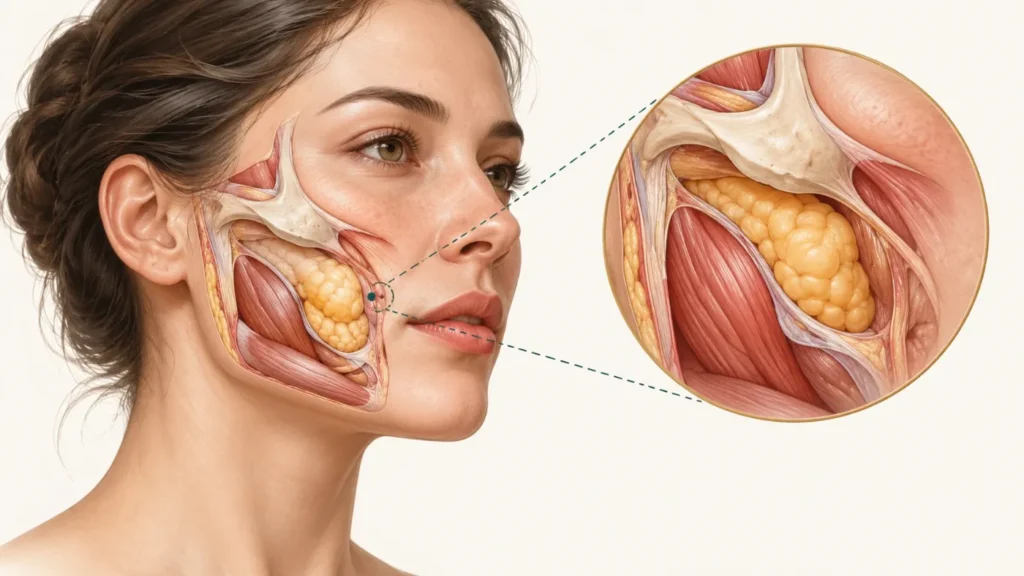
Quick answer: Buccal fat removal before and after photos can show changes in cheek contour, but they are only meaningful when lighting, angle, swelling, and timing are comparable. Settling takes several months, and a plastic surgeon must assess your anatomy first. At Vivid Clinic in Istanbul, Turkey, you can request a free consultation with a plastic surgeon.
Editorially reviewed by the Vivid Clinic Surgical Board. Last updated: October 2026.
What a True Buccal Fat Removal Before and After Comparison Can Show
Most people searching for buccal fat removal before and after images want to know one thing: does the cheek look different, and by how much? A photo pair can answer part of that question, but only when both images were taken under the same conditions. Lighting, head tilt, camera distance, and facial expression can change the apparent fullness of the cheeks more than the procedure itself.
A useful comparison starts with a baseline photograph taken before any treatment, using the same background, a neutral expression, and the same camera height. Follow-up photographs should be taken at matching stages, so that early swelling is not mistaken for the final shape. For example, two photographs taken a few weeks apart can look very different if one was taken in the morning with puffy tissues and the other in the afternoon after the swelling has eased.
Limitations matter too. A single image cannot show depth, bone structure, or how the face moves when you speak or smile. Published images also reflect only the cases a clinic chooses to show, so they are best read as examples rather than promises.
Cheek Fat Versus Masseter and Cheekbone Anatomy
The buccal fat pad is a naturally occurring pad of fat in the cheek hollow area. The American Society of Plastic Surgeons (ASPS) describes the goal of buccal fat removal as thinning the cheeks in that hollow region. The size of the pad varies from person to person, so two people with similar-looking faces can have very different cheek fullness.
Cheek shape is also influenced by other structures. The masseter is the chewing muscle along the jaw, and the cheekbone sets the upper contour of the midface. When people compare a photograph with their own reflection, they are often judging all three layers at once. A procedure that removes fat does not change the muscle or the bone, so the result should be assessed with that in mind.

Natural variation in cheek fullness is common, and it is not a defect. A clear anatomy discussion at consultation helps separate what you see in the mirror from what fat, muscle, and bone each contribute, and it lets you decide whether treatment is worth considering at all.
Healing Stages and When Photographs Should Be Taken
Early photographs are rarely a reliable guide to the final result. ASPS notes that the final results of buccal fat removal may be initially obscured by swelling. Healing continues for several weeks as the swelling decreases, and Cleveland Clinic reports that overall healing is usually about three weeks, with swelling, bruising, and numbness at the incision sites expected to fade gradually.
A sensible photo schedule uses the same time points for every comparison: one set before treatment, one at an early follow-up visit, and later sets at the intervals your surgeon recommends. Avoid comparing an image taken during early healing with a finished-looking image taken months later, because the two show different stages of recovery rather than two outcomes.
Many people judge the shape too early. Tissues continue to settle over time, so the most useful assessment usually comes after the swelling has clearly resolved.
Ageing, Over-Removal and Long-Term Limitations
Age is one of the most important factors to discuss. ASPS notes that buccal fat pad removal is typically not performed in people with thin, narrow faces, and that removing the fat could make the face look more drawn with age. Cheek fat changes over time alongside skin, bone, and muscle, so a result that looks balanced today may look different in later years.
This is why a single comparison captures only one moment. Someone who already has a slim midface may notice hollowing emerge with age, which is why surgeons usually ask about long-term goals as well as current appearance.
Removing too much tissue, or removing it from a face that did not need it, is a limitation that cannot always be reversed. A conservative plan is often discussed first, and it is reasonable to ask how your surgeon would respond if the outcome turned out less full than you expected.
Celebrity Photos: Confirmed Facts Versus Speculation
Celebrity comparisons are popular online, but they are rarely reliable evidence. Photographs can be edited, filtered, retouched, or taken under very different lighting. A change in weight, makeup, hairstyle, camera angle, or age can produce a striking visual difference with no procedure at all.
Only a confirmed statement from the person, or a record they choose to share, can establish that a procedure took place. Anything else is speculation. Readers who want to understand outcomes should look for consented, dated, unedited images from the clinic that performed the treatment, rather than guessing what someone else may have had done.
Is Buccal Fat Removal Right for You? Candidacy and Reasons to Defer
Buccal fat removal is not a fit for everyone. ASPS notes that it is typically not performed in people with thin, narrow faces, and that the size of the buccal fat pad varies from one individual to another. Some people describe their cheeks as too full, even chubby, and that concern is exactly what a surgeon will explore during assessment.
Reasons to defer treatment include unrealistic expectations, unresolved health questions, body weight that is still changing, and a goal based on someone else’s photograph. Each of these deserves a conversation before any decision is made. Treatment is always optional, and a buccal fat removal before and after gallery should never be the only input into that choice.
Procedure Overview and Realistic Expectations
The overview below is a summary for readers comparing care plans. Timings come from the sources named in each row, and they are not a universal schedule.
Optional overview of relevant treatments, not a recovery table for a natural feature.
| Aspect | Details |
|---|---|
| Duration Process | About 1 to 2 hours, according to the bichectomy page on the Vivid Clinic website. ASPS and Cleveland Clinic do not state a fixed length, so the surgeon’s plan determines the actual time. |
| Hospitalization Duration | Usually none. Cleveland Clinic notes that buccal fat removal can be done in a hospital or a provider’s office, and that patients go home the same day. |
| Mobility Duration | Patients leave the same day in standard outpatient care. Walking and activity limits are set individually by the treating surgeon. |
| Return to Activity | Normal activities usually resume after a few days to a week, once the provider agrees (Cleveland Clinic). Desk work, exercise, and travel are separate decisions, and exercise timing is set by your surgeon. |
| Complete Recovery | Healing usually takes about three weeks, and swelling can continue for several weeks as it decreases (Cleveland Clinic; ASPS). Tissue settling can take longer, so a complete outcome is not promised on a fixed date. |
| Anticipated Results | Final results can take several months to appear as the cheeks gradually contour (ASPS; Cleveland Clinic). Results vary between individuals. |
Individual timelines depend on anesthesia, the planned technique, and your healing response. Your surgeon sets the actual schedule.
Preparation and the Consultation Assessment
A proper assessment begins with your medical history, current medications, and any previous facial or dental procedures. Tell your surgeon about blood-thinning medicines, supplements, and any history of unusual bleeding, because these can change the plan. Do not start or stop any medication based on an article. Your clinician makes that decision with you.
Bring realistic goals. Describe what bothers you and what you hope will change, and ask what can and cannot be changed. Functional concerns, such as discomfort when chewing, should also be mentioned, because they affect the plan just as much as appearance does.
Your surgeon will look at cheek fullness, facial proportions, skin quality, and how your face moves. A free consultation with a plastic surgeon at Vivid Clinic in Istanbul, Turkey, gives you a structured place to ask these questions before you decide anything.
Recovery, Aftercare and When Results Can Be Assessed
Early recovery is measured in days and weeks. ASPS notes that you may be asked to follow a liquid diet for several days or longer after surgery, and that healing continues for several weeks as swelling decreases. Cleveland Clinic says that normal activities usually resume after a few days to a week, once your provider approves.
Early effects and longer settling are different things. The incisions may look healed on the surface while deeper tissues continue to settle for months. Plan around your surgeon’s guidance on exercise, travel, and follow-up visits, rather than a generic calendar you find online.
Buccal fat removal before and after results should be judged once the swelling has subsided. ASPS and Cleveland Clinic both note that final results can take several months, so an early photograph is not the final verdict.
Risks, Limitations and When Medical Assessment Comes First
Buccal fat removal is a surgical procedure, and it carries real risks. ASPS lists anesthesia risks, asymmetry, bleeding, deep vein thrombosis, cardiac and pulmonary complications, fluid accumulation, hematoma, infection, injury to a salivary duct, injury to branches of the facial nerve, numbness or other changes in sensation, persistent pain, poor healing of incisions, prolonged swelling, and a result that is less noticeable than hoped. The list is not exhaustive.
Cleveland Clinic highlights infection at the incision site, injury to facial nerves or the salivary duct, changes in sensation, and asymmetry. ASPS states that these risks and others should be fully discussed before consent is signed. Possible revisional surgery is also part of that discussion.
Contact your treating clinician promptly about any symptom that worries you, and follow the escalation advice they give you. Surgery should never be described as easy or risk-free, and a buccal fat removal before and after comparison does not change that. Photographs are not a substitute for a medical assessment.
Cost Factors and Comparing Care Plans
The cost of a buccal fat removal plan depends on the surgeon’s experience, the facility, the anesthesia type, the complexity of the plan, and whether it is combined with other procedures. Travel and accommodation for patients arriving from abroad, and the aftercare included, also affect the total. Cleveland Clinic notes that a local anesthetic is typically used, and general anesthesia may be used if more than one procedure is performed at once.
Quotes are individual. Compare like-for-like plans rather than headline figures, and ask exactly what each quote includes, such as the consultation, the surgery, follow-up visits, and any package elements. This article does not list fees or averages, because a responsible estimate depends on your own assessment.
Your Optional Patient Journey at Vivid Clinic in Istanbul
Your optional journey with Vivid Clinic begins when you arrive in Istanbul, Turkey. Where your package includes a VIP airport transfer, you are collected at the airport and taken to your hotel, and where your plan includes a five-star hotel stay, you check in there before your one-on-one consultation with the medical team. Transfer and hotel benefits apply only to select procedures, and eligibility is confirmed at consultation. If surgery or another treatment is recommended, the treatment day is scheduled and planned for your comfort and safety. Afterward, post-operative care and a check-up visit are arranged before you depart, and remote aftercare follow-up continues after you return home.
You can read more about the clinic’s bichectomy service page before you decide what to ask.
Why a Consultation and Verified Surgeon Credentials Matter
A consultation is where your expectations meet medical reality. At Vivid Clinic in Istanbul, Turkey, you can request a free consultation with a plastic surgeon, and you can review the clinic’s medical team before you book. Check any surgeon’s training, board certification, and professional registration yourself, rather than relying on claims alone.
Ask to see consented, dated, unedited case examples that show several angles and several stages of healing. The clinic’s before and after gallery can be a starting point, and it should be read with the limitations described in this article. Ask your surgeon what result would be too subtle for you and what result would be too strong.
Related guide: buccal fat removal cost in Turkey, the US and UK.
Frequently Asked Questions About Buccal Fat Removal Before and After
When is a buccal fat removal before and after result ready to assess?
A buccal fat removal result is usually assessed only after the early swelling has settled and the tissues have had time to contour. ASPS notes that the final results may be initially obscured by swelling, and that it can take several months to see the final shape. Cleveland Clinic reports that overall healing usually takes about three weeks. For a buccal fat removal before and after comparison, set photographs at fixed points, such as before treatment and at the follow-up visits your surgeon recommends. Photos taken in the first weeks are unlikely to show the final shape. At Vivid Clinic in Istanbul, Turkey, your surgeon will explain the assessment schedule during a free consultation.
What makes buccal fat removal before and after photographs comparable?
Before-and-after photographs are comparable only when conditions are as close to identical as possible. For a buccal fat removal before and after comparison, use the same neutral expression, background, camera height, distance, and similar lighting. Keep the head level and the mouth closed, with hair placed the same way, so the cheek contour is visible without distortion. Take the images at matching stages after treatment, not one early image beside one finished image. Check that the photographs are unedited, dated, and taken from the same patient. Ask whether additional angles, including a side view, are available, because one front view cannot show depth.
Can ageing change how buccal fat removal before and after results look?
Yes. Ageing affects skin, muscle, bone, and fat, so cheek shape can change over time even after a well-planned procedure. ASPS notes that removing the buccal fat pad could make the face look more drawn with age, which is why surgeons take age and existing facial structure seriously. A buccal fat removal before and after photo taken at one point in life does not show how the face will look many years later. Discuss long-term goals as well as current appearance. Your surgeon can explain how your cheek fullness, bone structure, and skin quality may change, and whether a more conservative plan would suit you better. Treatment is always optional.
Can celebrity photos prove someone had buccal fat removal?
No. Celebrity photos cannot prove that someone had buccal fat removal. Editing, filters, makeup, lighting, camera angle, weight changes, and age can all create differences that look like a buccal fat removal before and after result. Only a confirmed statement from the person, or a record they choose to share, can establish a procedure. Speculating about another person’s face is unhelpful, and it does not tell you what is right for your own anatomy. If you are researching treatment, look for dated, consented, unedited photographs from the clinic that performed the procedure. A free consultation with a plastic surgeon at Vivid Clinic can help you focus on your own goals.
Which buccal fat removal before and after case details should I request before choosing a surgeon?
Ask for information that helps you judge the surgeon and the case, not only attractive photographs. For a buccal fat removal before and after decision, request the surgeon’s training, professional registration, and experience with cheek contouring. Ask for consented, dated, unedited examples that show several angles and stages of healing. Request a clear explanation of the planned technique, the anesthesia type, the expected recovery, and the complications the surgeon discusses with patients. Ask who will care for you after surgery and how follow-up works if you live abroad. Finally, ask what would make the surgeon recommend against treatment. A thoughtful answer to that question is one of the best signs of a responsible plan.
Sources and Further Reading
- American Society of Plastic Surgeons: Buccal Fat Removal
- American Society of Plastic Surgeons: Buccal Fat Removal Recovery
- American Society of Plastic Surgeons: Buccal Fat Removal Safety
- American Society of Plastic Surgeons: Buccal Fat Removal Results
- Cleveland Clinic: Buccal Fat Removal
Your Next Step: an Informed Personal Choice
This article is for informational purposes only and does not replace a personal medical consultation. Suitability, risks, recovery, and expected results should always be discussed with a qualified medical professional.
Reviewing buccal fat removal before and after examples is a sensible first step, but it is only one part of an informed decision. If you are considering treatment in Istanbul, Turkey, Vivid Clinic can help you understand your options with a personalized plan. Bring your questions, your history, and your goals to a free consultation with a plastic surgeon, and take the first informed step at your own pace.