 ChatGPT

Introduction: Making the Right Choice for Your Breast Aesthetics Journey
Choosing between breast implants and fat transfer can feel overwhelming, especially when you want a natural, beautiful enhancement that fits your lifestyle and goals. The question of breast implants vs fat transfer is more than just about size-it’s about safety, recovery, results, and how you want your body to feel. Many women from around the world travel to Istanbul, Turkey in search of the best care, innovative techniques, and premium service found at places like Vivid Clinic.
Your journey starts here: understanding the true differences, uncovering what’s possible, and knowing which path could suit you best. In this comprehensive guide, we’ll break down the five most practical differences, so you can make your decision with clarity and confidence.
What Are Breast Implants?
Breast implants are medical devices made of silicone gel or saline solution, designed to enhance breast size and shape. During breast implant surgery, a plastic surgeon precisely creates a pocket under the chest muscle or breast tissue, then places the implant for the desired projection and fullness. Implants offer a wide range of customization-patients can choose between round or teardrop shapes, different sizes, textures, and profiles. This method has been a cornerstone of breast augmentation for over four decades, and its long safety record makes it a favorite among those wanting noticeable, predictable enhancement.

At Vivid Clinic in Istanbul, breast implants are placed using modern, minimal-scar approaches for both local and international patients. The U.S. Food and Drug Administration (FDA) lists capsular contracture, rupture and additional surgeries among the known risks of breast implants, which is why long-term follow-up matters.
What Is Fat Transfer Breast Augmentation?
Fat transfer breast augmentation, also known as breast fat injections or structural fat grafting, is a technique where fat is harvested from other areas of your body-such as the abdomen, flanks, or thighs-using gentle liposuction. This fat is carefully purified and injected into the breasts to increase their volume and subtly enhance their shape. Unlike implants, no foreign material is used; only your own living tissue is transferred. This method is popular with women seeking a moderate, natural-looking increase and those aiming to contour their figure simultaneously. As with all cosmetic procedures, precise planning and the hands of an experienced surgeon are critical for achieving proportionate, long-lasting outcomes.
Why Do International Patients Choose Istanbul for Breast Aesthetics?
Istanbul has become a leading destination for women interested in breast aesthetics, including those weighing the pros and cons of breast implants vs fat transfer. Why? The city combines renowned medical expertise, state-of-the-art private clinics, and warm hospitality-all at prices often more accessible than in Western Europe or the US. Vivid Clinic stands out as a trusted provider for international patients, offering seamless care: from your airport pickup and luxury hotel stay to world-class surgeons and tailored aftercare.
Patients benefit from advanced surgical techniques, extensive experience with both implants and fat transfer, and the reassurance of safety-focused protocols. Istanbul’s blend of artistry and medical innovation makes it a true hub for breast enhancement journeys.
Procedure Overview Table: Breast Implants vs Fat Transfer

| Aspect | Breast Implants | Fat Transfer |
|---|---|---|
| Duration | 1-2 hours | 2-3 hours (incl. liposuction) |
| Hospitalization | Usually day case (0-1 night) | Usually day case (0-1 night) |
| Mobility | Same day (limited activity) | Same day (limited activity) |
| Return to Activity | 5-7 days (light); full at 3-4 weeks | 4-6 days (light); full at 2-3 weeks |
| Complete Recovery | 4-8 weeks | 4-8 weeks (add 1-2 wks for liposuction areas) |
| Anticipated Results | Initial shape visible right away; final results 2-4 months; implants last 10-20 years or more | Initial shape visible immediately; fat settles over 2-4 months; results semi-permanent (some fat may be reabsorbed over time) |
While both procedures allow same-day mobility and require a short stay, their differences shine through in the process, recovery experience, and longevity of results. Fat transfer typically involves at least two areas of the body: the donor area (where fat is removed via liposuction) and the breasts (where fat is injected). Implant-based augmentation tends to offer more substantial, instantly visible volume and often longer-lasting shape, but requires awareness of device lifespan and the potential for future replacement surgeries. The recovery period is similar, but liposuction can add extra swelling or soreness for a few additional weeks.
Five Key Practical Differences: Breast Implants vs Fat Transfer
1. Material and Method
The primary difference lies in what enhances your breasts. Implants introduce a medical-grade silicone or saline device, customizable in size and shape, that remains in the body. Fat transfer, in contrast, relies entirely on your own tissue. Fat cells are harvested, filtered, and reinjected-no synthetic materials required. This distinction is important for patients concerned with biocompatibility or seeking the most natural approach. Each technique has been proven safe in well-selected candidates, but patient preference for foreign vs autologous material can be a deciding factor.
2. Potential for Size Change
Implants can deliver dramatic increases in breast size, accommodating even large changes in cup size in a single procedure. Fat transfer, however, is best for those desiring subtle or moderate enhancements-typically a half to one cup size per session. Repeated fat transfer sessions are technically possible but may have diminishing returns, as the body can only safely accommodate so much new fat per treatment. For those dreaming of a significant increase or full volume transformation, implants usually offer more predictability.
3. Scarring and Incisions
Breast implant surgery usually requires an incision-most commonly beneath the breast fold (inframammary), but sometimes also around the areola or in the armpit. Though modern incision lines are small and placed discreetly, they do leave a scar. Fat transfer uses micro-cannulas for both liposuction and fat injection, resulting in tiny, nearly invisible puncture scars that often fade to imperceptibility. For those with a particular concern about scarring, this difference may be significant.
4. Recovery Experience
While both procedures are performed under general anesthesia in most cases, their post-op recovery varies slightly. Implants may bring a sense of tightness or swelling in the chest for one to two weeks, requiring support garments and restricted movement for the first days. Fat transfer patients also need to wear a compression garment on the areas that underwent liposuction. Both procedures call for some downtime, but individual experiences can differ. Bruising may be more common at liposuction sites, while chest sensitivity is typically more pronounced after implant placement.
5. Longevity and Maintenance
Breast implants have a long safety record, and many patients enjoy their result for 10-20 years or longer before considering revision. However, implants are not considered lifetime devices. Over decades, they may require replacement or adjustment, especially if you desire a shape refresh, experience rippling, or develop capsular contracture. Fat transfer, on the other hand, relies on graft survival-usually 50-70% of the transferred fat ‘takes’ permanently, while the rest is reabsorbed. Weight changes can affect results. Maintenance is lower for fat transfer, but the final volume may fluctuate with your body over the years.
Who Is a Good Candidate for Breast Implants?
Breast implants may be ideal for women looking for a significant size increase, dramatic upper-pole fullness, or precise control over shape and symmetry. Patients with minimal native breast tissue or very slender frames can also benefit from the predictable volume that an implant provides. If you have specific aesthetic goals-such as a desire for a certain cup size, very round cleavage, or the restoration of breast volume after weight loss or pregnancy-implants may offer the fastest, most reliable path to your vision. However, safety and realistic expectations are paramount, and thorough medical evaluation at a center like Vivid Clinic in Istanbul is essential.
Who May Not Be Suitable for Breast Implants?
Some women may not be eligible for breast implants due to medical reasons, such as active infections, poorly controlled chronic diseases, or a personal/family history of certain cancers. Extreme physical activity that risks trauma to the chest, uncorrected breast asymmetry due to congenital conditions, or insufficient skin coverage can also limit candidacy. Additionally, if you are primarily concerned about placing a foreign object in your body, or want only a minimal increase in size, fat transfer may be more appealing. Always rely on an expert plastic surgeon’s assessment to determine which procedure matches your health and goals.
Who Is a Good Candidate for Fat Transfer to the Breasts?
Fat transfer breast augmentation suits women who want a subtle, natural enhancement (typically up to one cup size), have enough available body fat to harvest, and desire improvements in breast shape and contour without implants. It is particularly attractive for those who are seeking dual body contouring benefits-removing stubborn fat from one area and using it to augment the breasts. Patients must have good skin quality and stable body weight, as fluctuations can affect long-term results. This approach is not suitable for the very lean, or those hoping for dramatic augmentation in a single session. Careful preoperative evaluation at a specialist center ensures the best chance of success.
Who May Not Be Suitable for Fat Transfer?
Very slim individuals may not have enough donor fat for safe and aesthetically satisfying results. Additionally, women seeking more than a modest increase in size, or those with significant sagging (ptosis) that would be best treated with a lift or implant, may not achieve their desired outcome with fat transfer alone. Certain medical conditions-such as uncontrolled diabetes, clotting disorders, or active infections-also preclude elective cosmetic surgery. As always, an in-depth consultation at a clinic like Vivid Clinic in Istanbul ensures your safety and helps guide your decision.
Benefits of Breast Implants vs Fat Transfer: An Honest Review
Benefits of Breast Implants
- Significant, long-lasting size increase with precise control
- Wide variety of shapes, projections, and profiles to customize your look
- Suitable for patients with limited existing breast tissue
- Quick, dramatic change in volume and upper-pole fullness
- Time-tested procedure with decades of data
- Potential for correction of marked asymmetries
Benefits of Fat Transfer
- Uses your own tissue-no foreign material or implants
- Natural look and feel, subtle volume enhancement
- Improvement of body contours by removing fat from donor areas
- Minimal scarring-tiny hidden incisions
- More rapid return to certain activities (for some patients)
- Lower long-term maintenance-no implant replacement required
Drawbacks and Limitations You Should Consider
Breast Implants
- Risk of complications like capsular contracture or implant rupture (though rare)
- Need for future replacement or revision over time
- Potential for visible or palpable edges in very thin patients
- Scarring (although typically discreet)
- Requires introduction of a foreign body
Fat Transfer
- Only modest volume increase achievable in one session
- Results can be affected by future weight changes
- Not suitable for extremely slender patients
- Some grafted fat is naturally reabsorbed by the body
- More variable volume retention from person to person
How the Procedure Works Step-by-Step

Breast Implants
After a detailed preoperative consultation, patients undergo general anesthesia. The surgeon makes an incision (usually beneath the breast), creates a pocket either under the gland or muscle, and places the implant after meticulous measurements. A layered closure ensures minimal scarring, and support garments are fitted. The surgery typically lasts 1-2 hours. Most patients return home the same day or after one night in the clinic.
Fat Transfer
The procedure begins with gentle liposuction, often from the abdomen, flanks, or thighs. The harvested fat is purified using advanced filtration to remove impurities. The surgeon then injects the fat into multiple levels of breast tissue to achieve smooth, even enhancement. The entire session lasts 2-3 hours. Compression garments are used both for donor and recipient areas. Patients usually leave the clinic the same day.
Operation Process Overview at Vivid Clinic in Istanbul
At Vivid Clinic, your comfort and care are prioritized every step of the way. After arriving in Istanbul, patients are greeted with a VIP airport transfer and seamless check-in at a 5-star hotel. The next day, you meet your dedicated plastic surgeon in a private consultation, where your expectations, anatomy, and health history are thoroughly evaluated. After confirming your treatment plan, surgery takes place in a fully accredited, modern operating suite using the latest safety protocols.
Gentle, attentive post-op care supports your early recovery, including help with dressing, pain management, and mobility. Before you return home, the clinic schedules a checkup visit to monitor healing and answer all your questions. Remote aftercare follow-up remains available to guide you through each milestone of your recovery, wherever you are in the world.
Recovery Timeline: What to Expect After Surgery

After Breast Implants
Most patients experience soreness, swelling, and chest tightness in the first week, best managed with prescribed pain relief and support bras. Light movement is encouraged soon after surgery, but strenuous activity and heavy lifting are restricted for at least 3-4 weeks. Swelling steadily decreases over a month, and most return to office-based work or social activities within 5-7 days. The breasts gradually settle into their final shape after 2-4 months, as tissues relax and swelling resolves.
After Fat Transfer
The first week typically includes mild swelling and bruising, not just in the breasts but at the liposuction donor sites. Supportive garments help contour healing. Most daily activity is possible by day 4-6, avoiding intense exercise for two to three weeks. The transferred fat initially appears slightly overcorrected; as swelling subsides and some fat is reabsorbed, the final breast volume is revealed by three to four months. Sensitive, personalized aftercare ensures you heal as comfortably as possible.
When Will You See Results?
Implant results are visible immediately but often look high or firm at first. As healing progresses, implants ‘drop and fluff’ to their natural positioning over several weeks. Fat transfer also gives instant shaping, but a portion of the grafted fat will be absorbed in the first two to three months; this is expected and factored into the surgical plan. Your final results from either approach should be visible and stable by four to six months. Long-term results depend on lifestyle factors such as body weight and overall health.
Risks and Safety Considerations
Like any surgery, both breast implants and fat transfer carry potential risks. With implants, possible complications include infection, bleeding, implant displacement, rupture, or capsular contracture (scar tissue hardening). Fat transfer risks include fat necrosis (localized hardening), oil cysts, lumpiness, or uneven resorption. The best way to reduce risks is by choosing a reputable clinic like Vivid Clinic Istanbul with board-certified plastic surgeons, and following pre- and post-surgery instructions carefully. Open communication, realistic expectations, and a personalized plan are the cornerstones of safe, successful breast enhancement.
Results vary by individual.
Cost Factors for Breast Implants vs Fat Transfer in Istanbul
One of the most common questions is: ‘What’s the cost difference between breast implants and fat transfer in Turkey?’ Cost depends on several factors, including:
- Surgeon’s experience and reputation
- Complexity and duration of the procedure
- Implant type, brand, and profile (if applicable)
- Additional procedures (like combining lift or liposuction)
- Quality of the hospital or clinic
- Anesthesia and medication costs
- Aftercare, compression garments, and post-surgery care
- Travel, hotel, and VIP transfer services
Generally, fat transfer can be more costly if combined with extensive liposuction or staged sessions, while the device cost of high-end implants can increase the total for implant augmentation. The only accurate way to receive a precise quote is through a personalized consultation-your treatment plan will determine your final investment. Vivid Clinic provides full, transparent pricing during your free consultation, tailored to your unique goals.
Why Choose Vivid Clinic in Istanbul for Your Breast Enhancement?
Vivid Clinic is a premier center for breast aesthetics in Istanbul, renowned for its patient-focused philosophy and international hospitality. Here’s what sets Vivid Clinic apart:
- Highly experienced, internationally trained plastic surgeons
- State-of-the-art operating facilities and safety protocols
- Personalized consultations to match your goals with the best method
- Multilingual patient coordinators and complete travel arrangements
- Comprehensive aftercare for both local and international clients
- Access to both breast implant and fat transfer techniques, including combination approaches
- Warm, luxury environment with privacy and comfort at every step
Every journey is customized. Vivid Clinic’s expertise ensures your experience-from first inquiry to long-term follow-up-is seamless, supportive, and oriented toward natural, confidence-boosting outcomes.
Comparing Results: Implants, Fat Transfer, and Combination Approaches
Modern aesthetic surgery recognizes that every patient’s ideal outcome is unique. While some women achieve their goals with one technique, others may benefit from combining both-using implants for structure and fat transfer for soft contouring or correcting ripples. At your consultation, your surgeon will discuss not only the procedures but also how your anatomy, skin thickness, and lifestyle influence the best choice for lasting beauty and balance. Examples and gallery images of real outcomes are available at Vivid Clinic-see more in our Before & After Gallery.
Results vary by individual.
Additional Options: Breast Lift and Body Contouring
Some patients may discover during their consultation that a breast lift or simultaneous body contouring procedure will optimize their result. For those with significant sagging or loose skin, lift techniques can be combined with implants, fat transfer, or both. Similarly, the same liposuction used for fat harvest may be extended to reshape the waist, flanks, or thighs, providing dual aesthetic benefits.
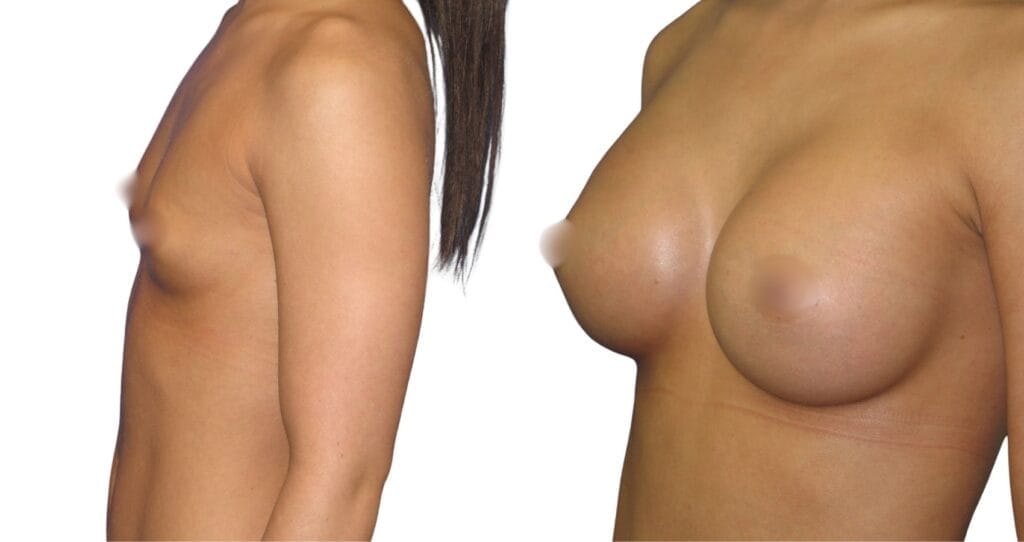
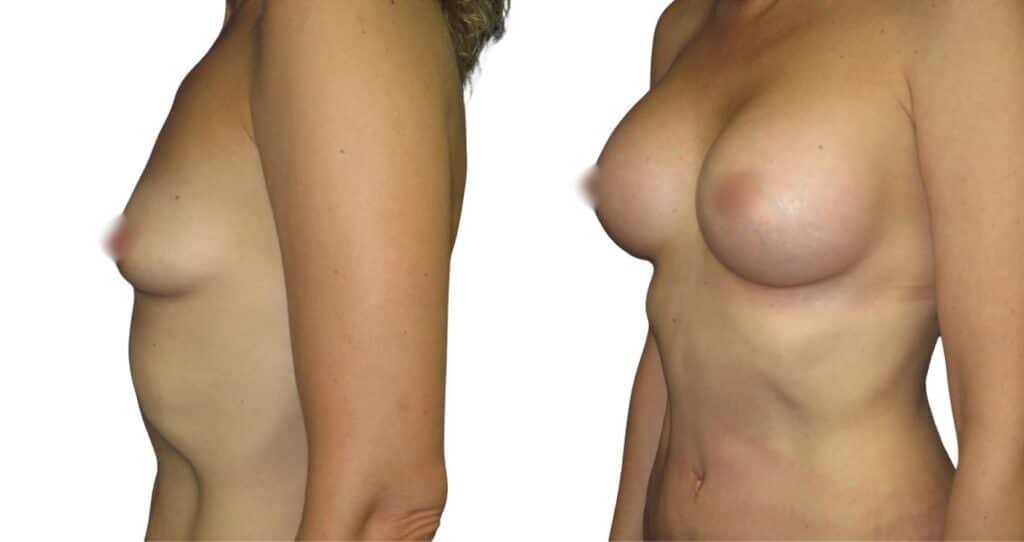
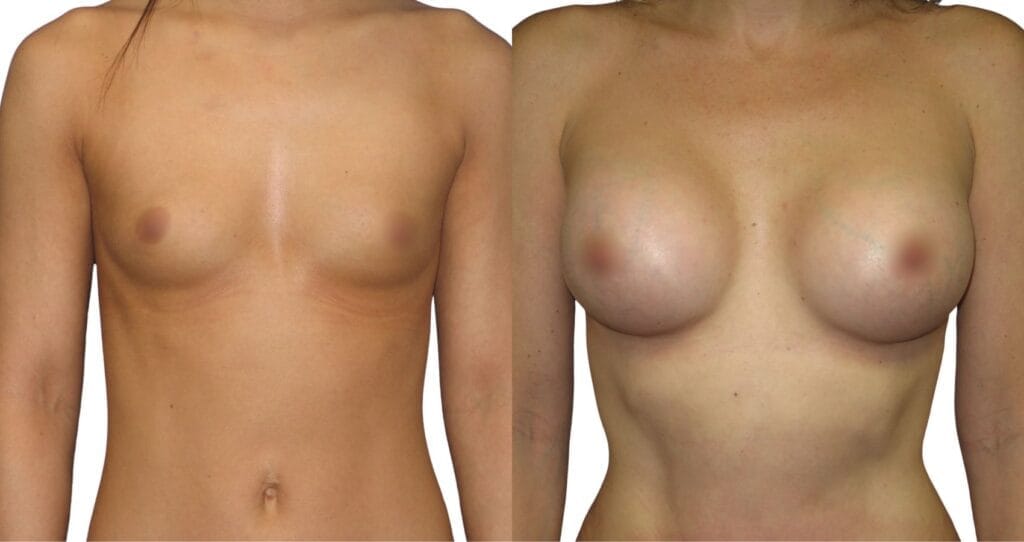
Breast Implants and Fat Transfer Before & After at Vivid Clinic
These consented Vivid Clinic cases show breast implant results alongside breast fat injection (fat transfer) results from our Istanbul surgeons. Comparing them side by side is the clearest way to see breast implants vs fat transfer in terms of size gain and shape.


FAQs: Breast Implants vs Fat Transfer
1. Which gives a more natural result-breast implants or fat transfer?
If your goal is the most natural look and feel, fat transfer is often the preferred method since it uses your own living tissue for enhancement. It offers subtle, soft changes with no foreign material. However, with today’s advanced cohesive gel implants and precise surgical technique, implants can also look and feel very natural, especially when matched carefully to your body. The best choice depends on your anatomy, goals, and desired size change. Discuss your vision thoroughly with your plastic surgeon at Vivid Clinic in Istanbul for guidance tailored to you.
2. How long do results last for breast implants vs fat transfer?
Breast implants typically last 10-20 years or longer, though they may need replacement or adjustment eventually. Fat transfer is considered semi-permanent; the surviving fat cells behave like natural tissue and should last for years unless significant weight loss occurs. It’s normal for some transferred fat to be reabsorbed within the first months-usually about 30-50%-and the final volume stabilizes by three to four months. Both methods benefit from maintaining a healthy, stable weight and regular follow-up care at Vivid Clinic.
3. Is recovery easier after breast implants or fat transfer?
Recovery experience varies, but many find fat transfer easier since incisions are smaller and only a short downtime is required. However, there may be multiple areas feeling sore-the breasts and the donor sites. Implants may involve more chest tightness early on, but swelling and discomfort usually subside within the first week. Both approaches require support garments and activity modification, and Vivid Clinic provides detailed aftercare to support your healing through every step in Istanbul and remotely once you return home.
4. Are the risks different for breast implants vs fat transfer?
Each method carries unique risks. Implants can rarely cause infection, capsular contracture, or device rupture, while fat transfer risks include fat necrosis, lumps, or uneven absorption. Both are considered safe when performed by experienced surgeons in accredited facilities like Vivid Clinic Istanbul, with expert screening minimizing risks. Your consultation includes a full discussion of risks, benefits, and how your medical history affects safety. All surgeries are planned with your individualized needs in mind.
5. Can you combine breast implants and fat transfer in one procedure?
Yes, some patients are ideal candidates for a combination approach-using implants to achieve the desired size and using fat transfer to enhance contours or camouflage implant edges. This can provide the most balanced, natural result, especially in very slim or asymmetric cases. Your Vivid Clinic surgeon in Istanbul will explain if this hybrid technique is suitable for your goals, and how it might be integrated into your personalized surgical plan.
Conclusion: Your Next Step for Confident Breast Enhancement in Istanbul
Choosing breast implants vs fat transfer is ultimately a personal decision shaped by your anatomy, wishes, and lifestyle. Both methods can offer safe, elegant improvements when planned with artistry and medical expertise at centers like Vivid Clinic in Istanbul, Turkey. Whether you’re drawn to the predictable sculpting of implants, the subtle enhancement of fat transfer, or a tailored combination, your journey begins with an expert assessment and honest advice.
Start your transformation today-get a free consultation with a plastic surgeon at Vivid Clinic and discover what’s possible for you. To explore techniques, see inspiration in our Before & After Gallery, or learn more about related procedures like breast implants, fat transfer, or breast lifting, visit our breast aesthetics pages for further information.