 ChatGPT

The Quiet Signal That Turns Down the Noise
People who take it often describe the same strange experience. The cookie jar stops calling. The second helping loses its appeal. One patient told our team it felt as if someone had “turned the volume down on food”. No willpower battle. Just quiet.
So how does Ozempic work to create that effect? The answer is not magic and it is not a stimulant. It is a clever copy of a message your own gut already sends, held in place for much longer than nature intended.
At Vivid Clinic in Istanbul, Turkey, we are not a prescribing clinic for this medication. Our plastic and bariatric surgeons meet people at the next chapter: after the weight has changed, when the body and face need attention, or when someone is deciding between injections and surgery. Understanding the mechanism helps you make better decisions at every stage, so let us walk through it clearly.
How Does Ozempic Work in Simple Terms?
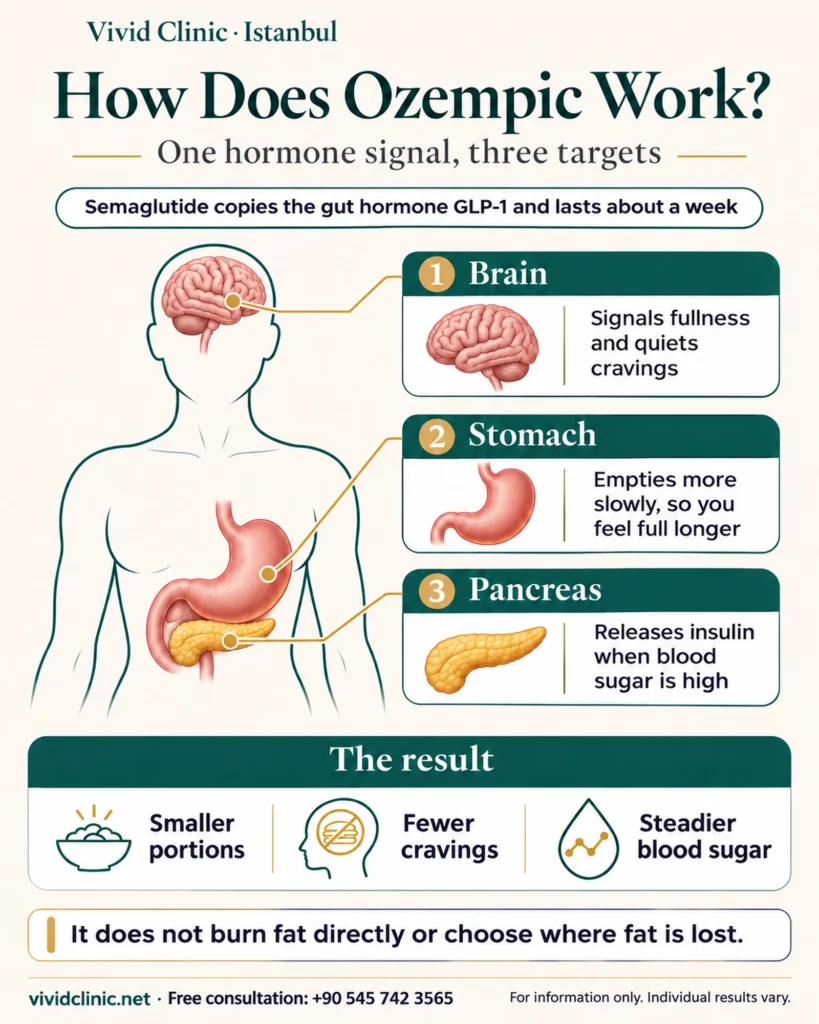
Every time you eat, cells in your intestine release a hormone called GLP-1 (glucagon-like peptide-1). Think of it as a text message to three recipients: your pancreas, your stomach, and your brain. The message says, “Food has arrived. Handle it, slow down, and stop eating soon.”
The trouble is that natural GLP-1 disappears within minutes. The active ingredient in Ozempic, semaglutide, is built to resist breakdown. One weekly injection keeps that message circulating for roughly seven days.
Effect 1: The Pancreas Releases Insulin When It Is Needed
When blood sugar rises, semaglutide encourages the pancreas to release more insulin. It also reduces glucagon, a hormone that tells the liver to release stored sugar. Because this effect depends on glucose levels, the risk of very low blood sugar is lower than with some older diabetes drugs, although it rises if combined with insulin or sulfonylureas.
Effect 2: The Stomach Empties More Slowly
Food leaves your stomach at a slower pace. You feel full sooner and stay full longer. This is also why nausea and reflux are common early on, and why your anesthesiologist needs to know you take the drug before any operation.
Effect 3: The Brain Feels Satisfied
GLP-1 receptors sit in brain regions that control hunger and reward. Semaglutide acts there too. Many users report fewer cravings and less “food noise”, the constant background thinking about the next meal.
How Does Ozempic Work for Weight Loss?
Weight loss on semaglutide is not caused by burning fat faster. It happens because you eat less, comfortably, for a sustained period. Smaller portions, fewer snacks, less interest in rich food. Over months, that calorie gap adds up.
In clinical trials of the 2.4 mg weekly dose, used under the Wegovy brand, adults lost on average close to 15 percent of body weight over 68 weeks alongside lifestyle support. At the doses used in Ozempic for diabetes, average weight loss tends to be lower. Individual results vary widely.
Does Ozempic Burn Fat?
Not directly. You lose fat because of the calorie deficit. You can also lose muscle. Body-composition studies suggest a notable share of the weight lost on GLP-1 medications can be lean mass if you do not protect it with protein and resistance exercise.
How Long Does It Take Ozempic to Work?
Two clocks run at the same time.
Blood sugar often begins to improve within the first week or two. Weight moves more slowly, because doses start low and increase gradually to help your stomach adjust.
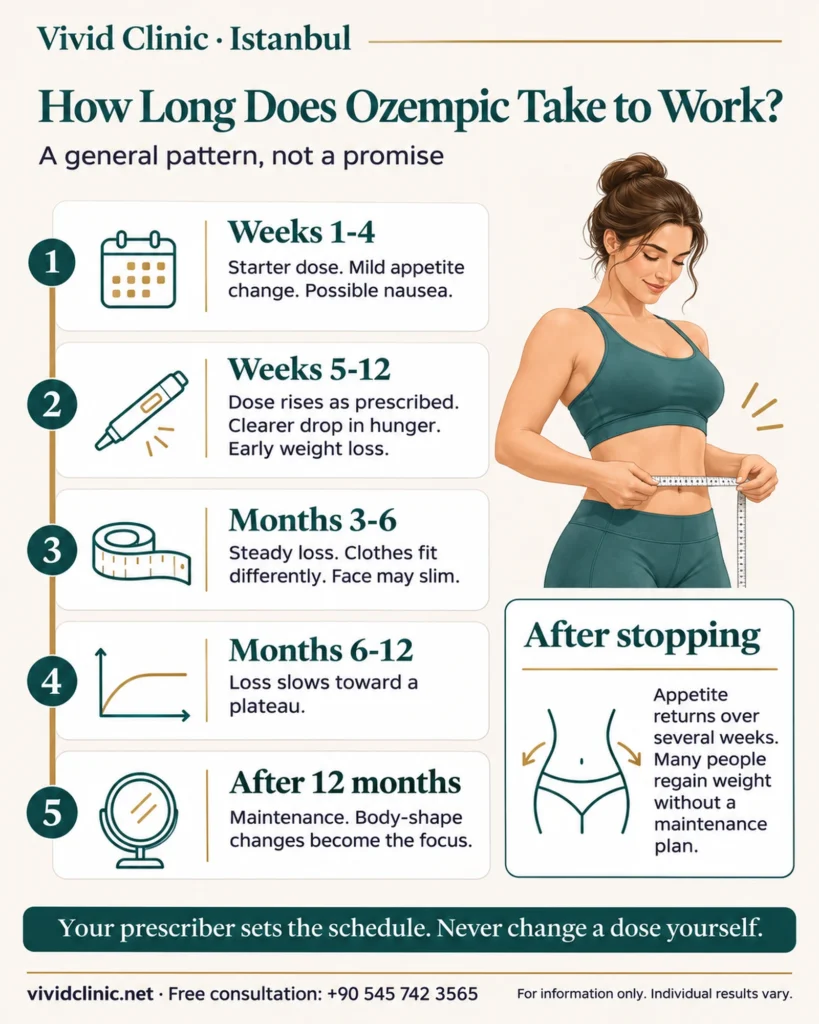
| Timeframe | What Many People Notice |
|---|---|
| Weeks 1 to 4 | Starter dose; mild appetite change; possible nausea |
| Weeks 5 to 12 | Dose increases as prescribed; clearer drop in hunger; early weight loss |
| Months 3 to 6 | Steady loss; clothes fit differently; facial slimming may appear |
| Months 6 to 12 | Loss slows toward a plateau for many people |
| After 12 months | Maintenance phase; body-shape changes become the main concern |
This is a general pattern, not a promise. Your prescriber sets the schedule, and you should never adjust a dose on your own.
Why Does Weight Loss Slow Down Over Time?
Almost everyone reaches a point where the scale stops moving, and it can feel as if the medication has stopped working. It has not. Your body has simply reached a new balance.
A smaller body burns fewer calories. If you have lost muscle along the way, the drop is even larger. At the same time, hormones that defend your previous weight push back by nudging hunger upward. The medication is still turning the volume down, but your body is now turning it up from the other side.
This is the moment when habits matter most:
- Keep protein high and meals regular
- Add or increase resistance training to protect muscle
- Review sleep and stress, both of which influence appetite hormones
- Speak to your prescriber before changing anything about your dose
A plateau is also a natural checkpoint. If you are at a healthy, sustainable weight, it may be time to shift from losing to maintaining. If you are still far from a healthy range despite good adherence, it is reasonable to ask your doctor whether another approach, including surgery, deserves a conversation.
What Happens When You Stop?
The signal fades. Appetite gradually returns to where it was. In follow-up studies, participants regained roughly two thirds of the weight they had lost within a year of stopping semaglutide. That does not mean the medication failed. It means obesity behaves like a long-term condition, and treatment often needs to be long-term too.
For some people, this is the moment they start reading about bariatric surgery requirements and more durable options such as the gastric sleeve.
What Ozempic Cannot Do for Your Shape
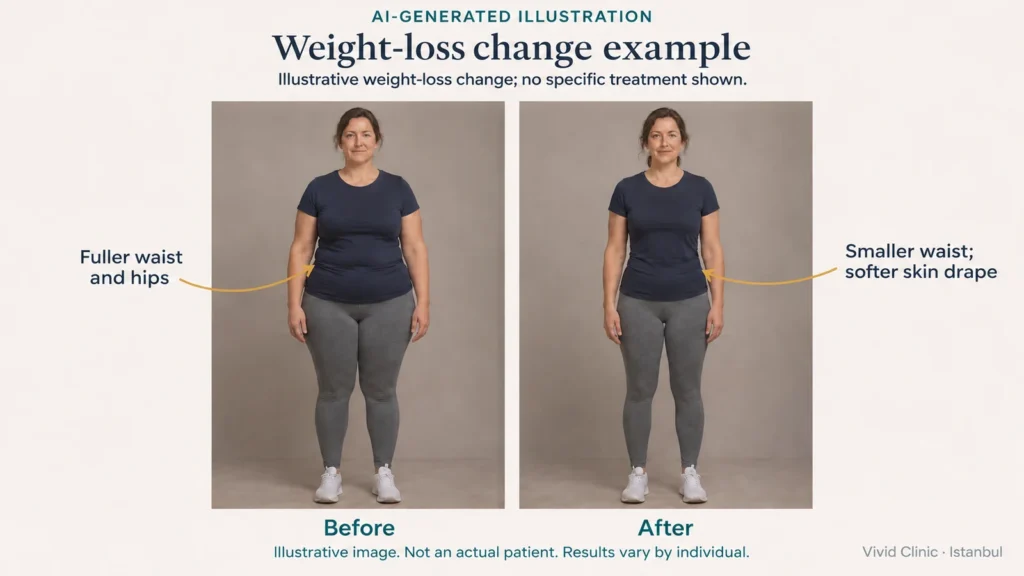
Here is the part rarely mentioned in the headlines. Semaglutide shrinks fat cells across your whole body. It has no idea which fat you like and which you do not.
- It cannot keep volume in your cheeks.
- It cannot tighten skin on your abdomen or arms.
- It cannot lift breasts that have lost fullness.
- It cannot restore buttock projection.
These are the concerns that bring post-weight-loss patients to a plastic surgeon. They are common, treatable, and nothing to be embarrassed about.
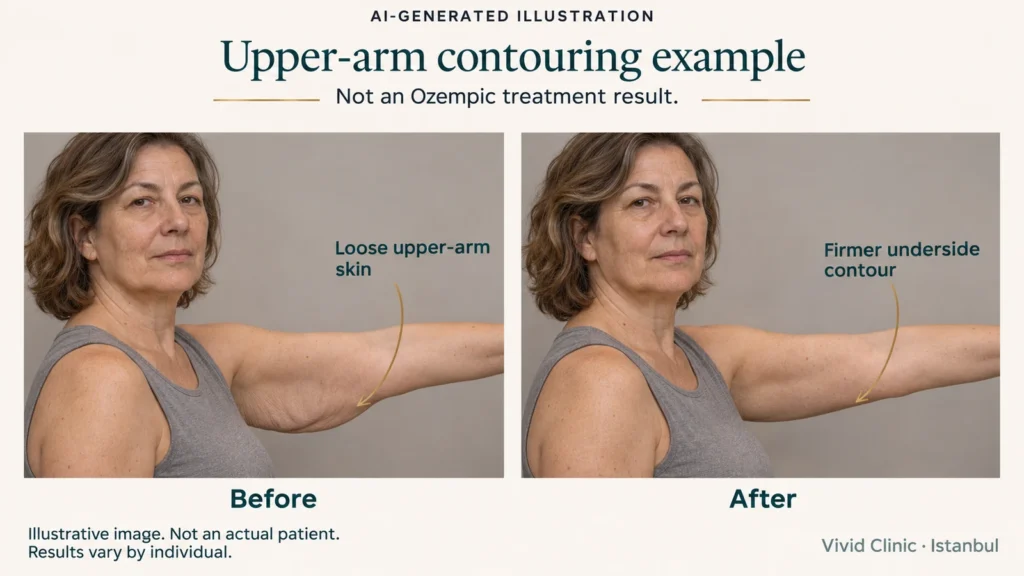
Why Patients Choose Istanbul, Turkey After GLP-1 Weight Loss
Istanbul is a leading destination for both bariatric and reconstructive body surgery. Patients travel here for experienced surgeons, hospital-based care, and well-organized packages that include accommodation and transfers.
At Vivid Clinic, bariatric surgeons and plastic surgeons work side by side. If you are comparing medication with surgery, or planning contouring after reaching your goal, you can discuss both in one place. Every patient is offered a free consultation with a plastic surgeon.
Who Is a Good Candidate for Bariatric Surgery Instead of, or After, Medication?
A sleeve gastrectomy or similar procedure may be considered if:
- Your BMI is 40 or above, or 35 or above with weight-related health conditions, in line with widely used criteria
- Medication has not produced enough loss, was not tolerated, or is not sustainable for you
- You are ready for long-term dietary change and follow-up
- A medical and psychological evaluation confirms suitability
You can check your number with our BMI guide and calculator.
Who May Not Be Suitable?
Surgery may not be appropriate for people with certain uncontrolled medical or psychiatric conditions, active substance dependence, or those unable to commit to follow-up. Only a full evaluation can decide.
Benefits of a Surgical Route
- Substantial and typically durable weight loss for many patients
- Improvement or remission of conditions such as type 2 diabetes in a significant number of cases
- No weekly injections or ongoing prescription
- A single, planned treatment with structured aftercare
Benefits vary, and surgery is a tool rather than a cure.
Procedure Overview Table: Gastric Sleeve
| Aspect | Details |
|---|---|
| Duration Process | 1 to 2 hours, performed laparoscopically |
| Hospitalization Duration | 2 to 3 nights |
| Mobility Duration | Walking within hours of surgery |
| Return to Activity | 1 to 2 weeks for desk work |
| Complete Recovery | 4 to 6 weeks |
| Anticipated Results | Progressive weight loss over 12 to 18 months |
How Gastric Sleeve Works Step by Step
- Pre-operative checks. Blood tests, heart and lung assessment, and often an endoscopy.
- Anesthesia. The operation is performed under general anesthesia.
- Keyhole access. Several small incisions are made in the abdomen.
- Reshaping. Around three quarters of the stomach is removed, leaving a narrow sleeve.
- Leak testing and closure. The staple line is checked before incisions are closed.
- Staged diet. Liquids, then purees, then soft foods over several weeks.
Interestingly, sleeve surgery also changes gut hormones, including GLP-1 and the hunger hormone ghrelin. In a sense, it adjusts some of the same signalling that medication targets, in a more lasting way.
Operation Process Overview at Vivid Clinic
Your journey with Vivid Clinic is organized so that you can focus on your health rather than logistics. On arrival in Istanbul, a VIP airport transfer brings you to your 5-star hotel, where check-in is handled with our coordinator’s help. A one-on-one consultation follows, with a full medical evaluation and time for every question. On surgery day, the hospital team prepares you, your surgeon performs the procedure, and nurses monitor you closely afterwards. Post-operative care includes pain control, early walking, and dietitian guidance. Before departure you attend a checkup visit to confirm you are fit to fly. Back home, remote aftercare follow-up continues with dietary coaching and regular contact.
Recovery Timeline
Days 1 to 3
Hospital stay, sips of clear liquid, and short walks to reduce clot risk.
Weeks 1 to 2
Liquid diet. Fatigue is normal. Most people return to light work.
Weeks 3 to 6
Purees and soft foods. Energy improves. Light exercise resumes when cleared.
Months 2 to 18
Solid foods in small portions, vitamin supplements, and steady weight loss.
When Will You See Results?
Whether through medication or surgery, weight change is gradual. With a sleeve, loss is usually fastest in the first six months and continues for up to eighteen. With medication, loss tends to level off at around a year. Body contouring, if wanted, is normally planned once your weight has been stable for several months. Results vary from patient to patient.
Risks and Safety Considerations
Common side effects of semaglutide include nausea, vomiting, diarrhea, constipation, and abdominal discomfort. Less common but serious problems include pancreatitis, gallbladder disease, and dehydration-related kidney issues. Anyone with a personal or family history of medullary thyroid carcinoma or MEN2 should not take it.
Bariatric surgery has its own risks, including bleeding, staple-line leak, blood clots, reflux, and nutritional deficiencies. A careful evaluation and lifelong follow-up reduce these risks but cannot remove them.
Cost Factors
Pricing depends on the procedure chosen, hospital stay, surgeon experience, anesthesia, pre-operative tests, and the hotel, transfer, and aftercare services in your package. The final cost depends on your personal treatment plan, which is why a consultation is the most accurate way to receive pricing. See our guide to bariatric surgery price factors for more context. Estimate only. Final pricing is confirmed after consultation.
Real Vivid Clinic Results: Body Contouring Before and After
The photos below are real Vivid Clinic patient cases, shared with consent. They are separate from the AI-generated illustrations used elsewhere in this article. Individual results vary, and each caption states what the photos show.
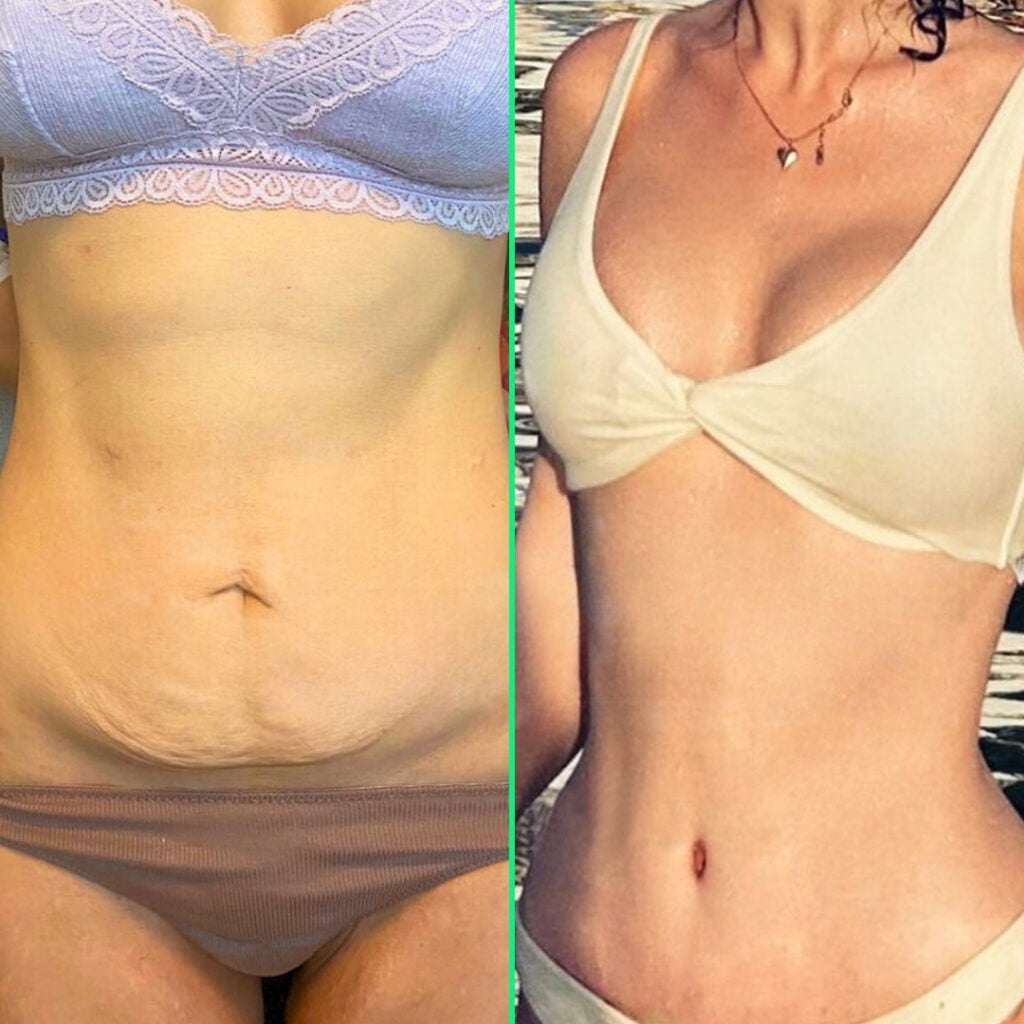
Left: before · Right: after · View: front · Follow-up interval: not recorded
Before: Loose abdominal skin. After: Flat abdomen.
Vivid Clinic patient, shared with consent. Individual results vary; this is one case, not a promise of your outcome.
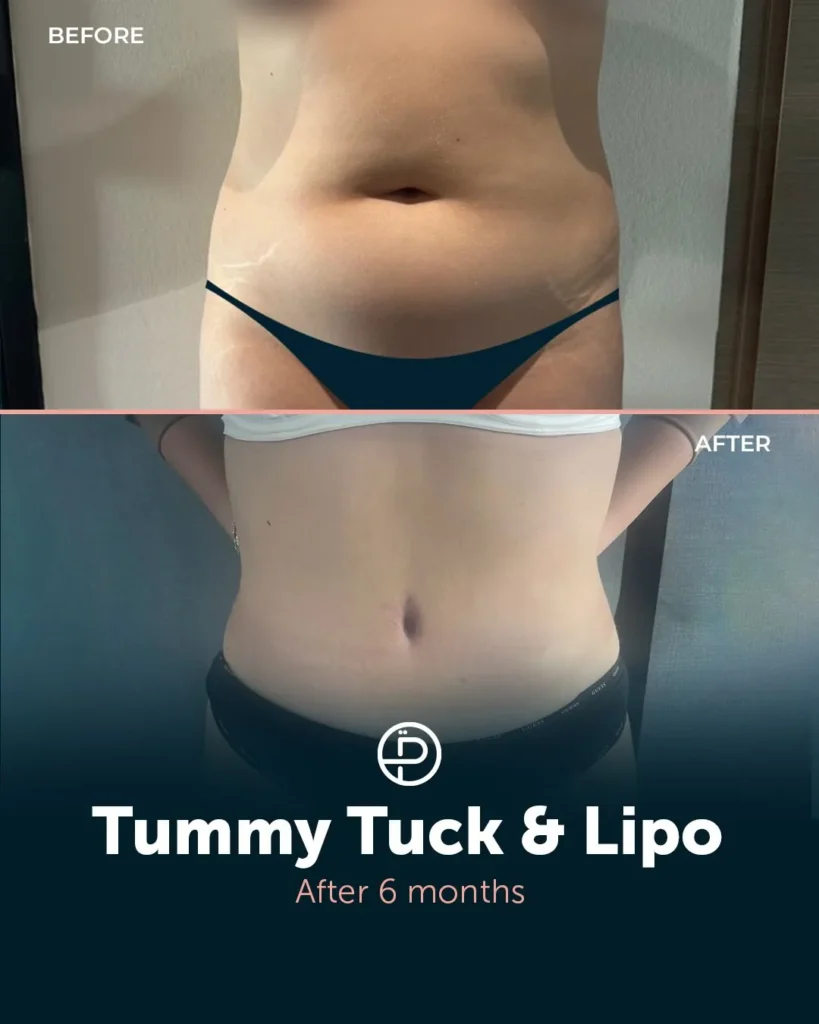
Top: before · Bottom: after · View: front · Follow-up photo: 6 months (as labelled)
Before: Lower abdominal fullness. After: Flatter abdomen and a more defined waist.
Framing and light differ; the before photo is warmer.
Vivid Clinic patient, shared with consent. Individual results vary; this is one case, not a promise of your outcome.
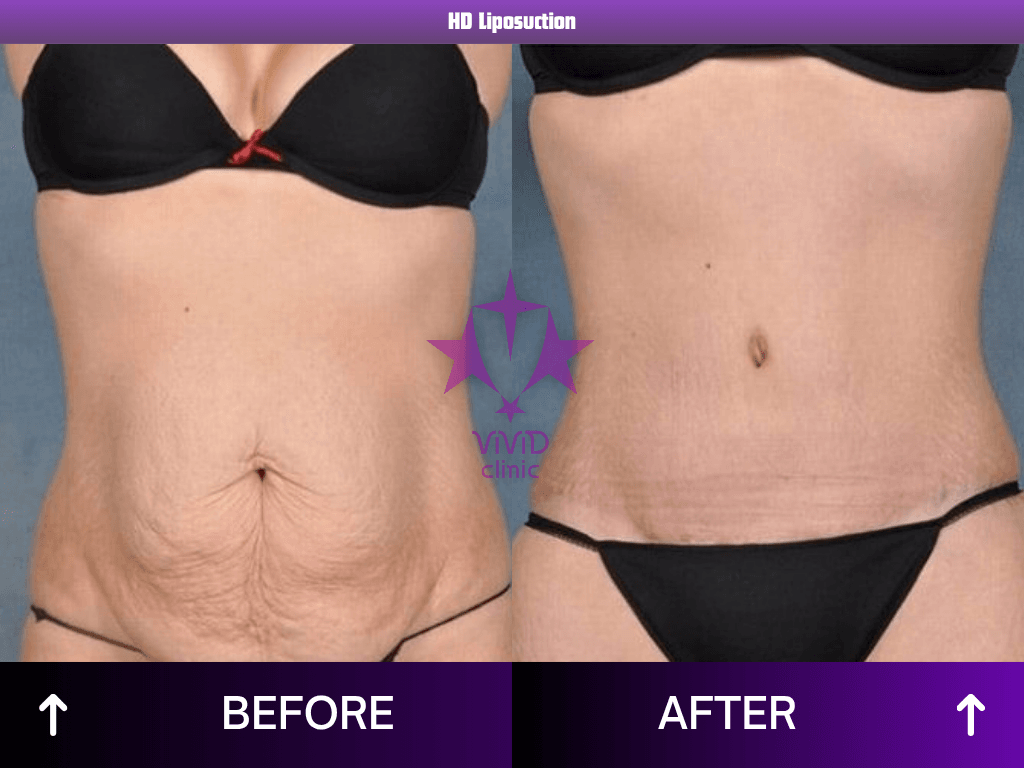
Left: before · Right: after · View: front · Follow-up interval: not recorded
Before: Loose lower-abdominal skin. After: Flatter abdomen.
Vivid Clinic patient, shared with consent. Individual results vary; this is one case, not a promise of your outcome.

Left: before · Right: after · View: arm raised · Follow-up interval: not recorded
Before: Fuller upper arm. After: Slimmer upper arm.
Vivid Clinic patient, shared with consent. Individual results vary; this is one case, not a promise of your outcome.
Photos are unedited clinic composites; before and after photos may differ in lighting, clothing and pose. Consent is on file at the clinic. See more cases on our tummy tuck, liposuction and arm liposuction pages, or browse the full before and after gallery.
Why Choose Vivid Clinic in Istanbul?
Vivid Clinic offers premium, patient-focused care for international patients, covering consultation, planning, transfers, hotel coordination, treatment, follow-up, and remote aftercare. Our doctors across bariatric and aesthetic surgery plan together, so you receive joined-up advice. Read what previous patients say in our testimonials.
FAQs
How does Ozempic work differently from older diet pills?
How does Ozempic work compared with stimulant-style diet pills? It does not speed up your heart or metabolism. It copies a natural gut hormone, GLP-1, to reduce hunger, slow stomach emptying, and steady blood sugar. The effect is hormonal rather than stimulant-based.
How does Ozempic work in the first month, and why is the starting dose so low?
How does Ozempic work at the beginning? Doctors start with a low dose so your digestive system can adapt. In the first month, many people feel a mild drop in appetite and some nausea. Meaningful weight change usually comes later, once the dose has been increased as prescribed.
How does Ozempic work on belly fat compared with facial fat?
How does Ozempic work on specific areas? It does not target any area. Fat is lost across the body according to your genetics. Some people lose facial volume early while stubborn abdominal fat remains, which is why facial hollowing and loose skin are common concerns afterwards.
How does Ozempic work alongside surgery at Vivid Clinic in Istanbul?
How does Ozempic work with a planned operation? Because it slows stomach emptying, your anesthesiologist may ask you to pause it before surgery. At Vivid Clinic, your surgeon and anesthesia team review your medications during consultation and give you individual instructions, coordinated with your prescribing doctor.
How does Ozempic work long term if I stop taking it?
How does Ozempic work after you stop? It does not keep working. Appetite signals return over several weeks, and studies show many people regain much of the lost weight within a year. Long-term maintenance needs a plan, whether that is continued treatment, lifestyle change, or bariatric surgery.
Conclusion
Now you know how does Ozempic work: it borrows your body’s own fullness signal and holds it steady, so eating less feels natural. It is effective for many people, gradual in its results, and dependent on continued use. What it does not do is decide where fat leaves, protect your muscle, or tighten your skin.
If your weight has changed and you want expert advice on what comes next, from bariatric options to face and body contouring, Vivid Clinic in Istanbul, Turkey is ready to help. Get a Free Consultation with a plastic surgeon and plan your next step with confidence.
This article is for general information and does not replace medical advice. Vivid Clinic does not prescribe or supply Ozempic. Ozempic is a registered trademark of its owner. Results vary by individual.