
 ChatGPT
The Number Everyone Wants to Know
Scroll through social media for five minutes and you will find someone holding up an old pair of pants, grinning. “Forty pounds down.” “Three dress sizes.” The stories are inspiring. They are also selected. Nobody posts the month where nothing moved.
So when you ask how much weight can you lose on Ozempic, what you really want is the honest average, the realistic range, and a sense of where you might land. That is a sensible question, and the clinical trials answer it better than any viral video.
At Vivid Clinic in Istanbul, Turkey, our bariatric and plastic surgeons talk to patients on both sides of this journey: those wondering whether medication will be enough, and those who have already lost weight and are deciding what to do about loose skin or a stubborn plateau. We do not prescribe Ozempic, which allows us to be straightforward about its strengths and its limits.
How Much Weight Can You Lose on Ozempic According to the Research?
Let us separate two things that often get blended together: Ozempic at diabetes doses, and semaglutide at the higher weight-management dose.
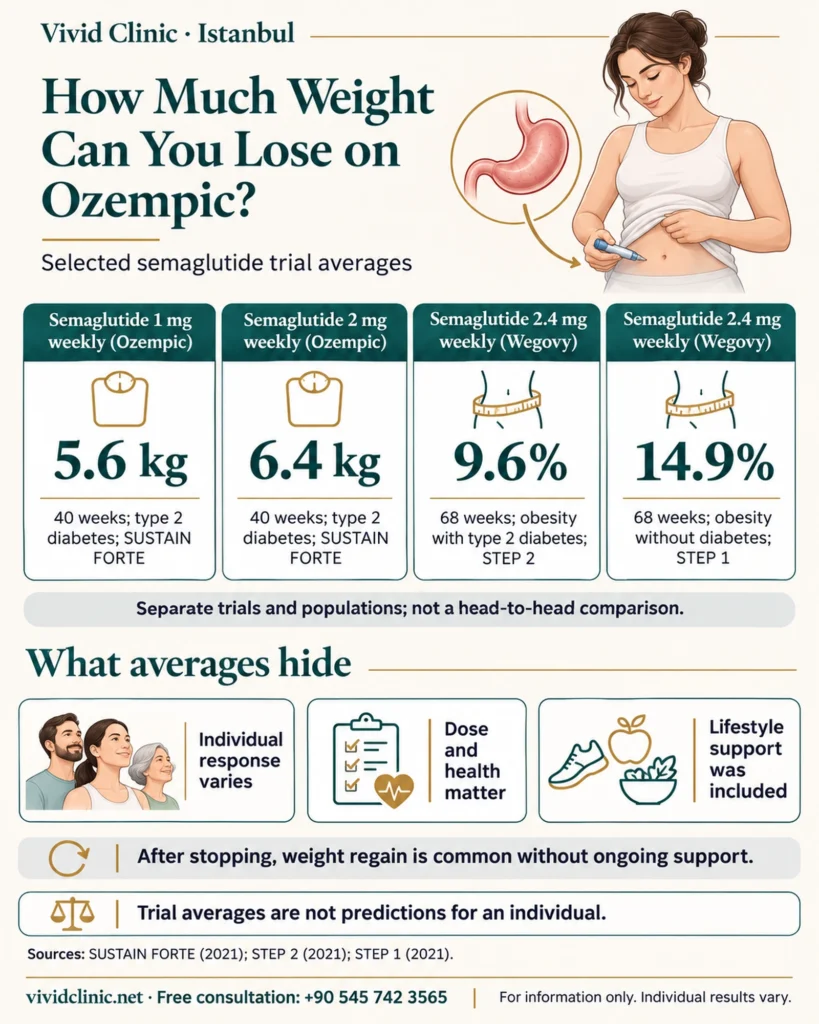
| Medication and Dose | Who Was Studied | Approximate Average Weight Loss | Study Length |
|---|---|---|---|
| Semaglutide 1 mg weekly (Ozempic) | Adults with type 2 diabetes | Roughly 4 to 6 kg | About 30 to 56 weeks |
| Semaglutide 2 mg weekly (Ozempic) | Adults with type 2 diabetes | Roughly 7 kg | 40 weeks |
| Semaglutide 2.4 mg weekly (Wegovy) | Adults with overweight or obesity, without diabetes | About 15 percent of body weight | 68 weeks |
| Semaglutide 2.4 mg weekly (Wegovy) | Adults with obesity and type 2 diabetes | About 10 percent of body weight | 68 weeks |
Figures are rounded averages from published trials and included lifestyle support. They are not predictions for any individual.
What does 15 percent look like in real life? For someone starting at 100 kg, it is about 15 kg. For someone at 130 kg, closer to 20 kg.
Averages Hide a Wide Range
In the largest weight-management trial, about a third of participants lost 20 percent or more of their body weight. At the other end, a meaningful minority lost less than 5 percent. Bodies respond differently, and nobody can tell you in advance which group you will be in.
How Fast Do You Lose Weight on Ozempic?
Slower than the internet suggests, at least at the start. The dose is increased gradually over several months so the stomach can adapt.
- Month 1: often 1 to 2 kg, sometimes less, on the starter dose
- Months 2 to 3: loss becomes steadier as the dose rises
- Months 4 to 9: typically the most productive period
- Months 9 to 15: loss slows and most people reach a plateau
A rate of roughly half a kilogram to one kilogram per week during the active phase is common, but there is no single correct pace.
Why Do Some People Lose Less?
If you have typed “why can’t I lose weight on Ozempic” into a search bar at midnight, you are not alone. Several factors affect response:
- Type 2 diabetes. People with diabetes tend to lose less on average than those without.
- Dose. Lower maintenance doses produce smaller effects.
- Diet quality. The drug reduces appetite; it does not choose your food.
- Activity and muscle. Less movement and muscle means lower energy use.
- Other medications that promote weight gain.
- Sleep, stress, and hormones.
- Biology. Some people are simply lower responders.
Can You Gain Weight on Ozempic?
It is uncommon, but it happens, usually when calorie intake stays high despite reduced appetite, or when another medical factor is involved. Your prescribing doctor is the right person to review this.
How to Get the Most From Your Weight Loss
Whatever number you end up with, the quality of the weight you lose matters as much as the quantity. Two people can both lose 15 kg and look and feel completely different, depending on how much of it was fat and how much was muscle.
- Eat protein first. With a small appetite, start each meal with the protein portion.
- Train with resistance. Two or three sessions a week helps you keep muscle and shape.
- Move daily. Walking supports heart health and helps maintain your loss.
- Sleep well. Poor sleep increases hunger hormones and cravings.
- Keep follow-up appointments. Regular reviews let your doctor adjust treatment and check blood results.
- Plan for maintenance early. Decide with your doctor what happens when you reach your goal.
These habits also influence how you look afterwards. Patients who protect their muscle and lose weight steadily tend to have firmer contours and less dramatic facial hollowing, and they are often better candidates for body contouring if they choose it later.
The Plateau and the Rebound
Two realities deserve attention before you set your expectations.
The plateau. Around the one-year mark, weight usually stabilizes. Your body has adapted. That is normal, not a failure.
The rebound. In an extension of a major trial, participants who stopped semaglutide regained about two thirds of their lost weight within a year. For most people, the medication works for as long as it is taken.
This is why many patients begin asking a different question: is there a more lasting option?
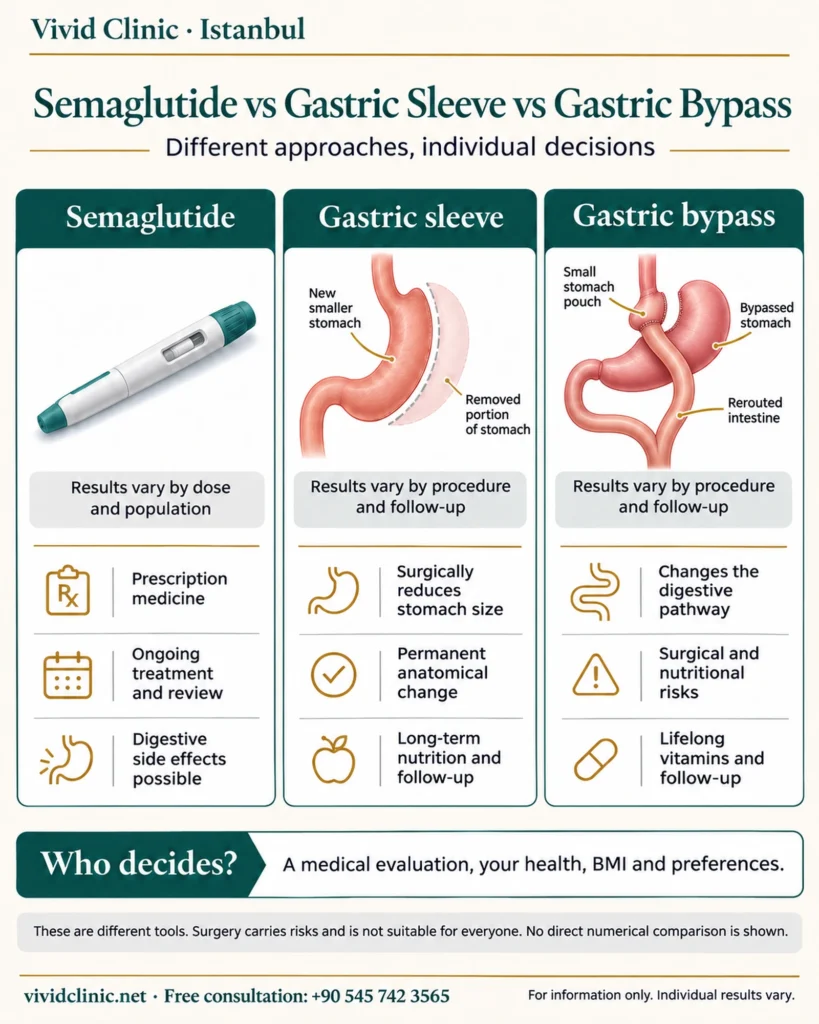
Ozempic Compared With Bariatric Surgery
| Approach | Typical Total Body Weight Loss | Durability |
|---|---|---|
| Ozempic at diabetes doses | Around 5 to 7 percent on average | While treatment continues |
| Semaglutide 2.4 mg | Around 15 percent on average | While treatment continues |
| Gastric sleeve | Often around 25 to 30 percent | Long term for many patients with lifestyle support |
| Gastric bypass | Often around 30 to 35 percent | Long term for many patients with lifestyle support |
These are general ranges from published literature. Individual results vary, and surgery is only suitable for people who meet medical criteria.
Medication and surgery are not competitors. Some patients use medication first and move to surgery later. Others use medication after surgery if weight creeps back. You can read about each operation in our guide to the 4 types of bariatric surgery.
Why Patients Choose Bariatric Surgery in Istanbul, Turkey
Istanbul has become a major center for metabolic surgery. Patients are drawn by experienced laparoscopic surgeons, modern hospitals, and inclusive care that covers hotel, transfers, and follow-up.
At Vivid Clinic, bariatric procedures sit alongside plastic surgery, so the same clinic can support you from weight loss through to body contouring. Every patient is offered a free consultation with a plastic surgeon to discuss post-weight-loss options.
Who Is a Good Candidate for Gastric Bypass?
- BMI of 40 or above, or 35 or above with weight-related conditions, in line with commonly used guidelines
- Type 2 diabetes or severe reflux, where bypass may offer particular advantages
- Previous attempts with diet, exercise, or medication that did not achieve lasting results
- Readiness for lifelong vitamin supplements and follow-up
Who May Not Be Suitable?
People with certain severe medical conditions, untreated eating disorders, or those unable to commit to long-term follow-up may be advised against surgery. See our overview of bariatric surgery requirements.
Benefits of Gastric Bypass
- Substantial weight loss for most suitable patients
- High rates of improvement in type 2 diabetes and other weight-related conditions
- Reduced hunger through changes in gut hormones
- No ongoing weekly injections
Procedure Overview Table: Gastric Bypass
| Aspect | Details |
|---|---|
| Duration Process | 2 to 3 hours, performed laparoscopically |
| Hospitalization Duration | 3 to 4 nights |
| Mobility Duration | Walking on the day of surgery or the next morning |
| Return to Activity | 2 to 3 weeks for desk work |
| Complete Recovery | About 6 weeks |
| Anticipated Results | Most weight loss within 12 to 18 months |
How Gastric Bypass Works Step by Step
- Evaluation. Blood tests, cardiac and respiratory checks, and nutritional assessment.
- Anesthesia. General anesthesia in a hospital operating theatre.
- Creating a pouch. The surgeon forms a small stomach pouch from the upper stomach.
- Rerouting. A section of small intestine is connected to the pouch, bypassing most of the stomach and the first part of the intestine.
- Checks. Connections are tested for leaks.
- Recovery and diet. A staged diet moves from liquids to solids over several weeks.
Details of each operation are on our gastric bypass and gastric sleeve pages.
Operation Process Overview at Vivid Clinic
At Vivid Clinic, the process is structured to keep you informed and comfortable. International patients arriving in Istanbul are collected by VIP airport transfer and taken to a 5-star hotel, where check-in is arranged for you. Your one-on-one consultation includes a thorough medical evaluation and a frank discussion of which procedure fits your health and goals. Surgery day takes place in an accredited hospital with an experienced team. Post-operative care covers pain relief, early mobilization, and dietitian support during your hospital stay. A checkup visit is scheduled before departure to make sure you are ready to travel. Once home, remote aftercare follow-up continues with nutrition coaching and regular progress reviews.
Recovery Timeline
Days 1 to 4
Hospital stay with monitoring, clear liquids, and short walks.
Weeks 1 to 2
Liquid diet at home or in your hotel. Rest with gentle walking.
Weeks 3 to 6
Purees and soft foods. Return to work for most people.
Months 2 to 18
Regular small meals, vitamins, exercise, and continued weight loss.
When Will You See Results?
With medication, visible change usually starts after two to three months. With bariatric surgery, weight tends to fall quickly in the first six months, then more gradually up to eighteen months. Once you have held a stable weight for several months, body contouring such as a tummy tuck can be considered. Results vary from patient to patient.
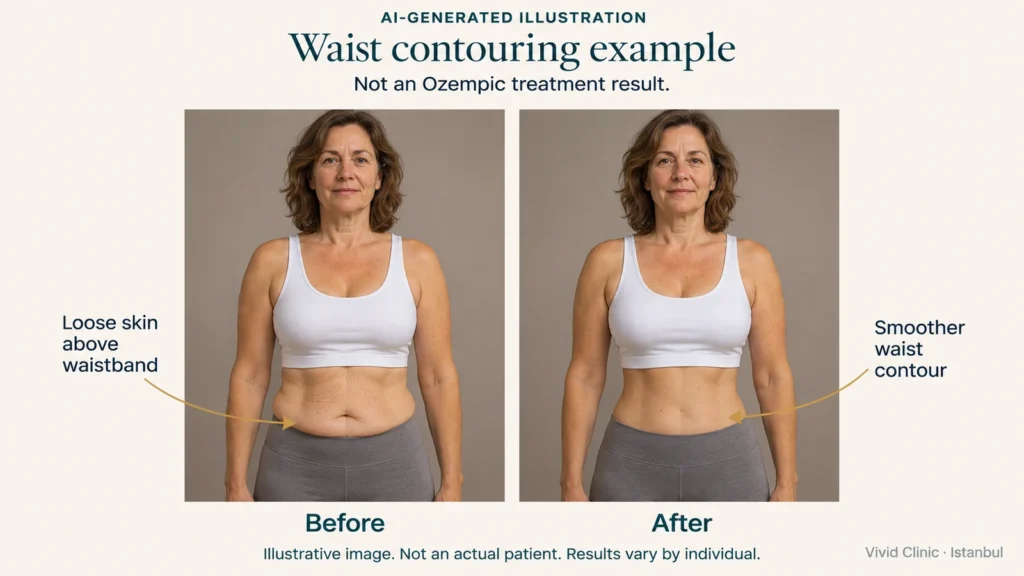
Risks and Safety Considerations
Medication side effects include nausea, vomiting, diarrhea, and constipation, with rarer serious problems such as pancreatitis and gallbladder disease. Bariatric surgery carries risks of bleeding, leak, blood clots, ulcers, dumping syndrome, and vitamin deficiencies. Neither route is without risk, and both require medical supervision. A careful evaluation helps match the option to the person.
Cost Factors
Cost depends on the procedure, length of hospital stay, surgeon experience, anesthesia, pre-operative tests, and the hotel, transfer, and aftercare services in your package. The final cost depends on your personal treatment plan, which is why a consultation is the most accurate way to receive pricing. Our article on bariatric surgery price explains the main factors. Estimate only. Final pricing is confirmed after consultation.
Real Vivid Clinic Results: Tummy Tuck and Liposuction Before and After
The photos below are real Vivid Clinic patient cases, shared with consent. They are separate from the AI-generated illustrations used elsewhere in this article. Individual results vary, and each caption states what the photos show.

Left: before · Right: after · View: front · Follow-up interval: not recorded
Before: Large loose abdominal apron with stretch marks. After: Flat abdomen (scar masked by a colour overlay).
Vivid Clinic patient, shared with consent. Individual results vary; this is one case, not a promise of your outcome.
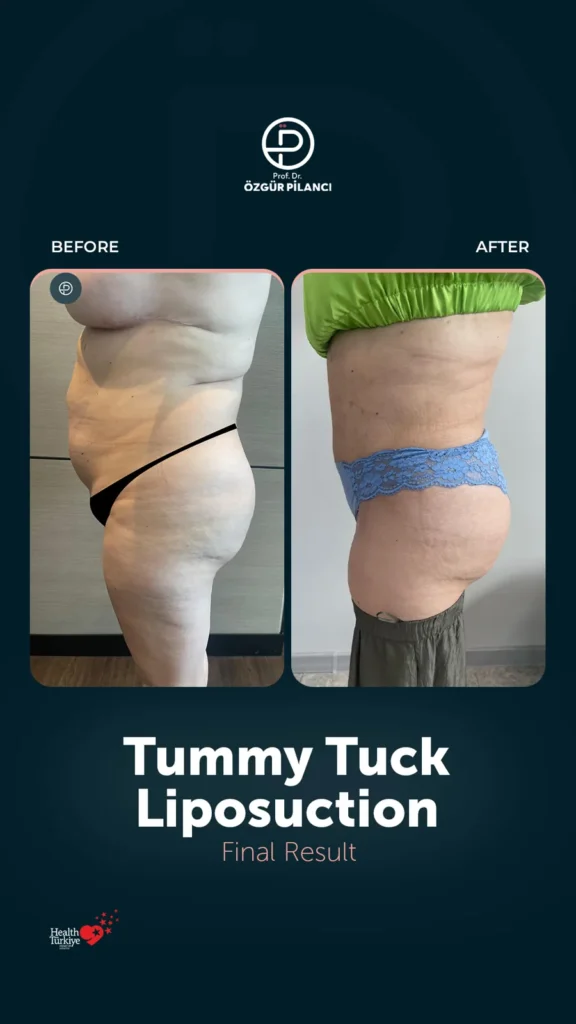
Left: before · Right: after · View: side · Follow-up interval: not recorded
Before: Abdominal overhang in profile. After: Flatter abdominal profile.
Labelled final result with no interval. The angles do not match exactly.
Vivid Clinic patient, shared with consent. Individual results vary; this is one case, not a promise of your outcome.
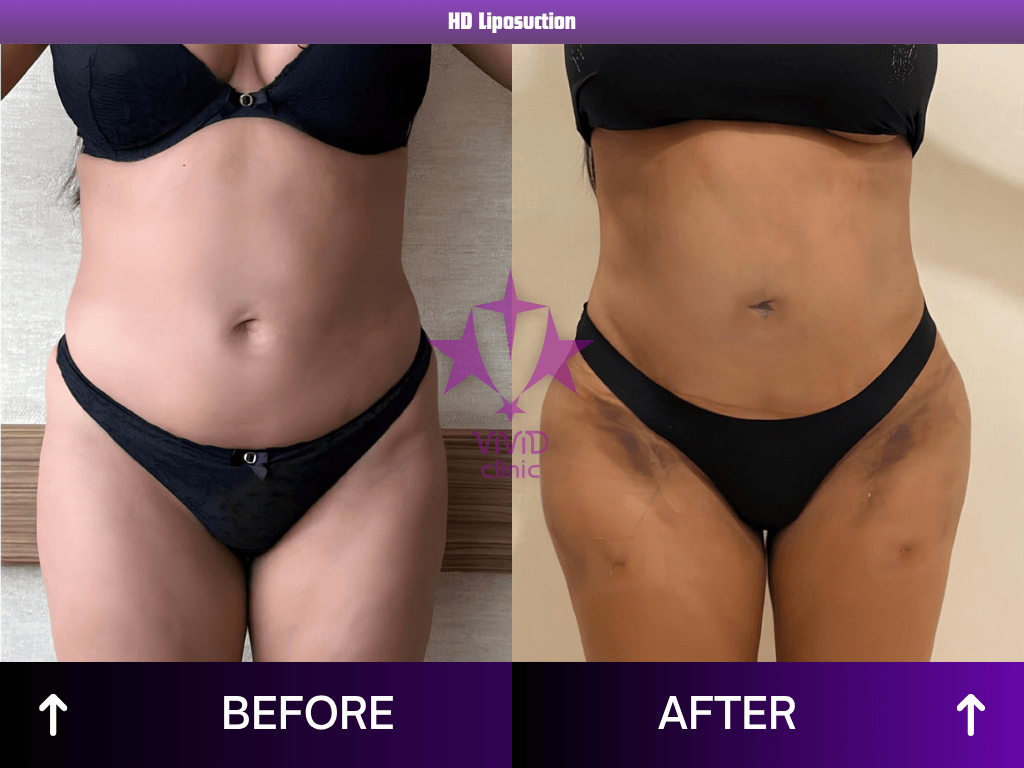
Left: before · Right: after · View: front · Follow-up interval: not recorded
Before: Rounded abdomen and flanks. After: Flatter abdomen with early bruising.
Vivid Clinic patient, shared with consent. Individual results vary; this is one case, not a promise of your outcome.
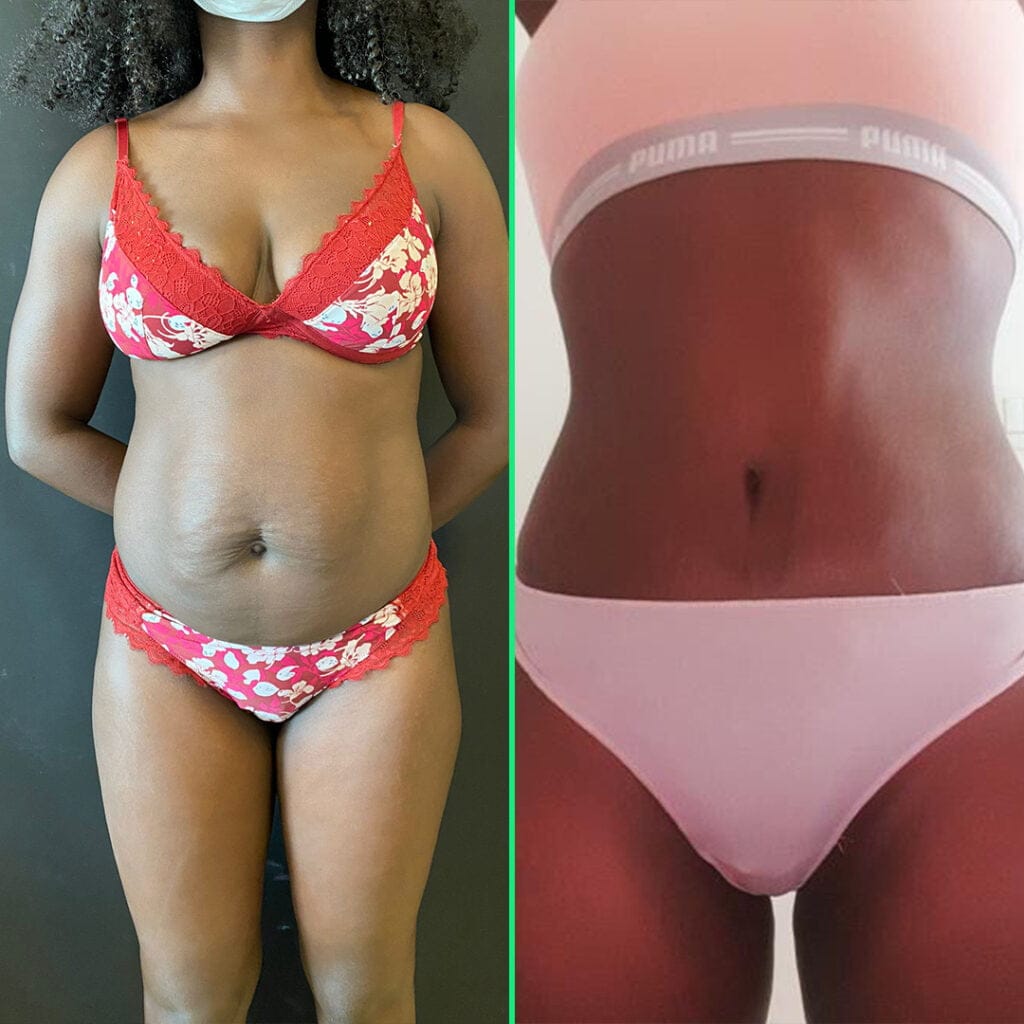
Left: before · Right: after · View: front · Follow-up interval: not recorded
Before: Loose abdomen. After: Flat abdomen.
Vivid Clinic patient, shared with consent. Individual results vary; this is one case, not a promise of your outcome.
Photos are unedited clinic composites; before and after photos may differ in lighting, clothing and pose. Consent is on file at the clinic. See more cases on our tummy tuck and liposuction pages, or browse the full before and after gallery.
Why Choose Vivid Clinic in Istanbul?
Vivid Clinic is a premium, international clinic supporting patients with consultation, planning, transfer, hotel coordination, treatment, follow-up, and remote aftercare. Our doctors in bariatric and plastic surgery work together, so your plan covers both weight loss and the shape you want afterwards. Read real experiences in our testimonials.
FAQs
How much weight can you lose on Ozempic in the first three months?
How much weight can you lose on Ozempic early on? Because the dose starts low and rises gradually, many people lose a few kilograms in the first three months, often in the range of 3 to 6 kg. Some lose more, some less. The most active period usually follows once a maintenance dose is reached.
How much weight can you lose on Ozempic compared with a gastric sleeve?
How much weight can you lose on Ozempic versus surgery? Diabetes-dose Ozempic averages a few kilograms, and higher-dose semaglutide averages around 15 percent of body weight. A gastric sleeve often achieves around 25 to 30 percent, with more durable results for many patients.
How much weight can you lose on Ozempic if you have type 2 diabetes?
How much weight can you lose on Ozempic with diabetes? Trials in people with type 2 diabetes show lower average weight loss than in people without it, commonly around 4 to 7 kg at standard Ozempic doses. Blood sugar benefits remain an important part of the treatment’s value.
How much weight can you lose on Ozempic before body contouring at Vivid Clinic makes sense?
How much weight can you lose on Ozempic before thinking about surgery? There is no fixed number. Vivid Clinic surgeons look for a weight that has been stable for three to six months and visible excess skin or volume loss. Your plan is confirmed after a personal consultation.
How much weight can you lose on Ozempic and keep off after stopping?
How much weight can you lose on Ozempic and maintain? Research suggests many people regain a large proportion within a year of stopping unless they have a maintenance strategy. Continued treatment, lifestyle change, or bariatric surgery are options to discuss with your doctor.
Conclusion
The fair answer to how much weight can you lose on Ozempic is this: on average, several kilograms at diabetes doses and around 15 percent of body weight at the higher weight-management dose, with wide variation between individuals and a strong tendency to regain after stopping. It is a valuable tool, not a finish line.
If you want to explore a more lasting solution, or you have reached your goal and want help with the shape that remains, Vivid Clinic in Istanbul, Turkey can guide you. Get a Free Consultation with a plastic surgeon and receive advice built around your body and your goals.
This article is for general information and does not replace medical advice. Vivid Clinic does not prescribe or supply Ozempic. Ozempic is a registered trademark of its owner. Results vary by individual.