
 ChatGPT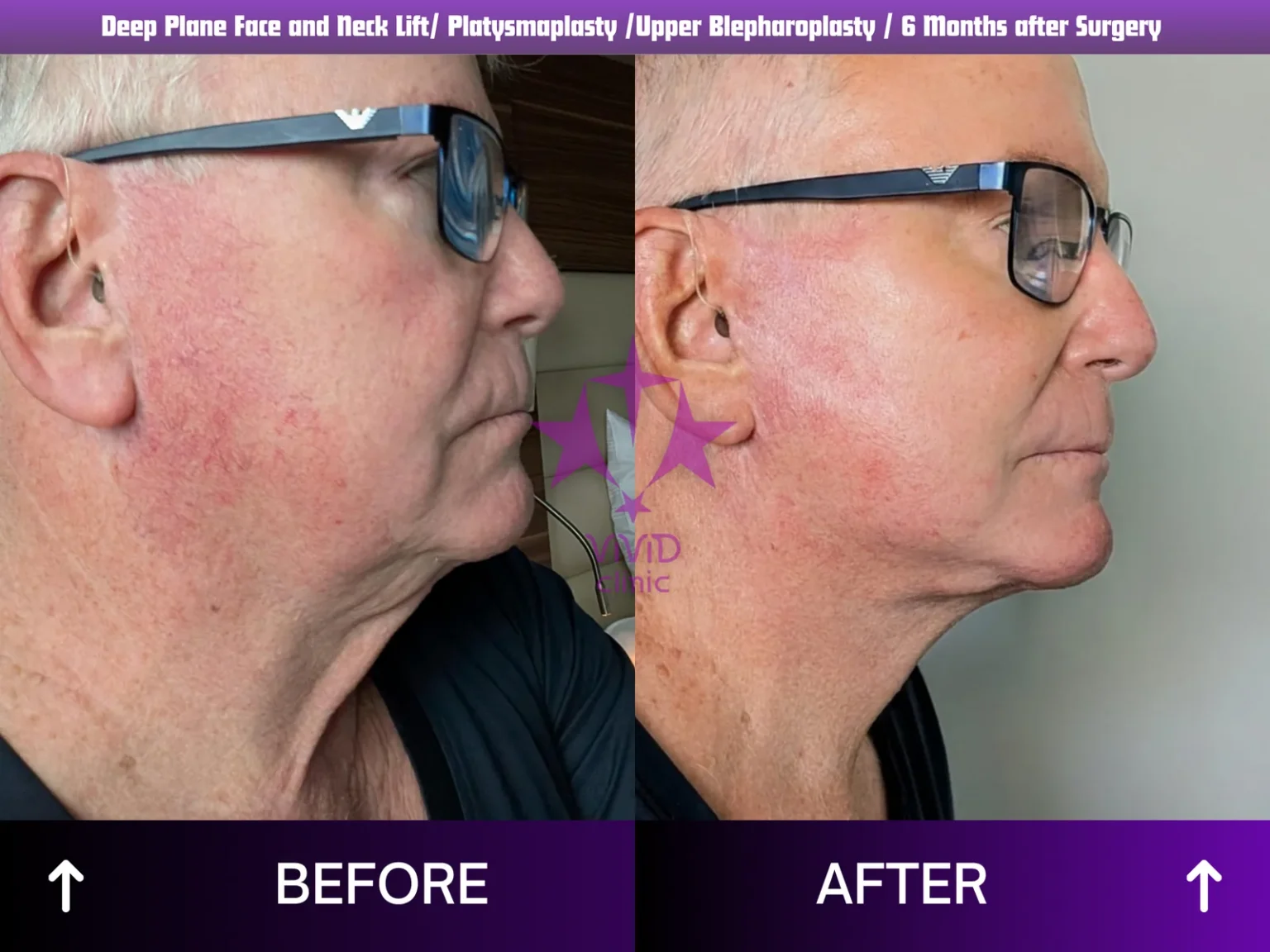
Quick answer: Platysmaplasty is a surgical procedure that tightens and repositions the platysma — the thin sheet of muscle running down the front of the neck — to reduce vertical banding and improve neck contour. It is one of the most frequently searched neck-rejuvenation terms, and for good reason: it addresses a concern that facial skin tightening alone often cannot fully resolve. This article answers the most common questions people ask before considering platysmaplasty, and walks through a documented six-month case from Vivid Clinic in Istanbul, Turkey, so you can see how the procedure typically fits into a broader surgical plan.
What Platysmaplasty Changes in the Neck Muscle
The platysma is a broad, flat muscle that extends from the collarbone area up over the jawline. In youth, its two vertical bands lie close together and blend smoothly into the neck’s soft tissue. With age, weight change, or simply genetics, the muscle’s central edges can separate and become loose, producing the visible vertical cords — often called “platysmal bands” — that show most clearly when the neck is tensed or turned. Platysmaplasty is the surgical step aimed at addressing this specific muscular laxity. In general terms, it involves accessing the muscle, then tightening or repositioning its edges — commonly described as plication — so the platysma lies flatter and the two bands sit closer to the midline. The exact suturing pattern, whether a corset-style repair or another plication method is used, and how much muscle is addressed, is a technical decision the operating surgeon makes based on each patient’s anatomy. This article does not attribute a specific technique to any individual case; it describes the muscle-level goal that platysmaplasty generally aims to achieve.
Platysmaplasty vs. a Neck Lift: Overlapping Terms
One of the most common points of confusion is whether platysmaplasty and a neck lift are the same operation. They are related but not identical, and the terms are often used loosely in casual conversation, which adds to the confusion. A neck lift is a broader surgical category that can include several elements: skin redraping and excision, fat removal or contouring beneath the chin, and muscle work on the platysma. Platysmaplasty specifically refers to the muscle component. In most surgical plans, platysmaplasty is performed as one part of a neck lift rather than as a freestanding procedure, because tightening the muscle without also addressing loose overlying skin, or without support from an adjacent facelift, can leave the aesthetic goal only partially met.
That said, platysmaplasty can occasionally be planned as a more isolated addition — for example, in a patient with relatively good skin elasticity whose primary concern is muscle banding rather than skin excess, or as a secondary refinement after a previous facelift. Even in those cases, it is rarely performed in true isolation without any adjunct procedure, since access to the muscle typically involves incisions that a surgeon will usually pair with some degree of skin adjustment. Understanding this relationship matters because it shapes expectations: someone searching for platysmaplasty images or before-and-after results will almost always be looking at combined-procedure outcomes, not a platysma-only result. For a broader look at how these elements come together, our guide to neck lift surgery at Vivid Clinic outlines the range of techniques used to address neck laxity, and our overview of facelift procedures explains how facial and neck rejuvenation are frequently planned together.
Case M: A Combined-Surgery Example
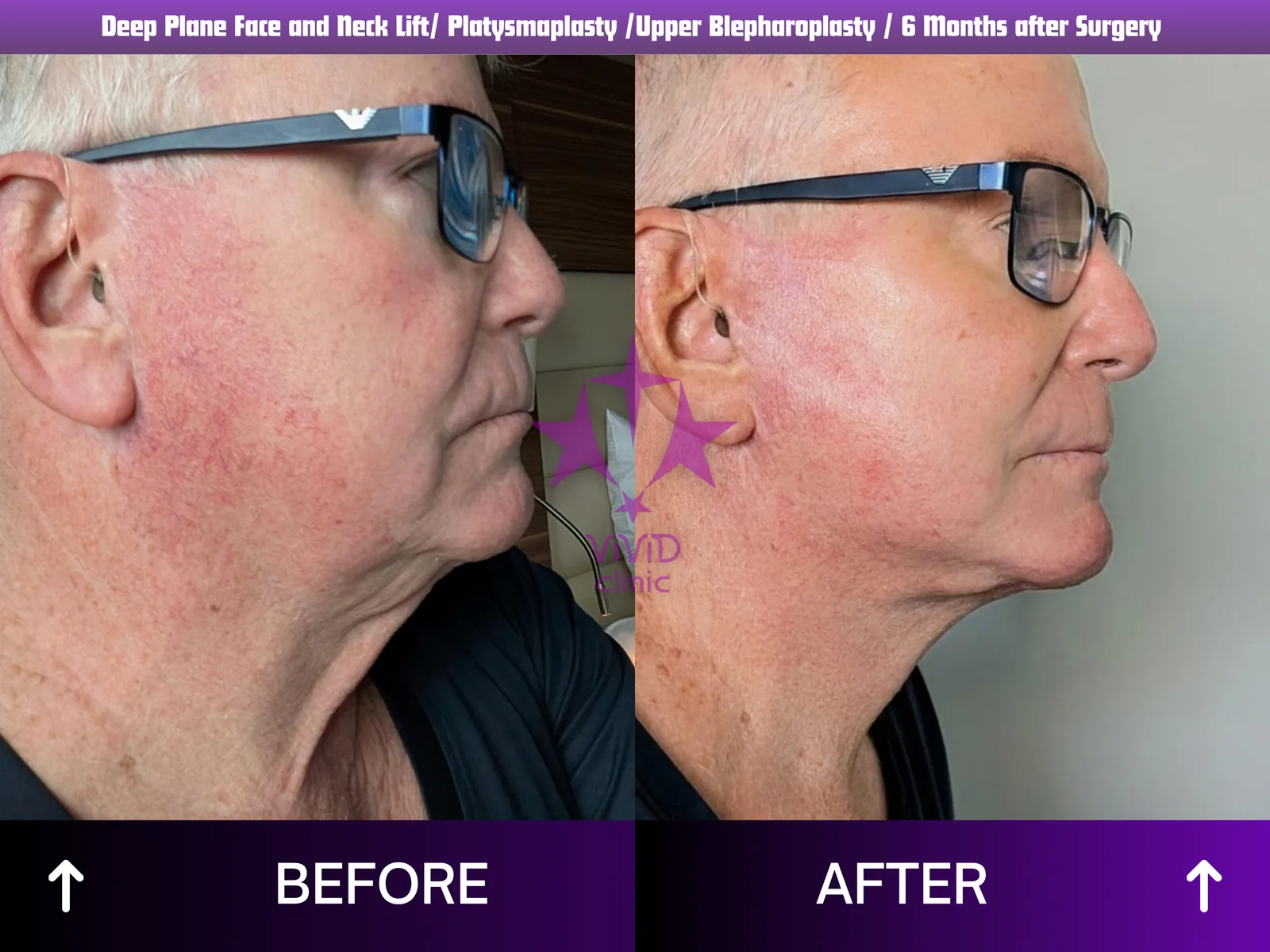
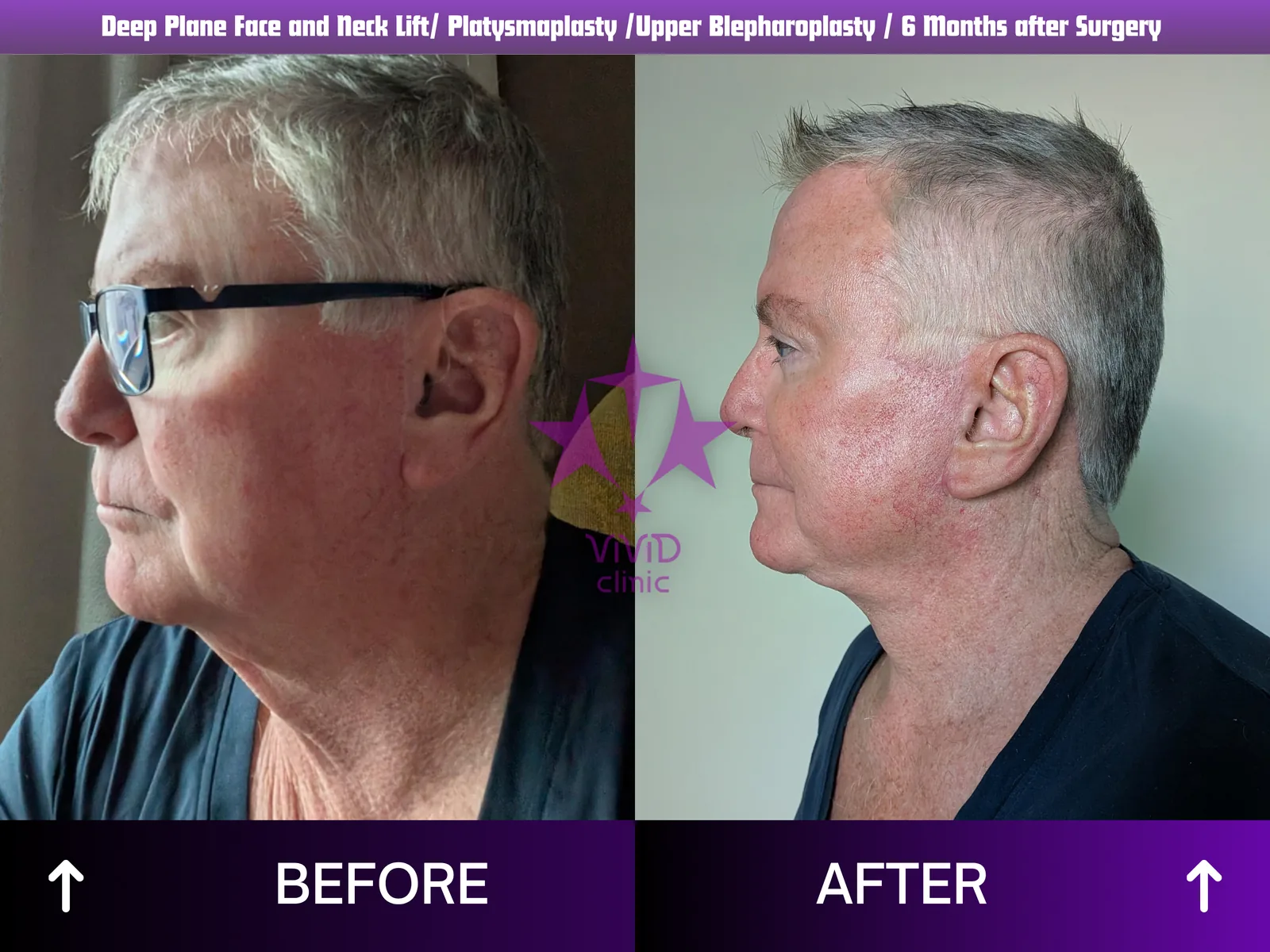
To illustrate what a platysmaplasty result can look like in practice, we’re sharing a documented case from Vivid Clinic, identified here as Case M, photographed six months after surgery. It is important to state clearly what this case involved: a deep plane face and neck lift, platysmaplasty, and upper blepharoplasty, performed together as a single combined surgical plan. This is not a platysmaplasty-only case, and it should not be read as one. We are presenting it because it reflects how platysmaplasty is actually performed in the overwhelming majority of real surgical practice — as one element within a coordinated approach to facial and neck rejuvenation, rather than as an isolated procedure. Any neck contour change visible in these photographs is the combined result of all three procedures acting together, not platysmaplasty in isolation.
How to Read Front and Profile Neck Photographs
Before-and-after photography is a useful reference point, but it needs to be read carefully rather than taken at face value. Angle, lighting, facial expression, head tilt, and even accessories like glasses can all shift how a jawline or neck appears from one photo to the next, independent of any surgical change. In the images below, both the “before” and “after” photos for this patient were taken with glasses on, which can subtly affect how the lower face and neck line reads. The profile images also show slightly different head angles between the two time points, and lighting is not identical across the frontal pair. None of this means the photographs are unreliable — it means they should be viewed as a general reference for visible contour change over time, not as a precise clinical measurement.

You can review additional documented outcomes across different procedures in our before-and-after gallery, keeping in mind that each case reflects its own combination of procedures and healing timeline.
What These Photos Cannot Establish About Muscle Repair
This is worth stating plainly: photographs like the ones above show the visible skin and contour outcome of surgery. They cannot show what happened beneath the skin. A photo cannot tell you whether the platysma bands were plicated with a corset technique or another suturing approach, how much muscle was addressed, whether a lateral or medial repair was prioritized, or any other technical detail of how the muscle itself was repaired. Two very different surgical techniques could, in principle, produce visually similar external results, and the same technique can look different across patients with different starting anatomy. When you’re evaluating platysmaplasty photographs — from any clinic, not only this one — treat them as a record of visible contour change under the specific photographic conditions in which they were taken, not as documentation of surgical technique. Questions about the specific muscle-repair approach a surgeon plans to use are best asked directly during consultation.
Who May Be Suitable for Platysmaplasty
Candidacy Factors
Good general candidates for platysmaplasty tend to be adults in reasonably good overall health, non-smokers or those willing to stop smoking well ahead of surgery, and people with realistic expectations about what muscle tightening can and cannot achieve. Visible vertical neck banding, particularly when tensing the neck muscles or turning the head, is the primary indication the procedure is designed to address. Because platysmaplasty is usually paired with a neck lift or facelift, candidacy is often assessed as part of a broader facial aging evaluation rather than in isolation.
Limitations to Consider
Platysmaplasty is not a weight-loss procedure and is not designed to address significant submental fat on its own — that is usually managed with liposuction or direct excision as part of the same surgical session. It also cannot fully compensate for very loose or thin skin without an accompanying skin-tightening component. Certain medical conditions, blood-thinning medications, or unrealistic expectations about achieving a “perfect” or permanently youthful neck may make a person a poor candidate, or may require modifying the plan. We are not making any candidacy determination about the patient shown in Case M based on these photographs — that assessment can only be made in person by an evaluating surgeon.
Preparation and Consultation
Preparation for platysmaplasty generally follows the same principles as preparation for any facial or neck surgery: a detailed medical history review, discussion of current medications and supplements, smoking cessation well in advance if applicable, and a frank conversation about goals and limitations. Pre-operative photography and, in many practices, standardized imaging help the surgical team plan the muscle and skin work together. Because the procedure is so often combined with a facelift or neck lift, the consultation typically covers the full combined plan rather than platysmaplasty as a standalone discussion.
Procedure Overview
| Aspect | Typical Range |
| Duration | Adds roughly 30–60 minutes when combined with a facelift/neck lift (1–2 hours if ever performed alone) |
| Hospitalization | Typically a day case, or one night when combined with a facelift/neck lift |
| Mobility | Light activity within days; avoid neck strain for about 2 weeks |
| Return to Activity | Social recovery around 10–14 days |
| Recovery | Neck tightness and tingling typically ease over weeks to a few months |
| Anticipated Results | Initial neck contour visible by 4–6 weeks; final result by 6–12 months |
These figures describe platysmaplasty’s typical contribution when performed as part of a combined procedure, drawing on general, evidence-informed surgical guidance rather than a specific patient’s day-by-day experience. Individual timelines vary based on the full scope of surgery, healing rate, and individual anatomy.
How the Operation Is Planned and Performed
Platysmaplasty is performed under anesthesia, most often as part of a facelift or neck lift surgical session, through incisions that are typically placed to be as inconspicuous as possible — commonly around the ears and, when needed, a small incision under the chin. The surgeon accesses the platysma muscle, addresses excess or separated muscle edges, and secures the repair before redraping the overlying skin and closing the incisions. When performed alongside a deep plane facelift, as in the case described above, the muscle work is coordinated with the deeper facial tissue repositioning so the jawline and neck read as a cohesive unit rather than two separately treated areas. The precise sequence and technical choices are determined by the operating surgeon based on the individual patient’s anatomy and the full scope of the planned surgery.
Recovery and the Results Timeline
Recovery after platysmaplasty follows a general pattern common to neck and lower-face surgery, though the specific pace varies by patient and by how many procedures were combined. In the first one to two weeks, swelling, tightness, and some bruising in the neck and jawline are expected, and most patients need this window before feeling comfortable in social settings. Neck movement is typically restricted or gentle during this period to protect the muscle repair. Over the following weeks, swelling gradually resolves and the neck contour continues to settle; many patients report ongoing subtle improvement for several months as internal healing progresses. General surgical guidance, including resources from bodies like the American Society of Plastic Surgeons, indicates that final results from neck and platysma surgery are usually best judged around six to twelve months after surgery, once residual swelling has fully resolved and tissues have settled into their healed position. It’s important to separate this general timeline from Case M’s specific documented facts: what we know about Case M is that the photographs were taken at the six-month mark, following a combined deep plane face and neck lift, platysmaplasty, and upper blepharoplasty. We do not have — and are not presenting — a day-by-day account of that patient’s individual recovery experience.
Risks and Safety Considerations
As with any surgical procedure, platysmaplasty carries risks that should be discussed thoroughly with your surgeon. These generally include the standard surgical risks of bleeding, infection, and adverse reaction to anesthesia, as well as risks more specific to neck muscle surgery: temporary or, rarely, prolonged numbness or altered sensation in the neck or lower face, asymmetry, irregularities in the healed muscle contour, and the possibility that a “cobra neck” deformity or other contour irregularity could occur if the muscle repair shifts unfavorably during healing. Scarring at incision sites is expected to some degree, though incisions are generally planned to be well concealed. When platysmaplasty is combined with additional procedures, such as a facelift or blepharoplasty, the overall risk profile reflects the combined surgery rather than platysmaplasty alone, and recovery may take longer than for any single element performed on its own. A thorough consultation is the appropriate setting to review how these general risks apply to your specific anatomy and health history.
Cost Factors and Combination Planning
Because platysmaplasty is almost always planned alongside other procedures, its cost is best understood as part of a combined surgical package rather than a stand-alone line item. Factors that influence overall cost include the extent of muscle correction needed, whether it is combined with a full facelift, neck lift, liposuction, or blepharoplasty, the surgeon’s experience, facility and anesthesia fees, and any post-operative garments or follow-up care included in a package. We are not able to state a fixed price here, since cost varies by complexity, surgeon, and individual assessment — an accurate estimate can only be provided after an in-person or virtual consultation reviewing your specific goals and anatomy.
Your Journey at Vivid Clinic in Istanbul
When you choose Vivid Clinic for your care in Istanbul, Turkey, your journey is coordinated from the moment you book. Our patient coordinators plan your visit around your surgery date, arrange a VIP airport transfer, and check you into a partner five-star hotel for your stay. You’ll meet your surgeon for an in-person consultation to confirm your plan before proceeding, have your procedure at our accredited facility, and recover under the clinical team’s aftercare protocol, with a check-up before you fly home. After you return home, Vivid Clinic’s team stays in contact for remote follow-up as you continue healing. Package inclusions can change, so confirm current details with your patient coordinator before booking.
Choosing a Surgeon and Discussing Expectations
Because platysmaplasty is a nuanced, technique-dependent procedure usually performed as part of a larger surgical plan, the surgeon’s experience with combined facelift, neck lift, and platysma work matters significantly. When researching a provider, ask about their specific experience with platysmaplasty, how they typically combine it with facelift or neck lift techniques, and what their approach is to managing risks like contour irregularity. You can learn more about the surgeons who perform these procedures by reviewing our surgical team, and by asking direct questions during consultation about how your individual anatomy might be approached — every plan should be based on an in-person or thorough virtual evaluation, not on photographs of other patients.
Frequently Asked Questions
Is platysmaplasty the same operation as a neck lift?
Not exactly. Platysmaplasty refers specifically to surgical tightening of the platysma muscle, while a neck lift is a broader term that can include muscle work, skin redraping, and fat removal. Platysmaplasty is typically performed as one component within a neck lift rather than as a synonym for it.
Can platysmaplasty be combined with a deep plane face and neck lift?
Yes. Platysmaplasty is very commonly combined with a deep plane facelift and neck lift, since the muscle work and deeper tissue repositioning are often planned together for a more cohesive jawline and neck result. You can read more in our deep plane facelift guide, and see broader examples in deep plane facelift before and after results.
What does this six-month platysmaplasty case show?
Case M shows front and profile photographs taken six months after a combined deep plane face and neck lift, platysmaplasty, and upper blepharoplasty. It illustrates a visible contour outcome from that full combination of procedures — it does not isolate the effect of platysmaplasty alone, and photographic conditions (glasses, angle, and lighting) differ somewhat between the before and after images.
Can platysmaplasty photos prove how the muscle was repaired?
No. Before-and-after photographs document the visible skin and contour result only. They cannot show how the platysma muscle bands were plicated, sutured, or otherwise technically repaired beneath the skin. Details of surgical technique are a matter for direct discussion with the operating surgeon, not something photographs can establish.
Which factors affect platysmaplasty cost and recovery planning?
Cost and recovery both depend on the extent of the muscle correction, whether platysmaplasty is combined with a facelift, neck lift, liposuction, or blepharoplasty, the surgeon’s approach, and individual healing factors. There is no fixed price that applies to every patient — an accurate estimate and recovery plan require an individual consultation.
Platysmaplasty addresses a specific, common concern — vertical neck muscle banding — and works best as part of a coordinated surgical plan rather than in isolation. The six-month case shared here reflects a combined deep plane face and neck lift, platysmaplasty, and upper blepharoplasty performed at Vivid Clinic in Istanbul, Turkey, with all of the photographic and interpretive limitations described above. If you’re exploring whether platysmaplasty fits your goals, the next step is a personalized evaluation. Get a Free Consultation with Vivid Clinic to discuss your anatomy, options, and a realistic plan tailored to you.