
 ChatGPT

Medically reviewed by Prof. Dr. Özgür Pilancı, Plastic, Reconstructive & Aesthetic Surgeon — August 2026
Quick answer (updated August 2026): Almond eyes have an opening longer than it is tall, corners that taper to a point rather than curving, and an outer corner sitting slightly higher than the inner one. Look into a mirror with a relaxed face: if white shows at either side of your iris but little above or below it, and the eye narrows smoothly toward both corners, you have almond shaped eyes. It is the most commonly described eye shape, and it needs no treatment.

What defines an almond eye shape
An almond eye is defined by four things at once: proportion, corners, tilt, and how much white shows.
Proportion first. In a typical adult the eye opening, or palpebral fissure, measures roughly 30 mm across and 8 to 10 mm from lid to lid: about three times wider than tall. Almond eyes sit at or beyond that ratio, so they read as horizontal.

Then the corners. Almond eyes taper, the inner corner narrowing to a soft point and the outer corner drawing out to a fine tip. An epicanthal fold, a small fold of skin over the inner corner found in around half of people of East Asian descent according to Cleveland Clinic, partly hides that taper. It is a normal variant, and it is why the same eye can read almond in one photo and rounder in another.
Then the tilt, the technical backbone of this whole topic. Draw a line from the inner corner to the outer corner: outer end higher is a positive canthal tilt, level is neutral, lower is negative. EyeWiki, the American Academy of Ophthalmology’s reference resource, puts the normal upward slope at up to about 3 mm, with a lateral canthal angle near 4.1 degrees. Almond eyes carry a mild positive tilt: a millimeter or two, not a dramatic slant.
Finally, scleral show: the iris touches or nearly touches both lids at rest, so visible white sits mainly to the sides. A crease is common but not required, and hooded lids can cover an almond opening without changing the shape beneath.
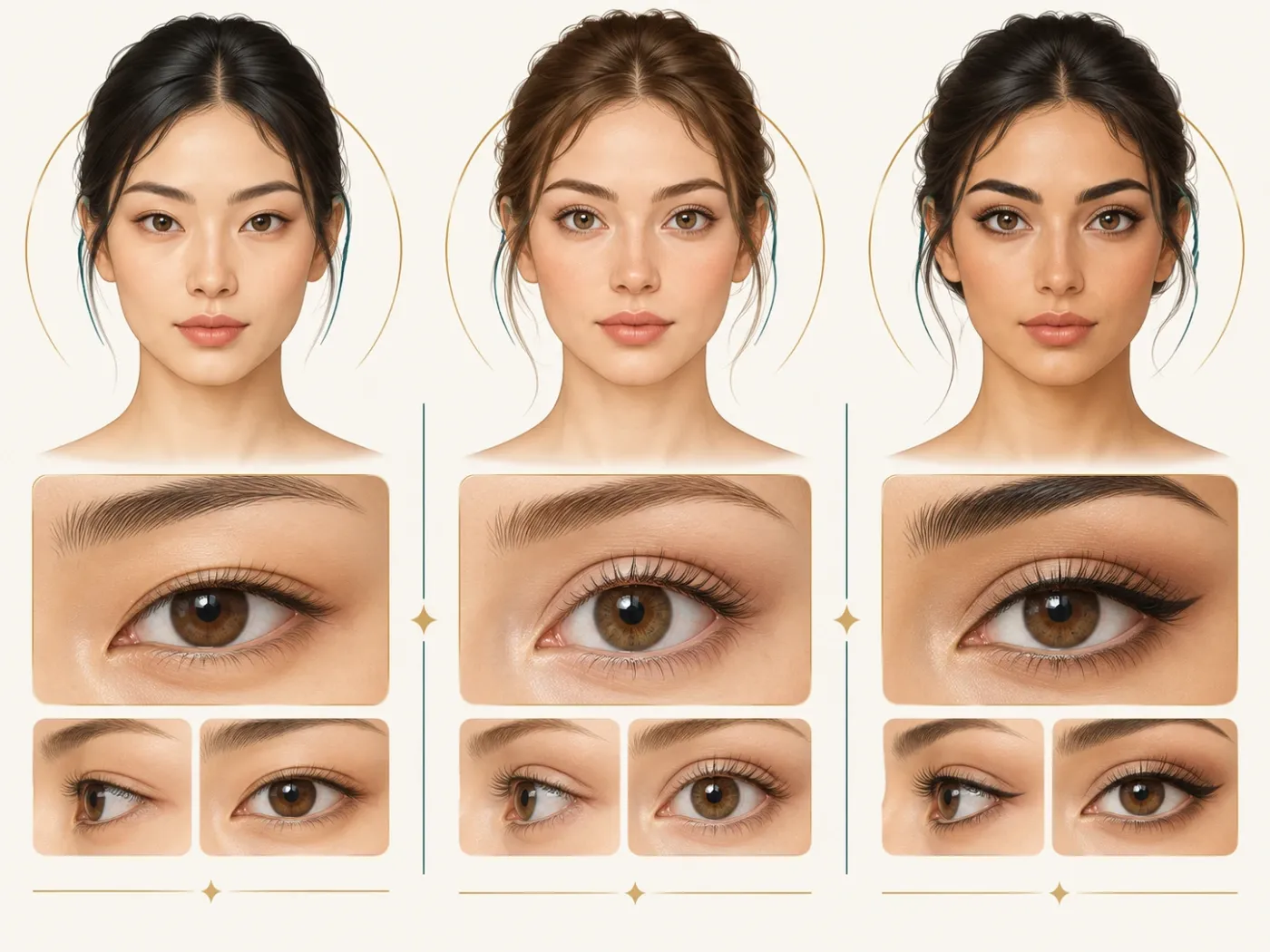
How to tell if you have almond eyes: a mirror test
You can settle this in about ninety seconds. The biggest source of error is expression, so relax your face first: raised brows change an eye’s apparent shape more than people expect.
Step 1 — Set up honestly. Use even, front-on light, or a straight-on photo at eye level with no filter. Looking up at a camera exaggerates the tilt and looking down flattens it, so keep your chin level.
Step 2 — Judge the outline first. Ignore the crease, lashes and brows. Clearly longer than tall and narrowing at both ends is almond; closer to circular, with a soft curve rather than a taper, is round.
Step 3 — Check the white. In a relaxed forward gaze, almond eyes show white mainly at the sides, because the lids cut across the top and bottom of the iris. White above and below points to round or protruding eyes.
Step 4 — Find the tilt. Rest a fingertip beside each corner, or lay a straight edge across a photo. Outer corner higher is positive, level is neutral, lower is negative; most people fall within a couple of millimeters either way.
Step 5 — Check the crease, then the other eye. Lift your brow gently; if a crease appears that was hidden, you have some hooding, a lid characteristic rather than a shape. Repeat on the other side: one eye often reads slightly more almond than the other.
What this test cannot tell you is anything medical: it measures shape, not health.

Almond vs round eyes, and the shapes people confuse them with
Almond is about elongation and tapered corners. Round is about a taller, more curved outline with more visible white.
| Almond eyes | Round eyes | |
|---|---|---|
| Outline | Longer than tall, tapering at both ends | Taller and more circular, softer curve |
| Corners | Pointed, drawn out | Blunter, curved |
| Visible white | Mostly at the sides of the iris | Often visible above and/or below the iris |
| Canthal tilt | Usually mildly positive | More often neutral |
| Impression | Elongated, cat-like | Open, wide, expressive |

The shapes people mistake for almond fall into two groups. The first describes the lid rather than the opening: hooded eyes have a fold of upper lid skin covering the crease, and monolid eyes have little or no visible crease. Either can sit over almond shaped eyes, so hooded almond and monolid almond are coherent descriptions, not contradictions.
The second group describes angle or depth. Upturned and downturned eyes are defined purely by which way the outer corner points, so they modify the almond shape rather than replace it. Deep-set eyes sit further back in the orbit so the brow bone shadows the lid; protruding eyes sit further forward with more white on show. Both are independent of outline, so deep-set almond eyes are common.
If none of these fits cleanly, that is not a failure of your eyes: the categories were invented by the beauty industry to sell techniques, not by anatomists.
The main variations of the almond eye
Most of the phrases people search combine the almond outline with one other trait.
Upturned almond eyes
The classic almond with a more pronounced positive tilt, so the outer corner clearly lifts. Often called cat eyes or fox eyes; eyeliner flicks follow this line naturally.
Downturned almond eyes
The almond outline with a neutral or slightly negative tilt, so the outer corner sits level with or below the inner one. Very common, and softer in effect. Canthal tilt also drifts down slightly with age.
Round almond eyes
A hybrid: tapered almond corners with a taller opening, so a little more white shows above or below the iris.
Thin almond eyes
A narrower vertical opening, so the eye looks especially elongated and the lid platform is small, often with a low or hidden crease. One soft shadow tone suits it better than a heavy dark one.
Big almond eyes
The almond outline at a larger scale relative to the face, with a generous lid platform. It is the look most eye makeup marketing is built around.
Almond eyes in men
Almond shaped eyes read differently on a male face, for two structural reasons. Men typically have a heavier brow ridge and a brow that sits lower, closer to the orbital rim. The same almond opening therefore looks deeper set and more shadowed, with a smaller lid platform.
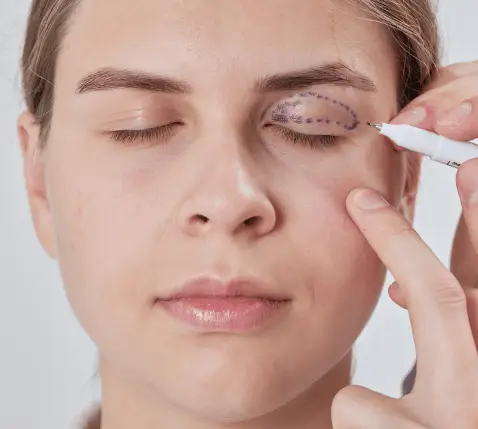
That combination, an elongated, slightly hooded, deep-set almond eye under a low straight brow, is what online communities call hunter eyes, and it has generated a great deal of anxious content aimed at young men. It describes one common structural pattern, not a target: brow height, orbital rim projection and canthal position are largely skeletal, and no exercise or tape changes them.
What does change with age is upper eyelid skin and brow descent, which crowd the lid and make eyes look tired. That is treatable, and it is a common reason men consult about their eyes. Have brow position assessed first: lifting a brow and removing lid skin solve different problems.
Are almond eyes attractive?
Almond eyes are widely described as attractive across many cultures, and there is a plausible reason: a mild positive tilt and a clearly defined lid read as alert and well rested. But the honest answer carries three caveats worth more than the compliment.
First, the framing is circular. Almond is over-represented in makeup tutorials and surgery marketing because it is the most common shape and the easiest to diagram. When every tutorial teaches you to look more almond, “almond is attractive” becomes self-fulfilling rather than a finding.
Second, the standard is not universal. Preferred eye aesthetics vary between cultures and shift across decades. The fox eye trend, which involved pulling the outer corners upward in photographs, was widely criticized, including by CNN and HuffPost, for mimicking a feature people of East Asian descent have historically been mocked for. That criticism deserves to be taken seriously, ourselves included.
Third, and most importantly: no eye shape needs fixing. Round, hooded, monolid, downturned and deep-set eyes are normal variation, not deviations from almond. If you are considering a procedure because of a comparison you made on a phone screen, that is a reason to wait rather than to book.
How to enhance almond eyes without surgery
For almost everyone searching this topic, the useful answer is makeup and grooming, not an operating room. To emphasize an almond shape you extend it horizontally and lift the outer third; to soften it you add height in the center.
Eyeliner does most of the work. A thin line along the upper lash line that thickens toward the outer third and ends in a short flick follows the natural taper and exaggerates the tilt; keeping it tight to the lashes at the inner corner avoids shortening the eye. On the lower lid, lining only the outer third preserves the elongation; lining all the way round closes the eye up and makes almond read as small.
For shadow, the deepest tone placed in the outer corner and drawn slightly upward reinforces the shape, while a nude pencil rather than black on the lower waterline makes the opening look taller.
Lashes and brows matter more than people realize: curling lashes and concentrating length at the outer corners extends the almond, a brow with a slight upward tail supports it, and over-plucking that tail visually drops the outer eye. None of this is a procedure, and all of it is reversible.

Aesthetic procedures that change eye shape, and their honest limits
If you still want a structural change, these are the realistic options. All are elective and all carry risk.

A fox eye lift is the umbrella term for raising the outer corner. The surgical versions are canthopexy, which tightens and repositions the lateral canthal tendon, and canthoplasty, which divides and reattaches it at a new height. Canthoplasty gives a larger, more durable change and is harder to reverse. Both are demanding: EyeWiki reports symblepharon, an adhesion between lid and eyeball, in 5.9% of patients in one lateral canthoplasty series, alongside ectropion, chemosis, corneal irritation and asymmetry. This is oculoplastic surgery, not a lunchtime treatment.
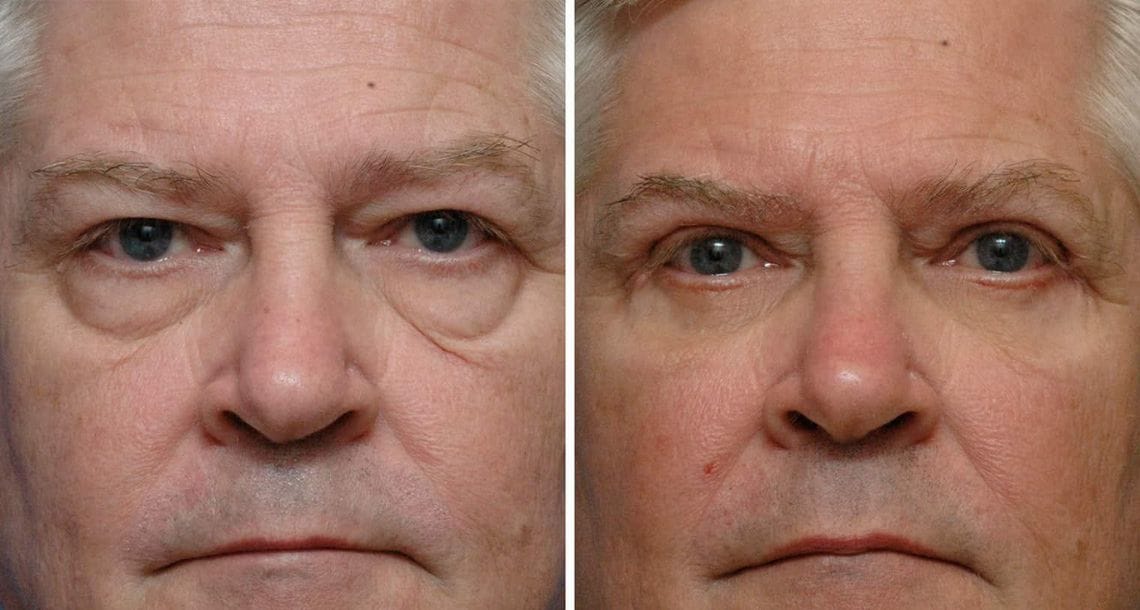
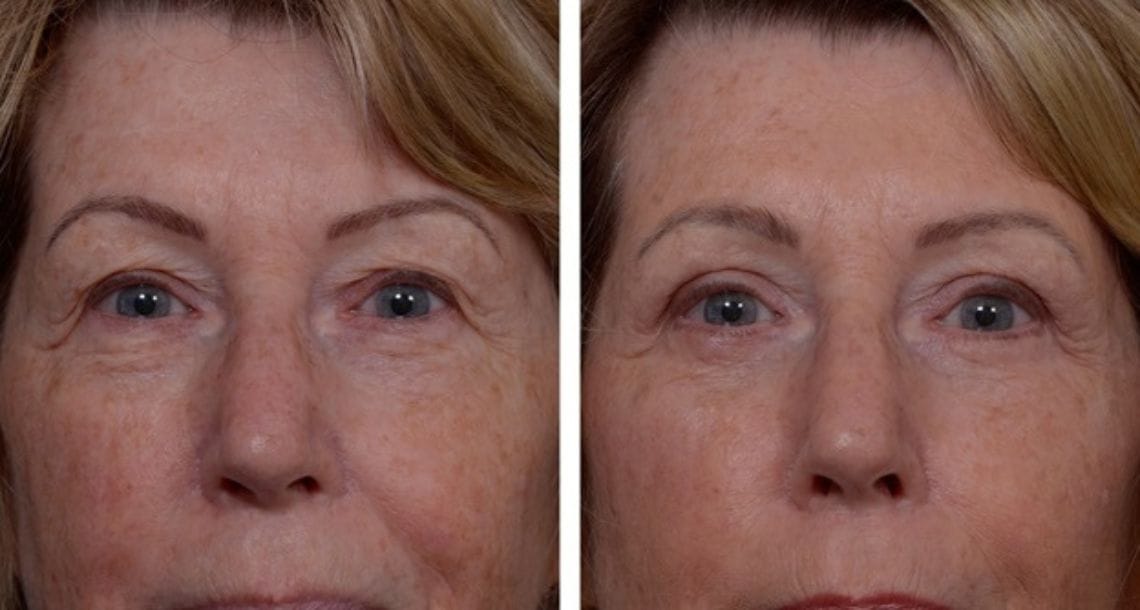
Upper eyelid surgery (blepharoplasty) removes excess upper lid skin and sometimes fat. It does not change the shape of the opening; it uncovers the shape you already have, which is why hooded almond eyes look more defined afterward. ISAPS’s 2024 global survey recorded more than 2.1 million eyelid procedures worldwide, the most common surgical procedure globally for the first time. The American Society of Plastic Surgeons lists the risks as dry eye, difficulty closing the eyes, lid lag, ectropion, unfavorable scarring, temporary or permanent vision changes and a very rare risk of blindness.
Brow position is the most under-considered factor: a forehead or brow lift raises the brow and the outer eye together, and in some faces achieves what the patient assumed needed canthal surgery.
Thread lifts deserve candor. Cleveland Clinic puts results at one to three years, and ASPS notes threads lift tissue by only a few millimeters and suit mild to moderate laxity. Around the eye corner the durability record is poor and repeat treatment is the norm.
Filler can soften a hollow tear trough but does not change eye shape, and the area around the eye is a higher-risk injection site: accidental intravascular injection there can cause vision loss.
Whatever you consider, your surgeon should assess lid laxity, tendon position, brow height and tear film first. If nobody examines those, seek another opinion.
When to see an ophthalmologist rather than a cosmetic surgeon
Some changes around the eye are medical, not cosmetic, and a cosmetic clinic is the wrong first stop. See an ophthalmologist or your doctor promptly if one eyelid has started drooping and the other has not, if drooping varies through the day, if you have double vision, if one pupil is noticeably smaller, if an eye is bulging forward, or if a lid change arrives with new eye pain, headache or neck pain.
The reason matters. The American Academy of Ophthalmology notes that asymmetric ptosis can signal third nerve palsy, Horner’s syndrome, myasthenia gravis or an orbital lesion, and that a droopy lid with an abnormal pupil, or new drooping with head or neck pain, warrants urgent assessment, not a cosmetic consultation. Thyroid eye disease can also change the shape and position of both eyes.
A lid blocking part of your field of vision is a functional problem, and the Academy’s guidance on eyelid surgery describes blepharoplasty as both functional and cosmetic. Tell any surgeon about chronic dry eye, laser vision correction or earlier eye surgery: all three raise the threshold for operating.
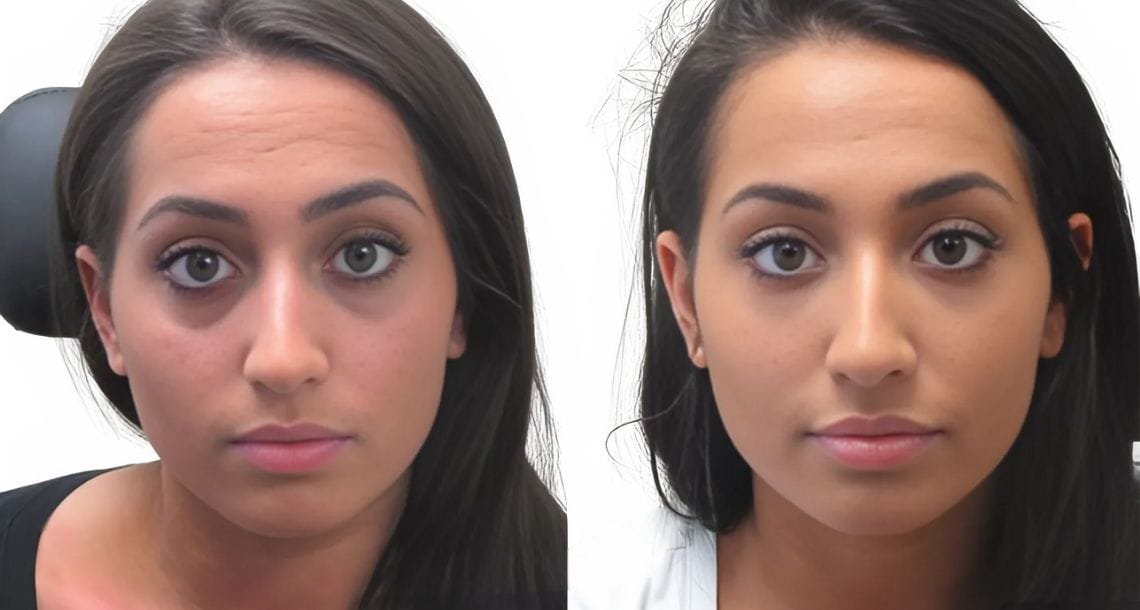
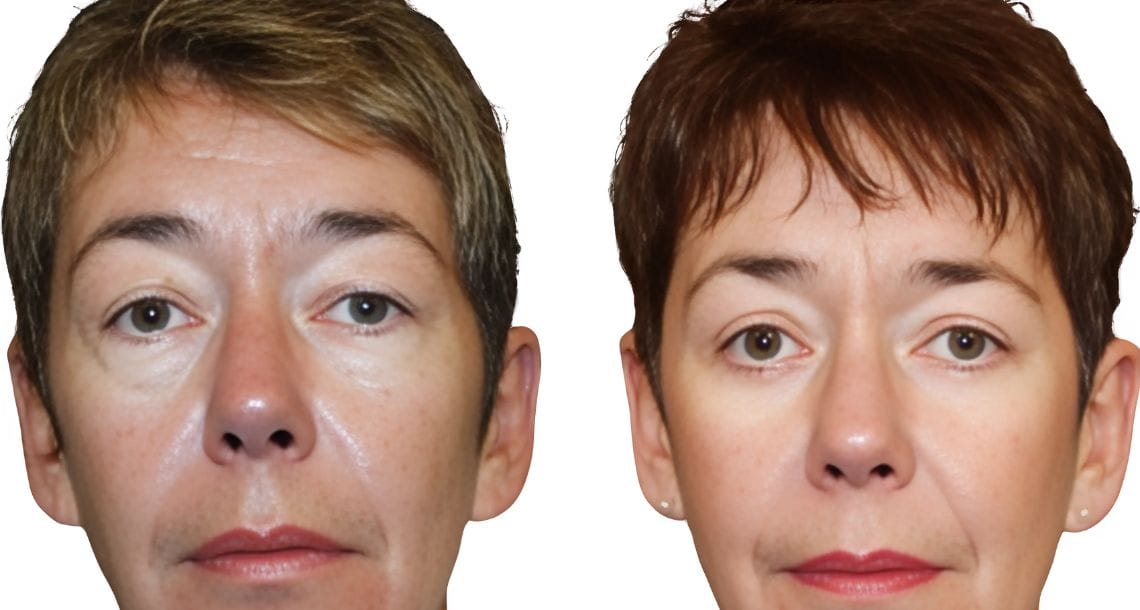
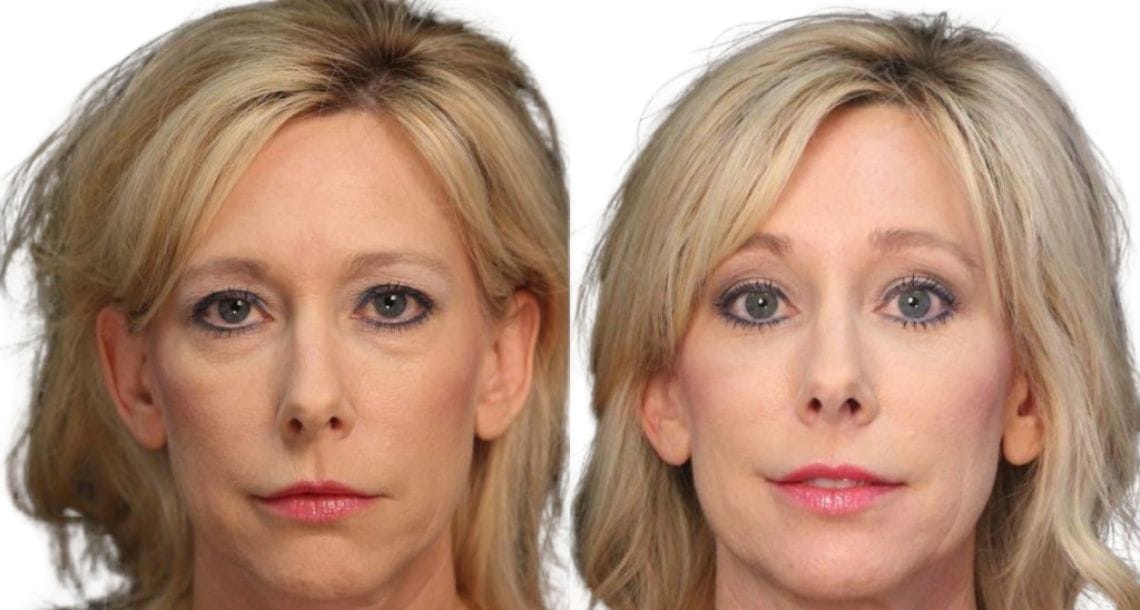
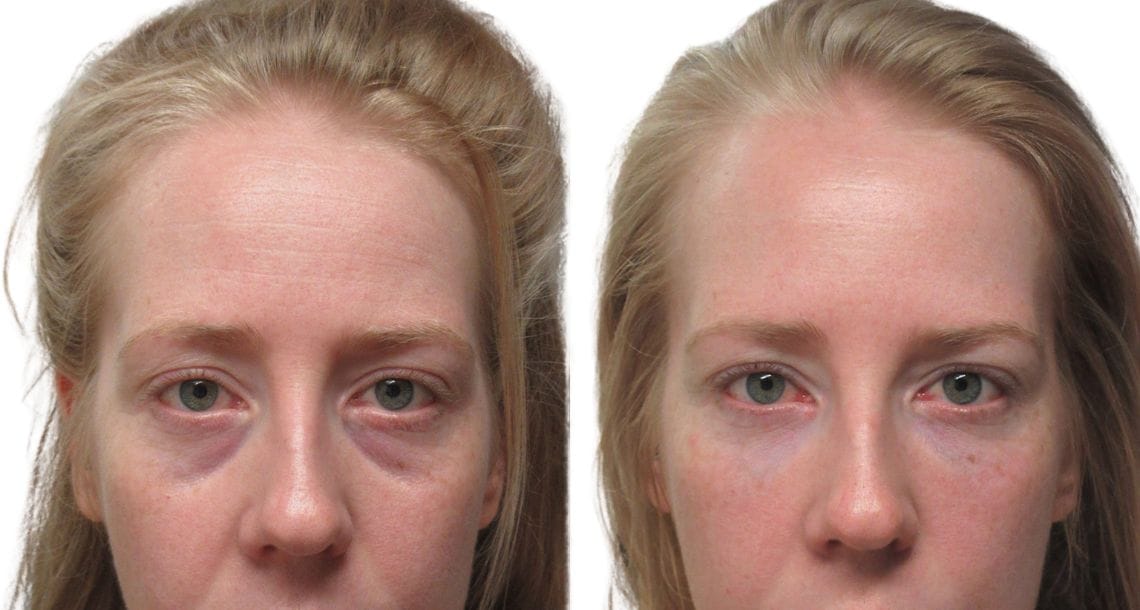
Eyelid Surgery Before & After Results at Vivid Clinic


Frequently Asked Questions
What are almond eyes?
Almond eyes have an opening longer than it is tall, corners that taper to a point, and an outer corner sitting slightly higher than the inner one. The iris typically touches both lids, so visible white sits mainly to the sides. It is normal variation, not a condition.
Are almond eyes rare?
No. Almond is the most frequently described eye shape worldwide and appears across every ethnic background. It can look rarer than it is because hooding, epicanthal folds and lighting change how the outline reads in photographs.
What is the difference between almond eyes and round eyes?
Almond eyes are elongated, with tapered corners and little white above or below the iris. Round eyes have a taller, more curved opening with blunter corners and more visible white. Almond eyes usually carry a slight upward tilt at the outer corner; round eyes are more often level.
Can you change your eye shape without surgery?
You can change how it reads, not the shape itself. Eyeliner lifted at the outer third, lash curling, a brow tail kept slightly upward and a lighter lower waterline all alter apparent shape. Bone position, canthal tendon height and orbital depth are structural.
Do almond eyes always have a positive canthal tilt?
Not always. A mild positive tilt is common but is not part of the definition, and downturned almond eyes with a level or slightly negative tilt are entirely normal. The American Academy of Ophthalmology treats an upward slope of up to about 3 mm as normal.
Is a fox eye lift permanent?
It depends on the technique. A surgical canthoplasty repositions the lateral canthal tendon and is long lasting but hard to reverse; a canthopexy tightens without dividing it and gives a smaller change. Thread-based versions are temporary, at one to three years per Cleveland Clinic.
Not sure whether what you are seeing is eye shape or eyelid change? They are different problems with different answers, and a surgeon can usually tell from a photograph. Send photos for a free, no-obligation assessment through our face aesthetics team; if the honest answer is that nothing needs doing, that is the answer you will get.