
 ChatGPT
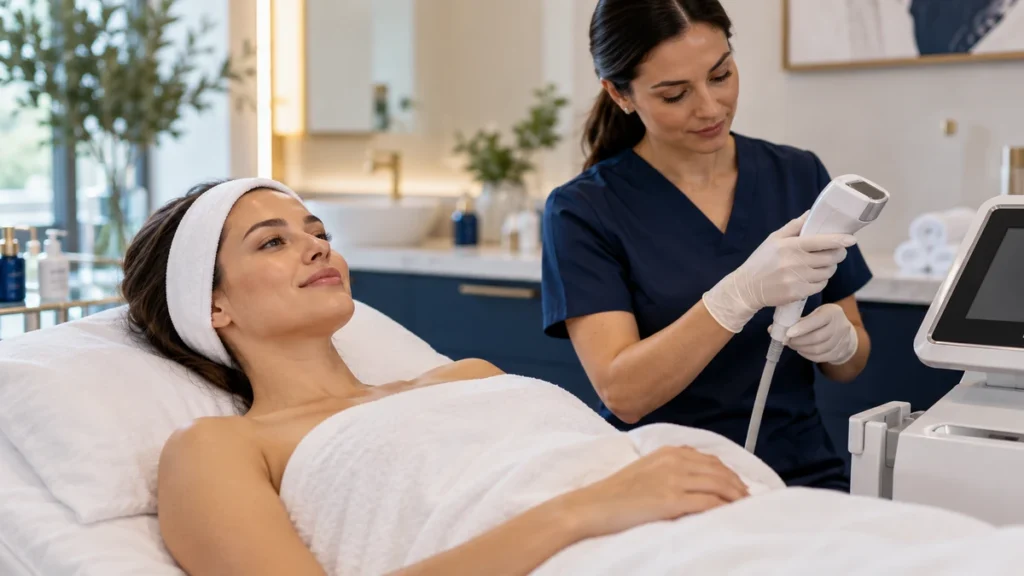
Medically reviewed by Prof. Dr. Özgür Pilancı, Plastic, Reconstructive & Aesthetic Surgeon — August 2026
Quick answer (updated August 2026): A non-surgical neck lift is not one procedure. It is a group of energy-based treatments — microfocused ultrasound (Ultherapy), radiofrequency, RF microneedling and minimally invasive under-the-skin radiofrequency — that heat deeper tissue to stimulate collagen. They give modest, gradual tightening over several months and suit mild early laxity. None removes skin. Where there is real skin surplus or vertical neck banding, the American Academy of Dermatology is blunt: non-surgical tightening “still cannot give you the results of a surgical procedure like a facelift, eyelid surgery, or neck lift.”

The honest way to organize non-surgical cosmetic treatments
Sort these treatments by what they physically do rather than by brand name and the menu shrinks fast. A device or injection can do only four things to facial skin.
- Tighten — heat the dermis and deeper layers so collagen contracts and remodels: microfocused ultrasound, radiofrequency, RF microneedling, subcutaneous RF.
- Resurface — remove or fractionally injure the surface so it heals smoother: ablative and fractional lasers, peels, dermabrasion, microdermabrasion.
- Target color — heat a pigment or vessel and spare the rest: intense pulsed light and vascular lasers.
- Add or condition — inject volume or nutrients, or deep-cleanse and hydrate: fillers, biostimulators, mesotherapy-type injections, hydradermabrasion facials.
Match mechanism to complaint and most of the confusion disappears.
Energy-based tightening: microfocused ultrasound and radiofrequency
Energy devices all work the same way: they deposit heat at a controlled depth, denaturing collagen so it contracts immediately and then triggers months of new collagen formation.
Microfocused ultrasound (Ultherapy) focuses energy into tiny coagulation points at set depths, including the layer corresponding to the SMAS, the sheet surgeons tighten in a facelift. It passes through the surface without damaging it, so downtime is minimal. The AAD reports most people have one treatment and see “modest lifting and tightening within 2 to 6 months.” Modest is the operative word; a clinic that replaces it with “a facelift without surgery” is overselling. On Ultherapy price, cost varies with the number of energy lines delivered and areas treated. We publish no figure, because an unverified price is worse than none — ask to be quoted in lines and areas, not vague “sessions.”
Non-invasive radiofrequency heats the dermis through an external handpiece. The AAD reports most people have one treatment, feel some tightening immediately and see the best result at around six months, persisting “2 to 3 years with the right skin care.” Cleveland Clinic adds that some need two to six sessions and that RF works best “on younger people who are just starting to show signs of aging” — it is not recommended for severely sagging skin.
RF microneedling combines both: fine needles carry radiofrequency into the dermis. It is used for texture, pore size and atrophic acne scarring as well as mild laxity, over three or more sessions weeks apart, each with a few days of redness and pinpoint scabbing.

Minimally invasive radiofrequency: the AccuTite and FaceTite family
Between external devices and surgery sits a group of procedures in which a thin probe passes beneath the skin under local anesthetic and delivers radiofrequency into the subcutaneous layer, sometimes with liposuction. FaceTite and AccuTite are trade names here. The AAD describes it realistically: results at about one month, gradual tightening for close to a year, and roughly four or five days of downtime plus compression and wound care — a real recovery, not a lunchtime treatment.
It is also where the evidence is weakest. A 2022 systematic review of subsurface radiofrequency examined 30 studies and found “modest” patient satisfaction and complications including nodules, prolonged swelling and numbness, marginal mandibular nerve weakness, burns and seromas. Seventy-seven percent of studies carried author conflicts of interest, and the reviewers concluded that “little evidence supports the efficacy and safety of subcutaneous RF treatments as an improvement over results that may be obtained using traditional surgical methods.”
That does not make them worthless, just a considered choice for a narrow group. If you are pricing AccuTite cost, treat the quote as a surgical one: ask who performs it, what anesthesia is used, and what happens if the result is uneven.
Can a non-surgical neck lift replace a neck lift?

For most people searching the term, no. Non-surgical tightening genuinely helps early laxity — a jawline just beginning to soften, skin that has lost a little snap. It does not remove skin, and the neck is the least forgiving place to try, because loose neck skin is a surplus problem, not a firmness one.
The American Society of Plastic Surgeons draws the line plainly: surgery “can minimize excess skin and fat, whereas fillers can address fine horizontal lines,” with non-surgical options suiting patients who have “the beginnings of loose skin and wrinkles.” Cleveland Clinic agrees that non-surgical facelift treatments “might not be effective” for extremely loose or sagging skin, and that surgery is “a more dramatic, permanent treatment” while non-surgical work “tend[s] to deliver short-term results.”
The triage is simple. Pinch the skin under your jaw: if there is little to hold, energy tightening is reasonable to try. If you can gather a fold, or see two vertical cords when you tense, no device will retract that — those cords are the edges of the platysma muscle, and they are addressed surgically. Our neck lift page covers that operation and the facelift page the jawline above it.
Resurfacing: CO2, erbium, “pixel” lasers, peels and microdermabrasion
Resurfacing treats fine lines, texture, pigmentation, sun damage and acne scarring, graded by how deep the injury goes. Depth buys results and costs downtime.
Ablative lasers vaporize tissue. A CO2 laser (10,600 nm) is the most powerful resurfacing tool available; StatPearls reports re-epithelialization at about eight days and wrinkle improvement of up to 90% with full-field treatment. Erbium:YAG (2,940 nm) is absorbed by water far more strongly, vaporizes more precisely with less residual heat, and re-epithelializes in about five days.
Fractional treatment splits the beam into microscopic columns, leaving untreated skin between them to speed healing. That is where pixel laser comes from: “Pixel” is a trade name for fractional resurfacing, describing the grid the beam makes rather than a distinct treatment. What matters is a device’s wavelength and whether it is ablative — not what it is called.
Chemical peels achieve the same graded injury chemically. Per the AAD, light peels heal in one to seven days and need three to five sessions; medium peels crust for seven to fourteen days; deep peels need fourteen to twenty-one days of bandaged recovery, and only one is possible in a lifetime. Dermabrasion sands skin to the papillary dermis and remains legitimate for deep acne scarring and perioral lines.
Microdermabrasion is the gentlest, removing only the stratum corneum. Anyone searching microdermabrasion for acne should calibrate accordingly: StatPearls lists acne and acne scars among its indications and notes improved collagen density with repetition, but patients “often require 4-6 weekly treatments.” It helps congestion and surface texture; it will not resolve inflammatory acne or lift a deep scar.
One point matters more than any device comparison: with medium and deep resurfacing, Fitzpatrick III–VI skin carries a higher risk of pigment change, and full-field CO2 is not recommended for Fitzpatrick IV and above. Ask whether the clinician regularly treats your skin type.

Signs of infection after CO2 laser — and what normal healing looks like

Ablative resurfacing temporarily removes the epidermis, your barrier against bacteria and viruses. Most healing is uneventful, but infection can look deceptively like ordinary recovery — learn the difference before treatment, not at 2am on day four.
Expected after CO2: redness, swelling and heat for 48 to 72 hours; an oozing phase; fine crusting resolving over three to four days after fractional treatment and seven to ten after full-field; itching as skin re-epithelializes; and residual pink for about two weeks after fractional, several weeks to months after full-field. Discomfort should be improving day by day.
Warning signs — contact your treating clinician promptly:
- Pain increasing after day three or four rather than steadily settling
- Redness spreading beyond the treated area, or a sharply advancing border
- Purulent or yellow-green discharge, or honey-coloured crusting — StatPearls describes post-laser bacterial infection as “nonhealing erosions accompanied by erythema, honey-colored crusting, or purulent exudate”
- Grouped painful erosions or blisters in the first week — the pattern of herpes simplex reactivation, which “most often occur[s] in the perioral region but may involve the entire face,” needing prompt antiviral treatment
- An area that stops healing, ulcerates or crusts unusually while the rest improves
- Persistent redness or intense itching weeks later, which can indicate candidal infection — StatPearls notes this may appear up to two months after treatment
- Fever, chills or feeling generally unwell
Because the epidermis is absent, infections after resurfacing “may present atypically … and can resemble burns or delayed wound healing,” so clinicians are advised to have a low threshold for swabbing rather than waiting. Do not wait it out or self-treat with leftover antibiotics. The NHS advises emergency care for any skin infection with a very high temperature or feeling hot, cold or shivery, a fast heartbeat or breathing, purple patches, dizziness or confusion.
Aftercare protocols differ by clinician and device — follow the written instructions from whoever treated you, not anything you read online, including this article.
IPL: excellent for redness and pigment, limited for acne
Intense pulsed light is not a laser. It fires a broad band of light (roughly 400–1400 nm) absorbed selectively by hemoglobin and melanin, so it excels at two things: vascular redness — rosacea, telangiectasia, flushing — and surface pigmentation such as sun spots. StatPearls notes the effect is cumulative, “routinely requiring 3 to 6 treatments every 2 to 4 weeks for the full clinical effect.”
IPL for acne is more nuanced. Acne appears among IPL’s approved indications, and light treatment can reduce inflammatory lesions and is genuinely useful for the red marks left behind after spots clear. But it is an adjunct, not a replacement for medical acne therapy. Two safety points: shorter wavelengths are absorbed by melanin, so darker skin types carry a higher risk of pigment change and paradoxical hair growth, and anyone with a history of cold sores should discuss antiviral cover first.
Mesotherapy and injectables: what the evidence supports
Mesotherapy means injecting small quantities of a substance — vitamins, hyaluronic acid, amino acids, plant extracts, drugs — into the dermis or subcutaneous fat. The formulations are not standardised, which is the core problem.
The American Society of Plastic Surgeons reviewed the evidence and concluded, unusually directly, that “until more data is available, we cannot recommend routine clinical use of mesotherapy injections.” ASPS notes the only FDA-approved injection lipolysis agent is deoxycholic acid for submental fat, that there are “currently no recommendations for standardized treatment protocols,” and that reported adverse events include nerve injuries, mycobacterial infections, panniculitis and alopecia.
Hold that in mind when you search mesotherapy before and after and find dramatic galleries. Photographs are not evidence unless angle, lighting and expression match and the interval is stated. Our before-and-after gallery shows surgical outcomes; we do not publish other clinics’ images. Botulinum toxin and hyaluronic acid fillers, by contrast, have a solid evidence base and do what they claim within clear, temporary limits.
HydraFacial, “hydrofacial” and hydradermabrasion: maintenance, not correction

If you have searched what is a hydrofacial, you almost certainly meant HydraFacial — one of the most common misspellings in aesthetics. It refers to hydradermabrasion: a device that exfoliates, uses suction to clear pores and infuses a serum in one pass.
Cleveland Clinic describes this category as working on the epidermis, typically needing “three to six treatments, spaced two to four weeks apart,” with minimal downtime and monthly maintenance thereafter. Results are explicitly temporary because, as it puts it, “your body is always aging.” A hydradermabrasion facial makes skin cleaner, smoother and better hydrated for a few weeks. But it is maintenance, not correction: it does not tighten, it does not lift, and it does not change the structure of an aging face.
Sessions, downtime and realistic timelines
| Treatment | Typical course | Downtime | When results appear |
|---|---|---|---|
| Microfocused ultrasound | Usually 1 | Little or none | 2–6 months |
| Non-invasive radiofrequency | 1, sometimes 2–6 | Redness under 24 hours | Some immediate; best at ~6 months |
| Minimally invasive RF (AccuTite/FaceTite family) | 1 | About 4–5 days plus compression | ~1 month, gradual to ~1 year |
| Non-ablative laser | 3–5 | Little or none | 2–6 months after final session |
| Fractional CO2 | 1 or more | 5–10 days; redness ~2 weeks | Within about 2 weeks of healing |
| Full-field CO2 | Usually 1 | 14–21 days | Weeks to months |
| Light chemical peel | 3–5 | 1–7 days | Progressive |
| Medium chemical peel | Usually 1 | 7–14 days | After healing |
| IPL | 3–6, every 2–4 weeks | Minimal | Cumulative |
| Microdermabrasion | 4–6 weekly | None | Gradual, subtle |
| Hydradermabrasion facial | 3–6, then monthly | None to 48 hours | Immediate but short-lived |
Timings come from the sources below; a clinician’s own protocol may differ.


Related Before and After Results at Vivid Clinic
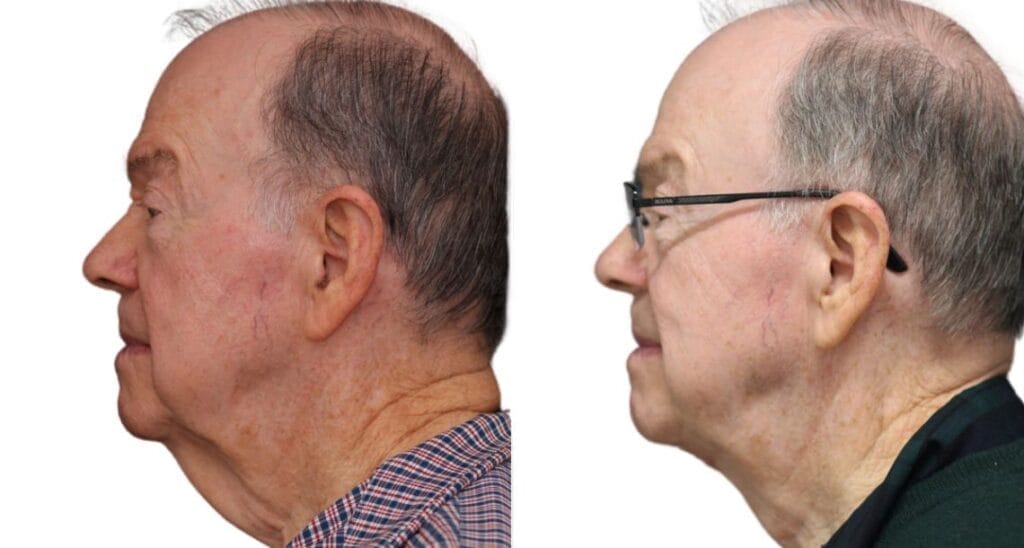
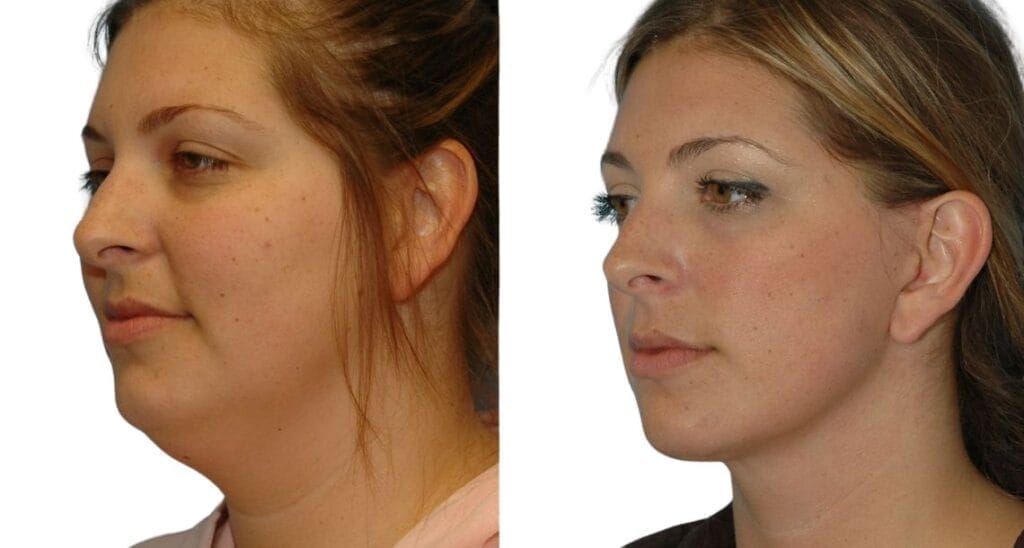
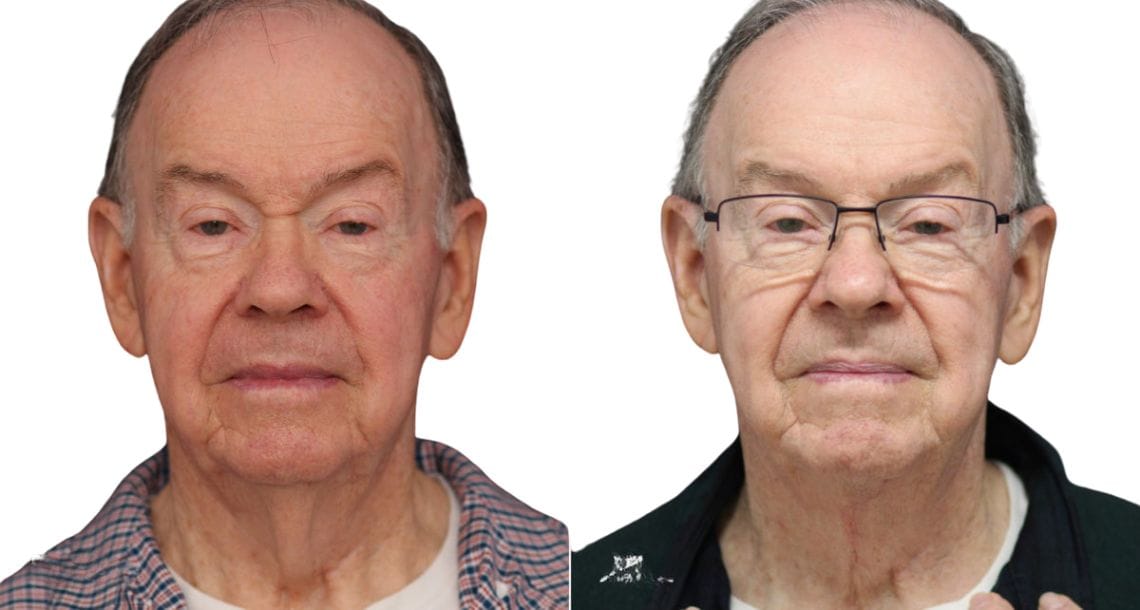
The photos below show real Vivid Clinic patients who had neck lift — a related procedure, not a non-surgical treatment itself — shared with their consent to show how our Istanbul team documents results. Ask during your free consultation to see cases that match your own treatment. Individual results vary. Browse the full Before & After Gallery.



Frequently Asked Questions
Does a non-surgical neck lift actually work?
Within narrow limits. Energy-based tightening stimulates collagen and produces gradual, modest firming over roughly two to six months — worthwhile for a jawline only just beginning to soften. What it cannot do is remove skin. If you can gather a fold under your jaw, or see vertical cords when you tense, no device will retract it, and the AAD says plainly that non-surgical tightening cannot give you the results of a neck lift.
How much does Ultherapy or AccuTite cost?
We have not published a figure, because prices vary by clinic, country, areas treated and, for ultrasound, the number of energy lines delivered — an unverified number would mislead you. Ask for a written quote naming the areas, the number of lines or passes, who performs the treatment, the anesthesia used, and what happens if a top-up is needed. A clinic unwilling to itemize is telling you something useful.
Is HydraFacial the same thing as a “hydrofacial”?
Yes — “hydrofacial” is a very common misspelling of HydraFacial, a brand of hydradermabrasion. It exfoliates the surface, uses gentle suction to clear pores and infuses a serum in one pass, working only on the epidermis. Expect three to six sessions two to four weeks apart, then monthly maintenance. It improves clarity and hydration for a few weeks; it does not tighten skin or change facial structure.
Can IPL clear my acne?
IPL can help, but it is an adjunct rather than a treatment for acne itself. Light-based therapy can reduce inflammatory lesions and is particularly useful for the persistent red marks left after spots settle. Active inflammatory or nodular acne responds far better to prescribed topical or oral therapy. Get the acne under control medically first, then consider IPL or laser for residual redness and scarring.
What are the signs of infection after CO2 laser?
The pattern that matters is a change in direction: normal recovery gets steadily more comfortable, and infection does not. Contact your treating clinician promptly if pain increases after day three or four, redness spreads beyond the treated area, you develop purulent or yellow-green discharge or honey-coloured crusting, grouped painful blisters appear in the first week (typical of herpes simplex reactivation), or one area stops healing while the rest improves. Seek emergency care if infection comes with a very high temperature, shivering, fast heartbeat or confusion.
Is microdermabrasion good for acne?
It has a modest but real role. Microdermabrasion removes only the outermost layer of dead skin, so it can improve congestion, surface texture and dullness, and repeated sessions improve collagen density — but protocols usually involve four to six weekly treatments and the effect is gentle by design. It will not control inflammatory acne, and it will not correct established atrophic scarring, which needs deeper resurfacing or laser.
Not sure whether you need a device or an operation? Send photographs for an assessment with our face aesthetics team and get a straight answer about what would and would not change — including when the honest answer is that nothing is needed yet.