
 ChatGPT

Medically reviewed by Prof. Dr. Özgür Pilancı, Plastic, Reconstructive & Aesthetic Surgeon — August 2026
Quick answer (updated August 2026): Your skin tone has two separate parts: surface tone (how light or deep your skin is) and undertone (the subtle hue beneath it — cool, warm, neutral, or olive). The fastest home check is the vein trick: in daylight, veins that look blue or purple suggest a cool undertone, green suggests warm, and a hard-to-call mix suggests neutral. No single test is reliable on its own — run several, take the majority verdict, and remember that undertone exists at every depth, from very fair to very deep skin.

What Is My Skin Tone? Surface tone and undertone: the two-axis idea
If you have ever typed “what is my skin tone” and ended up more confused than when you started, the reason is almost always the same: two different things are being called by one name. Your skin is best described along two independent axes — depth and temperature.
Surface tone (also called depth) is how light or deep your skin is: fair, light, medium, tan, or deep. It is driven by how much melanin — the pigment made by melanocyte cells in the epidermis — your skin produces, and it shifts across the year as sun exposure rises and falls.
Undertone is the subtle hue underneath the surface: cool, warm, neutral, or olive. It comes from the interplay of melanin type, blood vessels near the surface, and the skin’s own yellowish tint — and unlike surface tone, it stays essentially stable for life. You can tan three shades darker in summer and your undertone does not move.
So when someone asks “what skin tone am I?”, the complete answer has two parts — for example, light with warm undertones or deep with cool undertones. Foundation ranges, hair color advice, and seasonal color analysis all quietly rely on this two-axis idea.
The undertone families: cool, warm, neutral — and olive
Most guides sort undertone skin into three families; a fourth — olive — is now widely used because a large group of people never fit the first three.
Cool undertones lean pink, red, or bluish. Silver jewelry tends to sit harmoniously against cool skin, and true white reads clean rather than harsh.
Warm undertones lean yellow, golden, or peachy. Gold jewelry tends to harmonize, and cream or off-white often sits more naturally than stark white.
Neutral undertone skin shows no strong lean either way — the undertone roughly matches the surface tone. If half the tests in this article say cool and half say warm, this is very likely you, and it is genuinely the easiest category to shop for: both metal families and both white families work.
Olive undertones are the group the three-way model fails. Olive skin combines a warm, golden element with a subtle green-gray cast, which is why olive-toned people often find “warm” foundations turn orange on them and “cool” ones turn ashy or pink. Olive occurs at many depths and in many populations. If nothing ever seems to match and most colors feel slightly “off,” test yourself against the olive description before concluding you are neutral.
The vein trick: undertone veins explained
The most famous skin tone test is the vein test, and it takes ten seconds. In natural daylight, look at the veins on the inside of your wrist: blue or purple veins suggest a cool undertone, green-looking veins suggest a warm undertone, and a mix you cannot call either way suggests neutral.
Why does it work at all? Perceived vein color is not the color of blood — it is the result of how light scatters and is absorbed passing through skin before reaching the vessel. Skin with a yellow-leaning (warm) cast shifts that perceived color toward green; skin with a pink or blue-leaning (cool) cast leaves it blue or purple.
And that is exactly why the test has limits. Because the color you see is filtered through your skin’s own depth and pigment, the vein trick grows less reliable as skin gets deeper — at deep surface tones, veins are harder to see, and what you can see is dominated by overlying melanin rather than undertone. It also misfires in olive skin, where the green-gray cast can make any vein read “green.” Treat vein undertone as one vote among several, never a verdict on its own.

The other tests, honestly graded
Every undertone article lists the same handful of home tests, and it is worth being honest about what they are: folk heuristics that often disagree with each other. Each captures something real; each fails a large minority of people. Here they are, graded.
The white-vs-cream fabric test (moderately useful). Hold pure white fabric against your bare face in daylight, then swap it for cream. If true white makes your skin look clearer, you likely lean cool; if it washes you out while cream sits comfortably, you likely lean warm; if both work, that points neutral. One of the better tests, because it compares directly against your face rather than your wrist.
The silver-vs-gold jewelry test (moderately useful, but biased by habit). Silver and platinum tend to harmonize with cool undertones, yellow gold with warm ones, and both with neutral. The weakness: most people already own more of one metal and judge the familiar one as “better.” Assess it fresh, in daylight, against bare skin.
The sun response test (weak for undertone). Burning easily suggests less protective pigment; tanning easily suggests more. This is really a rough proxy for your Fitzpatrick phototype — the six-point medical scale of how skin responds to ultraviolet light — which is a depth-and-pigment measure, not an undertone measure. Plenty of warm-undertoned people burn, and plenty of cool-undertoned people tan. A tie-breaker at most.
Eye and natural hair color (weak). Convention says blue, gray, or green eyes with ash-toned hair lean cool; brown, amber, or hazel eyes with golden or auburn hair lean warm. The correlations exist, but exceptions are everywhere — dark-eyed, dark-haired people span every undertone on the planet.
Two options beat all of the above: professional color analysis (a trained analyst drapes calibrated fabrics against your face in controlled light) or, more practically, testing foundation shades on your jawline in daylight — the shade that disappears into your skin has, by definition, both your depth and your undertone. The home tests are for getting close before you ever swatch anything.

A step-by-step undertone self-test

How to know your undertone with the least self-deception: run the tests as a sequence, under the same conditions, and take the majority verdict. Here is the full skin tone finder in six steps. Skin colour comes from melanin, explained in Cleveland Clinic’s guide to melanin.
- Start with a clean, bare face — no makeup, no self-tanner, and not straight after sun or exercise, both of which redden the skin.
- Use natural daylight, near a window or in open shade. Indoor bulbs skew warm or cool and bias every test.
- Stand against a white or neutral background — a white wall or towel — so no colored reflection contaminates what you see.
- Run at least three tests: the vein trick, the white-vs-cream fabric test, and the jewelry test. Add sun response and eye/hair as tie-breakers only.
- Take the majority verdict. Three votes for warm is a warm undertone; three for cool is cool.
- If the votes split, call it neutral — and check olive. A genuine split is the classic neutral result; a split vote plus a faintly green-gray cast is the olive signature.
Write the result down as both axes — depth plus undertone — and you have the answer to “what’s my undertone” and “what skin tone am I” in one line.
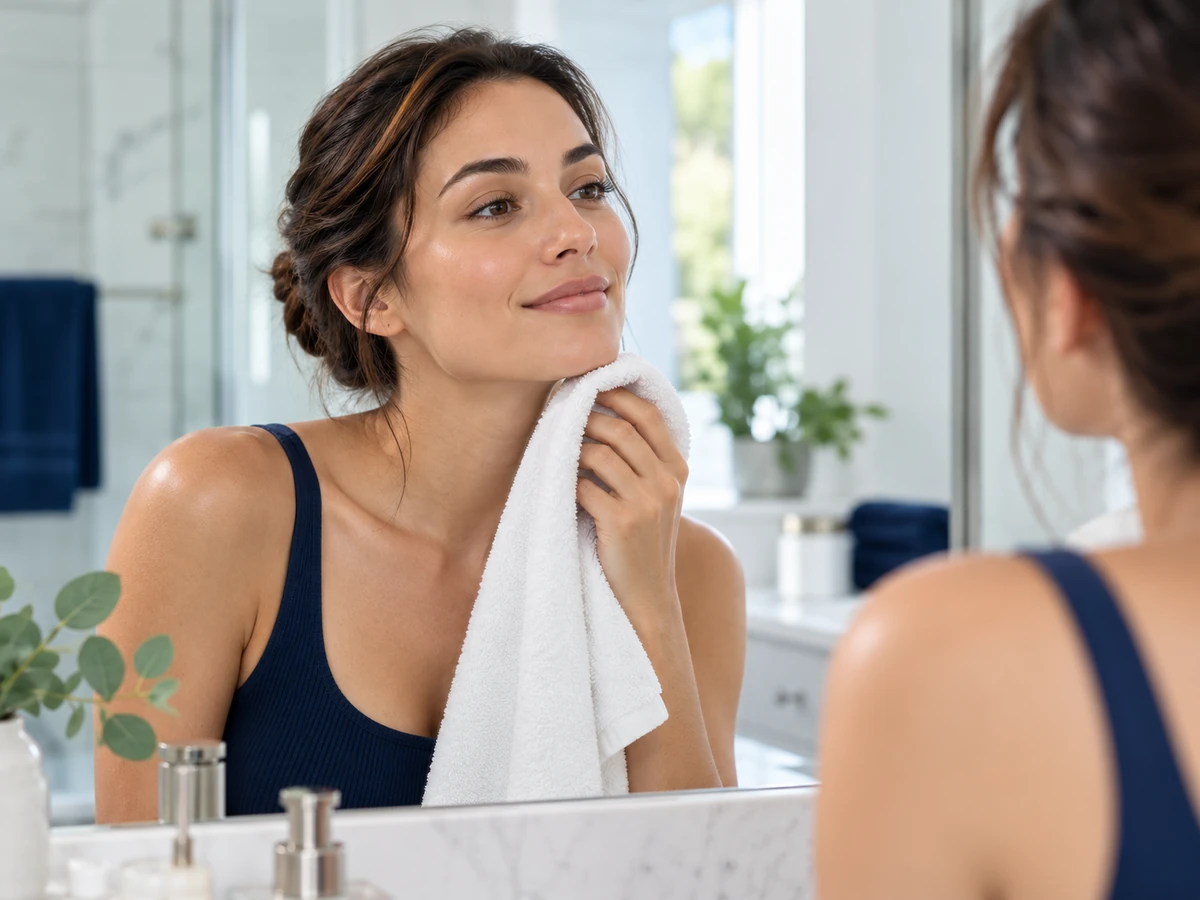
Undertone exists at every depth
This is the single most common confusion on the whole topic, so it deserves its own section: undertone and depth are independent. Deep skin can be cool-toned. Fair skin can be warm-toned. Every combination exists.
The beauty industry historically fed the confusion by equating “fair” with cool and “tan or deep” with warm. It is simply wrong. Fair skin is very often warm-golden; medium and tan skin is frequently olive; and deep skin spans the entire temperature axis, from richly warm golden-red undertones to distinctly cool blue-red ones. If you have deep skin and the vein test has never worked for you, that is a limitation of the test — not evidence that undertone “doesn’t apply” to you. At deeper surface tones, the fabric test, the jewelry test, and above all the jawline foundation test are far more informative than anything involving veins.
What knowing your undertone is actually useful for
Undertone is practical self-knowledge, not a personality type. It earns its keep in four places.
Foundation and concealer matching — the original use case. Getting depth right but undertone wrong is why a foundation can be “the right shade” and still look orange, pink, or gray on the face.
Clothing colors. Cool undertones tend to harmonize with blue-based colors and true white; warm undertones with earth tones, cream, and yellow-based colors; neutrals with most of both. This is the engine behind seasonal color analysis.
Hair color. Ash and cool-toned shades tend to suit cool undertones; golden, copper, and warm-toned shades suit warm ones. Colorists assess undertone as a matter of routine.
Jewelry, as covered above — with the happy footnote that neutral undertones genuinely suit both metals.
None of this is a rule. Personal preference outranks every chart.
Does undertone matter medically? Honestly: no

Here is the part a clinic is well placed to say plainly: your cosmetic undertone plays no role in medical or aesthetic treatment planning. When clinicians assess skin before procedures — laser and other energy-based treatments, peels, or surgery — what matters is the Fitzpatrick phototype (how the skin responds to ultraviolet light and, by extension, how it handles certain treatments) together with the skin’s actual pigmentation behavior, such as any tendency to post-inflammatory hyperpigmentation. Those are depth-and-pigment questions, not temperature questions.
So there is no need to arrive at a consultation knowing whether you are cool, warm, neutral, or olive — no one will ask. Skin assessment is part of any proper consultation for facial aesthetic treatment, and it is done by examining your skin, not your wrist veins. Undertone belongs to foundation counters and wardrobes; phototype belongs to the clinic. Both are useful — they answer different questions.
Related Before and After Results at Vivid Clinic
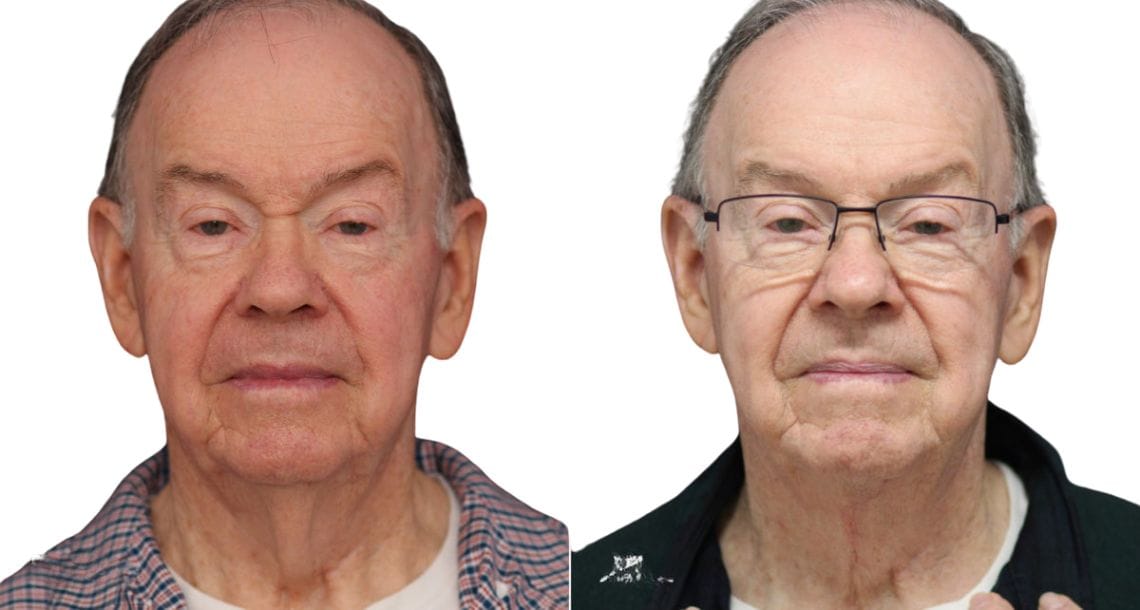
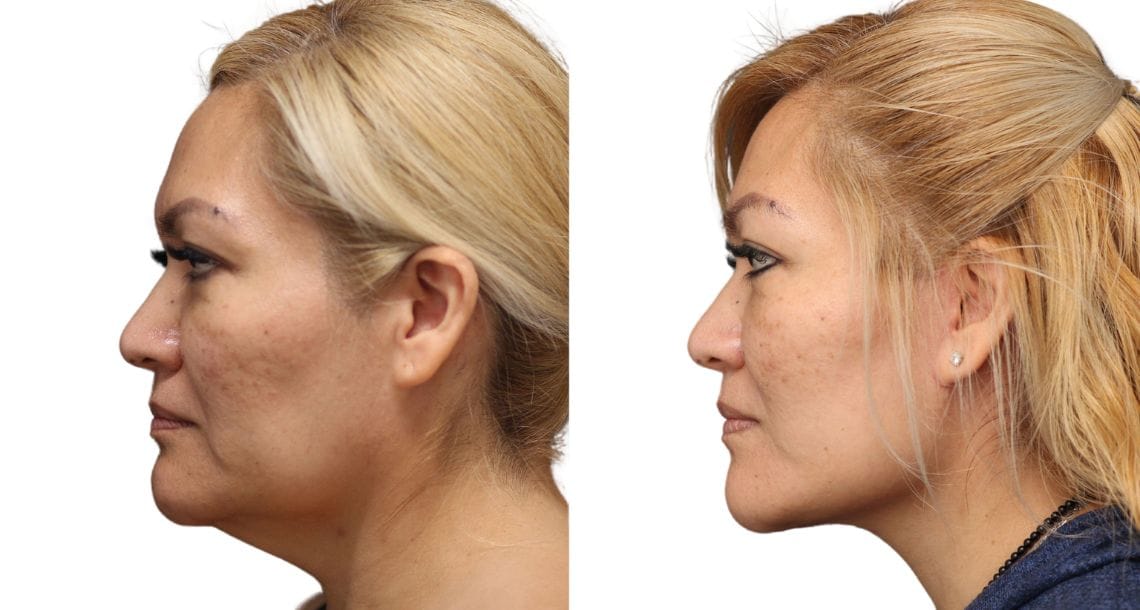
The photos below show real Vivid Clinic patients who had facial rejuvenation (facelift) — a related procedure, not skin-tone analysis itself — shared with their consent to show how our Istanbul team documents results. Ask during your free consultation to see cases that match your own treatment. Individual results vary. Browse the full Before & After Gallery.




Frequently Asked Questions
How do I know my undertone if my veins look both blue and green?
A genuinely mixed vein reading is the classic sign of a neutral undertone — the categories are zones on a spectrum, not boxes. Confirm it with the fabric and jewelry tests: if true white and off-white both sit comfortably against your face, and silver and gold both harmonize, call yourself neutral. If instead most colors feel slightly “off” in both directions, check the olive description, since olive skin routinely produces unreadable vein results.
Does deep or dark skin have an undertone?
Yes — undertone exists at every depth, and deep skin spans the full range from warm golden-red to distinctly cool blue-red, with olive in between. What changes at deeper surface tones is not the existence of undertone but the reliability of the tests: veins become harder to see and their color is dominated by overlying pigment. Use the fabric test, the jewelry test, and daylight foundation swatching on the jawline instead.
What is an olive undertone?
Olive is a widely used fourth undertone category describing skin with both a warm golden element and a subtle green-gray cast. It explains why many people fail the three-way test: warm-labeled foundations turn orange on olive skin while cool-labeled ones turn ashy or pink. Olive occurs at many depths, from light to deep, and across many populations.
Is the vein test accurate?
It is a reasonable first check, not a verdict. The color you perceive in a vein depends on how light scatters and is absorbed traveling through your skin, so the result is filtered through your skin’s own depth and cast — which is why it grows unreliable at deeper surface tones and in olive skin. Treat it as one vote alongside the fabric and jewelry tests, and let the majority decide.
Can my undertone change with age, tanning, or season?
Your surface tone changes constantly — it deepens with sun exposure and can dull with age — but your undertone is essentially stable for life. What can change is how visible it is: redness, sun damage, or pigmentation changes can mask it temporarily. If you tested yourself years ago while tanned or wearing self-tanner, re-run the self-test on bare, untanned skin; that answer is the durable one.
What is the fastest reliable way to find my skin tone for foundation?
Test the product itself: swatch two or three candidate shades in stripes on your jawline — not your wrist — blend the edges lightly, and judge in natural daylight. The shade that disappears into your skin carries both your correct depth and your correct undertone by definition. Use the vein, fabric, and jewelry tests beforehand only to narrow which family of shades to bring to the jawline.
Do I need to know my undertone before a cosmetic consultation?
No. Clinics assess skin using the Fitzpatrick phototype — how your skin responds to ultraviolet light — and your individual pigmentation behavior, because those inform decisions about lasers, peels, and healing. Cosmetic undertone is never part of that assessment, so arrive with clean skin and honest answers about burning, tanning, and any history of dark marks after injury, and the clinician will take it from there.
Whatever combination of depth and undertone you land on, it is worth saying the quiet part out loud: there is no better or worse answer here — only a more accurate description of the skin you already have.