
 ChatGPT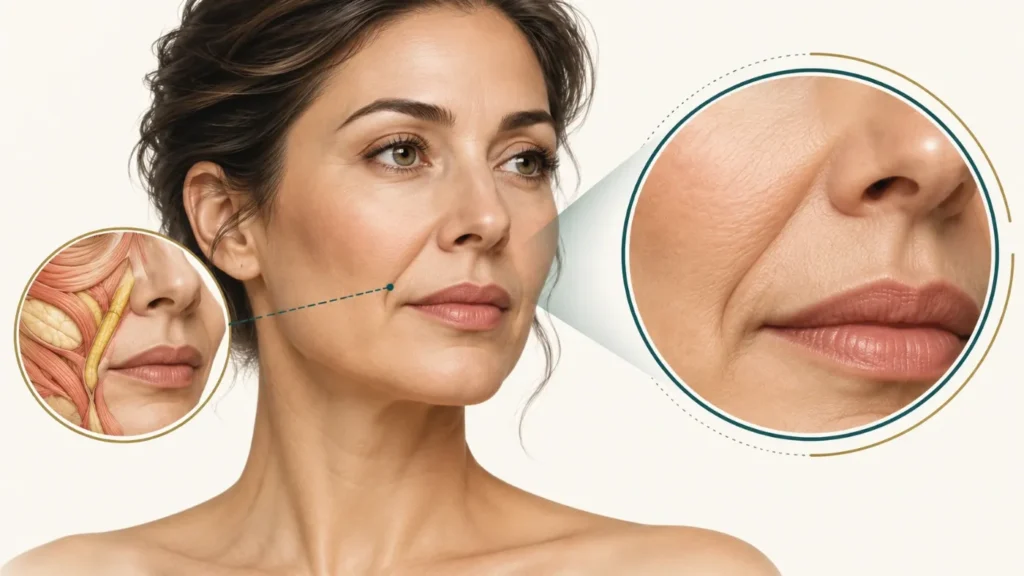
Quick answer: Smile lines, or nasolabial folds, are normal facial creases that deepen with age, sun exposure, smoking and volume loss. Learning how to get rid of smile lines starts with understanding their cause. Options range from skin care and fillers to lifting surgery, and Vivid Clinic in Istanbul, Turkey, offers a free consultation with a plastic surgeon.
Editorially reviewed by the Vivid Clinic Surgical Board. Last updated: October 2026.
If you have noticed deeper creases running from the sides of your nose toward the corners of your mouth, you are far from alone. Most people searching for how to get rid of smile lines want the same thing: a face that looks rested and expressive, without losing the features that make it recognizably theirs. This guide explains what these folds are, what can realistically be done about them, and what to discuss before choosing a path.
The short version is that smile lines are a normal part of facial anatomy. Their visibility changes with age, skin quality and tissue support, and not every fold needs treatment. A good plan starts with an honest look at your goals rather than a single crease viewed in a mirror.
At Vivid Clinic in Istanbul, the first step is a free consultation with a plastic surgeon. Whether you are considering a non-surgical option or a lifting procedure, that conversation is where your options are compared against your own anatomy.
Smile Lines Are Normal Facial Folds
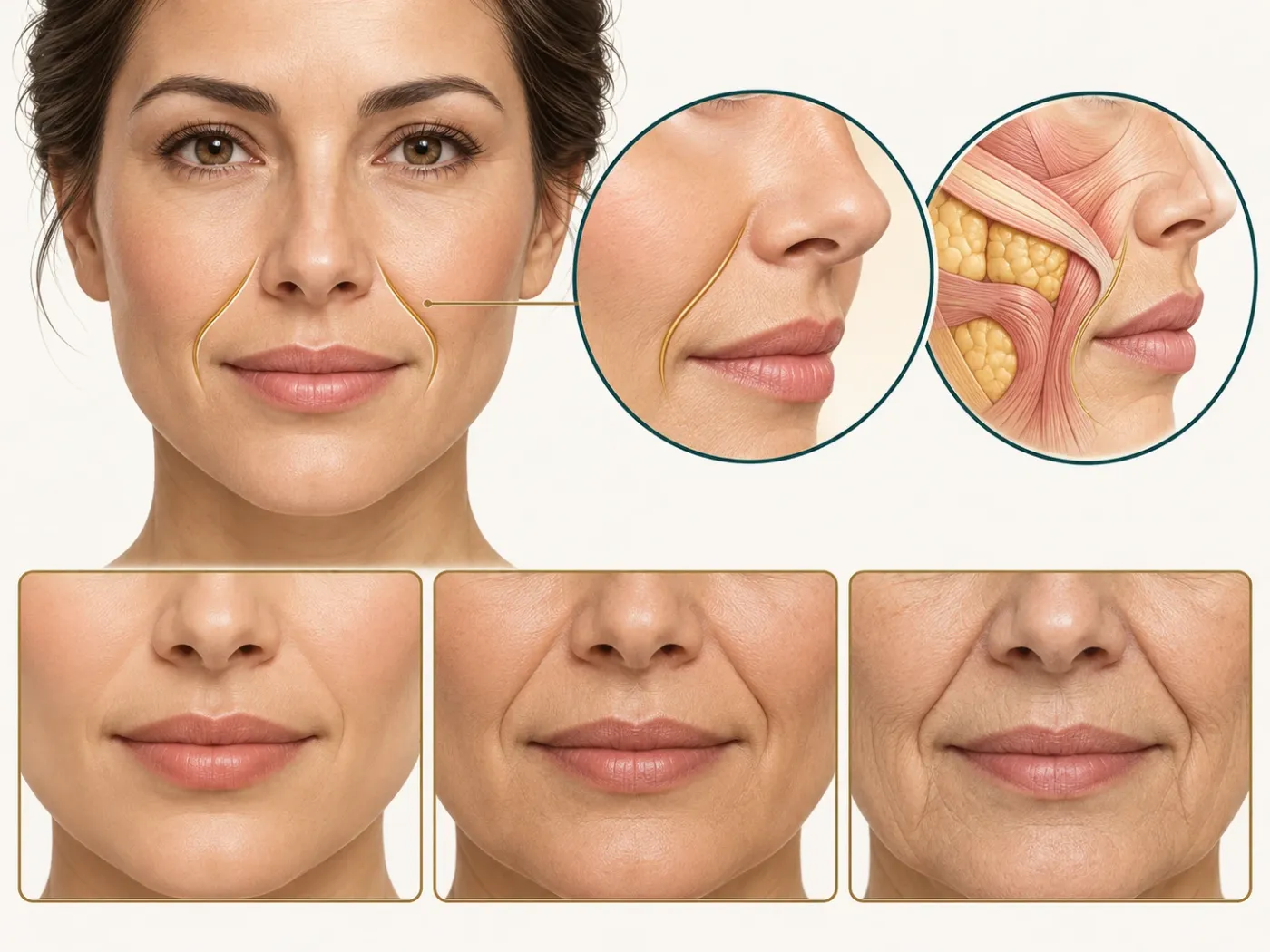
Nasolabial folds are the creases that run from the outer edge of the nose down toward the corners of the mouth. They are a normal feature of the midface. Cleveland Clinic describes them as very common in women and men of all races, becoming more noticeable with age.
Because they are normal, the goal of any discussion about how to get rid of smile lines should be proportion and function. Treatment is optional, and a responsible plan respects normal expression, including smiling and laughing.
Nasolabial Folds Versus Expression Wrinkles
Smile lines are not all the same. Some are mainly expression lines, shaped by years of repeated muscle movement. Others are structural folds, where the skin and the tissue beneath it have lost support, so the crease sits deeper even at rest. Cleveland Clinic lists aging as the leading cause, noting that cheekbones can flatten, gravity pulls down loose skin, and collagen and elastin decline.
This distinction matters because the two types often respond to different approaches. Surface care may soften the top layer of skin, while volume loss or tissue descent usually requires a different plan. A clinician can usually tell the difference by observing how the fold moves and how the cheek sits when the face is at rest.
Skin Care and Prevention: What They Can and Cannot Do
Skin care cannot remove a structural fold, but it can influence how the skin around it ages. Cleveland Clinic notes that topical retinoids, a form of vitamin A, may promote collagen production and reduce smile lines over time. The same source recommends daily sunscreen of at least SPF 30 and avoiding tanning, whether in the sun or in a tanning bed.
Several everyday habits affect how these folds look. Smoking destroys collagen and elastin, and sun exposure breaks them down as well. Major weight changes also matter, since weight loss can leave looser skin and weight gain can make the cheeks fuller. Sleeping on your back, or switching sides regularly, is another small step many people overlook.
Prevention and topical care support skin health, but they work gradually and cannot reshape deeper tissue. If a fold bothers you enough to consider treatment, a dermatologist or cosmetic surgeon can advise you.
Fillers and Support From Surrounding Facial Anatomy
Dermal fillers are one of the most discussed non-surgical options for smile lines. They add volume beneath the fold so the skin sits more evenly. Cleveland Clinic says the effects of fillers can last six months to a year. A 2021 meta-analysis of randomized trials on tissue fillers for the nasolabial fold area described the improvement as sustainable for up to a year, although the authors rated the evidence quality as low and noted high variability between studies.
Fillers do not work in isolation. The fold sits at the edge of the cheek, so the support provided by cheek volume and the underlying structure influences the final look. A clinician may assess whether cheek volume loss is contributing before adding filler to the fold itself. This is one reason the same complaint can call for different plans in different people. For a broader view of how surgeons assess the whole face, read the facial balancing guide from Vivid Clinic.
Fillers also carry a different risk profile from skin care. In pooled trial data, lumpiness, tenderness, swelling and bruising were among the most frequently reported reactions. The American Society of Plastic Surgeons (ASPS) notes that severe complications are uncommon, but vascular occlusion, where filler enters a blood vessel, is rare and can be serious.
When Lifting Procedures Are Considered
For some people, the fold is part of a broader pattern of sagging. ASPS states that a facelift addresses deeper fold lines between the nose and the corners of the mouth, along with jowls, fallen fat and loose skin. Lifting surgery repositions tissue rather than adding volume, which is why it is considered when the concern extends beyond the fold alone. Our face aesthetic overview describes the facial procedures discussed at Vivid Clinic, and the deep plane facelift guide explains one lifting technique in detail.
A facelift does not stop the aging process. ASPS notes that it “does not change your fundamental appearance and cannot stop the aging process.” Surgery carries different risks from filler, so it is usually discussed when non-surgical options no longer match the goal.
Candidacy: When Treatment Can Wait
Many people who ask how to get rid of smile lines are in good health with realistic goals. Treatment can wait when the fold does not bother you or when you expect to erase every line.
Your clinician will review your medical history, current medications, past facial treatments and any previous reactions to fillers or anesthesia. Active skin infection or inflammation in the treatment area is a reason to delay and seek medical review first.
Smile Line Treatment Options: Fillers, Botox and Facelift
Optional overview of relevant treatments, not a recovery table for a natural feature.
| Aspect | Details |
|---|---|
| Duration Process | Dermal filler: no session length range in our verified sources; your provider sets this after assessment. Lifting surgery (facelift or cheek lift): no verified range; the surgeon gives a plan-specific estimate. |
| Hospitalization Duration | Filler: no hospital stay is described in our verified sources. Lifting surgery: admission needs depend on the procedure and facility and are not stated in verified sources. |
| Mobility Duration | Not stated in verified sources for either option. Ask your surgeon when walking and light movement are permitted. |
| Return to Activity | Desk work, exercise and travel are separate questions. Not stated in verified sources; your clinician gives individual guidance for each. |
| Complete Recovery | Filler: swelling and bruising are commonly reported in trials, and settling is individual. Lifting surgery: recovery timing is not stated in the ASPS sections we could verify. |
| Anticipated Results | Filler: effects can last six months to a year (Cleveland Clinic), and up to one year in the 2021 meta-analysis; ongoing treatment is needed for long-term results (ASPS). Lifting surgery: the results interval is not stated in verified sources. |
How to Prepare for a Smile Line Treatment Consultation
A useful consultation starts with preparation. Bring a list of current medications and supplements, a summary of past facial treatments, and any history of allergies or reactions to fillers or anesthesia. Think about what bothers you most, whether it is the fold in photos, the way makeup sits, or how you feel when you smile.
Prepare realistic goals too. Write down two or three results you hope to see, and note any changes you would not want, such as a shift in your expression. Recent photos taken in good light, at rest and while smiling, give your clinician a useful baseline.
Avoid self-diagnosis and unsupervised treatment. Buying injectables online or copying a treatment seen on social media can carry real risk. A consultation with a licensed clinician replaces guesswork with an individual assessment.
Smile Line Treatment Recovery and When to Judge Results
Recovery depends on the option you choose. ASPS explains that after facelift surgery a bandage may be placed around the face to limit swelling and bruising, and small drainage tubes may be present. Your surgeon gives specific instructions on incisions, medications, warning signs and follow-up visits. Ask at consultation when dressings come off and when you can resume exercise, because the answers vary.
Smile Line Treatment Risks, Limitations and Medical Red Flags
No option for how to get rid of smile lines is risk-free. ASPS lists common dermal filler reactions as bruising, swelling, bleeding at the injection site, redness, lumps, asymmetry, and under- or over-correction of wrinkles. Less common issues include infection and skin tissue loss. Vascular occlusion is rare but serious, and eye involvement can cause vision loss.
ASPS describes facelift risks as rare and lists reactions to anesthesia, bleeding, blood clots, nerve injury causing weakness, infection, poor wound healing and unfavorable scarring among them. The organization states that these risks will be fully discussed before you consent. Any sudden pain, skin color change or vision change after a facial injection needs urgent medical care.
Limitations matter as much as benefits. Fillers are temporary, lifting does not stop aging, and results vary between individuals. A responsible clinician explains what a treatment cannot do as clearly as what it can.
What Affects the Cost of Smile Line Treatment in Istanbul
Costs for how to get rid of smile lines vary because the right plan varies. Factors include the surgeon’s experience, the facility, anesthesia where it is used, the complexity of your assessment, whether treatments are combined, travel and accommodation, follow-up care and personal needs. This article does not list prices, because any quote depends on your individual plan.
When comparing quotes, check that the same procedures and follow-up visits are included. A lower figure can reflect fewer components. Ask for a written, dated estimate.
Smile Line Treatment in Istanbul: Your Patient Journey at Vivid Clinic
For international patients, the journey at Vivid Clinic can begin with arrival in Istanbul, Turkey. Where the package includes it, a VIP airport transfer brings you to a five-star hotel check-in, and eligibility for these transfer and hotel benefits is confirmed at consultation because they apply to select procedures only. A one-on-one consultation with the clinical team reviews your goals, medical history and anatomy. If you decide to proceed, the surgery or treatment day follows, with post-operative care arranged around your recovery. A check-up visit comes before your departure home, and remote aftercare continues once you are back, so you can share progress and ask questions from your own country.
Why a Consultation With a Plastic Surgeon Matters
The most useful next step in learning how to get rid of smile lines is a conversation with a qualified clinician who examines your face in person. A free consultation with a plastic surgeon at Vivid Clinic in Istanbul, Turkey, gives you the chance to ask about options, risks, limitations and alternatives without committing to any treatment.
You can also review the Vivid Clinic medical team page before you decide, and ask any surgeon directly about their experience with the procedure you are considering.
Frequently Asked Questions About How to Get Rid of Smile Lines
Are nasolabial folds normal even in younger adults?
Yes. Nasolabial folds are a common feature of facial anatomy, and Cleveland Clinic describes them as very common in people of all races. They become more noticeable with age, but seeing them earlier in life is not a health concern in itself. For most people, the reason to explore how to get rid of smile lines is personal, such as how the crease looks in photos or how makeup sits, rather than a medical need. Vivid Clinic in Istanbul encourages anyone in this position to discuss their goals during a free consultation with a plastic surgeon before deciding whether any action is needed.
Can skin care remove a structural fold?
Skin care cannot remove a structural fold. Topical retinoids may promote collagen production and reduce smile lines over time, according to Cleveland Clinic, and daily sunscreen helps protect the skin from the collagen loss caused by sun exposure. A structural fold reflects changes in volume and tissue support beneath the skin, which creams do not replace. If you are learning how to get rid of smile lines through skin care alone, expect gradual change rather than a dramatic one. A clinician can explain whether topical care is a sensible first step or whether a volume or lifting option should be assessed in person at Vivid Clinic in Istanbul.
Why might a clinician assess cheek support before treating the fold?
A smile line is only the visible edge of a larger picture. Cleveland Clinic notes that flattening cheekbones can contribute to these folds, and that weight changes and loose skin can make them more noticeable. When a clinician checks cheek support before treating the fold, they can see whether volume loss in the midface is driving the crease. Filling the fold alone may not address that cause, so a plan that starts with cheek support can be more appropriate for some people. This assessment is part of how to get rid of smile lines responsibly, and it is best done in person during a free consultation with a plastic surgeon.
What risks should I discuss before nasolabial filler?
Start with the common reactions. ASPS lists bruising, swelling, bleeding at the injection site, redness, lumps, asymmetry and skin rash among the usual effects. Less common issues include infection, skin tissue loss, and under- or over-correction. Vascular occlusion, where filler enters a blood vessel, is rare but serious, and eye involvement can cause vision loss. ASPS advises choosing a board-certified plastic surgeon who understands these risks and can manage them. Also ask how long the product lasts, whether repeat treatment will be needed, and what your clinician will do if a reaction occurs. Anyone exploring how to get rid of smile lines with filler should have these answers before treatment.
When could surgical assessment be more appropriate than repeated filler?
Surgical assessment may be worth considering when the folds are linked to sagging skin, jowls or loose tissue that filler cannot reposition. ASPS states that a facelift addresses deeper fold lines between the nose and mouth corners, along with jowls, fallen fat and loose skin. If you are repeatedly treating the same area and the result no longer matches your goals, a surgeon can explain whether lifting tissue is a better fit. Surgery carries its own risks, including bleeding, infection and unfavorable scarring, so it is a decision for a personal consultation. Vivid Clinic in Istanbul can help you compare how to get rid of smile lines through surgical and non-surgical routes.
Sources and Further Reading on Smile Lines
- Cleveland Clinic: Nasolabial Folds (Smile Lines): Causes and Treatment
- Stefura T, et al. Tissue Fillers for the Nasolabial Fold Area: A Systematic Review and Meta-Analysis of Randomized Clinical Trials. Aesthetic Plastic Surgery, 2021
- ASPS: Dermal Fillers
- ASPS: Dermal Filler Safety
- ASPS: Facelift
- ASPS: Facelift Safety
- ASPS: Facelift Recovery
Related reading: Marionette lines: filler vs Botox · Botox in Turkey
Building Your Smile Line Treatment Plan
Deciding how to get rid of smile lines is a personal choice, and it does not have to happen today. Normal facial folds are not an emergency, and treatment is always optional. What matters most is understanding the cause, the realistic benefits, the limitations and the risks of each option.
Medical disclaimer: This article is for general education and does not replace a medical examination. Candidacy, suitable treatments and expected outcomes depend on an individual assessment by a licensed clinician. Results vary, and no clinic can promise a specific result.
If you are planning your aesthetic journey in Istanbul, Turkey, Vivid Clinic can help you understand your options clearly before you decide. Get a Free Consultation with a plastic surgeon and share your goals for a personalized evaluation.