
 ChatGPT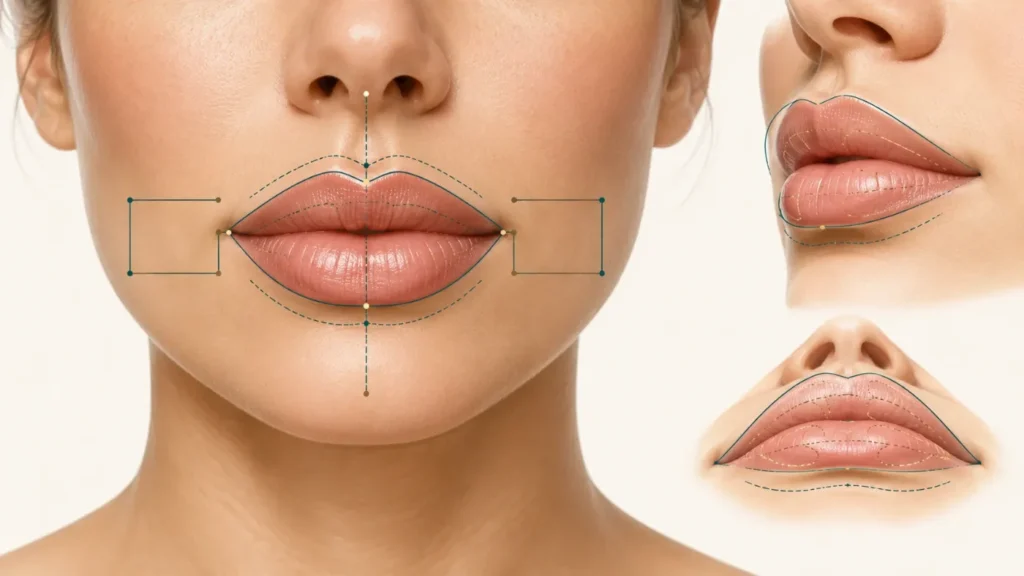
Quick answer: Lip filler shapes describe how volume and border definition can be planned around your natural lip anatomy, not a single template copied from a trend. At Vivid Clinic in Istanbul, Turkey, a free consultation with a plastic surgeon is the first step toward a personal answer.
Editorially reviewed by the Vivid Clinic Surgical Board. Last updated: October 2026.
If you are considering a lip treatment, you may be wondering why two people with similar lips can receive very different recommendations. The answer usually starts with anatomy, not with a trend name. This guide explains how lip filler shapes are discussed in a clinical setting, what normal variation means, and which questions to bring to a consultation.
Understanding lip filler shapes and natural lip anatomy
Lips are made up of the upper and lower lip, the vermilion border that outlines them, the cupid’s bow at the top of the upper lip, and the surrounding skin and muscle that move them when you speak or smile. Each of these parts varies from person to person in height, width, projection and symmetry. Those differences are normal, and they set the starting point for any conversation about lip filler shapes.
Why anatomy sets the limits
Natural lip anatomy limits what any named filler style can achieve. A thin upper lip with little natural projection cannot be turned into a fuller shape simply by adding product in one place. The same amount of product can look balanced on one face and disproportionate on another, because the surrounding bone, skin and muscle are different.
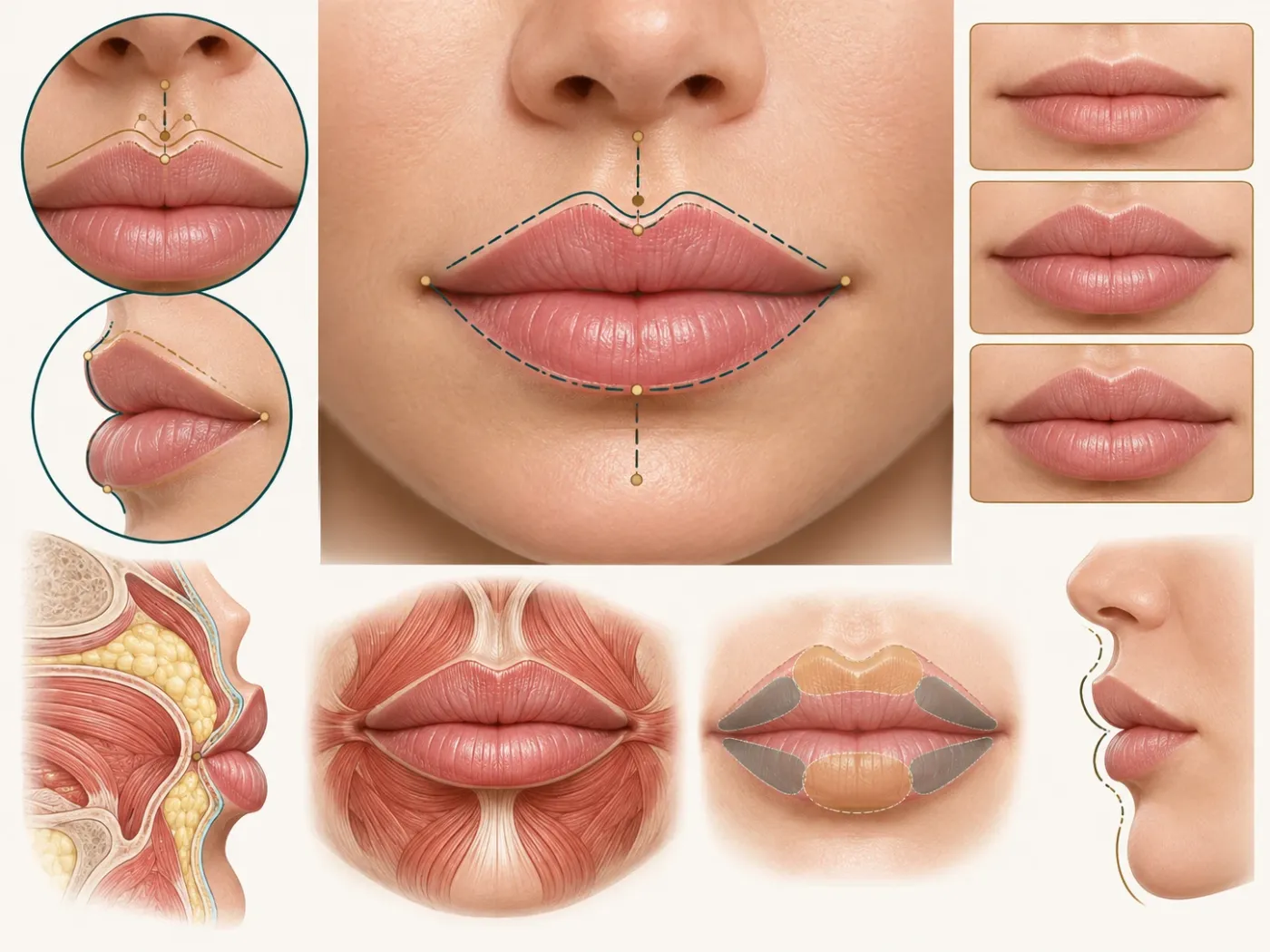
This is why the first question in a consultation is rarely “which shape do you want?” It is closer to “what is your current shape, and what would you like to change?” Your clinician looks at lip height, border definition, the relationship between the upper and lower lip, and how the lips sit beside the nose and chin.
Normal variation is not a flaw
Many lips are naturally asymmetrical. One side may be slightly fuller, or the cupid’s bow may sit higher on one side. These differences are part of normal human variation and do not automatically need correction. Treatment is optional, and a responsible clinician will say so if the change you are looking for would work against your natural features.
Volume, definition and proportion goals
Volume and border definition are two separate goals. Volume describes how full the lips look at rest and in motion. Border definition describes how crisp the outline of the lip is against the surrounding skin. Some patients want more fullness, others want a clearer outline, and some want both. Planning them separately makes it easier to understand what a treatment can and cannot do.
Proportion is about how the lips relate to the rest of the face. A clinician may consider the balance between the upper and lower lip, the distance from the nose to the upper lip, and the way the smile shows the lips. Lip filler shapes that look good in isolation can look out of place when the face is viewed as a whole, which is why proportion is discussed alongside volume.
Trend names versus a clinical plan
Social media has created many labels for lip filler shapes, and some of them describe very different goals. Using a trend name as your request can cause confusion, because two clinicians may hear the same name and picture different results. A consultation works better when you bring photos of your current lips, examples you like and a clear description of what bothers you.
Lip filler styles, including those named online, are a starting point for discussion only. Whole-face planning is covered in our guide to facial balancing in Turkey, which explains how lip goals can fit within a broader plan. The final plan is individual, and it may differ from the style you saw online.
Staging, swelling and maintenance
Swelling is the main reason an early result can look misleading. The Cleveland Clinic notes that swelling usually goes away after 24 to 48 hours, but it may take up to a week. Its aftercare guidance adds that it can take two to four weeks for swelling to fully resolve and for the filler to integrate into the lip tissue. That is why photographs taken on the day of treatment are not a reliable measure of the final look.
Migration, vascular risks and choosing a clinician
Migration means the filler moves away from where it was placed. A 2023 review of lip augmentation complications in the Journal of Clinical and Aesthetic Dermatology found migration among the reported problems, alongside nodules and other reactions. Nodules were the most common category in that review, and some appeared weeks or months after treatment.
Vascular occlusion is rare but serious. The American Society of Plastic Surgeons (ASPS) describes it as filler entering a blood vessel instead of staying under the skin, which can block blood flow and may cause skin loss, or vision loss if the eye is affected. Extreme pain, paleness of the lips or surrounding skin, and purple discoloration may signal this problem. The Cleveland Clinic advises contacting a healthcare provider immediately for an evaluation if these signs appear.
Choosing a clinician is one of the most important decisions in this process. The ASPS recommends a board-certified plastic surgeon who understands the risks and is trained to manage complications, and it notes that risks should be explained before any consent form is signed. Ask how the team would respond if a complication happened, including how you would reach them outside clinic hours.
Candidacy and reasons to defer treatment
Lip treatment may not be appropriate for everyone, and your clinician will review your health history before deciding whether treatment is suitable. Cold sore reactivation is listed as a possible effect by the Cleveland Clinic, so a history of cold sores is worth raising at the start. The U.S. Food and Drug Administration has not approved lip fillers for anyone under 21 or during pregnancy, according to the same source.
If you are also weighing other facial options, Vivid Clinic’s face aesthetics overview describes the facial procedures discussed at the clinic, and each plan is reviewed by a plastic surgeon.
Lip Filler Overview: Realistic Expectations
The overview below covers the lip filler option most often discussed for lip volume. It is not a recovery table for a natural feature, and it does not promise a result. Timings come from the sources cited in this article, and an individual plan may differ.
Optional overview of relevant treatments, not a recovery table for a natural feature.
| Aspect | Details |
|---|---|
| Duration Process | Set at consultation for each individual plan. The sources reviewed do not give a standard appointment length. |
| Hospitalization Duration | The Cleveland Clinic overview describes lip fillers as injections and does not describe a hospital stay. The treating clinician confirms the setting for each plan. |
| Mobility Duration | Walking and light activity are generally fine after treatment, while strenuous exercise is usually avoided for several days (Cleveland Clinic aftercare guidance). |
| Return to Activity | Vigorous exercise is usually avoided for several days, while eating, drinking and kissing are not restricted (Cleveland Clinic aftercare guidance). The sources reviewed do not address desk work or travel, so confirm those with your clinician. |
| Complete Recovery | Initial swelling often eases within 24 to 48 hours but can take up to a week (Cleveland Clinic). The filler may take two to four weeks to fully settle into the tissue (Cleveland Clinic aftercare guidance). |
| Anticipated Results | The Cleveland Clinic cites 12 to 18 months, while the 2023 JCAD review notes that hyaluronic acid is usually resorbed in about four to six months. Results depend on the product, placement and individual metabolism, and are best assessed at follow-up once swelling has settled. |
Preparing for your consultation assessment
Preparation starts with your medical history. Bring a list of current medications and supplements, any past reactions to injectables or local anesthetics, any history of cold sores, and any previous lip or facial procedures. Your clinician needs this information to judge suitability, and no treatment should be planned from a self-assessment alone.
Bring photos taken in good light, with a neutral expression and a relaxed smile, along with examples you like. Write down what you want to change and what you would prefer to leave alone. You can review the clinical team on the medical team page before your visit.
Lip Filler Recovery and When to Judge Results
Early effects are normal. Swelling, redness, sensitivity and bruising are expected and are usually short-lived, according to Cleveland Clinic aftercare guidance. A cold pack wrapped in a washcloth can help with immediate side effects, and acetaminophen can ease discomfort without adding to bruising the way some other pain relievers can.
Light bruising can appear where the needle went in, and intense exercise may make it more noticeable. A little bumpiness right after treatment is usually normal, and gentle massage over the first few days may help smooth the filler if your clinician advises it. Large, hard or painful lumps, or lumps that do not resolve after a couple of days, should be reported to your provider.
Lip Filler Risks, Limitations and Medical Red Flags
Lip treatment carries risks, and it is not a simple or risk-free procedure. The Cleveland Clinic lists bleeding and pain at injection sites, cold sore reactivation, discoloration, infection, asymmetry and filler migration among possible effects, along with the vascular risk described above. The ASPS lists swelling, lumps, bruising, asymmetry and skin damage among dermal filler complications.
Limitations matter too. Filler adds volume but cannot remove it, and it does not change bone structure. The ASPS notes that soft tissue fillers cannot achieve the same results as a facelift, brow lift or eye lift, though they may delay when those procedures become appropriate. Some patients are better served by other options, which a clinician can explain.
Seek medical assessment without delay if you notice extreme pain, unusual paleness or purple discoloration in the lips or surrounding skin, or any change in vision. These signs need immediate evaluation, so contact your provider right away or seek emergency care.
What Affects the Cost of Lip Filler in Istanbul
Cost depends on the individual plan rather than a fixed rate. Factors include the clinician’s experience, the setting, the amount and type of product needed, the complexity of the plan, whether treatment is combined with other procedures, travel, and follow-up care. Each of these can change the total.
Quotes are individual, and they should be compared on what is included: the consultation, the treatment, follow-up visits and how complications would be handled. A lower figure that leaves out follow-up care may cost more over time. Ask for a written plan that lists each item.
Lip Filler in Istanbul: Your Patient Journey at Vivid Clinic
For international patients, a journey at Vivid Clinic in Istanbul, Turkey, can follow these steps, although each plan is individual and eligibility is confirmed at consultation. Where the package includes it, you arrive in Istanbul, are met by a VIP airport transfer and check in to a five-star hotel. Your one-on-one consultation with a plastic surgeon reviews your goals, history and suitable options, and a treatment day follows only if you decide to proceed. Post-operative care and a check-up visit are arranged where the package includes them, before you depart for home. Remote aftercare can continue after you leave, where available. Transfer and hotel benefits apply only to select procedures, and eligibility is confirmed at consultation.
Choosing a Qualified Surgeon for Lip Filler
A free consultation with a plastic surgeon is the most useful next step if you are considering lip treatment. It gives you a personal assessment of your anatomy, your goals and whether any option is suitable, which no article can provide. At Vivid Clinic in Istanbul, Turkey, you can request a free consultation before any decision is made.
Verify credentials for yourself. Ask for the surgeon’s board certification and the training behind it, and check the clinic’s public team page, which lists clinicians by specialty. Make sure the clinician who would perform your treatment is the one you have met, not only the clinic name. Public profiles are a starting point, and you can confirm details directly with the clinic.
Frequently asked questions about lip filler shapes
How does natural lip anatomy limit a named filler style?
Natural lip anatomy sets the starting point for any lip filler shapes discussion. Height, projection, border definition and the relationship between the upper and lower lip all influence how a named style will look on your face. A style that suits one face can look disproportionate on another, because the surrounding bone, skin and muscle differ. A clinician therefore translates a style name into measurable goals and checks whether it fits your features. Your consultation is the place to test those limits honestly.
Can volume and border definition be planned separately?
Yes, volume and border definition are different goals, and they can be planned separately within lip filler shapes. Volume describes fullness at rest and in motion, while border definition describes how clearly the outline of the lip stands against the surrounding skin. A clinician may focus on one goal first, or combine them in a staged plan. Separating the goals makes it easier to understand what a treatment can change and what it cannot. Fillers add volume but cannot remove it, so a conservative first step is often discussed for newcomers to treatment.
Why can swelling make an early result misleading?
Swelling is the main reason an early result can look different from the final outcome of lip filler shapes treatment. Initial swelling often eases within 24 to 48 hours, but it can take up to a week, and the filler may need two to four weeks to settle fully into the tissue, according to Cleveland Clinic guidance. Photographs taken on the day of treatment show the lips at their most swollen. Waiting until swelling has settled gives you and your clinician a fair view of the result, which is why follow-up visits matter.
What are migration and serious vascular complications?
Migration means filler moves away from the area where it was placed, and it is one of the reported complications of lip filler shapes treatment. Nodules were the most common category in a 2023 review of lip augmentation complications, and some appeared weeks or months later. Vascular occlusion is rarer but serious: filler enters a blood vessel and can block blood flow, which may cause skin loss, or vision loss if the eye is affected. Extreme pain, paleness or purple discoloration needs immediate evaluation. Choose a board-certified plastic surgeon, ask how complications are managed, and contact a provider without delay if symptoms appear.
How should maintenance, clinician credentials and treatment costs be assessed?
Assess maintenance, credentials and cost together when you plan lip filler shapes treatment. Lip fillers typically last 12 to 18 months according to the Cleveland Clinic, though results vary, so ask how often top-up visits would be needed. Confirm that the surgeon is board-certified and ask which training and experience apply to your procedure. For costs, compare written quotes that list the consultation, the treatment, follow-up and complication management. Prices depend on the individual plan, so no fixed figure applies. A free consultation with a plastic surgeon at Vivid Clinic in Istanbul, Turkey, is a practical way to compare your options.
Sources and Further Reading on Lip Filler Shapes
- American Society of Plastic Surgeons: Dermal Filler Safety
- American Society of Plastic Surgeons: Dermal Fillers
- Cleveland Clinic: Lip Fillers, What to Expect, Types, Benefits and Side Effects
- Cleveland Clinic: Lip Filler Aftercare, Dos and Don’ts
- Diwan Z, et al. Evaluation of Current Literature on Complications Secondary to Lip Augmentation Following Dermal Filler Injection. J Clin Aesthet Dermatol. 2023;16(7):26-33
Related reading: Lip shapes chart and natural variation
Choosing a Lip Filler Shape That Suits Your Face
Choosing lip filler shapes is a personal decision, and the right answer depends on your anatomy, goals, health and expectations. Treatment is optional, and waiting or choosing no treatment is always a valid option.
Medical disclaimer: this article is for general education and does not replace a medical assessment. Results, risks and timelines vary between individuals, and no outcome can be promised. Only a qualified clinician can decide whether any treatment is suitable for you.
If you would like a personal assessment, request a free consultation with a plastic surgeon at Vivid Clinic in Istanbul, Turkey, and bring your questions about lip filler shapes.