
 ChatGPT

The Bathroom Mirror Moment
You lean in under the bathroom light, push your fringe back with one hand and tilt your head. The corners at your temples look higher than they did in your school photos. Is this a mature hairline, or the first chapter of going bald?
Most men ask that question between their late teens and early thirties, and many women notice a similar shift. Often a moving hairline is completely normal. Sometimes it is the early sign of pattern hair loss, and knowing which one you have changes what you should do next.
This guide walks you through five clear signs that separate normal maturation from progressive recession. It comes from the team at Vivid Clinic in Istanbul, Turkey, where you can book a free consultation with a plastic surgeon or our hair team for a personal opinion rather than guesswork.
What Is a Mature Hairline?
Quick Answer: A mature hairline is the natural, slightly higher hairline most men develop as they move from adolescence into adulthood. It typically rises about 1 to 2 cm from the rounded teenage hairline, evens out at the temples and then largely stays put. It is a normal part of growing up, not a disease, and it usually needs no treatment.
Children and young teens tend to have a low, gently rounded hairline. Through puberty and early adulthood, the front edge softens and moves back a little, especially at the temple corners, giving the face a more adult frame.
When Does a Mature Hairline Usually Form?
For most men, the change happens gradually between the late teens and the late twenties. The timing varies, but the key feature is that it settles and then looks much the same from one year to the next.
What Is a Receding Hairline?
A receding hairline is a hairline that keeps moving back over time. In most men, it is an early feature of androgenetic alopecia, also called male pattern hair loss, which is driven by genetics and a sensitivity of hair follicles to the hormone DHT.
Instead of stopping after a modest rise, the temples deepen, the front hairs become finer and the change continues. Our guide to hair transplant in Turkey explains how advanced recession is restored.
Why the Difference Matters
A mature hairline is something to accept, not fix. Treating it as balding can lead to unnecessary medication or premature surgery, while missing early recession can waste the window when medical treatment is most useful.
Mature Hairline vs Receding: 5 Clear Signs to Tell Them Apart
Quick Answer: A mature hairline rises modestly, stays fairly even, keeps thick hairs at the front and then stops. A receding hairline keeps moving, deepens at the temples, shows fine miniaturized hairs and is often accompanied by thinning on top or at the crown. Tracking these five signs over several months gives the clearest answer.
Sign 1: How Far the Hairline Has Moved
Normal maturation is modest. It is commonly described as a rise of about 1 to 2 cm from the teenage position, spread fairly evenly across the front.
If it has travelled well beyond that, recession becomes more likely.
Sign 2: The Shape of the Temples
A mature hairline often has slight, soft corners at the temples, but the overall line still looks balanced. Both sides tend to move by a similar amount.
Recession usually deepens the temples into a sharper M or V shape. One side may also retreat faster than the other, giving an uneven look.
Sign 3: The Quality of the Front Hairs
In a mature hairline, the front row of hairs is usually as thick as the rest of your hair. In early pattern hair loss, follicles shrink in a process called miniaturization, so the front hairs become thinner, shorter and wispy.
Sign 4: Whether the Change Has Stopped
This is often the most telling sign. A mature hairline stabilizes, so photos taken a year apart look much the same. If you see a clear difference every six to twelve months, the pattern points toward progressive hair loss.
Sign 5: What Is Happening Elsewhere on the Scalp
Maturation affects the front edge only. Recession is often part of a wider pattern, so check for thinning on top, a widening crown, extra shedding and a family history of baldness. Several signs together deserve attention.
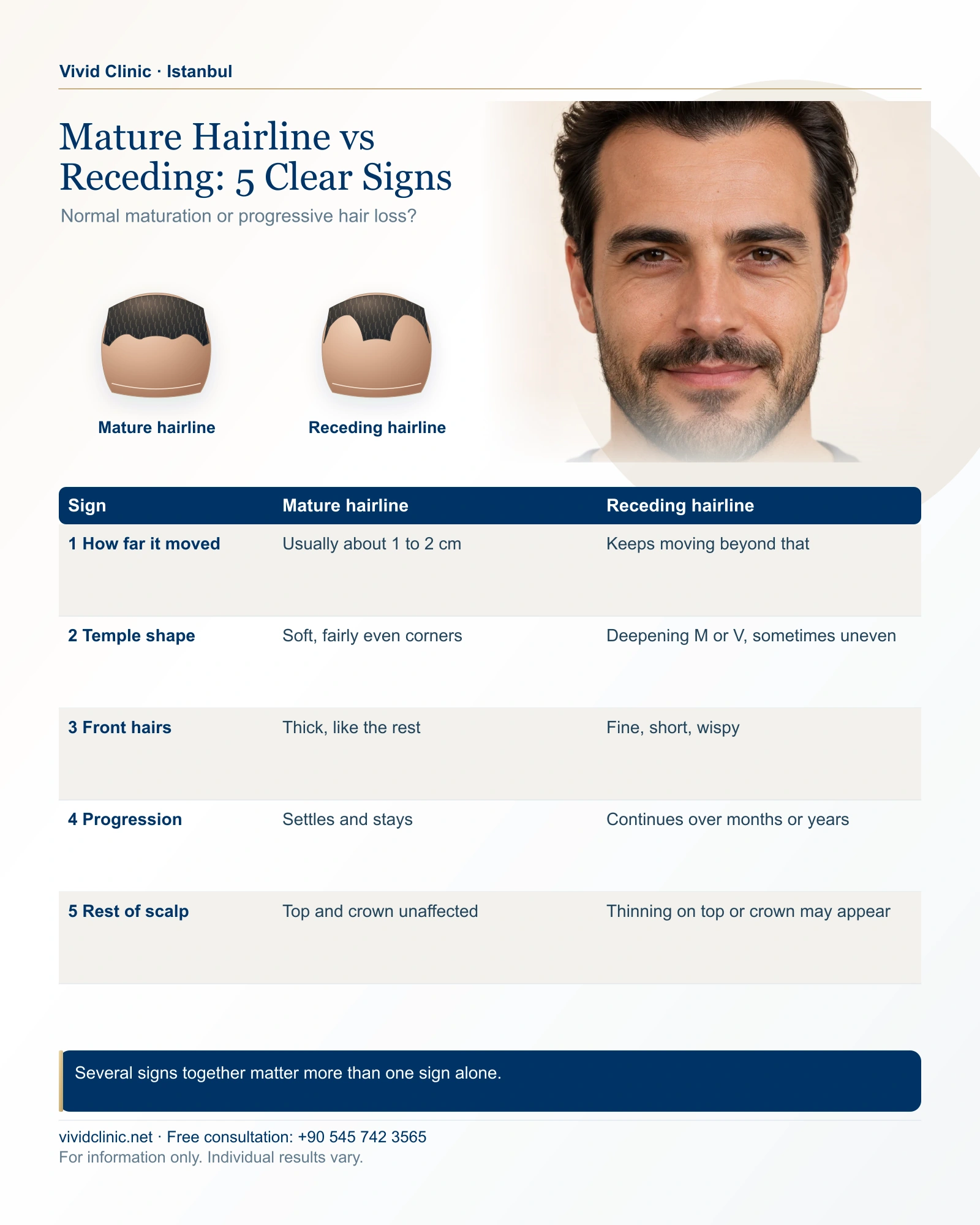
Mature Hairline vs Receding Hairline: Side-by-Side Comparison
| Feature | Mature Hairline | Receding Hairline |
|---|---|---|
| Typical age of change | Late teens to late twenties | Can start from the late teens and continue |
| How far it moves | Usually about 1 to 2 cm | Keeps moving beyond normal maturation |
| Temple shape | Soft, fairly even corners | Deepening M or V shape, sometimes uneven |
| Front hairs | Thick, similar to the rest | Fine, short, wispy (miniaturized) |
| Progression | Stabilizes | Continues over months or years |
| Other areas | Crown and top unaffected | Thinning on top or at the crown may appear |
| Usual approach | Reassurance, no treatment needed | Specialist assessment and treatment options |
How to Check Your Own Hairline at Home
A simple, consistent routine tells you far more than a single worried glance in a mirror.
- Take front and side photos with your hair pushed back, in the same spot and lighting each time.
- Repeat every three to six months and compare side by side.
- Look at the temples, the front row of hairs and the crown.
- Note any sudden shedding, itching or redness.
Mature Hairline Changes in Women
Women can also develop a slightly higher, more adult hairline, but the pattern of hair loss in women is usually different. Female pattern hair loss tends to widen the parting and thin the top while the front edge stays in place.
Frontal recession in women deserves a careful look, because tight hairstyles can cause traction hair loss and rarer scarring conditions can start there. A specialist or dermatologist should assess it.
Women with a naturally high forehead may consider hairline lowering surgery after a full assessment.
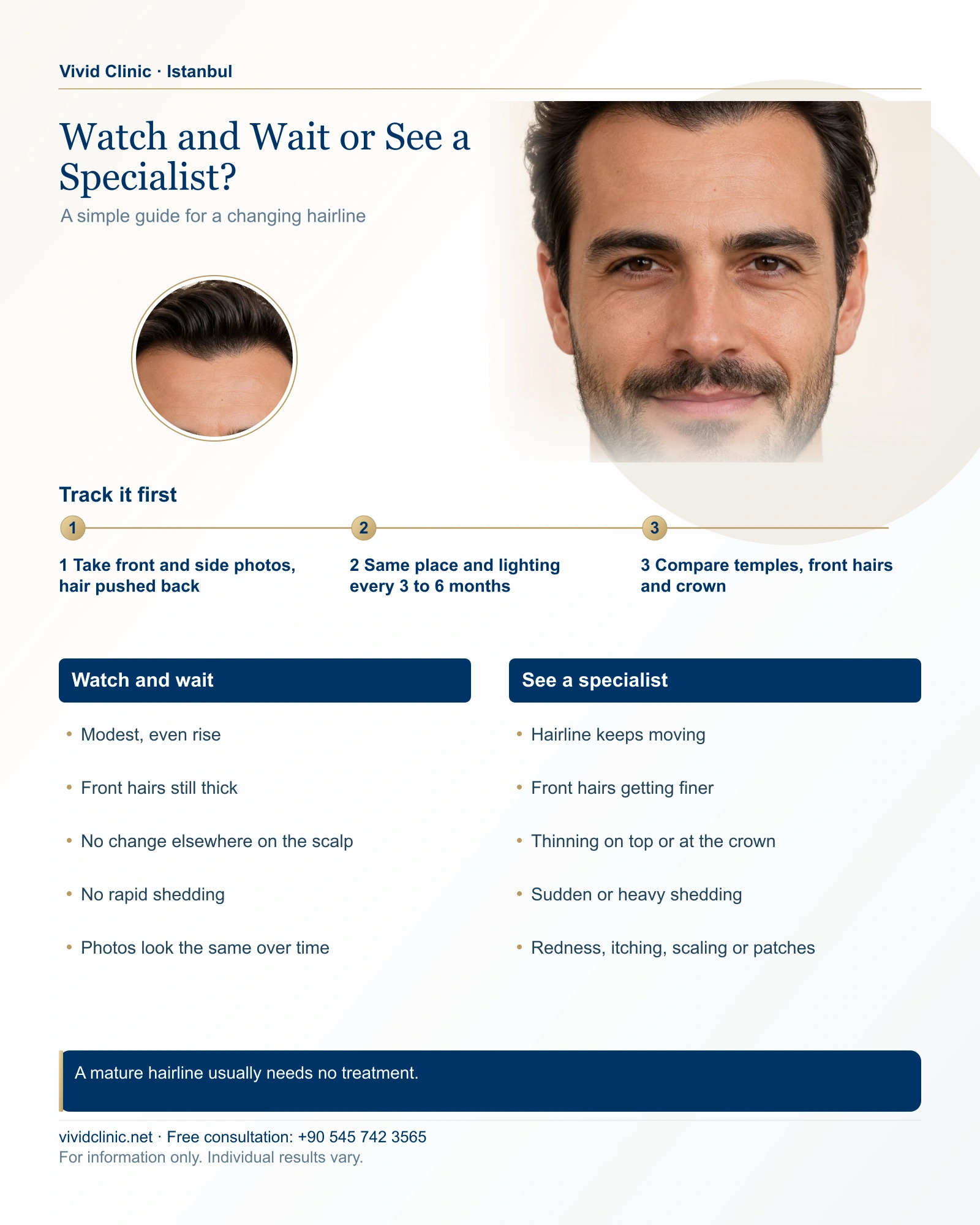
When to Watch and Wait
Quick Answer: Watching and waiting is reasonable if your hairline has risen modestly and evenly, the front hairs are still thick, nothing else on your scalp has changed and there is no rapid shedding. Track it with photos every three to six months. If it stays stable, you most likely have a mature hairline and no treatment is needed.
When to See a Hair Specialist
It makes sense to book an assessment if you notice any of the following:
- The hairline keeps moving between your six-month photos
- Front hairs are clearly becoming finer and shorter
- Thinning appears on top or at the crown
- You are shedding noticeably more than usual
- Patches, redness, scaling, pain or itching appear on the scalp
- Hair loss started suddenly after illness, stress or a new medication
A specialist can check for miniaturization under magnification. Sudden or patchy loss and scalp symptoms should be seen by a doctor, as other medical causes are possible.
Does a Mature Hairline Need Treatment?
Quick Answer: Usually not. A mature hairline is a normal adult feature, and most people are best served by reassurance and good styling. Treatment only becomes relevant when an assessment shows that recession is going beyond normal maturation.
The right haircut, often slightly longer on top with a soft textured fringe, can frame a mature hairline very naturally.
Options When Recession Goes Beyond Normal Maturation
If an assessment confirms progressive recession, the right option depends on your age, the speed of loss and how much hair remains.
Medical Hair Loss Treatment
Medication is often the first step for early pattern hair loss. Common options include topical minoxidil and, for some men, prescription tablets that reduce the effect of DHT. They may slow loss but work only while used and can have side effects, so a doctor should prescribe and monitor them. You can read more about hair loss treatment at Vivid Clinic.
PRP as a Supportive Option
Platelet-rich plasma from your own blood is injected into the scalp to support existing follicles. Evidence is still developing and responses vary, so it is a supportive option rather than a way to regrow a lost hairline. Learn more about PRP hair treatment in Turkey.
Hair Transplant With FUE or DHI
When frontal follicles are already lost, a hair transplant moves hair from the donor area at the back of the scalp. With FUE hair transplantation, follicles are extracted one by one and placed into tiny channels. A DHI hair transplant uses an implanter pen to place grafts directly.
For young men, a good surgeon will not rebuild a teenage hairline on an adult head, because a line that is too low can look unnatural if loss continues.
Who Is a Good Candidate for a Hair Transplant?
- Confirmed pattern hair loss that goes beyond a mature hairline
- A healthy, dense donor area
- Loss that has slowed or is medically managed, and good general health
- Realistic expectations about density and a natural adult hairline
Who May Not Be Suitable Yet?
If you are very young and losing hair quickly, surgery is often better postponed. People with a normal mature hairline do not need a transplant at all. A weak donor area or uncontrolled medical problems also need attention first.
How the Technique Works
Under local anesthesia, the surgeon first designs the hairline with you, considering face shape, age and likely future loss. Grafts are harvested and implanted at natural angles, with the finest single hairs at the front edge for a soft transition.
Procedure Overview Table: FUE/DHI Hair Transplant
| Aspect | Details |
|---|---|
| Duration Process | Usually 6 to 8 hours in one day, depending on the number of grafts |
| Hospitalization Duration | Not usually required; performed as a day procedure under local anesthesia |
| Mobility Duration | Walking the same day |
| Return to Activity | Desk work in about 3 to 5 days; gym and swimming after about 3 to 4 weeks |
| Complete Recovery | Scabs usually clear in 10 to 14 days; redness can take a few weeks to fade |
| Anticipated Results | Early growth from about 3 to 4 months; fuller result at 12 to 18 months |
Operation Process Overview at Vivid Clinic
Your journey begins when you arrive in Istanbul and a VIP airport transfer takes you to your 5-star hotel for check-in. A one-on-one consultation follows, where your hairline, donor area and goals are examined in person and the plan discussed online is confirmed or adjusted. On procedure day, the medical team guides you through hairline design, local anesthesia, graft harvesting and implantation. Post-operative care includes your first gentle wash and clear instructions for sleeping, washing and protecting the grafts. A checkup visit before departure confirms that healing has started well. Once you are home, remote aftercare follow-up continues through photo reviews and direct contact with your coordinator.
Recovery Timeline After a Hair Transplant
Days 1 to 3
Mild forehead swelling and donor tenderness are common. Rest and sleep with your head raised.
Days 4 to 14
Small scabs wash away, and most people return to desk work within the first week.
Weeks 3 to 8
Many transplanted hairs shed. This is normal, as the follicles stay in place.
Months 3 to 6
New hairs appear, often fine at first.
Months 12 to 18
Hairs thicken and the final result becomes clear. Results vary by individual.
Benefits of Getting an Expert Assessment
- Reassurance if you simply have a mature hairline
- Early detection if recession is starting
- Honest advice on whether surgery is needed
- An age-appropriate hairline if you proceed
Risks and Side Effects
Medication can cause side effects, which your doctor should discuss with you. Hair transplant risks include swelling, numbness, infection, folliculitis, temporary shedding, donor scarring, lower graft growth than hoped and an unnatural hairline if design is too aggressive. Careful planning reduces, but does not remove, these risks.
How to Prepare
- List any medications, supplements and medical conditions
- Stop smoking and limit alcohol in the days before, as advised
- Ask your team which medicines to pause, never stop prescribed medication on your own
Aftercare Tips
- Follow the washing routine exactly
- Avoid touching, scratching or rubbing the grafts
- Protect the scalp from direct sun for several weeks
- Continue any medical treatment your doctor recommends, as it protects non-transplanted hair
Cost Factors in Istanbul, Turkey
Cost depends on the number of grafts, the technique (FUE or DHI), the area treated, any added medical or PRP treatment, and the hotel, transfer and aftercare services included. A mature hairline may need no treatment at all. You can use the surgery price calculator for an initial estimate. Final pricing is confirmed after consultation.
Why Choose Vivid Clinic?
Vivid Clinic focuses on honest assessment, including telling patients when they do not need surgery, and plans hairlines for your age and future pattern. You can meet our doctors and request a free consultation with a plastic surgeon or our hair team before making any decision. Our coordinators support planning, transfers, hotel, treatment and remote aftercare in Istanbul, Turkey.
What International Patients Should Expect
Most patients start with an online photo review. A typical hair transplant stay is about three to four days, with your flight home after the checkup.
FAQs
At what age does a mature hairline usually stop moving?
For most men, a mature hairline forms gradually between the late teens and the late twenties, and then it largely stays in place. The timing varies from person to person, so there is no fixed birthday when it stops. The practical test is stability: if photos taken six to twelve months apart look much the same, your hairline has probably settled. If it keeps moving year after year, especially at the temples, that points toward pattern hair loss rather than normal maturation. If you are unsure, a specialist can examine the front hairs under magnification for miniaturization, one of the earliest signs of recession.
Can a hair transplant lower a mature hairline, and is FUE or DHI better?
A hair transplant can technically place grafts below a mature hairline, but most experienced surgeons are cautious about doing this, especially in young men. A mature hairline is a normal adult feature, and rebuilding a teenage line can look unnatural if hair loss develops later. When recession does go beyond normal maturation, both FUE and DHI can create natural results. FUE extracts follicles one by one, while DHI places grafts directly with an implanter pen. The better choice depends on your donor area, hair type and goals, and it is decided during a personal consultation rather than in advance. Results vary by individual.
How can women tell a mature hairline from female pattern hair loss?
Women can develop a slightly higher, more adult hairline too, but a mature hairline in women usually stays even and stable. Female pattern hair loss tends to look different: the parting widens and the top thins, while the front edge often stays where it is. Hair loss along the front in women may instead be linked to tight hairstyles, extensions or, less commonly, scarring conditions that need early medical attention. Women with frontal changes, redness or itching should see a specialist or dermatologist before any treatment. Some women with a naturally high forehead, rather than hair loss, may discuss hairline lowering surgery after a full assessment.
Do I need to travel to Istanbul to find out whether my mature hairline is receding?
Not at first. Vivid Clinic can usually start with an online review: you send clear photos of your hairline, temples and crown taken in good light with your hair pushed back, along with a short medical history. The team can then tell you whether your pattern looks like a mature hairline, whether monitoring makes sense or whether an in-person assessment is worthwhile. Travel is suggested only if treatment looks likely. If you do come to Istanbul, Turkey, a stay of about three to four days is typical for a hair transplant, including consultation, procedure, first wash and a checkup before you fly home.
What affects the cost of treatment if a mature hairline turns out to be receding?
If your assessment confirms a normal mature hairline, there may be nothing to pay for beyond reassurance and styling advice. If recession is confirmed, cost depends on what you actually need. Medical treatment and PRP are priced differently from surgery. For a hair transplant, the main factors are the number of grafts, the size of the area, the technique chosen, whether the hairline and crown are treated together, and the package services such as hotel, VIP transfers, medications and remote aftercare. The surgery price calculator gives an initial estimate, but final pricing is confirmed only after a personal consultation and plan.
Conclusion
A higher hairline is not automatically balding. Often it is simply a mature hairline: a modest, even rise that settles and needs no treatment. The five signs in this guide, distance, temple shape, hair quality, progression and the rest of the scalp, help you tell the difference calmly.
If your photos show steady change, finer hairs or thinning elsewhere, an assessment is the sensible next step. Vivid Clinic in Istanbul, Turkey offers a free consultation with a plastic surgeon and our hair team to give you an honest answer. Get a Free Consultation and find out where your hairline really stands.
Real Before and After Results at Vivid Clinic
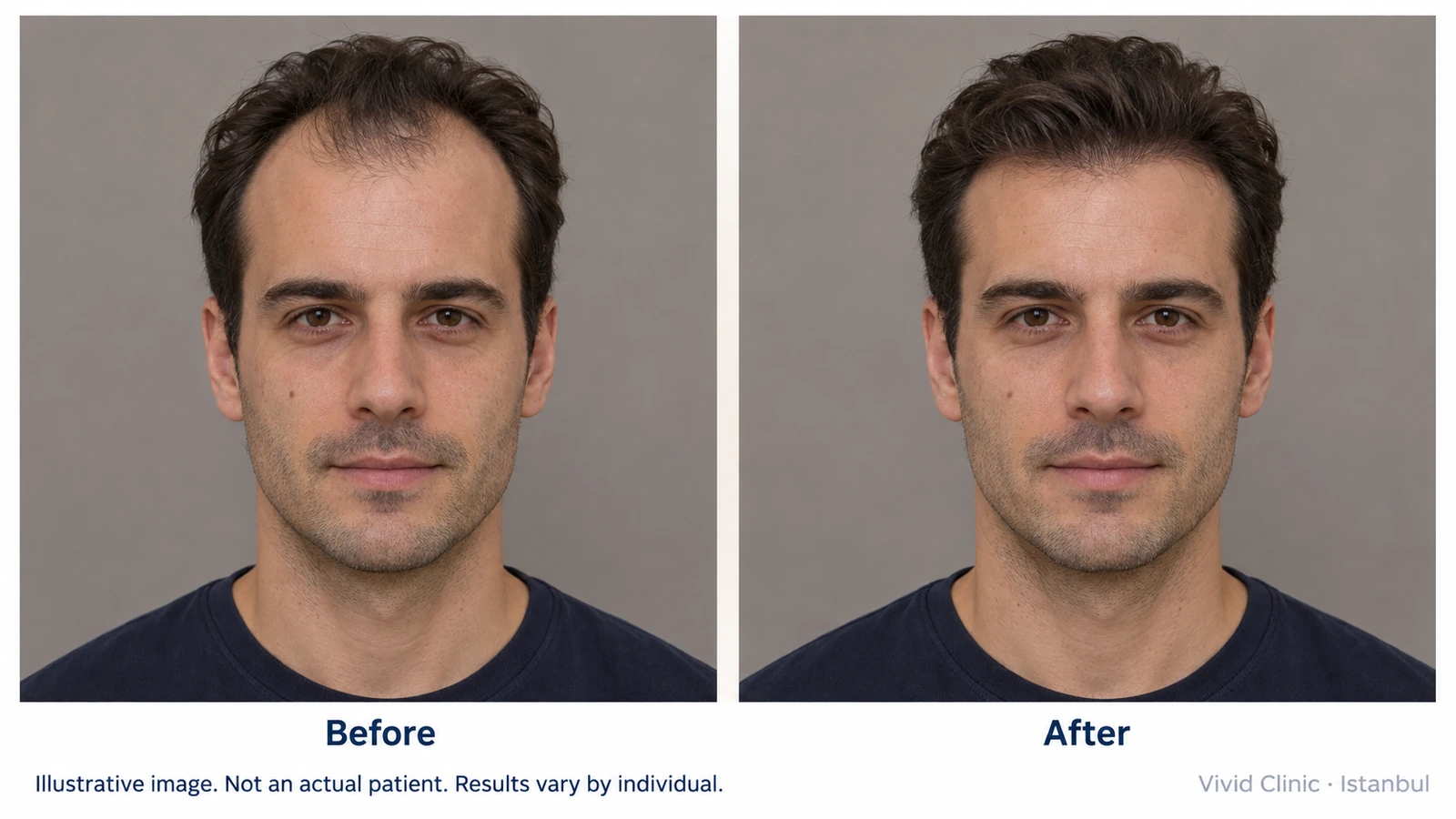
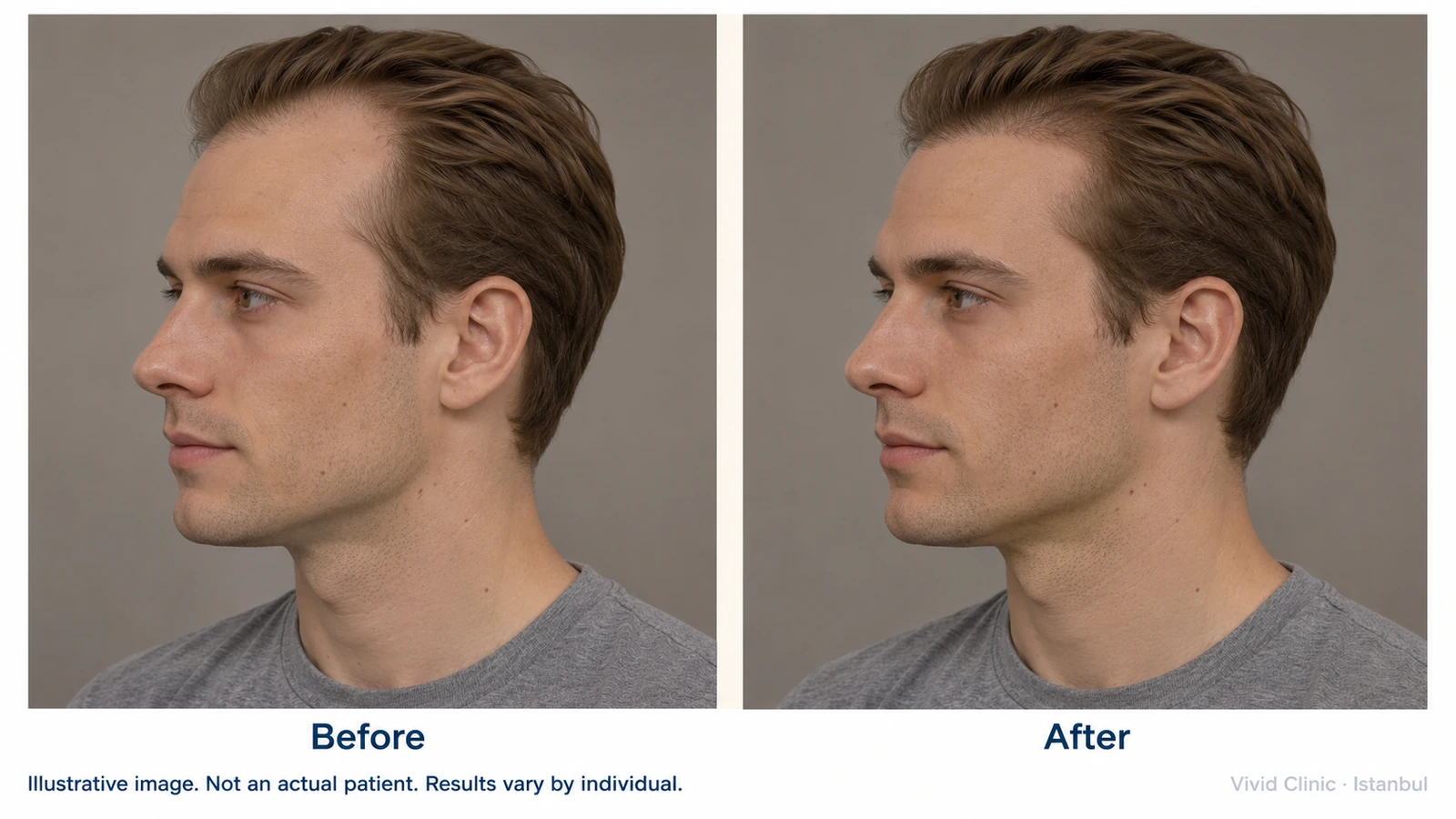
The photos below show real Vivid Clinic patients from the clinic’s own gallery, shared with consent as published on the clinic site; they are hair transplant cases for hair loss, not mature hairline cases, because a mature hairline usually needs no surgery. Results vary by anatomy, healing and treatment plan.


You can see more real results in the full before and after gallery. If you are unsure whether your hairline is maturing or receding, send your photos to Vivid Clinic for a personal, no-obligation assessment.
This article is for general information and does not replace a personal medical consultation. Suitability, risks, recovery and expected results should always be discussed with a qualified medical professional. Results vary by individual.