
 ChatGPT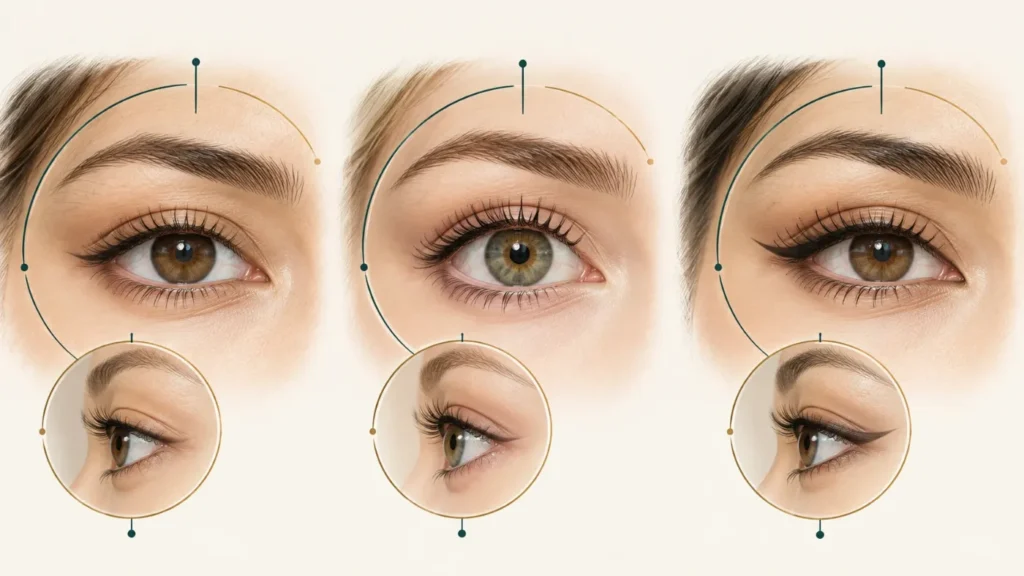
Quick answer: Almond vs doe vs siren eyes are informal labels for how an eye shape looks, not medical diagnoses. Almond eyes look tapered, doe eyes look rounder and more open, and siren eyes usually describe lengthened makeup. At Vivid Clinic in Istanbul, Turkey, a free consultation with a plastic surgeon can help you sort structure from styling.
Editorially reviewed by the Vivid Clinic Surgical Board. Last updated: October 2026.
What Each Label Actually Describes
If you have spent time on beauty content lately, you have probably heard the terms almond eyes, doe eyes and siren eyes. Many readers look for these labels to describe what they see in the mirror with more precision. Used this way, they are shorthand for visual impressions, not clinical categories.
Almond eyes describe an outline that narrows toward both corners, giving an elongated, slightly tapered look. Doe eyes describe a rounder, wider-looking impression, often with a more open upper lid and a softly curved lower lash line. Siren eyes usually describe a styled look, most often created with liner, shadow and lashes that lengthen the outer corner.
These are not medical terms, and no single measurement decides which label fits. Lighting, makeup, lid fullness, brow position and even photo angle can change how an eye reads from one moment to the next.
Almond Eye Anatomy and Proportions
When people describe almond eyes, they usually focus on proportion: the width of the opening, the height of the lid, and where the widest point sits between the inner and outer corners. An almond-shaped impression often comes from an opening that is fullest in the middle, with corners that taper gently.
Anatomy varies widely. The angle between the inner and outer corners, often discussed as canthal tilt, is one factor, but eyelid skin, the fat under the upper lid and brow position all affect the visible outline. A useful comparison therefore looks at the whole face. Vivid Clinic’s face aesthetics services cover the wider face in Istanbul, Turkey.
Consider a practical example. Two people with the same lid shape can look very different if one has heavier upper lids or sparser lower lashes. An almond-shaped eye needs no correction. Its outline is normal human variation, and how you feel about it is a personal matter.
Doe Eyes and the Rounded Visual Impression
Doe eyes are described by a rounder shape, a larger-looking iris visible below the upper lid and lashes that curve gently outward. The effect is often associated with an open, soft expression. Because the look depends on how the eye is framed, it can change noticeably with eyelid position, brow height and cosmetic technique.
Almond and doe are not always separate categories. Many people have an almond-shaped eye that looks rounder when the upper lid appears more open or when the lower lash line is brightened. This overlap is why these labels work best as a spectrum rather than three separate boxes.
To understand your own eye shape, compare photos taken in natural light, without makeup, from the same distance and angle. Changes between these conditions show how much of the look comes from styling.
Siren Eyes: Styling Versus Anatomy
Siren eyes are most often a makeup look. The style usually involves a defined lower lash line, a lifted or lengthened outer corner, and shadow placed to create depth. Because it is built with products, it can be recreated or changed at will.
The distinction matters. Makeup can change how far an eye appears to extend, but it does not alter the eyelid skin, the muscles or the bone structure beneath. A bold outer liner can make an eye look longer in a photo while the anatomy underneath stays exactly the same.
If you are weighing these labels, ask which part of the look you would keep without makeup. For many people, most of the look is styling, and only a small part reflects the eye’s natural outline.
How to Compare Your Own Features Without Ranking Attractiveness
Comparing eye shapes can quickly turn into a ranking, but the labels do not describe which eyes are better. Every shape can look balanced within a face, and every face can look expressive in its own way. A more useful goal is to understand what you notice and what concerns you.
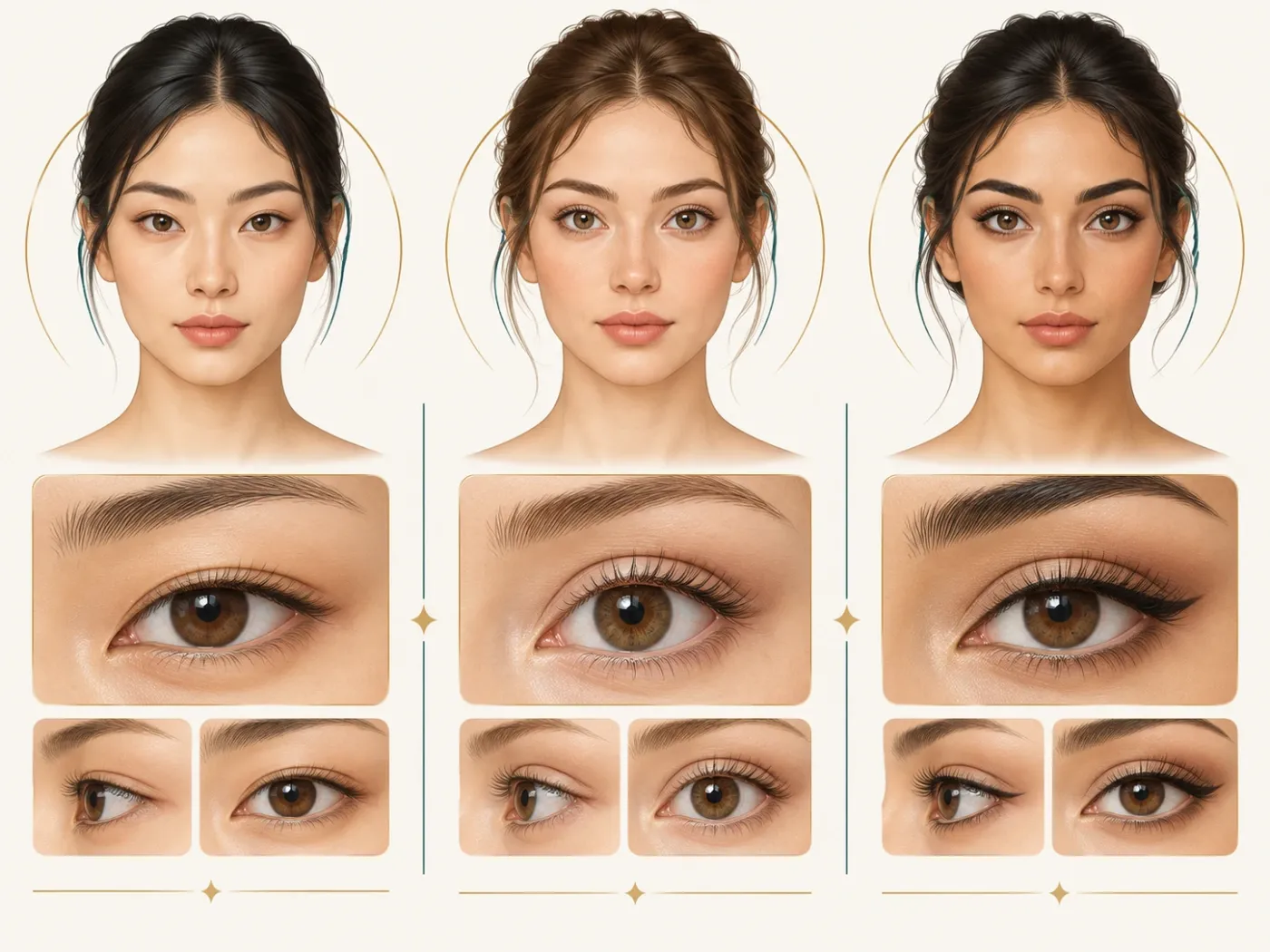
Start by writing down what specifically bothers you, if anything. Is it the outer corner, the heaviness of the upper lid, the shadow under the lower lid, or simply how photos look? A specific concern is much easier to discuss with a clinician than a general wish to look like a particular label.
Selfies are useful for noticing patterns, but they are not measurements. For a fair comparison, use the same lighting, the same camera distance and a neutral expression, and review your photos over several days.
Almond vs Doe vs Siren Eyes: Candidacy and Reasons to Defer Treatment
Most people exploring these labels do not need treatment. Eye shape is normal variation, and the labels are most helpful as a way to talk about style and goals. Deferring a decision is a reasonable choice, especially when the concern is mainly about makeup or photographs.
Treatment is always optional. The American Society of Plastic Surgeons (ASPS) lists upper-lid skin that sags or folds, fatty puffiness, under-eye bags and drooping lower lids among the conditions eyelid surgery can address. Those are specific, examinable concerns, which differ from a preference for one label over another. You can read more in Vivid Clinic’s educational guide to hooded eyelids.
Reasons to wait include an unclear goal, a recent change in vision or eye comfort, a health condition that could affect healing, or a wish to see how your features look over time. Mention any eye symptoms to a physician first. Candidacy is decided by a medical professional after assessment, not by an article.
Relevant Procedure Overview and Realistic Expectations
Eye shape itself has no procedure timeline, because normal anatomy does not need treatment. The overview below is included only for readers exploring eyelid surgery as an option. Values come from the sources we could verify, and where a source gives no figure, the table says so.
Optional overview of relevant treatments, not a recovery table for a natural feature.
| Aspect | Details |
|---|---|
| Duration Process | The sources verified for this article do not give a procedure length. Your surgeon confirms timing for your specific plan at consultation. |
| Hospitalization Duration | Vivid Clinic’s blepharoplasty guide describes a day-case pattern with a planned stay. The exact stay is confirmed at consultation. |
| Mobility Duration | Walking and light movement limits are set individually. The verified ASPS pages do not give a number of days. |
| Return to Activity | Desk work, exercise and travel clearance are separate decisions. The ASPS recovery guidance lists resuming normal activity and exercise as a question for your surgeon and gives no timing. |
| Complete Recovery | Most patients look presentable within about two weeks, while final healing may take a few months, according to the ASPS results guidance. |
| Anticipated Results | The ASPS describes eyelid surgery results as long-lasting, but notes that you will continue to age naturally. Individual outcomes vary. |
Preparation and the Consultation Assessment
A consultation is where these questions become practical. Your surgeon will ask about your medical history, current medications, past eye or eyelid procedures, dry eye symptoms and any vision concerns. These answers shape whether any plan is appropriate at all.
Bring a list of your goals in your own words. You might want a lighter upper lid for a more rested look, or you might want to understand how much of your eye shape is affected by makeup. Clear goals help your surgeon separate what can be improved from what is normal variation.
Do not start, stop or change medications, supplements or eye drops on your own because of an article. Follow the instructions your physician gives you. Self-diagnosis is not a reliable basis for deciding on surgery.
Recovery, Aftercare and When Results Can Be Assessed
Recovery after eyelid surgery has two stages. Early on, the ASPS notes that initial healing may include some swelling, bruising, irritation, dry eyes and discomfort. Surface healing can look presentable within about two weeks for most patients, but tissues keep settling for longer.
Settling is a separate stage. The ASPS states that final healing may take a few months, so judging the outcome in the first weeks can be misleading. Its recovery guidance also advises darkly tinted sunglasses and sun protection until healing is fully complete.
Your surgeon will set timing for stitch removal, follow-up visits, exercise and driving. Ask these questions before any procedure so your planning is realistic.
Risks, Limitations and When Medical Assessment Comes First
Eyelid surgery is a real surgical procedure, not a simple cosmetic step. The ASPS lists possible risks that include anesthesia risks, bleeding, infection, dry eyes, difficulty closing the eyes, ectropion (an outward rolling of the lower lid), lid lag, numbness of the eyelashes, sensitivity to light and unfavorable scarring. It also lists temporary or even permanent change in vision, with a very rare chance of blindness, and the possible need for revision surgery.
The ASPS safety guidance states that these risks will be fully discussed before consent. The page gives no numerical figures, and individual risk depends on your health, anatomy and surgical plan. Ask your surgeon for personal estimates.
Medical assessment comes first whenever the concern is functional rather than cosmetic. Sudden vision changes, severe pain, or increasing redness and drainage after any eye procedure need immediate attention from your treating team. Do not wait for a scheduled appointment in those cases.
Cost Factors and Comparing Care Plans
No fixed price appears in this article, and quotes are individual. The cost of any eyelid treatment in Istanbul, Turkey depends on the surgeon’s experience, the facility, the type of anesthesia, the complexity of the plan, whether procedures are combined and how long the operation takes.
Travel, accommodation and aftercare can also change the total. Some packages include airport transfers or hotel stays, but these benefits apply only to select procedures and are confirmed at consultation. Compare plans by what each one includes, not only by the headline figure.
Your Optional Patient Journey at Vivid Clinic in Istanbul
If you decide to pursue a treatment, your journey with Vivid Clinic can begin when you arrive in Istanbul, Turkey. Where the package includes it, a VIP airport transfer brings you to a five-star hotel for check-in. Your one-on-one consultation with the medical team follows, where your surgeon reviews your goals, medical history and anatomy.
If you proceed, the surgery or treatment day is planned for comfort and safety, with post-operative care and a check-up visit before your departure. After you return home, remote aftercare continues so your recovery can be followed from a distance. Eligibility for transfers and hotel benefits is confirmed at consultation, because these benefits apply to select procedures only.
Why Consultation and Verified Surgeon Credentials Matter
A free consultation with a plastic surgeon at Vivid Clinic is a sensible next step if you want a personal answer about your own eyes. Your surgeon can explain which features are normal variation, which are functional concerns and which are matters of style.
Vivid Clinic’s medical team directory lists the clinicians. Before you decide, review each clinician’s profile and verify credentials and training with the relevant professional bodies. Ask about revision policies, follow-up schedules and who will support you after you return home.
Frequently Asked Questions About Almond vs Doe vs Siren Eyes
What is the difference in almond vs doe vs siren eyes?
Almond vs doe vs siren eyes are informal descriptions, so the difference lies in the impression each label creates. Almond eyes describe a tapered outline that is fullest in the middle and narrower at the corners. Doe eyes describe a rounder, more open look, often with a visible iris and softly curved lashes. Siren eyes usually describe a makeup style that lengthens and lifts the outer corner with liner, shadow and lashes. None of these labels is a medical diagnosis, and they often overlap. A person may have an eye that looks doe-like in one photo and siren-like after styling. For a personal assessment, a plastic surgeon at Vivid Clinic in Istanbul, Turkey can explain which features are structural and which are styling.
Can almond eyes also look rounded or doe-like?
Yes. Almond vs doe vs siren eyes overlap more than many guides suggest, because the visible shape depends on lighting, eyelid position, brow height and makeup. An almond-shaped eye can look rounder when the upper lid appears more open or when the lower lash line is brightened. The reverse is also true: a rounder eye can look more tapered when the lids are heavier or the outer corner is shaded. Comparing several photos taken in natural light is more useful than matching one picture to a label. Normal variation does not require treatment. If you want to understand your own eyes better, a consultation with a plastic surgeon can separate structure from styling.
In almond vs doe vs siren eyes, how much of the siren look comes from makeup?
For most people, a large part of a siren-eye appearance comes from makeup. Liner that lengthens the outer corner, a defined lower lash line and shadow that adds depth can change how far an eye seems to extend. Makeup does not change the underlying eyelid skin, muscles or bone structure. When you compare almond vs doe vs siren eyes, try recreating the look with everyday products first. What you can reproduce with makeup is styling, while what remains after you remove it reflects your underlying anatomy. Styling can be adjusted at any time, which is one reason many people try makeup long before they consider any procedure.
Can almond vs doe vs siren eyes be told apart accurately from a selfie?
A selfie can help you notice patterns, but it cannot assess eye shape accurately. Camera distance, lens angle, head tilt, lighting and expression all change how an eye appears. A close-range selfie can exaggerate the eyelids, and a flash photo can flatten the shadows that define almond vs doe vs siren eyes. For a fairer comparison, take photos from the same distance with a neutral expression and soft daylight, and review them over several days. Even then, a photo is not a measurement. A plastic surgeon examines your eyelids, brow position and tissues in person, which is the only reliable way to judge whether a concern is worth discussing as a treatment option.
What are the limits and functional risks of trying to change eye shape?
The limits depend on what is being changed and why. Makeup and styling have clear limits but few medical risks. Eyelid surgery is a real operation, and the ASPS lists risks that include bleeding, infection, dry eyes, difficulty closing the eyes, lower-lid rolling outward, lid lag, scarring, possible revision surgery and temporary or even permanent vision change, with a very rare chance of blindness. No procedure can promise a specific almond vs doe vs siren eyes look, and results vary from person to person. Any treatment should be decided only after a medical assessment. Your surgeon can explain individual risks, limits and realistic goals.
Sources and Further Reading
- American Society of Plastic Surgeons: Eyelid Surgery
- American Society of Plastic Surgeons: Eyelid Surgery Safety
- American Society of Plastic Surgeons: Eyelid Surgery Recovery
- American Society of Plastic Surgeons: Eyelid Surgery Results
Your Next Step: an Informed Personal Choice
Almond vs doe vs siren eyes are useful words for describing what you see, but they are not a reason to change anything on their own. Eye shape is normal variation, and deciding whether any change is right for you is a personal choice that should be informed by medical advice.
If you are considering a consultation in Istanbul, Turkey, Vivid Clinic can help you understand your options with a personalized assessment. You can request a free consultation with a plastic surgeon to discuss your goals, your medical history and the realistic limits of any plan.
This article is for informational purposes only and does not replace a personal medical consultation. Suitability, risks, recovery, and expected results should always be discussed with a qualified medical professional.