
 ChatGPT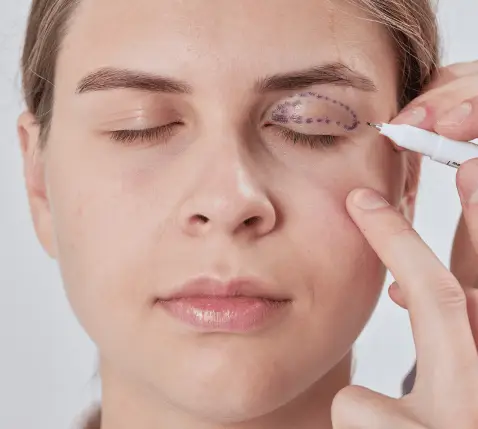
Medically reviewed by Prof. Dr. Özgür Pilancı, Plastic, Reconstructive & Aesthetic Surgeon — August 2026
Quick answer (updated September 2026): A hooded upper eyelid can come from four different things — excess eyelid skin, a descended eyebrow, a weak levator muscle, or bulging fat — and each has a different operation. Blepharoplasty removes skin and fat; it does not fix a drooping brow or a weak lid muscle, and performing it on the wrong diagnosis is the most common reason patients are disappointed. Expect visible bruising for about ten to fourteen days, stitches out at around a week, and a settled result at three months. Upper eyelid surgery is among the most reliable operations in aesthetic surgery; lower eyelid surgery is among the least forgiving.
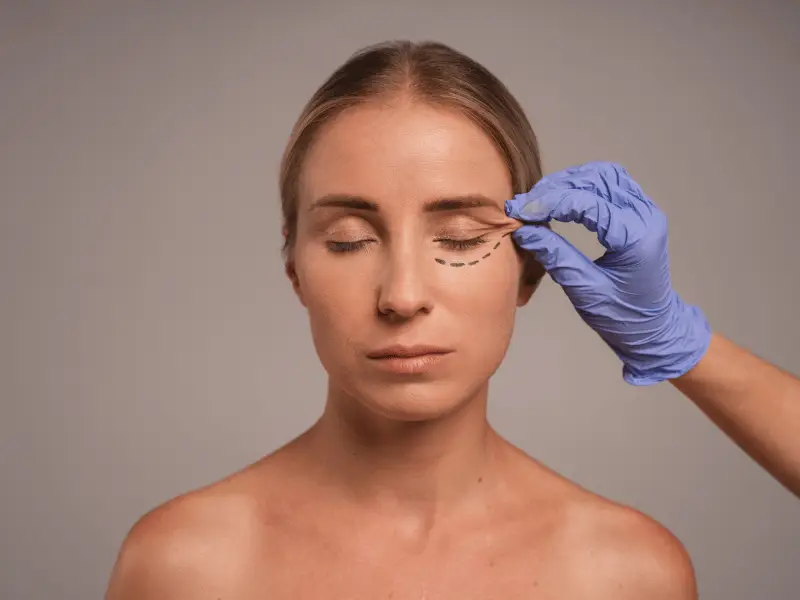
The four causes of a hooded eye, and why the difference decides everything
Almost everyone searching for “hooded eyelids” is describing the same visual: skin overhanging the crease, eyes looking smaller or tired, eyeshadow disappearing when the eye opens. That single appearance has four distinct anatomical causes.
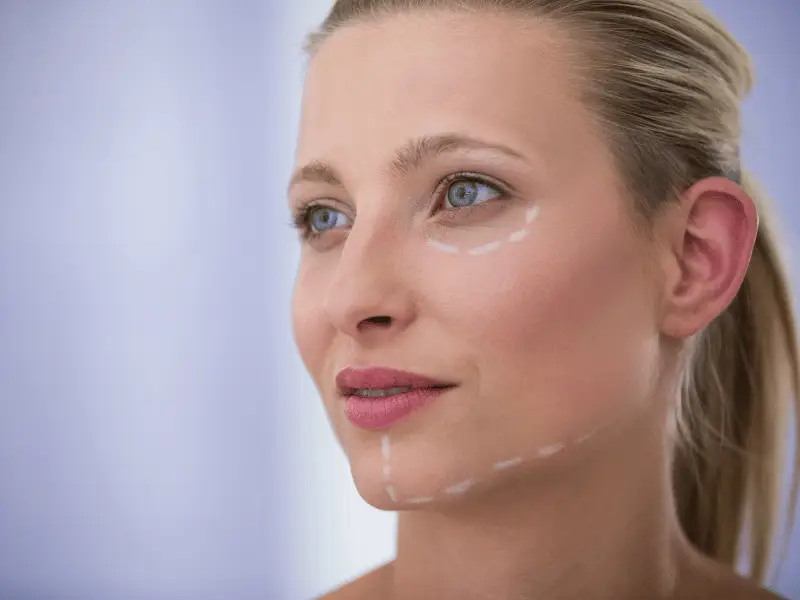
Excess upper eyelid skin. Some people are simply born with more upper lid skin and a lower crease — hooding that appears in the twenties or earlier and runs in families. When it develops with age instead, from loss of skin elasticity, it is called dermatochalasis. In both, the lid margin itself sits normally; it is skin folding over it.
Brow descent (brow ptosis). The eyebrow drops with age and drags the lid tissue down with it. The lid may be entirely normal. The test is simple and you can do it in a mirror: lift your eyebrow gently with a fingertip. If the hooding disappears and the eye looks open, your problem is the brow, and removing eyelid skin will not fix it — it will lower your brow further.
True eyelid ptosis. Here the lid margin itself sits too low, because the levator muscle or its tendon has weakened, stretched or detached. This is a mechanical failure, not a skin excess. It is measured by MRD1 — the distance from the centre of the pupil’s light reflex to the upper lid margin, normally around 4–5 mm. An MRD1 of 2 mm or less is clinically significant ptosis, and at that level the upper visual field is meaningfully obstructed. The fix is levator repair, not skin removal.
Fat prolapse. The fat pads that cushion the eye can push forward, producing fullness in the inner corner of the upper lid or bags below the lower lid. Removing skin does nothing to fat.
Most patients have more than one of these at once. The consultation that matters is the one that separates them — brow position assessed, MRD1 measured, levator function tested, lower lid laxity checked. A consultation that skips straight to “we’ll take some skin off” is skipping the part that determines whether you will be happy.
Upper blepharoplasty: what it actually does
Upper eyelid surgery removes a measured strip of excess skin, sometimes a thin strip of the underlying orbicularis muscle, and — where fat is bulging — a conservative amount from the medial and central fat pads. The incision sits inside the natural eyelid crease, which is why the scar becomes almost impossible to see once mature: it hides in a fold that only exists when the eye is open.

It is usually done under local anaesthetic with sedation, as a day case, taking roughly forty-five minutes to an hour per side. General anaesthesia is reserved for combined or complex procedures. It is one of the most commonly performed operations in aesthetic surgery — American surgeons performed 120,755 blepharoplasties in 2024 alone.
The result is a visible, natural opening of the eye: the crease reappears, eyeshadow stays visible, and for patients whose hooding had reached their lash line, peripheral vision improves. What it does not do is lift a brow, raise a low lid margin, remove crow’s feet, or lighten dark circles.
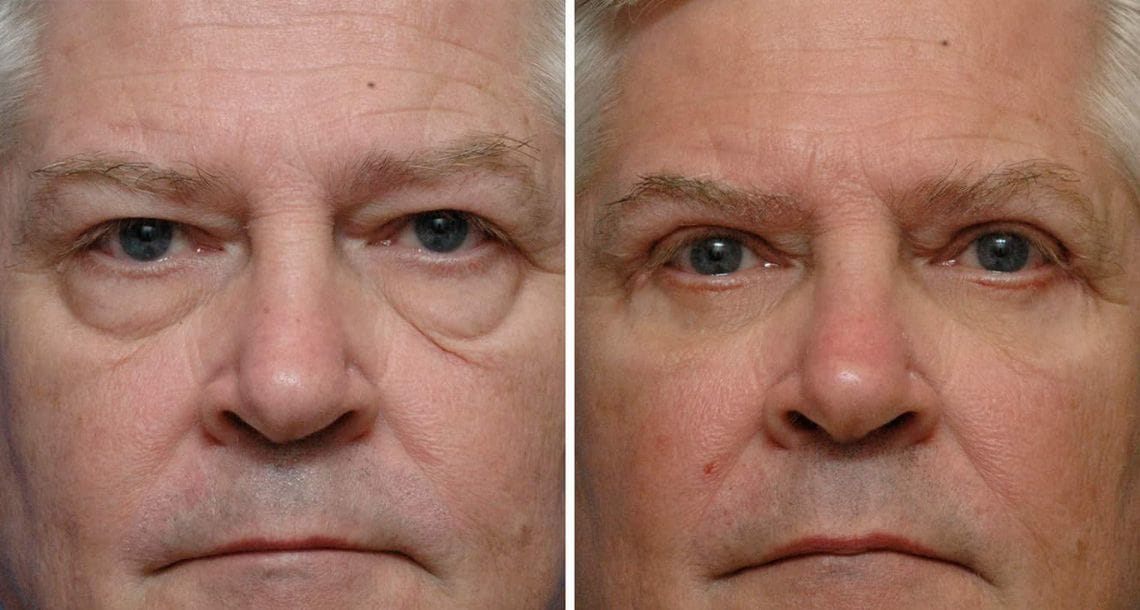
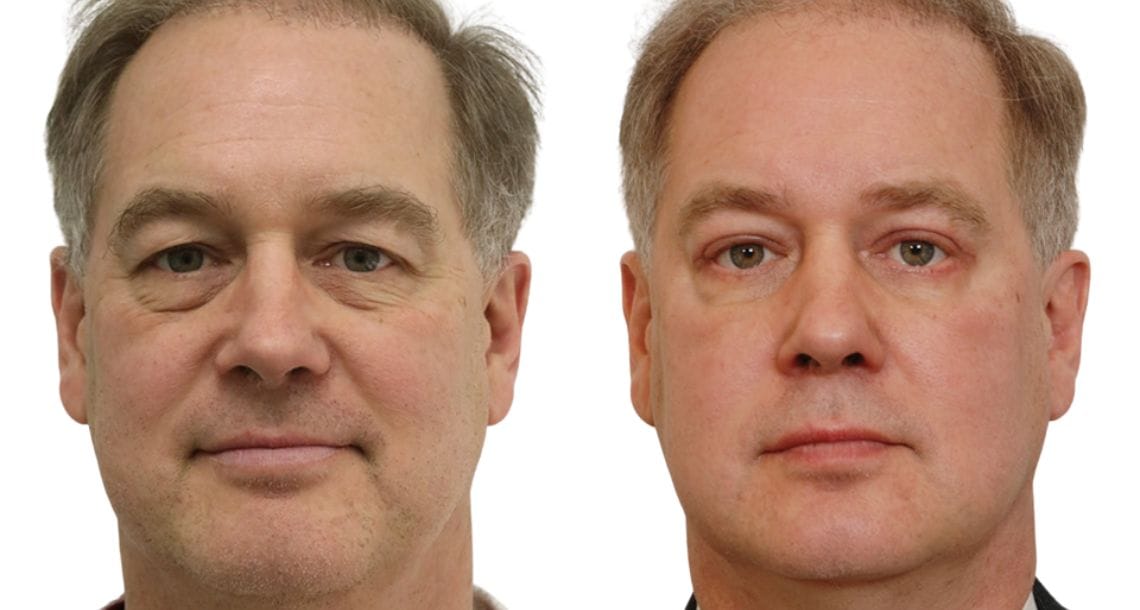
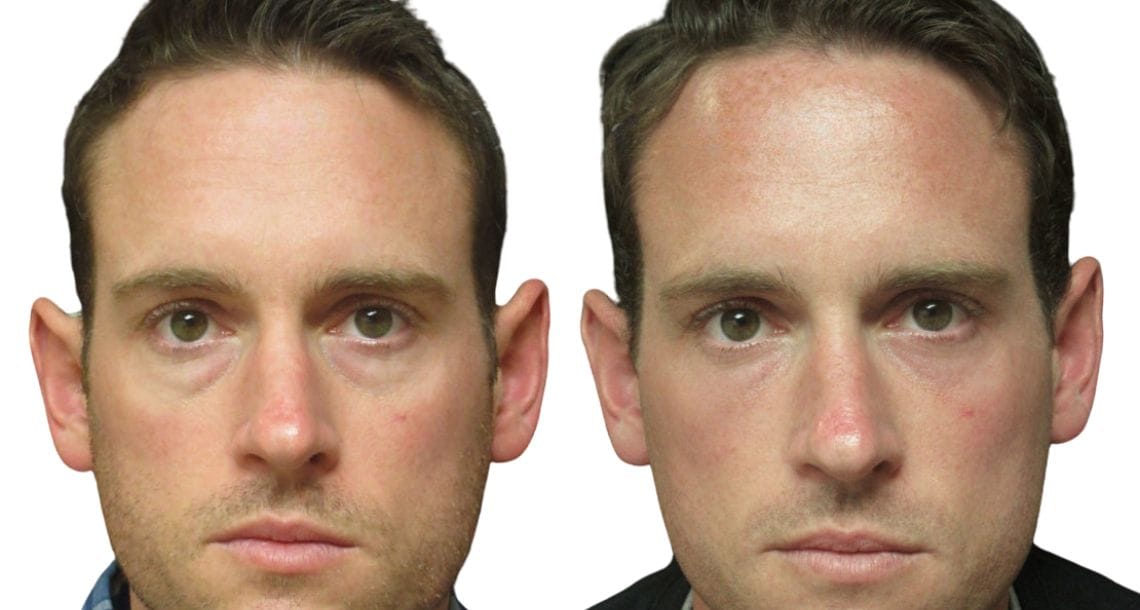
The comparison below is a combined-procedure result rather than an eyelid-only one — this patient had upper blepharoplasty alongside a deep plane face and neck lift and platysmaplasty, and kept his glasses on for both photographs, which obscures the baseline eyelid crease. It is included as a broader illustration of the same operation rather than a close eyelid-specific comparison.

Lower blepharoplasty: the harder operation
Under-eye surgery addresses bags — fat pushing forward through a weakening septum — and, sometimes, excess skin. There are two routes in, and the difference matters more than most patients realise.

Transconjunctival approach: the incision is made inside the lower lid, leaving no external scar at all. It suits patients whose problem is prolapsing fat with reasonably good skin. Modern practice increasingly favours repositioning that fat over the orbital rim to fill the tear trough hollow beneath, rather than simply removing it — removing fat from an already hollow face makes the hollowing worse. Because it does not disturb the lid’s supporting structures, this approach has a markedly lower rate of lid malposition.
Transcutaneous (subciliary) approach: an incision just below the lashes, used when excess skin genuinely has to be excised as well. It gives more access and carries more risk — scar, and lower lid retraction.
Skin pinch: a conservative 2–3 mm strip of skin removed along the lash line, often combined with transconjunctival fat work. It addresses crepey skin without opening the lid’s deeper layers, and it is a good middle path.
Why lower eyelid surgery goes wrong
“Botched lower eyelid surgery” is one of the most searched phrases in this category, and it deserves a straight explanation rather than reassurance.
The characteristic bad outcome is lower lid retraction — the lid pulled downward, showing white sclera below the iris, sometimes progressing to ectropion, where the lid turns outward. It gives a permanently startled, hollow, or “pulled” look and it is difficult to revise.
It has three main causes, and all three are preventable at the planning stage:
- Over-resection of lower lid skin. The lower lid has almost no skin to spare. A few millimetres too many and there is not enough left to hold the lid up against gravity.
- Pre-existing lower lid laxity that was not addressed. As the lid loosens with age, it needs support — a canthopexy or canthoplasty tightening the outer corner — before or during any skin removal. Skipping this assessment is the single most common technical error.
- Scar contracture pulling the lid downward as the transcutaneous incision heals.
The practical takeaway for a patient: ask the surgeon whether they have assessed your lower lid laxity, what they found, and whether they plan canthal support. If the answer is vague, that is your answer.
Functional versus cosmetic: when it is a medical operation
Upper blepharoplasty is sometimes funded, and the criterion is always documented visual obstruction rather than appearance.
In the UK, NHS commissioning policies typically require photographic evidence and formal visual field testing demonstrating encroachment on the central visual field, and explicitly exclude normal age-related change as a funding basis. In the US, insurer criteria generally require superior visual field loss of at least 20 degrees or 30%, demonstrated with the lid in its natural position and shown to improve by a similar margin when the lid is taped up — the paired taped and untaped tests exist to prove the eyelid is the cause.
If your hooding reaches your lashes, obscures the top of your field of view when driving, or forces you to raise your brows to see comfortably, ask for a visual field test before you assume this is cosmetic.
What it costs
Third-party benchmarks first, checked August 2026. The American Society of Plastic Surgeons lists an average surgeon’s fee of $3,359 for upper blepharoplasty and $3,876 for lower blepharoplasty — before anaesthesia and facility costs, so US all-in totals run considerably higher. In the UK, all-inclusive private pricing typically runs £2,500–£4,500 for both upper lids and £3,500–£5,500 for both lower lids.
Istanbul prices sit below both, and the reason is cost base — surgeon wages, facility overheads, rent — not a shortcut in the operating room. What must be identical wherever you book: a named, credentialled surgeon; an accredited facility; anaesthesia appropriate to the procedure; and a written quote stating which lids, which approach, whether ptosis repair or canthal support is included, and what a revision would cost. Vivid Clinic confirms eyelid surgery quotes at consultation after an assessment, because the honest price depends on which of the four problems above you actually have.
Recovery, day by day
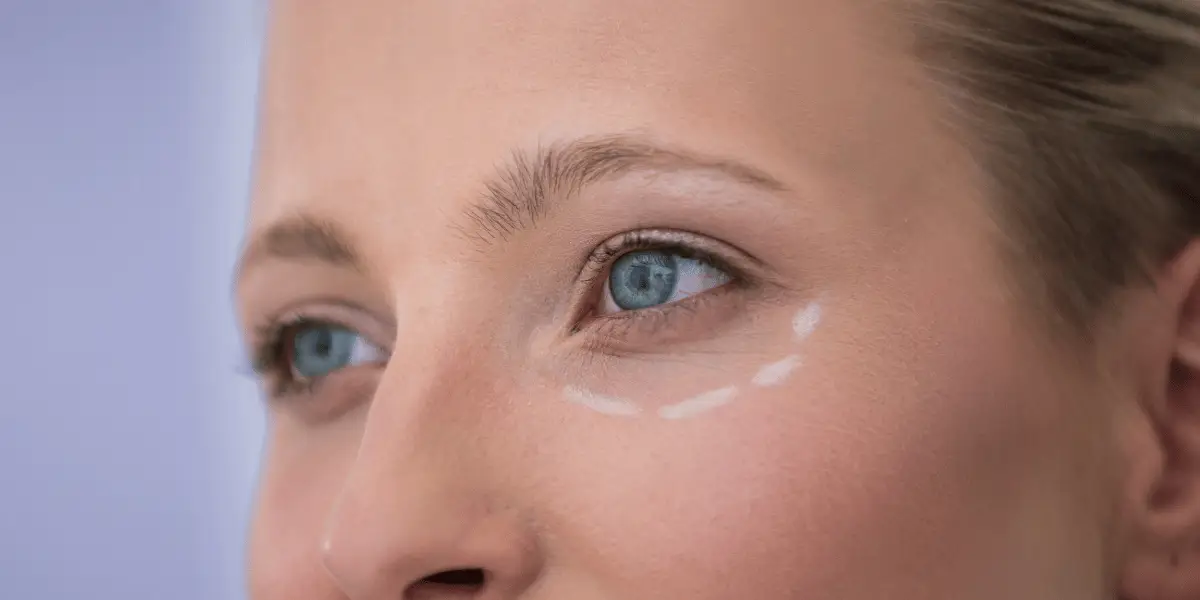
Days 1–3. Swelling and bruising build and peak. Cold compresses and sleeping with your head elevated are the standard measures. Vision may be blurry from ointment. This is the worst of it, and it looks worse than it is.
Days 4–7. Bruising begins to spread downward and yellow at the edges — normal, and often more visible than it was on day two. Skin sutures are typically removed around day five to seven.
Days 7–14. Bruising and swelling recede steadily. Most patients are comfortable in public somewhere in this window, with concealer. Avoid strenuous activity for about a week; wait roughly two weeks before contact lenses.
Weeks 3–6. The incision line is pink and slightly firm — this is when it looks its most obvious, and it is temporary. Residual swelling gives a slightly heavy feel that comes and goes.
Months 2–3. The result settles. The scar begins its long fade toward invisibility inside the crease.
Months 6–12. Final maturation. A well-placed upper lid scar becomes genuinely hard to find.
On what helps: cold compresses and head elevation are standard and sensible. Arnica is not supported by the evidence — a randomised placebo-controlled trial of topical arnica after upper blepharoplasty found no improvement in bruising or swelling, and a 130-patient study of oral arnica with bromelain found no statistically significant reduction in bruising either. It is harmless; it is not doing what the packaging says.
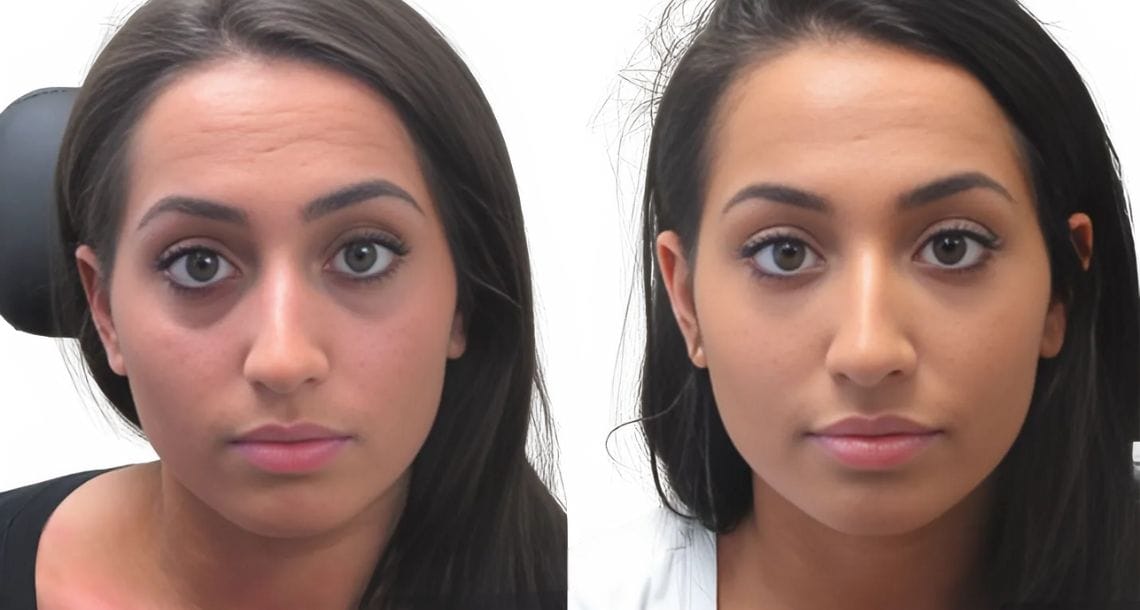
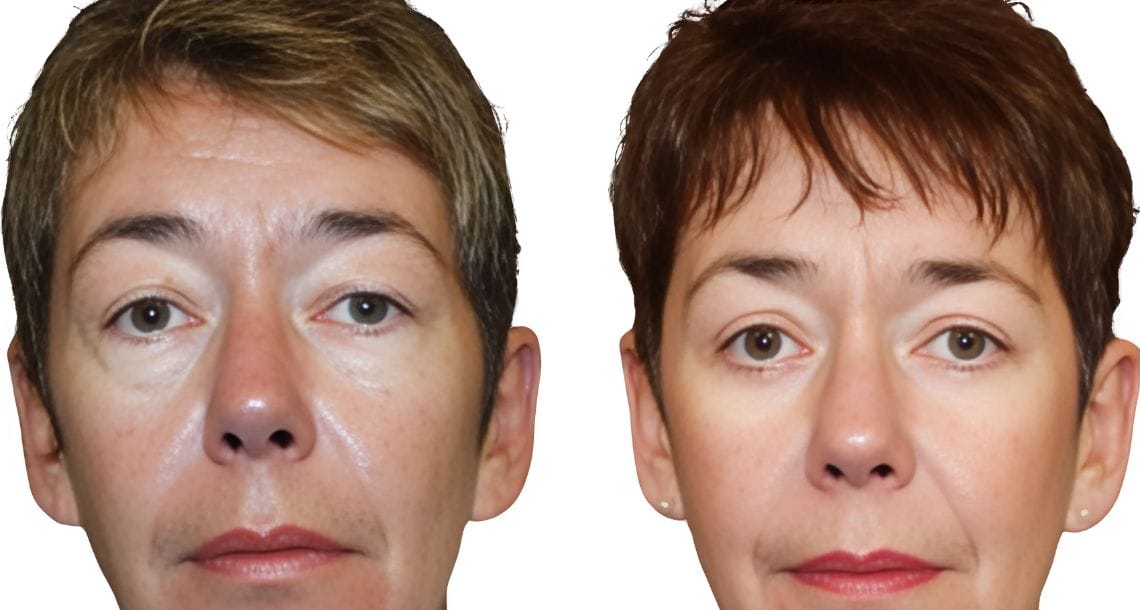
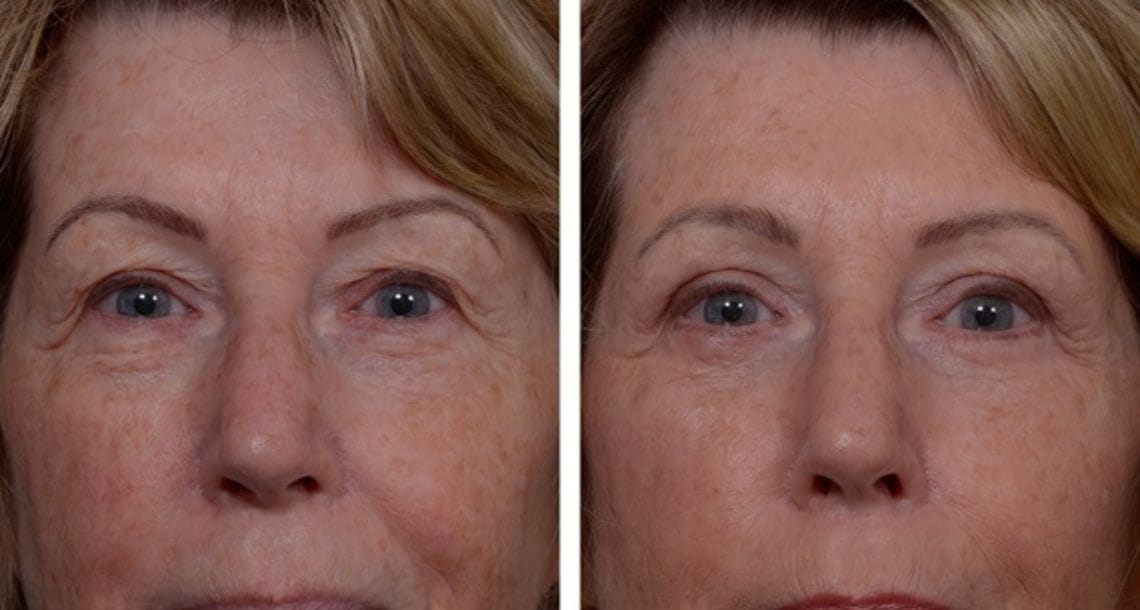
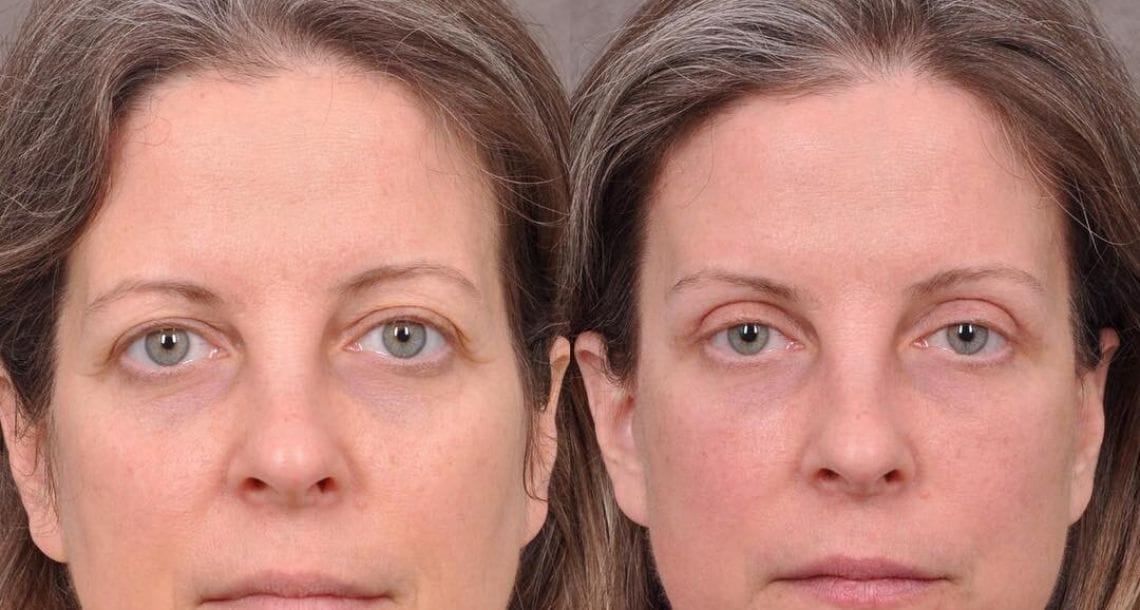
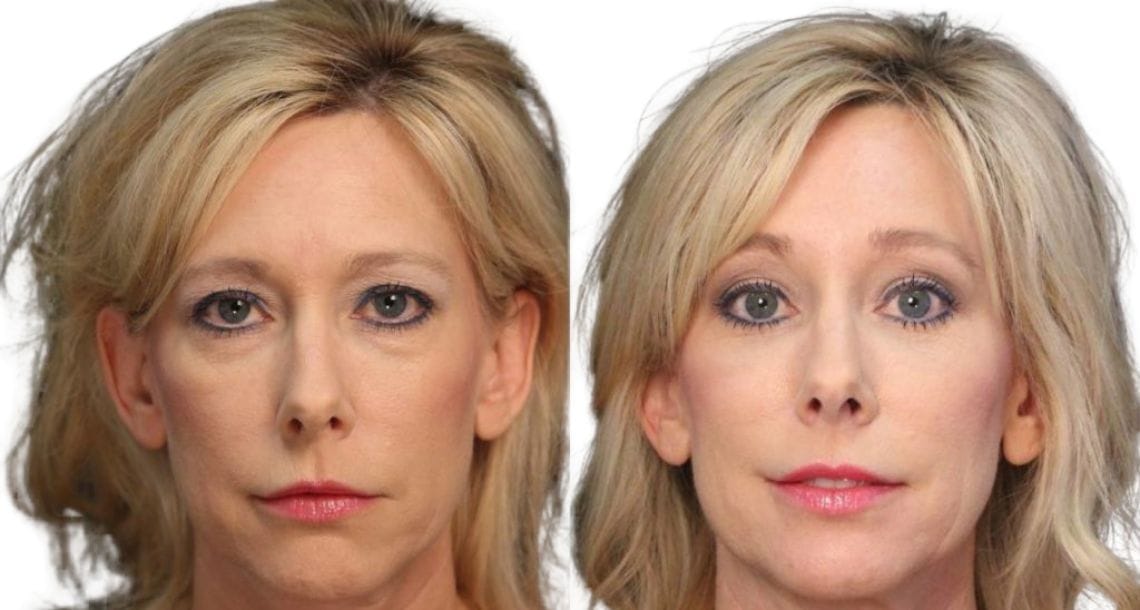
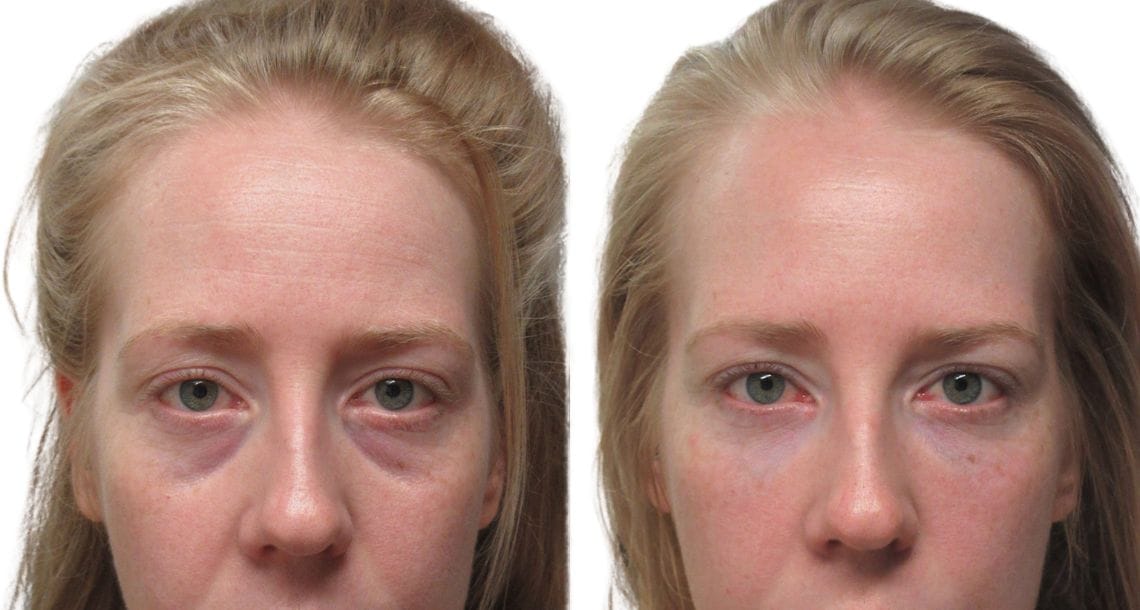
You can see what settled results look like in our blepharoplasty before and after gallery — with the caveat that any pair photographed before three months is showing an unfinished result.
Risks, stated plainly
Dry eye is the most common complaint after eyelid surgery, particularly in the first weeks, and is more likely in patients who already had dry eye symptoms. Ask to be screened for it beforehand.
Lagophthalmos — incomplete eyelid closure — can follow over-resection and usually settles as swelling resolves, but is the reason conservative skin removal matters.
Chemosis, swelling of the conjunctiva, is common after lower lid work and self-limiting.
Asymmetry and the need for revision occur at low but real rates in any honest series.
Orbital haemorrhage with permanent vision loss is the complication people fear, and it is genuinely rare. The largest cohort study, covering 269,433 cosmetic eyelid procedures, found orbital haemorrhage in 0.055% of cases — roughly 1 in 2,000 — and permanent visual loss in 0.0045%, roughly 1 in 22,000.
Crucially, most haemorrhages occurred within the first 24 hours and disproportionately in the first three. That is why you are told to stay reachable, avoid bending and lifting, and contact your surgeon immediately about sudden severe pain, rapidly increasing swelling, or any change in vision on the first day. It is treatable when it is caught quickly.
Non-surgical options: what works, what does not
Botulinum toxin brow lift. Relaxing the muscles that pull the brow down lets the forehead muscle lift it slightly — a genuine effect, measured in a few millimetres, lasting three to four months. It can soften a mild brow-driven hood. It cannot remove skin, and over-treatment causes the opposite problem: a heavy brow or an oddly peaked one.
Tear trough filler. Hyaluronic acid can soften the shadow caused by volume loss under the eye. In the wrong hands or the wrong plane it produces the Tyndall effect — a bluish-grey discolouration — lumps, and prolonged swelling. It does nothing for excess skin or true fat herniation, and filling a bag rather than the hollow beside it makes the bag more obvious.
Energy devices and plasma pens. Marketed hard as “non-surgical eyelid lifts”. Radiofrequency and plasma devices are not cleared specifically for eyelid skin tightening, and the FDA has issued a safety communication about at least one such device warning that safety and effectiveness had not been established for certain aesthetic skin procedures. Eyelid skin is the thinnest on the body and adjacent to the eye itself. This is not the region to accept an off-label device on a marketing claim.
Skincare. Caffeine-containing eye creams transiently reduce puffiness through vasoconstriction. Nothing topical removes structural fat or excess skin.
Brow lift. Where the brow is the actual problem, a brow or forehead lift is the operation that fixes it — sometimes alone, sometimes combined with a modest upper blepharoplasty. Related but distinct is the fox eye lift, which changes the tilt of the outer corner rather than removing hooding.
Dark circles: four different problems wearing the same face
“How to get rid of eye bags and dark circles” is one question hiding four, and they respond to completely different treatments.
Pigmentation — genuine excess melanin in the lower lid skin, often familial and more common in deeper skin tones, sometimes worsened by rubbing. Responds to topical pigment treatment and, cautiously, to peels. Filler and surgery do nothing for it.
Vascular shadowing — dark blood vessels visible through very thin lower lid skin. Responds to vascular laser and to anything that thickens the skin; not to filler alone.
Structural shadow — the tear trough hollow, or the shadow cast by a prolapsing fat bag above it. This is the one that responds to filler or to surgical fat repositioning, because it is an optical problem created by contour.
Congestion and fatigue — allergic rhinitis, rubbing, poor sleep. Treat the allergy, not the eyelid.
If a clinic offers the same treatment for all four, they have not diagnosed which one you have.
Double eyelid surgery: a note on framing
Asian blepharoplasty, or double eyelid surgery, creates or defines an upper lid crease. The anatomy behind it is specific: in many East Asian eyelids the levator aponeurosis fuses to the overlying tissue lower down than in other populations, allowing fat to sit lower and obscure a crease, often alongside an epicanthal fold at the inner corner.
Two techniques exist. The non-incisional (suture) method anchors the tissue through small punctures — quick recovery, minimal scarring, but a higher rate of the crease loosening over time. The incisional method excises a strip of skin and fixes the crease surgically, allowing simultaneous fat adjustment, with a longer recovery and a more durable result. Crease heights typically sit around 6–8 mm above the lash margin; too high looks unmistakably artificial.
One point of framing matters. This is frequently described as a “westernising” procedure, and that description is both inaccurate and unhelpful. A visible upper lid crease occurs naturally in a large proportion of East Asian populations, and the first documented version of the operation was performed in Japan in 1896, targeting a feature already present in most of the women studied. It is the most commonly performed aesthetic procedure across much of East Asia. The surgical goal is a crease proportionate to the patient’s own eye — not a different ethnicity’s eye — and any surgeon who describes it otherwise is describing an aesthetic you should not accept.
Blepharoplasty Before & After Results at Vivid Clinic
Frequently Asked Questions
Will blepharoplasty fix my hooded eyelids?
Only if excess eyelid skin is actually the cause. Hooding can also come from a descended eyebrow, from true eyelid ptosis where the lid margin itself sits too low, or from prolapsing fat — and blepharoplasty addresses none of those. Test the brow yourself: lift your eyebrow gently in a mirror, and if the hooding disappears, you need a brow lift rather than eyelid skin removal. A proper consultation measures MRD1, tests levator function and assesses brow position before proposing anything.
How long does bruising last after blepharoplasty?
Swelling and bruising peak in the first three days, then recede steadily over about ten to fourteen days. Bruising often spreads downward and yellows around day four to seven, which looks alarming and is normal. Most people are comfortable in public with concealer somewhere in the second week. Stitches usually come out around day five to seven, and the incision line stays pink and slightly firm for several more weeks before fading. Note that arnica, despite its popularity, has failed to beat placebo in randomised trials of blepharoplasty bruising.
How much does eyelid surgery cost?
As third-party benchmarks checked August 2026: the ASPS average surgeon’s fee is $3,359 for upper blepharoplasty and $3,876 for lower, both excluding anaesthesia and facility fees, so US all-in totals run considerably higher. UK private all-inclusive pricing typically runs £2,500–£4,500 for upper lids and £3,500–£5,500 for lower lids. Vivid Clinic confirms your quote at consultation, because price depends on which lids are treated and whether ptosis repair or canthal support is needed.
What causes botched lower eyelid surgery?
Almost always one of three things: too much lower lid skin removed, pre-existing lower lid laxity that was never assessed or supported, or scar contracture pulling the lid down as it heals. The result is lower lid retraction — white sclera visible below the iris — sometimes progressing to ectropion, where the lid turns outward. It is difficult to revise and largely preventable at the planning stage, which is why you should ask specifically whether your lower lid laxity has been assessed and whether canthal support is part of the plan.
Can I get rid of eye bags without surgery?
It depends entirely on what is causing them. A shadow from a tear trough hollow can be softened with filler. Genuine fat prolapse — a bulge that is still there when you lie down — cannot be dissolved, tightened or creamed away; it needs repositioning or removal. Pigmented dark circles need pigment treatment, not volume. Energy devices and plasma pens marketed as non-surgical eyelid lifts are not cleared for eyelid skin, and regulators have warned about safety and effectiveness claims for at least one such device.
Is blepharoplasty dangerous?
It is one of the more predictable operations in aesthetic surgery, but it is surgery beside the eye and the risks are real. Dry eye is common in the early weeks. Incomplete lid closure, conjunctival swelling and asymmetry occur. The complication patients fear most — bleeding behind the eye causing permanent vision loss — is very rare: a study of 269,433 procedures found orbital haemorrhage in about 1 in 2,000 cases and permanent visual loss in about 1 in 22,000, with most bleeds occurring within the first 24 hours and treatable if caught quickly. That is precisely why the first-day instructions matter.
Not sure whether your hooding is skin, brow, muscle or fat? That is the whole question, and it is answered by measurement rather than by photographs of other people. Send images for a free online assessment and get a straight answer about which operation — if any — would actually change what you are seeing.