
 ChatGPT

Medically reviewed by Prof. Dr. Özgür Pilancı, Plastic, Reconstructive & Aesthetic Surgeon — August 2026
Quick answer (updated August 2026): Every face is asymmetrical. Perfect symmetry does not exist in nature, mild asymmetry is almost never noticed by others, and most asymmetrical faces need no treatment. The exceptions: sudden asymmetry — a drooping side, an eye that will not close, slurred speech — is a medical emergency, and progressing asymmetry needs a medical workup. For stable asymmetry that genuinely bothers you, treatment is matched to the cause and the tissue layer.
Every face is asymmetrical — including yours
If you have been studying your face and concluding it is uneven, here is the most useful fact in this article: it is, and so is everyone else’s. One brow sits higher, one eye opens a fraction wider, the nose deviates a degree from the midline, one jaw side carries more muscle. Every healthy face shows these differences, because the two sides develop, age and are used separately.
The pop-culture claim that “symmetry equals beauty” is far cruder than the research behind it. Studies find a modest average preference for symmetry, but the effect depends heavily on study design and says nothing about the mild asymmetry nearly all of us carry. A 2024 study that tested observers — including medical professionals — against faces with graded asymmetry found they could not distinguish small differences below a measurable threshold. In plain terms: the asymmetry you find in the mirror with effort is usually invisible to everyone else. And perfectly mirrored composites of real faces look subtly wrong rather than better — that is not the face anyone knows; many of the world’s most photographed faces are visibly asymmetrical.
Why your face suddenly looks asymmetrical in photos
This effect drives more worry about facial asymmetry than any medical condition, so it gets its own section.
You know your face almost entirely from mirrors — a flipped image. A photo taken by someone else shows the un-flipped face the rest of the world sees, and front cameras complicate things further by mirroring the preview, the saved image, or neither, depending on settings.
So when a photo makes your face look “suddenly crooked,” what changed is usually the direction of the image, not your face. Your asymmetries are the same as ever — simply on the unfamiliar side, and a brain calibrated to your mirror face flags the difference as wrong. Add a close-held phone lens, which enlarges whatever is nearest it, plus harsh lighting, and a normal face can look strikingly uneven in a selfie. Fine in the mirror but odd in photos almost always means this mirror-flip effect, not a change in your anatomy.

When facial asymmetry is a medical emergency
Almost everything in this article is calm and cosmetic. This section is the exception, and it matters.
Sudden facial asymmetry is a medical emergency until proven otherwise. If one side of your face — or someone else’s — has drooped over minutes or hours, treat it as a possible stroke and use the FAST check: Face drooping on one side, Arm weakness, Speech slurred or confused, Time to call emergency services immediately (911 in the US, 999 in the UK, 112 in Turkey and most of Europe). Call even if the symptoms fade — the NHS advises emergency assessment even after stroke symptoms have passed. Do not drive yourself to hospital, and do not book a cosmetic consultation.
Bell’s palsy is the other common cause of new one-sided facial weakness. It typically develops over a few days rather than minutes, often with an eye that will not close or a brow that will not lift. Most people recover well within months, but it still needs same-day medical assessment: only a clinician can distinguish it from a stroke, and its standard steroid treatment works best started within 72 hours.
Progressive asymmetry needs a medical workup, not a cosmetic one. A baby whose head always turns to one side (torticollis) and whose face is flattening should see a pediatrician — early treatment is simple and effective. Asymmetry clearly worsening over months or years — particularly gradual shrinking of one side, as in the rare hemifacial atrophy of Parry–Romberg syndrome — needs specialist investigation, as does asymmetry with pain, numbness, a lump or a changing bite. These conditions are uncommon; this is a triage rule, not a reason for alarm. Sudden or progressive asymmetry goes to a doctor first. Stable, lifelong asymmetry is the cosmetic conversation, and it is never urgent.
What causes an asymmetrical face?
For the stable, lifelong asymmetry most readers actually have, the causes group into four families.
Development and genetics — the dominant cause. The two halves of the face grow toward each other and never meet with mathematical precision. Family patterns are common: a deviated septum, a jaw slightly longer on one side, eyes at fractionally different heights. Ordinary variation, not a defect.
Aging. Faces do not age symmetrically. Soft tissue descends at slightly different rates, and decades of habit load the sides unevenly — sleeping mostly on one side, chewing mostly on one side. Volume loss and descent exaggerate differences that were always there, which is why asymmetry grows more noticeable from mid-life.
Dental and skeletal causes. The bite and the facial skeleton are one system: a crossbite, missing teeth on one side, or a difference between the two jaw joints can shift the chin off the midline. This category matters because its pathway is different — orthodontic or jaw-based, not soft-tissue camouflage.
Lifestyle and injury. Cumulative sun exposure and smoking accelerate skin aging, sometimes unevenly — drivers famously age faster on the window side. Trauma, old fractures and previous surgery leave their own asymmetries.
How facial asymmetry is actually assessed
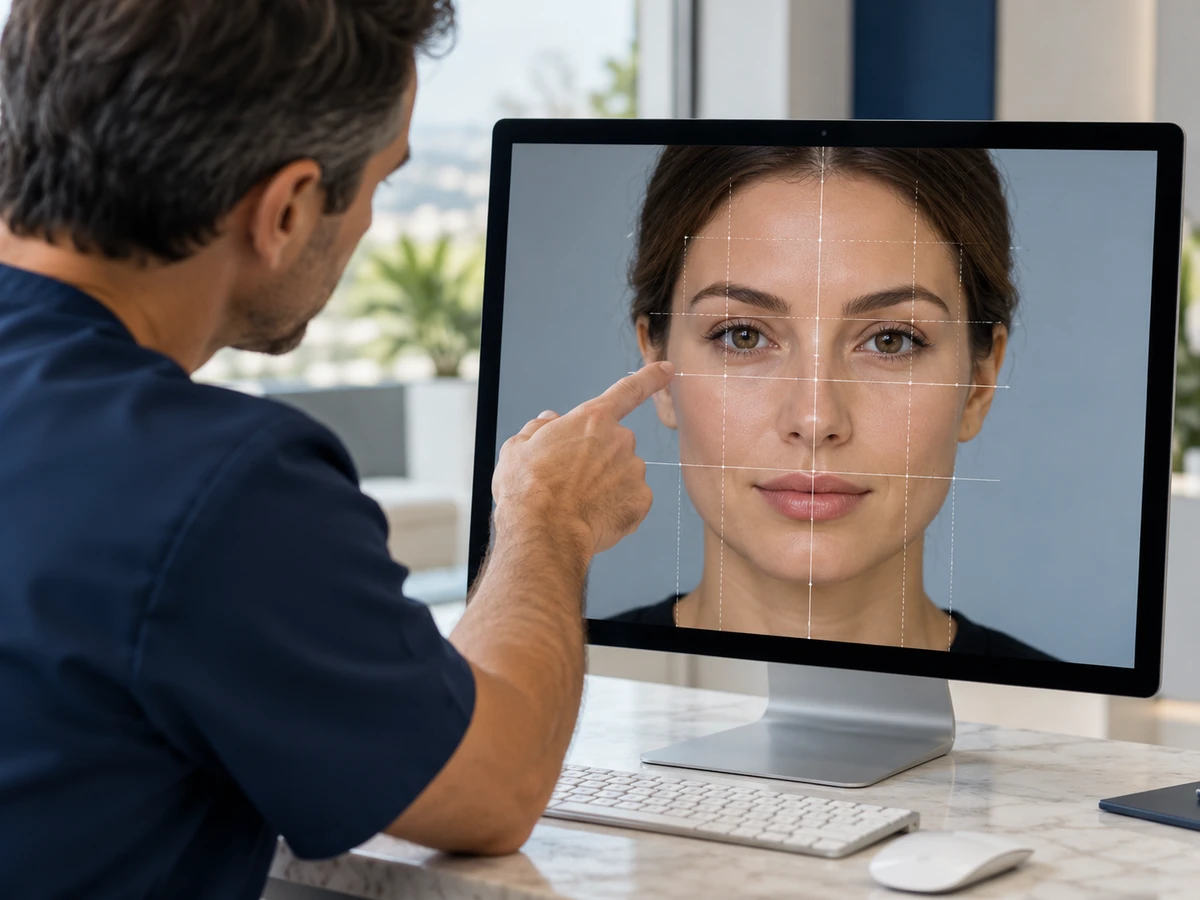
The folded-photo trick and symmetry-scoring apps are entertainment, not assessment. They inherit every flaw of the photo they start from — lens distortion, head tilt, lighting, the mirror-flip problem — and they measure the photograph, not the face.
A clinical assessment starts with the question the apps skip: which layer is asymmetrical — skin, fat, muscle or bone — because the treatment depends entirely on the answer. It uses standardized photography (fixed distance, fixed head position, consistent lighting), adds imaging where the skeleton or bite is involved, and examines the face in motion where the concern is muscular. And an honest assessment often concludes the asymmetry is within the normal range. A clinician who tells you that is doing their job.
Treatment options, matched to the cause
There is no single “asymmetry operation.” The right option — including none — follows from the cause and the layer.
No treatment is the correct choice for most people, and the one an ethical clinic should recommend most often.
Non-surgical camouflage. Where the difference is one of volume — one cheek flatter, one jaw corner lighter — dermal fillers can balance the sides, temporarily and reversibly. Where it is muscular — a masseter enlarged by one-sided chewing, a brow pulled by stronger muscle activity — botulinum toxin can relax the overactive side. Both are legitimate for mild asymmetry; both are temporary, and neither can move bone or lift descended tissue.
Surgery, matched to the layer. Skeletal asymmetry: implants or bone reshaping (osteotomies). Volume deficiency: fat grafting to the flatter side. Asymmetric descent calls for the corresponding lift: eyelid surgery for asymmetric lids, a facelift where one side has descended further with age. And because the nose sits on the midline, a deviated nose is the most visible facial asymmetry — rhinoplasty addresses it. The full range of facial procedures is on our face aesthetics hub.
The orthodontic and jaw pathway. When the bite drives the asymmetry, camouflage is the wrong tool. These cases belong with orthodontists and maxillofacial teams — braces, and in significant skeletal cases corrective jaw (orthognathic) surgery — before any cosmetic step.

What a plastic surgeon actually is — and how to choose one
If your asymmetry is worth treating, the choice of surgeon matters more than the choice of technique — so it is worth knowing what the title means.
A plastic surgeon completed formal residency training in plastic, reconstructive and aesthetic surgery — a specialty spanning trauma, cancer reconstruction and congenital difference as well as cosmetic work. In the United States, for example, certification by the American Board of Plastic Surgery requires at least six years of surgical training after medical school plus written and oral examinations; other countries have equivalent national boards. “Cosmetic surgeon” is not a protected specialty title in many jurisdictions, and “aesthetic practitioner” often means no surgical training at all. Look for a specialist qualification in plastic surgery, verify it with the issuing board, and check membership of recognized plastic surgery societies.
Credentials are the entry requirement; the consultation reveals the rest. Three things separate a careful surgeon from a salesperson: assessment before recommendation — they examine and measure before naming a procedure, not the reverse; willingness to say no — the surgeon who tells you your asymmetry is normal is showing you their judgment; and full case series, not highlights — ask for consecutive results in a consistent format (our before-and-after gallery shows how standardized comparisons should look). A surgeon who can say which layer is involved, what would change, what would not, and what happens if you do nothing is the one worth trusting.
Related Before and After Results at Vivid Clinic
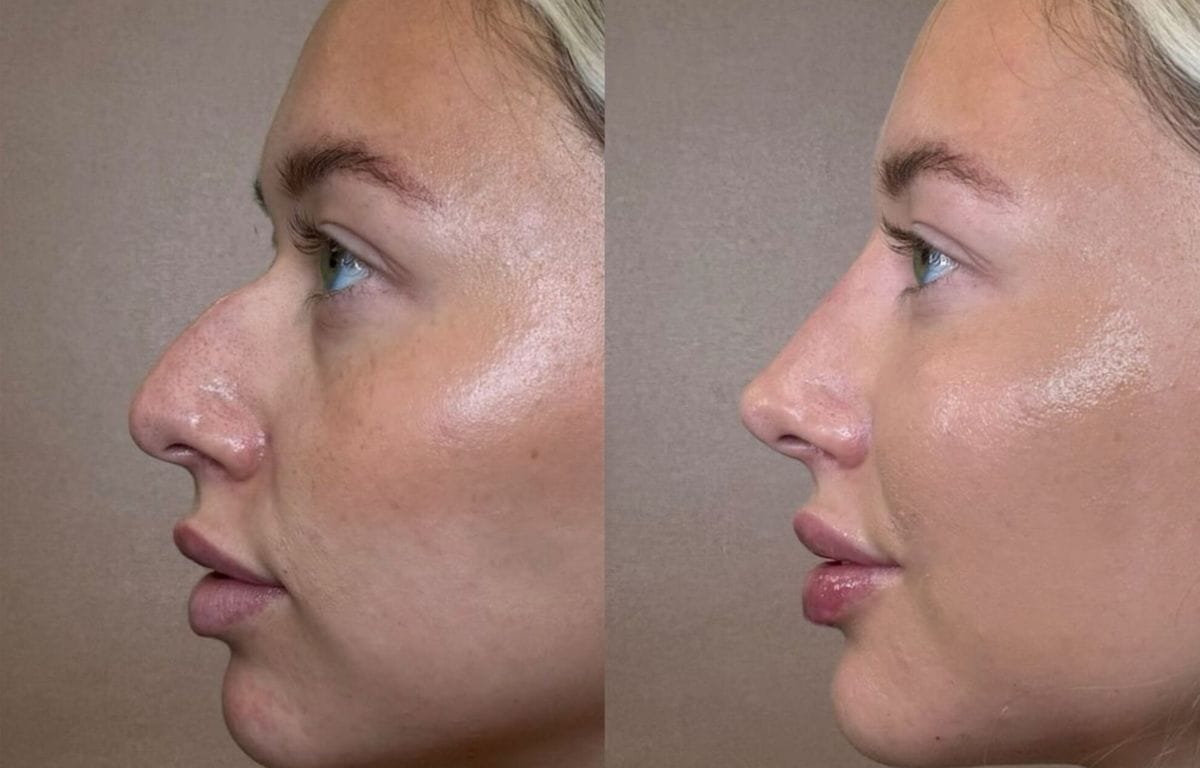
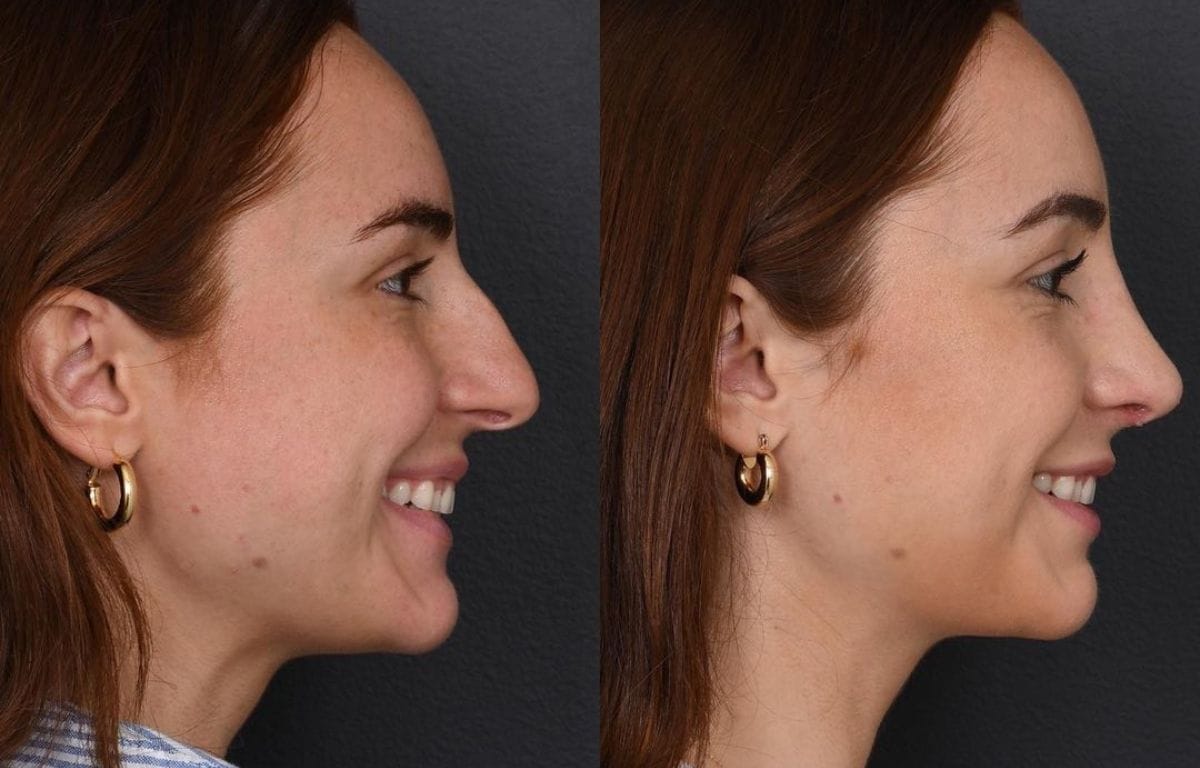
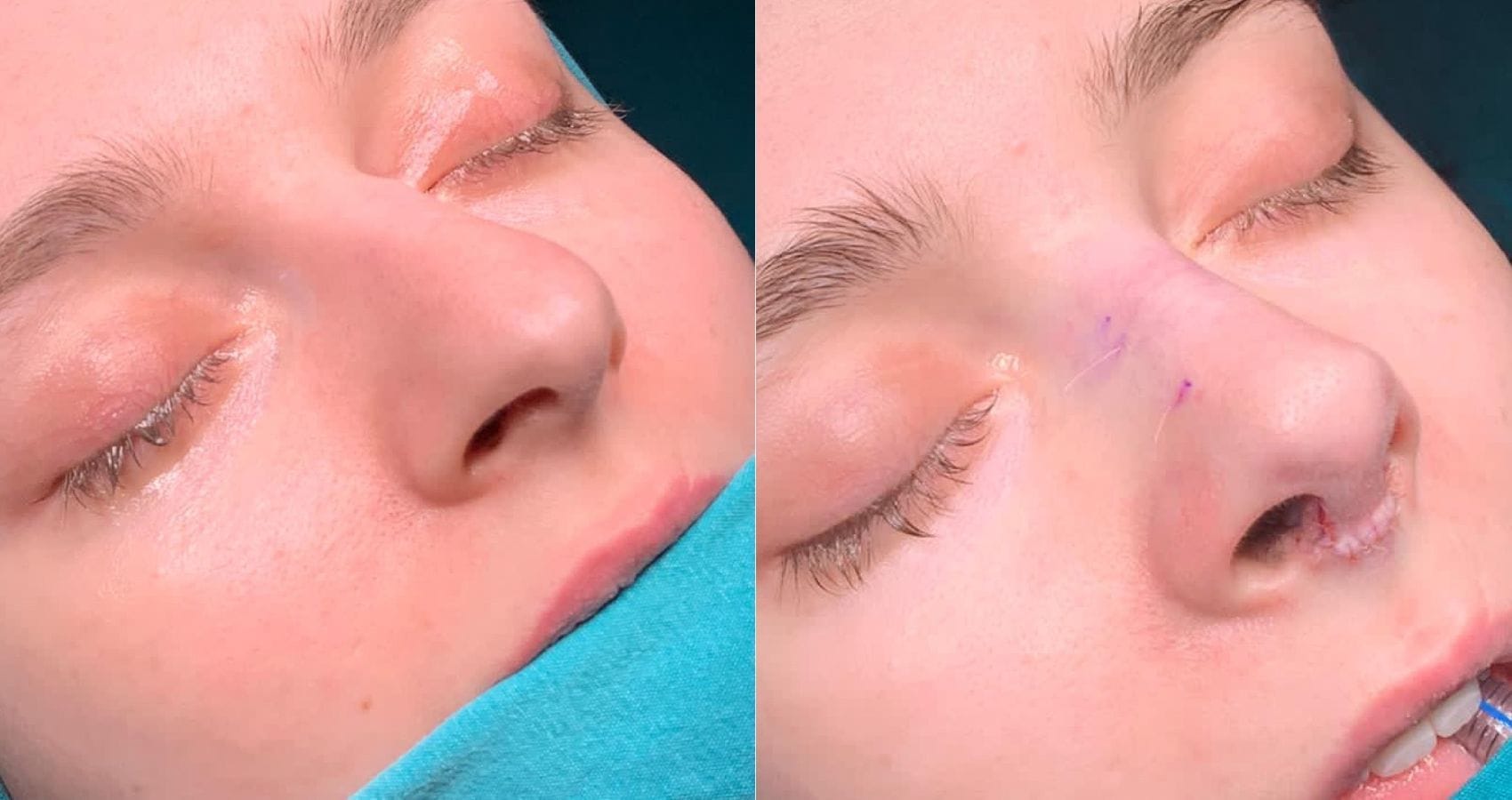
The photos below show real Vivid Clinic patients who had rhinoplasty — a related procedure, not asymmetry correction itself — shared with their consent to show how our Istanbul team documents results. Ask during your free consultation to see cases that match your own treatment. Individual results vary. Browse the full Before & After Gallery.



Frequently Asked Questions
Is it normal to have an asymmetrical face?
Yes — universal, in fact. Every face is asymmetrical to some degree, because the two sides develop, age and are used independently. Observers cannot reliably detect small asymmetries, and mild unevenness does not make a face less attractive. It warrants attention only when sudden (an emergency), progressive (a medical workup), or genuinely bothersome to you.
Why does my face look asymmetrical in photos but fine in the mirror?
Because the mirror shows a flipped image and the photo does not. You have calibrated to your mirror face over a lifetime, so the un-mirrored version everyone else sees looks subtly wrong. Close-range lenses and harsh lighting exaggerate it. A “crooked” selfie is an optics problem, not an anatomy problem.
When should I worry about an asymmetrical face?
In two situations. Sudden asymmetry — drooping over minutes to hours, an eye that will not close, arm weakness or slurred speech — is a medical emergency: call emergency services, because it may be a stroke, and even Bell’s palsy needs same-day assessment. And asymmetry progressing over months, or accompanied by pain, numbness or a lump, needs a medical workup. Stable lifelong asymmetry is neither — it is normal.
Can face yoga or facial exercises fix an asymmetrical face?
No reliable evidence supports it. Most asymmetry lives in bone, cartilage, fat distribution or tissue descent — none of which exercise changes — and facial exercise is as likely to reinforce the dominant side as balance it. Varying your sleeping side and chewing on both sides are sensible habits, but no routine reshapes an asymmetrical face.
Can fillers fix an asymmetrical face?
They can camouflage one kind: volume asymmetry. If one cheek or jaw corner is flatter, filler can balance the sides temporarily and reversibly, and botulinum toxin can address muscular asymmetry such as an enlarged masseter. Injectables cannot move bone, straighten a nose or lift descended tissue — those layers need matching treatments.
What surgery corrects an asymmetrical face?
It depends on the layer. Bone: implants or reshaping, and jaw (orthognathic) surgery when the bite is involved. Volume: fat grafting. Descent: the corresponding lift — eyelid surgery or a facelift. A deviated nose: rhinoplasty, often the most relevant operation because the nose is the face’s central landmark. Assessment identifies the layer; the operation follows.
What is the difference between a plastic surgeon and a cosmetic surgeon?
A plastic surgeon has completed specialty residency training in plastic, reconstructive and aesthetic surgery and holds board certification in it — in the US, at least six years of surgical training plus examinations. “Cosmetic surgeon” is not an equivalent protected title in many countries, and “aesthetic practitioner” may mean no surgical training. Verify the qualification with the issuing board, not the clinic’s website.
Wondering whether your asymmetry is even noticeable — or what, if anything, would change it? Send photographs for a free online assessment and get a straight answer — including when the honest answer is that your face is simply normal.