
 ChatGPT
Medically reviewed by Prof. Dr. Özgür Pilancı, Plastic, Reconstructive & Aesthetic Surgeon — August 2026
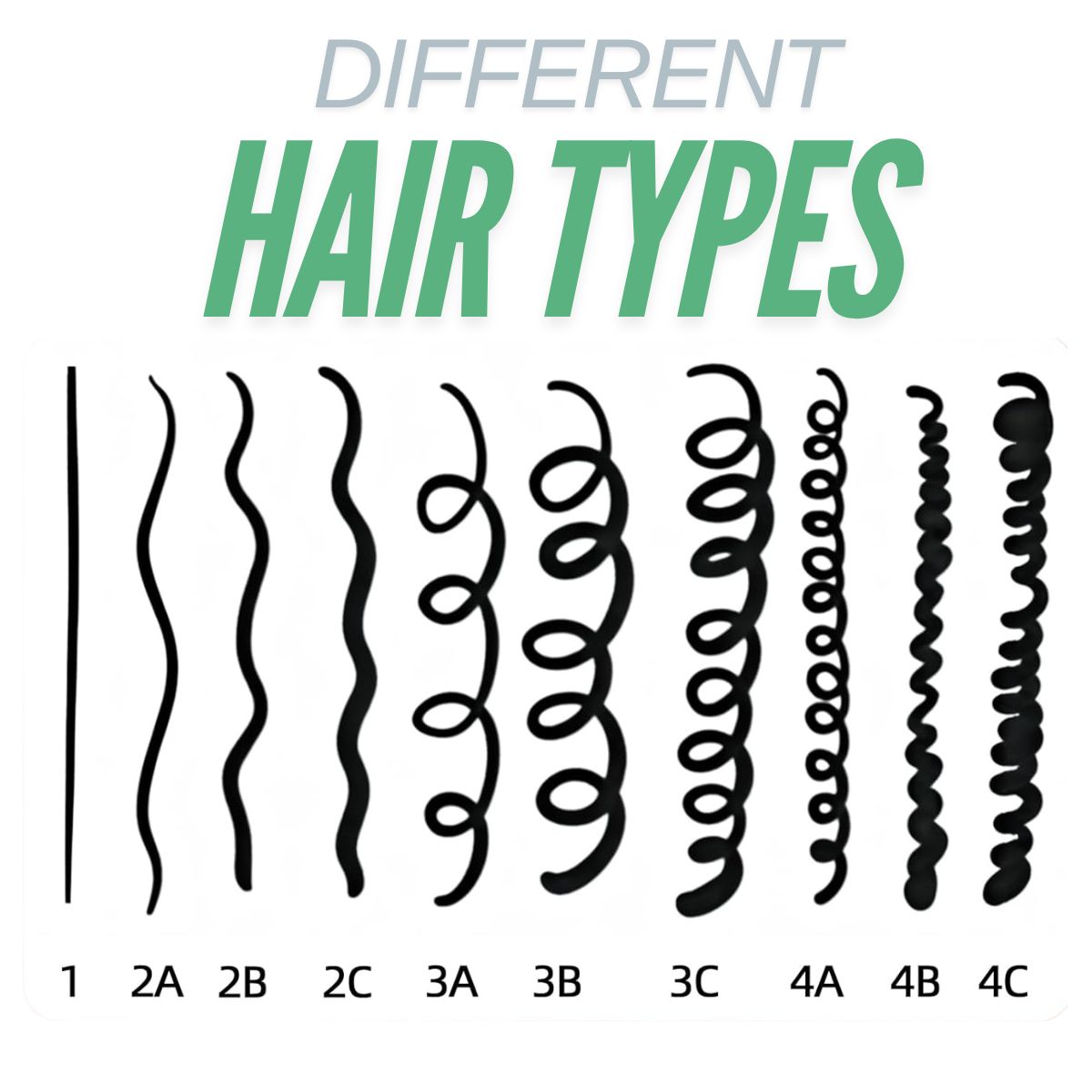
Quick answer (updated August 2026): The hair type chart runs from 1 (straight) to 4 (coily), with A, B and C subtypes marking how tight the pattern gets inside each number — twelve categories in total, from pin-straight 1A to tightly coiled 4C. 1C is straight hair with a coarse, thick strand and a tendency to poof rather than lie sleek. 4C is the tightest coil, with so much shrinkage that stretched hair can look several times longer than it does at rest.
The chart is useful shorthand, but curl pattern is only one of five things that decide how your hair behaves — and for anyone considering a transplant, it is curl geometry beneath the skin, not the letter on the chart, that changes the surgery.
Where the chart came from
The system almost everyone uses was created in the 1990s by Andre Walker, Oprah Winfrey’s long-time stylist, originally as a way of organising his own haircare line. It caught on because it gave people a shared vocabulary for something that had never had one.
It is worth knowing two things about it. First, it was built as a marketing framework, not a dermatological classification. Second, it has been fairly criticised for an implicit hierarchy — a scale that runs "straight to coily" and calls straight hair type 1 quietly implies a ranking that does not exist. Curl pattern is a structural property of the follicle, not a quality grade. Use the chart the way it works best: as a way of predicting how your hair will behave, and therefore how to look after it.
The full 1A–4C hair type chart
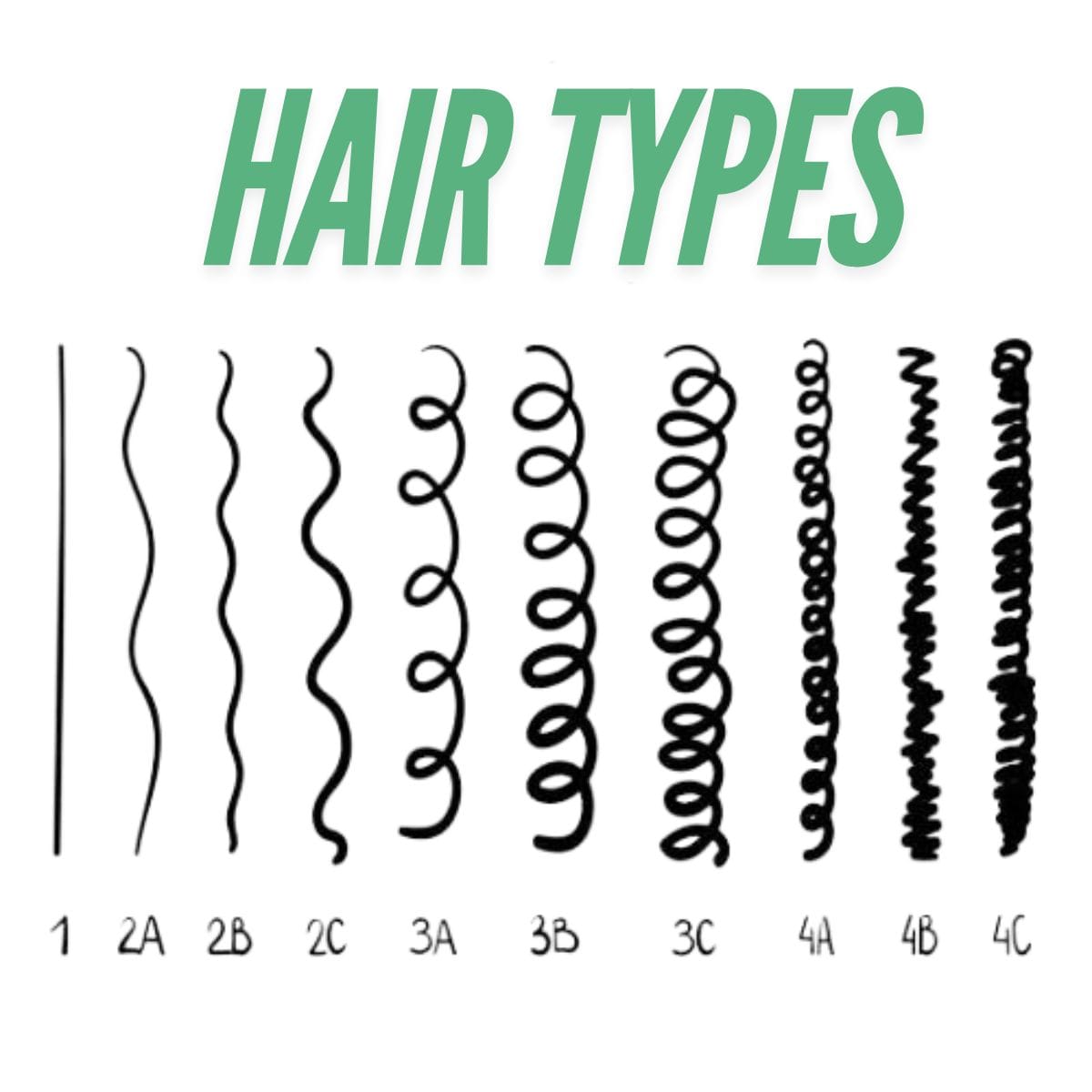
Type 1 — Straight. No curl pattern at all; hair falls flat from root to tip. Sebum travels down the shaft easily, so type 1 hair is the least likely to be dry and the most likely to look oily.
- 1A — pin-straight, fine, silky, with no bend whatsoever. Holds a style badly and shows oil fast.
- 1B — straight with more body and a soft bend at the ends. Medium thickness.
- 1C — straight but thick and coarse, with the widest individual strands of the type 1 family. It is the "almost wavy" one: flat at the root, with volume building through the mid-lengths, and the most prone to frizz and poof of any straight hair.
Type 2 — Wavy. An S-shape that lies closer to the head than a curl.
- 2A — a loose, gentle S starting around eye level. Fine, easily weighed down.
- 2B — a more defined S with a clear shape, usually beginning at mid-length.
- 2C — thick, deep waves shading into loose curls, with noticeable frizz and real resistance to being styled straight.
Type 3 — Curly. A defined spiral you can wrap around something.
- 3A — loose, bouncy spirals, roughly the width of a stick of sidewalk chalk.
- 3B — springy corkscrews, roughly the width of a marker pen.
- 3C — tight corkscrews packed densely together, roughly the width of a pencil, with the most volume of the type 3 family.
Type 4 — Coily. A tight coil or zig-zag, densely packed, with the most shrinkage of any type.
- 4A — a defined S-pattern coil, roughly the width of a crochet needle. The curl unit is visible without stretching.
- 4B — a Z-pattern with sharp angles rather than smooth curves; the pattern bends rather than spirals.
- 4C — the tightest pattern in the system, so compact that the coil often is not visible at all until a section is pulled straight.
The pen-and-pencil comparisons are informal shorthand, not measurements — they are useful for placing yourself on the chart, not for anything clinical.
What is 1C hair?
1C is the most-searched type on the chart, and it is also the one people most often misidentify — usually as 2A. The difference is the strand, not the shape. 1C has no S-curve; it is genuinely straight. What makes it distinctive is diameter: 1C strands are coarse and thick, which gives the hair body, weight and a tendency to expand rather than lie flat. It is the frizziest member of the straight family, typically flat at the root with all its volume in the mid-lengths and ends.
The practical consequences: wash roughly twice a week, alternating a hydrating shampoo with an occasional clarifying one; keep conditioner to about an inch below the roots so the mid-lengths get moisture without the crown going limp; use a root-lifting product to counter the flatness at the top; ask for long layers rather than blunt lines; and detangle damp, from the ends upward, with a flexible-bristle brush. A weekly hydrating mask does more for 1C frizz than any anti-frizz serum.
What is 4C hair?
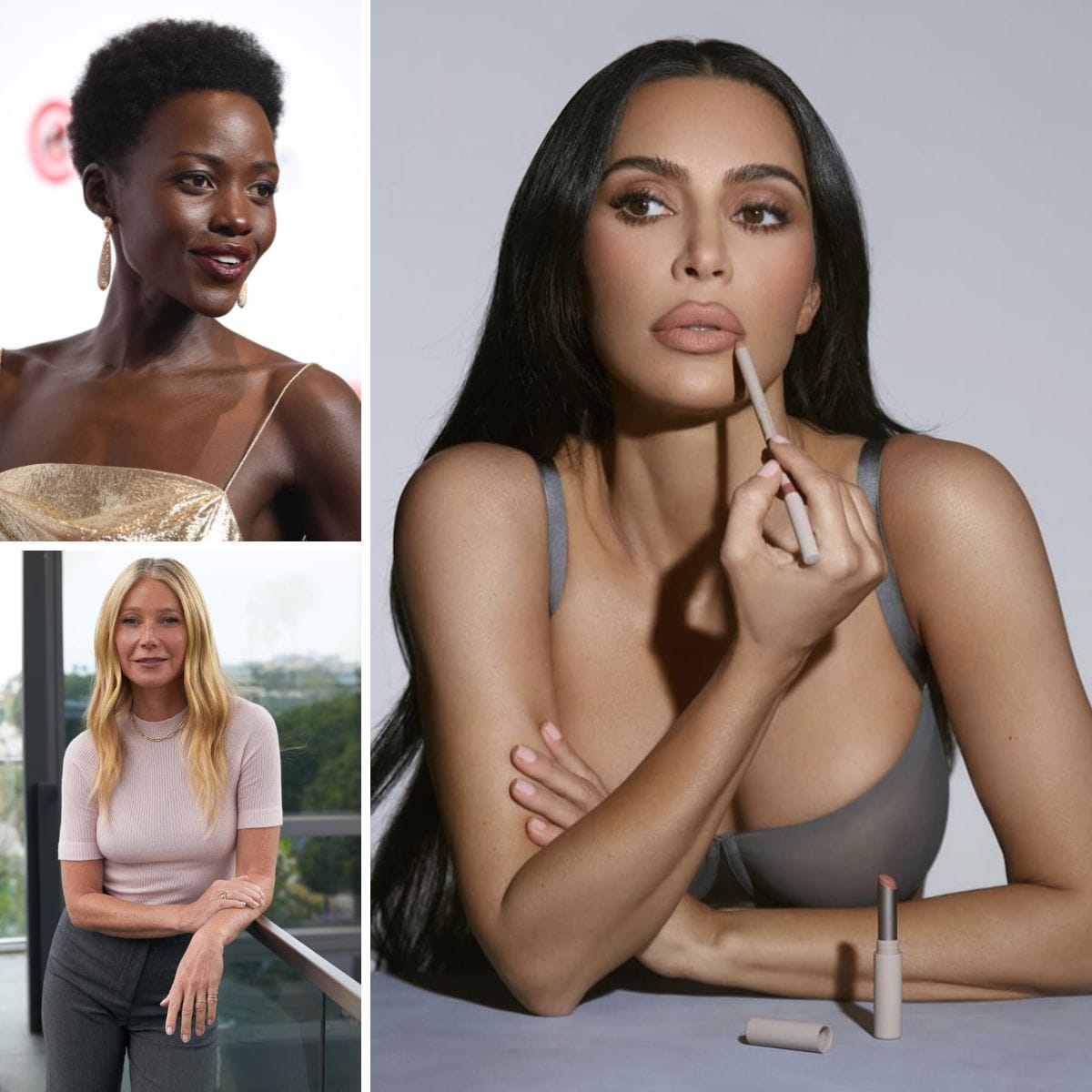
4C is the tightest coil pattern in the system. Its defining characteristic is not the curl you can see — it is the curl you cannot. The coil is so compact that the pattern often only becomes visible when a section is stretched, and hair that hangs at chin length can be twice that long when pulled straight. This is shrinkage, and it is a property of the coil geometry rather than a sign of damage or poor growth.
The other defining property is that 4C hair needs added moisture. Sebum — the scalp’s own conditioner — travels easily down a straight shaft and struggles to navigate a tightly twisted one, which leaves the mid-lengths and ends drier than in other types. Dryness is what makes hair brittle, and brittle hair breaks. Note the causal chain carefully: the coil itself is not fragile, but a dry coil handled with tension is. Which is why the care rules for 4C are the ones they are — high-slip conditioner for detangling, always on damp hair and always from the ends up, low-manipulation and protective styling, and moisture sealed rather than applied and left to evaporate.

The four things the chart leaves out
Curl pattern is the most visible variable, not the most useful one. Four others matter as much:
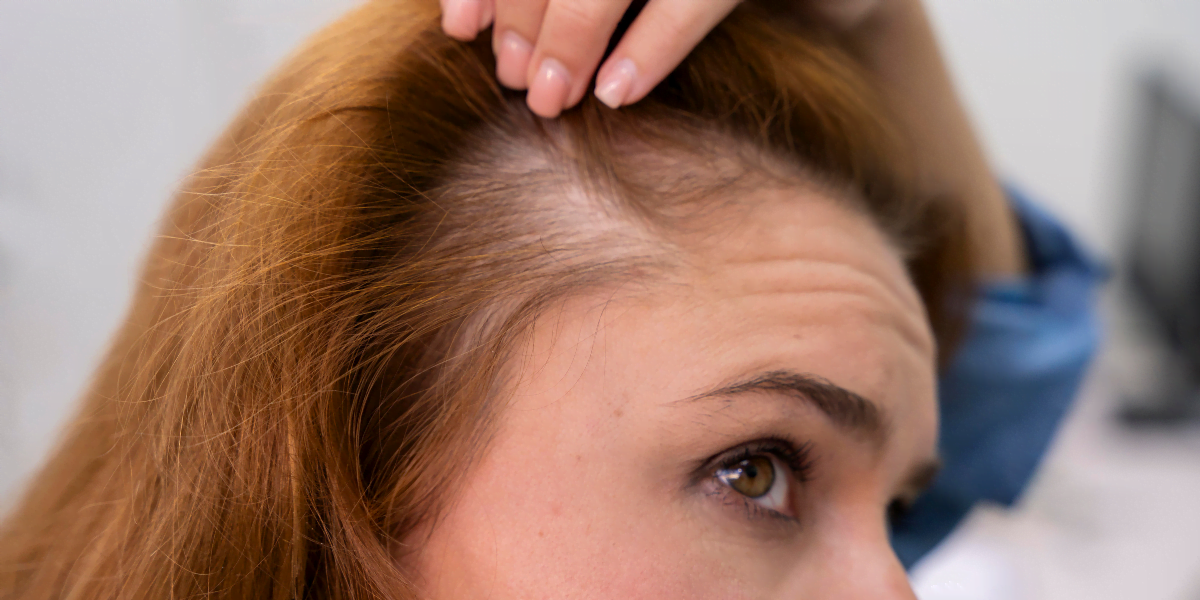
Density — how many hairs per square centimetre of scalp. High-density 2A behaves nothing like low-density 2A. Density, not curl, is what determines whether thinning shows.
Strand diameter — fine, medium or coarse. This is what separates 1A from 1C, and it decides how much weight a product can add before the hair collapses.
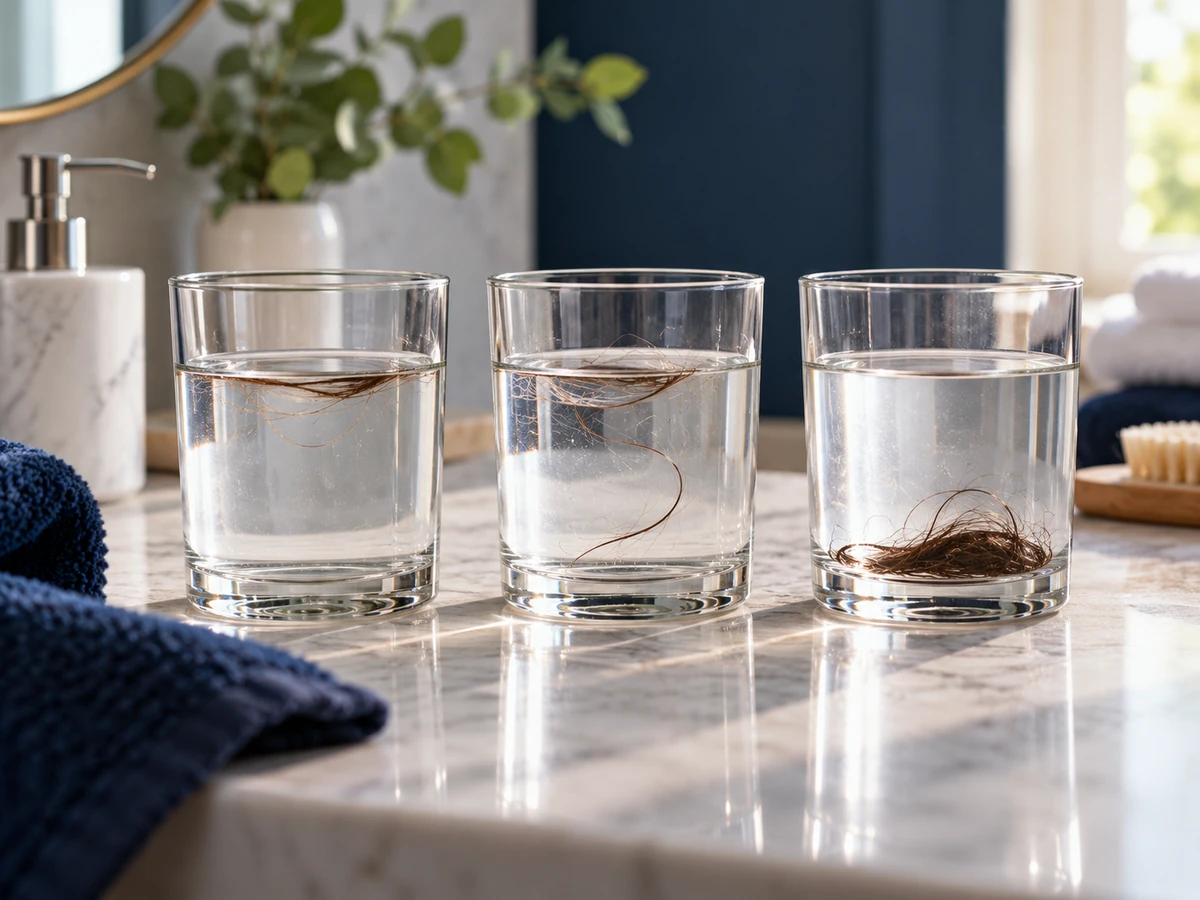
Porosity — how readily the cuticle lets water in and out. Low-porosity hair has a tightly packed cuticle that repels moisture and accumulates product; high-porosity hair absorbs quickly and loses moisture just as fast. The float test is the usual home check: drop a clean shed strand into room-temperature water. Floating suggests low porosity; sinking quickly suggests high. Low-porosity hair benefits from lightweight leave-ins, occasional clarifying, and heat-assisted deep conditioning; high-porosity hair usually needs sealing oils and butters and a protein-moisture balance.
Scalp behaviour — oily, balanced or dry, and independent of the hair type growing out of it.
Alternative systems exist precisely because of these gaps. The LOIS system classifies pattern, strand size and texture on three separate axes; the FIA system separates curl definition, strand diameter and overall volume measured by ponytail circumference. Neither has displaced the 1A–4C chart in everyday use, but both make the same point: a single letter and number cannot describe a head of hair.
Hair type and ancestry: the factual version
Follicle shape determines curl. A round follicle cross-section produces a straight strand; an oval one produces a wave or curl; a flattened, elliptical one produces a tight coil. Population averages differ — hair of East Asian ancestry tends toward a round follicle and a thicker strand, hair of African ancestry toward an elliptical follicle and a tighter coil, hair of European ancestry toward the middle of that range with the widest internal variation.
Those are averages across populations, with enormous individual variation inside every one of them, and every curl pattern on the chart occurs in every ancestry group. They describe structure, not quality, and they are relevant here for exactly one reason: follicle geometry is what a hair transplant surgeon has to work with.
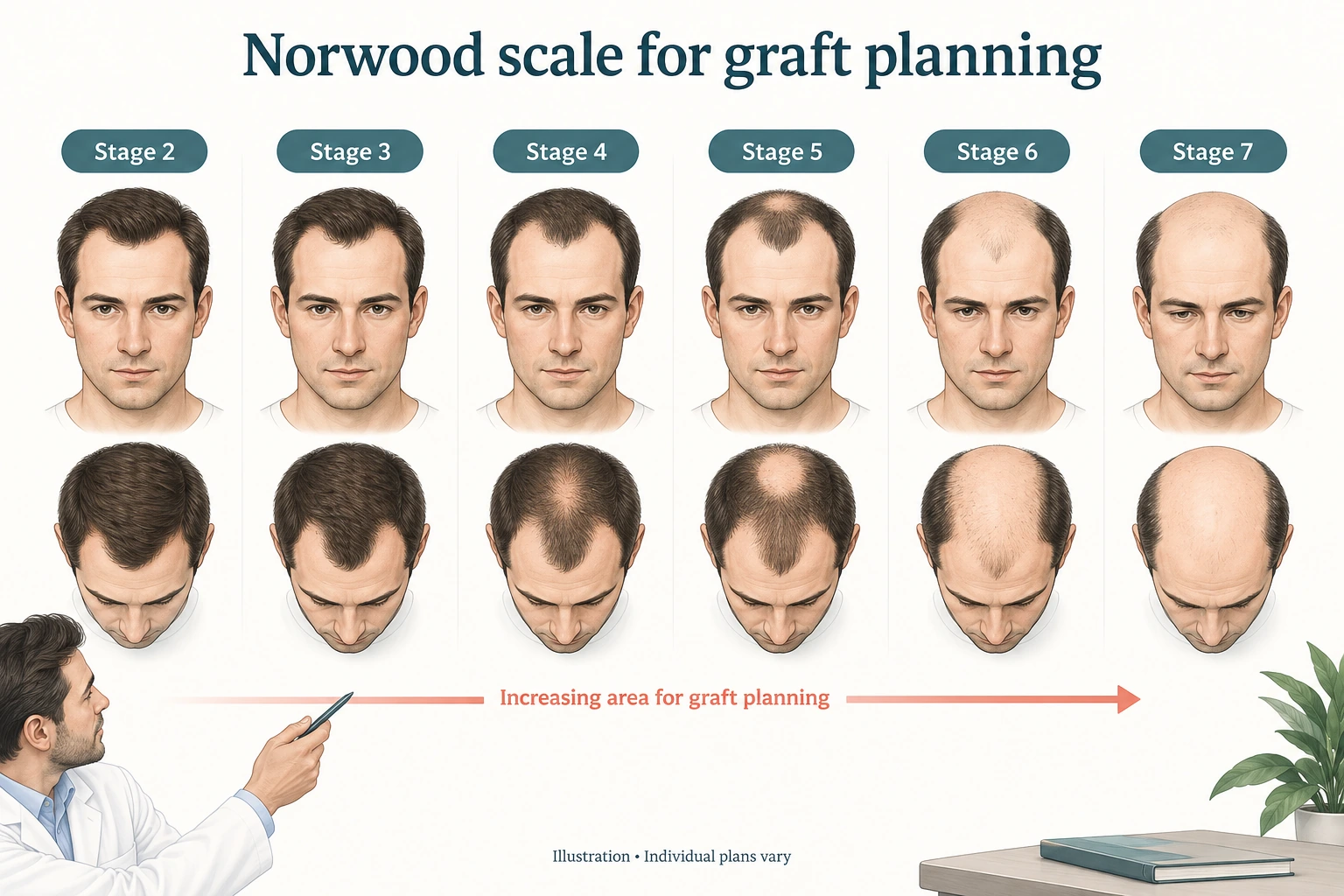
What your hair type changes about a hair transplant

This is where the chart stops being cosmetic and starts being surgical.
In FUE, each follicular unit is extracted individually with a small punch. That punch has to travel down the follicle’s path without cutting it. In straight hair the path is essentially straight, so the punch follows it easily. In tightly coiled hair, the follicle curves beneath the skin as well as above it — and the degree of that sub-dermal curve is the single most important technical variable in the operation. A follicle that curves above the dermis but runs relatively straight below it is far easier to extract intact than one that curves in both.
The practical consequences, in order of importance:
Punch selection changes. Standard sharp rotary punches designed for straight hair transect — cut through — a markedly higher proportion of coiled grafts. Blunt, serrated, curved or resistance-responsive punches, usually at a larger diameter, follow the curve far better. Fully robotic extraction systems currently underperform on tightly coiled hair.
The surgeon’s experience with your specific hair type matters more than the technology on the brochure. This is the question to ask in a consultation, and the one to ask for photographs of.
Curl works in your favour once the grafts are in. A coil or curl spreads laterally across the scalp and covers more surface area than a straight hair standing at the same density. The practical upshot is that coiled hair can achieve convincing coverage with a lower graft count than straight hair needs — one of the few places where textured hair is the easier case.
Keloid risk needs screening. Higher Fitzpatrick skin types carry an elevated predisposition to keloid scarring. FUE and DHI leave much smaller wounds than strip harvesting, which lowers the risk, but a personal or family history of keloids should be raised before surgery, not after.
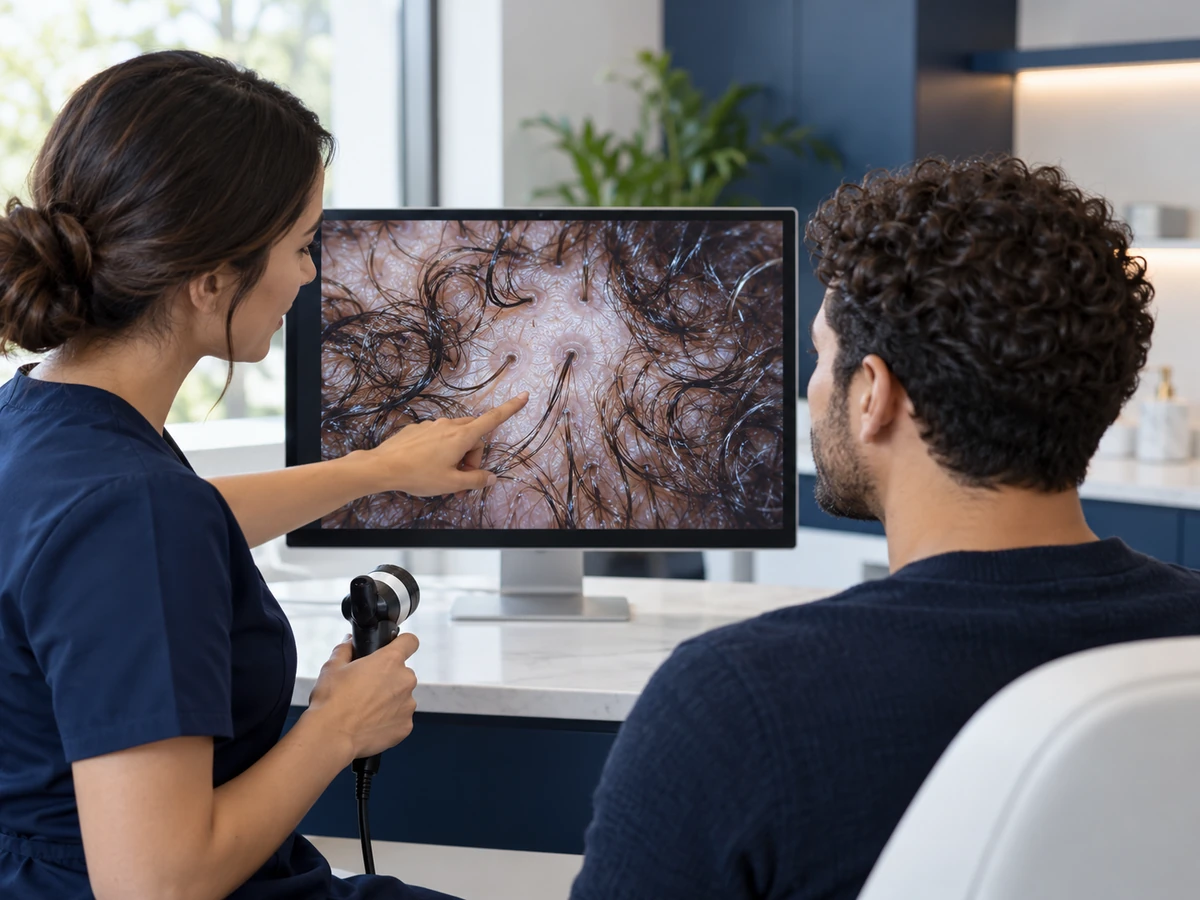
Two conditions specific to textured hair also affect candidacy. Traction alopecia — hair loss caused by sustained pulling from tight braids, weaves, extensions or ponytails — is fully reversible if tension stops early, and permanent once the follicles scar. CCCA (central centrifugal cicatricial alopecia) is the most common scarring alopecia in women of African descent, starting at the crown and destroying follicles through inflammation. Both can be transplanted once the disease is confirmed inactive, and neither should be transplanted while it is still progressing — which is why a dermatological assessment, sometimes including a biopsy, comes before a surgical one. Our female hair transplant page covers this pathway.
For what any of this costs, our 2026 US hair transplant cost guide breaks pricing down per graft, per city and per country — and the Elon Musk hair transplant cost piece is a useful reality check on what the numbers look like at the top end.
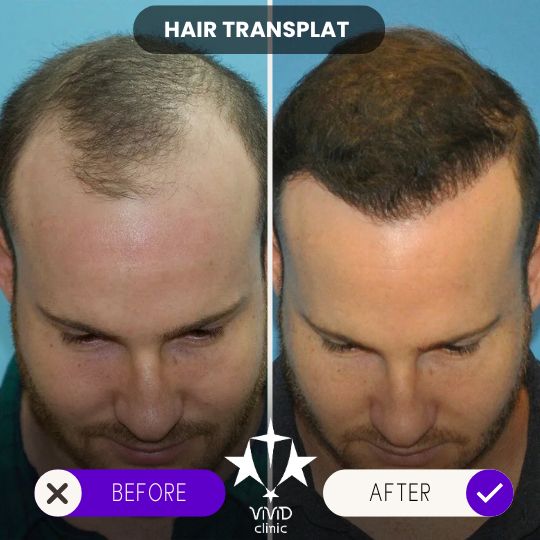
Hair Transplant Before and After Results at Vivid Clinic
These before-and-after photos show real Vivid Clinic patients treated in Istanbul, shared with their consent. Photos are matched for angle and lighting wherever possible. Individual results vary. Browse the full Before & After Gallery.




Frequently Asked Questions
What is 1C hair?
1C is straight hair with a coarse, thick strand — the thickest of the type 1 family. It has no S-curve, so it is not wavy, but its weight and diameter make it expand and frizz rather than lie sleek, and it typically sits flat at the root with volume through the mid-lengths. If you can see a definite S-shape when your hair dries untouched, you are 2A rather than 1C.
What is 4C hair?
4C is the tightest coil pattern on the chart, so compact that the curl often is not visible until a section is stretched. Its most distinctive property is shrinkage: 4C hair can appear a fraction of its actual length at rest. It needs more added moisture than other types because scalp oils cannot travel easily down a tightly twisted shaft, and it needs gentle, low-tension handling — dryness plus mechanical tension is what causes breakage, not the coil itself.
Can hair type change over your life?
Yes. Puberty, pregnancy, menopause, thyroid disorders, some medications and chemotherapy can all shift curl pattern, strand diameter or density, sometimes permanently. Heat damage and chemical relaxing can loosen or destroy a curl pattern in the affected length — that portion will not recover, though new growth returns to your natural pattern. Age tends to reduce strand diameter and, in many people, loosen curl slightly.
Does hair type affect whether a hair transplant will work?
It affects the technique, not the outcome. Tightly coiled hair curves beneath the skin as well as above it, so extraction requires punches and experience matched to that geometry — standard rotary punches designed for straight hair damage a much higher proportion of coiled grafts. Handled correctly, textured hair transplants very well, and the curl’s lateral coverage often means fewer grafts are needed for the same visual density. The variable that matters is your surgeon’s experience with your hair type.
How do I find my hair type?
Wash your hair, apply nothing, and let it air-dry completely without touching it. Whatever pattern it forms is your type. Check the strand thickness separately by rolling a single shed hair between your fingers — if you cannot feel it, it is fine; if it feels like a thread, it is coarse. Most people have more than one pattern on a single head, with looser hair at the crown and tighter at the nape, which is normal and worth knowing when you buy products.
What is hair porosity and why does it matter more than type?
Porosity is how readily your cuticle lets moisture in and out, and it is often a better predictor of which products will work than the number on the chart. Low-porosity hair repels water and builds up product, so it needs lightweight formulas, periodic clarifying, and warmth to help deep conditioners penetrate. High-porosity hair absorbs quickly and loses moisture just as fast, so it needs sealing oils and a protein-moisture balance. Test it by dropping a clean shed strand in room-temperature water and seeing whether it floats or sinks.
Wondering whether your hair type makes you a straightforward transplant case or a technically demanding one? That is a question about follicle geometry, donor density and scalp health — not about the letter on a chart. Send photographs for a free online assessment and get a straight answer about graft count, technique and cost.