
 ChatGPT
The Bulge That Ignores Every Sit-Up
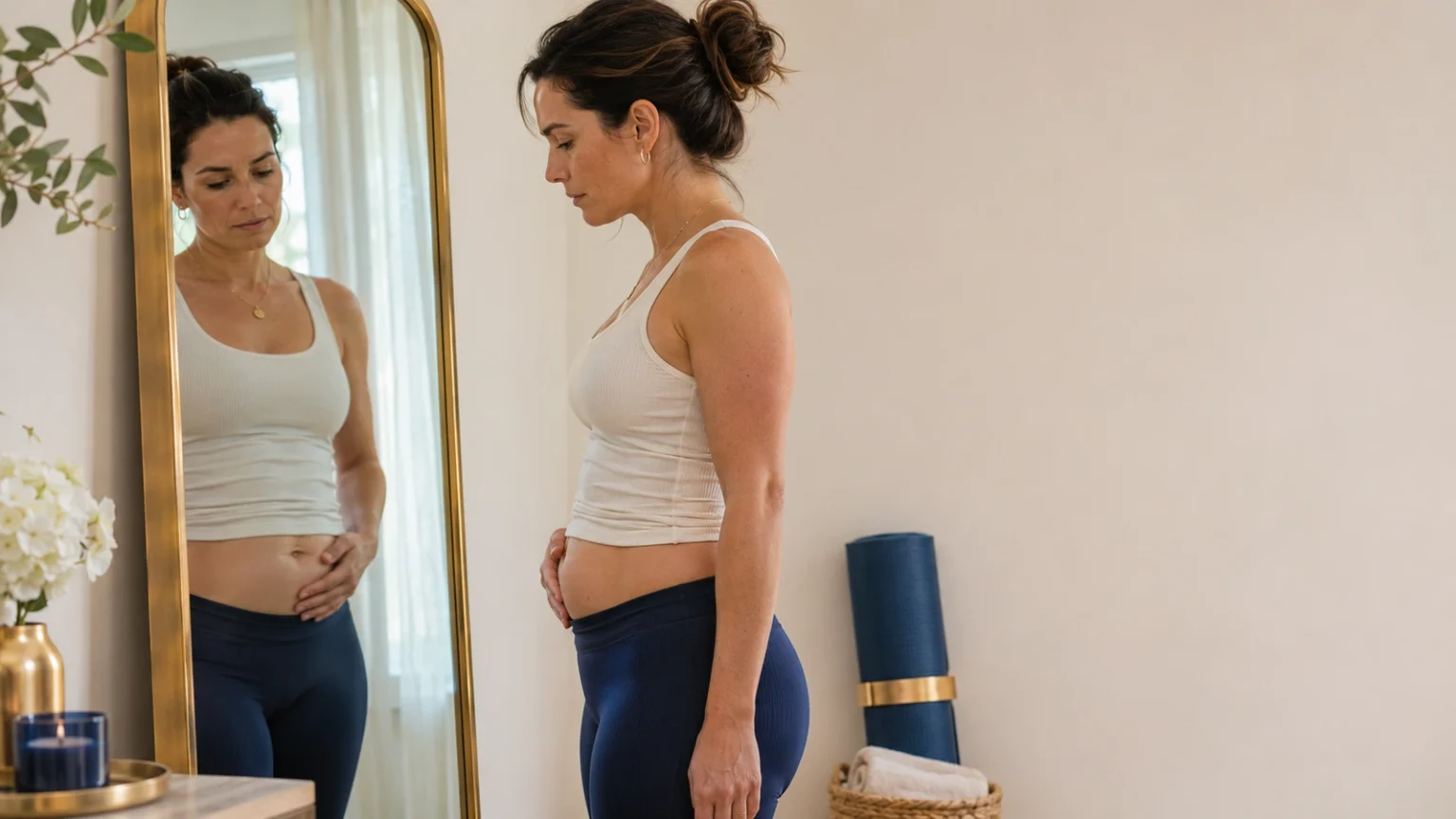
You have done the work. The scale has moved, your arms look leaner and your jeans slide over your hips. Then you sit down, glance at your lap, and there it is: the same soft curve below your navel. A lower belly pooch has a way of staying put while everything else changes.
It is rarely about effort. That small bulge can be fat, loose skin, separated muscles, posture, bloating or a mix, and each cause needs a different answer.
This guide explains what is really behind a lower belly pooch and walks through five ways to flatten it, from daily habits to surgery, with an honest view of when an operation is not needed. At Vivid Clinic in Istanbul, Turkey, you can also request a free consultation with a plastic surgeon for a personal opinion.
What Is a Lower Belly Pooch?
Quick Answer: A lower belly pooch is a rounded bulge between the navel and the pubic bone that stays visible even when the rest of the body is slim. It can come from fat, loose skin, separated abdominal muscles, posture, bloating or deeper visceral fat, in women and men alike.
Some people call it a lower stomach pooch. The key point is that a lower belly pooch is a shape, not a diagnosis. Two people with the same outline can have different causes underneath.
How It Differs From a Muffin Top or an Apple Shape
A muffin top spills over a waistband, mostly at the sides. An apple body shape carries weight around the whole midsection. The bulge discussed here sits at the front, below the navel, and can exist without either. Our guide to belly types compares the shapes.
The Mommy Pooch After Pregnancy
After pregnancy, a lower belly pooch is often nicknamed the mommy pooch. The skin and abdominal wall are stretched for months, and some skin does not fully retract.
A caesarean scar tethered to deeper tissue can also make the skin above it fold into a small shelf, as explained in our article on a hanging belly after a C-section.
Why a Lower Belly Pooch Stays: 6 Honest Causes
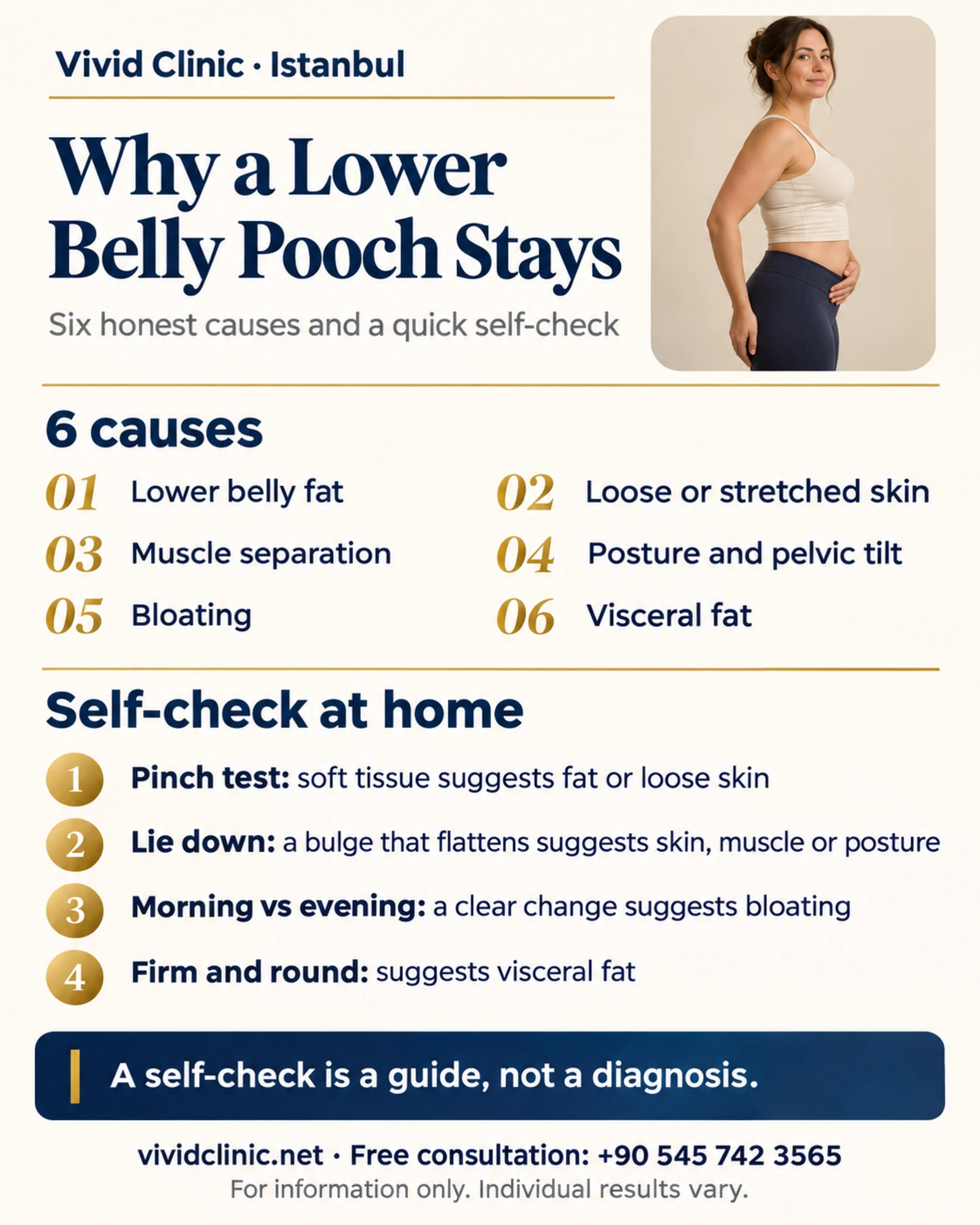
Quick Answer: A lower belly pooch usually persists for one or more of six reasons: fat under the skin, loose skin, muscle separation, posture and pelvic tilt, bloating, and visceral fat around the organs. Diet and exercise help some of these and barely affect others.
1. Subcutaneous Lower Belly Fat
This is the soft, pinchable layer between skin and muscle. Lower belly fat of this kind is often the last to go, but it can respond slowly to overall fat loss.
2. Loose or Stretched Skin
After pregnancy, major weight loss or simply with age, skin can lose elasticity and hang or fold even when little fat remains. No exercise tightens skin that has been significantly stretched.
3. Muscle Separation
The two vertical bands of abdominal muscle can drift apart, most often after pregnancy. This is called diastasis recti. A typical sign is a ridge or dome down the midline when you sit up. Ask a doctor or physiotherapist to assess it before intense core training.
4. Posture and Pelvic Tilt
When the pelvis tips forward, the lower back arches and the abdomen is pushed out, even in someone with very little fat. Long sitting, tight hip flexors and weak glutes contribute, and this cause often improves with exercise.
5. Bloating
A stomach that is flat in the morning and round by evening usually points to digestion rather than fat. Bloating that is persistent, painful or new for you deserves a medical check, and no body contouring treatment addresses it.
6. Visceral Fat
Visceral fat sits deep inside the abdomen, around the organs. It makes the belly feel firm, and you cannot pinch it.
Surgery cannot remove visceral fat, because liposuction and a tummy tuck work only in front of the muscle wall. It responds to nutrition, activity and sleep.
A Simple Self-Check at Home
These observations are a guide and do not replace an examination.
- Pinch test: soft tissue you can hold suggests fat or loose skin.
- Lie-down test: a bulge that flattens on your back often involves skin, muscle or posture.
- Morning and evening: a clear change through the day suggests bloating.
- Firm and round: a hard belly you cannot pinch suggests visceral fat.
How to Get Rid of Lower Belly Pooch: 5 Ways, From Lifestyle to Surgery
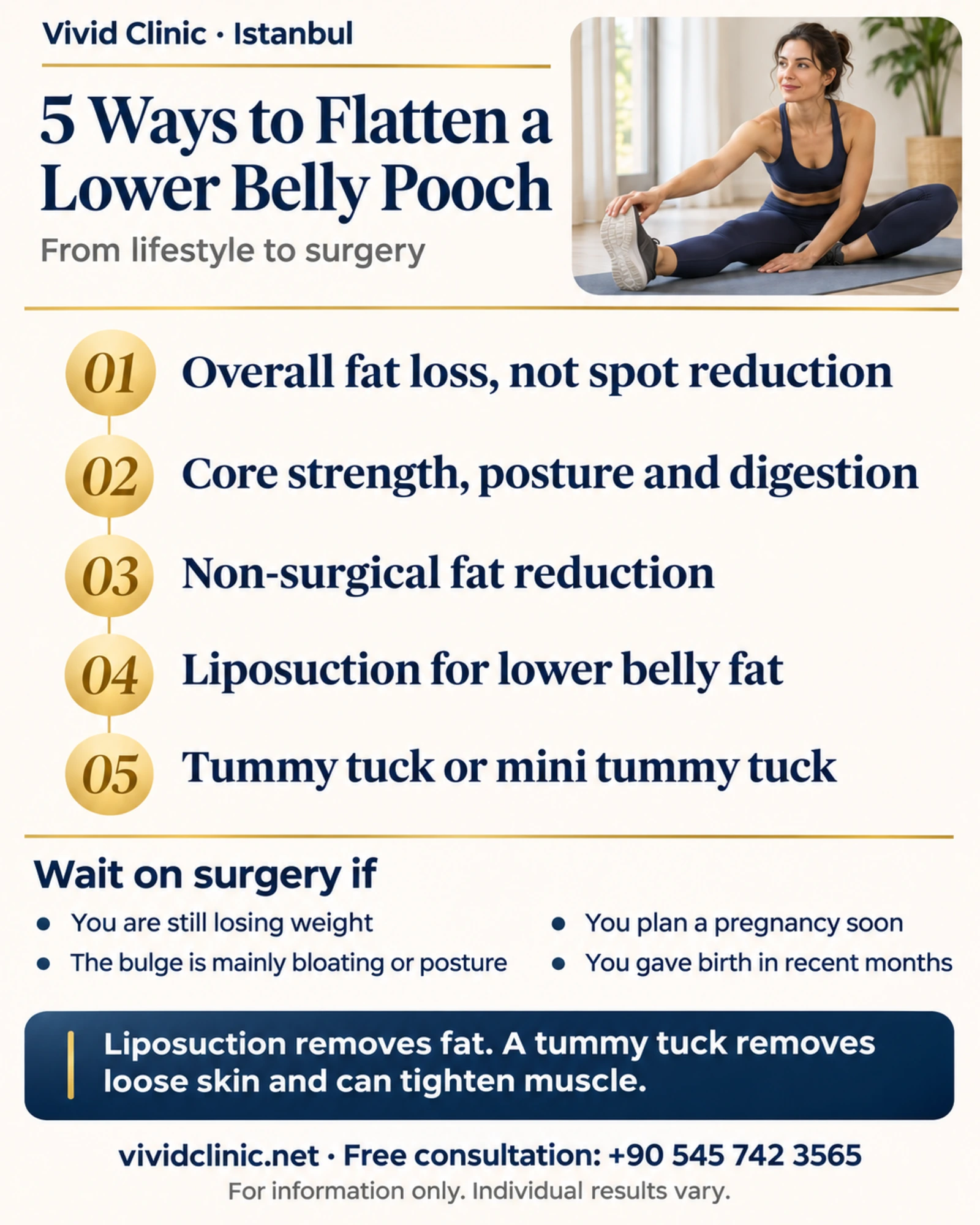
Quick Answer: To flatten a lower belly pooch, start with overall fat loss, core and posture work, and better digestion, because spot reduction through exercise is not supported by evidence. If a fat pocket remains, liposuction may help. When loose skin or muscle separation is the main cause, a tummy tuck is usually more effective. Results vary.
1. Overall Fat Loss, Not Spot Reduction
Research has not shown that abdominal exercises burn the fat lying over the muscles being trained. Your body decides where it draws fat from.
What works is a modest, sustainable calorie deficit with enough protein, regular strength training, daily movement and good sleep.
2. Core Strength, Posture and Digestion
Deep core work trains the muscles that act like a natural corset. Planks, dead bugs and bird dogs suit most people better than endless sit-ups. Add hip flexor stretches and glute work if your pelvis tips forward.
If you suspect muscle separation, get assessed first. For bloating, track trigger foods and see a doctor if symptoms persist.
3. Non-Surgical Fat Reduction
Several device-based treatments aim to reduce small fat pockets without surgery. They cool fat cells, heat them with radiofrequency or laser energy, or disrupt them with focused ultrasound.
Downtime is short, but the change is modest. Results build over about two to three months, more than one session is often needed, and uneven results are possible. These devices do not repair separated muscles or remove significantly loose skin.
4. Liposuction for Lower Belly Fat
When a pocket of fat remains on a stable, healthy body with firm skin, liposuction can remove it through a few small incisions. Techniques such as VASER liposuction use ultrasound to loosen fat first.
Liposuction is body contouring, not weight loss. It does not tighten stretched skin, repair muscles or reach visceral fat. Our overview of liposuction in Turkey explains more.
5. Tummy Tuck or Mini Tummy Tuck
A tummy tuck, known medically as abdominoplasty, removes excess skin and fat and tightens the abdominal wall.
A mini tummy tuck uses a shorter incision and treats only the area below the navel, so it suits mild skin excess limited to the lower abdomen. The full procedure treats the whole abdomen and usually repositions the navel.
When Surgery Is Not Needed
Surgery is the wrong tool for a lower belly pooch in several common situations.
- You are still losing weight, and your shape is still changing
- The bulge is mainly bloating or posture
- The fullness is mostly visceral fat
- You are planning a pregnancy in the near future
- You gave birth within the past several months
Liposuction or Tummy Tuck: Which One Fits?
The answer depends on what your lower belly pooch is made of. Liposuction alone is usually enough when three things are true: the problem is pinchable fat, the skin is firm and elastic, and the muscles are not separated.
A tummy tuck becomes the better choice when skin hangs or folds, when stretch marks and laxity sit below the navel, or when the abdominal wall has weakened after pregnancy or weight change. The two are often combined.
Choosing liposuction when the real issue is skin can leave the area looking deflated. Our body contouring guide shows how the procedures fit together.
Who Is a Good Candidate for a Tummy Tuck?
Suitability is confirmed individually. Typical signs include:
- Loose skin or a fold in the lower abdomen that does not respond to exercise
- A stable weight for roughly six months or more
- Completed family planning, since a later pregnancy can stretch the result
- Good general health and no smoking
- Realistic expectations, including acceptance of a scar
Who May Not Be Suitable?
A tummy tuck is not a treatment for obesity. People with a high body mass index, uncontrolled diabetes, heart or lung disease, bleeding disorders or previous blood clots may be advised against surgery. Active smokers face a higher risk of wound healing problems.
How a Tummy Tuck Works: Technique Step by Step
- Assessment and marking. Your surgeon examines skin, fat and muscle tone, then marks the plan.
- Anesthesia. The operation is performed under general anesthesia.
- Incision. A low horizontal incision is placed where underwear usually covers the scar.
- Muscle tightening. Lax or separated muscles are brought together with internal stitches.
- Skin removal. Excess skin and fat are removed. In a full procedure, the navel is brought out through a new opening.
- Closure. Drains may be placed, and a compression garment is fitted.
For more on techniques and planning, read our tummy tuck in Turkey guide.
Procedure Overview Table: Tummy Tuck
| Aspect | Details |
|---|---|
| Duration Process | About 2 to 4 hours (full); about 1 to 2 hours (mini) |
| Hospitalization Duration | 1 to 2 nights |
| Mobility Duration | Gentle, slightly bent walking within the first day |
| Return to Activity | About 2 to 3 weeks for desk work; 6 to 8 weeks for strenuous exercise |
| Complete Recovery | About 3 to 6 months for swelling and tightness to settle |
| Anticipated Results | Early shape at 6 to 12 weeks; final contour and scar maturation over 6 to 12 months or longer |
Operation Process Overview at Vivid Clinic
Your journey begins when you arrive in Istanbul, where a VIP airport transfer meets you and takes you to your 5-star hotel for check-in. Next comes a one-on-one consultation, in which your surgeon examines your abdomen and confirms whether liposuction, a tummy tuck or a combination suits you. On surgery day, the hospital team looks after you from admission to recovery. Post-operative care follows, with dressing changes, garment guidance and help with early walking. A checkup visit before you leave confirms that healing is on track and that you are fit to travel. After your departure, remote aftercare follow-up continues with photo reviews and direct contact with the Vivid Clinic team.
Recovery Timeline After a Tummy Tuck for a Lower Belly Pooch
Healing differs from person to person. These are typical ranges.
Days 1 to 3
Expect tightness, swelling and soreness, managed with prescribed medication. You walk slightly bent to protect the incision, and short walks begin early.
Weeks 1 to 2
Drains, if used, are usually removed in this period. Your checkup takes place.
Weeks 3 to 6
Many patients return to desk work at around two to three weeks. The compression garment is generally worn for about six weeks, as your surgeon advises. Light exercise resumes gradually, but core training and heavy lifting wait.
Months 3 to 12
Swelling fades, sensation slowly returns and the abdomen settles into its new contour. The scar fades to a paler line over many months but does not disappear.
Benefits of Treating a Lower Belly Pooch With Surgery
- Removes loose skin that exercise cannot tighten
- Can restore a firmer abdominal wall when muscles are lax
- Can be combined with liposuction for a balanced outline
Benefits differ between patients, and a stable weight protects the result.
Risks and Side Effects
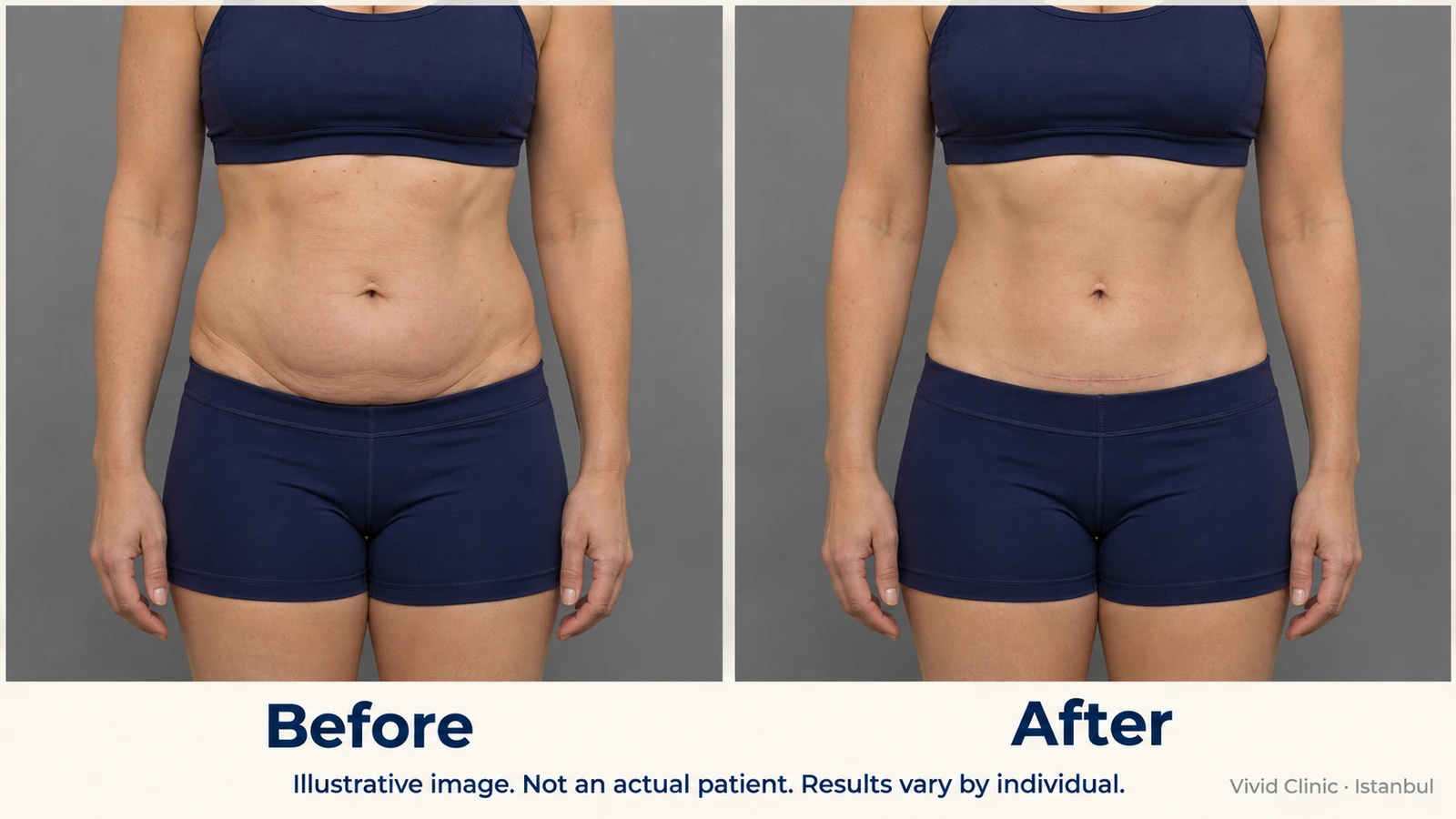
A tummy tuck carries potential risks, including bruising, swelling, numbness, fluid collection (seroma), bleeding, infection, delayed wound healing, widened or raised scars, asymmetry, contour irregularities and, rarely, blood clots or anesthesia-related complications.
Careful patient selection, stopping smoking and following aftercare instructions lower these risks but cannot remove them.
How to Prepare Before Surgery
- Reach a stable weight and hold it for several months
- Stop smoking and nicotine products for the period your surgeon specifies
- Share your full medical history, medications and supplements
- Arrange help at home for the first two weeks
Aftercare Tips for a Smoother Recovery
- Wear your compression garment as directed
- Walk little and often from the first day
- Sleep with your upper body raised and knees slightly bent in the early weeks
- Avoid smoking, alcohol, saunas and heavy lifting until you are cleared
- Report fever, increasing pain, redness, wound discharge or leg swelling promptly
Cost Factors in Istanbul, Turkey
The cost of treating a lower belly pooch depends on which procedure you need: liposuction alone, a mini tummy tuck, a full tummy tuck or a combination. Operating time, surgeon experience, hospital and anesthesia fees, and the hotel, transfers and aftercare in your package also influence the total.
For a first idea, try the surgery price calculator. It gives an estimate only; your surgeon confirms the final figure after assessment.
What International Patients Should Expect
Most planning happens before you travel: you send photos, describe your goals and receive a personalized recommendation. Many tummy tuck patients plan around seven to ten days in Istanbul, while liposuction alone often needs a shorter stay. Your coordinator confirms the schedule. On the flight home, wear your garment, drink water and walk the aisle regularly.
Why Choose Vivid Clinic in Istanbul, Turkey?
Vivid Clinic is a premium, international clinic focused on natural-looking, personalized body contouring. Every plan starts with a free consultation with a plastic surgeon, including a frank opinion on whether your lower belly pooch needs surgery at all.
From there, one team coordinates your consultation, transfers, hotel, treatment, checkups and remote aftercare. You can meet our doctors before you decide.
FAQs
How long should I stay in Istanbul after a tummy tuck for a lower belly pooch?
Most international patients plan around seven to ten days in Istanbul after a tummy tuck, although the exact schedule depends on your procedure and how you heal. The stay usually covers your in-person consultation, surgery day, one to two nights in hospital, early recovery at your hotel and a checkup visit before departure. Your surgeon confirms that you are fit to fly at the final checkup. On the journey home, wear your compression garment, stay hydrated and walk regularly. Remote aftercare then continues with photo reviews.
Can exercise alone flatten a lower belly pooch?
Sometimes, and it depends on the cause. If the bulge is mainly fat under the skin, posture or weak deep core muscles, a combination of overall fat loss, strength training and posture work can make a visible difference. Exercise cannot selectively burn fat from one area, because spot reduction is not supported by evidence. It also cannot tighten significantly stretched skin or close a wide muscle separation. If your abdomen stays rounded despite a healthy, stable weight and consistent training, loose skin or muscle laxity is likely involved, and a surgical opinion may be useful.
Is liposuction or a tummy tuck better for a lower belly pooch?
It depends on what your lower belly pooch is made of. Liposuction alone tends to suit people with a pinchable fat pocket, firm elastic skin and no muscle separation. A tummy tuck, or a mini tummy tuck for concerns limited to the area below the navel, is usually recommended when loose skin, stretch marks or a weakened abdominal wall are the main issue. Many plans combine both. Your surgeon examines skin quality and muscle tone before recommending a technique. Results vary by individual.
How soon after pregnancy can I treat a lower belly pooch with surgery?
Surgeons generally advise waiting until your body has recovered from pregnancy, your weight has been stable for several months and you have finished breastfeeding. For many women, that means at least six to twelve months after delivery, though your surgeon will set the timing for your situation. It is also sensible to wait until you have completed your family, because a later pregnancy can stretch the skin and muscles again. In the meantime, a physiotherapist can assess muscle separation and guide safe core rehabilitation.
What affects the cost of treating a lower belly pooch in Turkey?
Several factors shape the price. The biggest is the procedure itself: liposuction alone, a mini tummy tuck, a full tummy tuck or a combination with liposuction. Operating time, muscle repair, surgeon experience, hospital and anesthesia fees and pre-operative tests also matter, as do the hotel, transfers and aftercare included in your package. Because plans differ so much between patients, an exact figure can only be given after an assessment. Vivid Clinic in Istanbul, Turkey provides a personalized quote following your consultation, with no obligation to proceed.
Conclusion
A lower belly pooch is rarely a sign that you are not trying hard enough. It can be fat, loose skin, muscle separation, posture, bloating or visceral fat, and the right answer depends on the cause. Start with overall fat loss and core and posture work. If a fat pocket remains, liposuction may help, and when skin or muscle laxity is the cause, a tummy tuck is usually the more effective route. No option suits everyone, and results vary.
If you would like a personal assessment, Vivid Clinic in Istanbul, Turkey offers a free consultation with a plastic surgeon. Get a Free Consultation and find out which of the five steps makes sense for your lower belly pooch.
Real Before and After Results at Vivid Clinic
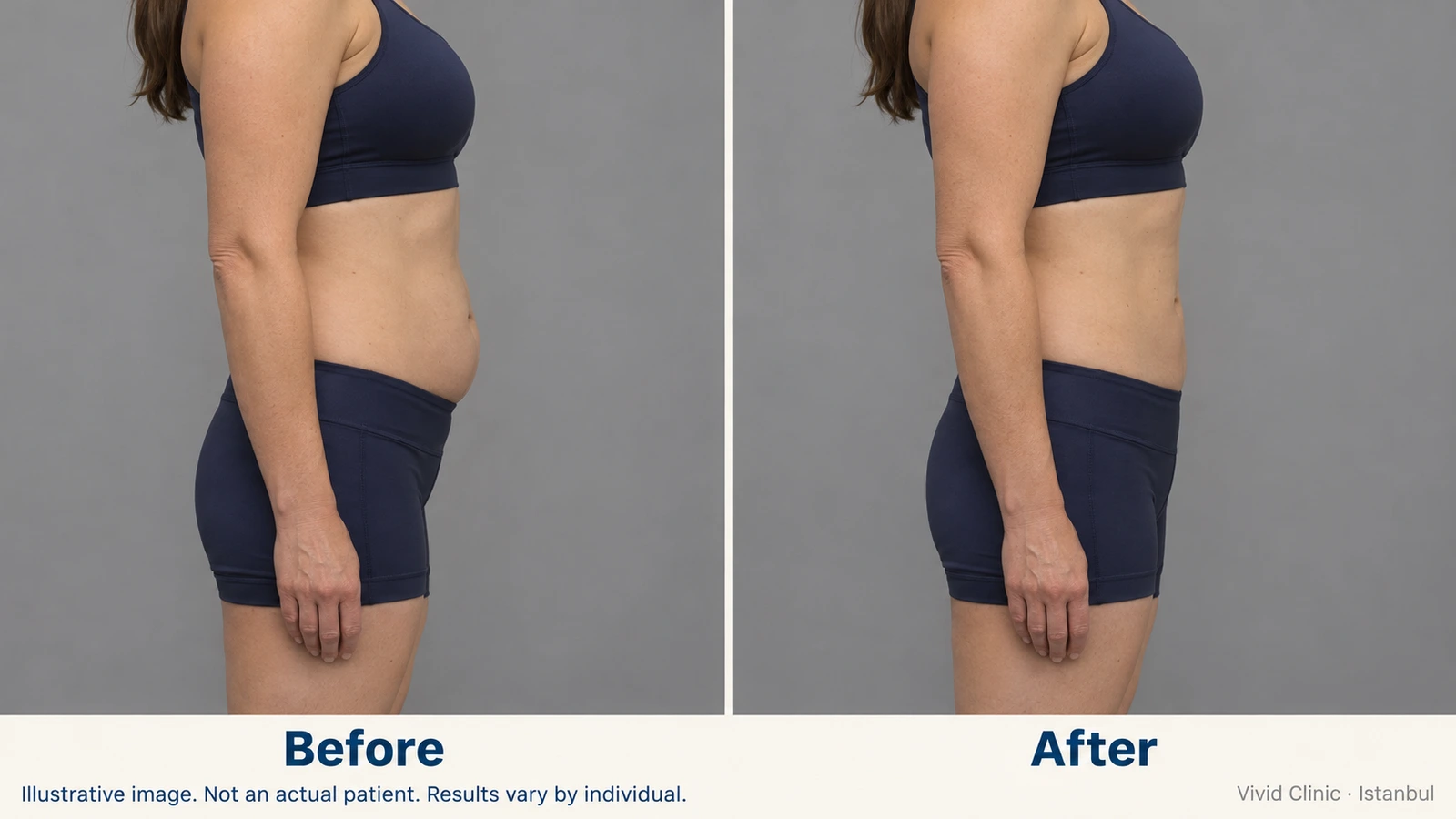
The photos below show real Vivid Clinic patients from the clinic’s own gallery, shared with consent as published on the clinic site. They are tummy tuck and liposuction cases from the clinic gallery, as labelled; results vary by anatomy, healing and treatment plan.
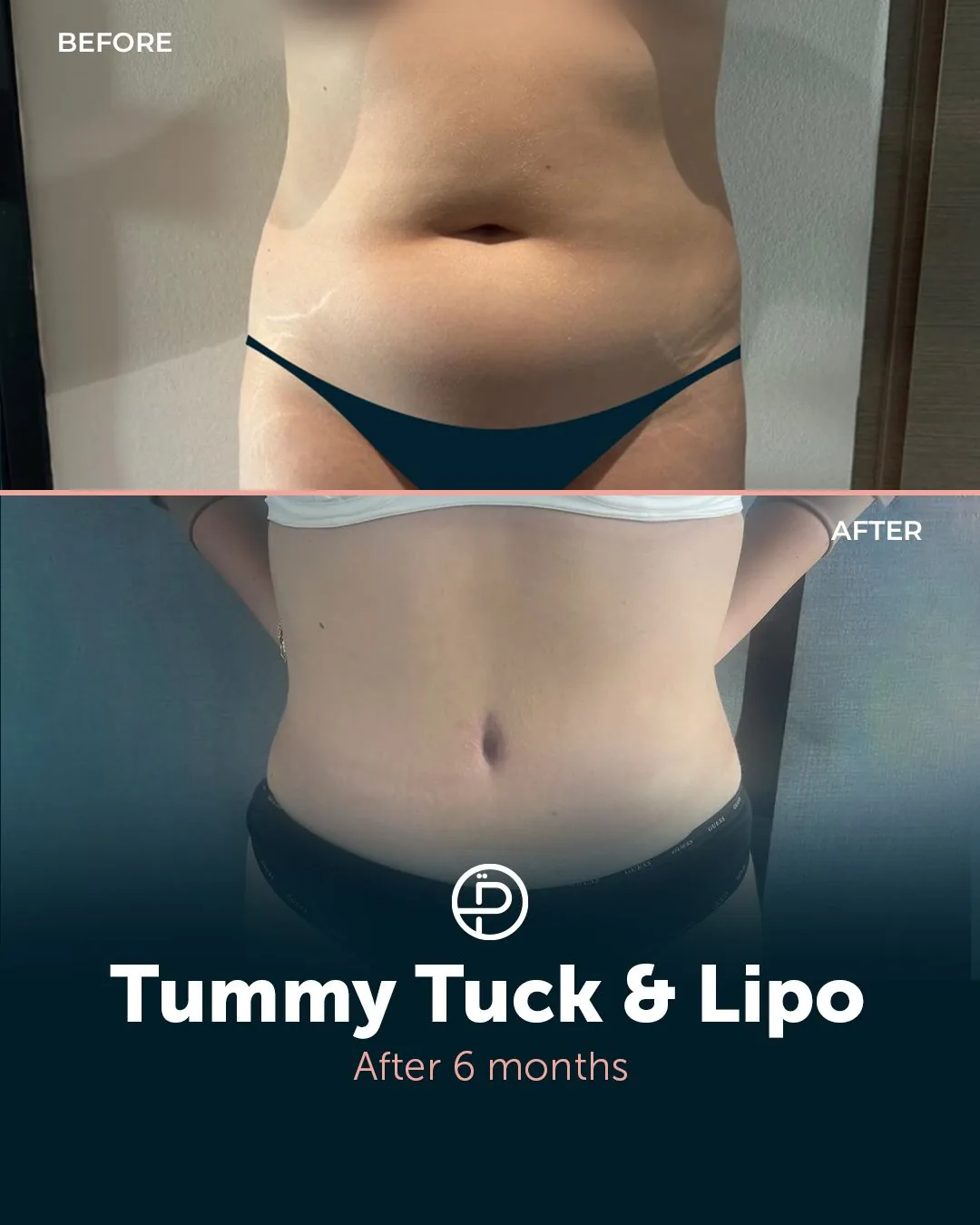
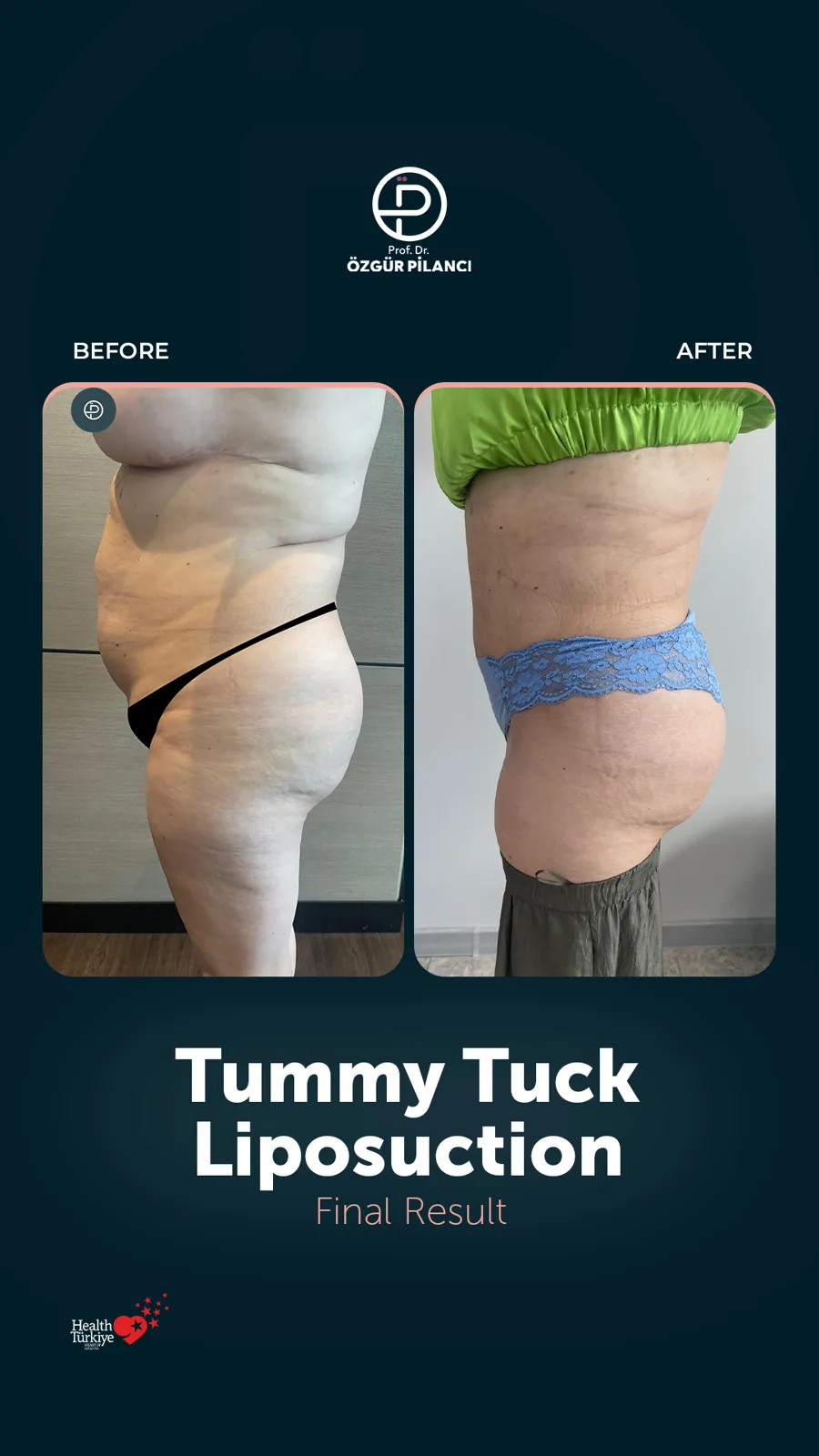

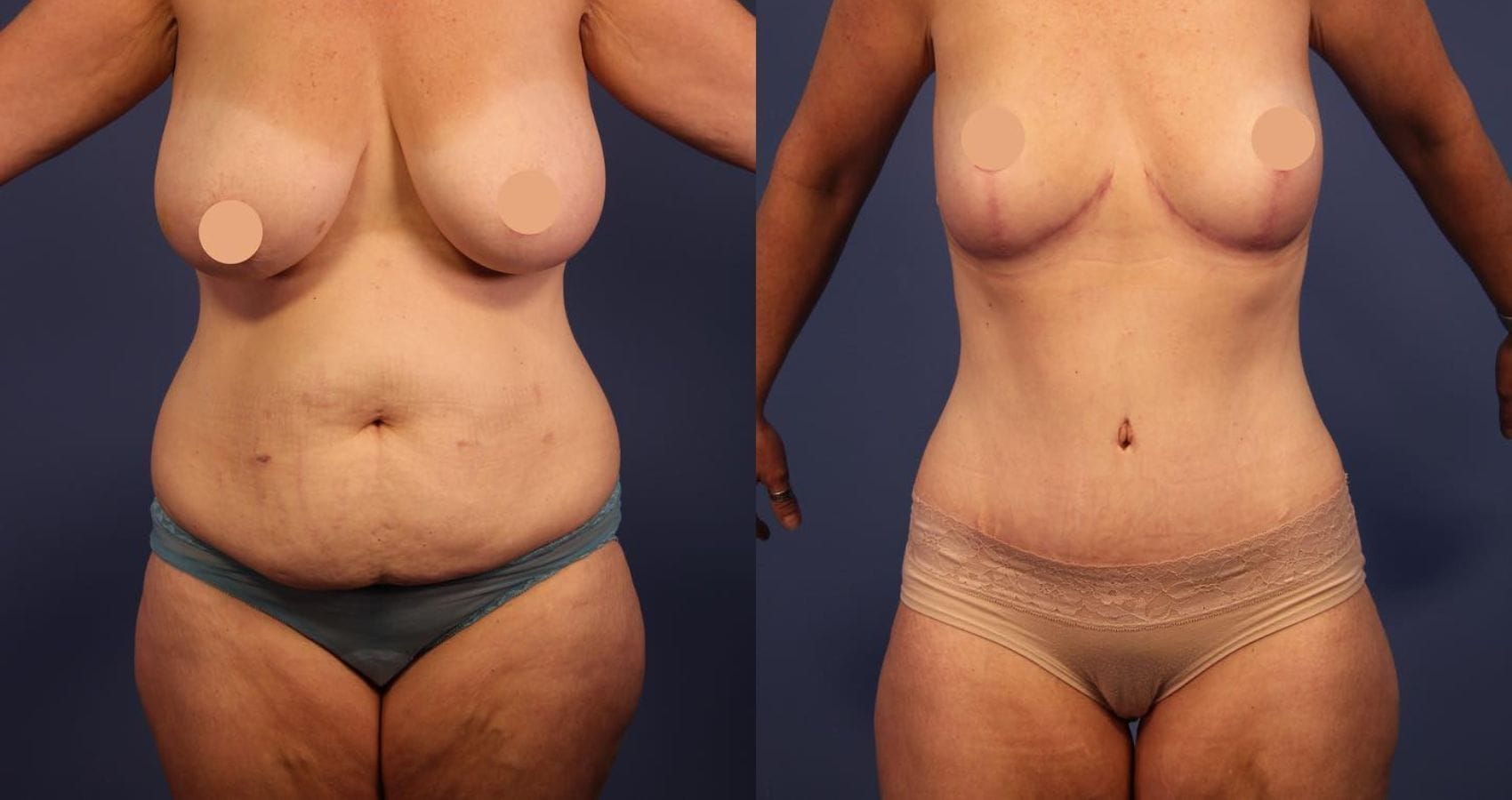
You can browse more cases in the full before and after gallery. To learn what may be realistic for your own abdomen, send your photos to the Vivid Clinic team and request your free consultation with a plastic surgeon.
This article is for general information and does not replace a personal medical consultation. Suitability, risks, recovery and expected results should always be discussed with a qualified medical professional. Results vary by individual.