
 ChatGPT

Medically reviewed by Prof. Dr. Özgür Pilancı, Plastic, Reconstructive & Aesthetic Surgeon — August 2026
Quick answer (updated August 2026): “Mediterranean people” does not name a single population — it names the inhabitants of a sea bordered by three continents, from Portugal and Morocco to Greece, Turkey, and the Levant. Within Southern Europe, some feature tendencies are commonly described: olive-leaning skin that tans readily (often Fitzpatrick types III–IV), a higher prevalence of dark hair and brown eyes than in Northern Europe, and straight or slightly convex nasal profiles. Every one of those is a population-level tendency, not a description of any individual — the variation within any single country is greater than the average difference between countries, and three millennia of movement around the basin have made mixed ancestry the norm, not the exception.

Who “Mediterranean people” actually describes
The Mediterranean is a sea, not a population. More than twenty countries on three continents share its coastline — Southern Europe from Iberia to the Balkans, North Africa from Morocco to Egypt, and the Levant — and “Mediterranean people” honestly describes all of them.
That is worth stating first because most searches for the phrase expect a single face, and no such face exists. What the region’s inhabitants share is geography and a long history of contact: similar climates, connected coastlines, and thousands of years of trade, migration, and empire moving people around the water in every direction. This article focuses on the Southern European shore — Italy, Greece, Spain, France, and the Basque Country — because that is what most English-language searches for the phrase intend, but the label itself is far wider.
One principle governs everything below: a population average describes a distribution, not a person. Population genetics has established that the overwhelming majority of human genetic variation is found within populations rather than between them — two people from the same Italian town can easily differ more from each other than either does from someone across the sea (Witherspoon et al., Genetics, 2007). Averages can tell you which features are more or less common in a region. They cannot tell you what any individual looks like, and any sentence of the form “people from X look like Y” is a stereotype, not a fact.
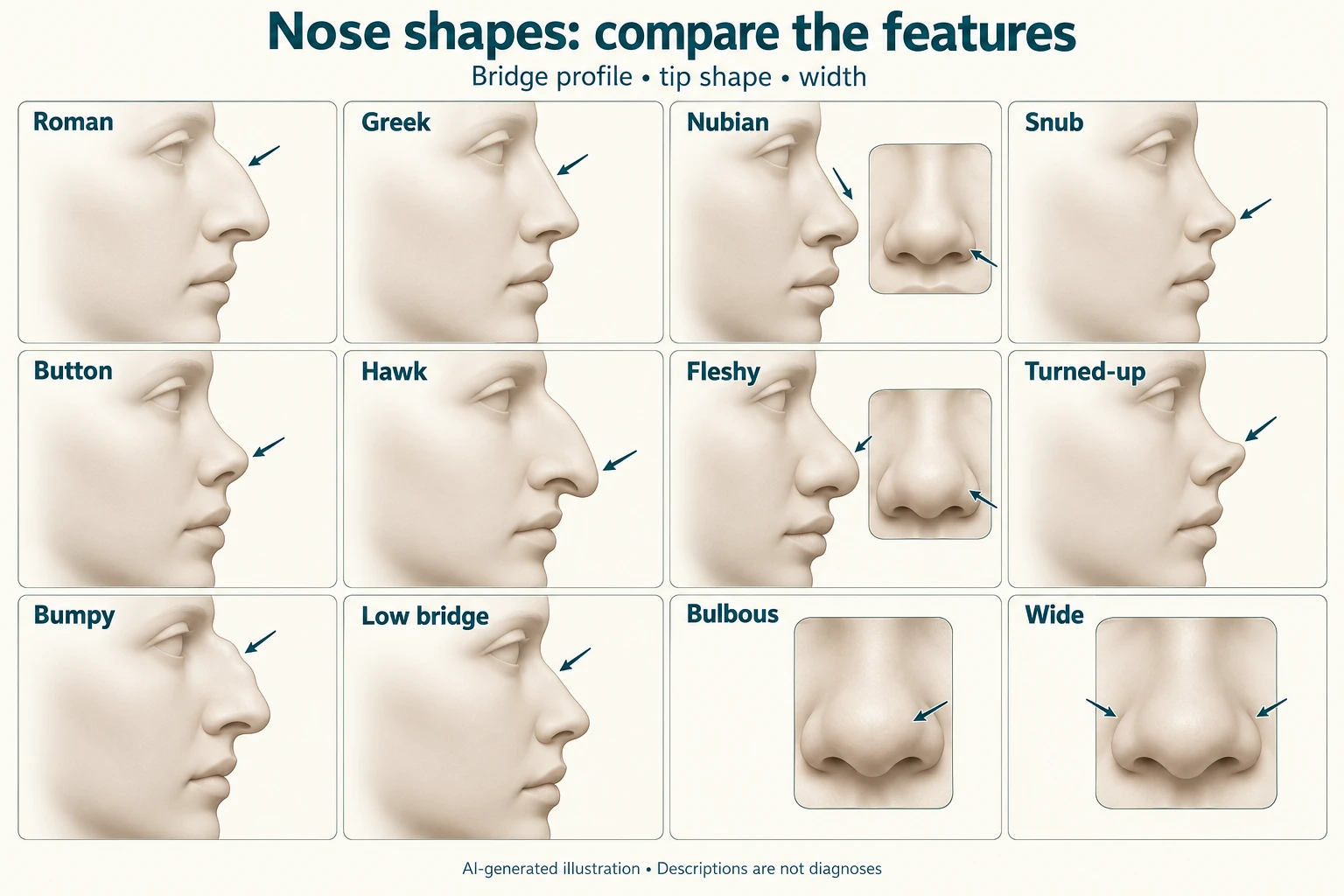
Three thousand years of movement around one sea
Mediterranean history is a story of people in boats, and it explains why “admixed” is the neutral, accurate description of every modern population on the sea’s shores.
Phoenician traders from the Levant founded colonies from Cyprus to Cádiz. Greek settlers built cities across Sicily and Southern Italy — a region the Romans simply called Magna Graecia, “Greater Greece.” Rome then connected the entire basin for centuries: ancient-DNA research published in Science found that the population of Imperial Rome drew heavily on ancestry from the eastern Mediterranean and Near East, with the city acting as a genuine genetic crossroads of Europe and the Mediterranean (Antonio et al., 2019). Later came the Arab conquests across North Africa, Sicily, and most of Iberia — where Al-Andalus lasted the better part of eight centuries — and Ottoman rule across the eastern Mediterranean into the twentieth century.
The genetic record reflects all of it, alongside deep continuity. Ancient-DNA work on the Minoans and Mycenaeans showed that modern Greeks share substantial ancestry with the Bronze Age populations of the Aegean — continuity and mixture at the same time, over more than three thousand years (Lazaridis et al., Nature, 2017).
The practical conclusion for this article: modern national labels — Italian, Greek, Spanish, French — describe geography, language, and culture far more than they describe biology. There was never a sealed “Italian gene pool” to have features from.
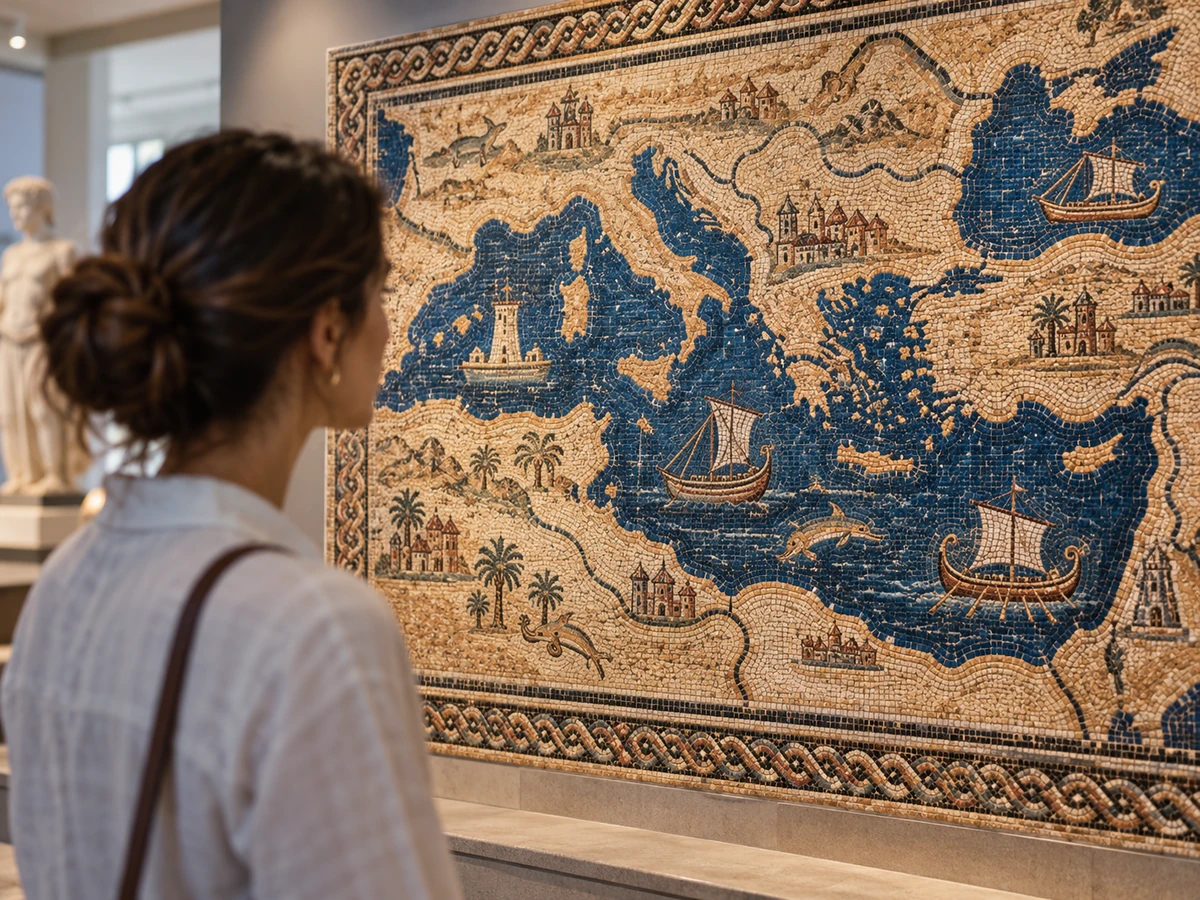
Commonly described features in Southern European populations
Certain tendencies do appear more frequently in Southern European populations than elsewhere in Europe, and describing them accurately — as tendencies — is the legitimate answer to what most people searching this topic want to know.
Skin tone. The complexion most associated with the region is often called “olive” — skin with warm, sometimes slightly green-leaning undertones that tans readily and burns less easily than very fair skin. On the Fitzpatrick scale, a dermatological classification of how skin responds to ultraviolet light, Southern European skin commonly falls in types III–IV — burns mildly or minimally, tans easily — though the full range from type I to type V occurs throughout the region. The Fitzpatrick type matters practically: it guides sun protection and laser and resurfacing treatment choices, which is why clinicians record it.
Hair and eye color. Dark brown to black hair and brown eyes are more prevalent in Southern than in Northern Europe — European pigmentation follows a broad north–south gradient, with light eyes and hair most frequent around the Baltic and progressively less common toward the Mediterranean. Prevalence is the entire claim: blond and red hair and blue, green, and hazel eyes all occur naturally across Southern Europe, and always have.
Facial structure. The vocabulary people search for — “strong” or “defined” bone structure, prominent cheekbones, expressive brows — has no precise anatomical definition, and it describes faces found everywhere. The nasal profile is the one feature with a real research literature: straight and slightly convex dorsal profiles, including the so-called Roman or aquiline nose named after Roman portrait sculpture, are commonly described in Mediterranean populations.
Research on nasal-shape variation links population differences partly to ancestral climate — narrower nasal passages condition cooler, drier air more efficiently (Zaidi et al., PLOS Genetics, 2017) — and genome-wide studies have identified genes influencing nose width, height, and profile. A convex profile is normal anatomy, not a flaw; where someone dislikes theirs, modern rhinoplasty is planned around softening a profile while keeping the character of the nose, never around erasing it.
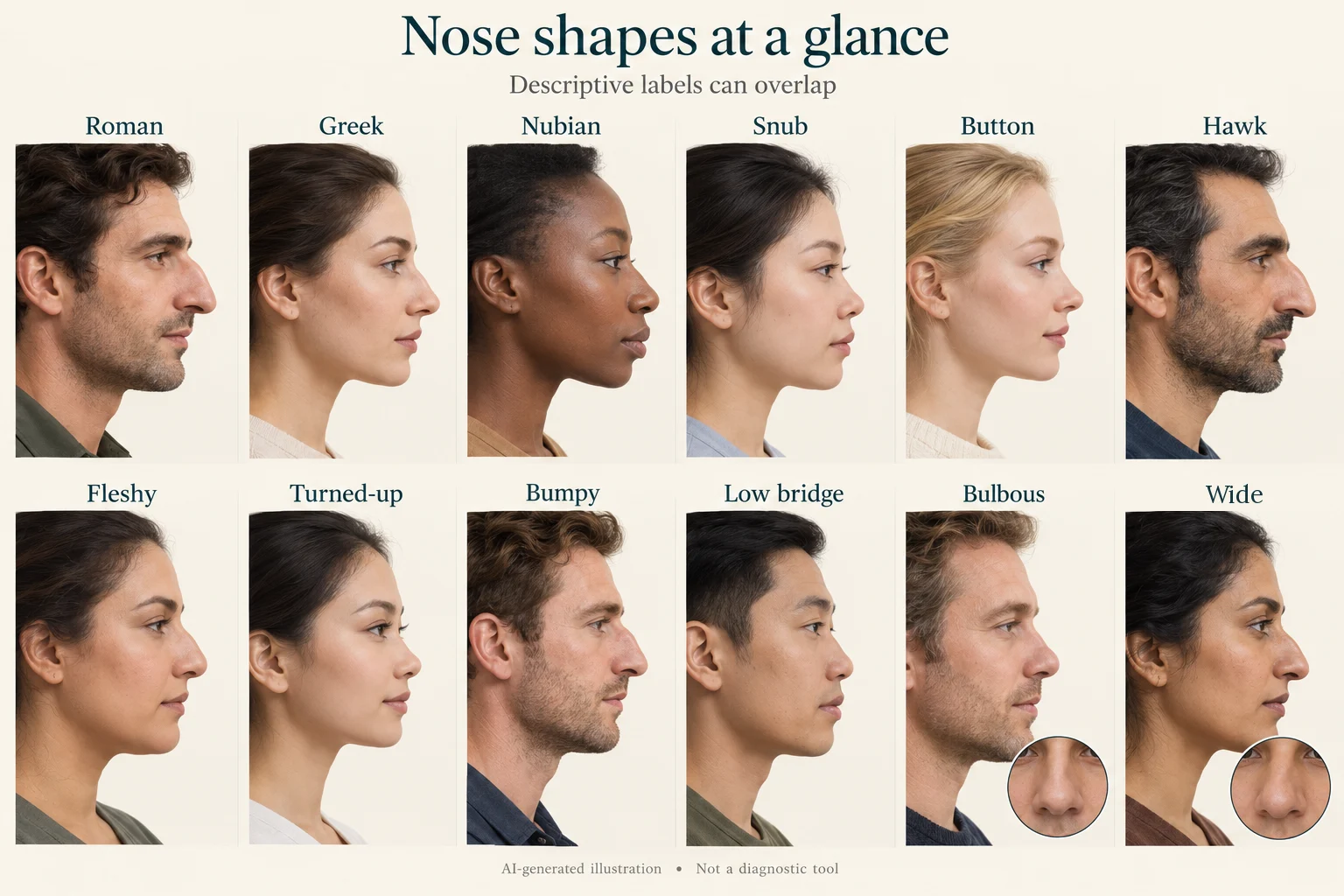
Region by region: what the evidence supports
The short answer for every country below is the same: real tendencies, enormous internal variation, and a history that guarantees mixed ancestry. Here is what can honestly be said about each.
Italian features
Italy shows one of the steepest internal genetic gradients in Europe — studies of Italian population structure consistently find that north–south variation within Italy spans much of the variation of the continent. Greek colonization shaped the south, while the north saw centuries of movement from continental Europe. Commonly described tendencies — dark hair, brown eyes, olive-leaning skin, defined nasal profiles — are real at the level of frequency, but “Italian ethnicity” is a national identity, not a biological category: a Milanese and a Sicilian may look, and genetically be, quite different, and both are equally Italian.
Greek features
Modern Greeks show measurable genetic continuity with the Aegean’s Bronze Age inhabitants alongside later admixture — one of the better-documented continuity stories in Europe (Lazaridis et al., 2017). The famous “Greek profile” — a nose descending in a nearly straight line from the forehead — comes from classical sculpture, and sculpture was an aesthetic convention, not a census: real Greek noses vary as much as anyone’s. Commonly described tendencies include dark, often wavy hair, brown eyes, and olive-leaning skin, with the usual caveat that lighter coloring is entirely normal across Greece.
Spanish features
Iberia’s layered history — Phoenician and Carthaginian colonies, Roman Hispania, Visigothic rule, and nearly eight centuries of Al-Andalus — makes Spain a textbook case of Mediterranean admixture. Commonly described tendencies match the Southern European pattern: dark hair, brown eyes, skin in the Fitzpatrick II–IV range with a north–south gradient. Spain’s Atlantic north, meanwhile, has long had a higher frequency of lighter coloring — a reminder that even within one country the “Mediterranean” description only fits part of the map.
French features
France is the clearest demonstration that national labels are geographic. The country spans three zones — Atlantic, continental, and Mediterranean — and only its southern coast is Mediterranean in any sense. Commonly described southern French tendencies mirror neighboring Spain and Italy; northern French populations pattern with continental Europe. A single set of “French facial features” does not exist, and the search phrase mostly reflects the gravitational pull of Parisian fashion culture rather than anything measurable.
Basque features
The Basque Country, straddling the western Pyrenees between Spain and France, carries the genuinely exceptional story in this article — and it is linguistic and genetic, not facial. Basque (Euskara) is Western Europe’s only surviving pre-Indo-European language, a true language isolate. Genomic research in Current Biology found that Basques descend from the same Iron Age populations as their neighbors but then experienced centuries of relative isolation and reduced gene flow, leaving them genetically distinctive among European populations — with internal genetic differences that track geography and even dialect within the Basque Country itself (Flores-Bello et al., 2021).
What the research does not support is a recognizable “Basque face”: the distinctiveness is statistical, visible to genome-wide analysis, not to the eye. Searches for Basque physical characteristics are best answered honestly — the remarkable thing about the Basques is continuity you can hear in the language and detect in the genome, not read in a face.

The “Mediterranean look” is a cultural shorthand
The image the phrase conjures — olive skin, dark waves, strong brows, a defined profile — is as much a product of cinema, fashion, and travel marketing as of demography. Casting and advertising compress a three-continent region of enormous diversity into a single aesthetic, and the compression then shapes what people expect real Mediterranean faces to look like. There is nothing wrong with admiring the aesthetic; it is simply worth knowing that it is a curated image, and that actual faces from Lisbon to Beirut cover a far wider range than the shorthand allows.
Heritage and aesthetic surgery, briefly

People from every background occasionally want a feature refined — a profile softened, a tip defined — and the modern standard of care is identity-preserving: planning changes so the face still reads as belonging to the same person and the same family. Heritage features are not flaws awaiting correction, and a surgeon’s task is balance within the face in front of them, not conformity to an imported template. That philosophy, and what it means technically, is covered across our face aesthetics pages.

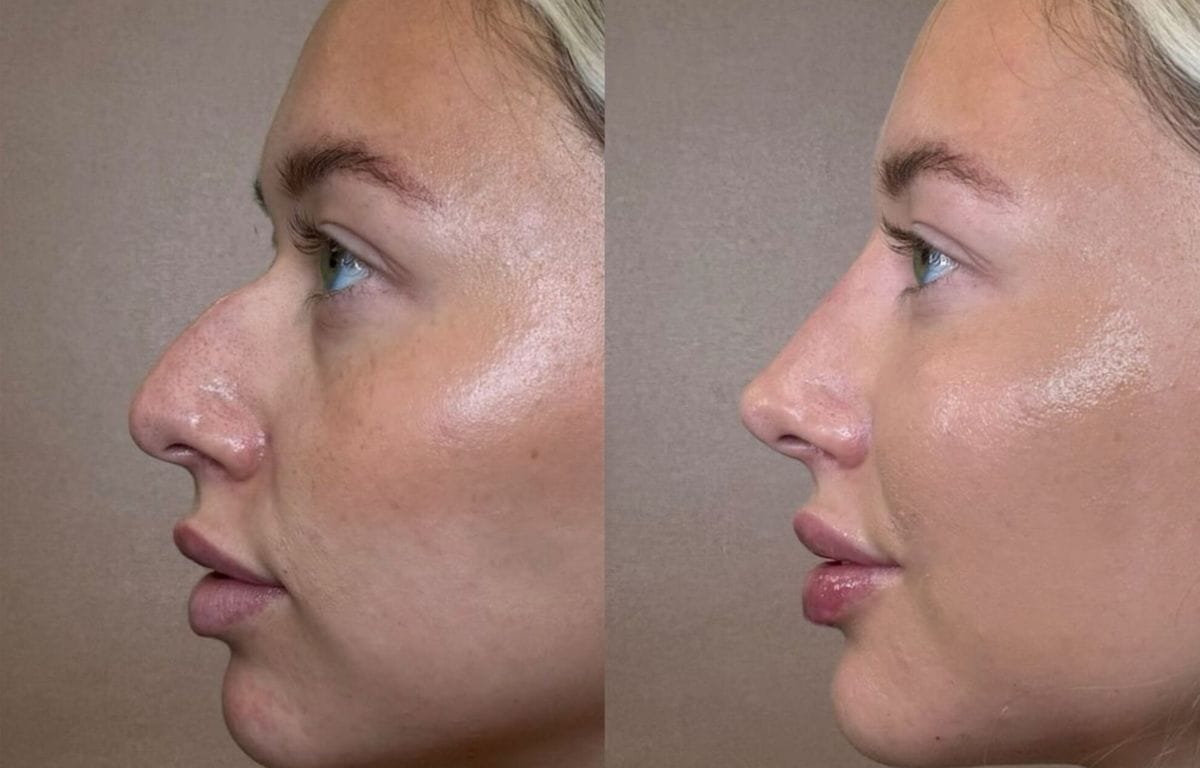
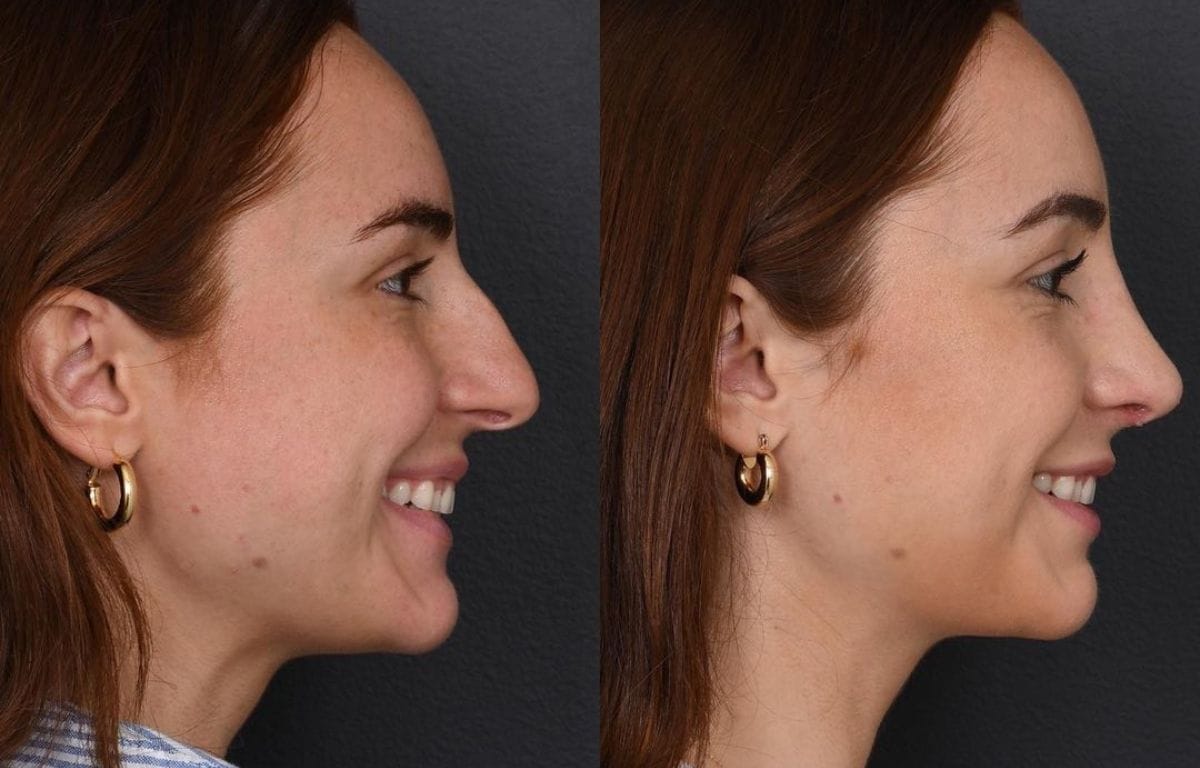
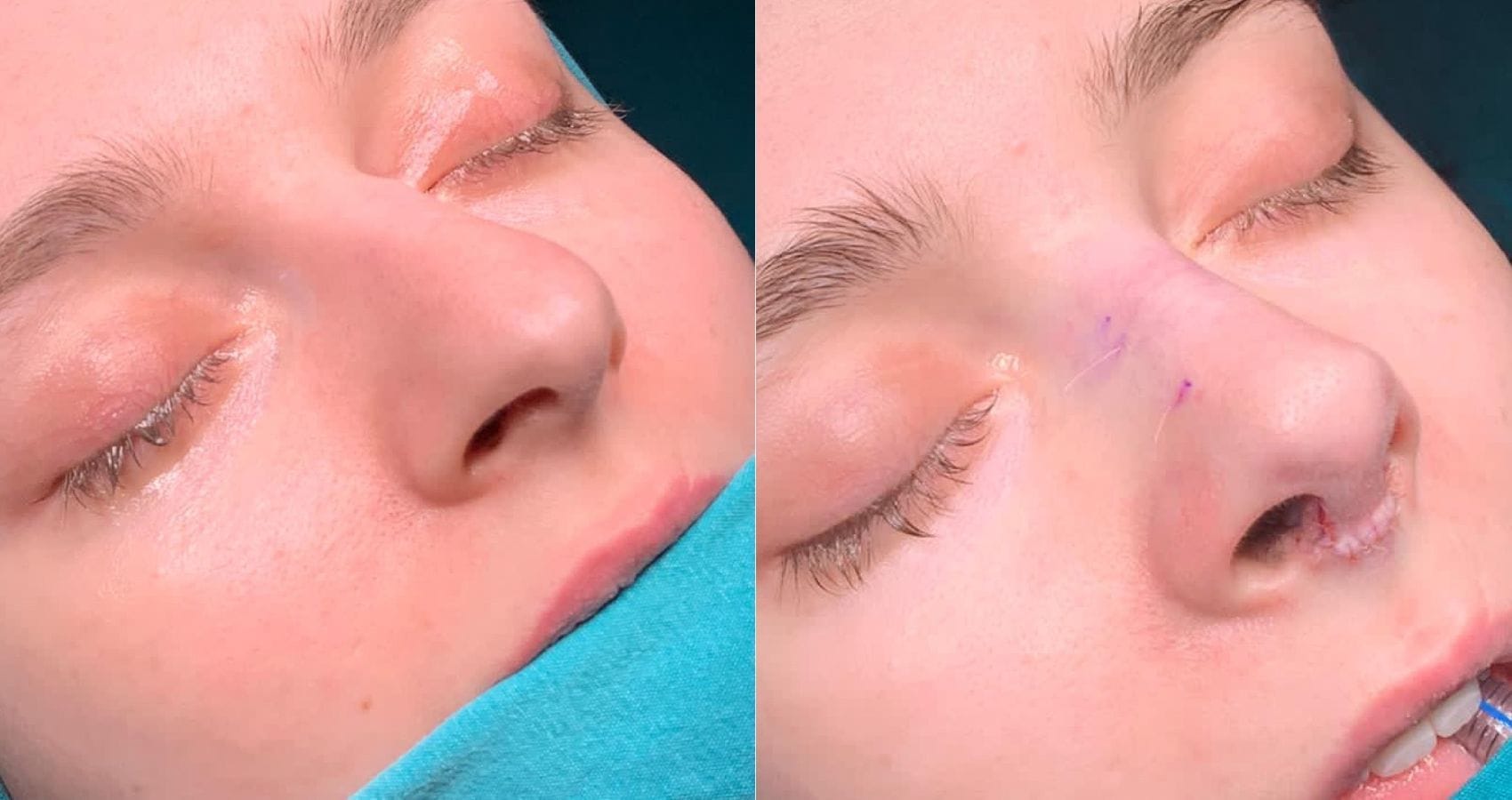
Related Before and After Results at Vivid Clinic
The photos below show real Vivid Clinic patients who had rhinoplasty — a related procedure, not heritage features itself — shared with their consent to show how our Istanbul team documents results. Ask during your free consultation to see cases that match your own treatment. Individual results vary. Browse the full Before & After Gallery.



Frequently Asked Questions
Who counts as “Mediterranean people”?
Everyone living around the Mediterranean Sea — the populations of Southern Europe, North Africa, and the Levant, across more than twenty countries on three continents. The phrase describes geography and shared history, not a single ethnic group or appearance. In everyday English it is often used narrowly to mean Southern Europeans, but that usage covers only one of the sea’s three shores.
Do people from Mediterranean countries share common facial features?
Only in the statistical sense. Some tendencies — olive-leaning skin, darker hair and eye pigmentation, straight or slightly convex nasal profiles — appear at higher frequency in Southern European populations than in Northern Europe. But variation within any single population exceeds the average differences between populations, so no feature is universal in the region and none is exclusive to it. Averages describe distributions; they never describe the individual in front of you.
What are commonly described Italian facial features?
Descriptions usually mention dark hair, brown eyes, olive-leaning skin, and a defined nasal profile — and those are genuine frequency tendencies in Italy. The fuller answer is that Italy contains one of Europe’s steepest internal genetic gradients from north to south, so Italians span nearly the full European range of coloring and features. “Italian” is a nationality and a culture; it has never been a single biological type.
What are commonly described Greek facial features?
Commonly described tendencies include dark, often wavy hair, brown eyes, olive-leaning skin, and the straight nasal profile associated with classical sculpture. Ancient-DNA research shows modern Greeks genuinely share ancestry with the Aegean’s Bronze Age populations, but the “Greek profile” of statuary was an artistic ideal rather than a portrait of the population — Greek faces vary as widely as any other nation’s.
Why are the Basque people considered genetically distinctive?
Because of isolation, not separate origins. Genomic research shows Basques descend from the same ancient Iberian populations as their neighbors, but centuries of reduced gene flow after the Iron Age left them measurably distinctive in genome-wide analyses — and internally varied along lines of geography and dialect. Their language, Euskara, is Western Europe’s only surviving pre-Indo-European tongue. None of this translates into a recognizable “Basque look”; the distinctiveness is detectable in DNA and audible in the language, not visible in a face.
What is olive skin?
“Olive” describes skin with warm, sometimes subtly green-leaning undertones that tans easily and burns relatively rarely — typically Fitzpatrick types III–IV on the dermatological scale of ultraviolet response. It is common in Mediterranean populations and plenty of others. The classification matters clinically because Fitzpatrick type guides sun-protection advice and the safe settings for laser and resurfacing treatments.
Can cosmetic surgery refine a feature without erasing heritage?
Yes — that is precisely how modern aesthetic surgery is meant to be planned. The goal is balance within the individual face: softening a profile or refining a tip while keeping the characteristics that carry family resemblance. A feature associated with heritage is normal anatomy, never something to “correct,” and a good surgeon will tell you what will stay the same as clearly as what would change.
Curious what a refinement would look like on your face — and what should stay exactly as it is? Send photographs for a free online assessment and get an honest answer about both.