
 ChatGPT

Medically reviewed by Prof. Dr. Özgür Pilancı, Plastic, Reconstructive & Aesthetic Surgeon — August 2026
Quick answer (updated August 2026): A non-surgical brow lift is real but small. Published measurements put botulinum toxin, filler and microfocused ultrasound at roughly 1 to 2 mm of average elevation. Surgery moves more: pooled endoscopic data show 3 to 4 mm held long-term, and the gliding brow lift — subcutaneous, through two 3 mm incisions per side — reports similar figures at the brow tail. Injections reshape the brow; surgery repositions it.

What actually holds your eyebrow up
One muscle lifts your brow and several pull it down; every brow lift changes that balance.
The frontalis is, in the literature’s phrase, “the sole brow elevator”. Opposing it are the corrugator supercilii, depressor supercilii, procerus and outer orbicularis oculi — which is why the brow tail drops first with age.

Position matters as much as height. A female brow peaks between the lateral limbus and lateral canthus, just above the bony supraorbital rim; a male brow is flatter and sits at rim level. Raising a man’s brow into a woman’s arch is a common failure.

What a non-surgical brow lift can and cannot do
A non-surgical brow lift does not remove skin. It weakens the muscles pulling the brow down, adds volume beneath it, or tightens tissue with energy — and the result is measured in millimeters.

Botulinum toxin. Weakening the depressors lets the frontalis win: treating the superolateral orbicularis oculi raises the brow tail; the corrugator, depressor supercilii and procerus raise the inner brow. A 2025 cohort of 230 patients averaged 1.35 mm of elevation (range 0.6–2.1 mm); a narrative review cites 1 mm centrally and 4.8 mm laterally for lateral orbicularis injection. Onset is around two days; the effect lasts three to four months. Injected too low, the same treatment drops the brow or produces a peaked “Spock” arch.
Filler. High-density hyaluronic acid on the bone in the temple supports the brow tail from below. In the same cohort, 230 patients given 0.2 mL at two temporal points averaged 1.35 mm, reaching 1.7 mm at the outer brow. Filler near the eye carries a rare risk of blindness if product enters an artery.
Energy devices. In a rater-blinded study of 40 subjects, microfocused ultrasound produced 2.16 ± 0.63 mm of elevation at 90 days, falling to 1.93 ± 0.57 mm at 180 days; 87.5% achieved a meaningful lift, with redness and swelling settling within a week.
Threads. Barbed threads lift the brow tail slightly — polydioxanone lasts upwards of six months, poly-L-lactic acid longer — but reviews call long-term efficacy “doubtful”, listing asymmetry and migration among the complications.
The limit that matters. If heavy hooding rests on your lashes, injections will not fix it — and nor will eyelid surgery alone if the real culprit is a low brow.
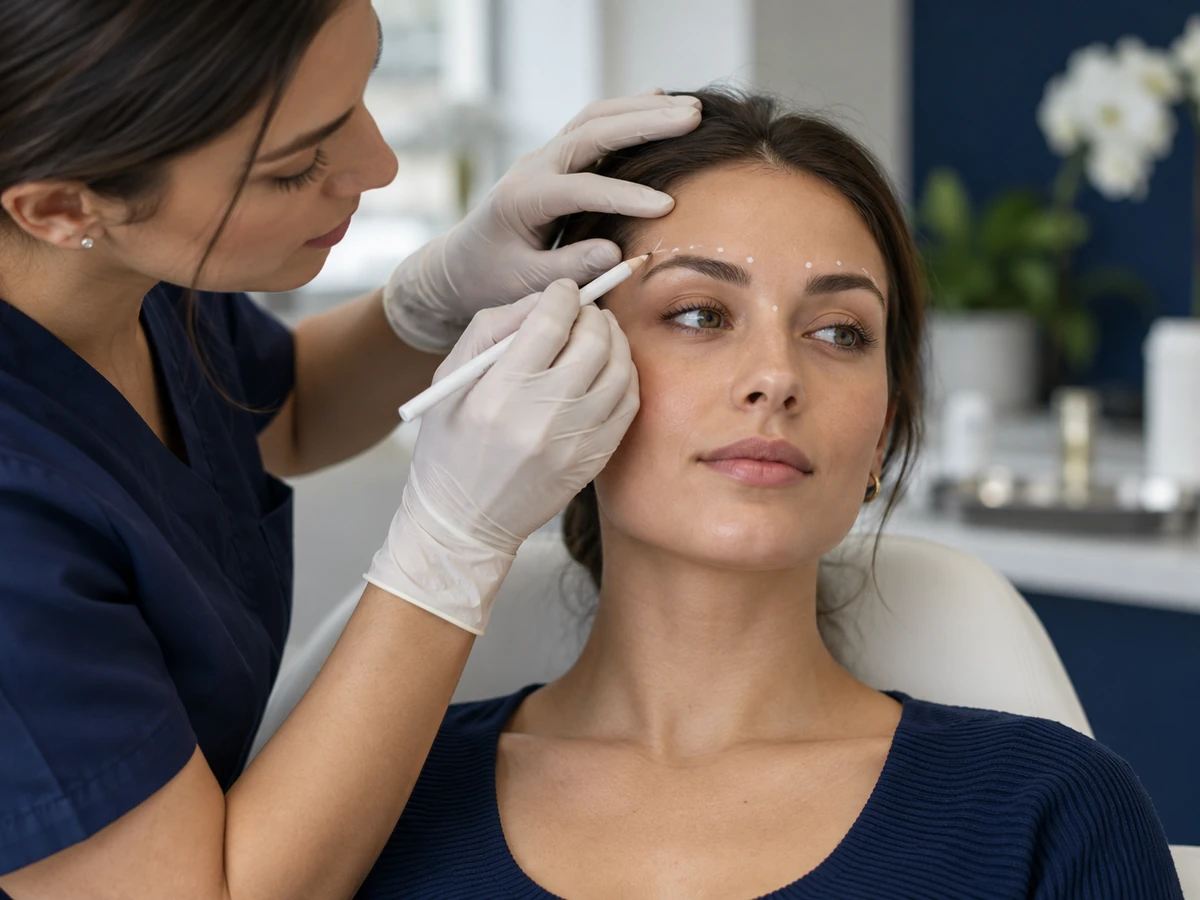
Surgical brow lift techniques, briefly compared
Surgical forehead lift techniques differ mainly in where the incision sits and how much scar you accept for lift.
The endoscopic brow lift works through about five short incisions behind the hairline, each under 2 cm. A meta-analysis of 12 studies and 478 cases found pooled long-term elevation of 3.25 mm medially, 3.86 mm centrally and 4.35 mm laterally. It suits a forehead under 6 cm from brow to hairline.
The direct brow lift excises skin above the brow — the workhorse for facial palsy — but leaves a visible scar, with numbness reported in 74% of one series. The coronal lift gives the most elevation and the longest scar, with temporary hair loss reported “as high as 33%”. A fox eye lift targets the outer canthus and brow tail.
The gliding brow lift
The gliding brow lift is a specific published technique, not a marketing name. Described by Viterbo, Auersvald and O’Daniel in 2019, it uses two 3 mm vertical incisions per side and dissects in the subcutaneous plane, releasing skin from the frontalis, corrugator, orbicularis oculi and temporoparietal fascia. No endoscope is used, and because dissection stays above the muscle the facial nerve is largely spared.
Fixation is the unusual part: a temporary cutaneous hemostatic net of fine nylon sutures holds the brow, removed after 48 to 72 hours. Patients go home the same day, no drains, no dressing.
Results are encouraging rather than magical. The original 124-patient series achieved adequate repositioning in 118, with no hematoma, infection, permanent sensory change or alopecia, and 5% relapsed early. An independent series of 63 patients measured 3.65 mm at the brow tail at three months and 2.46 mm at two years, while mid-pupil elevation fell to 0.73 mm — it holds the outer brow well, the inner brow poorly.
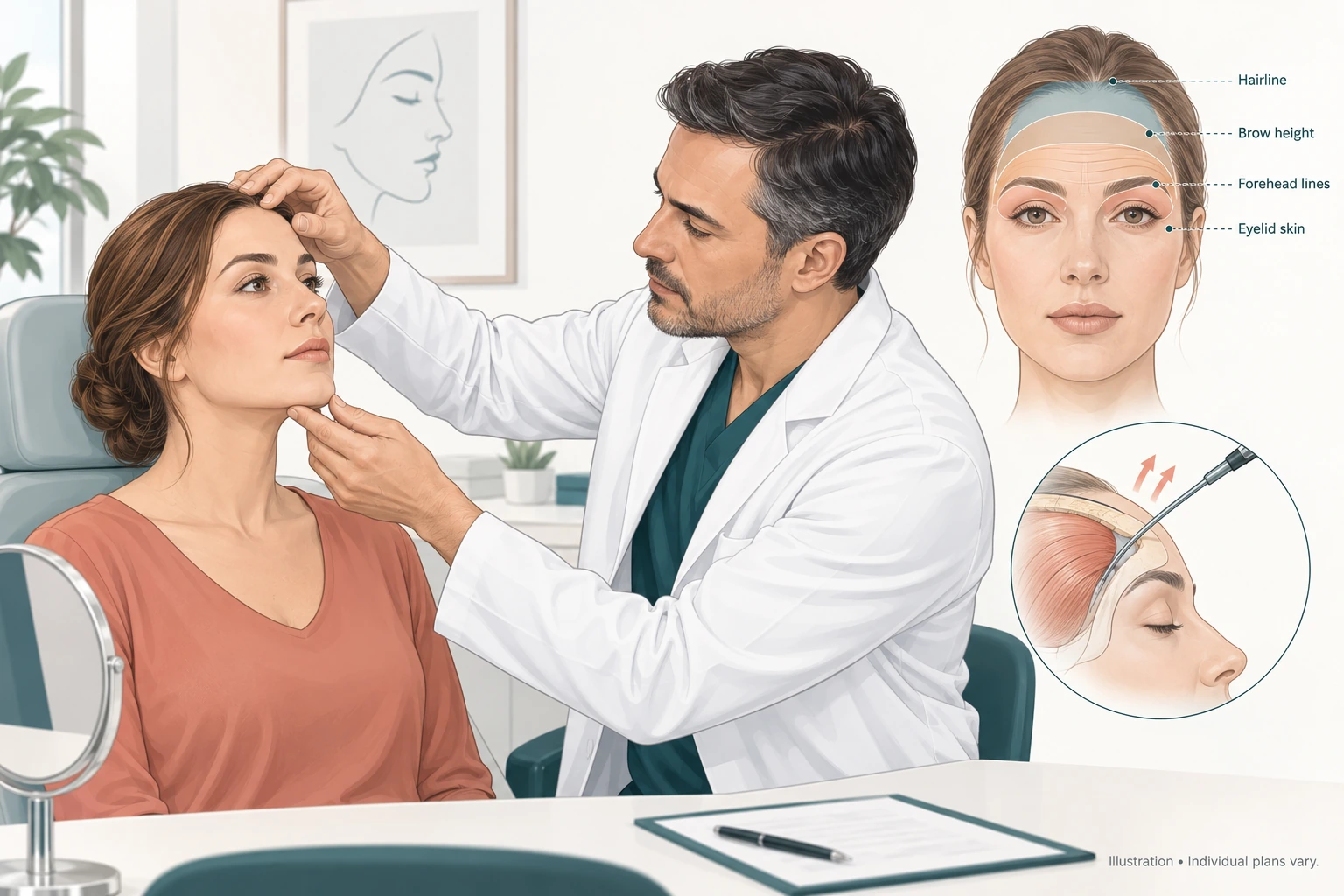
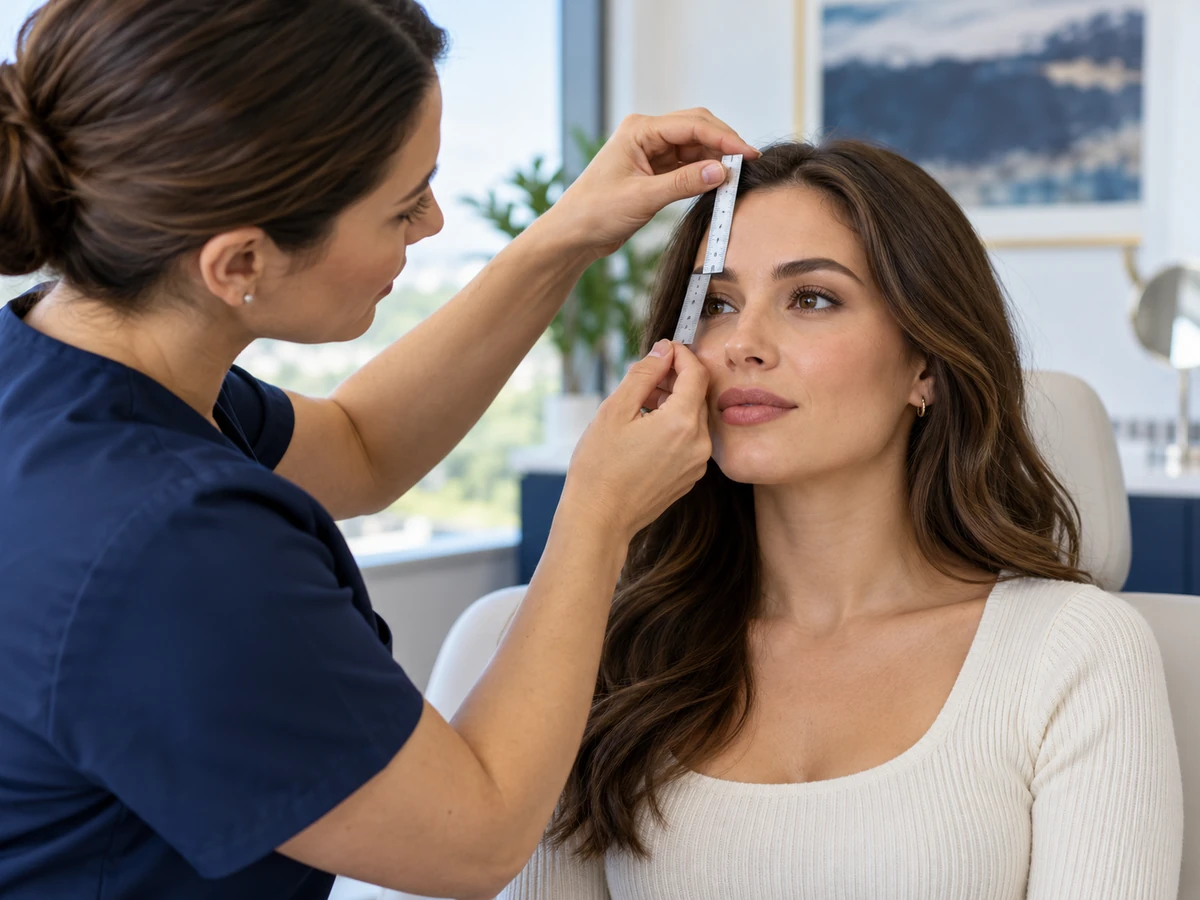
Brow lift recovery, day by day
This timeline is representative, drawn from published protocols. Your surgeon’s instructions differ and always take precedence.

Day 0. Endoscopic and gliding brow lifts are usually day-case. The forehead may be taped or loosely wrapped. Ice for 24 hours; keep your head elevated.
Day 1. The head dressing typically comes off and showering usually resumes.
Days 2–3. Swelling and bruising peak and migrate down into the eyelids — gravity, not a complication. A hemostatic net, where used, comes out at 48 to 72 hours. Some surgeons prescribe a short steroid taper.
Days 4–7. Bruising changes color and settles. Keep the head elevated all week. Tightness, numbness and scalp itching are normal.
Days 7–11. Staples or sutures come out at the first proper wound check.
Days 10–14. Most people are back at work, using cosmetics to camouflage bruising. No vigorous exercise until about two weeks; hair coloring is generally safe from around one month.
Months 1–3. The brow settles downward from its post-operative height. Some relapse is expected and planned for: studies record an average loss of 2 to 3 mm in the first three months. Absorbable fixation devices may stay palpable through the scalp for five months or more.
Months 3–12. The final result. Numbness resolves over months; photographic assessment is usually done between three and twelve months.
Why is one of my eyebrows higher than the other?
Almost certainly because you are a human being. Brow asymmetry is so routine that assessing and photographing it is a standard part of the pre-operative examination, not a finding that alarms anyone.

Habit is the most common cause: if one upper eyelid sits fractionally lower, the frontalis on that side contracts all day to lift the lid clear of your vision and the brow rides up with it — a recognized cause of tension headache that worsens with reading or screen work. Aging is rarely symmetrical either: the lateral brow drops first, and seldom at the same rate on both sides. Too much toxin on one side switches off a brow elevator.
Long-standing asymmetry, visible in old photographs, is cosmetic. New asymmetry is medical.
When a drooping brow is an emergency
Read this even if you skip everything else. A brow or forehead that suddenly stops working — especially on one side only — is not a cosmetic problem. Sudden, new, one-sided facial weakness, drooping of one side of the face, difficulty closing an eye, or slurred speech needs emergency assessment immediately. The NHS test is FAST — Face, Arms, Speech, Time to call 999 (911 in the US, 112 across the EU). Call emergency services if you think you are having or have had a stroke, or if you have had stroke signs in the last 24 hours even if they have now stopped. Do not drive yourself.
One piece of half-knowledge needs correcting. Bell’s palsy affects the whole side of the face including the forehead, whereas a cortical stroke often spares the forehead, because the upper face receives nerve signals from both sides of the brain. That distinction is not reliable enough to use on yourself. Forehead and eyelid function is preserved in only about 75% of cortical strokes, and a brainstem stroke can mimic Bell’s palsy exactly. Weakness of an arm or leg, dizziness, double vision or severe headache alongside facial weakness all point toward a stroke.
Bell’s palsy itself is common — 10 to 40 cases per 100,000 people a year — and usually improves. It still needs urgent attention: if the eye will not close fully, the cornea dries out and can ulcerate. Eye protection starts on day one.
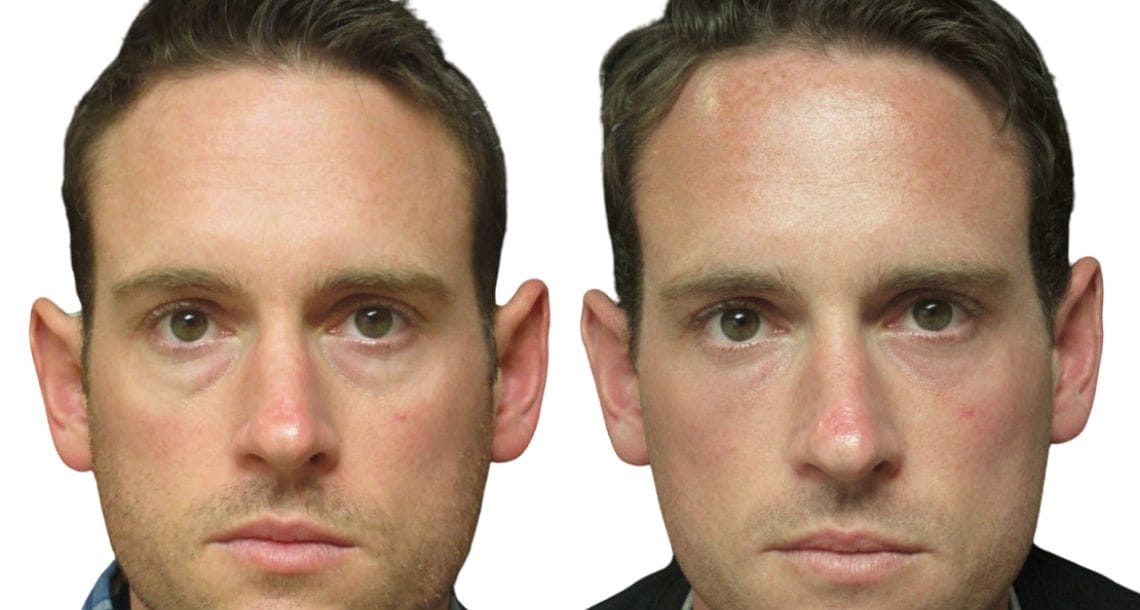
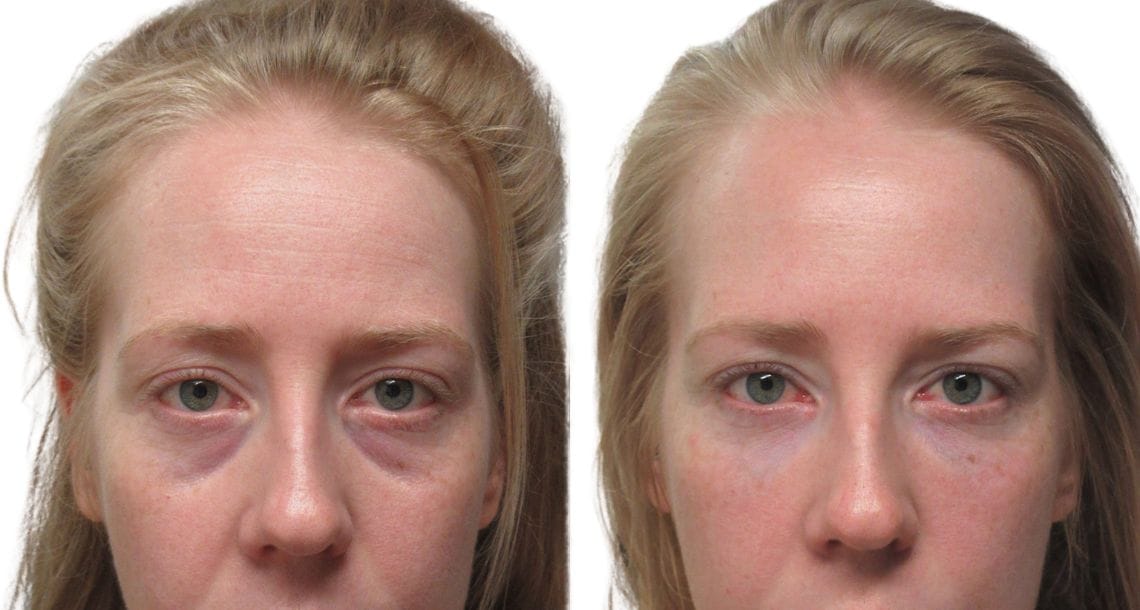
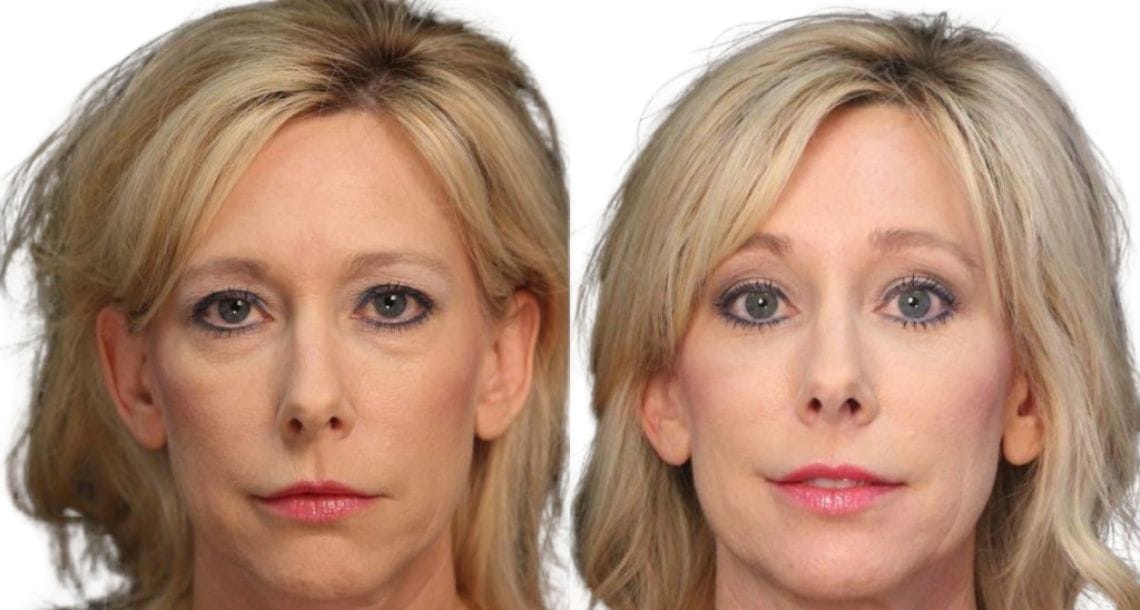
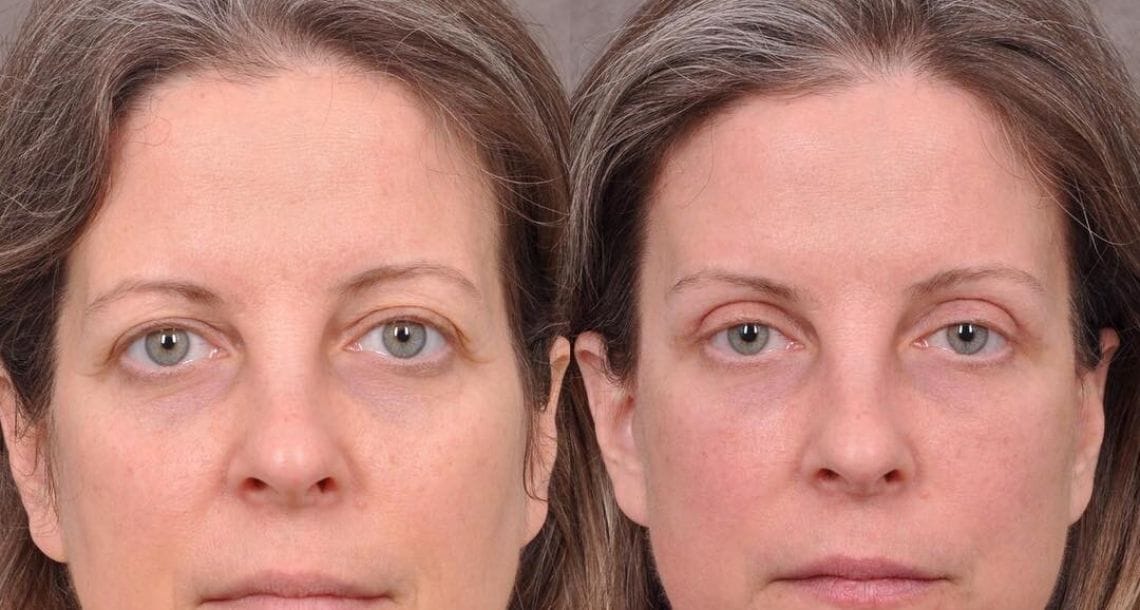
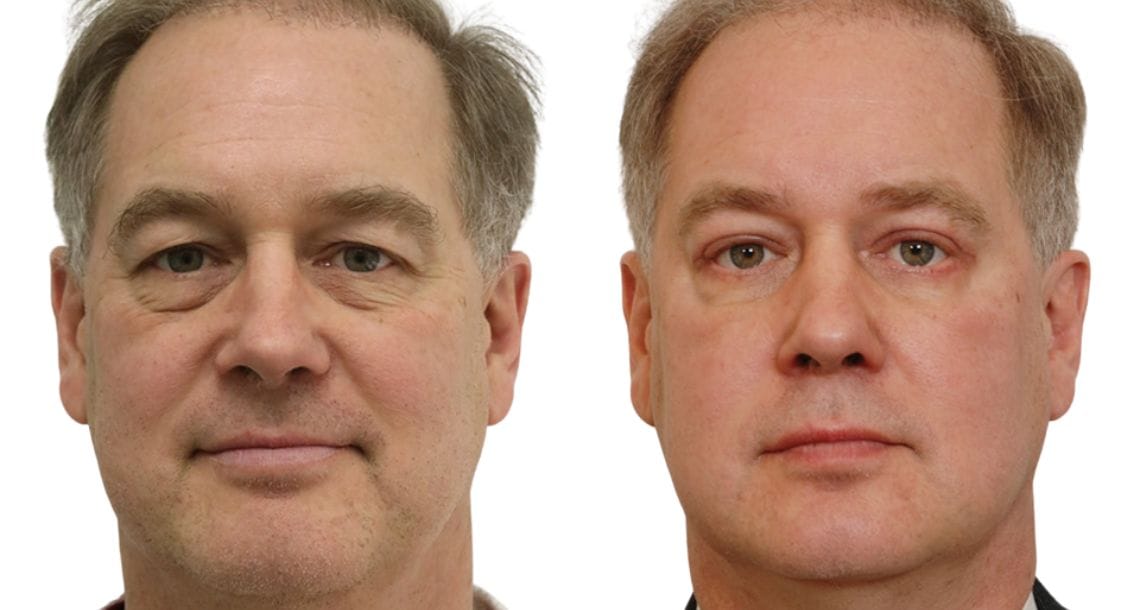
Related Before and After Results at Vivid Clinic
The photos below show real Vivid Clinic patients who had eyelid surgery — a related procedure, not brow lift itself — shared with their consent to show how our Istanbul team documents results. Ask during your free consultation to see cases that match your own treatment. Individual results vary. Browse the full Before & After Gallery.

Frequently Asked Questions
Does a non-surgical brow lift actually work?
Yes, within limits. Published studies measure average elevation of roughly one to two millimeters from botulinum toxin, hyaluronic acid filler or microfocused ultrasound. That reshapes the arch and opens the eye area, but will not lift heavy skin off the lashes — and every result is temporary.
How much does a botulinum toxin brow lift raise the brow?
It depends which muscles are injected. Treating the outer orbicularis oculi lifts the brow tail most — one review cites 4.8 mm laterally against 1 mm centrally, while a recent cohort injecting the glabella recorded 1.35 mm. Onset is about two days; the effect lasts three to four months.
What is a gliding brow lift, and how does it differ from an endoscopic one?
Both work through small hidden incisions, but in different planes. An endoscopic lift dissects under the periosteum against the bone, using a camera through five incisions behind the hairline. A gliding lift dissects in the subcutaneous plane through two 3 mm incisions per side, held by a temporary suture net. Reported elevation is comparable.
How long is recovery after an endoscopic brow lift?
Most people are presentable and back to routine activity in 10 to 14 days. Dressings come off on day one, swelling peaks around days two to three, sutures come out between days seven and eleven, and vigorous exercise waits about two weeks. The final result is assessed between three and twelve months.
Is it normal for one eyebrow to be higher than the other?
Yes — in almost everyone. Surgeons document brow asymmetry routinely because they expect to find it. Most of it comes from habitual muscle use, small differences in eyelid position, or uneven aging of the outer brow. Asymmetry that is new, sudden or worsening needs a medical opinion, not an aesthetic one.
What are the risks of brow lift surgery?
Reported complications include forehead numbness in around 5.5% of cases, hair loss near the incisions in about 2.8%, and brow asymmetry in about 1.7%. Dissatisfaction is recorded at around 7.4%. Facial nerve weakness occurs in under 1% of endoscopic and open procedures.
Not sure whether your brow, your eyelids or neither is the problem? Send photographs for a free online assessment and get a straight answer about what would and would not change — including when the honest answer is that a few millimeters is not worth an operation. Our blepharoplasty before-and-after results beat a stock photograph.