
 ChatGPT

Medically reviewed by Prof. Dr. Özgür Pilancı, Plastic, Reconstructive & Aesthetic Surgeon — August 2026
Quick answer (updated August 2026): A recessed chin — a chin that sits noticeably behind the lower lip in profile — is almost always a skeletal trait, not a fat or weight problem. That is why exercises, chewing gum and “mewing” do not fix it. What does: hyaluronic acid filler for mild cases (temporary), a chin implant or sliding genioplasty for definitive change, and orthodontic or jaw surgery when the whole lower jaw sits back and affects the bite or breathing. The first step is working out which of those three situations is yours — a two-minute profile assessment answers most of it.

What a recessed chin actually is
“Recessed chin,” “receding chin,” “weak chin” and “no chin” all describe the same picture: in profile, the chin sits behind the lower lip, the jawline runs a short, shallow course toward the neck, and the area under the chin drapes soft instead of taut. There is no single medical term for it, because it is not a single thing. It helps to separate two anatomical situations that look similar from the outside.
The first is a small or set-back chin on a normal jaw — surgeons call the bony chin point the mentum, and an underprojected one microgenia. Teeth meet normally; only the chin point lacks forward projection. This is by far the more common version, and it is the one cosmetic chin surgery addresses.
The second is a recessed lower jaw — the entire mandible sits further back than the upper jaw. Cleveland Clinic calls this retrognathia and classifies it as a bite problem (malocclusion), not just an appearance trait: the chin looks recessed because the whole bone carrying it is recessed. The distinction matters because the fixes are completely different, and because a recessed mandible can come with problems that deserve a doctor before a cosmetic clinic — more on that below.
Either way, the underlying cause is architecture. A weak jawline in a slim, healthy 25-year-old is not a fitness failure, and searches like “bad jawline” are mostly people looking at ordinary skeletal variation through an unforgiving front camera.
Recessed chin vs normal: how to tell in the mirror
There is no universal “correct” chin, but surgeons do use simple reference lines, and you can approximate one at home. Take a relaxed profile photo — phone at ear height, eyes level, jaw unclenched. Now imagine a vertical line dropped from the front of your lower lip. An average chin reaches close to that line; a recessed chin sits visibly behind it, often by several millimeters. In a balanced profile the chin also roughly keeps company with the forehead and nose — which is why a strong nose so often reads larger above a recessed chin than it measures.
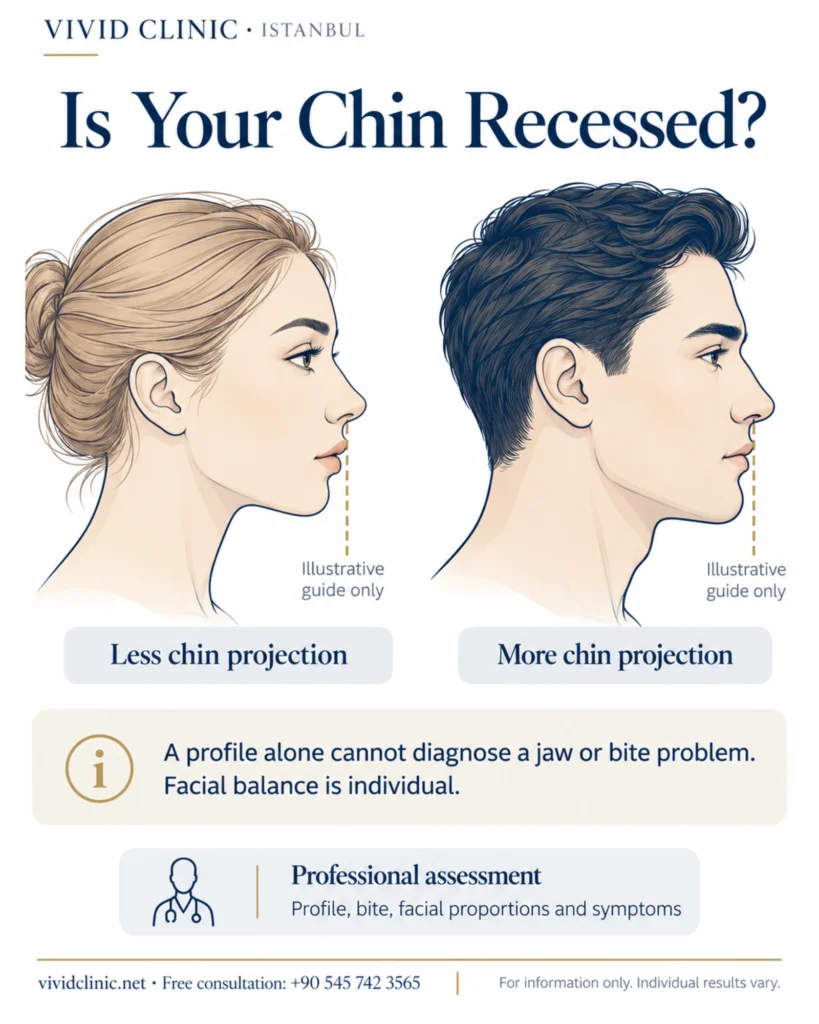
Three quick checks add context. First, look at old photographs: a chin that has looked the same since your late teens is inherited anatomy, not something that developed. Second, press your tongue to the floor of your mouth and swallow — if your chin muscle dimples and strains (a “golf ball” chin), the muscle is working overtime to seal lips over a set-back chin, a classic sign. Third, check your bite in the mirror: if your upper front teeth sit far ahead of the lowers, the jaw itself may be the story.
A note on the phrase “recessed chin vs normal”: recessed is normal, in the statistical sense. Chin projection sits on a spectrum, and mild recession is one of the most common facial traits there is. The question is never whether your chin matches a template — it is whether the proportion bothers you, and whether anything functional rides along with it.
What causes a receding chin or jawline

Genetics does most of the work. Chin projection, jaw length and jaw angle are strongly inherited, which is why a weak chin runs in families and is usually visible by the teenage years. A handful of congenital conditions — Pierre Robin sequence, Treacher Collins syndrome, hemifacial microsomia — involve underdevelopment of the jaw and are typically identified in childhood (Cleveland Clinic).
Growth and childhood habits shape the rest. How the jaws grow relative to each other decides the adult bite. Prolonged thumb-sucking and similar habits are associated with jaw position changes; orthodontists assess and, in growing children, can guide jaw growth with appliances — one reason early orthodontic assessment exists.
Injury can do it later. A jaw fracture that heals short, or surgery involving the mandible, can pull the chin back — Cleveland Clinic lists facial trauma among acquired causes of retrognathia.
Age blurs what bone you have. From mid-life, the jawbone gradually loses volume, skin loses elasticity, and descending soft tissue forms jowls that interrupt the jawline. This is why people say their jawline “disappeared” in their 50s: the chin did not move, but the frame around it softened. That version of a weak jawline is a skin-and-soft-tissue problem, and it is the one a neck lift or lower-face lift addresses — not a chin implant.
Weight sits on top. Submental fat can round off the chin-neck angle at any age, and it stacks with a recessed chin: less bony projection means less scaffolding holding soft tissue forward, so even modest fullness erases the jawline. This overlap is covered in depth in our double chin guide.
When a recessed jaw is a medical matter, not a cosmetic one
Most recessed chins need no treatment at all. But a genuinely recessed lower jaw can narrow the airway behind the tongue, and retrognathia is a recognized anatomical risk factor for obstructive sleep apnea (Cleveland Clinic). If your set-back jaw comes with loud snoring, gasping at night, unrefreshing sleep or daytime sleepiness, the right first appointment is a doctor or sleep clinic — not an aesthetic consultation. Effective treatments exist, from CPAP to mandibular advancement devices to, in selected cases, jaw-advancement surgery that treats the airway and the profile at once.

The same logic applies to bite problems. Difficulty biting or chewing, jaw joint pain, or upper teeth that land far ahead of the lowers point toward an orthodontist or oral-maxillofacial surgeon. In adults, significant retrognathia is corrected with orthognathic (corrective jaw) surgery, usually coordinated with orthodontics — a functional operation with a cosmetic bonus, rather than the reverse. A cosmetic chin implant placed on top of an untreated bite problem fixes the silhouette while leaving the mechanics alone, which is sometimes a reasonable choice — but it should be a choice, made knowing the difference.
What doesn’t work: mewing, gum and jawline gadgets
The internet’s favorite fixes for a weak jawline are exercises, and the evidence for them is close to zero. Mewing — holding the tongue against the palate to “restructure” the jaw — has no research showing it changes adult bone. The American Association of Orthodontists states plainly that there is no current research suggesting the technique benefits your jawline, and warns it can actually move teeth in unhelpful ways, creating bite and speech problems that need orthodontic repair later. Adult facial bones do not remodel because a muscle presses on them; if they did, orthodontists would not need titanium plates.
Chewing gum and silicone jaw trainers bulk the masseter — the chewing muscle at the back corner of the jaw. At best you get a slightly wider jaw angle and a tired TMJ; the chin, which is bone, stays exactly where it was. Weight loss sharpens a jawline blurred by fat, and it is worth doing for a hundred other reasons — but it cannot add a millimeter of projection, which is why “skinny with no jawline” is such a common search.
Posture is the one honest entry on the list: a forward-slumped head compresses the chin-neck area and makes any jawline look weaker. Lengthening the back of your neck improves how the area photographs immediately. It changes appearance, not anatomy — but it is free.
Non-surgical fixes: chin filler and skin tightening
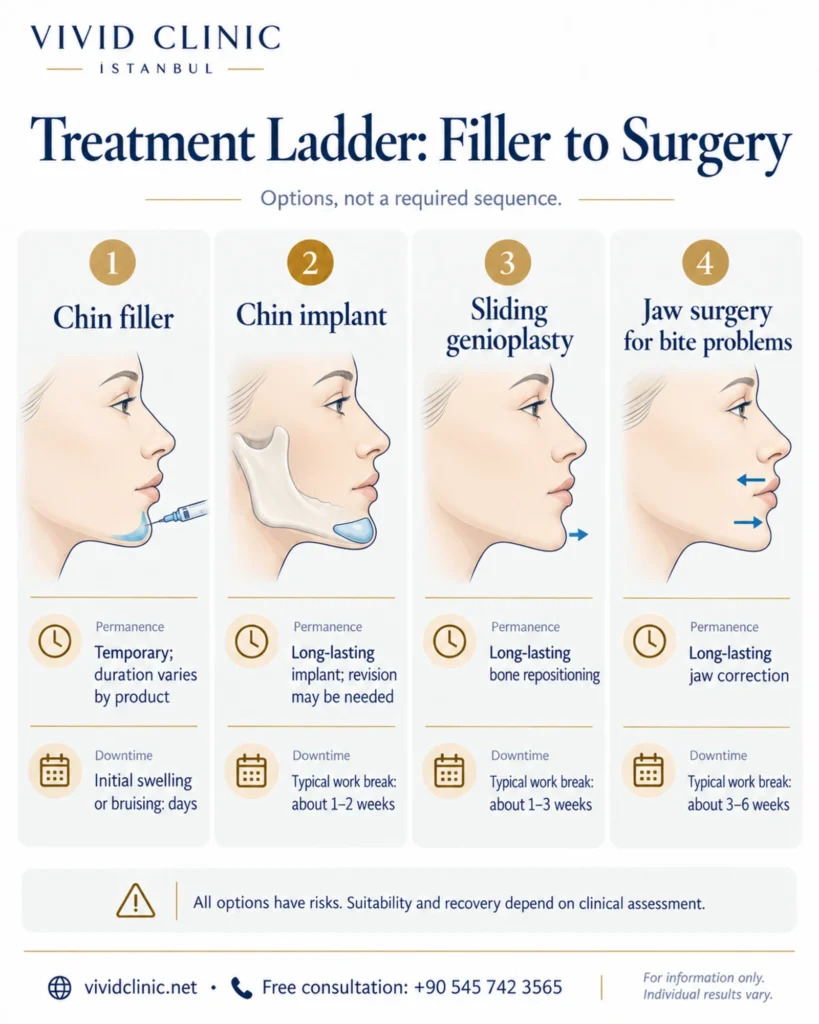

For mild recession, hyaluronic acid filler is the standard non-surgical option. Injected onto the chin point and along the jawline, it can add forward projection, square a jaw angle and smooth the transition into the neck — in the right face, a few milliliters visibly rebalances a profile in one appointment.
The honest limits: results are temporary (commonly around 9–18 months, product- and patient-dependent), volume is capped — a significantly recessed chin cannot be built out of gel without looking heavy — and technique matters, because the chin and pre-jowl area have their own vascular anatomy. Use a qualified medical injector, hyaluronic acid only (reversible with hyaluronidase), never permanent filler.
For the aging version of a weak jawline — good chin, blurred frame — energy-based skin tightening (radiofrequency, microfocused ultrasound) can modestly firm early jowl laxity, and platysmal Botox can soften downward neck pull. Modest is the operative word: none of these lift genuinely loose skin, and none of them add bone. When laxity is the dominant problem, the durable answer is surgical — a neck lift or lower facelift.
Surgery: chin implant vs sliding genioplasty
Two operations move a chin forward for good, and they solve the same problem by different routes.


A chin implant (alloplastic augmentation) places a shaped, solid silicone implant over the bone of the chin point, through a small incision under the chin or inside the lower lip. It typically takes under an hour, is often done as a day case, and recovery is short — most people are presentable within one to two weeks, with a firm, swollen chin settling over several more.
The American Society of Plastic Surgeons lists an average surgeon’s fee of $3,641 for chin augmentation (plasticsurgery.org, checked August 2026) — surgeon’s fee only, excluding anesthesia, facility and related costs. Risks are those of any implant: infection, shifting, and rarely long-term pressure effects on the bone, plus temporary numbness of the lower lip.
A sliding genioplasty cuts the chin segment of the jawbone through an incision inside the lower lip, slides it forward (or down, sideways, or shorter — it is the more versatile operation), and fixes it with small plates and screws. Cleveland Clinic describes general anesthesia, a soft diet for the first days, visible swelling for up to two weeks, and return to normal activity around 7–10 days, with nerve-related tingling or numbness of the chin and lower lip the risk patients hear most about — usually temporary.
Because it moves your own bone, there is no implant to shift or get infected, and larger or asymmetric corrections are possible. Neither operation changes your bite; that remains orthognathic territory.
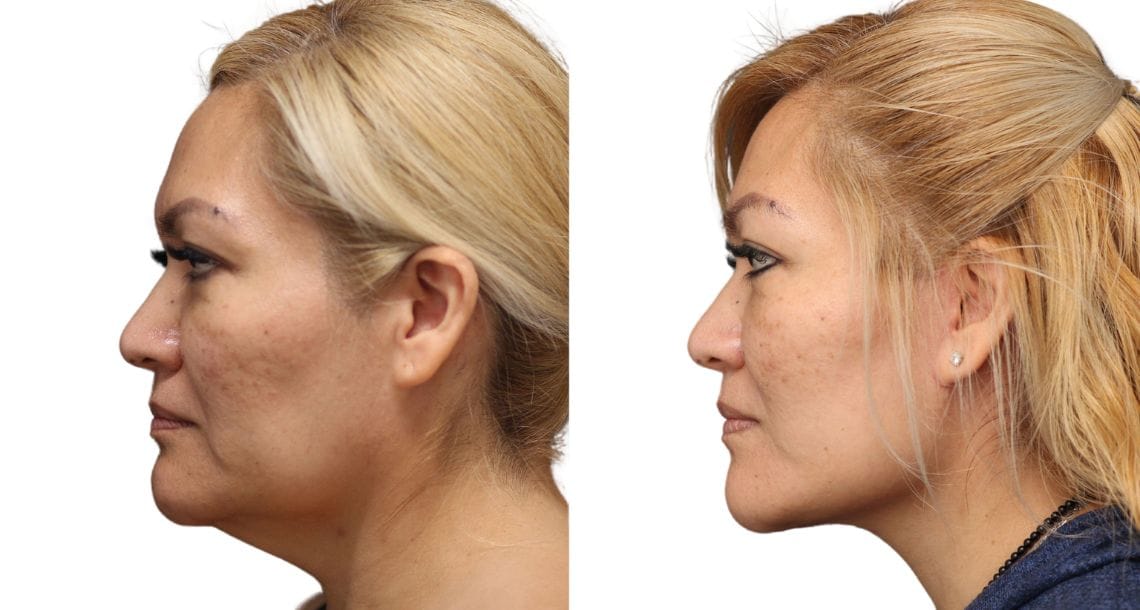
Which one? Broadly: implant for straightforward mild-to-moderate forward projection; genioplasty for bigger moves, vertical changes or asymmetry. Surgeons often pair either with submental liposuction or a neck lift in the same session, because sharpening the chin-neck angle from above and below at once is where side profiles change most dramatically. What to look for in results is a natural transition — judge any surgeon’s before-and-after gallery on matched-angle profile pairs, not front-on smiles.
Your profile is a system, not a chin

The most useful idea in modern facial surgery planning is that profiles are read as relationships: forehead to nose, nose to lips, lips to chin, chin to neck. Change one element and every neighbor reads differently. A modest nose can look prominent above a recessed chin — which is why a proportion of rhinoplasty consultations end with a discussion about the chin, and why some patients get a better result from addressing both than from over-reducing the nose.
This assessment approach — sometimes called facial balancing — is the frame in which a chin decision belongs: not “is my chin too small?” but “what combination of changes, if any, brings this profile into balance with the least intervention?”
Any consultation for a recessed chin should therefore look at your whole profile, your bite, your airway history and your soft tissue — and should be willing to conclude that the right amount of surgery is none.
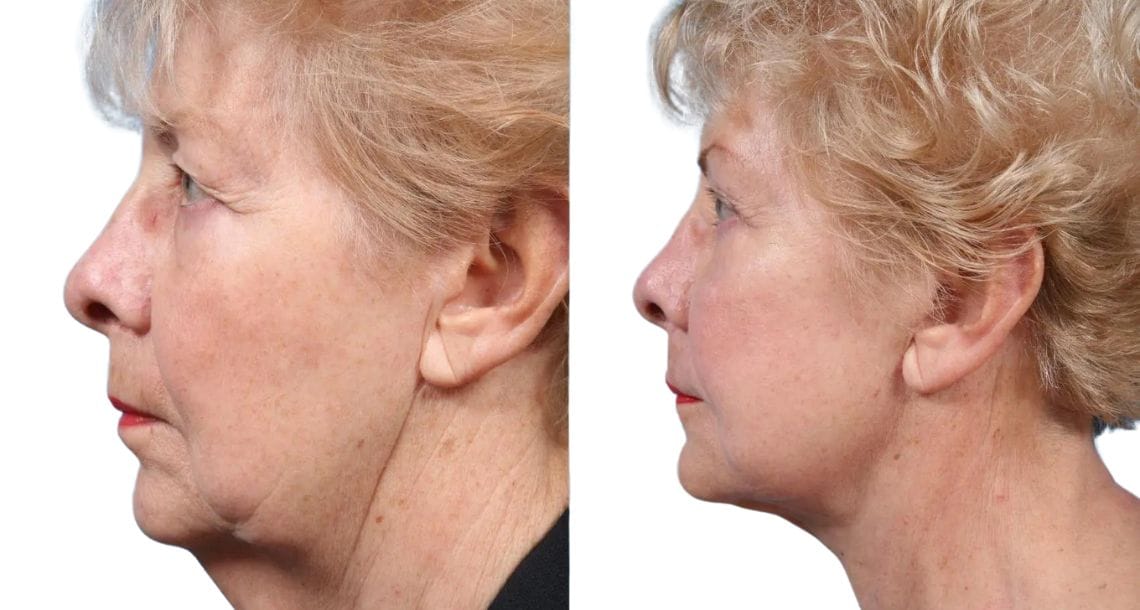
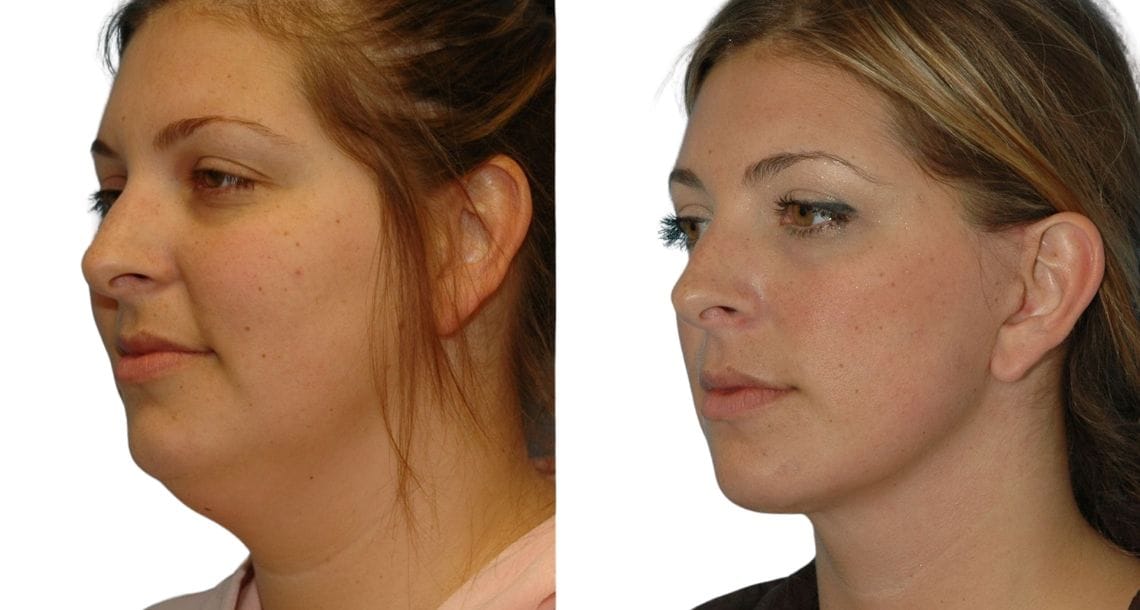
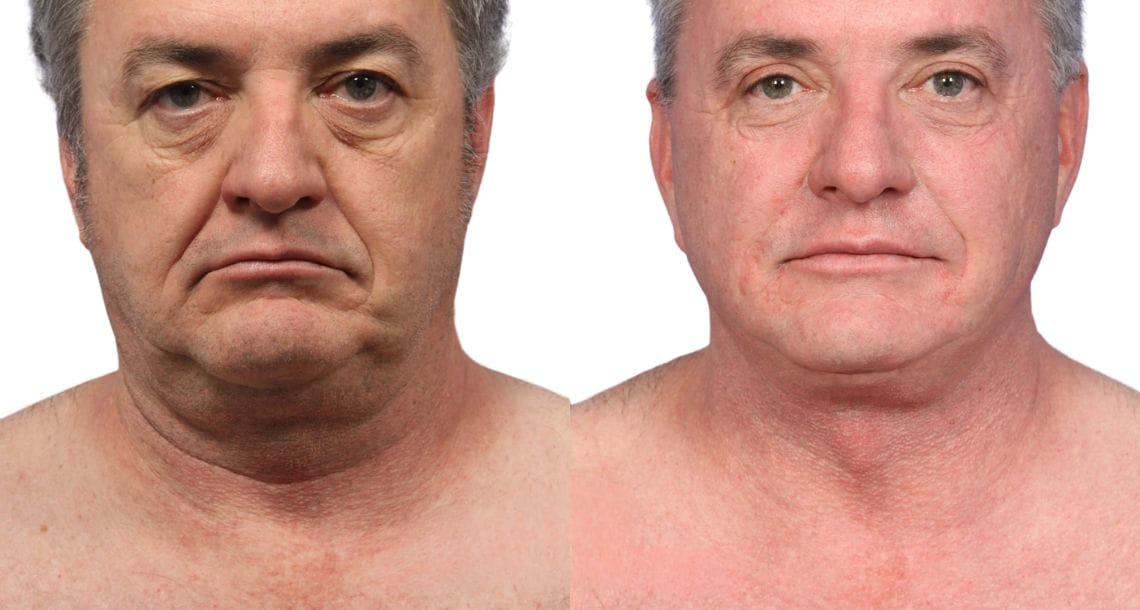
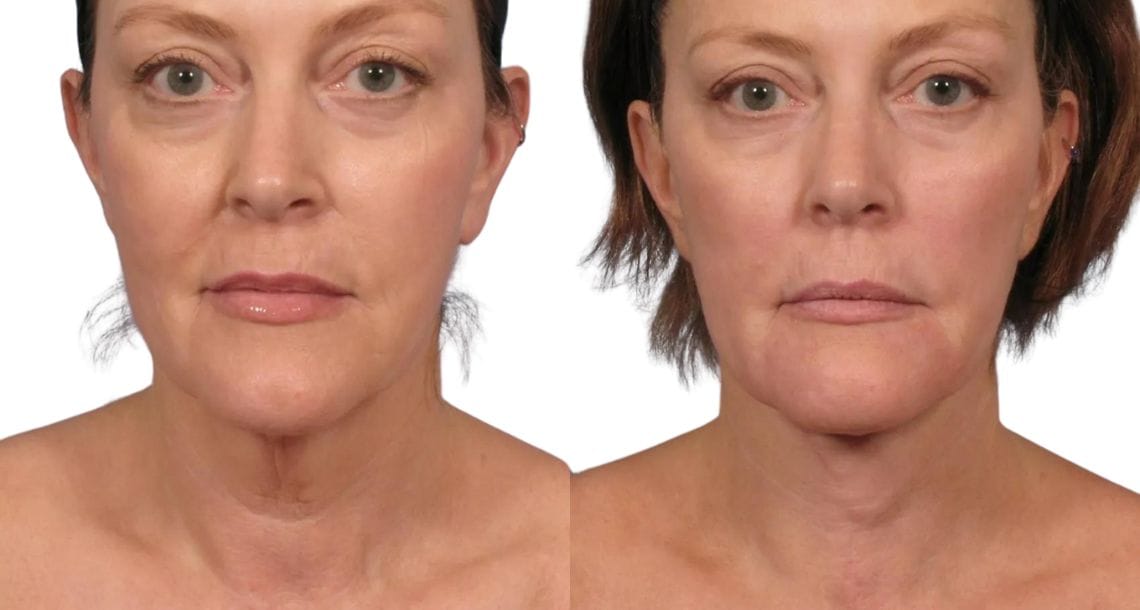
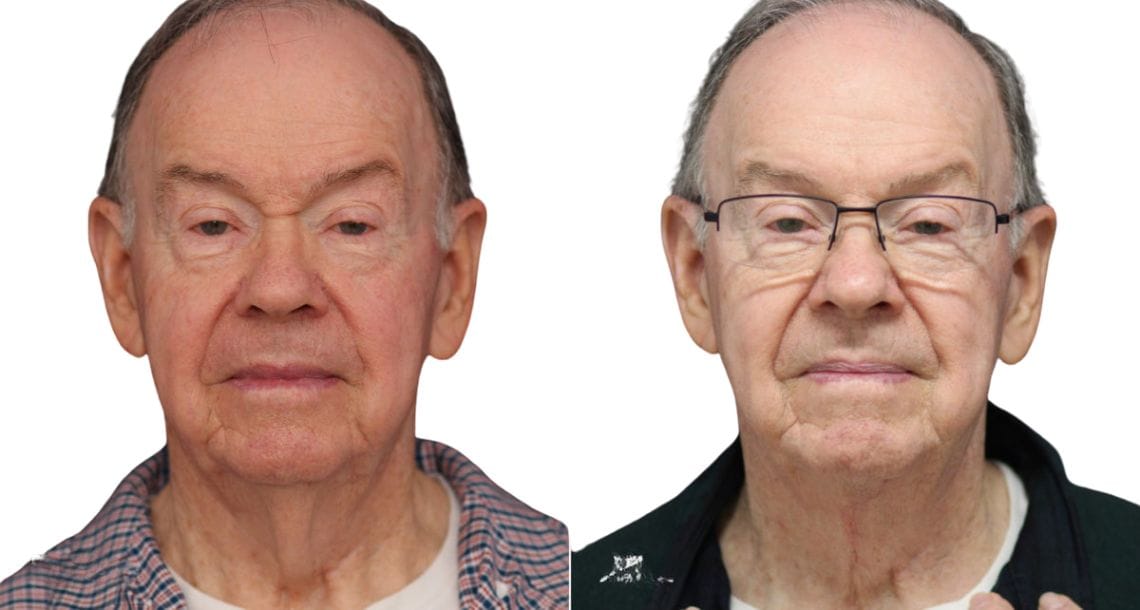
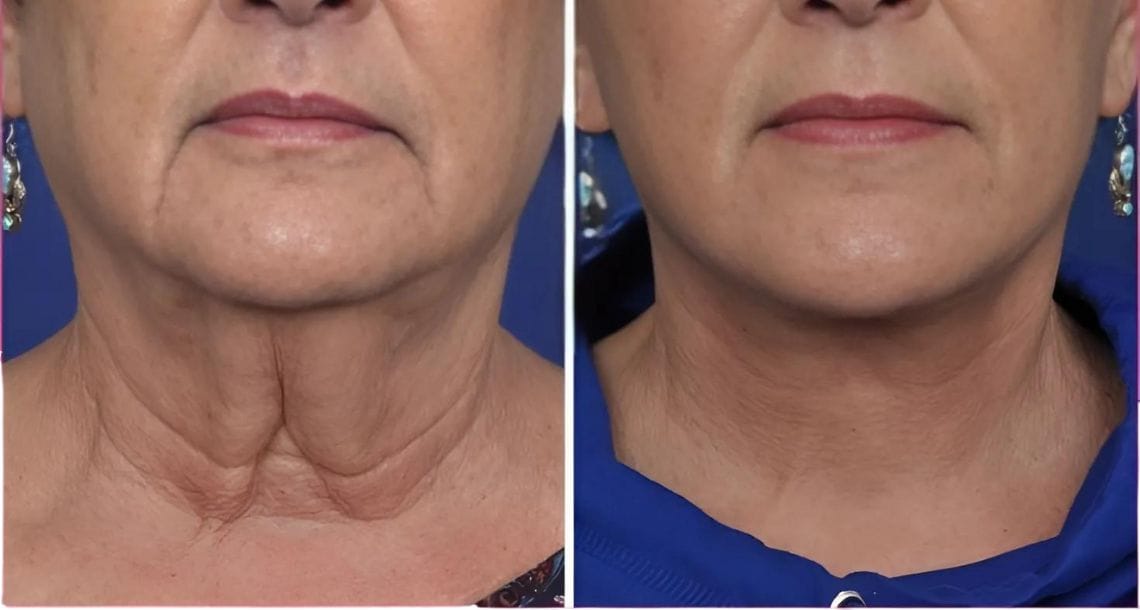
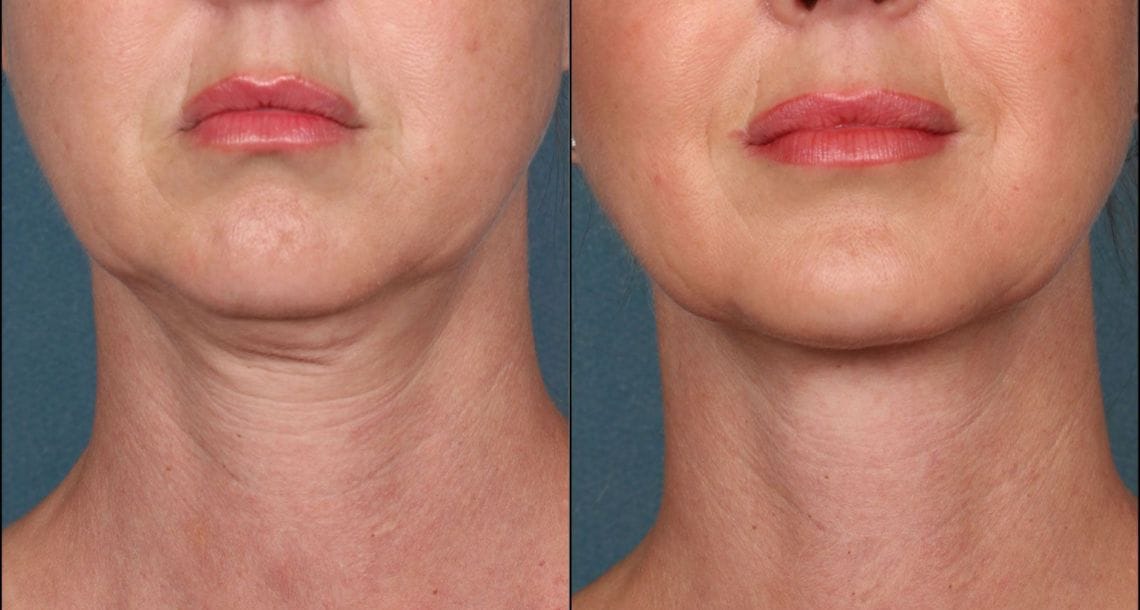
Jawline and Neck Before & After Results at Vivid Clinic
Frequently Asked Questions
Is a recessed chin normal?
Yes. Chin projection is a spectrum and mild recession is one of the most common facial traits, present in every population. It needs treatment only if it bothers you, or if it comes with bite problems or sleep-disordered breathing — in which case see a doctor or orthodontist first, because those are functional issues, not cosmetic ones.
How do I fix a recessed chin without surgery?
Hyaluronic acid chin filler is the only non-surgical option that genuinely adds projection, and it suits mild cases — results typically last around a year. Posture work improves how your jawline photographs. Exercises, mewing, gum and jaw trainers do not move the chin, because the chin is bone.
Does mewing fix a receding jawline?
No. There is no research showing tongue posture reshapes adult jawbone, and the American Association of Orthodontists warns that mewing can push teeth out of alignment and create bite and speech problems. Money spent on mewing courses is better spent on an orthodontic assessment.
Is a recessed chin genetic?
Mostly, yes. Jaw size, chin projection and jaw angle are strongly inherited, and a set-back chin usually shows by the teenage years. Congenital conditions such as Pierre Robin sequence involve jaw underdevelopment; injury and jaw fractures can cause recession later in life.
Can a recessed chin cause sleep apnea?
A recessed lower jaw (retrognathia) is a recognized risk factor for obstructive sleep apnea, because it narrows the airway behind the tongue. If you snore heavily, wake unrefreshed or gasp at night, get a sleep assessment before any cosmetic treatment — jaw position may be a medical matter for you, not an aesthetic one.
How much does recessed chin surgery cost?
As a third-party benchmark, the American Society of Plastic Surgeons lists an average surgeon’s fee of $3,641 for chin augmentation — excluding anesthesia, facility fees and related costs, which add substantially in Western markets. Sliding genioplasty is usually costlier than an implant. Vivid Clinic pricing is confirmed at consultation after a photo assessment, because the right quote depends on whether your case needs filler, an implant, a genioplasty, or nothing.
Not sure whether yours is a chin problem, a jaw problem, or just an unflattering camera angle? That question decides everything, and it takes a profile photo and a trained eye to answer. Send photographs for a free online assessment and get a straight answer about what — if anything — would meaningfully change your side profile.