
 ChatGPT

Medically reviewed by Prof. Dr. Özgür Pilancı, Plastic, Reconstructive & Aesthetic Surgeon — August 2026
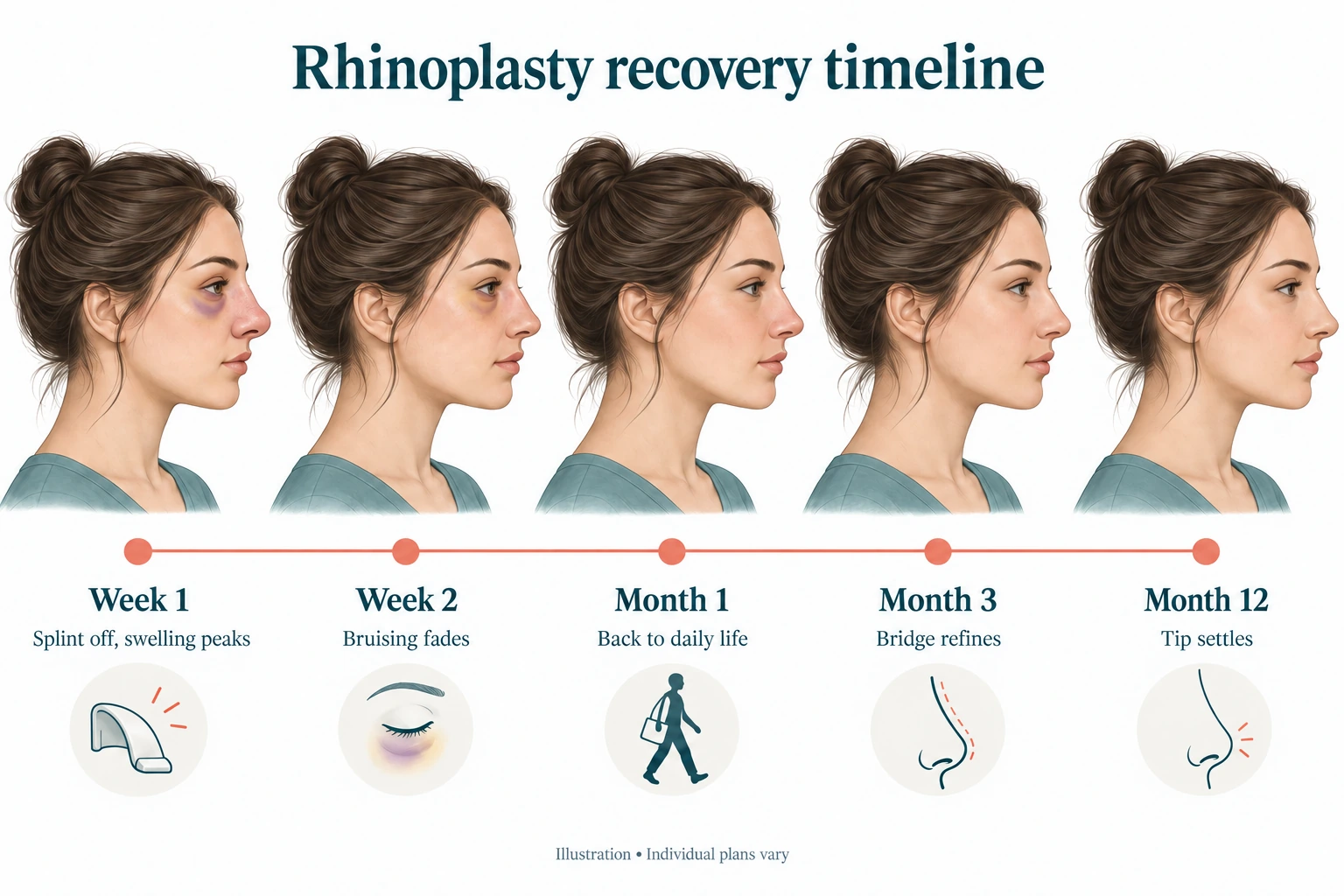
Quick answer (updated August 2026): Most people are presentable about two weeks after rhinoplasty surgery and back to normal life well before a month. The cast comes off at around one week, bruising has usually faded by two weeks, and the obvious swelling settles over two to three months. The nose keeps refining after that: the American Society of Plastic Surgeons notes that while initial swelling subsides within a few weeks, it can take up to a year for the new nasal contour to fully refine. The tip is always last. Everything below follows that arc — but your own surgeon’s instructions override every general figure on this page.
Why recovery takes longer than people expect
Rhinoplasty is a small operation with a long tail. The bone and cartilage work is finished on the day; what takes months is the soft tissue draping back down over a changed framework.
Swelling does not leave the nose evenly. It drains from the upper bridge first, where the skin is thin, and last from the tip and supratip, where the skin is thickest and most sebaceous. That is why the profile looks good relatively early while the tip still feels bulky — and why patients with thick skin wait considerably longer than patients with thin skin for the same operation.
None of this is a complication. It is the normal timetable, and knowing it in advance is the single best defence against the panic that tends to hit somewhere around week six.
Day 0: the day of surgery

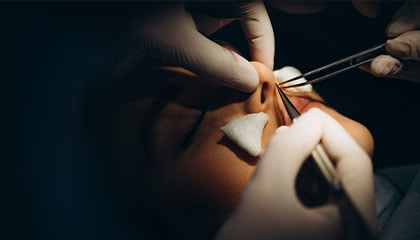
Rhinoplasty surgery usually takes two to four hours under general anaesthesia. You wake with an external splint or rhinoplasty cast taped over the bridge, sometimes with internal splints inside the nostrils, and occasionally with light packing. Most practices have moved away from traditional packing towards soft internal splints with breathing channels, which are far more comfortable to remove.
Expect a blocked nose, some ooze from the nostrils onto a small gauze dressing, a dry mouth from breathing through it, and a dull ache rather than sharp pain. Most patients need paracetamol-level pain relief rather than anything stronger. You will usually stay one night.
Sleep with your head elevated — two pillows, or a wedge — starting tonight and continuing for the first couple of weeks. It does more to limit swelling than anything else you can control.
Days 1–7: the first week
This is the least comfortable stretch, and it is mostly about congestion rather than pain. Bruising around the eyes appears within the first day or two, peaks around days two to three, and starts to fade after that. How much bruising you get depends heavily on whether bone work was done: osteotomies mean more bruising, tip-only work often means very little.
What to do this week: rest with your head up, use cold compresses around the eyes (not pressing on the nose), keep the cast completely dry, use saline spray if your surgeon has advised it, and eat soft food if chewing feels uncomfortable.
What not to do: blow your nose, bend forward, lift anything heavy, take ibuprofen or aspirin unless your surgeon has cleared it, smoke, or drink alcohol. Sneeze with your mouth open.

Week 1: the cast comes off
The rhinoplasty cast and any internal splints are removed at around seven days. This is the moment patients build up in their heads, and it is worth setting expectations properly: the nose underneath will be swollen, shiny, numb and upturned, and it will not look like the result. Almost everyone is slightly deflated at cast removal. That reaction is so predictable it should be considered part of the timeline.
Many surgeons then start a period of rhinoplasty tape — nightly taping across the bridge and over the tip for several weeks — to help control swelling and encourage the skin to redrape. Follow your surgeon’s specific regimen; the technique and duration vary between practices and there is no single correct protocol.
Weeks 2–4

By two weeks, bruising is generally gone or easily covered with makeup, and most people are comfortable in public and back at a desk job. Numbness across the tip is normal and can persist for months.
Breathing is often worse than before surgery at this stage because of internal swelling, and it improves gradually. This surprises people who had the operation partly to breathe better; it is expected, not a failure.
Exercise: light walking early on, with gentle cardiovascular exercise usually permitted around two to four weeks and contact sport or anything risking a knock to the nose deferred for considerably longer — commonly six weeks or more. Glasses are the other restriction: they should not rest on the bridge while the bones are healing, so tape them to the forehead or switch to contact lenses for the period your surgeon specifies.
Sun protection matters more than most patients realise. Healing nasal skin pigments easily, and a sunburn on a recently operated nose can leave discolouration that lasts a long time.
Months 2–3
Most of the visible swelling is gone by the end of month three. Friends who did not know about the surgery generally stop noticing anything. The bridge looks settled, the profile is close to its final line, and the tip is the obvious remaining work in progress — still slightly firm, slightly wide, and often slightly over-rotated.
Sensation returns gradually. Odd sensations — tingling, itching, a rubbery feeling in the tip — are all normal parts of nerve recovery.

Months 4–12: the tip finishes
This is the phase nobody warns patients about, and it is where the query "1 year rhinoplasty swelling stages" comes from. The change in this period is real but slow enough to be invisible day to day: the tip continues to define, residual supratip fullness resolves, and asymmetries that looked alarming at month two typically soften.
Two patterns are worth knowing:
- Morning puffiness. The nose is usually more swollen on waking and settles during the day. This can continue for the best part of a year and is not a sign of anything wrong.
- Thick skin takes longer. Sebaceous, thick nasal skin can hold swelling well past twelve months — eighteen months is not unusual — and the final degree of definition is lower than in thin skin regardless of technique.
The commonly quoted endpoint of twelve months for the final contour is a reasonable planning figure, and it is also the earliest most surgeons will discuss revision.

Swelling, or a problem? How to tell
Most things that worry patients in the first months are swelling. A few are not.
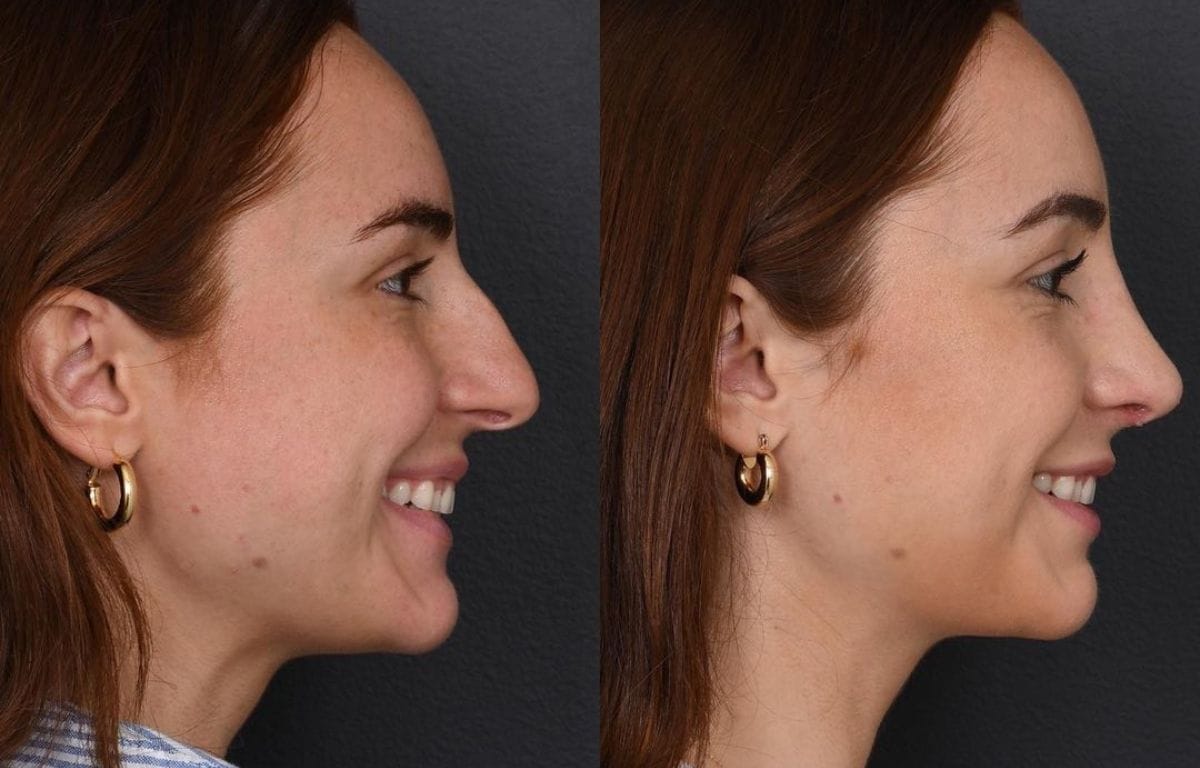
Uneven nostrils after rhinoplasty is the most common early alarm. Asymmetric swelling is normal and extremely common in the first months, and most apparent nostril asymmetry improves substantially as it resolves. It is also worth knowing that a majority of people had some degree of nostril asymmetry before surgery and simply never examined their nose that closely — comparing your pre-operative photographs is often the fastest reassurance. Genuine structural asymmetry does occur, but it is assessed at twelve months, not at two.
The same applies to a small bump, a slightly crooked line, or a tip that looks too upturned. Tips settle downward as swelling resolves; early over-rotation is expected.
Contact your clinic promptly if you have: a fever, spreading redness or increasing pain after the first few days, heavy or persistent bleeding, a sudden change in vision, severe or worsening headache, foul-smelling discharge, or a nose that becomes suddenly and painfully swollen. These are the things worth a phone call rather than a forum search.
Flying home after surgery abroad
If you have travelled for surgery, the usual pattern is to fly home after the cast is removed, around 7 to 10 days, with your surgeon’s clearance. Flying earlier is uncomfortable and carries the added blood-clot risk of combining recent surgery with long-haul travel — the reason the NHS advises resting rather than travelling in the days straight after an operation. Book flexibly if you can, and make sure you know who to contact once you are home.
What "best rhinoplasty surgeon" actually means
It is one of the most-searched phrases in this field, and it does not have an honest single answer — so here are the criteria that genuinely separate surgeons, rather than a claim about ourselves.
Look for recognised specialist qualifications in plastic surgery or facial plastic surgery and membership of the relevant national body. Ask how many rhinoplasties they perform a year, and how many of your specific type — a surgeon who does a hundred a year has met your anatomy before. Ask to see a large number of before-and-after results at twelve months, not a curated handful at six weeks, and specifically results on noses like yours: similar skin thickness, similar starting structure.
Judge the consultation itself — a surgeon who examines the inside of your nose, discusses your skin thickness, tells you what is not achievable, and offers a smaller operation than you asked for is showing you something a portfolio cannot. And ask about revision policy before you book, not after.
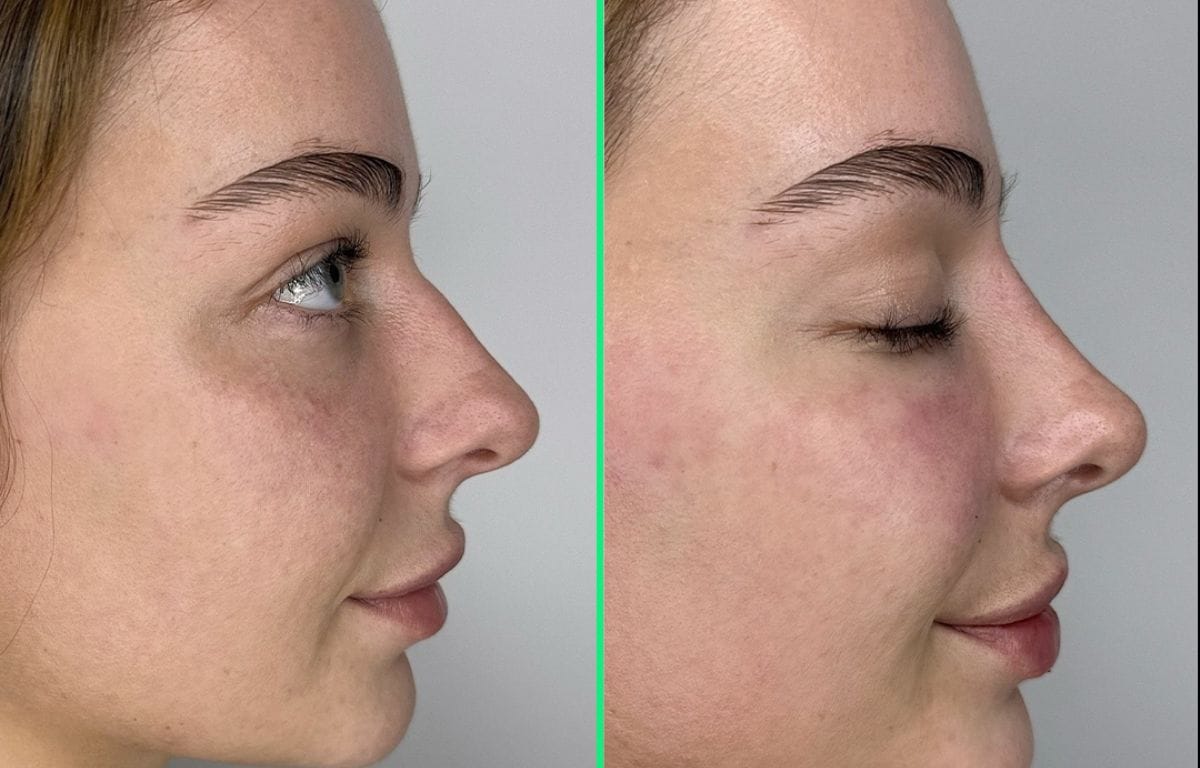
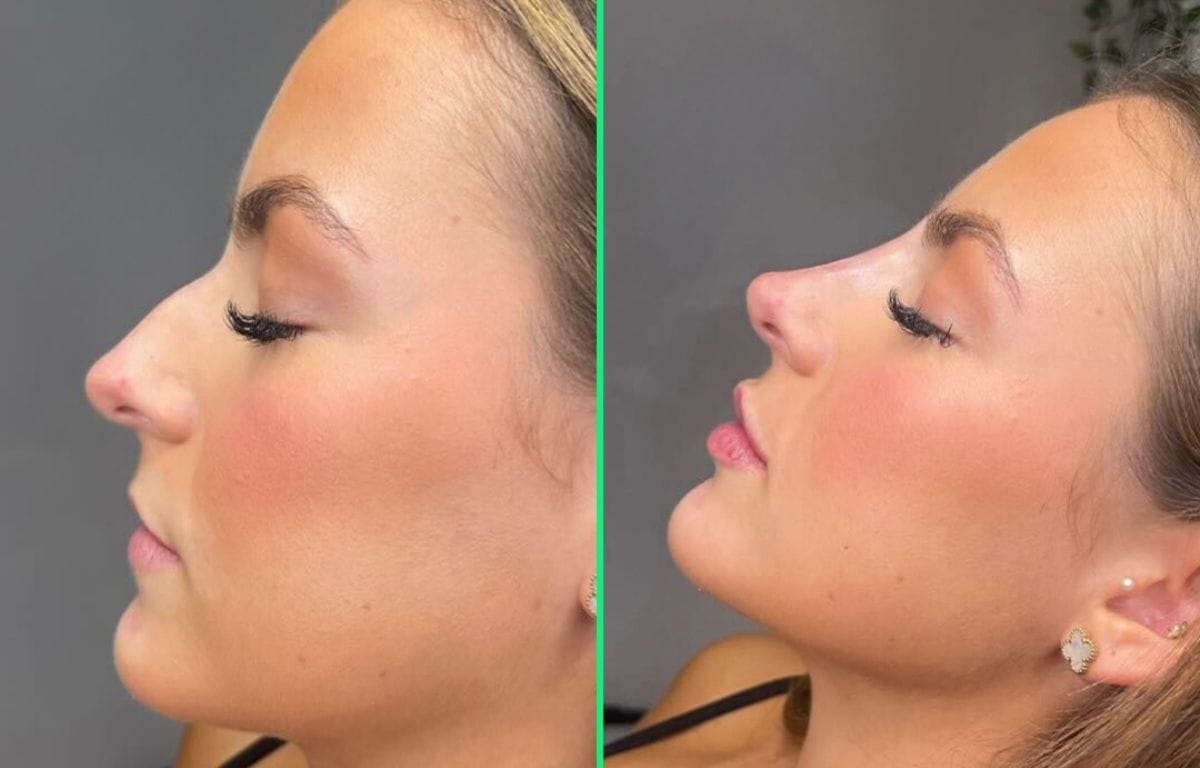
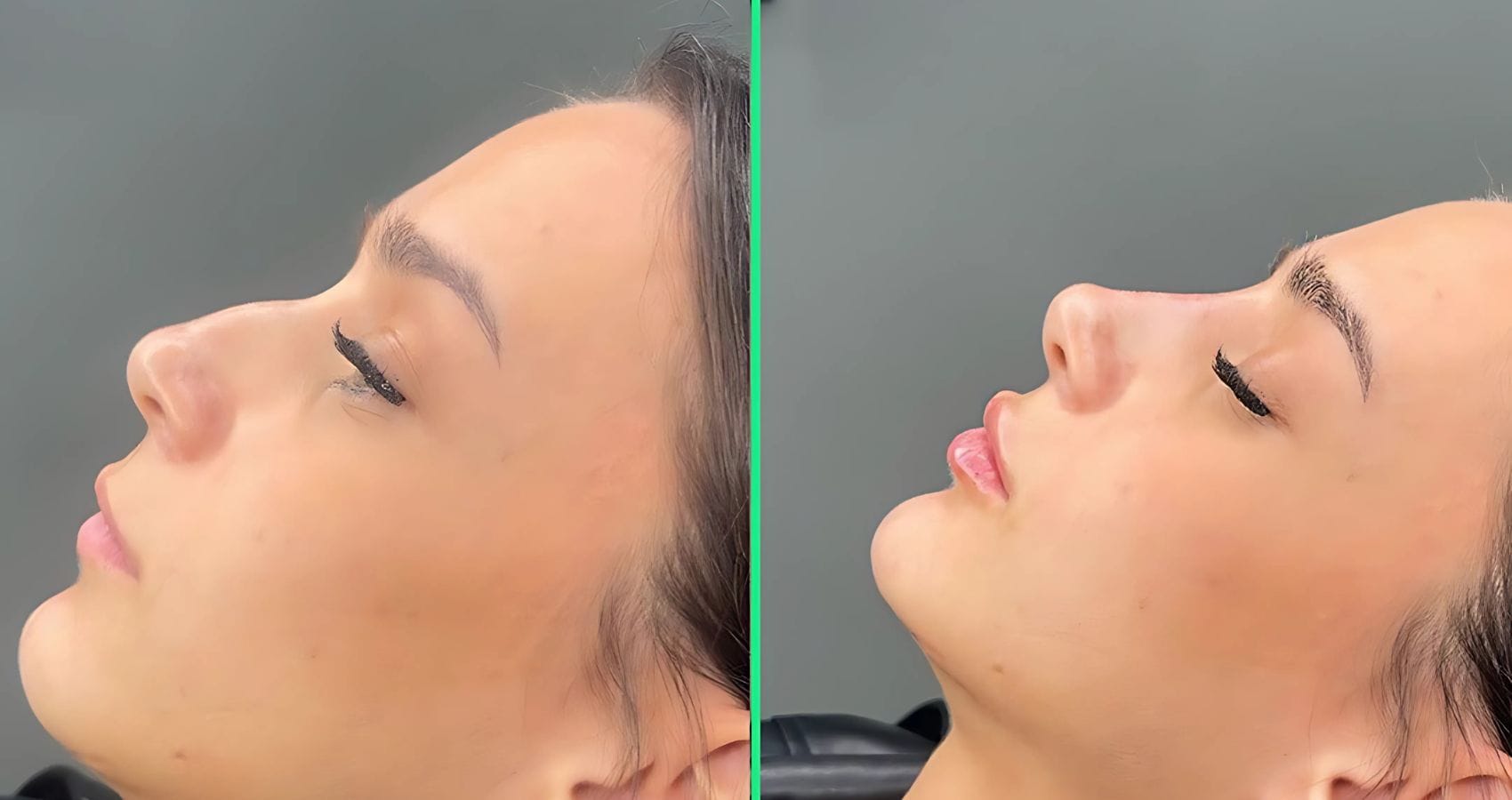
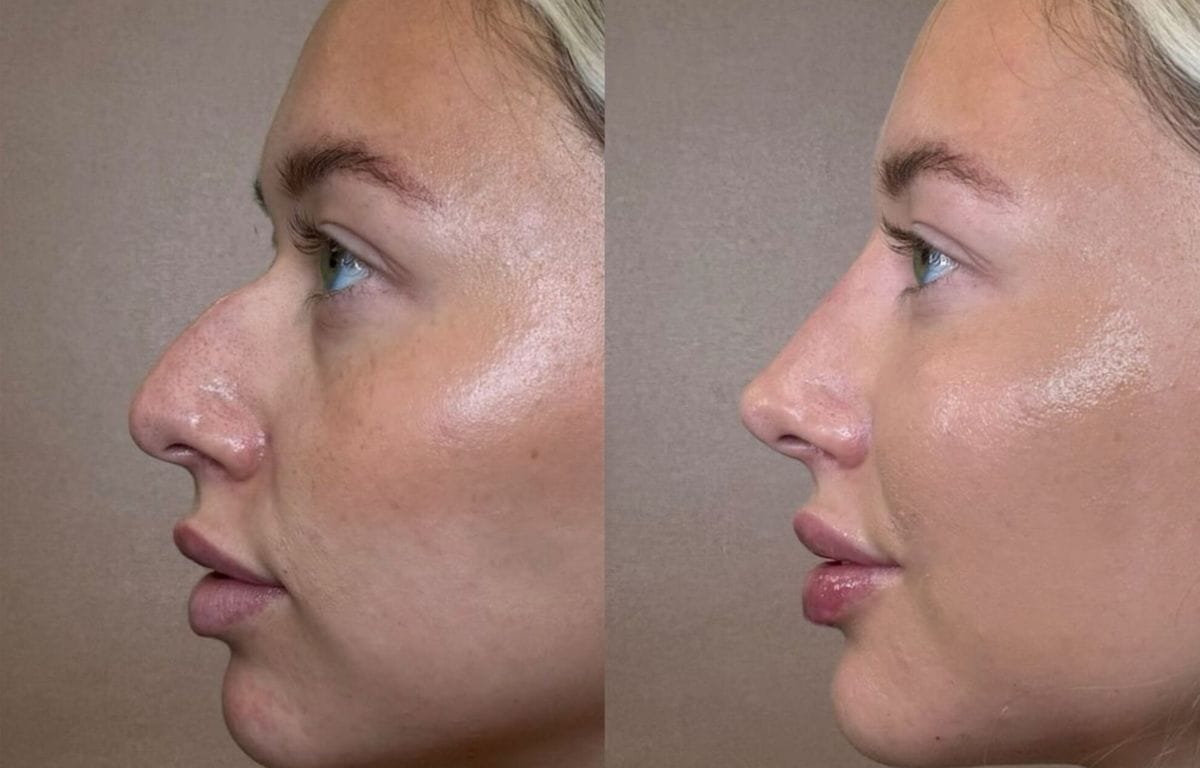
Our own results are in the before-and-after gallery, and our rhinoplasty page sets out how we approach the operation.
Rhinoplasty Before & After Results at Vivid Clinic



Frequently Asked Questions
How long is rhinoplasty recovery?
Most people are socially presentable at about two weeks, back to desk work within one to two weeks, and back to full exercise by around six weeks. The cast comes off at roughly one week and bruising fades over the first fortnight. Visible swelling largely settles over two to three months, but the nose continues to refine well beyond that — the ASPS notes it can take up to a year for the final nasal contour to appear, and thick skin can take longer still.
When does the rhinoplasty cast come off?
The external cast or splint is usually removed about seven days after surgery, along with any internal splints. Expect the nose to look swollen, shiny and upturned at that moment — it is not the result, and nearly every patient finds cast removal underwhelming. Many surgeons then start a taping regimen for several weeks to help control swelling.
Why are my nostrils uneven after rhinoplasty?
Almost always because of asymmetric swelling, which is extremely common in the early months and improves as it resolves. It also helps to check your pre-operative photographs: most people have some natural nostril asymmetry and have simply never looked that closely. True structural asymmetry does happen, but it is judged at twelve months rather than in the first weeks, and assessing it earlier tends to produce unnecessary worry.
How long does rhinoplasty swelling last?
Most obvious swelling resolves within two to three months. Subtle swelling — particularly in the tip and the area just above it — continues to resolve for six to twelve months, and can run past a year in thick, sebaceous skin. Morning puffiness that settles during the day is normal throughout the first year. The nose loses swelling from the bridge first and the tip last, which is why the profile looks finished before the front view does.
When can I exercise after rhinoplasty surgery?
Light walking is encouraged early. Gentle cardiovascular exercise is usually allowed around two to four weeks, and anything with a risk of impact — contact sport, ball sports, martial arts — is typically deferred six weeks or more while the bones consolidate. Heavy lifting and anything that raises blood pressure sharply should be avoided in the first weeks because it increases both swelling and bleeding risk. Follow your surgeon’s specific clearance rather than a general figure.
Do I have to tape my nose after rhinoplasty?
Many surgeons ask patients to tape the nose overnight for several weeks after the cast comes off, to help limit swelling and encourage the skin to redrape over the new framework. Protocols differ between surgeons and there is no single agreed regimen, so follow the instructions you were given rather than one you found online. If taping causes skin irritation, tell your clinic rather than stopping without saying.
When can I judge my final result?
Around twelve months for most people, and longer if your skin is thick. The rough shape is visible at cast removal, the profile settles within a few months, and tip definition emerges last. Twelve months is also the point at which most surgeons will discuss revision, precisely because so much changes between month three and month twelve that earlier assessments are unreliable.
Recovering and unsure whether what you are seeing is normal? Send photographs for a free online assessment and get a straight answer about whether it is swelling, healing, or something worth reviewing.