
 ChatGPT

Medically reviewed by Prof. Dr. Özgür Pilancı, Plastic, Reconstructive & Aesthetic Surgeon — August 2026
Quick answer (updated August 2026): Scandinavian features are best described as shared tendencies in colouring, not a single face type. Scandinavia — Denmark, Norway and Sweden — has one of the world’s highest prevalences of light hair, light eyes and very fair (Fitzpatrick I–II) skin, and researchers link light pigmentation at high latitude to hypotheses about vitamin D synthesis under weak ultraviolet light. But these are population averages, and averages describe distributions, not individuals: variation within any population is larger than the average difference between populations. Modern Nordic populations are diverse and admixed, and ancient-DNA research shows even Viking Age Scandinavia was genetically varied, with ancestry flowing in from across Europe.

Who “Scandinavian” actually describes
Strictly, Scandinavia means three countries: Denmark, Norway and Sweden, tied together by geography and by closely related North Germanic languages. The broader term Nordic adds Finland and Iceland (and the Faroe Islands and Greenland as autonomous territories).
The distinction matters more than it looks. Finnish is not a Scandinavian language at all — it belongs to the Uralic family, unrelated to Danish, Norwegian and Swedish — which is a concrete, everyday reminder that the region’s history is one of different peoples meeting and mixing rather than a single uniform stock. Northern Scandinavia is also the home of the Sámi, the indigenous people of the region, with their own languages and culture (more on them below).
One thing should be said plainly at the start, because it governs everything that follows: population averages describe distributions, not individuals. When researchers measure any feature — hair colour, eye colour, skin phototype, face shape — across populations, they find overlapping curves, and the variation within any population is greater than the average difference between populations. There are dark-haired, brown-eyed Norwegians and blond Spaniards, and both are entirely unremarkable. National labels like “Swedish” or “Danish” describe geography, citizenship, language and culture far more than they describe biology. Every tendency mentioned in this article should be read with that in mind.
Colouring: what is genuinely more common, and why
The best-documented distinction of Northern European populations is pigmentation. Light hair — blond through light brown — light eyes, and very fair skin that burns easily (Fitzpatrick phototypes I and II) all reach some of their highest global frequencies in and around the Nordic countries. Even here, none is universal: darker hair and brown eyes are common and completely ordinary across the region.
The genetics is increasingly well mapped. Variants in genes such as SLC24A5, SLC45A2, KITLG and TYR are associated with lighter skin and hair, and a well-known regulatory variant in the HERC2 gene, which dials down expression of the neighbouring OCA2 pigment gene, explains most blue eye colour — research suggests it descends from a single ancient founder mutation shared by most blue-eyed people alive today. Studies of ancient DNA show that light pigmentation variants rose in frequency in Europe over thousands of years under positive selection, meaning they conferred some advantage.
What was that advantage? The most widely discussed hypothesis involves vitamin D. Skin synthesises vitamin D under ultraviolet light, and at high latitudes UV is weak for much of the year; lighter skin permits more synthesis from less light, which would have mattered for populations with limited dietary vitamin D. It is a well-supported hypothesis — argued in detail by researchers such as Jablonski and Chaplin — but it is a hypothesis, not a settled certainty, and factors from diet to sexual selection to chance likely contributed too. Honest science communication keeps the word “hypothesis” attached.
Facial structure: the vocabulary, heavily hedged
People searching for “Scandinavian features” or “Norwegian people’s physical traits” usually want the descriptive vocabulary, so here it is — with the hedging it requires, because facial structure varies enormously within every population and no measurement defines anyone’s nationality.
Descriptions of Northern European faces often mention a relatively straight nasal profile in population-average terms — anthropometric research has long associated narrower, taller nasal shapes with cold, dry ancestral climates, since narrow passages warm and humidify air more effectively. Some Northern European and especially northern Fennoscandian populations are often described as having relatively prominent cheekbones, and lighter eyebrows and lashes simply follow overall pigmentation.
Genome-wide studies have begun identifying the many genes that each nudge nasal and facial shape slightly — no single “Scandinavian face gene” exists, and none of these tendencies predicts what any individual looks like. A “typical” Swedish, Norwegian or Danish face is a statistical fiction; real faces in Stockholm, Oslo and Copenhagen span nearly the full range of human variation, not least because the modern Nordic countries are immigration societies whose populations are far more varied than the stereotype.
The Sámi
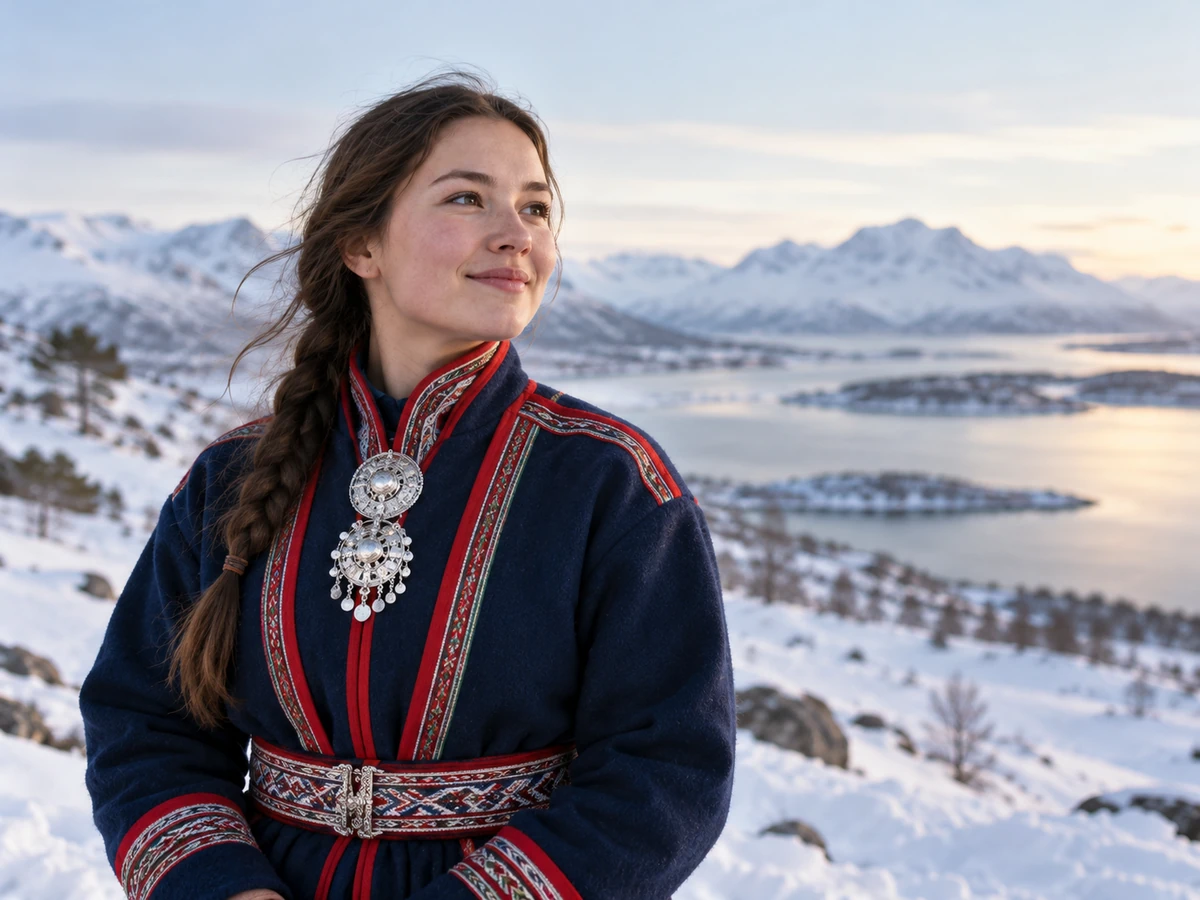
Any honest account of Scandinavian features has to include the Sámi, the indigenous people of northern Norway, Sweden, Finland and the Kola Peninsula of Russia. The Sámi have lived in Fennoscandia since long before the modern nation-states existed, speak Sámi languages (Uralic, like Finnish), and maintain distinct cultural traditions, livelihoods and parliaments in Norway, Sweden and Finland. Genetic studies find distinctive ancestry components in Sámi populations, reflecting a separate and older population history in the region — one more demonstration that “Scandinavian” was never one biological thing. The Sámi experienced long periods of forced assimilation policy, which is precisely why respectful, accurate mention matters.
What Viking Age DNA actually shows
Searches for “Nordic Viking facial features” carry a freight of myth — the image of a uniformly blond, blue-eyed warrior population — so it is worth stating what the science actually found.
The largest ancient-DNA study of the period, by Margaryan and colleagues, published in Nature in 2020, sequenced the genomes of 442 individuals from Viking Age burial sites across Europe and Greenland. Its findings run directly against the purity myth. Viking Age Scandinavia was genetically diverse, with clear internal structure and diversity hotspots, and it received substantial gene flow from elsewhere in Europe — from the south and the east — during and before the Viking Age itself.
The study also found that dark hair was more common among Viking Age individuals than among present-day Scandinavians, and that some people buried as Vikings, with Viking grave goods, had ancestry from outside Scandinavia entirely. “Viking” is best understood as an activity and a culture — seafaring, trading, raiding — that people of varied ancestry took part in, not a bloodline. Any “Viking purity” framing is not just offensive; it is contradicted by the archaeological genetics outright.

The “Scandinavian look” is a media construct
The instantly recognisable “Scandinavian look” — minimalist, blond, luminous — is largely a product of twentieth- and twenty-first-century media, fashion photography and marketing, built by selecting faces that fit the image and ignoring the majority that do not. Like the “Mediterranean look” or any other packaged national aesthetic, it describes a casting preference, not a population. Enjoying the aesthetic is harmless; mistaking it for biology is how stereotypes get laundered into “common knowledge.”
A practical note for very fair skin
There is one genuinely medical corollary to Fitzpatrick I–II skin, and it has nothing to do with appearance rankings: melanoma risk and photoaging. Fair-skinned populations have the world’s highest rates of skin cancer, and within Europe, Denmark and Norway consistently rank among the countries with the highest melanoma incidence. Very fair skin also shows photoaging — sun-driven wrinkling, pigment change and loss of elasticity — earlier than more pigmented skin. The practical advice is unglamorous and effective: daily broad-spectrum sunscreen, sun-seeking moderation, and attention to changing moles, with a low threshold for dermatological review.

Facial surgery and heritage: the identity-preserving view

If someone with Northern European features consults a surgeon, the modern standard is the same as for every heritage: the goal is balance within that face — not conformity to a template, and never “correction” of features a person inherited. A straight or convex profile, a strong cheekbone, a family nose are characteristics to work with, and most patients explicitly want to keep the features that make them recognisable to their own family. Our face aesthetics hub explains how we think about facial balance, and our rhinoplasty page covers how a nose can be refined while preserving its character.
Related Before and After Results at Vivid Clinic
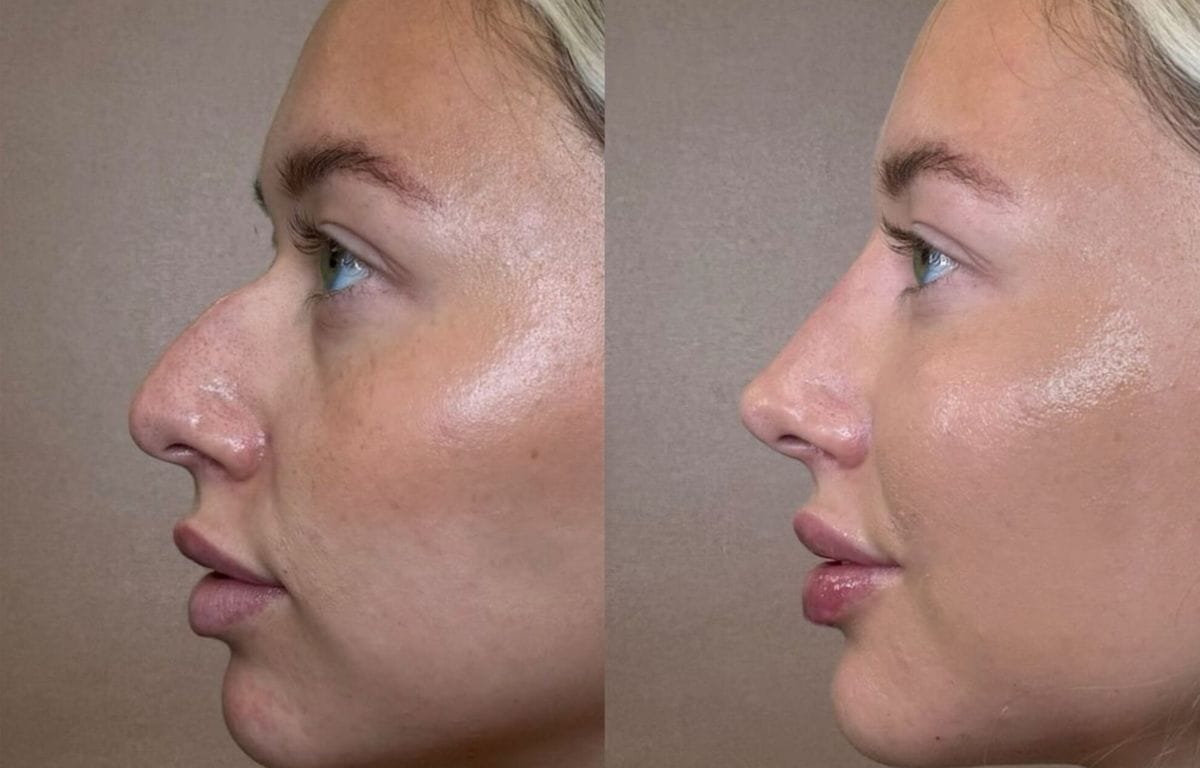
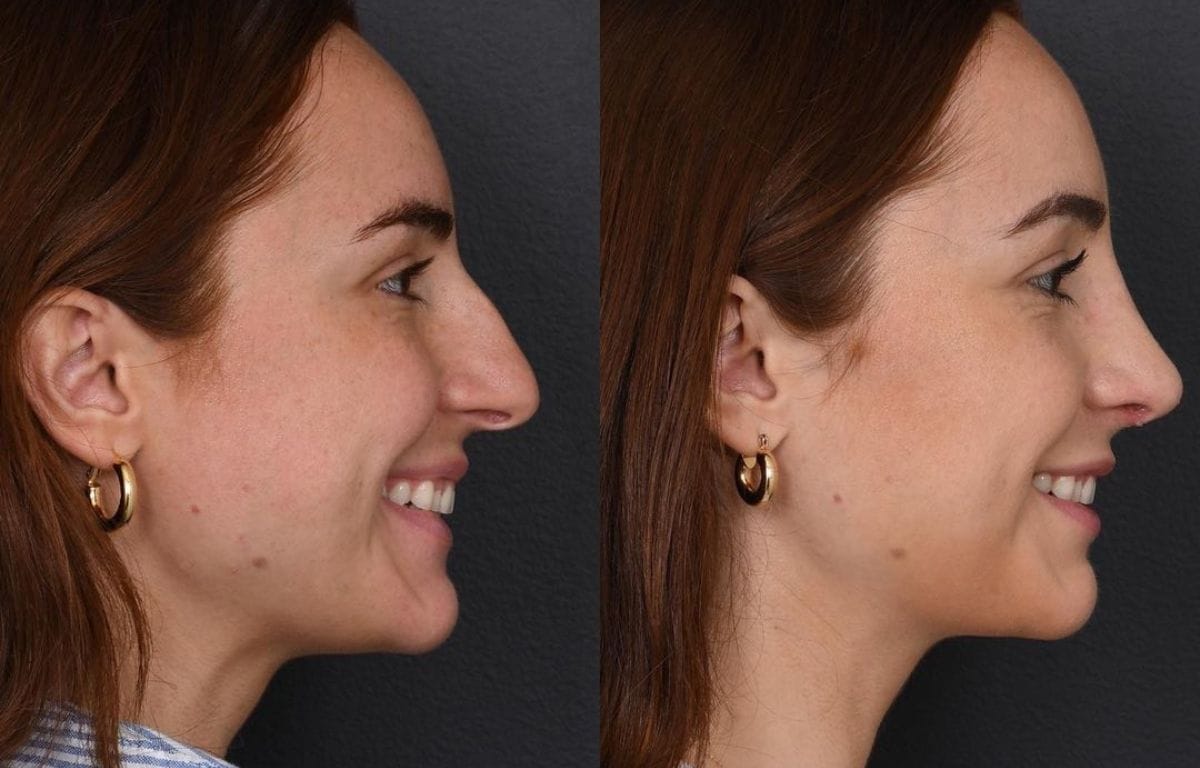
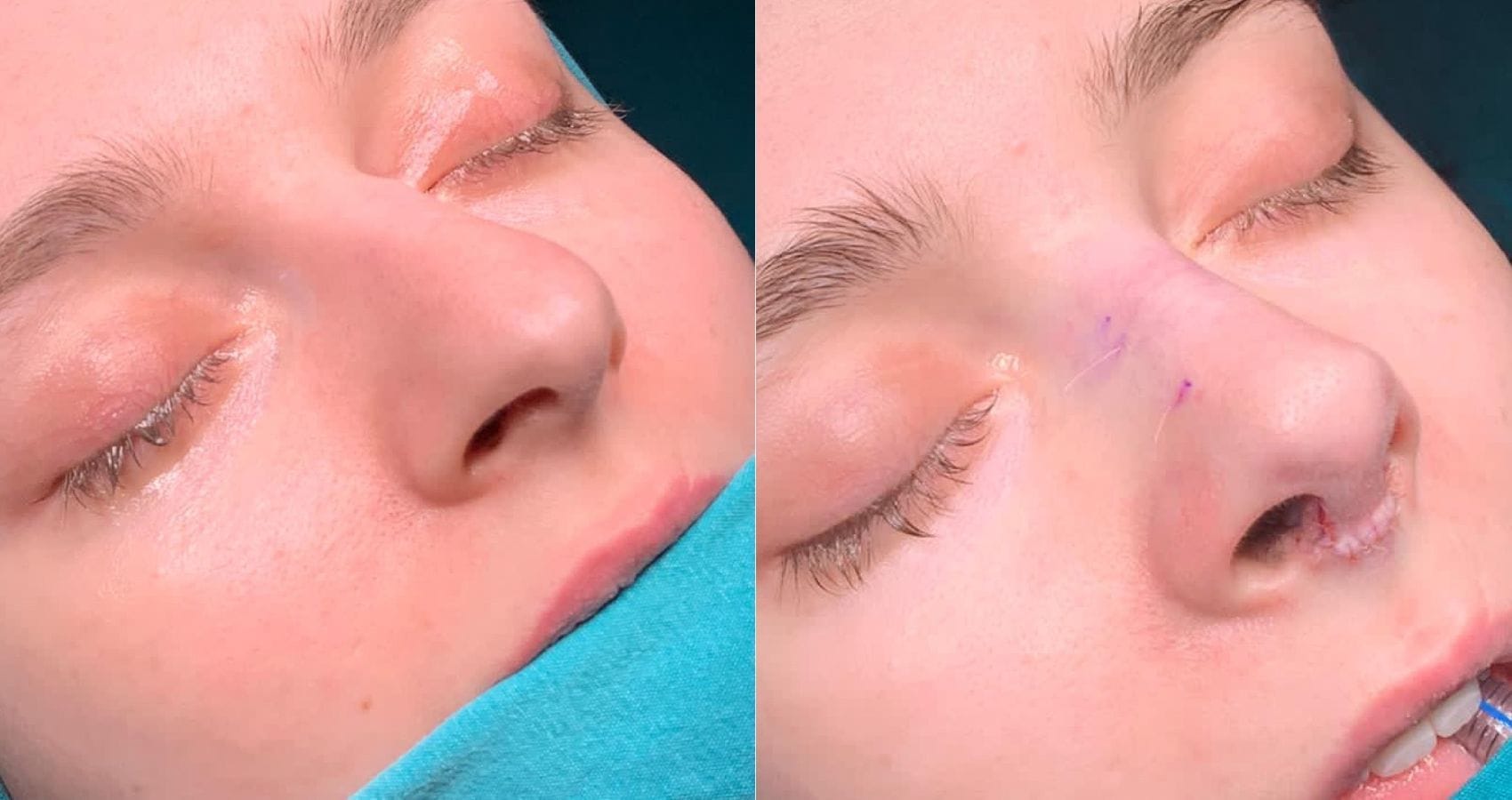
The photos below show real Vivid Clinic patients who had rhinoplasty — a related procedure, not heritage features itself — shared with their consent to show how our Istanbul team documents results. Ask during your free consultation to see cases that match your own treatment. Individual results vary. Browse the full Before & After Gallery.



Frequently Asked Questions
What are typical Scandinavian facial features?
There is no face that defines Scandinavia, only population tendencies. Light hair, light eyes and very fair skin reach some of their highest global frequencies in Denmark, Norway and Sweden, and descriptions often mention relatively straight nasal profiles and, in some northern populations, prominent cheekbones. All of these are statistical tendencies with wide overlap between populations — variation within any country exceeds the average difference between countries, so none of them predicts what an individual Scandinavian looks like.
Why are blond hair and blue eyes so common in Northern Europe?
Light pigmentation variants — in genes such as SLC24A5, SLC45A2 and KITLG, plus the HERC2/OCA2 variant behind most blue eyes — rose to high frequency in Europe under positive selection over thousands of years. The leading explanation is the vitamin D hypothesis: at high latitude, ultraviolet light is weak for much of the year, and lighter skin synthesises more vitamin D from less light. It remains a hypothesis rather than settled fact, and even in Scandinavia dark hair and brown eyes are common and completely ordinary.
Did Vikings really all have blond hair and blue eyes?
No. The 2020 Margaryan et al. study in Nature, which sequenced 442 Viking Age genomes, found that Viking Age Scandinavia was genetically diverse, received substantial ancestry from southern and eastern Europe, and had more dark-haired individuals than present-day Scandinavia. Some people buried as Vikings had no Scandinavian ancestry at all. “Viking” describes a period and an activity — not a uniform look, and certainly not a pure bloodline.
What is the difference between Scandinavian and Nordic?
Scandinavia strictly means Denmark, Norway and Sweden, linked by related North Germanic languages. The Nordic countries add Finland and Iceland, plus the Faroe Islands and Greenland. Finnish belongs to the Uralic language family — unrelated to the Scandinavian languages — which is a neat everyday reminder that the region has always contained distinct peoples and histories rather than one uniform population.
Who are the Sámi?
The Sámi are the indigenous people of northern Norway, Sweden, Finland and Russia’s Kola Peninsula, with their own Uralic languages, cultural traditions and elected parliaments in three countries. Genetic research finds distinctive ancestry in Sámi populations reflecting a long, separate population history in Fennoscandia. Any description of “Scandinavian features” that leaves out the region’s indigenous people is telling an incomplete story.
Is the “Scandinavian look” real?
As a media aesthetic, yes; as biology, no. The packaged image — blond, blue-eyed, minimalist — was assembled by fashion, film and advertising selecting faces that fit and ignoring the rest. Real Scandinavian populations are diverse and increasingly admixed, and the range of faces in any Nordic city is far wider than the stereotype. Population data describe distributions with heavy overlap, not a national face.
Does very fair skin need special care?
Yes, and this is the practical takeaway. Fitzpatrick I–II skin burns easily, tans poorly, carries the highest melanoma risk of any phototype — Denmark and Norway rank among Europe’s highest-incidence countries — and shows photoaging earlier than more pigmented skin. Daily broad-spectrum sunscreen, sensible sun habits and regular attention to changing moles are the evidence-based response.
Curious how your own features fit together — and what you’d want to keep exactly as it is? Send photographs for a free online assessment and get an honest opinion about balance, including when the honest answer is that nothing needs changing.