
 ChatGPT
Medically reviewed by Prof. Dr. Özgür Pilancı, Plastic, Reconstructive & Aesthetic Surgeon — August 2026
Quick answer (updated August 2026): “Slavic” is a language family, not a biological type. Roughly 315 million people speak Slavic languages across a territory stretching from the Baltic Sea to the Pacific coast of Russia, and their facial features span nearly the full range found in Europe and well beyond it. The tendencies people describe — lighter coloring toward the north, often-mentioned prominent cheekbones — are population averages that predict nothing about any individual, because variation within any of these populations is far greater than the average difference between them. The “Slavic look” of the internet is a media construct, not an anthropological finding.

What “Slavic” actually means
Slavic is the name of a branch of the Indo-European language family, spoken by some 315 million people. It is not the name of a single people, and it is certainly not the name of a biological population.
Linguists divide the family into three branches. West Slavic includes Polish, Czech and Slovak. East Slavic includes Russian, Ukrainian and Belarusian. South Slavic, spoken across the Balkans, includes Serbian, Croatian, Slovene, Bulgarian and Macedonian. Geographically the speakers of these languages stretch from the Baltic and Adriatic coasts to the Pacific — eleven time zones of territory in Russia alone.
Genetics tells the same story from the other direction. A major synthesis of autosomal, mitochondrial and Y-chromosome data across Balto-Slavic speaking populations found that geography predicts genetic variation far better than language does. West and East Slavic speakers — Poles, Belarusians, Ukrainians and central-southern Russians — form a remarkably low-differentiation group, while South Slavic speakers resemble their Balkan neighbors: Slovenians cluster near Hungarians, and eastern South Slavs group with Romanians and Greeks. In other words, Slavic-speaking populations blend continuously into everyone around them, exactly as you would expect from centuries of shared geography.
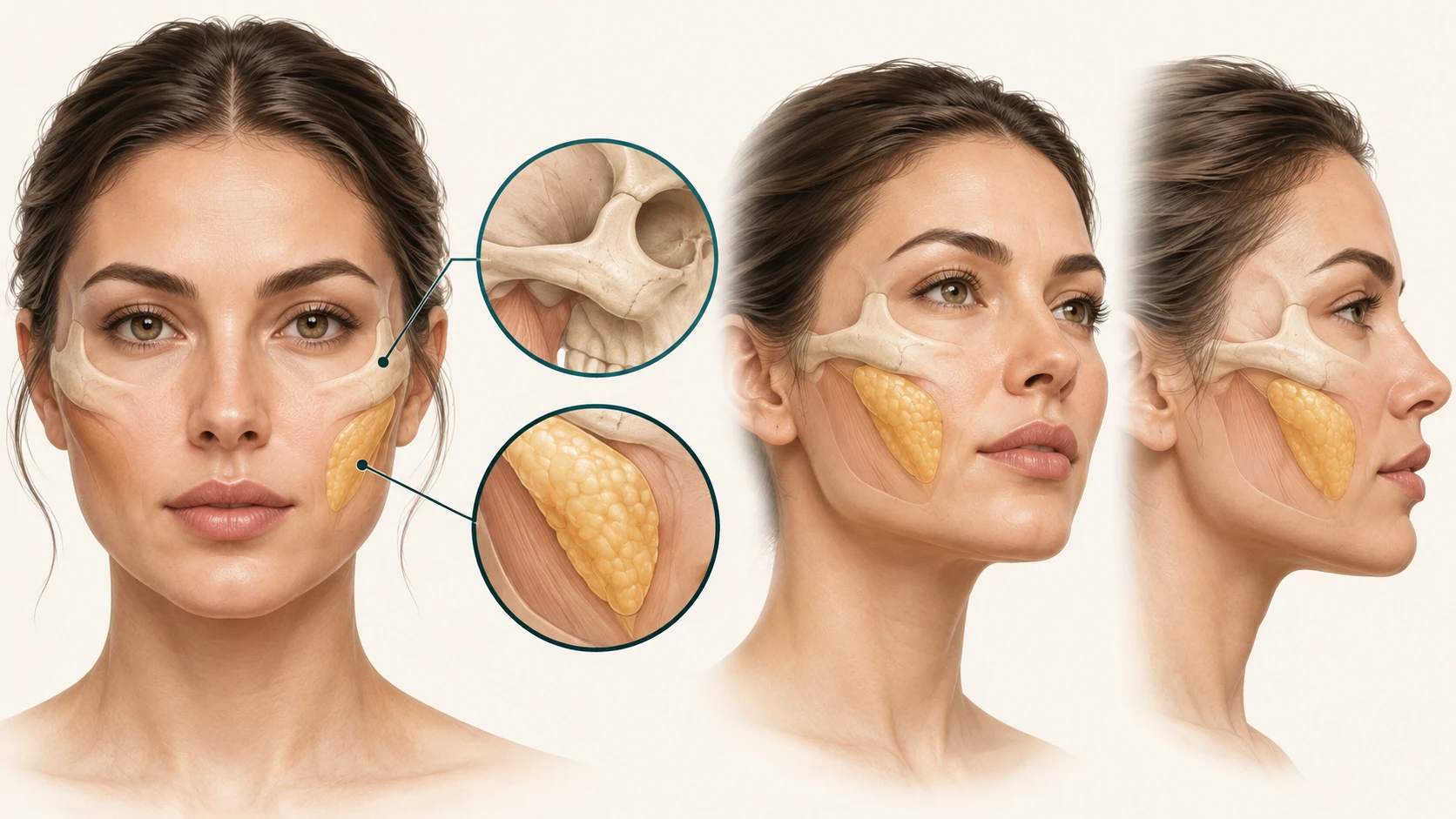
Commonly described Slavic facial features — and what averages can and cannot tell you
Before any description, the ground rule: population averages describe distributions, not individuals. Within any population — Polish, Russian, Serbian, anyone — the range of faces is enormous, and that within-group variation exceeds the average difference between groups. No feature list can tell you what any particular person looks like, and no person needs to match a list to belong.
With that stated, the vocabulary people reach for when describing faces from this region usually includes prominent or “high” cheekbones, a relatively broad midface, and, toward the north of the region, lighter hair and eye color. Honesty requires a caveat that most articles skip: this is folk description more than measured anthropometry. There is no rigorous cross-population database showing that midface skeletal prominence is systematically greater in Slavic-speaking populations than in their neighbors.
What the description captures is probably a blend of real but modest tendencies in bone structure and soft-tissue distribution, plus a large dose of pattern recognition trained on the media faces discussed below. Nose shapes, jaw shapes, face heights and widths all vary across the region the way they vary everywhere — continuously, and with vast overlap between populations.
Coloring: a gradient, not a category
Hair, eye and skin color across Central and Eastern Europe follow a smooth geographic cline, not categories. Light hair and light eyes reach some of their highest frequencies in the world around the Baltic, and coloring shifts gradually darker moving south toward the Balkans and the Mediterranean — with every shade present everywhere along the way.
The genetics behind this is well studied. Variants in a small set of genes — HERC2/OCA2 for eye color, SLC45A2 and others for skin and hair — account for much of the visible variation, and ancient-DNA work shows that light pigmentation variants rose in frequency in Europe under natural selection over roughly the last 5,000 years. The crucial point for this article is that none of these gradients line up with language boundaries or national borders. Coloring changes with latitude and longitude, smoothly, straight across the Slavic/non-Slavic line. A pigmentation map of Europe simply does not know where Poland ends and Germany begins.

A history that guarantees mixture
If the genetics seems to insist that no Slavic-speaking population is an island, the history explains why. Every century of the region’s past has moved people across it.
Ancient-DNA research published in Nature in 2025, analyzing 555 ancient individuals, traced the early medieval Slavic expansion to a source region spanning southern Belarus and northern Ukraine, with large-scale migration across Central and Eastern Europe between the sixth and eighth centuries. Crucially, the newcomers mixed with the people already there — to different degrees in different places — which means Slavic-speaking populations were blended from the very beginning.
The mixing never stopped. The Polish–Lithuanian Commonwealth was one of early modern Europe’s most multi-ethnic states, home to Poles, Lithuanians, Ruthenians, Germans, Jews, Armenians and Tatars. The Austro-Hungarian Empire stirred Czechs, Slovaks, Poles, Ukrainians, Croats, Slovenes, Hungarians, Austrians and others within one border for centuries. Ottoman rule in the Balkans lasted half a millennium and left demographic as well as cultural traces. In the east, the Mongol era tied the Rus’ principalities into the steppe world for centuries, and Russia’s later expansion across Siberia brought continuous contact with Finno-Ugric, Turkic and Siberian peoples. A “pure” population never existed anywhere in this story, and no serious geneticist looks for one.
Facial features in Poland: what can honestly be said
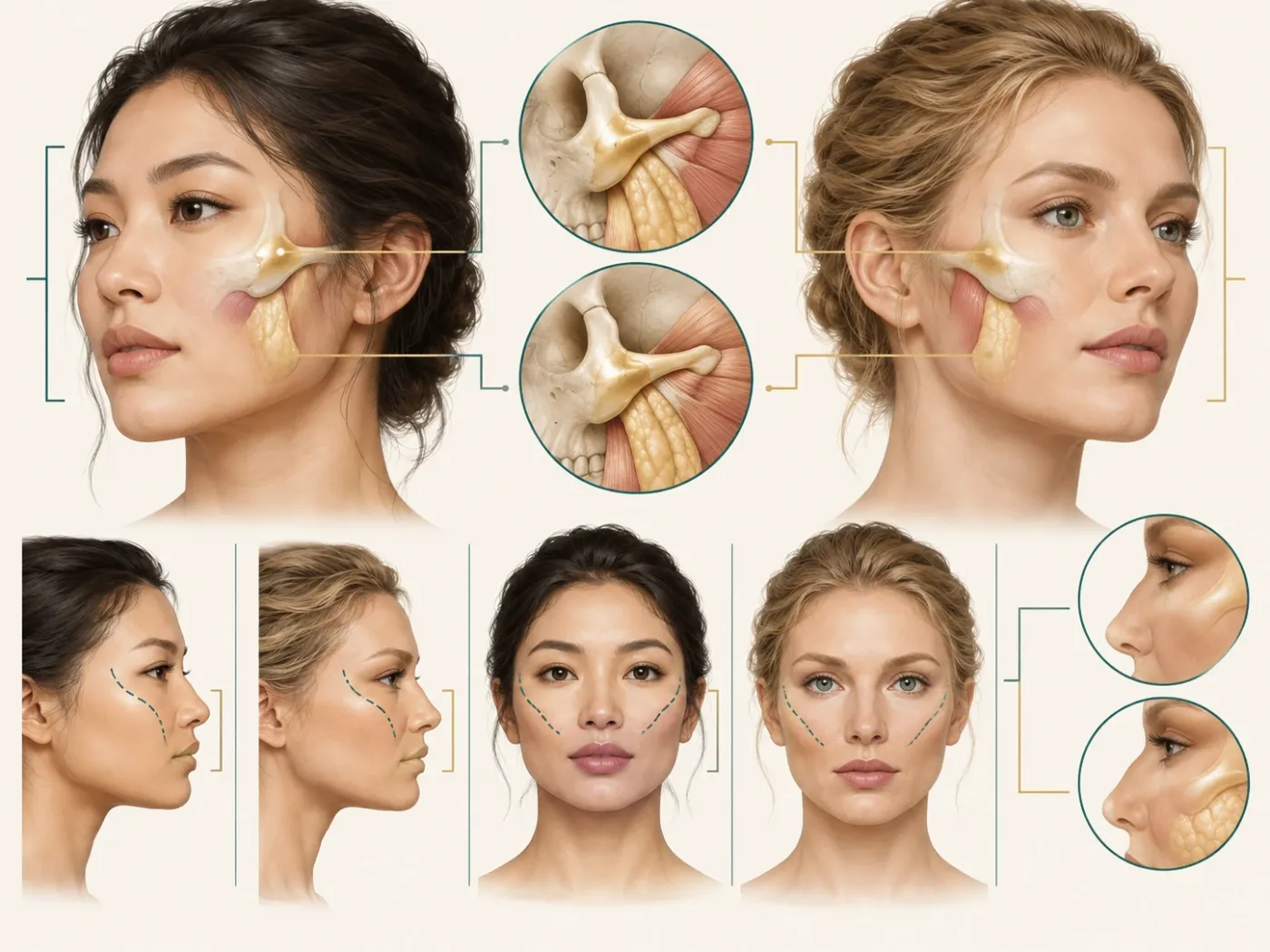
There is no single Polish face, and the average tendencies that do exist are shared with the whole surrounding region rather than being distinctively Polish. That is the honest answer to what people are really asking.
Poland sits in the northern part of the cline described above, so lighter hair and eye colors are common — alongside every darker shade. Genetically, Poles are close to a broad Central-East European group: the Balto-Slavic synthesis study found strikingly low differentiation between Poles, Belarusians, Ukrainians and central-southern Russians. Centuries of German settlement in the west and north, the Commonwealth’s diversity, and post-war border shifts and resettlements all fed into today’s population. So descriptions like “light coloring and defined cheekbones” capture a regional tendency at best; walk through Warsaw or Kraków and you will see the full European range of faces, all of them Polish.
Facial features in Russia: a country of many peoples
Russia spans eleven time zones and is home to well over a hundred recognized ethnic groups, so the question of a “typical Russian face” dissolves on contact with the map. “Russian” names a citizenship and a language community far more coherently than it names an appearance.
Ethnic Russians in the European core are genetically close to Ukrainians, Belarusians and Poles — part of the same low-differentiation group described above — while populations shift gradually in composition toward Finno-Ugric-speaking communities in the north, Turkic-speaking peoples along the Volga, the extraordinary diversity of the Caucasus in the south, and Siberian peoples in the east. All of these are part of what a “Russian face” can be. Any single description would erase most of the country.
The “Slavic look”: where the idea actually comes from
The “Slavic look” and “Russian beauty” of the internet are best understood as a casting decision, not a population description. From the 1990s onward, Western modeling agencies scouted intensively across post-Soviet and Central European cities, selecting faces at one narrow end of the local range — very light coloring, angular bone structure, particular proportions — because those faces photographed in line with an existing fashion ideal. Cinema and, later, social-media aesthetics recycled the same casting into a supposed regional “type”.
The construct then does what constructs do: it flattens over 300 million people into one face, teaches viewers to read the exception as the rule, and turns real people into a stereotype — flattering on the surface, reductive underneath. It is worth saying plainly that the models were real and the faces were real; what was invented was the claim of typicality. The actual populations look like what the genetics and history sections describe: a continuous, thoroughly blended range that no single face can stand for.
Heritage and facial aesthetics: a note on keeping what is yours

The clinical relevance of everything above is brief, and it points one way: features associated with heritage are characteristics, not flaws, and the purpose of well-planned facial surgery is balance within an individual face — never conformity to someone else’s average, and never the erasure of a family resemblance. A patient considering rhinoplasty or any other facial procedure is entitled to a surgeon who asks what should stay the same as carefully as what should change, and who treats population averages as background information rather than targets. That is the standard this clinic works to, and it is the only defensible one.

Related Before and After Results at Vivid Clinic
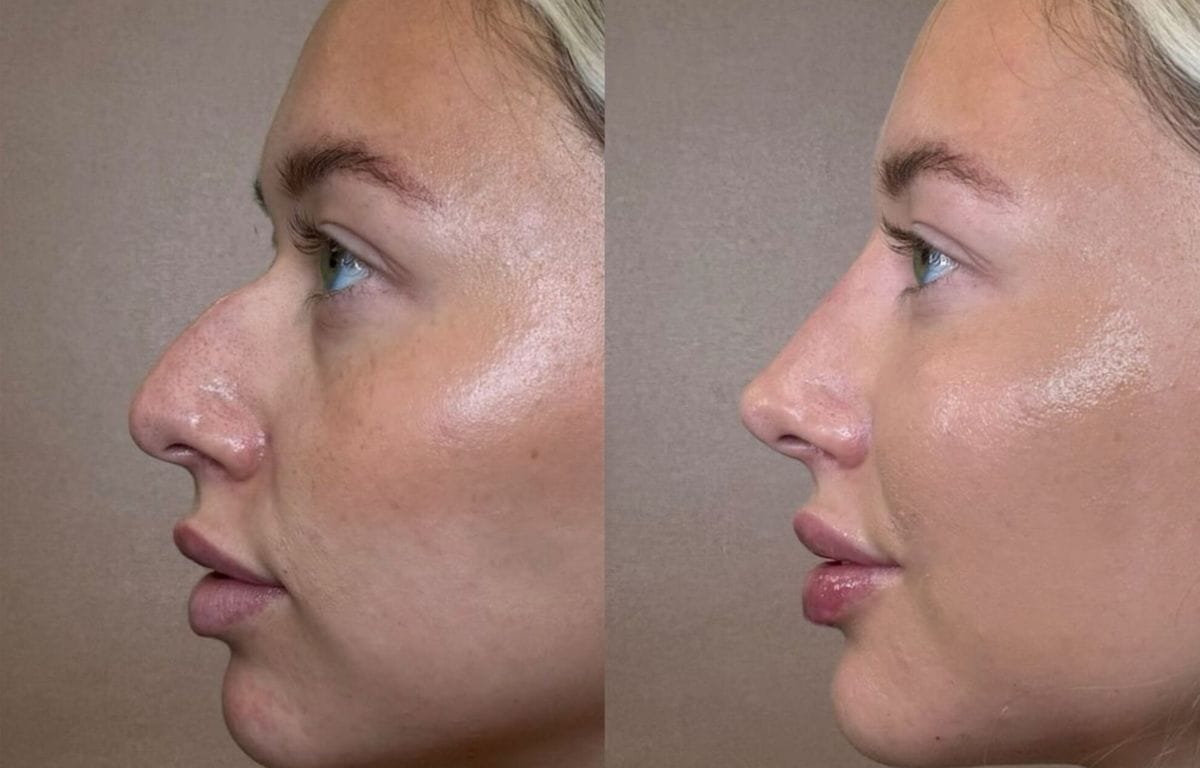
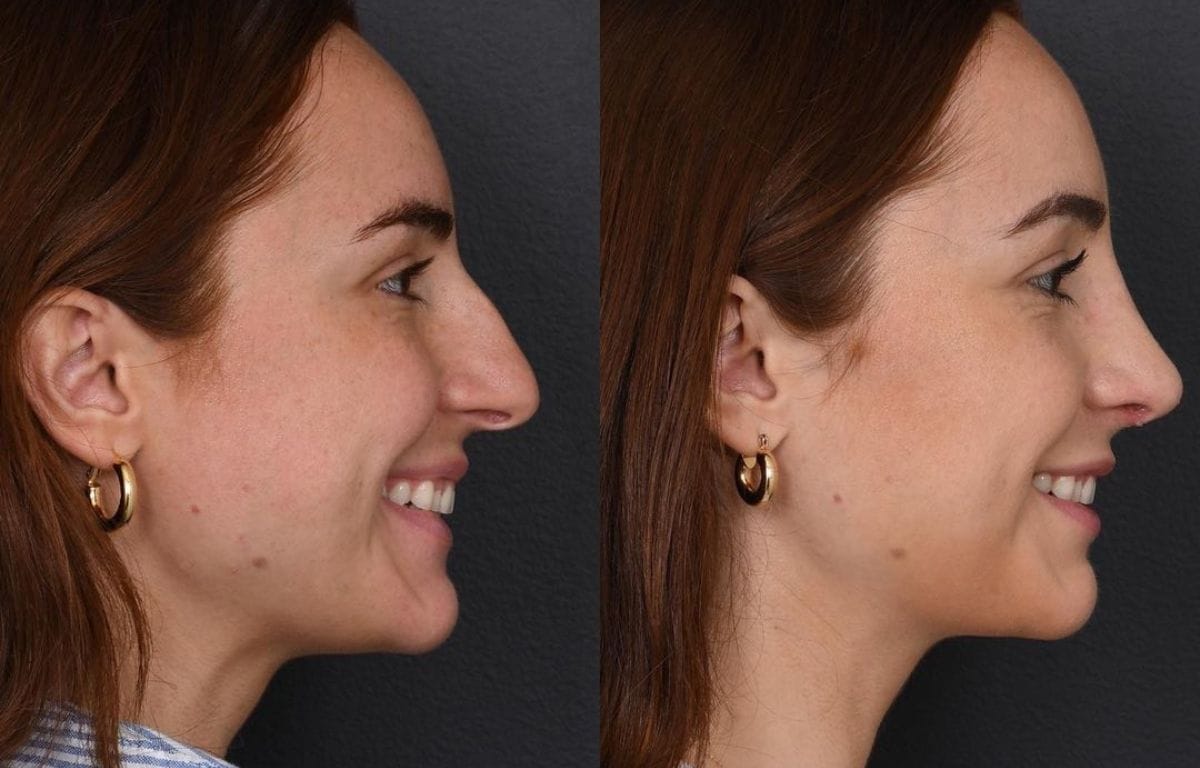
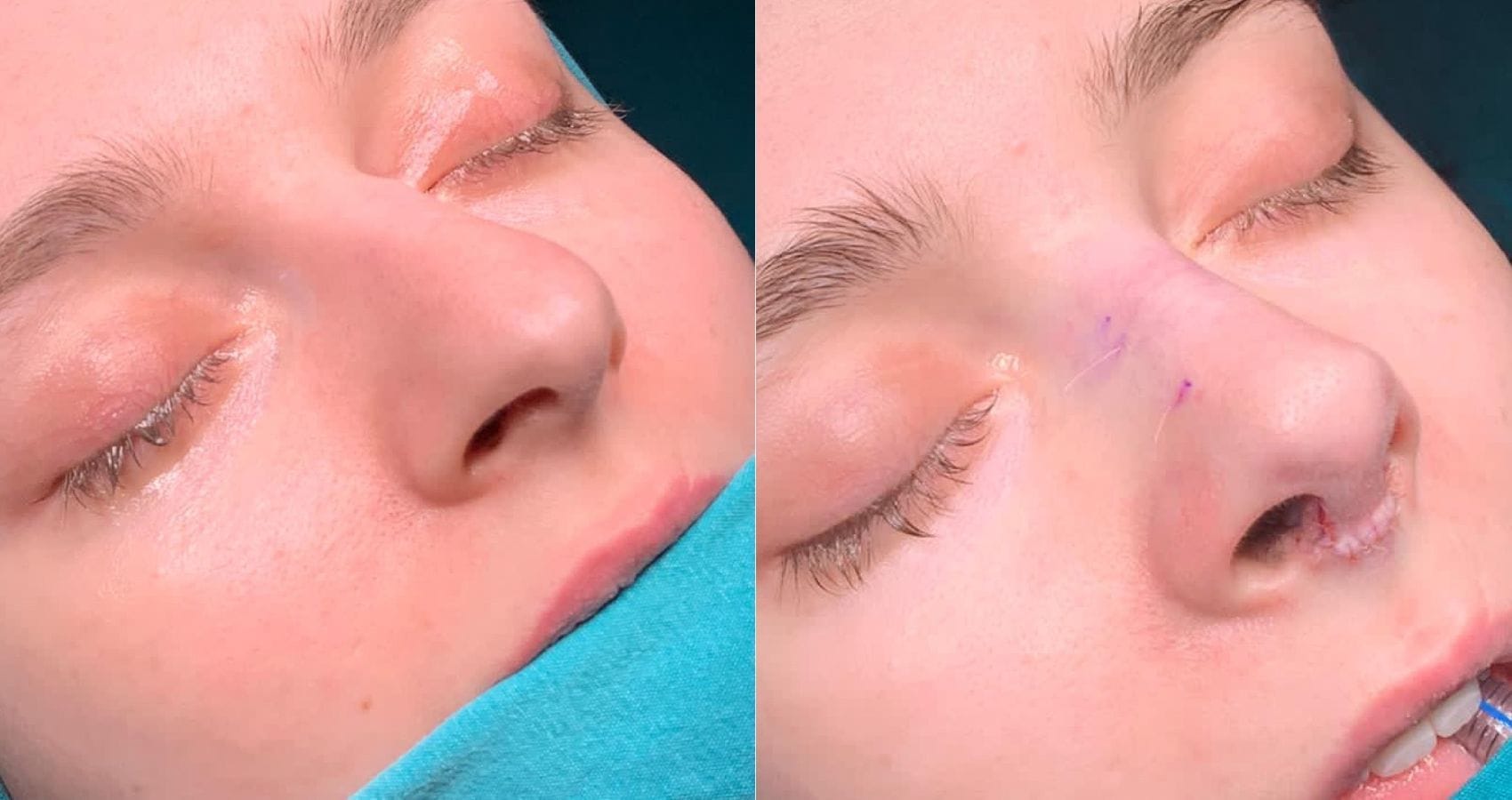
The photos below show real Vivid Clinic patients who had rhinoplasty — a related procedure, not heritage features itself — shared with their consent to show how our Istanbul team documents results. Ask during your free consultation to see cases that match your own treatment. Individual results vary. Browse the full Before & After Gallery.



Frequently Asked Questions
What does “Slavic” actually mean?
It is a linguistic term: the Slavic languages form a branch of the Indo-European family spoken by roughly 315 million people, divided into West (Polish, Czech, Slovak), East (Russian, Ukrainian, Belarusian) and South (Serbian, Croatian, Slovene, Bulgarian, Macedonian) groups. Speaking a Slavic language is what Slavic peoples have in common. It does not make them one biological population, and genetic studies show that geography shapes ancestry in the region far more than language does.
Are Slavic peoples a single genetic group?
No. Large genetic studies find that West and East Slavic speakers form a low-differentiation cluster with each other, while South Slavic speakers resemble their non-Slavic Balkan neighbors — Slovenians cluster near Hungarians, and Bulgarians near Romanians and Greeks. Every Slavic-speaking population blends continuously into the populations around it. The language family spread historically through both migration and adoption, so shared language never implied uniform ancestry.
Is there a typical Polish appearance?
No — and the tendencies that exist are regional rather than specifically Polish. Poland lies toward the lighter end of Europe’s north–south pigmentation gradient, so light hair and eyes are common, but every coloring occurs, and Polish ancestry reflects centuries of mixing with German, Baltic, East Slavic, Jewish, Tatar and other populations. Genetically, Poles are nearly indistinguishable from their eastern neighbors. Any specific description would fit millions of Poles and fail to fit millions of others.
Is there a typical Russian face?
Even less so. Russia contains more than a hundred ethnic groups across eleven time zones, from populations genetically close to Poles and Ukrainians in the European west to Finno-Ugric, Turkic, Caucasian and Siberian peoples elsewhere — all of them Russian citizens, many of them Russian speakers. The face the internet labels “Russian” is a narrow media selection from the country’s western edge, not a portrait of the population.
Why are prominent cheekbones so often mentioned?
Partly because some tendency toward a broader, more defined midface may exist in parts of the region, and mostly because the description has been repeated until it feels like data. It is folk description rather than measured anthropometry: no rigorous cross-population study establishes cheekbone prominence as a distinctively Slavic trait, and defined cheekbones occur in every population on earth. Media casting that favored angular faces did a great deal to cement the association.
Why does coloring vary so much across Eastern Europe?
Because pigmentation in Europe follows smooth geographic gradients shaped by ancient migrations and thousands of years of natural selection, with variants in genes such as HERC2/OCA2 and SLC45A2 rising to high frequency in the north. The gradients run straight across language boundaries — lighter on average toward the Baltic, darker toward the Balkans, every shade present everywhere. Color tracks geography and ancestry, not language or nationality.
Is the “Slavic look” a real thing?
As a media category, yes; as biology, no. The look assembled by modeling, film and social media selects one narrow, photogenic slice of an enormously varied set of populations and presents it as typical. The faces are real; the typicality is invented. Treating it as a real population type flattens over 300 million people into a stereotype — which is precisely why this article describes distributions and history instead of offering a checklist.
Curious what a change would mean for your own features — and what should stay exactly as it is? Send photographs for a free online assessment and get an honest, unhurried answer that starts from your face, not from anyone’s average.