 ChatGPT

The Fitting Room Moment Nobody Talks About
You are standing in a fitting room with three bras in your hand, and none of them sits the way the label promises. The cups gape at the bottom. One side fills differently from the other. For years you have quietly wondered why.
If that sounds familiar, you may have come across the term tuberous breasts. It describes a breast shape that forms during puberty, not an illness and not something you caused. Some women live with it comfortably. Others want to know what can be done.
This guide explains the signs, grades and corrective options in plain, clinical language. At Vivid Clinic in Istanbul, Turkey, you can also request a free consultation with a plastic surgeon to have your own anatomy assessed privately and without pressure.
What Are Tuberous Breasts?
Quick Answer: Tuberous breasts are a developmental difference in breast shape that appears during puberty. A tight band of tissue around the breast base limits how the lower part of the breast expands, so the breast grows forward more than outward. It is a shape variation, not a disease.
You may also see the terms tubular breasts, constricted breasts or tuberous breast deformity. They describe the same family of features, and “deformity” is only a technical label for shape.
The condition can affect one breast or both, and it ranges from very subtle to more noticeable. It does not affect your general health.
7 Signs of Tuberous Breasts: A Simple Checklist
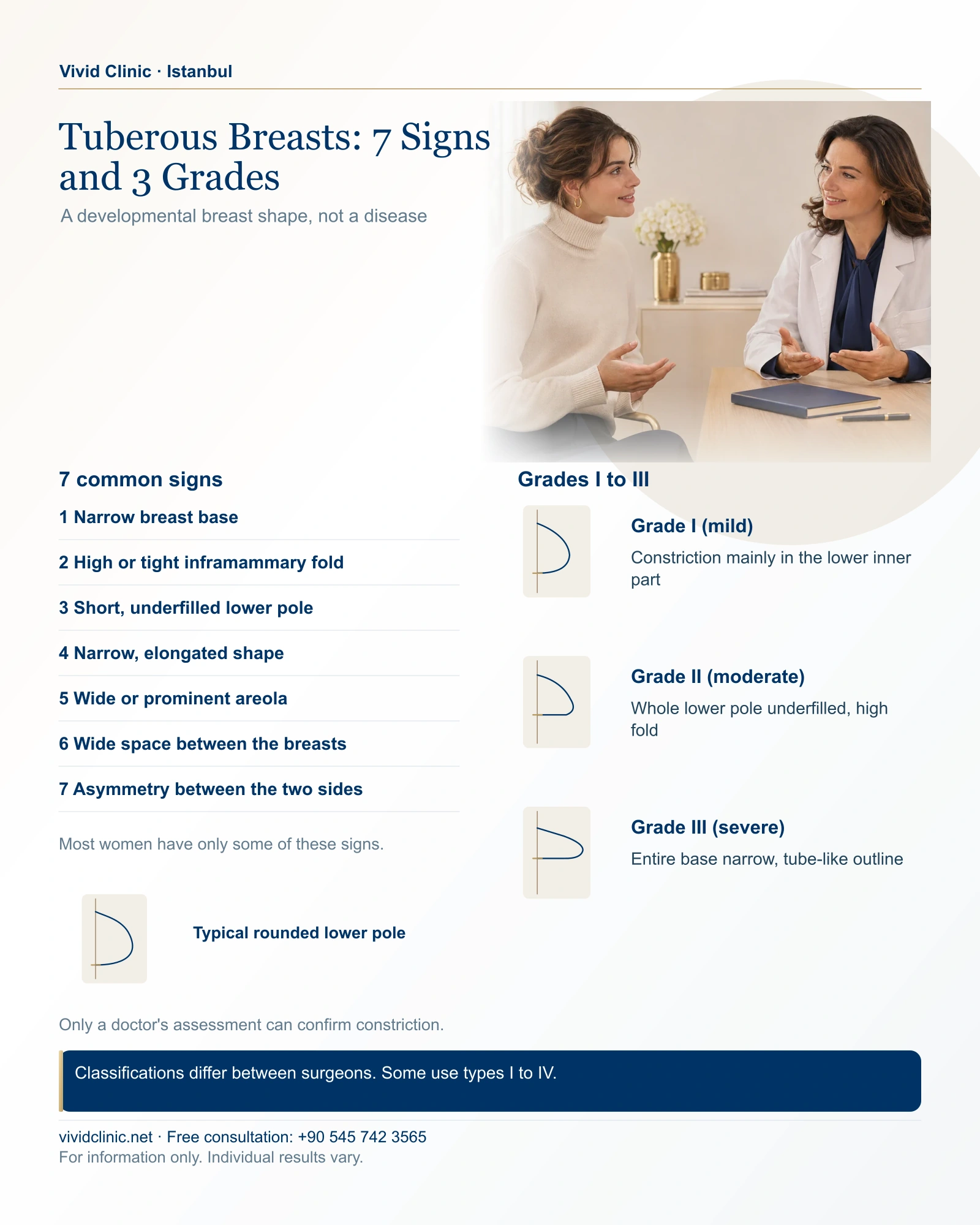
No single feature defines tuberous breasts. Surgeons look for a combination, and most women have only some of the points below.
- A narrow breast base. The footprint of the breast on the chest wall is smaller than expected.
- A high or tight inframammary fold. The crease under the breast sits higher than usual, or looks tight.
- A short, underfilled lower pole. There is little tissue between the areola and the fold.
- A narrow, elongated shape. The breast projects forward in a tube-like or conical outline.
- A wide or prominent areola. Breast tissue can push forward into the areola, making it look enlarged or raised.
- A wide space between the breasts. The inner portions do not fill toward the midline.
- Asymmetry. One side is often more constricted, smaller or higher than the other.
Why a Checklist Is Not a Diagnosis
Natural breasts vary enormously, and mild asymmetry is normal. Small breasts are not automatically tubular breasts. Only an assessment by a doctor can tell you whether constriction is present and how much.
Grades of Tuberous Breasts Explained
Surgeons grade tuberous breasts to plan treatment, not to judge appearance. The most commonly described system uses grades I to III, based on how much of the breast base is constricted. Other classifications use types I to IV.
| Grade | General description | What a surgeon usually considers |
|---|---|---|
| Grade I (mild) | Constriction mainly in the lower inner part of the breast. The outer side looks fuller. | Limited release of the lower pole, often with volume added |
| Grade II (moderate) | The whole lower pole is underfilled. The fold is high and the areola may point downward. | Wider release, lowering the fold, volume, possible areola reduction |
| Grade III (severe) | The entire breast base is narrow, with a tube-like outline and often a prominent areola. | Full release, new fold position, volume, areola reduction, sometimes two stages |
Classifications differ between surgeons, so your grade may be described differently from clinic to clinic. The plan matters more than the label.
What Causes Tuberous Breasts?
Quick Answer: The shape develops during puberty, when a ring of firm connective tissue around the breast base restricts normal expansion. The exact cause is not fully understood. It is not linked to diet, exercise, bras or anything you did.
A growing breast normally spreads downward and outward across the chest. In constricted breasts, the tight ring at the base resists that spread, so the tissue grows forward and sometimes into the areola.
How Tuberous Breasts Can Affect Daily Life
For many women the main issue is practical: finding bras and swimwear that fit both sides. For others it is emotional, especially after feeling different as a teenager. Both reactions are valid, and so is feeling fine about your shape. There is no medical need to treat tuberous breasts.
Tuberous Breasts and Breastfeeding
Some women with this breast shape have less glandular tissue and a reduced milk supply. Many others breastfeed without difficulty, and shape alone cannot predict the outcome.
If you are planning a pregnancy, speak with your doctor or a lactation consultant early. If you are considering surgery, tell your surgeon that breastfeeding matters to you. No surgeon can promise future breastfeeding ability, with or without an operation.
Do You Need Treatment? Non-Surgical Options First
No cream, massage, exercise or supplement changes the constricting tissue at the breast base. Chest exercises build the muscle underneath, not the breast itself.
What can help without surgery:
- Professional bra fitting by someone experienced with asymmetry
- Partial inserts or shaped padding to balance the smaller side under clothing
- Counselling support if body image is affecting your mood
If these measures are enough for you, surgery is not needed. Correction is for women who, after careful thought, want a change in shape that non-surgical options cannot provide.
Who Is a Good Candidate for Tuberous Breast Correction?
Quick Answer: Suitable candidates are healthy adults whose breast development is complete, who are bothered by the shape or asymmetry, and who hold realistic expectations. A surgeon confirms suitability after examining your anatomy and medical history.
Who May Not Be Suitable?
Surgery is usually postponed if you are pregnant, breastfeeding or planning a pregnancy very soon. Uncontrolled medical conditions and smoking need attention first. Expecting a flawless result is also a reason to pause and talk further.
What Is the Minimum Age?
Correction is planned only after breast development is complete, which for most women means from around 18 years of age. Waiting avoids operating on a breast that is still changing.
How Tuberous Breast Correction Works
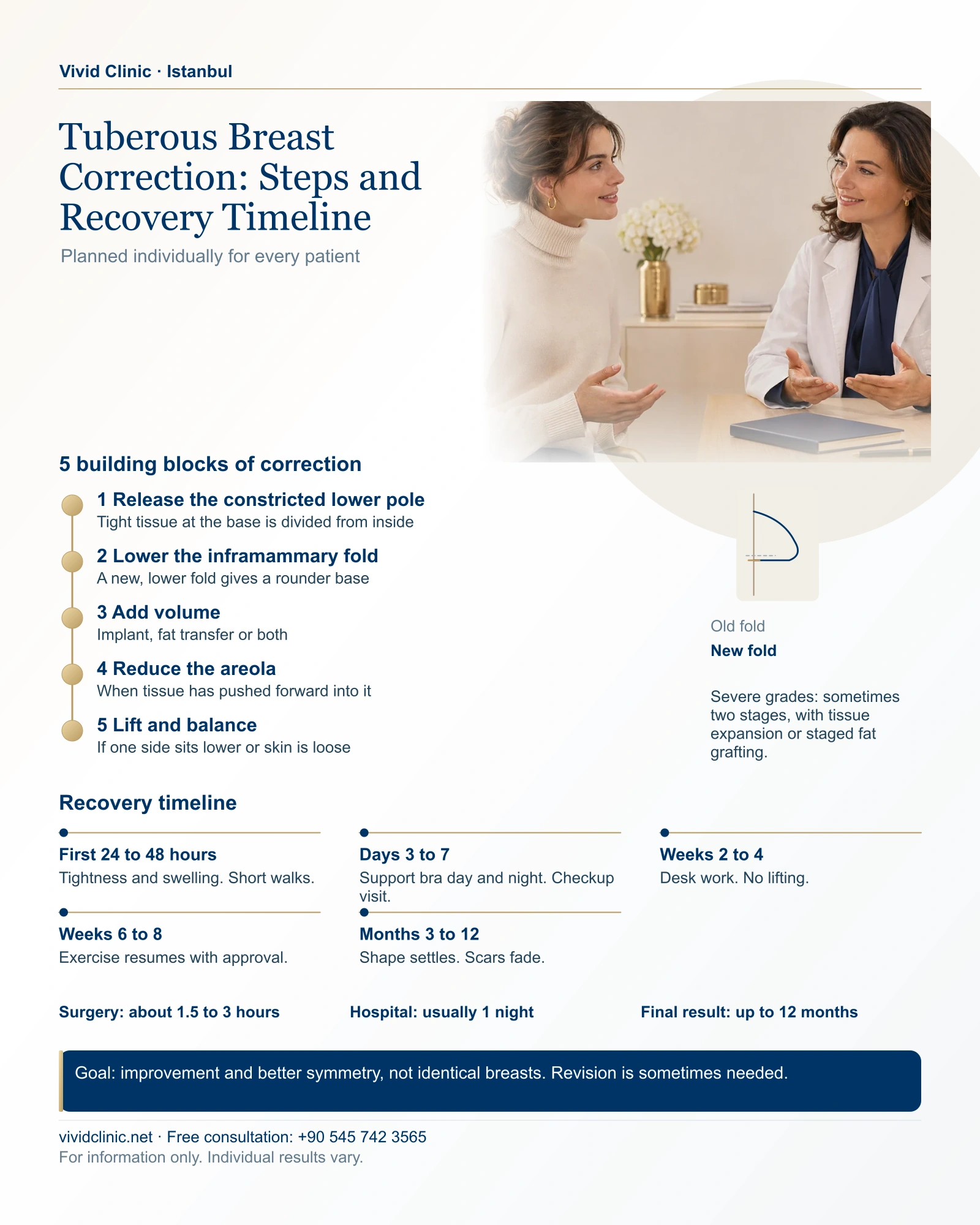
Surgery for tuberous breasts is not a standard enlargement. An implant alone can leave the tight lower pole unchanged, so the surgeon first releases the tissue, then rebuilds the shape. The steps below are combined differently for each patient.
Step 1: Releasing the Constricted Lower Pole
Working through an incision at the edge of the areola or in the fold, the surgeon divides the tight ring of tissue from the inside. This allows the lower pole to open and expand.
Step 2: Lowering the Inframammary Fold
The fold is repositioned lower on the chest wall so the breast has a fuller, rounder base. This is one of the most technically demanding parts of the operation.
Step 3: Adding Volume With an Implant or Fat Transfer
Most plans add volume. An implant placed during breast augmentation fills the released lower pole and widens the base. Our guides to breast implants, implant sizes and types and round versus teardrop implants explain the choices.
For milder cases, or to soften an implant edge, fat transfer breast augmentation uses your own purified fat. Some of the transferred fat is naturally absorbed, so more than one session may be needed.
Step 4: Reducing the Areola
Where tissue has pushed into the areola, the surgeon removes a ring of skin around it, repositions the tissue and reduces the areola diameter. The scar sits at the areola border.
Step 5: Lifting and Balancing Both Sides
If one breast sits lower or the skin is loose, a breast lifting technique may be added. Our breast lift in Turkey article describes the scar patterns.
When Correction Is Done in Two Stages
In more severe grades the lower pole skin may be too short to cover an implant. Some surgeons then use a temporary tissue expander or staged fat grafting first, and complete the correction months later.
Procedure Overview Table: Tuberous Breast Correction
| Aspect | Details |
|---|---|
| Duration Process | About 1.5 to 3 hours, depending on the techniques combined |
| Hospitalization Duration | Usually 1 night |
| Mobility Duration | Gentle walking from the same day or the next morning |
| Return to Activity | Desk work in about 1 to 2 weeks; exercise after 4 to 6 weeks with approval |
| Complete Recovery | About 6 to 8 weeks |
| Anticipated Results | Shape settles over 3 to 6 months; final result at up to 12 months |
Timings are general estimates.
Operation Process Overview at Vivid Clinic
Your journey begins with your arrival in Istanbul, where a VIP airport transfer is waiting to take you to your 5-star hotel for check-in and rest. Next comes a one-on-one consultation, in which your surgeon examines your breast base, fold position and symmetry and confirms the plan discussed online. On surgery day, the hospital team looks after you from admission and anesthesia through to your recovery room. Post-operative care includes dressing checks, a support bra fitting and clear written instructions. A checkup visit before departure confirms that healing is on track and that you are comfortable to fly. After you return home, remote aftercare follow-up continues with scheduled photo reviews and direct contact with your coordinator.
Recovery Timeline After Tuberous Breast Correction
First 24 to 48 Hours
Expect tightness, swelling and pressure across the chest. Prescribed medication manages discomfort, and short walks are encouraged.
Days 3 to 7
Swelling peaks, then eases. You wear a support bra day and night, and most international patients have their checkup visit.
Weeks 2 to 4
Many patients return to desk work. The breasts usually sit high and feel firm, and lifting or upper-body exercise is still off limits.
Weeks 6 to 8
With your surgeon’s approval, exercise resumes gradually as the lower pole relaxes and fills.
Months 3 to 12
The shape settles and scars slowly fade. Final symmetry can only be judged at the end of this period.
Benefits and Realistic Expectations
Well-planned surgery can bring meaningful change:
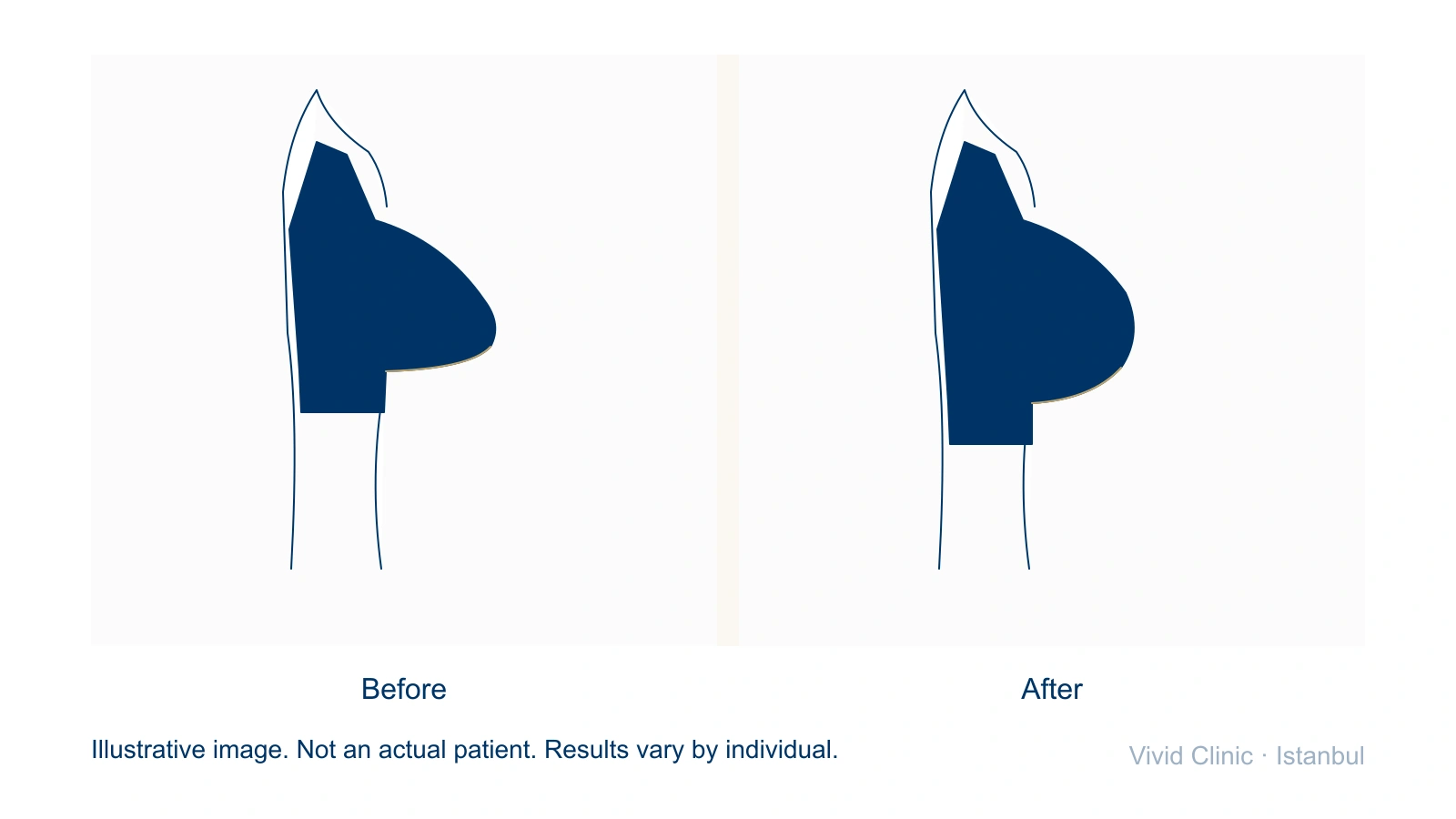
- A wider, rounder breast base and a fuller lower pole
- A fold that sits in a more typical position
- A smaller, flatter areola where that was a concern
- Better balance between the two sides
Now the honest part. The aim is improvement and better symmetry, not identical breasts, and small differences between the sides usually remain. Results vary by individual, and revision surgery is sometimes needed.
Risks and Possible Side Effects
All surgery carries risk, and correcting tuberous breasts is more complex than a standard augmentation. Possible issues include:
- Bleeding, infection or delayed wound healing
- Changes in nipple or breast sensation
- Residual asymmetry or persistent tightness in the lower pole
- A visible crease where the original fold was, often called a double bubble
- Widened or noticeable scars around the areola
- Capsular contracture, implant movement or rupture over time
- Partial absorption of transferred fat, anesthesia-related risks and the need for revision
Read our full guide to breast augmentation surgery risks before you decide.
How to Prepare Before Surgery
- Share your full medical history, medications and supplements
- Stop smoking and nicotine products as advised, usually several weeks before and after
- Write down your questions, including any about breastfeeding
Aftercare Tips for a Smoother Recovery
- Wear your support bra exactly as instructed
- Sleep on your back with your upper body slightly raised
- Avoid lifting, underwired bras and upper-body exercise until approved
- Attend every checkup and send your follow-up photos on time
- Contact the clinic promptly if you notice fever, sudden swelling on one side or unusual pain
Cost Factors in Istanbul, Turkey
Cost depends on your individual plan: the grade of constriction, whether one or both sides are treated, implant type or fat transfer, areola reduction or lift, operating time, anesthesia, hospital stay and any second stage. Hotel, transfers and aftercare in your package also play a part.
For an early idea, try the surgery price calculator. It gives an estimate only. Final pricing is confirmed after your consultation.
Why Choose Vivid Clinic in Istanbul?
Vivid Clinic is a premium, international clinic focused on personalised planning and natural-looking proportions. No two cases of tuberous breasts are alike, so your plan is built around your own measurements.
You can meet our doctors online before you travel. Every plan starts with a free consultation with a plastic surgeon, where you can ask about technique, scars, staging and realistic outcomes in complete privacy.
What International Patients Can Expect
Most planning happens before you fly. You send photographs, complete a medical form and receive a recommendation. Your coordinator then arranges dates, transfers and accommodation.
FAQs
How do I know if I have tuberous breasts or simply small breasts?
Size alone does not answer this. Small breasts usually have a normal base width, a fold in the usual position and a rounded lower pole. With tuberous breasts, the key feature is constriction: a narrow base, a high or tight fold and little tissue between the areola and the fold, sometimes with a wide or raised areola. Mild features can be hard to judge in a mirror. A plastic surgeon can assess your base width, fold position and lower pole from standard photographs or in person, and tell you whether constriction is present.
At what age can tuberous breasts be corrected with surgery?
Surgeons plan correction of tuberous breasts only after breast development is complete, which for most women means from around 18 years of age. In some, development continues slightly longer, so your surgeon will ask how long your size has been stable. Operating too early risks a result that changes as the breast keeps growing. You should also be in good health, at a steady weight and making the decision for yourself. If you are planning a pregnancy in the near future, discuss timing, because pregnancy and breastfeeding can alter breast shape after surgery.
Which technique is used to correct tuberous breasts: implants, fat transfer or a lift?
It depends on your grade and anatomy, and most plans combine several steps. The surgeon releases the constricted lower pole, lowers the inframammary fold and then adds volume with an implant, fat transfer or both. If tissue has pushed into the areola, an areola reduction is added. A lift may be needed when one side sits lower. For tuberous breasts with a very short lower pole, some surgeons work in two stages, using a tissue expander or staged fat grafting first.
How long should I stay in Istanbul after surgery for tuberous breasts?
Most international patients are advised to plan for about a week in Istanbul, although your surgeon confirms the exact length once your plan is set. That period covers your consultation, surgery day, a hospital night, early recovery at your hotel and a checkup visit before you fly. Because correcting tuberous breasts can involve fold repositioning and areola work, your surgeon will want to see the early shape before clearing you to travel. After you return home, follow-up continues remotely with photo reviews.
What affects the cost of surgery for tuberous breasts in Turkey?
Cost reflects complexity. Correcting tuberous breasts usually takes longer than a standard augmentation, and the plan may include tissue release, fold lowering, implants or fat transfer, areola reduction and sometimes a lift. Treating both sides differently, choosing a particular implant type, or needing a second stage also influences the total. Hospital, anesthesia, tests, accommodation, transfers and aftercare are further factors. For these reasons a fixed price cannot be given without assessment. Vivid Clinic provides a personalised quote after reviewing your photographs and medical history during your free consultation.
Conclusion
Having tuberous breasts does not mean something is wrong with you. It is a developmental shape that can be left alone or corrected, according to what matters to you. If you choose surgery, the plan should release the tight tissue, rebuild the lower pole and aim for honest improvement in shape and symmetry.
Vivid Clinic in Istanbul, Turkey offers a free consultation with a plastic surgeon so you can ask your questions privately and receive a plan based on your own anatomy. Get a Free Consultation whenever you feel ready.
Real Before and After Results at Vivid Clinic
These photos show real Vivid Clinic patients from the clinic’s own gallery, shared with consent as published on the clinic site, and results vary by anatomy, healing and treatment plan. Please note that they are breast augmentation and breast lift with implants cases, not tuberous correction cases: correcting a constricted breast uses the same building blocks but is planned individually, and the censor stickers were placed by the clinic.
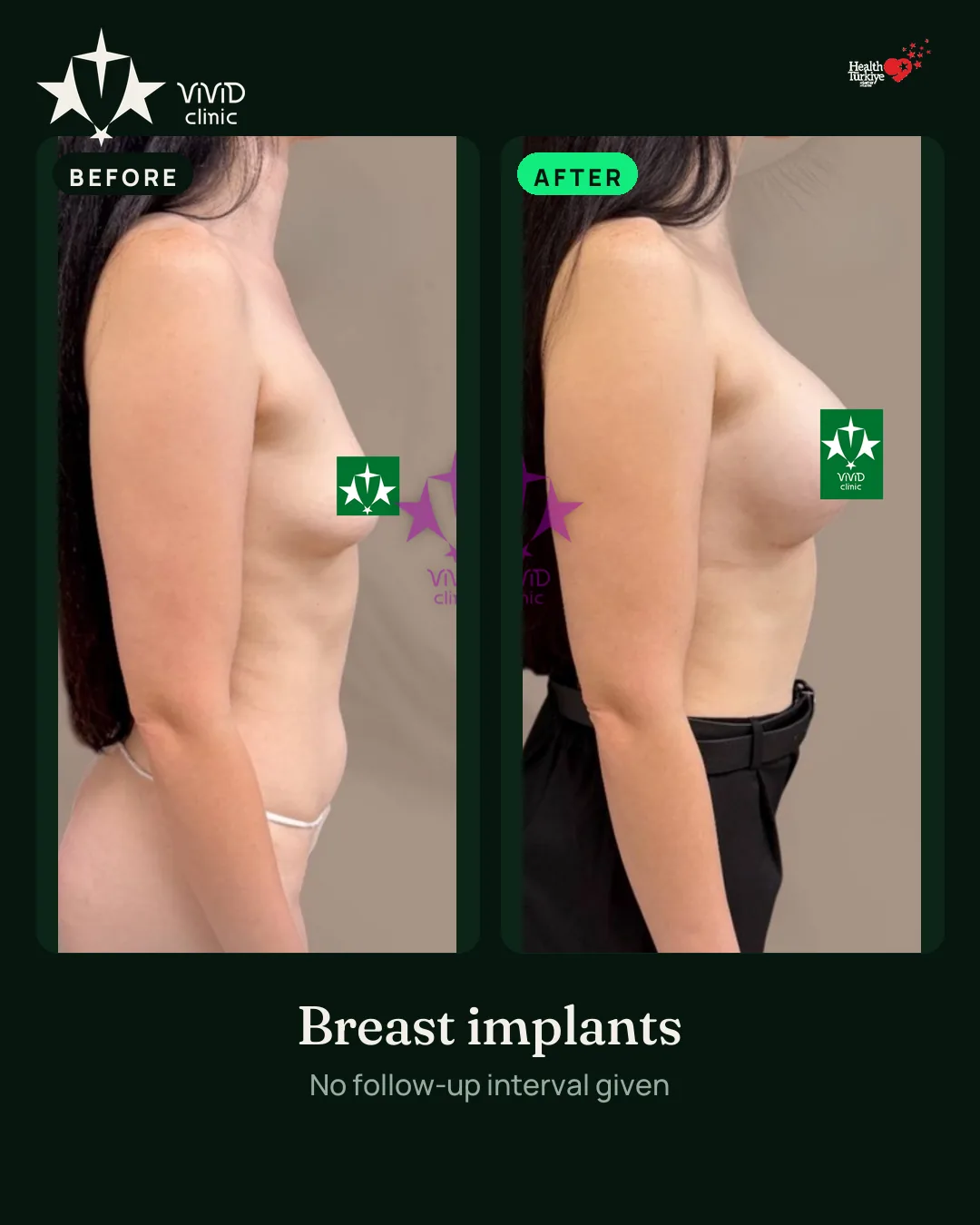
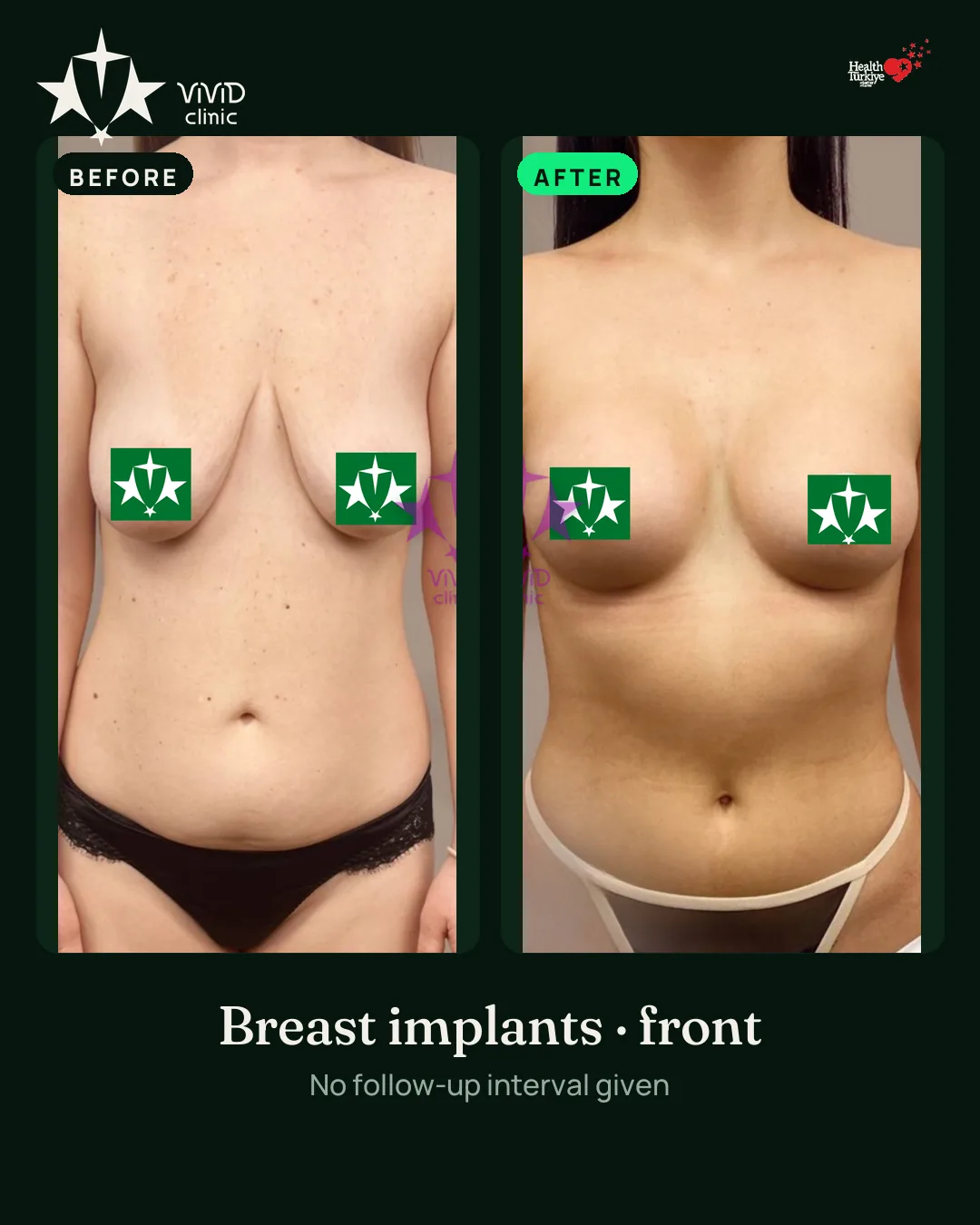
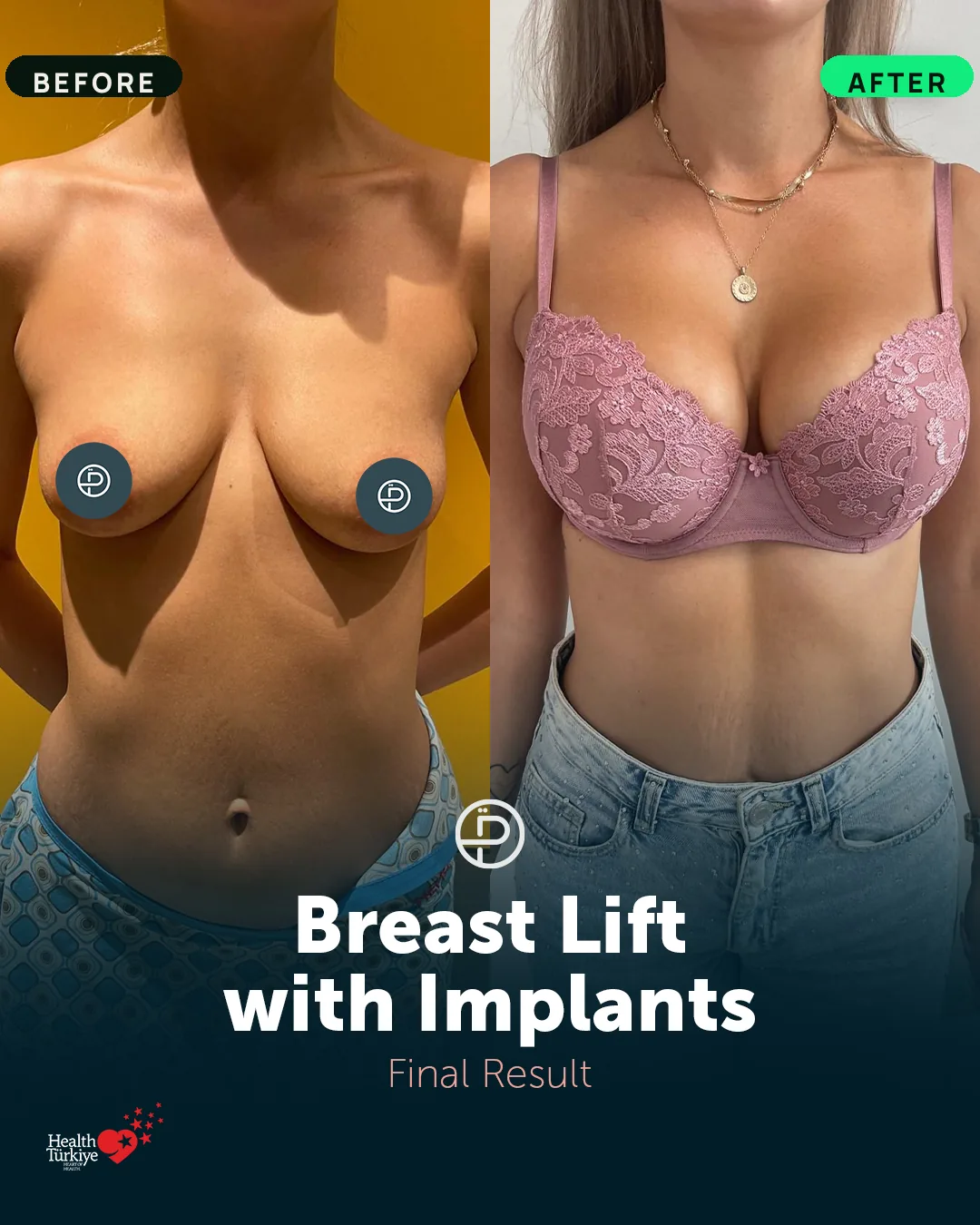
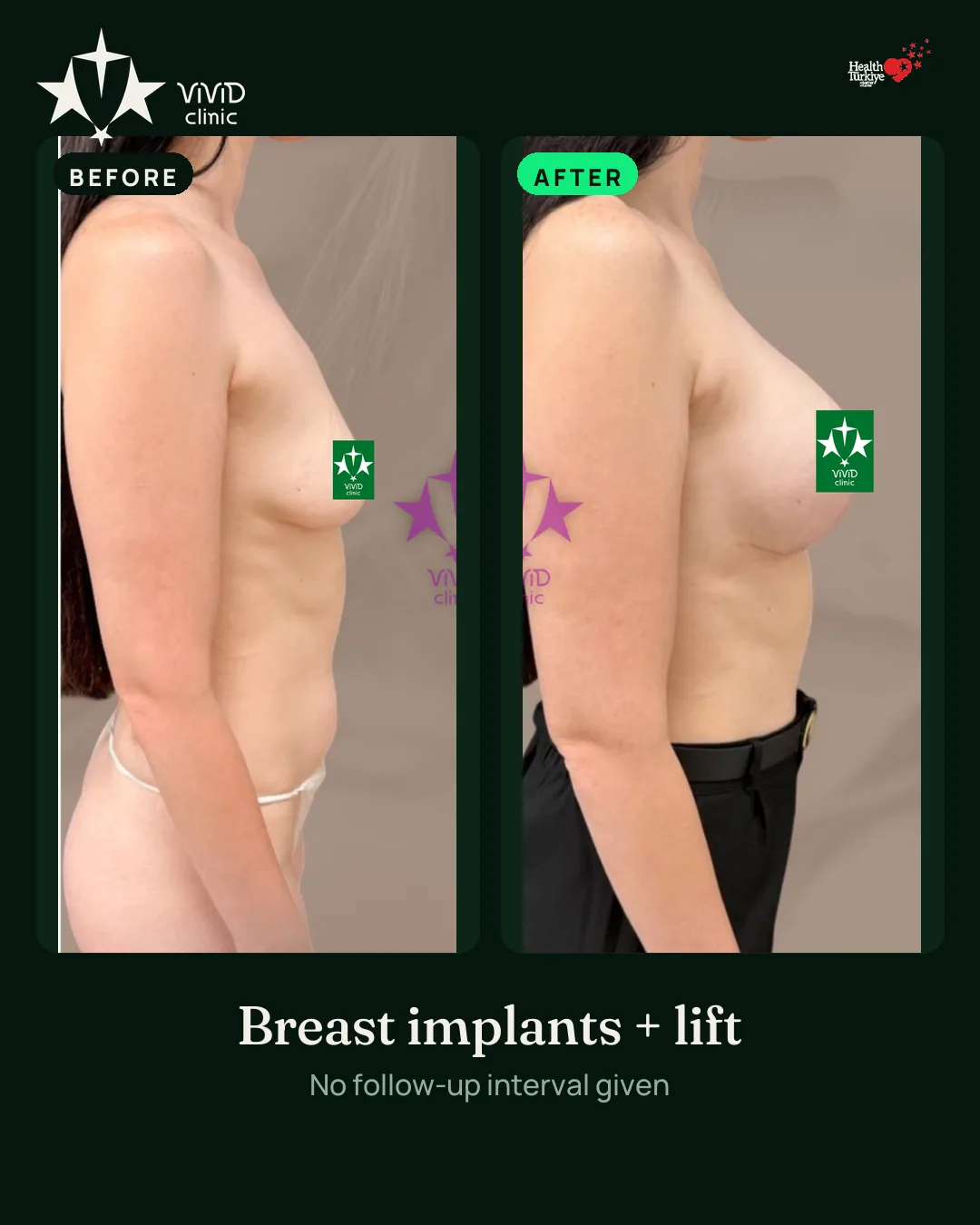
You can view more cases in the full before and after gallery. To find out which approach may suit your own anatomy, send your photos to the Vivid Clinic team and request your free consultation.
This article is for general information and does not replace a personal medical consultation. Suitability, risks, recovery and expected results should always be discussed with a qualified medical professional. Results vary by individual.