
 ChatGPT

Medically reviewed by Prof. Dr. Özgür Pilancı, Plastic, Reconstructive & Aesthetic Surgeon — August 2026
Quick answer (updated August 2026): Irish, Scottish and Welsh people are national and cultural identities — not face types. The populations of Britain and Ireland are closely related and heavily intermixed, and no feature or test could sort their faces into three national groups. What genuinely stands out sits at the level of population averages: the world’s highest documented rates of red hair (driven by the MC1R gene), a high prevalence of very fair, freckle-prone skin, and commonly light eyes. Averages describe distributions, not individuals — the variation within each nation is far greater than any average difference between them.
Three nations, not three face types
Wales, Ireland and Scotland are first of all nations, each with its own language, history and culture. Welsh is spoken daily by hundreds of thousands of people; Irish and Scottish Gaelic survive as living community languages. All three tongues belong to the Celtic language family — Welsh on the Brythonic branch, the two Gaelics on the Goidelic branch — and language, not appearance, is what actually defines “Celtic”.
That matters for how the rest of this page should be read. These are civic and cultural identities that anyone’s face can belong to — a Cardiff rugby crowd, a Dublin street and a Glasgow school contain every complexion in the world. What research can describe is the ancestry of the long-settled populations of the isles, and even there the differences turn out to be real but subtle.
What “Celtic” does — and does not — mean
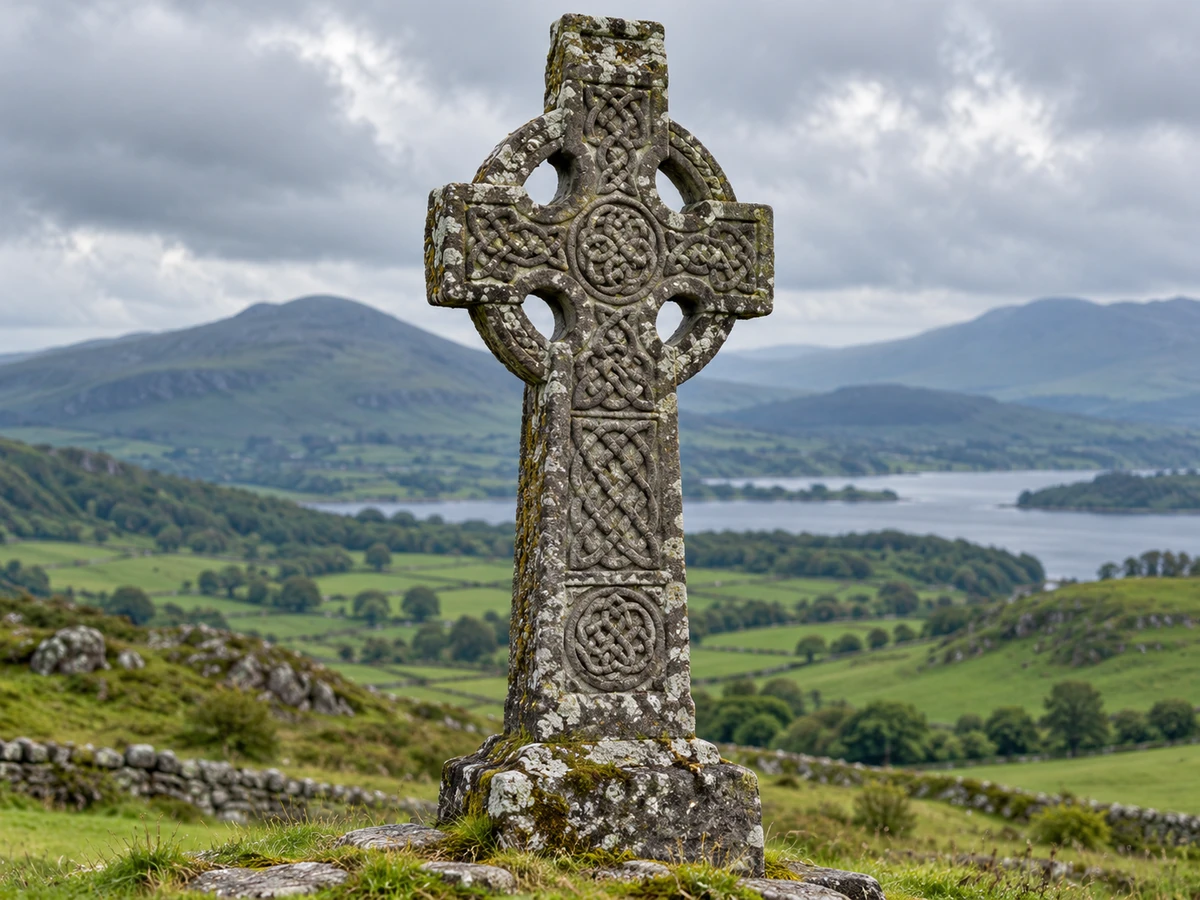
“Celtic” names a family of languages and the cultures historically associated with them, from Welsh and Irish to Breton in France. It has never named a biological type. The People of the British Isles study — the finest-scale genetic survey of the UK yet done, published by Leslie and colleagues in Nature in 2015 — found no single “Celtic” genetic group: if anything, the “Celtic” regions differed from one another more than the English regions did. Used as a physical category, the word has no scientific footing.
The population history written into the isles
The same study is the best guide to what regional differences do exist, and where they came from.
People resettled Britain and Ireland after the last Ice Age, and successive layers followed: Neolithic farmers, Bronze Age migrations, Romans, Anglo-Saxons, Norse settlers and Normans. The People of the British Isles project sampled people whose four grandparents were all born in the same rural area — a window onto the population of about 1885 — and sorted their DNA into 17 regional clusters.
The findings are a study in subtlety. Central, southern and eastern England shows a measurable Anglo-Saxon contribution of roughly 10–40% of ancestry — significant, but nowhere near a population replacement. Orkney is the most distinct region of all, with about 25% Norwegian ancestry from Norse settlement, and even there Vikings intermarried rather than displaced. The Welsh clusters carry more ancestry from the earliest post-glacial settlers than any other group in Britain, and Wales itself splits genetically between north and south. These are differences a statistical method can detect across thousands of genomes — not differences you can see across a dinner table.
The tendencies research actually supports
A few population-level tendencies in the isles are well documented — always as shifted frequencies, never as uniforms.
Red hair. Scotland and Ireland have the highest documented prevalence of red hair anywhere in the world. Survey estimates vary: commonly cited figures run from about 6% up to 13% in Scotland and around 10% in Ireland, against roughly 4% in England. Red hair is usually produced by inheriting two copies of variants in the MC1R gene, so far more people carry one copy — showing up as auburn tints, freckling or red beards — than have fully red hair. Even at the world’s highest rates, roughly nine in ten Scottish and Irish people are not redheads, which is what “population tendency” means in practice.
Fair, freckle-prone skin. The same MC1R variants, along with other pigmentation genes common in northwestern Europe, make very fair skin that freckles and burns easily — Fitzpatrick phototypes I and II — unusually prevalent across Ireland, Scotland and Wales.
Light eyes. Blue, gray and green eyes are common across the isles at rates among the highest in the world, though brown eyes are entirely usual in all three nations, and dark hair is in fact the most common hair color in each of them.
Everything else you may have read — face shapes assigned to nations, attempts to tell the three apart on sight — belongs to Victorian-era physiognomy, discarded by modern anthropology long ago. Individual faces are shaped by thousands of genetic variants plus environment, and they carry no national labels.
Welsh people and appearance
Wales holds the oldest ancestral layer in Britain: the PoBI study found Welsh DNA closest to the isles’ earliest post-glacial settlers. Traditional descriptions of Welsh coloring often emphasize dark hair with fair skin — a combination genuinely common in Wales — alongside every other combination the isles contain. There is no “Welsh phenotype” in any scientific sense; what exists is a nation of three million people whose faces span the full range, with fair, freckle-prone skin and dark hair both appearing at high frequency.
Irish people and appearance
Descriptions of Irish coloring usually center on very fair skin, freckles, and the world’s second-highest rate of red hair at around one person in ten. Light eyes are commonly reported at rates among the world’s highest, and the dark-haired, fair-skinned combination is at least as characteristic as the famous red-haired one. “Irish features” has no anatomical answer beyond these shifted frequencies — an Irish face is simply the face of an Irish person.
Scottish people and appearance
Scotland’s headline statistic is red hair — the highest documented national prevalence in the world, with estimates up to about 13%, and a much larger share carrying one MC1R variant. Very fair skin is correspondingly common, with real dermatological consequences discussed below. Beyond coloring statistics, Scottish faces reflect the same layered ancestry as the rest of the isles — Norse settlement strongest in Orkney and Shetland — and no facial geometry separates a Scot from anyone else.
Where the word “Caucasian” came from — and why it persists
Anyone researching this topic meets the word “Caucasian”, so its history is worth knowing — because the word is a fossil.
In 1795, the German naturalist Johann Friedrich Blumenbach divided humanity into five “varieties” and named the European one “Caucasian” after the Caucasus Mountains, partly because a skull from Georgia in his collection struck him as the most beautiful he owned. That is the entire scientific basis of the term: an eighteenth-century aesthetic judgement about one skull. Blumenbach’s taxonomy, and the race science built on it through the nineteenth century, has been completely discredited — human variation is continuous and does not sort into a handful of types.
The word survived anyway, especially in the United States, where it was absorbed into legal and bureaucratic language and still lingers on medical charts and forms. It is imprecise even on its own terms: it never described people from the Caucasus specifically, and as used in the US it loosely means “white” — a social category, not a biological one. Modern science writes about specific ancestries instead (“northwestern European ancestry”), with plain “white” preferred where a broad social category is meant. “Caucasian” persists purely by bureaucratic momentum; no current science treats it, or any of Blumenbach’s five categories, as a valid division of humanity.
A note on very fair skin, sun and skin health
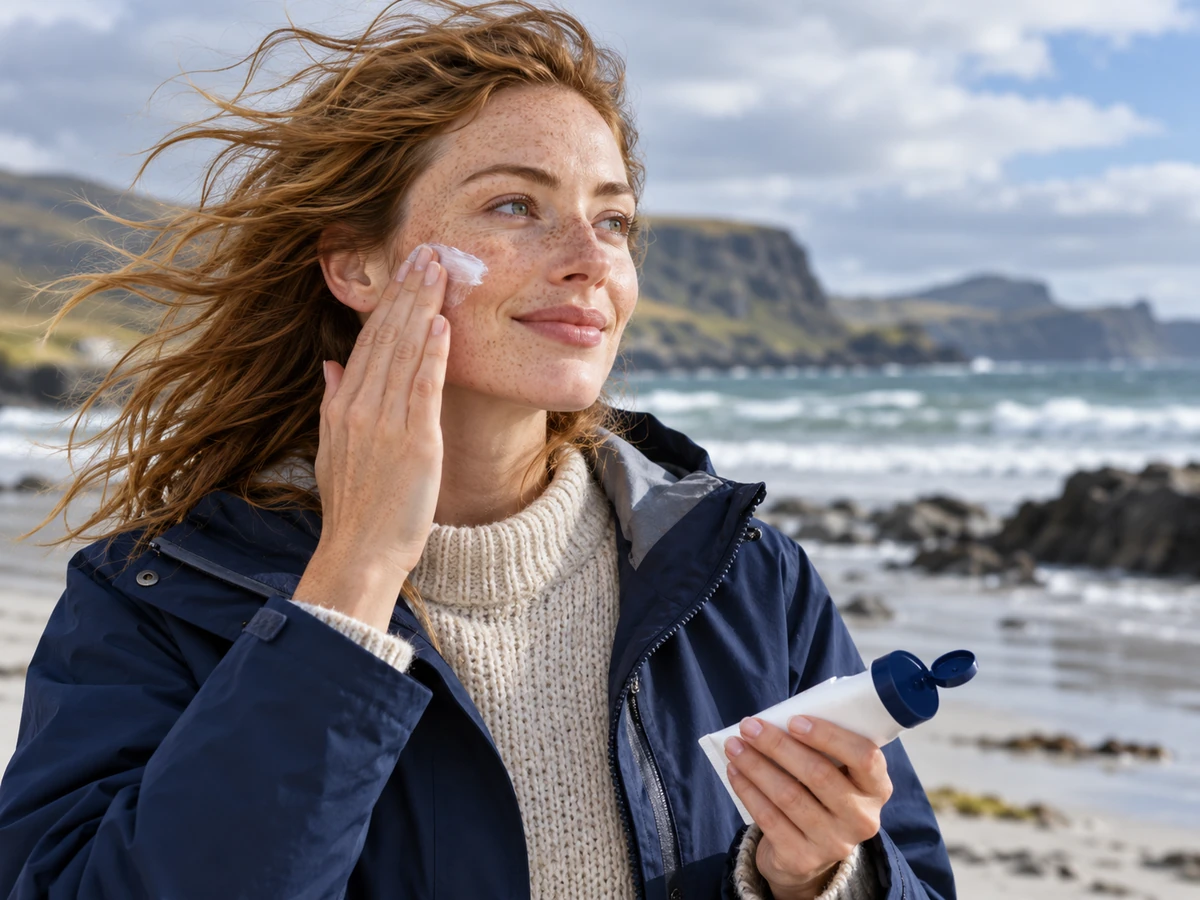
The most practically useful fact on this page is dermatological. Fitzpatrick type I–II skin — the very fair, freckling, easily burning skin so prevalent in Ireland, Scotland and Wales — offers the least natural protection against ultraviolet light. That means the highest melanoma and non-melanoma skin cancer risk of any skin type, and the earliest visible photoaging: fine lines, broken capillaries and pigment change arrive sooner on unprotected fair skin than on any other. MC1R variants themselves are independently associated with melanoma risk. Daily broad-spectrum sunscreen and regular skin checks are not cosmetic advice for this population; they are medical advice.
Heritage and aesthetic surgery: a note on identity

For completeness, since this site belongs to a plastic surgery clinic: when someone from any background considers a facial procedure, the modern standard is identity-preserving planning — refining what a patient asks to change while keeping the features that make their face theirs and their family’s. Heritage features are not flaws to be corrected, and a surgeon’s job is never to move a face toward someone else’s template. Our face aesthetics hub explains how we approach facial balance, and our rhinoplasty page covers the operation where this principle matters most.

Related Before and After Results at Vivid Clinic
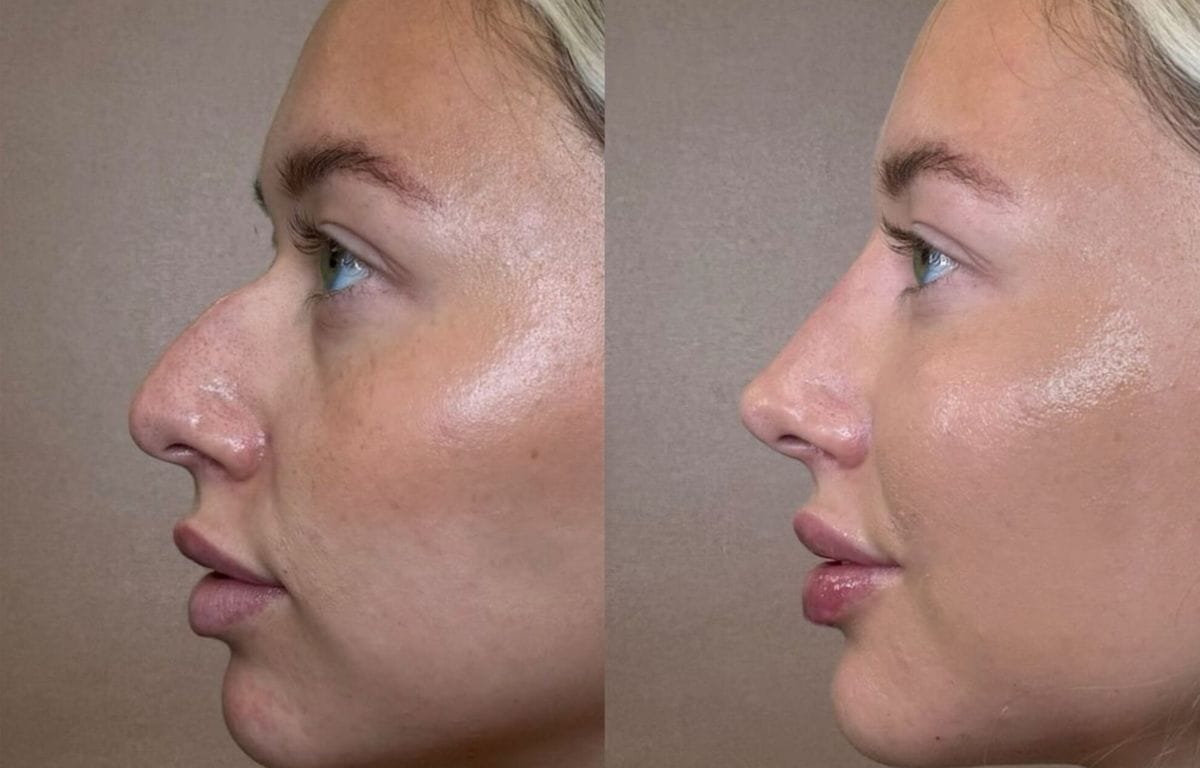
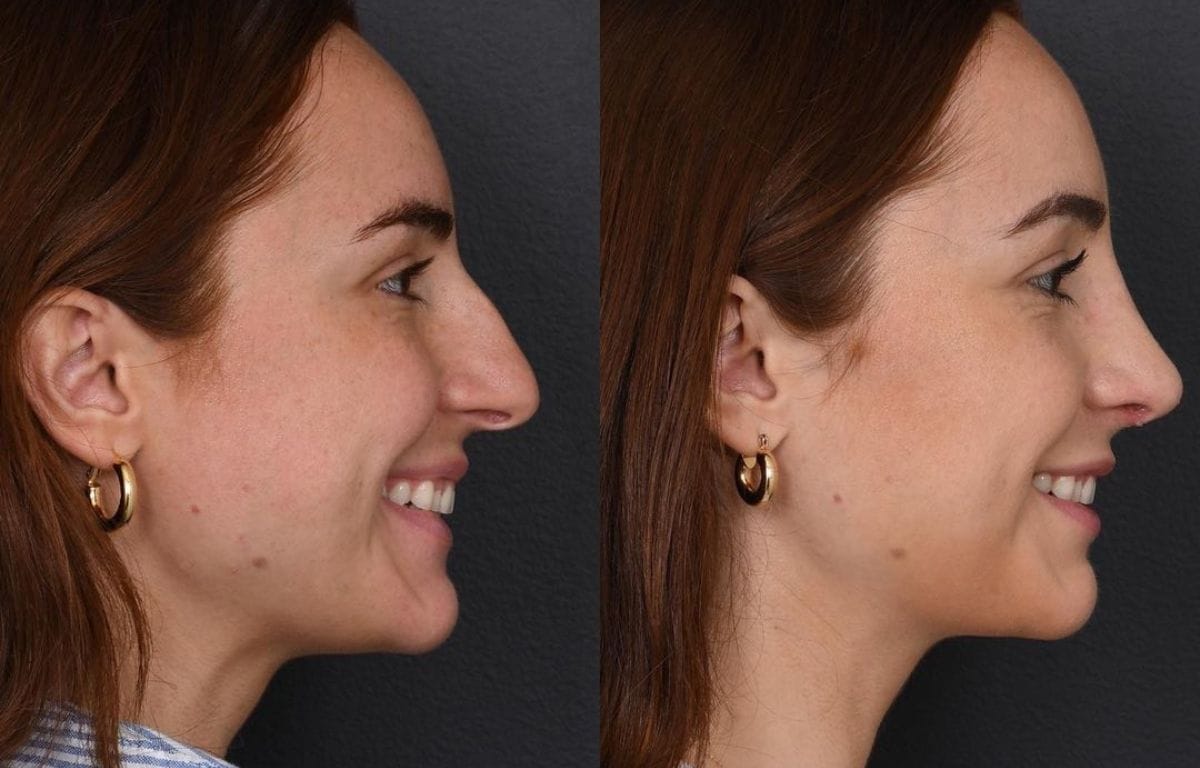
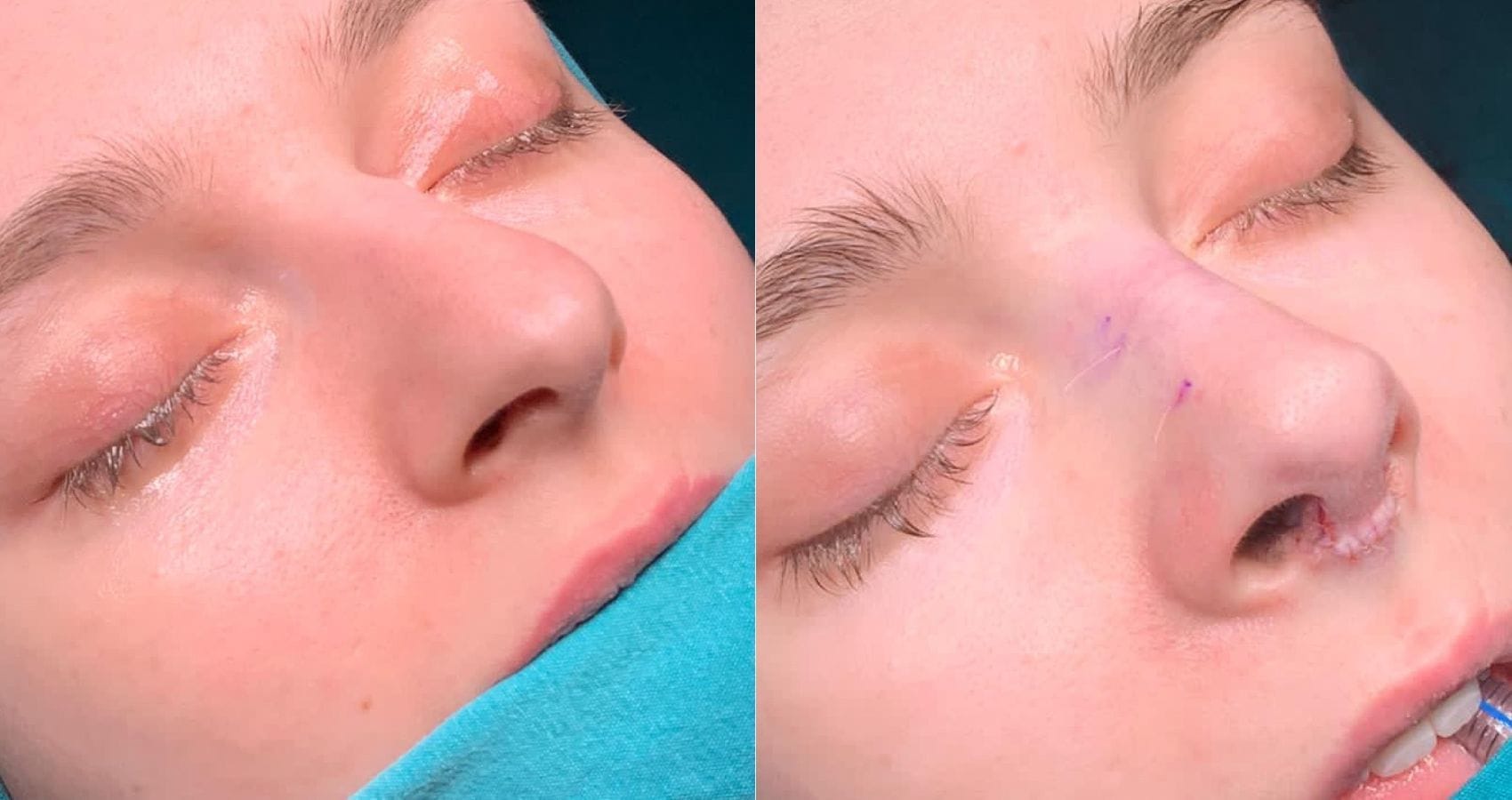
The photos below show real Vivid Clinic patients who had rhinoplasty — a related procedure, not heritage features itself — shared with their consent to show how our Istanbul team documents results. Ask during your free consultation to see cases that match your own treatment. Individual results vary. Browse the full Before & After Gallery.



Frequently Asked Questions
What do Welsh people look like?
There is no single Welsh look. Some combinations do appear at high frequency — dark hair with fair skin is genuinely common in Wales, and very fair, freckle-prone skin is widespread. Genetically, the Welsh clusters in the People of the British Isles study carry more ancestry from Britain’s earliest post-glacial settlers than any other group, but that is a finding about deep history, not appearance — the differences are far too subtle to see.
What do Scottish people look like?
Like people everywhere, with a few statistical tendencies: the world’s highest documented rate of red hair (estimates up to about 13%), and very fair, easily burning skin. Dark hair remains the most common hair color, and light and brown eyes both appear routinely. No facial shape identifies someone as Scottish — the differences between the isles’ populations are detectable only statistically, across thousands of genomes.
Are Irish, Scottish and Welsh people genetically different from each other?
Only subtly. The People of the British Isles study found real regional clusters — Wales distinct within Britain, Orkney about 25% Norse, Anglo-Saxon ancestry concentrated in England — but all of them closely related, and it found no single “Celtic” genetic group uniting the non-English nations. The variation within each nation is far larger than the average difference between them, which is why ancestry is invisible in an individual face.
Why is red hair so common in Scotland and Ireland?
Red hair usually requires two copies of variants in the MC1R gene, and those variants reach their highest known frequencies in Scotland and Ireland — commonly cited estimates put red hair at up to 13% of Scots and around 10% of Irish people, with a much larger share carrying one copy. Why they concentrated there is debated; weaker selection against very fair skin at northern latitudes, where UV is scarce and vitamin D synthesis matters, is the most discussed explanation.
What does “Caucasian” actually mean?
Historically, it is a term coined in 1795 by Johann Friedrich Blumenbach, who named Europeans after the Caucasus Mountains on the strength of a Georgian skull he found beautiful. His five-race taxonomy has been scientifically discredited, but the word survived in US legal and medical language, where it loosely means “white”. It is imprecise, it does not specifically describe people from the Caucasus, and modern research writes in terms of specific ancestries instead. It names a piece of history, not a valid biological category.
Are “Celtic features” a real thing?
Not physically. Celtic is a language and culture family — Welsh, Irish, Scottish Gaelic, Breton and others — and the genetic mapping of Britain and Ireland found no shared “Celtic” genetic group. When people say “Celtic features” they usually mean the coloring statistically common in Ireland and Scotland — red or auburn hair, fair freckled skin, light eyes — which is a tendency, not a definition, and one that millions of people in those nations do not share.
Does very fair skin need special care?
Yes, medically. Fitzpatrick type I–II skin — at its most prevalent in Ireland, Scotland and Wales — burns quickly, carries the highest melanoma risk of any skin type, and shows photoaging earliest. Daily broad-spectrum SPF, no deliberate tanning, and regular mole checks are standard advice for this skin type wherever in the world it lives.
Curious what any of this means for your own face — and what you would want kept exactly as it is? Send photographs for a free online assessment and you will get an honest answer, including when the honest answer is to change nothing.