
 ChatGPT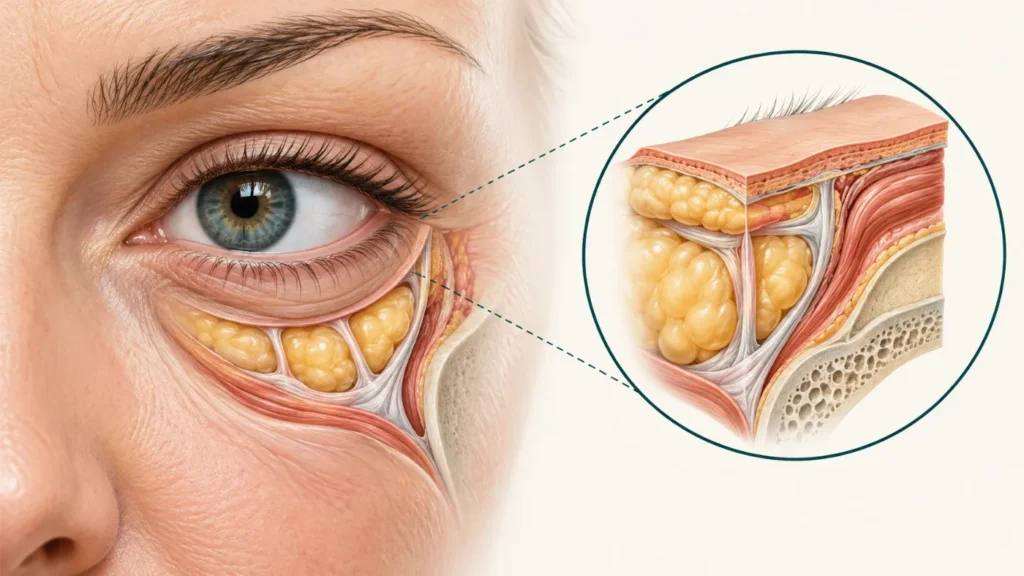
Quick answer: If you are asking what causes eye bags, the answer is usually a mix of fluid retention, prominent fat pads, skin that loosens with age, and factors such as salt, sleep and allergies. Many cases are temporary. Persistent bulges can be evaluated at Vivid Clinic in Istanbul, Turkey, during a free consultation with a plastic surgeon.
Editorially reviewed by the Vivid Clinic Surgical Board. Last updated: October 2026.
What Causes Eye Bags? A Clear Starting Point
Under-eye puffiness is a common appearance concern, and it can show up in the mirror at any age. Eye bags are not one single problem. They can reflect temporary fluid, normal changes in the skin and fat around the eyes, or, less often, a medical condition that deserves a proper check. Understanding which of these is involved is the first step toward a sensible decision.
Two people with the same complaint can have very different causes, so guessing rarely helps. That is why a free consultation with a plastic surgeon at Vivid Clinic in Istanbul, Turkey, is a sensible place to begin. A personal assessment is the most reliable way to separate what is temporary from what is structural.
Fluid Retention and Salt
When fluid builds up in the thin layers of tissue around the eyes and eyelids, the area can look swollen and puffy. Cleveland Clinic describes this fluid buildup and notes that salt contributes because it causes the body to retain water. The same source states that swelling usually resolves within a day.
Diet, hydration and general health all influence how much fluid the body holds, so puffiness often changes from day to day.
Sleep, Allergies and Everyday Irritants
Short or disrupted sleep is one of the most familiar reasons people wake up with puffy eyes. Cleveland Clinic notes that staying up late can leave you with bags after a short night, and that raising your head with an extra pillow can help limit fluid settling around the eyes overnight.
Allergies can add swelling and itching around the eyes. Mascara, eyeshadow, and eye creams containing fragrances, dyes, or preservatives can also irritate the eyes and the surrounding skin. Rubbing the eyes can cause swelling and broken blood vessels, according to Cleveland Clinic’s guide to dark circles.
Aging, Skin Laxity and Under Eye Fat
With age, the tissues that support the lower eyelid change. Collagen fibers become laxer, and the eyelid can sag more, as StatPearls describes in its lower eyelid blepharoplasty review. Smoking is also linked with collagen loss, which can thin the skin around the eyes, according to Cleveland Clinic.
Fat is the other major player. StatPearls describes steatoblepharon as fat protruding in the upper and lower eyelids, and dermatochalasis as excess skin of the eyelids. A bulge that comes from fat or skin laxity is structural, so it tends to remain after fluid-related puffiness has settled.
Understanding what causes eye bags at the structural level also explains why they can persist. Genetics can contribute too: Cleveland Clinic notes that for some people, fat pad prominence, bone structure, or skin laxity can be genetic, and that these features can be hard to fully correct without medical treatment.
Temporary Puffiness Versus Persistent Fat Bulging
When you ask what causes eye bags for your own face, a practical way to sort the two is to watch how the area behaves over time. Fluid-related puffiness is often worst after waking and eases during the day. A rounded fullness that stays through the day and casts a visible shadow points more toward fat or skin laxity, and a specialist will examine that pattern in person.
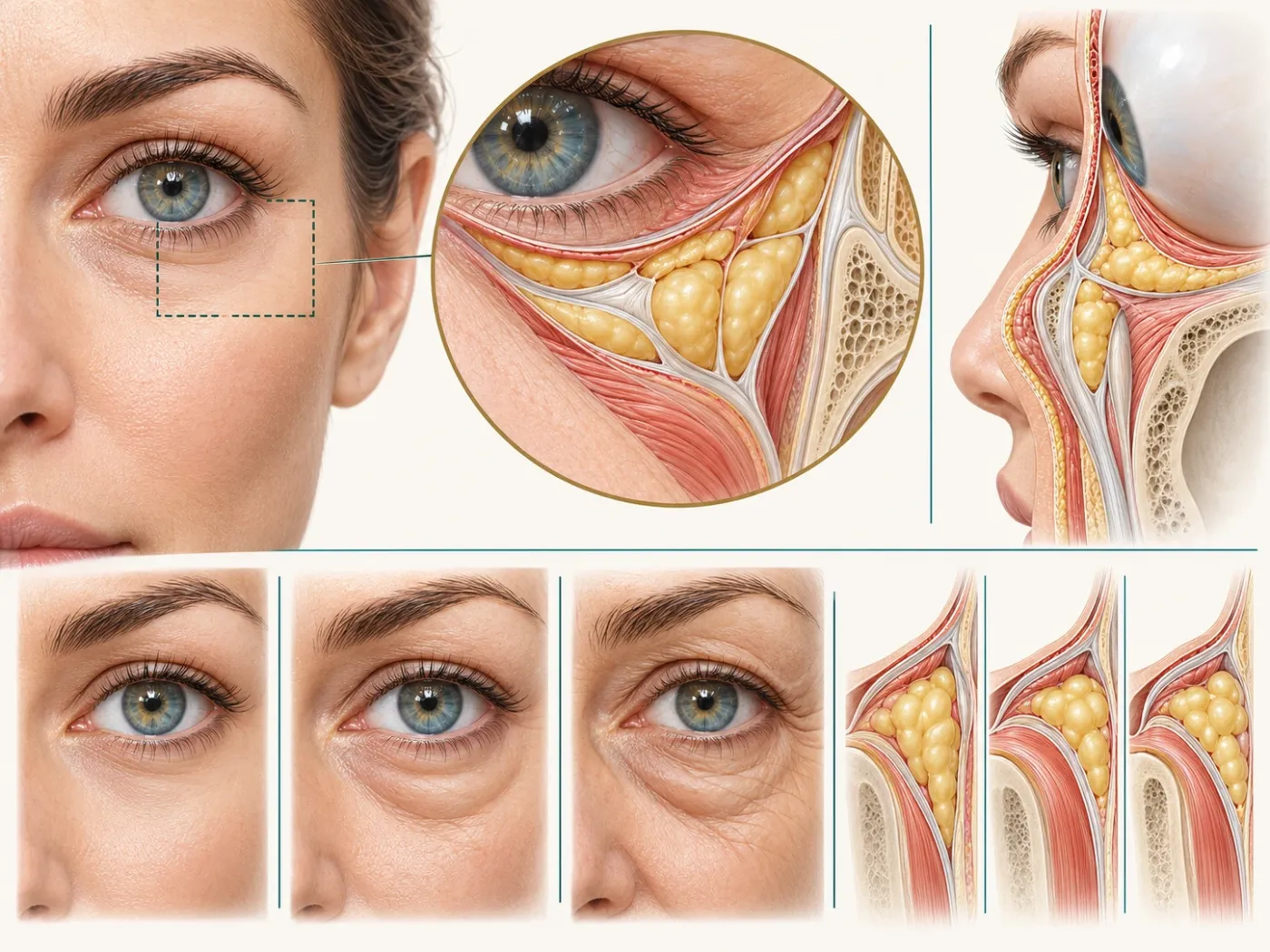
Dark circles are a related but separate question. Cleveland Clinic describes them in terms of thinning skin, pigment changes, blood vessels showing through, and poor sleep, and it treats them as related to, but distinct from, the volume-related puffiness that creates bags. Many people have a combination of both, which is why a single cause rarely explains the whole appearance.
When a Medical Evaluation Comes First
Most under-eye puffiness is harmless, but some causes need prompt attention. Cleveland Clinic advises that swelling lasting longer than 24 to 48 hours should prompt a visit to an eye care professional. If you wear contact lenses and your eyes or eyelids swell, remove the lenses right away.
Facial swelling can also reflect allergic reactions, medication side effects, infection, or other medical conditions. Cleveland Clinic’s facial swelling guide states that difficulty breathing, a feeling that the throat is swelling shut, or signs of a severe allergic reaction need emergency care. Eye pain, changes in vision, redness with fever, or swelling that worsens should be assessed by a medical professional rather than treated as a cosmetic concern.
Lower Eyelid Surgery: Who It May Help
Lower eyelid surgery, often called lower blepharoplasty, is one option that surgeons discuss when under-eye bulges are persistent and related to fat, skin, or both. The American Society of Plastic Surgeons lists lower-lid concerns that eyelid surgery can address, including bags under the eyes, fatty deposits that appear as puffiness, excess skin and fine wrinkles, and drooping lower lids that reveal white below the iris.
Surgery is not the right answer for everyone, because what causes eye bags differs from one patient to the next. Our eyelid surgery overview explains the procedure in more detail, but whether a technique suits you depends on your anatomy, health, and goals. A StatPearls review also notes that the durability of these procedures remains questionable, which is a good reason to ask direct questions about long-term expectations.
How a Specialist Assesses What Causes Eye Bags in You
A thorough assessment usually begins with a detailed medical history and an examination of the area around the eyes. StatPearls lists lower-eyelid targets that include excess orbital fat, excess eyelid skin, slackness of the eye muscles and orbital septum, malposition of the lower eyelid, and prominence of the nasojugal groove. Your surgeon checks which of these apply to you rather than assuming that one fix suits every face.
Surgery, Alternatives and Realistic Limitations
Not every answer to what causes eye bags calls for surgery. When puffiness is mainly fluid-related, your specialist may first discuss sleep position, salt intake, allergy management, and gentle eye-care habits. When discoloration is the main concern, the conversation is different and focuses on skin tone and the blood vessels visible beneath the skin.
Surgery has limits. It removes or repositions excess skin and fat, but it does not change skin pigment or the body’s tendency to hold fluid. Results also continue to evolve with aging. If your concern is mainly the upper lids, our guide to hooded eyelids covers those causes separately.
Procedure Overview: Relevant Treatments and Timelines
Optional overview of relevant treatments, not a recovery table for a natural feature.
| Aspect | Details |
|---|---|
| Duration Process | Not stated for lower eyelid surgery in the sources we could verify. Operative time is set by your surgeon after examination. |
| Hospitalization Duration | Blepharoplasty may be performed in an office-based setting, according to StatPearls. Whether an overnight stay is needed is not stated and is confirmed at consultation. |
| Mobility Duration | No walking duration is stated for lower eyelid surgery. An upper eyelid review advises ice packs at 30-minute intervals for the first 3 days and sleeping with the head raised. |
| Return to Activity | Not stated for lower eyelid surgery. The upper eyelid review advises avoiding contact lenses for the first 2 weeks and avoiding heavy lifting, without giving a return-to-work date. |
| Complete Recovery | In an upper eyelid StatPearls review, bruising and swelling may last up to 2 weeks, and eyelid numbness may last 6 to 8 weeks. Surface healing and longer tissue settling are different stages, and full settling is not promised. |
| Anticipated Results | The upper eyelid review describes final photographs at a 3-month visit. The lower eyelid StatPearls review notes that durability remains questionable. Results vary between individuals. |
Your Patient Journey at Vivid Clinic in Istanbul
Your journey with Vivid Clinic begins when you arrive in Istanbul, Turkey, where a VIP airport transfer and a five-star hotel check-in are part of the package for select procedures, with eligibility confirmed at consultation. Your one-on-one consultation with the medical team then reviews your anatomy, medical history, and goals before any decision is made. On the surgery or treatment day, every step is planned for comfort and safety, followed by post-operative care and a check-up visit before you depart. Remote aftercare follow-up continues after you return home, so the team can monitor healing and answer questions as recovery progresses.
Preparation and the Consultation Assessment
Preparation starts with an honest conversation. Bring a full list of medications and supplements, and mention any eye conditions, dry eyes, allergies, or previous eye or facial surgery.
The upper eyelid StatPearls review describes withholding antiplatelet and anticoagulant medications for one week before surgery and for up to a week afterward, with timing set by the surgical team. Never stop or change medication on your own; follow the written plan from your surgeon. This article does not offer self-diagnosis or unsupervised treatment instructions.
A free consultation with a plastic surgeon at Vivid Clinic gives you the chance to ask practical questions: what is causing your bulges, which options are suitable, what risks apply to you, and how the recovery schedule would look. Writing your questions down beforehand helps make sure nothing important is missed.
Recovery, Aftercare and When Results Can Be Assessed
Early healing usually includes some swelling, bruising, irritation, dry eyes and discomfort. The American Society of Plastic Surgeons also advises diligent sun protection and darkly tinted sunglasses until healing is fully complete.
Eyelid references describe practical early measures, including cold packs, head elevation, and avoiding contact lenses for a period after surgery. Settling continues well beyond the first few days, and some numbness along the eyelid margin can last several weeks. Stitch removal, activity, travel clearance, and a return to exercise should be confirmed by your surgeon at each check-up.
Final results are judged after the tissues have settled rather than in the first weeks. An upper eyelid review describes final photographs at a 3-month visit. Results depend on healing, anatomy, and aging, so they are best discussed as an evolving picture rather than a fixed outcome.
Risks, Limitations and Complications
Eyelid surgery is a medical procedure with real risks. The American Society of Plastic Surgeons lists anesthesia risks, bleeding from the incision lines, infection, swelling and bruising, dryness of the eyes, difficulty closing the eyes, ectropion (an outward rolling of the lower eyelid), lid lag that is often temporary, unfavorable scarring, and possible need for revision surgery. It also notes temporary or even permanent change in vision, with a very rare chance of blindness.
StatPearls adds further possibilities for lower blepharoplasty, including wound separation, asymmetry, double vision, and tear duct injury. Because outcomes are individual, your surgeon will discuss risks in detail before you consent. Asking which complications are most relevant to your face is a useful part of the decision.
Cost Factors and Comparing Care Plans
The cost of under-eye treatment in Istanbul, Turkey, depends on several factors, including the surgeon’s experience, the facility, anesthesia type, procedure complexity, and whether other procedures are combined. Because each clinic structures these elements differently, a single number on its own can mislead.
The fairest comparison is like-for-like: the same procedures, the same inclusions, the same aftercare, and a dated written quote. This article does not list prices, averages, or exchange rates. Any personal quote is confirmed only after a consultation.
Why Consultation and Verified Surgeon Credentials Matter
At Vivid Clinic, a treatment plan is created after a one-on-one consultation with the medical team. You can review the medical team, where each surgeon has an individual profile, before deciding who should assess you.
If you want a personal view of what causes eye bags for you, request a free consultation with a plastic surgeon in Istanbul. Share your goals and the concerns that bother you most, and the team can explain whether surgery, watchful waiting, or changes to daily habits make the most sense for your situation.
Related guide: how to get rid of eye bags permanently.
Frequently Asked Questions About What Causes Eye Bags
What causes eye bags to look worse in the morning?
Eye bags often look more noticeable after waking because of how fluid moves while you sleep. When you lie flat, fluid can collect in the thin tissues around the eyes and eyelids, which is one reason what causes eye bags can seem more pronounced first thing in the morning. A short or disrupted night adds to the effect, and a salty dinner can encourage the body to hold water. Raising your head slightly with an extra pillow may help. If swelling lasts longer than 24 to 48 hours, or comes with pain, redness, or vision changes, arrange an assessment with an eye care professional rather than waiting for it to pass.
What causes eye bags, and how do fat bulges differ from pigmentation?
This question matters because what causes eye bags is not always the same problem as dark circles. Age-related fat bulges are a volume change, where fat and surrounding tissue push forward and the lower lid looks puffy or shadowed. Pigmentation and visible blood vessels are a color change under the eye, often linked to sun exposure, genetics, thinning skin, or irritation, and they do not usually form a rounded bulge. A helpful clue is shadow: a bulge that casts a visible shadow points toward fat or skin laxity, while a brownish or bluish tint without much volume points toward color. Many people have both, so a specialist examines each component separately before recommending anything.
When is what causes eye bags medical rather than cosmetic?
Yes. Although most under-eye puffiness is harmless, what causes eye bags is sometimes a medical issue that needs assessment. Allergies can produce swelling and itching around the eyes, and infections such as pink eye can cause redness and discharge. Facial swelling can also come from medication reactions, angioedema, or medical conditions that affect the whole body. Swelling that lasts more than a day or two, affects only one side, or comes with pain, fever, discharge, or changes in vision should be checked promptly by an eye care professional or physician. Difficulty breathing or throat tightness is an emergency. A cosmetic consultation is not the right first step for these symptoms.
How does a specialist decide whether lower eyelid surgery is suitable?
A plastic surgeon starts by working out what is causing the change, which is the core of what causes eye bags in any individual patient. The assessment usually includes your medical history, current medications, any eye conditions, and how the skin, muscle, and fat look when you look up, down, and forward. Lower eyelid surgery can address excess skin, excess orbital fat, and slackness of the eye muscles and septum, but it does not treat dark pigment or temporary fluid retention, so those may need different planning. Your surgeon will also talk through risks such as dry eyes, lid lag, and scarring. Suitability is individual and is confirmed only after a personal examination.
What factors influence a lower blepharoplasty plan and quote?
A personalized plan and quote depend on several variables. The extent of skin and fat to be addressed, whether the surgery is performed alone or with another facial procedure, and the surgeon’s experience all shape the plan. Anesthesia type, the setting where the procedure takes place, and aftercare visits also affect the total. For international patients, transfers and accommodation may be part of a package where eligibility is confirmed at consultation. Quotes are individual, so comparing two numbers without matching inclusions can mislead. Once you know what causes eye bags for your own face, ask each clinic to itemize the same elements so the comparison is fair.
Sources and Further Reading
- American Society of Plastic Surgeons: Eyelid Surgery
- American Society of Plastic Surgeons: Eyelid Surgery Safety
- American Society of Plastic Surgeons: Eyelid Surgery Recovery
- Cleveland Clinic: How to Get Rid of Eye Bags
- Cleveland Clinic: Dark Circles Under the Eyes
- Cleveland Clinic: Facial Swelling
- StatPearls: Lower Eyelid Blepharoplasty
- StatPearls: Blepharoplasty
- StatPearls: Upper Eyelid Blepharoplasty
- Upper Eyelid Blepharoplasty: Evaluation, Treatment, and Complication Minimization
Your Next Step: an Informed Personal Choice
Understanding what causes eye bags is the first step toward a decision you can feel confident about. Eye bags can be temporary, structural, or a mix of both, and the right path depends on your own anatomy, health, and goals.
This article is for informational purposes only and does not replace a personal medical consultation. Suitability, risks, recovery, and expected results should always be discussed with a qualified medical professional.
If you are considering treatment in Istanbul, Turkey, Vivid Clinic can help you understand your options with a personalized plan. Get a Free Consultation with a plastic surgeon and take the first step at your own pace.