
E.max (lithium disilicate)
Pressed or milled from one block of glass-ceramic and bonded to the tooth. Light passes through much like natural enamel.
- Construction
- All-ceramic
- Fixing
- Adhesive bonding
- Well suited to
- Incisors, canines, premolars
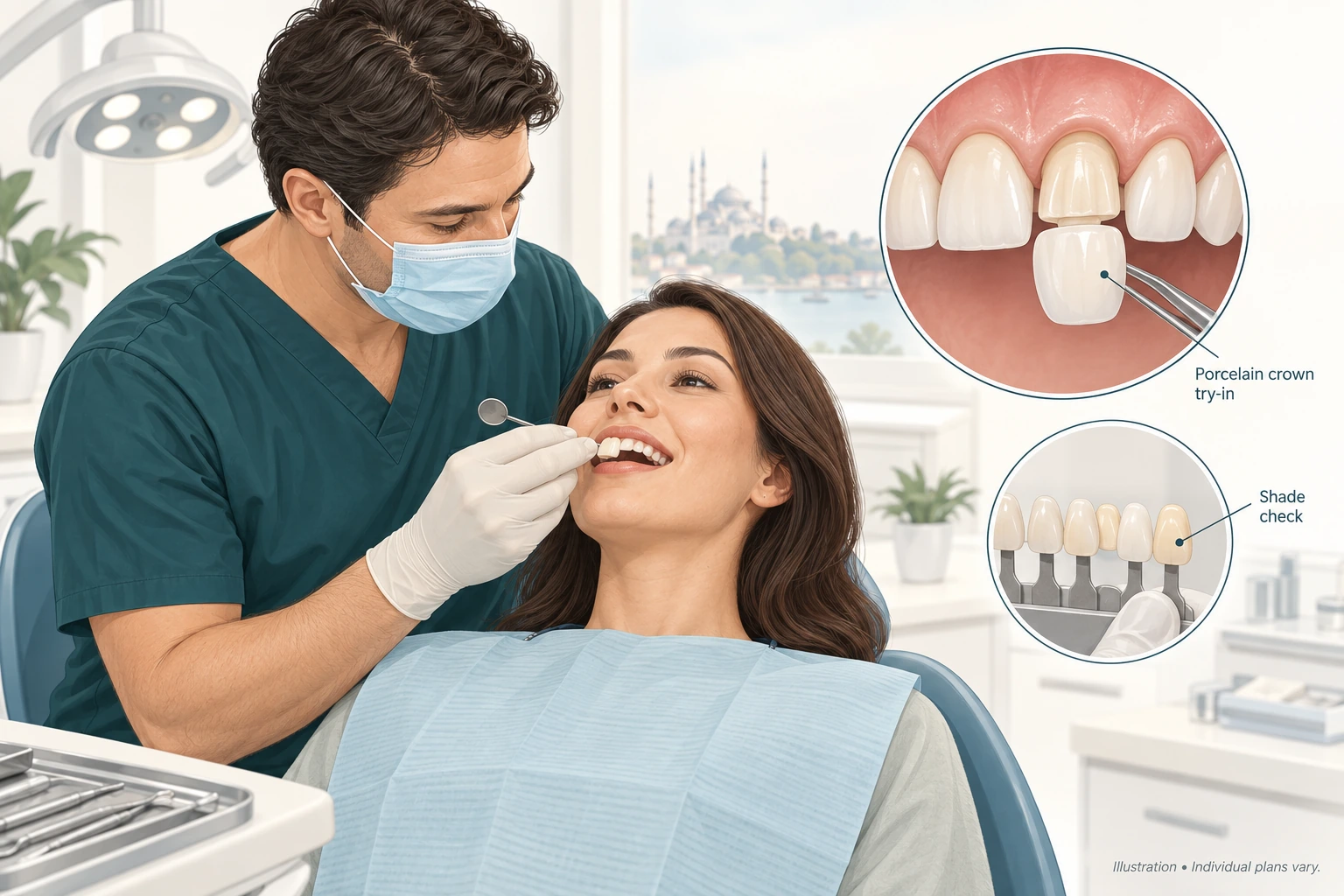
Porcelain crowns are tooth-coloured caps made entirely of ceramic, such as E.max, or of porcelain layered over a metal core. They restore damaged or discoloured teeth and suit front teeth especially well. Plan two visits over about 5–7 days in Istanbul.
Free medical review within 24 hours · No obligation · ★ 5.0 from 157 Google reviews
Editorially reviewed by the Vivid Clinic Surgical Board · Last reviewed September 2026

“Porcelain crown” covers two constructions: all-ceramic crowns, usually lithium disilicate (E.max), and porcelain fused to metal (PFM). Both cover the whole visible tooth to protect and restore it. For when a crown is needed at all, see our dental crowns in Istanbul hub.

| Visits | 2 appointments within one trip |
|---|---|
| Days in Istanbul | About 5–7 days |
| Appointment time | Around 1–2 hours per visit |
| Anaesthesia | Local anaesthesia |
| Hospital stay | None — outpatient dental treatment |
| Options | E.max (lithium disilicate) all-ceramic; porcelain fused to metal (PFM) |
| Temporary crowns | Yes, between visits |
| Back to work | Usually the next day |
| Adjustment period | About 1–2 weeks |
| Results last | Often 10–15 years or more with good care |
| Aftercare | Normal brushing and flossing, non-abrasive toothpaste, check-ups every 6–12 months |
Your dentist explains which material suits each tooth before anything is prepared.
The main difference is how each crown handles light, how much tooth is removed and how it behaves under biting forces. Many plans use more than one type.

Pressed or milled from one block of glass-ceramic and bonded to the tooth. Light passes through much like natural enamel.
A cast or milled metal core with porcelain layered on top. Still useful for longer bridges or where a metal framework is preferred.
A ceramist may add fine porcelain layers or surface stains to reproduce translucent edges and subtle colour variations.
PFM crowns generally need slightly more reduction on the visible surface to hide the metal. Crowns on implants are covered on our single tooth implant page.
Tooth health, nerve status, gums and bite are checked before any preparation. The depth of preparation is set by the material chosen for that tooth.
Examination and X-rays of the tooth, nerve, gums and bite.
The tooth is shaped evenly under local anaesthesia.
Digital scan; shade matched in balanced light, with photographs.
A temporary crown protects the tooth and tests the shape.
The crown is pressed, milled or layered, then glazed.
Fit, contacts, colour and bite checked; then bonded or cemented.
A typical plan for porcelain crowns. Root canal or gum treatment first may add a day or two, which your dentist confirms in advance.
Day 1
A VIP transfer takes you from Istanbul Airport to your hotel. Your patient coordinator and interpreter call to welcome you.
Day 2
Consultation, X-rays and plan confirmation, then tooth preparation, scans and temporary crowns.
Days 3–4
Your crowns are made while you rest or enjoy the city. Any root canal or gum treatment is scheduled here if needed.
Days 5–7
You review shape and shade at the try-in, then the crowns are bonded and the bite adjusted. The 24/7 support line stays open once you are home.
Clear smile photos, any recent X-rays and a note about the teeth to restore. A Vivid Clinic dentist suggests E.max, PFM or zirconia for each tooth. Free, no obligation.
Most people are back to normal activities the next day. Mild sensitivity to temperature is common and usually fades.
Well-made porcelain crowns give a natural, stable colour that resists staining. Many last 10–15 years or longer, depending on bite forces, hygiene, the underlying tooth and maintenance.
Porcelain does not whiten, so any whitening is done before shade matching. The ADA's patient site MouthHealthy has helpful advice on caring for crowns and gums.

In short: zirconia is stronger and is usually chosen for molars, heavy bites and bridges. E.max tends to offer slightly more translucency, which makes it a favourite for front teeth.
| Porcelain (E.max) | Zirconia | |
|---|---|---|
| Strength | A strong glass-ceramic when bonded correctly | Stronger |
| Translucency | Slightly greater; lifelike on front teeth | Modern layered zirconia can also look very natural |
| Usually chosen for | Incisors, canines and premolars; some molars with a normal bite | Molars, heavy bites and bridges |
| Heavy grinders | Zirconia is usually preferred instead | Monolithic zirconia usually preferred |
| Metal at the gum line | None | None |
PFM sits between the two on track record but is now chosen less often for single front teeth. For the zirconia side, see our zirconium crowns in Istanbul page. Many smiles combine E.max at the front and zirconia at the back, as part of a wider smile makeover.
Porcelain crowns in Turkey are often more affordable than in the UK, US or much of Europe. Even so, your quote is personal and only given after a Vivid Clinic dentist reviews your photos and X-rays. The consultation is free.
Typically covers:
Your price depends on
Porcelain crowns are a routine restoration, but they are not maintenance-free. These are the main risks to know about.

The NHS overview of dental treatments outlines what to expect from crowns in general terms.
Yes, this is one of the most common reasons patients ask for new porcelain crowns. The dark line usually comes from the metal core of an older porcelain-fused-to-metal crown showing as the gum recedes. Replacing it with an all-ceramic E.max or zirconia crown removes the metal margin. The dentist also checks the tooth and gum underneath, as recession or decay may need treatment first.
For some situations, yes. A porcelain fused to metal crown has decades of clinical use. It remains a reliable option for certain long bridges or when a metal framework is preferred. For most single front teeth, all-ceramic crowns are now usually chosen because they avoid the grey margin and let light through more naturally. Your dentist will explain which type of porcelain crown suits each tooth.
Often, for premolars and some molars in people with a normal bite, because lithium disilicate is a strong glass-ceramic when bonded correctly. For heavy grinders, molars under high load or bridges spanning several teeth, monolithic zirconia is usually preferred. Your dentist will assess wear facets, bite forces and available tooth thickness before recommending E.max porcelain crowns for a back tooth.
Usually about 5 to 7 days, across two main visits. The first covers examination, tooth preparation, digital scans and temporary crowns. After the porcelain crowns are made, a try-in and final bonding take place a few days later. Larger cases, or teeth needing root canal treatment first, may need a day or two more, which your dentist confirms in advance.
The glazed porcelain surface resists staining well and does not respond to whitening, so it keeps its original shade. Your natural teeth, however, can darken or be whitened, which may create a mismatch. If you plan to whiten, do it before your porcelain crowns are shade-matched. Polishing at check-ups keeps the glaze smooth, and abrasive toothpastes should be avoided. Your dentist can show you shades in balanced light.
For most front teeth, E.max all-ceramic porcelain crowns are the usual choice. With no metal, light passes through them much like natural enamel, so they look lifelike and avoid a grey line at the gum. PFM crowns look more opaque and generally need slightly more reduction on the visible surface to hide the metal. For highly visible teeth, a ceramist may add fine layers or stains to blend the crown with its neighbours.
Well-made porcelain crowns often last 10 to 15 years or longer with good care. Longevity depends on your bite forces, hygiene, the tooth underneath and regular maintenance. Brush twice daily with a non-abrasive toothpaste, clean at the crown margins with floss or interdental brushes and attend check-ups every 6 to 12 months. If you grind your teeth, wearing a night guard helps protect the porcelain from chipping.
Send clear smile photos, any recent X-rays and a note about the teeth you would like to restore. The consultation is free, with no obligation to book.
Free · No obligation · Reply within 24 h
Open a summary of this guide in your AI assistant.
 ChatGPT