
 ChatGPT
Quick answer: If you are asking how to get rid of eye bags permanently, the honest answer is that no single treatment stops aging or changes the anatomy behind under-eye puffiness. Options range from everyday habits to lower blepharoplasty, which addresses fat bulges and excess skin. At Vivid Clinic in Istanbul, Turkey, a plastic surgeon can explain which approach fits your anatomy.
Editorially reviewed by the Vivid Clinic Surgical Board. Last updated: October 2026.
What Are Under-Eye Bags, and Why Do They Form?
Under-eye bags are the rounded, puffy shapes that can sit below the lower eyelid. For many people they are most noticeable in the morning or after a tiring week. Understanding what is creating the shape is the first step, because the cause decides which option makes sense.
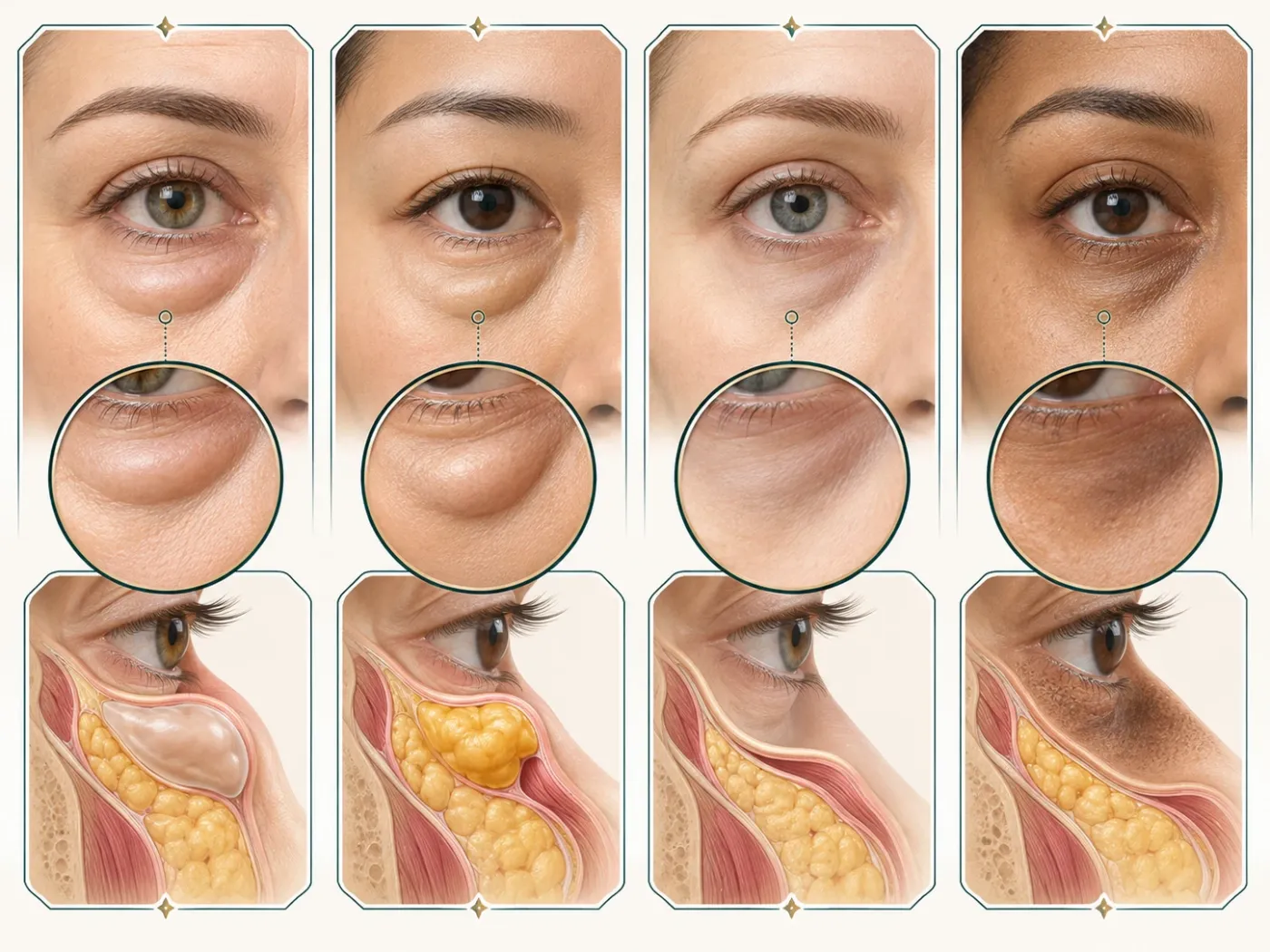
Some fullness comes from fat that sits behind the lower lid and pushes forward. Other shadowing comes from skin that has lost firmness, from temporary fluid, or from light falling on a hollow beneath the eye. Many people have a combination, which is why a single fix rarely explains everything. Under-eye fullness is also a normal variation in human anatomy. Treatment is always optional.
Identifying Puffiness, Fat Bulges, Dark Circles, and Hollows
Several concerns get grouped together under the phrase eye bags, but they have different causes and call for different solutions. Puffiness that changes from day to day often relates to temporary fluid and may be worse after poor sleep. A fat bulge, by contrast, looks like a rounded, stable contour that stays visible through the day. The American Society of Plastic Surgeons describes fat bulges as fatty deposits that appear as puffiness in the eyelids.
Dark circles are a color change rather than a bulge. Shadowing in the tear trough, the hollow between the lower lid and the cheek, can make a person look tired even when the lid is flat. Hollows are the reverse of a bulge, caused by volume loss rather than extra fat, so they need a different approach. A clinician looks at how these features combine on your face before suggesting anything.
Lifestyle Measures and Their Limits
Most people who search for how to get rid of eye bags permanently start with lifestyle changes, and they are a sensible place to begin. Regular sleep, staying hydrated, and avoiding heavy meals late in the evening are commonly discussed as ways to reduce temporary puffiness. These habits carry little risk.
The limit is that lifestyle measures cannot change the structure of the lower eyelid. If puffiness comes from fat positioned behind the lid, or from skin that has lost firmness over time, no amount of sleep will move that tissue. Sun protection is worth keeping as a habit as well. The ASPS advises diligent sun protection and darkly tinted sunglasses while eyelid surgery heals.
Non-Surgical Treatments: What They Address
Non-surgical approaches are often researched alongside surgery, so it helps to be clear about what they are generally aimed at. In broad terms, they tend to address surface concerns such as skin quality or the appearance of hollows, rather than removing a fat bulge or excess lower lid skin. Whether any of them suits you depends on your anatomy and medical history, and a clinician needs to assess that in person.
This article does not recommend a specific product, device or treatment for any reader. Any injection or energy-based treatment near the eye carries its own risks and should be discussed with a qualified clinician who has examined you. You can also explore the wider range of face aesthetic options on the Vivid Clinic website.
When Lower Blepharoplasty May Help
Lower blepharoplasty is a surgical option that addresses specific causes of lower eyelid appearance. According to the American Society of Plastic Surgeons, eyelid surgery can treat fat bulges that appear as puffiness, bags under the eyes, drooping lower lids that reveal white below the iris, and excess skin with fine wrinkles. The technique is matched to the cause, and your surgeon chooses it after examining your lower lid, skin and expectations. You can read more about eyelid lift planning at Vivid Clinic.
Lower blepharoplasty is not a treatment for dark circles or hollows on their own. A color change in the tear trough may remain after surgery, which is why a clear discussion of goals matters.
Why “Permanently” Does Not Mean Aging Stops
The word permanently is common in searches, but it describes a hope rather than a guarantee. Surgery changes the tissue a surgeon addresses, and those changes can last a long time. What surgery cannot do is stop the wider aging process, which continues in skin, muscle, bone and fat across the whole face.
Some people later notice new hollows, changes in skin texture or fresh puffiness. Those changes reflect ongoing aging rather than a single fixed state, which is why a surgeon plans the eye area with the cheeks and brow in mind.
How to Get Rid of Eye Bags Permanently: Candidacy and Reasons to Defer Treatment
Candidacy for lower eyelid surgery depends on your overall health, eyelid anatomy, skin quality and goals. The ASPS notes that the decision to have plastic surgery is extremely personal, and that potential benefits should be weighed carefully against risks.
There are also good reasons to defer treatment. A temporary cause, such as a recent illness or a stretch of poor sleep, may need time to settle. If your concern is mainly heavy upper lids, our guide to blepharoplasty for hooded eyelids covers a different set of causes. Sudden or painful swelling should be assessed by a doctor before any cosmetic discussion.
Relevant Procedure Overview and Realistic Expectations
The overview below is an optional summary of relevant treatments, not a recovery table for a natural feature. Timings depend on the technique and the individual, so it describes what to ask rather than offering fixed numbers.
Optional overview of relevant treatments, not a recovery table for a natural feature.
| Aspect | Details |
|---|---|
| Duration Process | Set by the surgeon for the technique chosen, such as upper lids, lower lids or both (ASPS eyelid surgery page). Normal anatomy itself has no procedure duration. |
| Hospitalization Duration | Not given as a fixed period in the sources reviewed. The setting and any overnight needs are confirmed by the treating clinician for each option. |
| Mobility Duration | Walking and light movement are individual. Your clinician will clarify any restrictions on activity after treatment. |
| Return to Activity | Desk work, exercise and travel are cleared separately. The ASPS advises asking when normal activity and exercise can resume (ASPS eyelid recovery page). |
| Complete Recovery | Initial healing may include swelling, bruising, irritation, dry eyes and discomfort (ASPS eyelid recovery page). Longer settling is individual, and no fixed completion date is promised. |
| Anticipated Results | The timing of assessment is set by the surgeon. Results vary between people, and aging continues after any procedure. |
Preparation and the Consultation Assessment
Preparation starts with honest information. Your surgeon will want to know about your medical history, current medications, and any previous eye conditions or eyelid surgery. They will also ask about dry eyes, tear production and vision, because eyelid surgery affects more than appearance. Please do not attempt self-diagnosis or unsupervised treatment at home, including injections, cutting, or strong products used near the eye.
At Vivid Clinic in Istanbul, Turkey, the consultation is where a plastic surgeon examines your lower lids, discusses options and explains limitations. If you want to start that conversation, you can request a free consultation with a plastic surgeon before deciding anything.
Recovery, Aftercare, and When Results Can Be Assessed
Recovery has two stages. The early stage includes the swelling, bruising and irritation the ASPS describes as part of initial healing. The later stage is the gradual settling of tissue, which takes longer and cannot be judged in the first days. Early effects are not the final result.
Aftercare usually includes protecting the eyes from the sun and following your surgeon’s instructions about cleaning, medication and follow-up visits. Ask when you can resume normal activity and exercise, and when any stitches are removed. Remote aftercare can help you raise concerns between visits, but it does not replace an in-person check when one is needed.
Risks, Limitations, and When Medical Assessment Comes First
Lower eyelid surgery is a medical procedure, and it carries risks. The ASPS lists possible complications including anesthesia risks, bleeding from incision lines, changes in skin sensation, difficulty closing the eyes, dry eyes, ectropion (outward rolling of the lower lid), infection, persistent pain, possible need for revision surgery, sun or light sensitivity, swelling and bruising, vision changes, and unfavorable scarring.
Some of these risks are rare, while swelling and bruising are common and temporary. The ASPS also notes a very rare chance of blindness among the vision-related risks. Your surgeon should explain which risks apply to your anatomy and planned technique. Surgery is never easy or risk-free, and lower blepharoplasty will not address every cause of under-eye shadowing or prevent future aging.
Seek prompt medical care for sudden or painful swelling around the eye, swelling with fever or redness, changes in vision, or any eye discharge. These symptoms need assessment by a doctor rather than a cosmetic conversation.
Cost Factors and Comparing Care Plans
Cost depends on the surgeon’s experience, the facility, the type of anesthesia, the complexity of the plan, whether other procedures are combined, travel and accommodation, and the aftercare that follows. Two quotes can look similar on paper and still cover very different services.
Because every plan is individual, no fixed price applies to everyone. Ask any clinic for a written, dated quote and check what is included, such as consultations, follow-up visits and remote aftercare. Vivid Clinic can provide a personalized quote after a free consultation with a plastic surgeon, once your goals and suitability are clear.
Your Optional Patient Journey at Vivid Clinic in Istanbul
Patients considering care at Vivid Clinic can plan a visit to Istanbul, Turkey, and the journey is designed around comfort and clarity. Where the package includes it, a VIP airport transfer collects you on arrival and takes you to a five-star hotel for check-in. Eligibility for transfer and hotel benefits is confirmed at consultation, because these benefits apply to select procedures only.
Your one-on-one consultation with the medical team follows, where your surgeon reviews your anatomy, medical history and goals. If you decide to go ahead, the surgery or treatment day is planned around your comfort and safety. Post-operative care follows, and a check-up visit confirms how you are healing. Departure is planned once that check-up confirms travel is appropriate, and remote aftercare follow-up continues after you return home.
Why Consultation and Verified Surgeon Credentials Matter
A good consultation includes a physical examination, a clear explanation of options, a discussion of risks and limitations, and time to ask questions. Choosing Vivid Clinic in Istanbul, Turkey means you can meet the medical team before making any decision, and a free consultation with a plastic surgeon is the first step.
When you review any clinic, check the credentials of the people who would examine you. The Vivid Clinic medical team page lists the clinicians involved in care. Look for clear specialties and profiles you can verify, and be cautious about any accolade that cannot be checked.
Related guide: what causes eye bags, and when lower eyelid surgery helps.
Frequently Asked Questions About How to Get Rid of Eye Bags Permanently
Is lower blepharoplasty the answer to how to get rid of eye bags permanently?
Surgery can give a lasting change to the tissue a surgeon treats, such as a fat bulge or excess lower lid skin. However, learning how to get rid of eye bags permanently cannot come with a guarantee, because aging continues across the face after any procedure. The surrounding skin, muscle and fat keep changing over time, so a lasting improvement to one feature is not the same as stopping aging. At Vivid Clinic in Istanbul, Turkey, a surgeon can explain what durability is realistic for your anatomy during a free consultation with a plastic surgeon.
Why does the cause matter for how to get rid of eye bags permanently: fat, swelling or dark circles?
A fat bulge is a rounded, fairly stable contour under the lower lid that tends to stay visible through the day. Temporary swelling often changes from day to day and may ease as sleep, fluid balance or illness improves. Dark circles are a color change rather than a bulge, and they can persist even when the lid is flat. Knowing how to get rid of eye bags permanently depends on identifying which of these you have. A clinician usually examines the lower lid in person, because the same appearance can have different causes.
Which concerns will lower blepharoplasty not address?
Lower blepharoplasty is designed for specific causes, so it will not address every concern people describe as eye bags. It does not treat dark circles or color changes in the tear trough on their own. It may not resolve a hollow caused mainly by volume loss, and it cannot prevent future aging of the face. When you ask how to get rid of eye bags permanently, a surgeon can tell you which part of your concern falls outside the operation and which other options may suit it better.
When do under-eye symptoms need a medical evaluation first?
Sudden swelling, painful swelling, swelling with redness or fever, changes in vision, or any eye discharge should be assessed by a doctor before you consider any cosmetic step. These symptoms are not routine appearance concerns, and the cause may need treatment. Anyone with a history of eye disease, dry eyes or previous eyelid surgery should also speak with a clinician before planning. For people researching how to get rid of eye bags permanently, the safest order is medical assessment first, then cosmetic goals, and only then a decision about treatment.
What should I ask a surgeon about how to get rid of eye bags permanently, recovery and follow-up?
Ask the surgeon which technique is proposed for your lower lids, why it is suggested, and what risks apply to you specifically. Ask how long swelling and bruising are likely to last, when you can return to desk work, exercise and travel, and what sun protection is recommended. For international patients, ask how check-up visits are arranged, how remote aftercare works, and who to contact after returning home. Ask whether transfer or hotel benefits apply to your plan. Finally, ask how to get rid of eye bags permanently in the surgeon’s view, including which results are realistic.
Sources and Further Reading
- American Society of Plastic Surgeons: Eyelid Surgery
- American Society of Plastic Surgeons: Eyelid Surgery Safety
- American Society of Plastic Surgeons: Eyelid Surgery Recovery
Your Next Step: an Informed Personal Choice
This article is for informational purposes only and does not replace a personal medical consultation. Suitability, risks, recovery and expected results should always be discussed with a qualified medical professional.
If you are considering how to get rid of eye bags permanently in Istanbul, Turkey, Vivid Clinic can help you understand your options with a personalized plan. Results may vary, and your surgeon will evaluate your suitability before recommending anything. Get a Free Consultation with a plastic surgeon and take an informed, unhurried first step.