
 ChatGPT
The Photo That Makes You Look Twice
It usually starts with a photo. Someone tags you at a wedding, the light comes from above, and your forehead looks a little taller than you remember. You zoom in on the temples.
If that moment sounds familiar, you are not alone, and you are not imagining it. A receding hairline is one of the most common changes men notice in their 20s and 30s, and many women notice a version of it too. The good news is that it tends to move slowly, and you have more options than a hat.
This guide walks you through the early signs, the real causes, and the fixes that have evidence behind them. At Vivid Clinic in Istanbul, Turkey, patients can start with a free consultation with a plastic surgeon and the hair restoration team, so you get an honest opinion before you decide anything.
What Is a Receding Hairline?
Quick Answer: A receding hairline is a gradual backward movement of the hair at the front of the scalp, usually starting at the temples. In most men it is an early feature of pattern hair loss, which is driven by genetics and hormone sensitivity. It can often be slowed with medical treatment and, in suitable candidates, restored with a hair transplant.
Mature Hairline or Receding Hairline?
Not every change is hair loss. Between the late teens and late 20s, many men develop a mature hairline, which sits slightly higher than the rounded, low line of adolescence and then stays put.
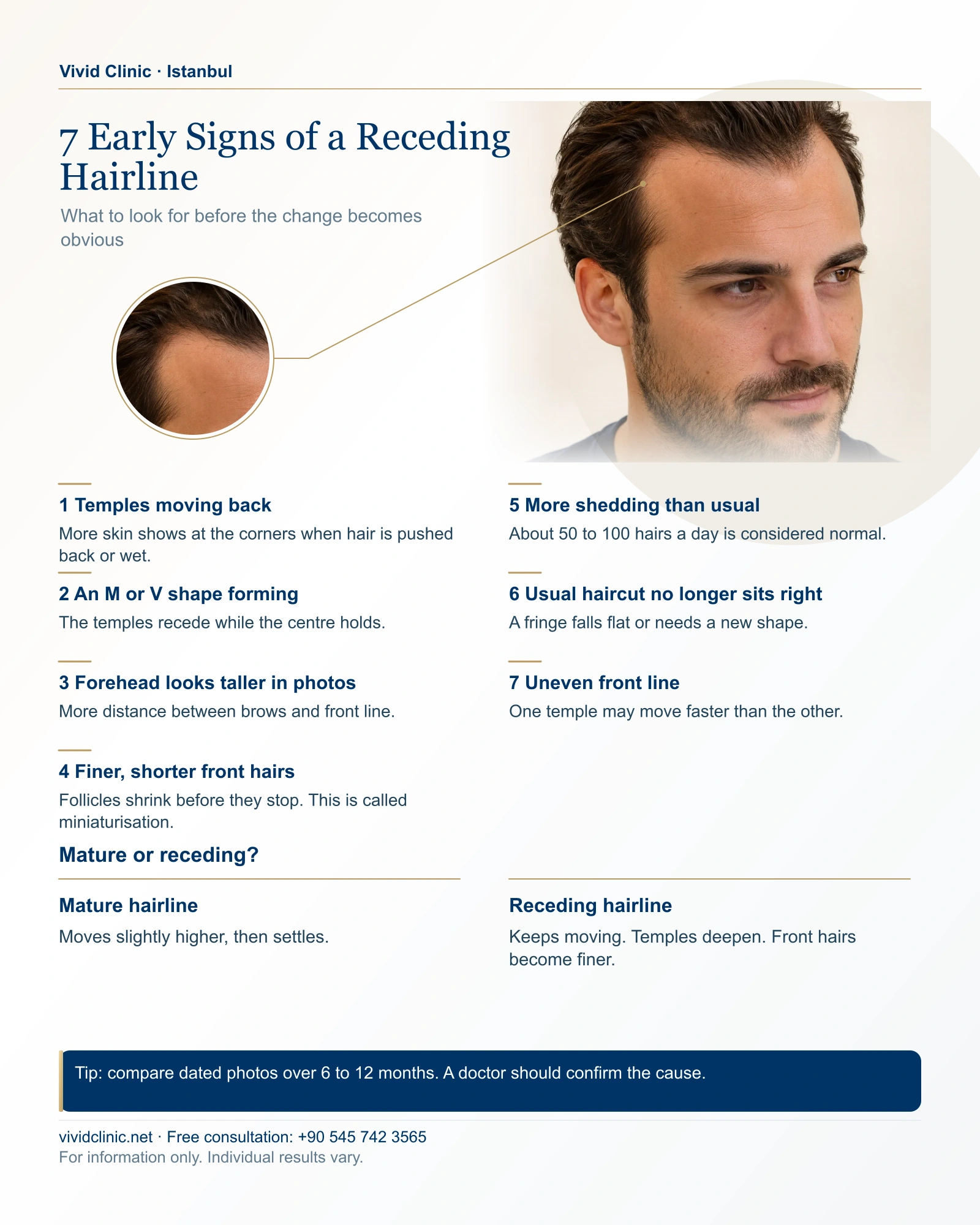
The difference is progression. A mature hairline settles. True recession keeps moving, the temples deepen, and the hairs at the front become finer. Comparing dated photos over 6 to 12 months tells you more than daily mirror checks.
7 Early Signs of a Receding Hairline
A receding hairline rarely announces itself. These are the early clues patients most often describe.
1. Your Temples Are Moving Back
The corners above your temples are usually the first area to thin. More skin shows when you push your hair back or when it is wet.
2. An M or V Shape Is Forming
As the temples recede and the centre holds, the front line takes on an M shape.
3. Your Forehead Looks Taller in Photos
A greater distance between your brows and your hairline is a simple, measurable sign when you compare photos taken a few years apart.
4. The Front Hairs Are Finer and Shorter
Before follicles stop producing visible hair, they shrink. This process, called miniaturisation, leaves wispy, lighter hairs along the front edge that will not grow long.
5. You Are Shedding More Than Usual
Losing roughly 50 to 100 hairs a day is considered normal. Extra hair on the pillow is not proof of recession, but combined with other signs it deserves attention.
6. Your Usual Haircut No Longer Sits Right
When a fringe falls flat, or your barber starts suggesting a different shape at the front, the density there has probably changed.
7. The Front Line Looks Uneven
Recession is often asymmetrical at first. One temple may move faster than the other, and the scalp may show under bright light.
What Really Causes a Receding Hairline in Men and Women?
Quick Answer: The most common cause is androgenetic alopecia, an inherited sensitivity of hair follicles to the hormone DHT. Tight hairstyles, illness, stress, nutritional deficiencies and some medical conditions can also thin the front of the scalp. Because the causes differ, the right treatment starts with a proper diagnosis.
Genetics and Hormones
In pattern hair loss, follicles at the temples and crown are genetically sensitive to dihydrotestosterone (DHT), a by-product of testosterone. Over time, sensitive follicles shrink and produce thinner hair, then stop.
The tendency can come from either side of the family. In most receding hairline men cases, the back and sides of the scalp are usually resistant to DHT, which is exactly why they can serve as a donor area later.
Traction, Stress and Other Triggers
Tight ponytails, braids, buns and extensions can pull on the frontal hair for years and cause traction alopecia. This is a frequent reason for a receding hairline in women.
Major illness, rapid weight loss, childbirth and severe stress can trigger temporary shedding. Thyroid problems, low iron and certain scarring scalp conditions can also be involved.
Where the Norwood Scale Fits In
Doctors often describe male pattern loss with the Norwood scale, a set of reference patterns ranging from minimal change to advanced loss. An early receding hairline sits at the lower end of that scale.
You do not need to memorise the stages. What matters is where you are now and how quickly you are changing, because both shape the plan.
How to Fix a Receding Hairline: The Options, From Gentle to Surgical
Quick Answer: Start with the least invasive step that matches your stage. Styling and medical treatment may be enough for early recession, PRP can support existing hair, and a hair transplant restores areas where follicles are already lost. No single option suits everyone, and results vary.
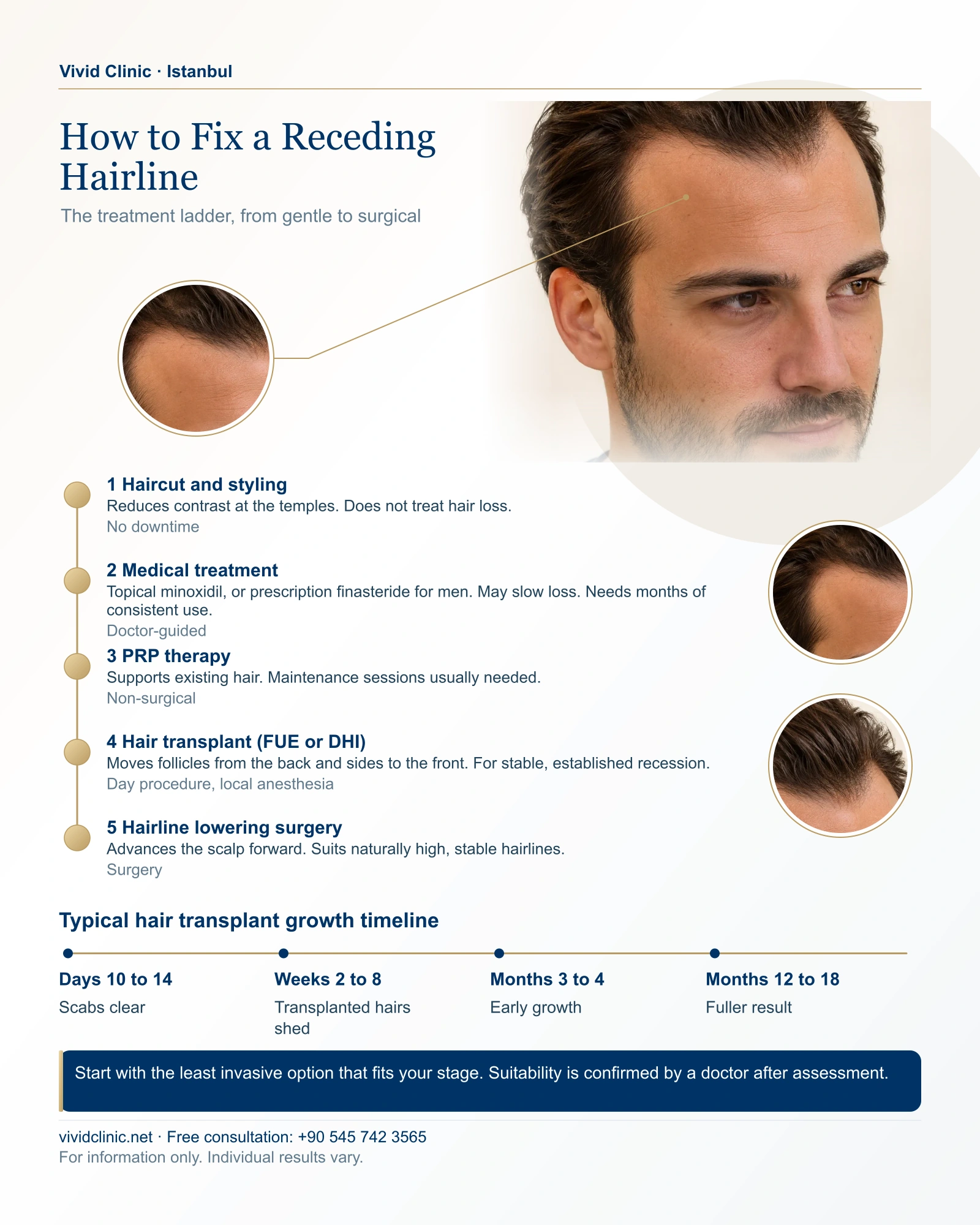
People searching how to fix receding hairline worries often expect one answer. In practice, treating a receding hairline works like a ladder with several rungs.
Haircuts and Styling That Work With Your Hairline
The fastest improvement costs the price of a haircut. Good haircuts for receding hairline shapes reduce the contrast between thin temples and thicker hair behind them.
A textured crop, a short buzz cut, a crew cut or a tidy side-swept style usually flatters more than long hair combed forward. A good barber can suggest a receding hairline haircut for your face shape. Styling does not treat hair loss, but it buys comfort while you decide.
Medical Treatments That May Slow Hair Loss
Two medications have the most evidence for a receding hairline caused by pattern hair loss. Topical minoxidil is applied to the scalp, and finasteride is a prescription tablet for men that lowers DHT.
Both need several months of consistent use before you can judge them, and the benefit usually fades if you stop. Both can have side effects, so speak to a doctor first. Read more about non-surgical hair loss treatment options.
PRP Therapy as a Supportive Treatment
Platelet-rich plasma uses a concentrated portion of your own blood, injected into the scalp. Some patients see thicker existing hair, although responses differ and maintenance sessions are usually needed.
PRP hair treatment supports living follicles. It cannot create new hair on bare skin.
Hair Transplant With FUE or DHI
When a receding hairline has clearly emptied the temples and the pattern is reasonably stable, a hair transplant moves DHT-resistant follicles from the back and sides of your scalp to the front.
With FUE hair transplant, follicles are extracted one by one and placed into tiny channels opened in the recipient area. With DHI hair transplant, an implanter pen places each graft directly, which can help when working between existing hairs.
Hairline Lowering Surgery
A second surgical route is hairline lowering, also called forehead reduction. The surgeon advances the hair-bearing scalp forward and removes a strip of forehead skin, leaving a fine scar along the new front line.
It tends to suit people with a naturally high hairline, good scalp flexibility and dense, stable hair, which is why it is chosen more often by women. It is generally not the first choice for progressive male pattern loss, because the hair behind the new line may keep thinning.
When Surgery Is Not the Right Answer Yet
A transplant is not always the best next step. If your receding hairline is mild, recent or still changing quickly, medical treatment and observation are often wiser. Operating too early can leave transplanted hair in front of a zone that later thins.
A responsible clinic will tell you when to wait.
Who Is a Good Candidate for a Hair Transplant?
Suitability is confirmed only after an assessment, but good candidates with a receding hairline often share these features:
- Clear recession at the temples or frontal third
- A reasonably stable pattern, often from the mid to late 20s onward
- Enough healthy donor hair at the back and sides
- Good general health
- Realistic expectations about density and timing
Who May Not Be Suitable?
Very young patients with rapidly changing loss, people with a weak donor area, and those with diffuse thinning across the whole scalp may not benefit. Active scalp disease, uncontrolled medical conditions and bleeding disorders need medical review first.
How a Hairline Transplant Is Performed
A typical session follows five steps:
- Design. Your new front line is drawn and agreed with you.
- Local anesthesia. The scalp is numbed while you stay awake and rest.
- Extraction. Follicular units are removed one by one from the donor area.
- Implantation. Grafts are placed at the planned angle, direction and density.
- Dressing. The donor area is covered and your aftercare is explained.
Designing a Natural-Looking Hairline
Design is where experience shows. A natural front line is slightly irregular, uses single-hair grafts at the very edge and follows the direction your hair grows.
It should also suit your age in ten or twenty years. A line placed too low or too straight can look artificial and uses donor hair you may need later. The celebrity hair transplants that go unnoticed usually share this conservative design.
Procedure Overview Table: Hair Transplant (FUE / DHI)
| Aspect | Details |
|---|---|
| Duration Process | Usually 6 to 8 hours in a single day, depending on the graft plan |
| Hospitalization Duration | Not usually required; performed as a day procedure under local anesthesia |
| Mobility Duration | Walking the same day |
| Return to Activity | Desk work in about 3 to 5 days; gym and swimming after about 3 to 4 weeks |
| Complete Recovery | Scabs clear in about 10 to 14 days; redness may take several weeks to fade |
| Anticipated Results | Early growth at 3 to 4 months; fuller result at 12 to 18 months |
Timings are general estimates and vary between patients.
Operation Process Overview at Vivid Clinic
Your journey with Vivid Clinic begins when you arrive in Istanbul, where a VIP airport transfer is waiting to take you to your 5-star hotel for check-in. The next step is a one-on-one consultation, where the team examines your scalp and donor area in person and finalises the hairline design with you. On treatment day, your procedure is carried out with planned breaks and a meal so the long session stays comfortable. Post-operative care includes clear written instructions, medication guidance and your first professional hair wash. A checkup visit confirms that the grafts and donor area are settling well before your departure. After you fly home, remote aftercare follow-up continues with scheduled photo reviews over the following months.
Recovery Timeline After a Hair Transplant
Days 1 to 3
Expect mild forehead swelling, tightness and small scabs. Sleep with your head elevated and avoid touching the grafts.
Days 4 to 14
Gentle washing softens the scabs, which usually clear by the end of the second week.
Weeks 2 to 8
Most transplanted hairs shed. This phase, often called shock loss, is expected and does not mean the grafts have failed.
Months 3 to 6
New hairs appear, thin at first. Density improves month by month.
Months 12 to 18
Hairs thicken and mature, and the result can be judged properly.
Benefits of Restoring Your Hairline
- Rebuilds a receding hairline using your own hair
- Transplanted follicles are generally long lasting
- Hair can be cut, washed and styled normally once healed
- Design is tailored to your face, age and hair type
Native hair around the transplant can keep thinning with time. Many doctors therefore recommend continuing medical treatment. Results vary by individual.
Risks and Side Effects to Understand
Like any surgical procedure, a hair transplant carries potential risks. These include swelling, bleeding, infection, folliculitis, temporary numbness, small dot scars in the donor area, patchy growth and temporary shedding of nearby native hair.
Less commonly, density or shape is disappointing and a second session may be discussed. Over-harvesting can thin the donor area, which is why planning matters. Hairline lowering has its own risks, including a visible scar, numbness and hair shedding near the incision.
How to Prepare Before Your Procedure
- Share your full medical history and medication list
- Stop smoking in advance, as advised by your team
- Do not stop or start blood thinners or supplements without medical advice
- Pack button-up or wide-neck tops and a travel pillow
Aftercare Tips for Better Healing
Follow your washing instructions exactly and sleep with your head raised for the first nights. Avoid sun exposure, sweating, swimming and helmets or tight hats until you are cleared.
Do not pick or scratch scabs. If you notice increasing pain, spreading redness or discharge, contact your team promptly.
Cost Factors in Istanbul, Turkey
The cost of receding hairline treatment varies with the size of the area, the number of grafts planned, the technique chosen, the experience of the team and the facility. Blood tests, medication, PRP sessions, hotel nights, transfers and aftercare can also be part of your package.
The final cost depends on your personal treatment plan. For a first indication, try the surgery price calculator. It gives an estimate only, and pricing is confirmed after consultation.
Why Choose Vivid Clinic for Receding Hairline Treatment?
Vivid Clinic is an international clinic in Istanbul, Turkey, focused on natural-looking, individually planned results. Every plan starts with an assessment, including an honest view on whether surgery is needed at all. You can meet our doctors online before you travel and request a free consultation with a plastic surgeon and the hair restoration team by sending clear photos of your front, temples, crown and donor area.
What International Patients Should Expect
Before arrival, you share photos and your medical history. Most hair transplant visits for a receding hairline involve a short stay of a few days, covering consultation, the procedure, the first wash and a checkup.
Your coordinator remains your point of contact once you are home, and growth is reviewed through follow-up photos over many months.
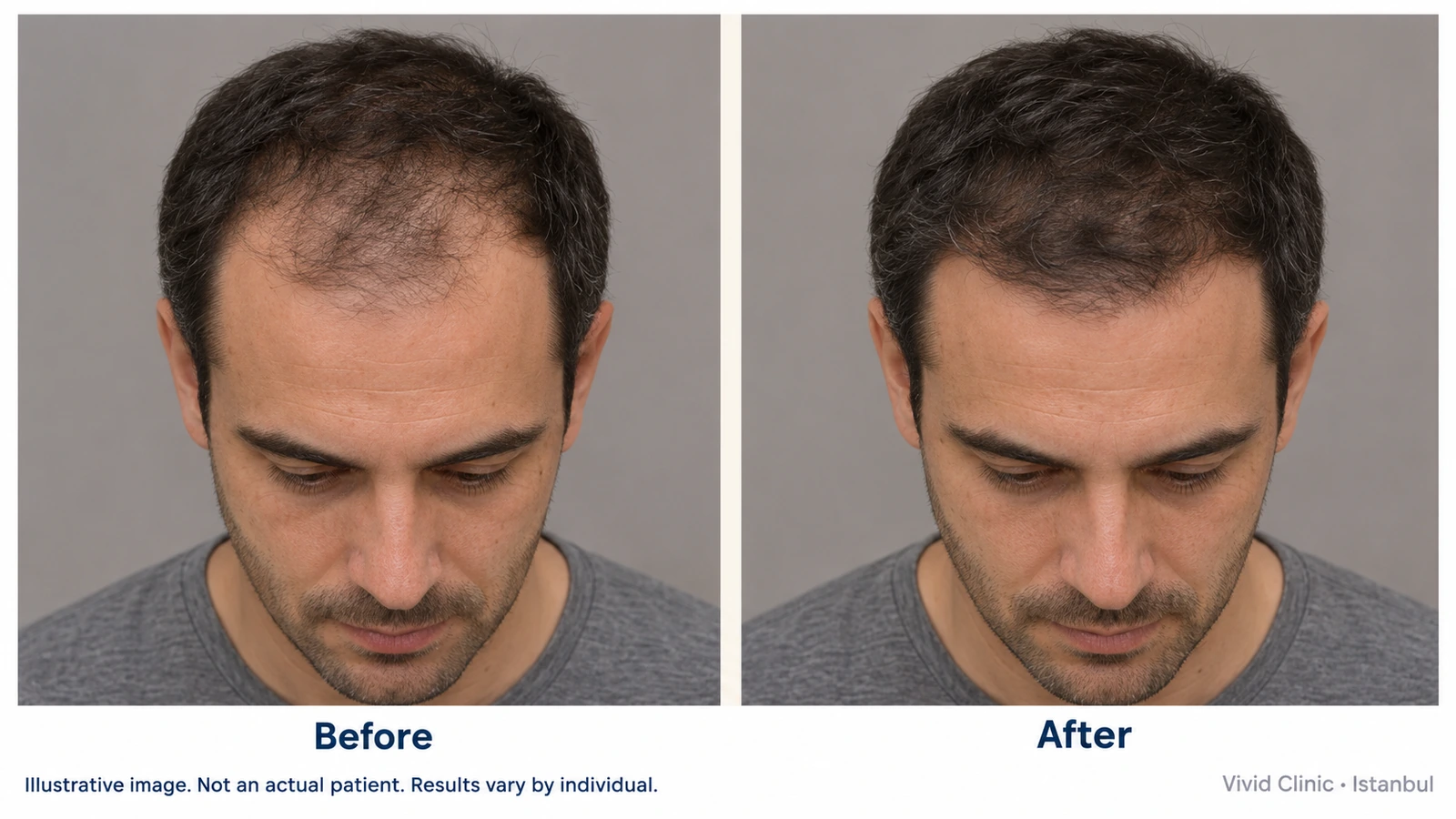
FAQs
Can a receding hairline grow back without surgery?
Whether a receding hairline can recover depends on the cause and the stage. If follicles are still alive but shrinking, medical treatment such as topical minoxidil or, for men, prescription finasteride may slow further loss and sometimes thicken existing hair. These need several months to judge, and the benefit usually fades when stopped. If the cause is traction or a temporary trigger such as illness, hair may recover once the trigger is removed. Where the skin at the temples is smooth and follicles are gone, regrowth without a transplant is unlikely. A doctor should confirm the diagnosis first.
At what age should men consider a hair transplant for a receding hairline?
There is no fixed age for treating a receding hairline, but timing matters. In the early 20s, hair loss can still be changing quickly, so many doctors prefer medical treatment and observation first. Operating too early risks placing a low front line that looks unnatural when the hair behind it thins. From the mid to late 20s onward, the pattern is often easier to predict, and planning becomes more reliable. Your doctor weighs your age, family history, rate of change and donor supply together, and sometimes the best advice is to wait and review in a year.
FUE or DHI: which technique suits a receding hairline best?
Both techniques use individually extracted follicles. FUE with pre-opened channels is efficient for larger areas and gives the team wide control over the overall pattern. DHI uses an implanter pen to place each graft directly, which can be helpful for working between existing hairs at the temples and for limited sessions. Neither is automatically better for a receding hairline. The choice depends on the size of the area, your hair calibre and curl, how much native hair remains and the design agreed with you. Your team at Vivid Clinic explains the reasoning during consultation.
How long should I stay in Istanbul for a receding hairline hair transplant?
Most international patients treating a receding hairline plan a short stay of a few days. A typical schedule includes arrival and 5-star hotel check-in, a one-on-one consultation and hairline design, the procedure day, and a post-operative visit for your first wash and checkup before departure. Many patients fly home two to four days after the procedure, but your team confirms the exact timing based on how you are healing. After you return home, follow-up continues remotely with photo reviews during the growth phase.
What affects the cost of receding hairline treatment in Turkey?
When a receding hairline is treated with a hair transplant, the main factors are the size of the area to cover, the number of grafts planned, the technique used, the experience of the team and the facility where the procedure takes place. Supporting treatments such as PRP, blood tests, medication, hotel nights, airport transfers and aftercare may be included in a package or added separately. Because every plan is individual, an exact figure requires an assessment. You can request a free consultation with a plastic surgeon at Vivid Clinic to receive a personalised quote.
Conclusion
A receding hairline can feel like a countdown, but it is better understood as a slow process that you can measure, manage and often treat. Spot the early signs, confirm the cause, and choose the least invasive option that fits your stage, whether that is a better haircut and medication or a carefully designed hair transplant.
Vivid Clinic in Istanbul, Turkey offers a free consultation with a plastic surgeon and the hair restoration team to help you find the right path. Get a Free Consultation and take the first step with clear, personal advice.
Real Before and After Results at Vivid Clinic
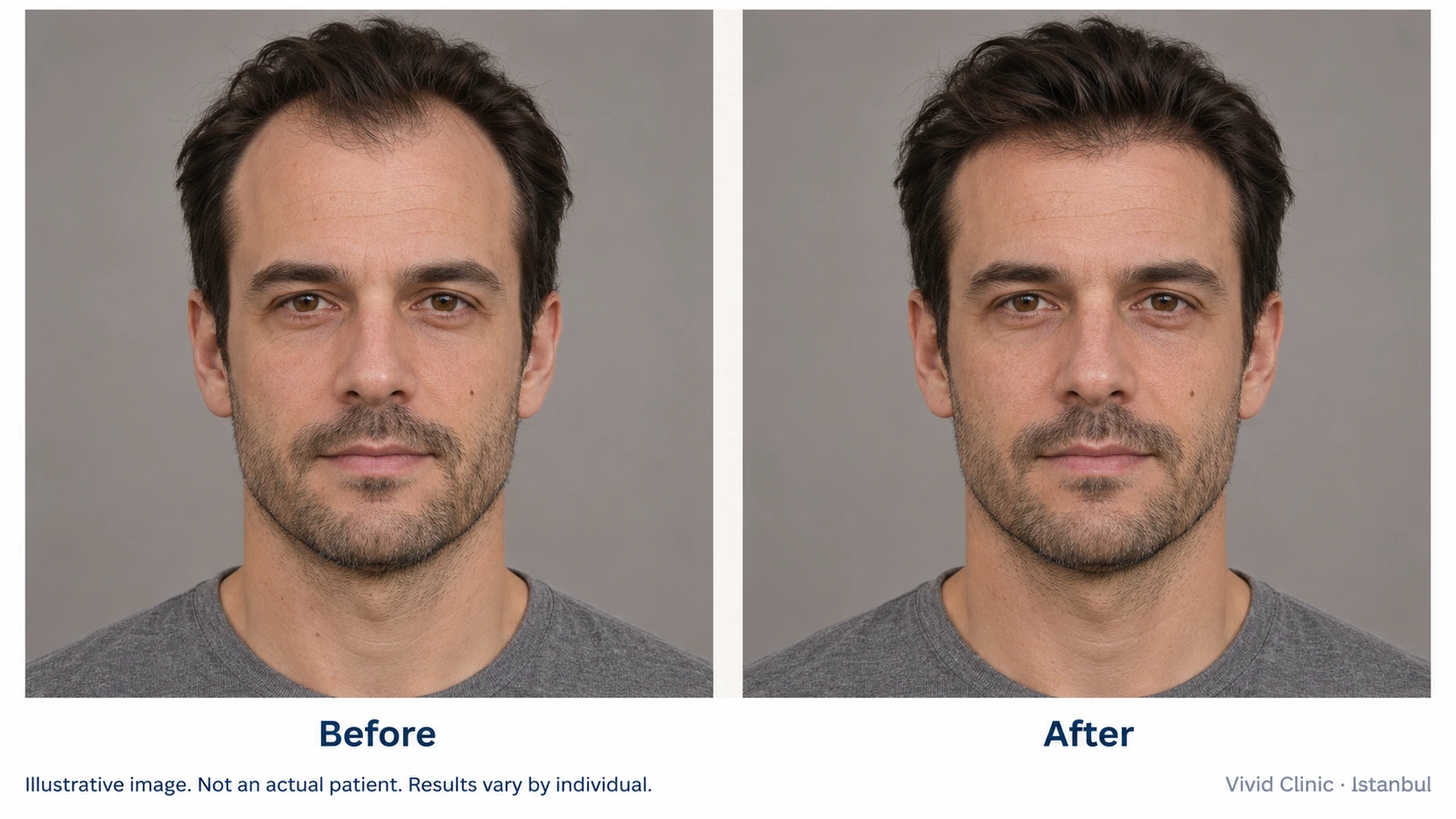
The photos below show real Vivid Clinic hair transplant patients, not all of whom were treated for a receding hairline alone, from the clinic’s own gallery, shared with consent as published on the clinic site. Results vary by anatomy, healing and treatment plan.


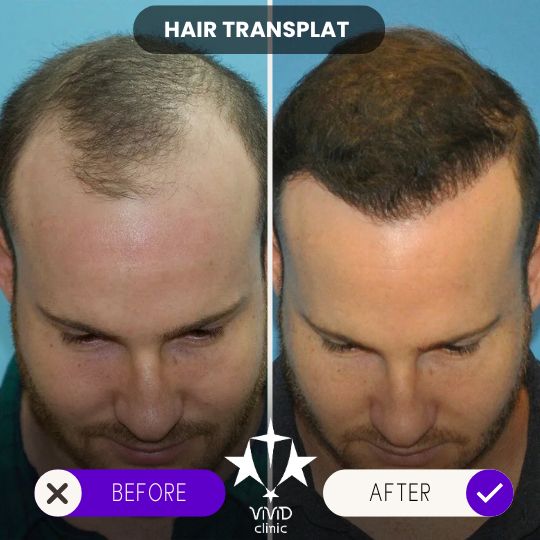


See more patient results in the full before and after gallery. If you would like an assessment of your own hairline, request your free quote and send your photos to the Vivid Clinic team.
This article is for general information and does not replace a personal medical consultation. Suitability, risks, recovery and expected results should be discussed with a qualified medical professional. Results vary by individual.