
 ChatGPT

The Bags That a Good Night’s Sleep Never Fixes
You slept eight hours. You drank the water, tried the cold spoons, bought the eye cream with the long ingredient list. And still, in the lift mirror at work, two soft pouches sit under your eyes and someone asks if you are tired.
If that sounds familiar, you have probably started reading about lower blepharoplasty, the operation that treats under-eye bags at their source instead of covering them. You may also be weighing it against filler, or wondering whether surgery abroad is sensible.
At Vivid Clinic in Istanbul, Turkey, every plan begins with a free consultation with a plastic surgeon, so you can find out what is really causing your eye bags before you commit to anything.
What Is Lower Blepharoplasty?
Quick Answer: Lower blepharoplasty is surgery on the lower eyelid that removes or repositions bulging fat and, when needed, tightens loose skin and muscle. The aim is a smoother transition between the lower lid and the cheek. It does not treat dark pigment, crow’s feet or the upper lid.
You will also see it called lower eyelid surgery, under eye bag surgery or eye bag removal. What changes from patient to patient is the incision, what is done with the fat, and whether the lid needs support.
This guide stays on the lower lid. For heavy upper lids, see blepharoplasty for hooded eyelids and the general blepharoplasty in Turkey page. Service details are on our eyelid lift page.
Lower Blepharoplasty: 7 Essential Facts at a Glance
- True eye bags are usually a structural problem, not a sleep problem.
- There are two main incisions: inside the lid, or just under the lashes.
- Modern surgery often repositions fat instead of simply removing it.
- Some lids need a support stitch or a small skin pinch as well.
- Filler and resurfacing help selected patients, but have clear limits.
- Most visible bruising settles within about two weeks; refinement takes months.
- Cost depends on your plan, not on a fixed menu.
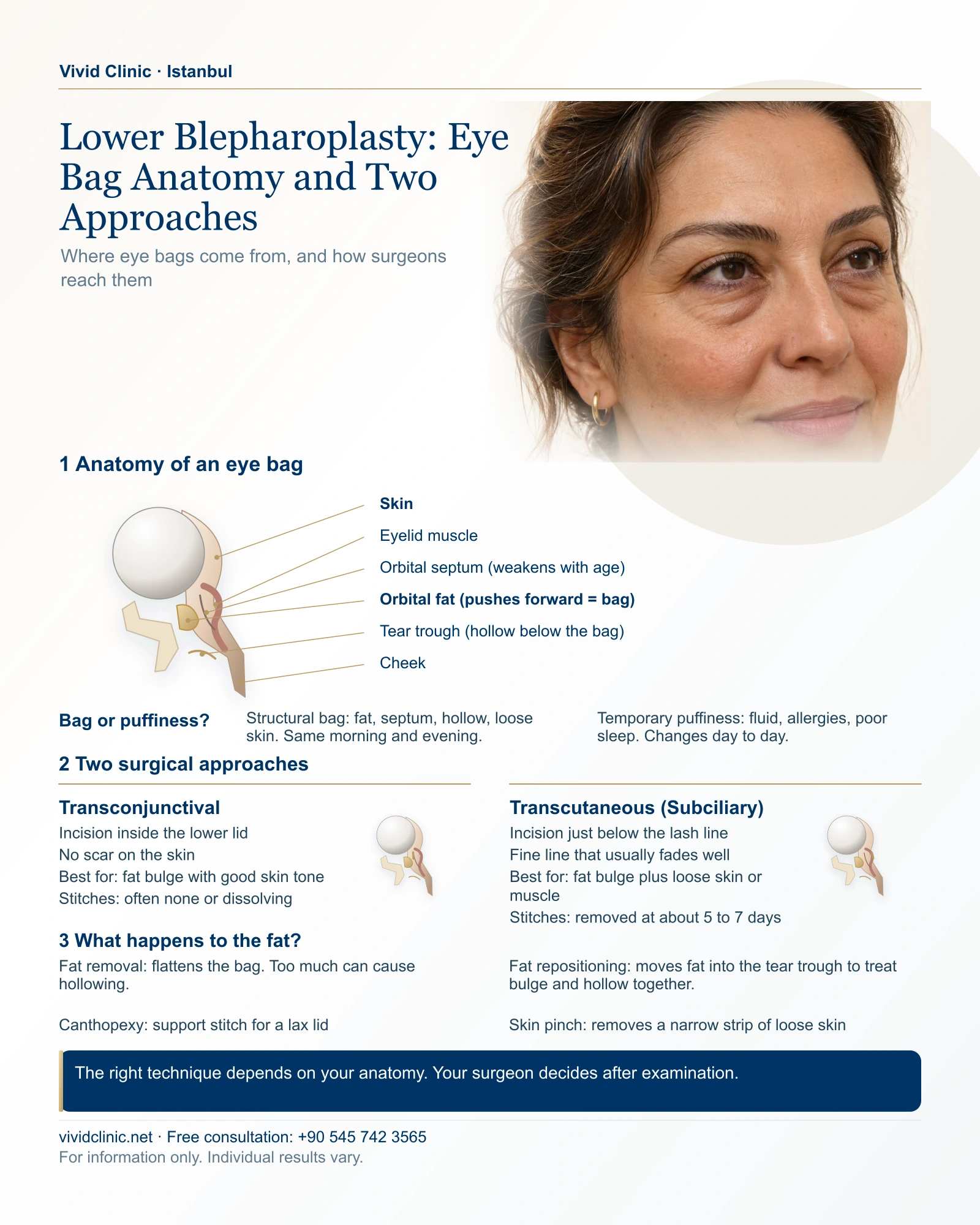
What Causes Eye Bags?
Lower blepharoplasty only fixes structural bags. Temporary puffiness needs a different answer.
Structural Causes: Fat, Septum, Tear Trough and Skin
Your eyeball rests on cushions of orbital fat. A thin membrane called the orbital septum holds that fat back. With age, and often with family tendency, the septum weakens and the fat pushes forward. This orbital fat herniation is the classic puffy bag.
Below the bag sits the tear trough, a groove where the lid meets the cheek. As the cheek loses volume, the groove deepens. A bulge above a hollow casts a shadow, so bags can look darker than they are.
Finally, lower-lid skin and muscle lose elasticity, leaving fine crepey folds and a looser lid.
Temporary Puffiness: Fluid, Allergies and Sleep
Fluid behaves differently. It is worse in the morning, after salty food, alcohol, a poor night or an allergy flare, and it improves through the day. Fat bags look much the same morning and evening. New, one-sided or rapidly changing swelling should be checked by a doctor.
Who Is a Good Candidate for Lower Blepharoplasty?
Quick Answer: The best candidates are healthy adults, typically 35 and over, with persistent under-eye bags, hollows or loose lower-lid skin that do not change with sleep. Good eye health and realistic expectations matter more than age.
You may be suitable if:
- Your bags are present every day and have been for years
- Filler has stopped helping, or has made the area look puffy
- You are a non-smoker, or willing to stop before and after surgery
- You understand that the goal is improvement, and that results vary
Goals differ slightly for men; see male blepharoplasty.
Who Is Not Suitable, or Needs Extra Care?
Lower blepharoplasty may be delayed, modified or declined if you have:
- Significant dry eye. Surgery can worsen dryness, so it is treated first.
- Thyroid eye disease. Active disease needs specialist control before cosmetic surgery.
- Uncontrolled blood pressure. This raises the risk of bleeding around the eye.
- Lower-lid laxity. A loose lid usually needs added support.
- Unrealistic expectations. No operation removes every line or makes two eyes identical.
Bleeding disorders and blood-thinning medication also need careful review.
Non-Surgical Alternatives and Their Limits
Not everyone with tired-looking eyes needs an operation.
Tear-Trough Filler
Hyaluronic acid gel placed in the groove can soften a hollow. It suits patients with firm skin and little or no fat bulge.
Filler cannot remove a bag, and volume beside a bulge can make the area look heavier. The under-eye is also prone to swelling, a bluish tint and lumpiness, and the result is temporary.
Skin Resurfacing
Laser or chemical peel resurfacing can improve fine lines and crepey texture. It will not flatten herniated fat or lift a loose lid, and it carries its own healing time and pigment risks.
When Surgery Is Not Needed
If your puffiness is mainly fluid, the answer is medical and lifestyle care. A mild hollow with good skin may suit a conservative injectable approach. Lower blepharoplasty earns its place when there is a true fat bulge, excess skin, or both.
Lower Blepharoplasty Techniques: Transconjunctival vs Transcutaneous
There are two main routes to the fat. Your surgeon chooses based on your skin, lid tone and what needs correcting.
| Feature | Transconjunctival | Transcutaneous (Subciliary) |
|---|---|---|
| Incision | Inside the lower lid | Just below the lash line |
| Visible scar | None on the skin | Fine line that usually fades well |
| Best for | Fat bulge with good skin tone | Fat bulge plus loose skin or muscle |
| Skin removal | Not through this route; a skin pinch can be added | Yes, conservative trimming |
| Stitches | Often none or dissolving | Fine stitches removed at about 5 to 7 days |
| Lid-position risk | Generally lower | Higher, so lid support is assessed carefully |
Fat Removal vs Fat Repositioning
Older techniques simply removed the bulging fat. This flattens the bag, but taking too much can leave the eye hollow.
In fat repositioning, the fat is released and moved over the bony rim to fill the tear trough, treating bulge and hollow together. Many patients need a blend of both.
When a Canthopexy or Skin Pinch Is Added
A canthopexy is a support stitch at the outer corner that tightens the lower lid against the eye. It is added when the lid is lax, to reduce the chance of it being pulled down as it heals.
A skin pinch removes a narrow strip of excess skin just under the lashes without lifting the muscle. It is often paired with the transconjunctival approach when skin is only slightly loose.
Upper Lids, Midface and Combined Plans
A descended cheek can deepen the lid-cheek groove, in which case an endoscopic mid facelift or a facelift operation may be discussed. Combining procedures changes operating time, recovery and cost. Anesthesia is local with sedation or general, depending on the plan.
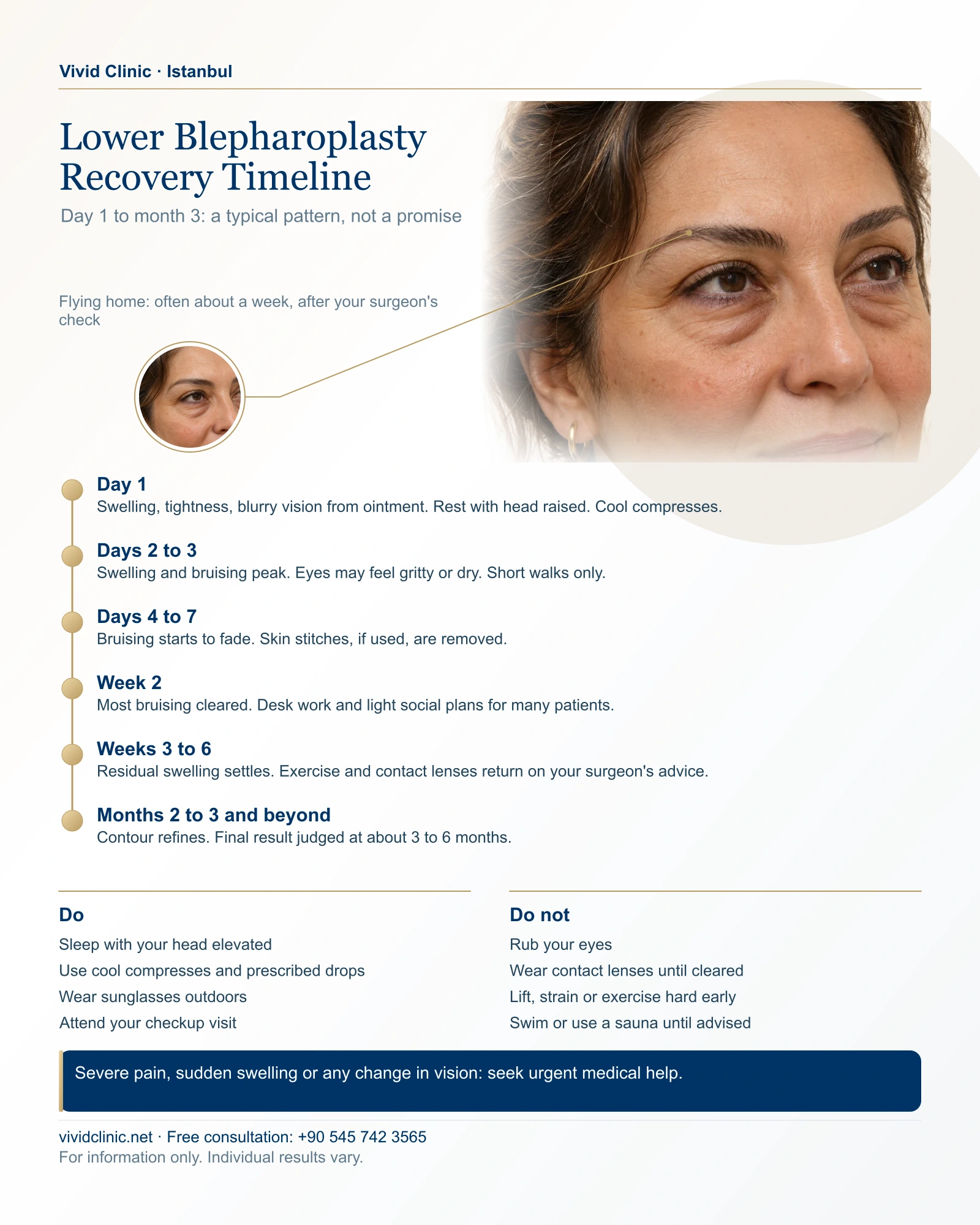
Procedure Overview Table: Lower Blepharoplasty (Lower Eyelid Surgery)
| Aspect | Details |
|---|---|
| Duration Process | About 1 to 2 hours for both lower lids |
| Hospitalization Duration | Day case, or 1 night if combined or advised |
| Mobility Duration | Walking the same day |
| Return to Activity | About 7 to 14 days for desk work and social life |
| Complete Recovery | About 4 to 6 weeks for most swelling; exercise resumes gradually |
| Anticipated Results | Visible at 2 to 4 weeks; final at about 3 to 6 months |
These are typical ranges. Your surgeon confirms what applies to you.
Operation Process Overview at Vivid Clinic
Your journey begins with your arrival in Istanbul, where a VIP airport transfer meets you and takes you to your 5-star hotel for check-in. Next comes a one-on-one consultation, when your surgeon examines your eyelids in person, reviews your medical and eye history, and confirms the technique discussed online. On surgery day, the team looks after you from admission to recovery and explains each step. Post-operative care follows, with cold-compress guidance, eye drops or ointment as prescribed, and contact with your coordinator. A checkup visit, including suture removal where needed, confirms that healing is on track before your departure. After you fly home, remote aftercare follow-up continues with photo reviews and direct access to the team.
Lower Blepharoplasty Recovery: Day by Day, Week by Week
Quick Answer: Most people look socially presentable 10 to 14 days after lower eyelid surgery. Bruising and swelling peak around days two to three, stitches come out at about five to seven days if used, and subtle swelling continues to refine for three to six months.
Lower blepharoplasty recovery varies with technique, skin type and general health.
Day 1
Expect swelling, tightness and watery or blurry vision from ointment. Rest with your head raised and use cool compresses. Discomfort is usually mild to moderate.
Days 2 to 3
Swelling and bruising usually peak. The eyes may feel gritty or dry. Short walks are encouraged, but avoid bending, lifting and straining.
Days 4 to 7
Bruising begins to fade. Skin stitches, if used, are typically removed in this window.
Week 2
Most bruising has cleared or can be covered once your surgeon allows make-up. Desk work and light social plans are realistic for many patients.
Weeks 3 to 6
Residual swelling settles and the lids feel softer. Contact lenses and exercise are reintroduced on your surgeon’s advice, often from around weeks two to four.
Months 2 to 3 and Beyond
Any incision line continues to fade, and the lid-cheek contour refines. The final result is usually judged between three and six months.
When Can You Fly Home After Lower Blepharoplasty?
Quick Answer: Many international patients fly home about a week after lower blepharoplasty, once the surgeon has checked healing and removed any stitches. This is a typical range, not a fixed rule. Your surgeon confirms the date for you.
Book a flexible ticket. Cabin air is dry, so bring your lubricating drops and sunglasses.
Benefits of Lower Blepharoplasty
- Treats the cause of structural bags, not only the shadow
- Can smooth the lid-cheek junction for a more rested look
- Uses your own tissue when fat is repositioned
- Results are typically long lasting, although aging continues
- Scars are hidden inside the lid or close to the lashes
Benefits differ between patients, and no result can be promised.
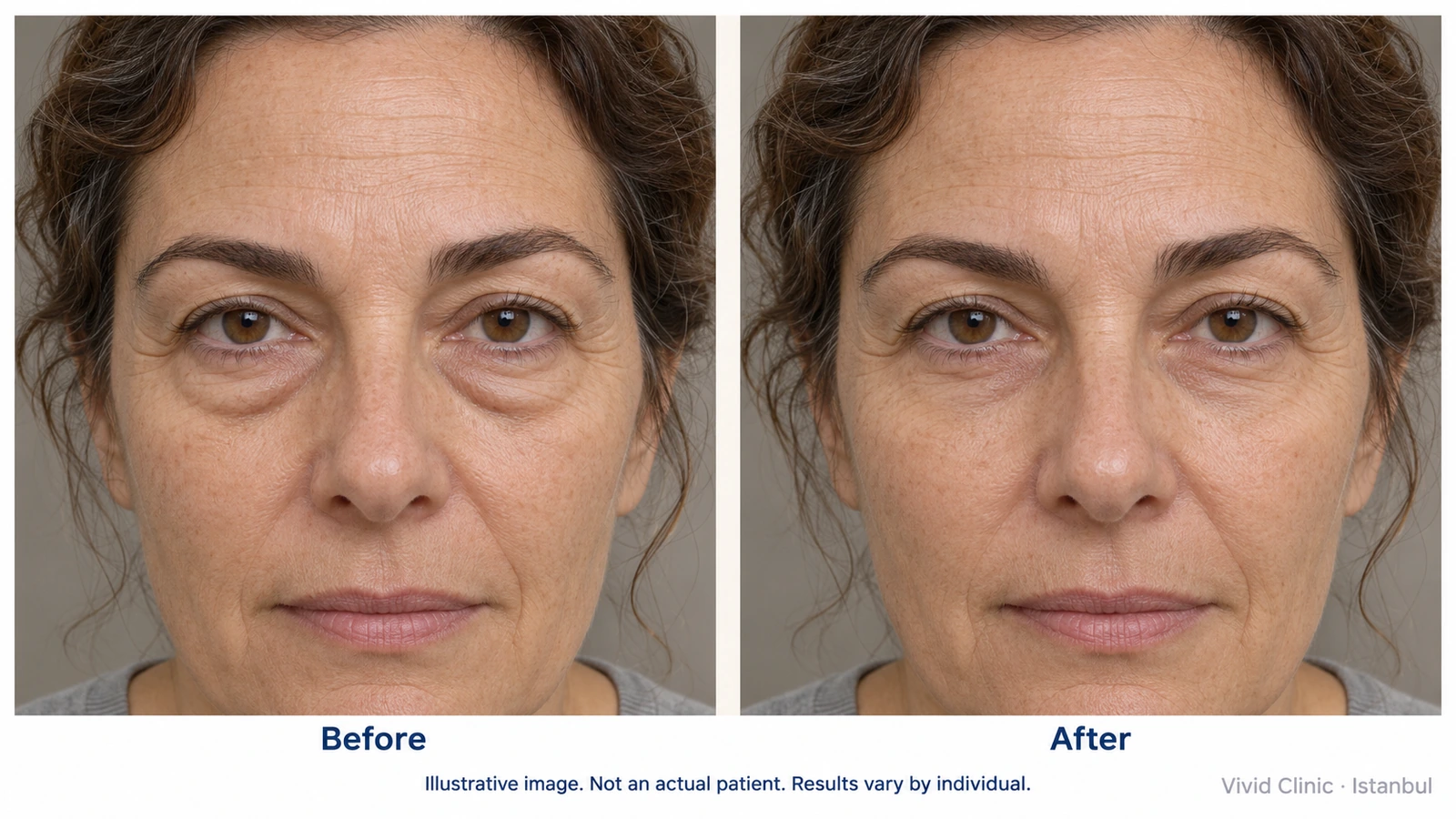
Lower Blepharoplasty Risks and Side Effects
Like any operation, lower blepharoplasty carries risks.
Common and Usually Temporary
- Bruising and swelling, often lasting one to two weeks
- Dry eye, grittiness or watering, usually easing over weeks
- Chemosis, a jelly-like swelling of the white of the eye, which generally settles with drops and time
- Temporary blurred vision, light sensitivity and numbness of the lid
Less Common but Important
- Lower-lid retraction or ectropion, where the lid is pulled down or turns outward. It may need massage, taping or revision surgery.
- Asymmetry, as no two eyes heal identically
- Hollowing, if too much fat is removed
- Infection, visible scarring, or small lumps along the incision
- Vision-threatening bleeding behind the eye. This is rare but an emergency. Severe pain, sudden tense swelling or any loss of vision needs urgent medical attention.
Careful patient selection, conservative technique and close follow-up lower these risks without removing them.
How to Prepare for Lower Blepharoplasty
- Share your full medical and eye history, including dry eye, LASIK, thyroid and blood pressure problems
- Ask your doctor before stopping any prescribed medicine
- Stop smoking and nicotine well before surgery
- Arrange time off, and bring a companion if you can, as vision may be blurry at first
Aftercare Tips for a Smoother Recovery
- Sleep with your head elevated for the first week
- Use cool compresses and prescribed drops or ointment as instructed
- Do not rub your eyes or wear contact lenses until cleared
- Avoid strenuous exercise, swimming, saunas and heavy lifting for the advised period
- Report worsening pain, discharge or any change in vision promptly
Lower Blepharoplasty Cost Factors in Istanbul, Turkey
There is no single price, because no two plans are the same. Cost depends on:
- Technique: transconjunctival, transcutaneous, or with fat repositioning
- Added steps such as canthopexy or skin pinch
- Whether upper lids or other facial procedures are combined
- Anesthesia type and operating time
- Hospital setting and surgeon experience
- Tests, medication, hotel, transfers and aftercare in your package
For a first idea, try the surgery price calculator. It gives an estimate only. Final pricing is confirmed after your consultation.
Why Choose Vivid Clinic for Lower Blepharoplasty?
Vivid Clinic is a premium, international clinic focused on natural-looking, personalized outcomes. Your lower blepharoplasty plan is built around an examination, and you will be told clearly if a non-surgical option suits you better.
International patients send front and side photos and a short medical history before travelling, and most plan to stay about a week.
You can meet our doctors, browse eyelid results in our blepharoplasty before and after guide, and request a free consultation with a plastic surgeon by sending clear photos of your eyes.
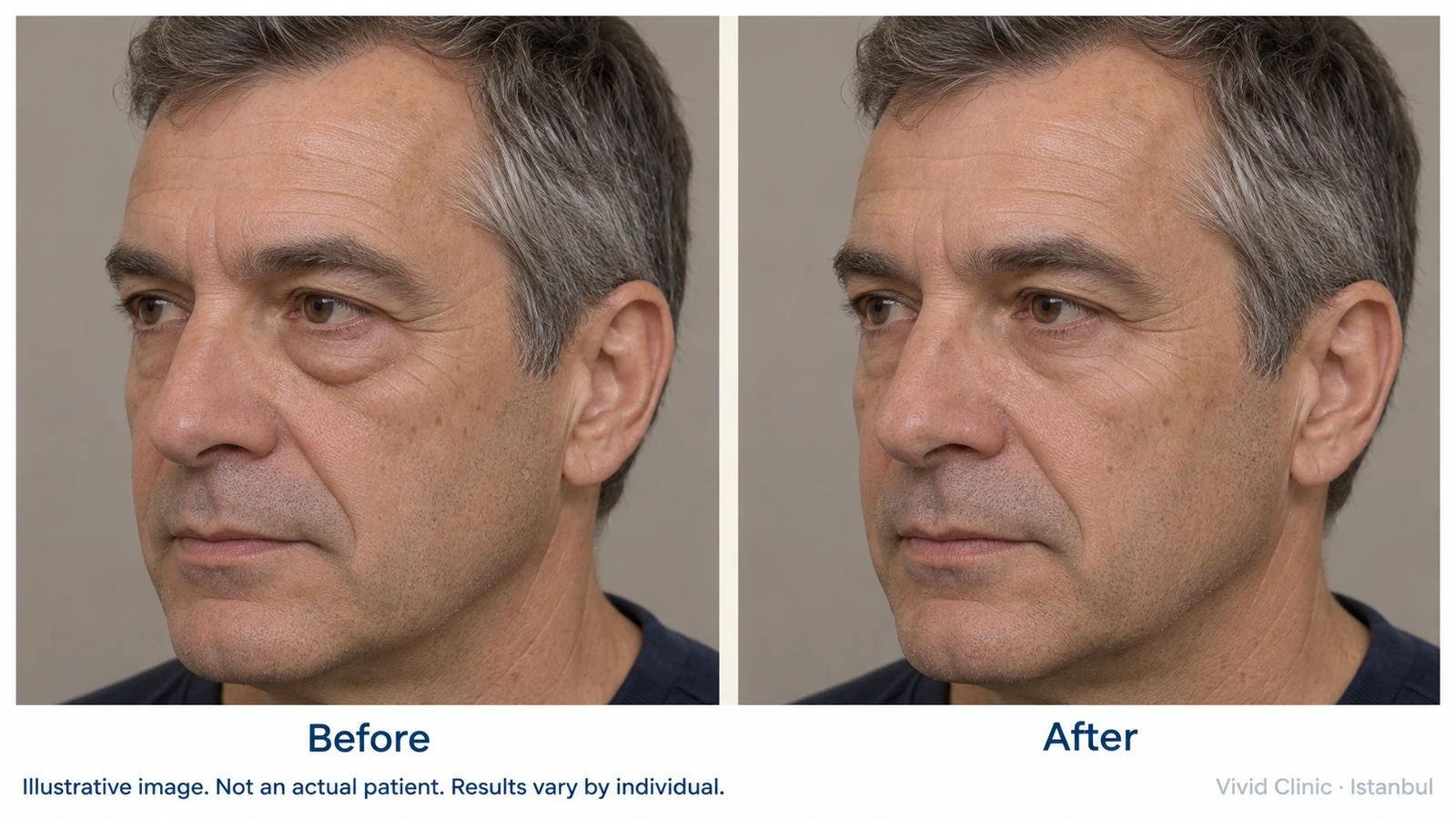
FAQs
How long does lower blepharoplasty recovery take for international patients travelling to Istanbul?
Most patients plan about a week in Istanbul. Swelling and bruising peak around days two to three, then fade steadily. If skin stitches are used, they are usually removed at about five to seven days, and many people feel comfortable in public with sunglasses by then. Desk work is often realistic at 7 to 14 days. Exercise, contact lenses and eye make-up return gradually on your surgeon’s advice. Subtle swelling can take three to six months to settle fully, so the early mirror is not the final result. Healing varies from person to person, and your surgeon will give you a personal timeline.
When can I fly home after lower blepharoplasty in Turkey?
Many patients fly home about a week after surgery, once the surgeon has examined the lids, removed any stitches and confirmed that healing is progressing normally. This is a typical range, not a promise, and it can be longer if procedures are combined or swelling is slow to settle. Book a flexible ticket where possible. On the flight, use your prescribed lubricating drops because cabin air is dry, wear sunglasses, avoid lifting heavy luggage, and keep your clinic contact details to hand. Remote follow-up continues after you return home.
Is transconjunctival or transcutaneous lower blepharoplasty better for under-eye bags?
Neither is better for everyone. The transconjunctival approach uses an incision inside the lid, leaves no skin scar, and suits patients whose main problem is bulging fat with good skin tone. The transcutaneous, or subciliary, approach uses a fine incision under the lashes and allows the surgeon to tighten loose skin and muscle as well. It carries a somewhat higher risk of lid-position problems, so lid support is assessed carefully. Fat may be removed, repositioned or both with either route. Your surgeon recommends a technique after examining your lids, skin and cheek support.
Can lower blepharoplasty replace tear-trough filler, and who is not suitable for surgery?
For patients with a true fat bulge, surgery often addresses what filler cannot, because filler adds volume and cannot remove a bag. For a mild hollow with firm skin, filler may still be reasonable. Surgery is not suitable for everyone. Significant dry eye, active thyroid eye disease, uncontrolled blood pressure and bleeding problems need to be treated or controlled first. A lax lower lid usually requires added support such as a canthopexy. Expectations matter too: the goal is a natural improvement, not flawless skin. A consultation and eye examination decide suitability.
What affects lower blepharoplasty cost at Vivid Clinic in Istanbul, Turkey?
Cost depends on your personal plan. The main factors are the technique used, whether fat is repositioned, whether a canthopexy or skin pinch is added, and whether upper eyelid or other facial surgery is combined. Anesthesia type, operating time, hospital setting, surgeon experience, tests, medication, accommodation, transfers and aftercare also play a part. Because these vary, a fixed figure in an article would be misleading. Vivid Clinic offers a free consultation with a plastic surgeon, after which you receive a personalized quote. The online calculator gives an estimate only.
Conclusion
Under-eye bags that never change with sleep are usually structural, and lower blepharoplasty is the treatment designed for that structure. The best plan depends on an accurate diagnosis: fat, hollow, skin, lid support, or a mix. For some that means lower blepharoplasty with fat repositioning. For others, a smaller treatment or none at all.
Vivid Clinic in Istanbul, Turkey offers a free consultation with a plastic surgeon to help you understand your options before you decide. Get a Free Consultation and send your photos for a personal evaluation.
Real Before and After Results at Vivid Clinic
The photos below show real Vivid Clinic patients from the clinic’s own gallery, shared with consent as published on the clinic site. They show eyelid surgery in general: most are recorded only as “eyelid lift”, with no record of upper or lower lid, so lower-lid work is mentioned only where the clinic note states it. Results vary by anatomy, healing and treatment plan.
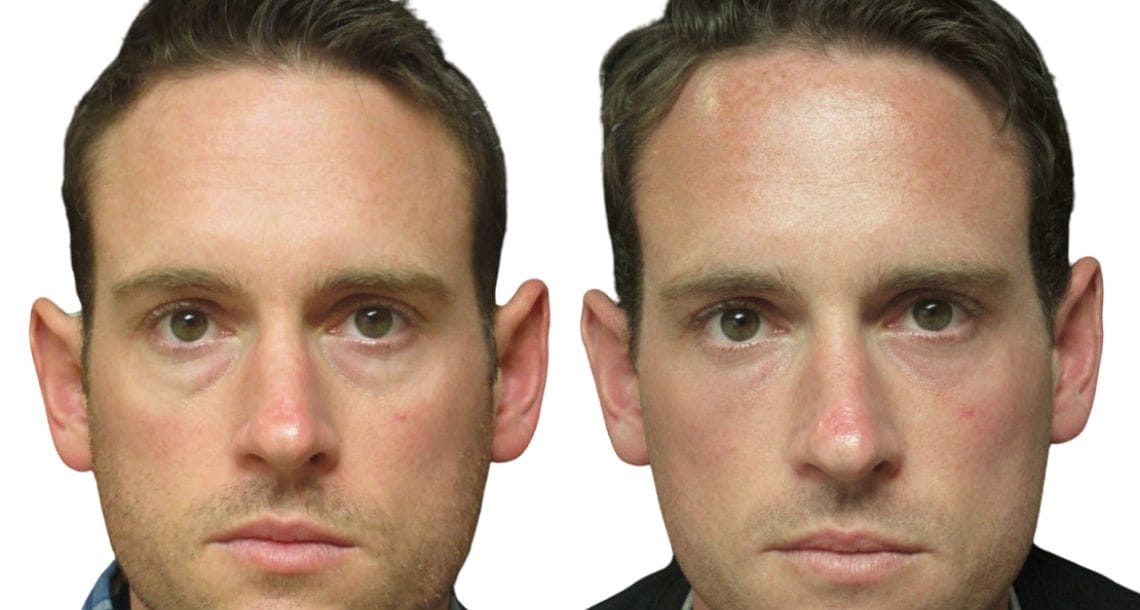
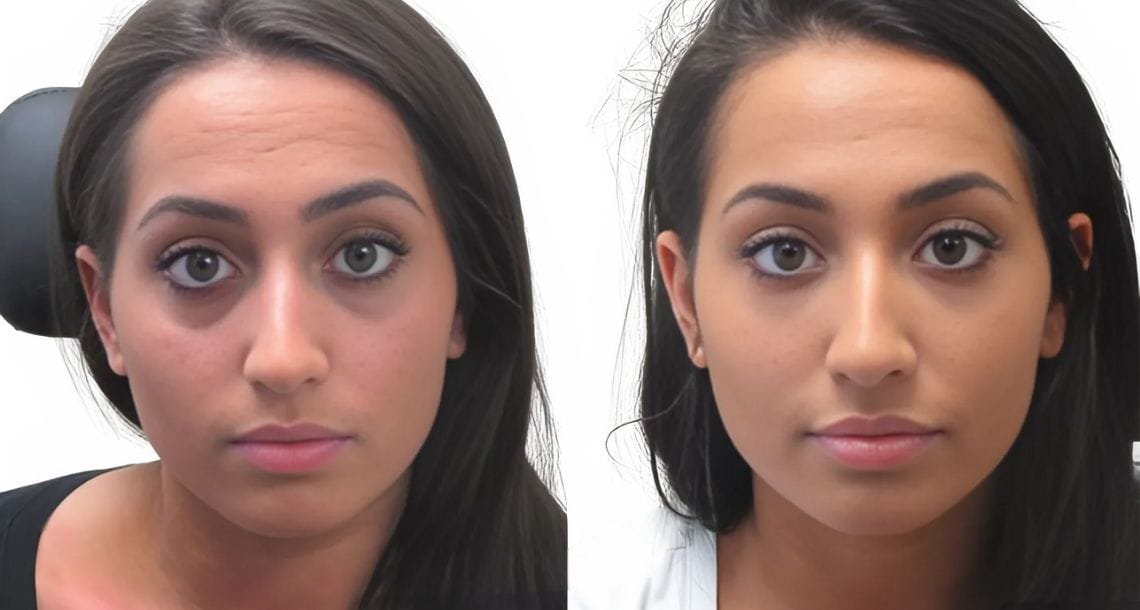
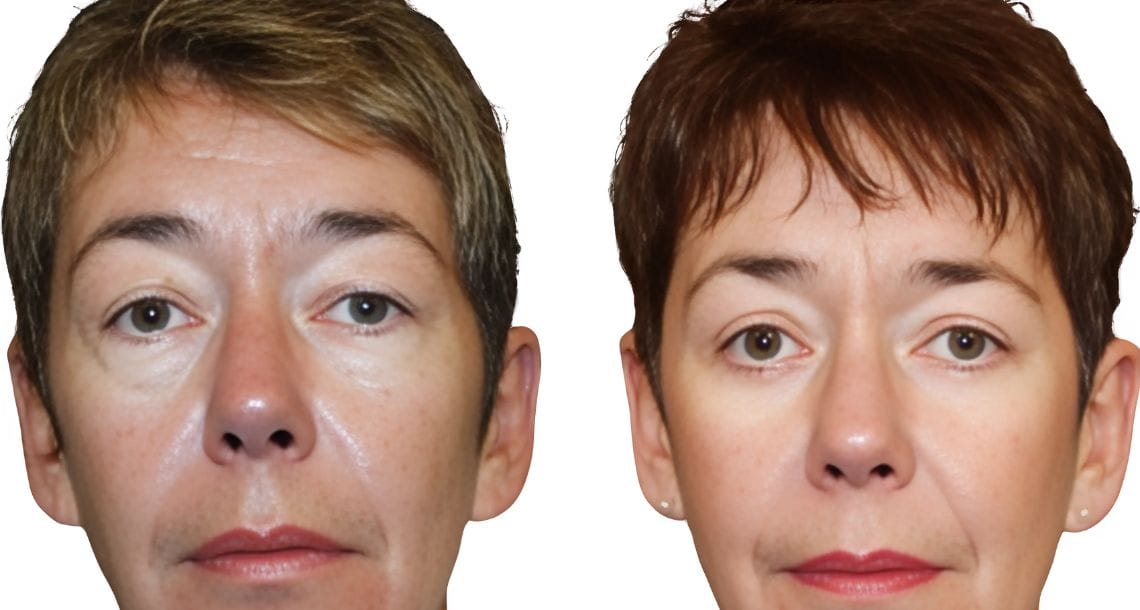
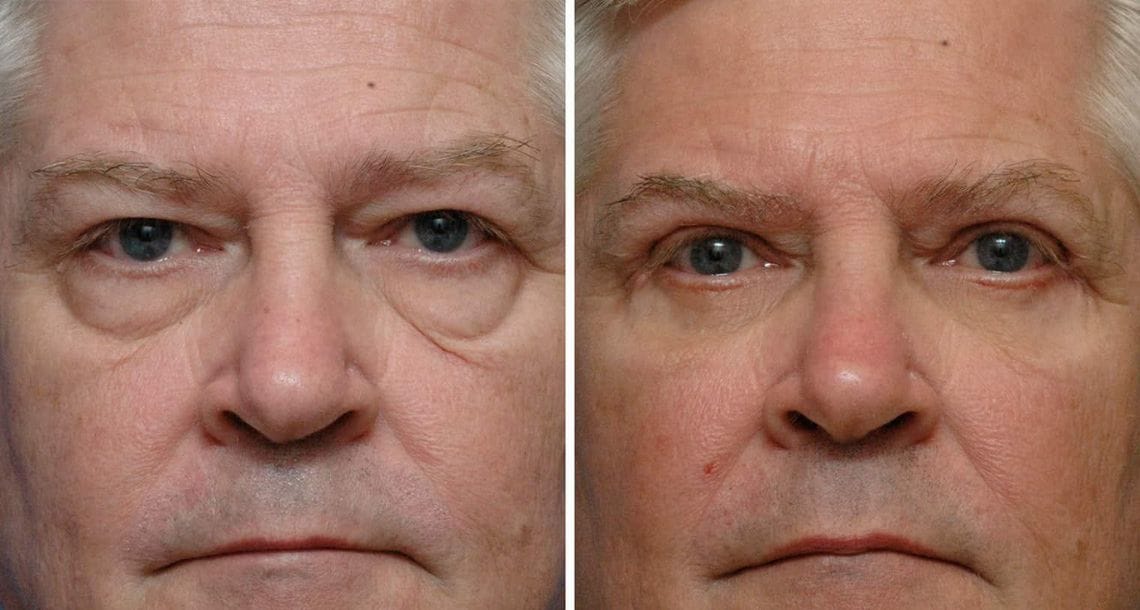
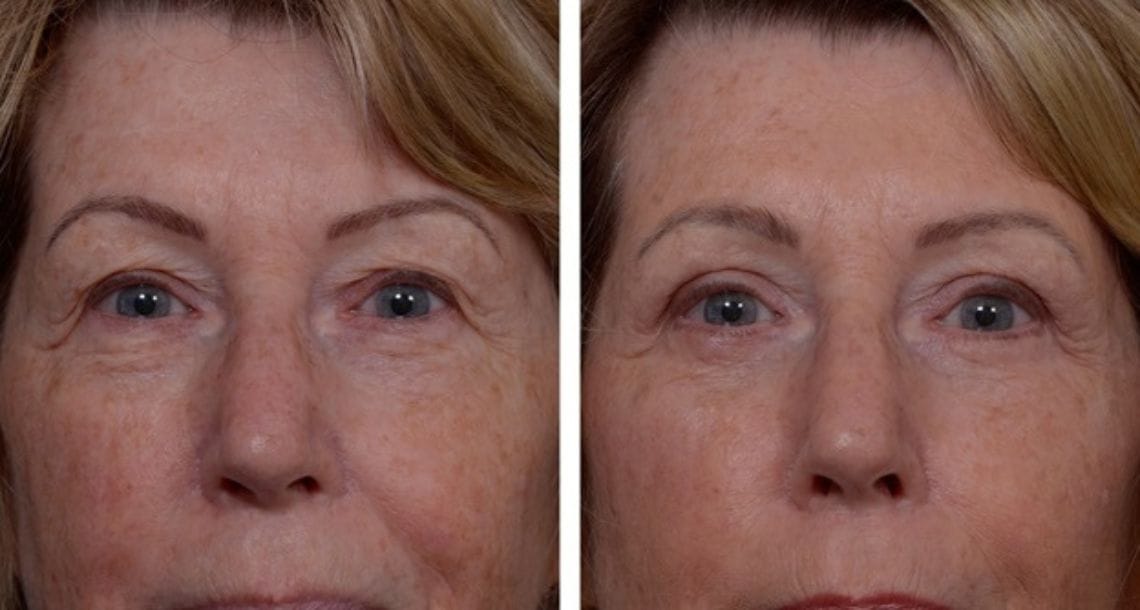

See more cases in the full before and after gallery and the blepharoplasty before and after gallery. To find out what may be achievable for your own eyes, request your free consultation.
This article is for general information and does not replace a personal medical consultation. Suitability, risks, recovery and expected results should be discussed with a qualified surgeon. Results vary by individual.