
 ChatGPT

When the Light Starts to Catch the Shadows
You lean towards the bathroom mirror in the morning light and notice something new. A soft hollow sits just below your cheekbone, and the face looking back seems thinner, more tired, maybe older than you feel. If that moment sounds familiar, you are probably seeing hollow cheeks, one of the most common changes adults notice from their thirties onwards.
For some people the change creeps in slowly with age. For others it arrives in a few months, after weight loss or a demanding year.
This guide from Vivid Clinic in Istanbul, Turkey explains why cheeks lose volume, how to tell volume loss from sagging, and five treatment options, from hyaluronic filler to fat transfer to the face and lifting surgery. Not everyone needs treatment. If you would like an honest opinion, you can start with a free consultation with a plastic surgeon, with no obligation to go ahead.
What Are Hollow Cheeks?
Quick Answer: Hollow cheeks are a sunken or concave look in the area between the cheekbone and the jaw, caused mainly by loss of fat and soft tissue in the midface. They can come from ageing, weight loss, genetics or past procedures. They are usually a cosmetic concern, not a medical one.
The cheeks are made of several separate fat compartments, layered over muscle and bone. When these compartments shrink or slide down, the surface dips and hollow cheeks begin to show.
The Anatomy of Midface Volume
In youth, the midface has a smooth, gentle curve that reads as freshness and health. With time, the deep fat pads thin out, the bone underneath slowly remodels and the skin loses some elasticity. The result is a flatter cheek, a more visible cheekbone edge and a hollow beneath it.
Hollow Cheeks vs High Cheekbones
High, defined cheekbones and sunken cheeks can look similar in photos, but they are different. High cheekbones describe the bone structure and the way it catches light. Hollowing describes missing soft tissue below that bone.
You can read more about this feature in our guide to high cheekbones.
Signs of Sunken Cheeks and Cheek Volume Loss
Quick Answer: Common signs include a visible dip under the cheekbone, a more prominent cheekbone edge, deeper smile lines, a tired look even after rest, and makeup that settles into shadows. A side or three-quarter photo often shows the change more clearly than a mirror.
Look for these clues in natural light:
- A concave area between the cheekbone and the jaw
- A cheekbone edge that looks sharper than it used to
- Deeper nasolabial folds running from nose to mouth
- Shadows under the eyes that seem to connect with the cheek
- A face that looks gaunt or tired in photos
Comparing old and recent photos taken in similar light often shows whether your hollow cheeks come from volume loss, sagging or both.
What Causes Hollow Cheeks?
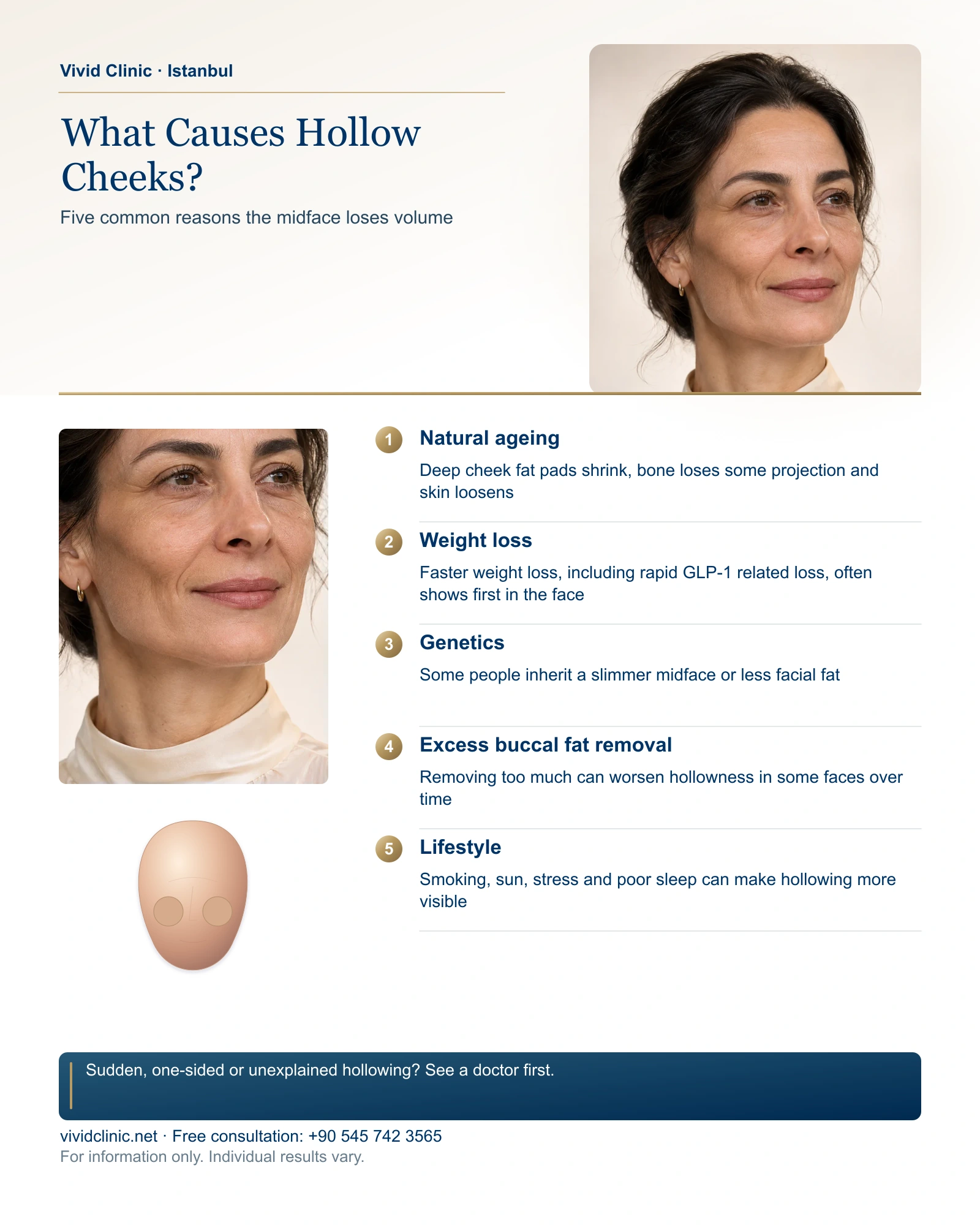
Usually several factors overlap, and knowing which apply helps a surgeon choose between adding volume and lifting tissue.
Natural Ageing
Ageing is the most common cause of hollow cheeks. The deep fat compartments of the midface shrink, the bones of the face lose a little projection, and collagen production slows. The cheek flattens and the soft tissue that remains tends to descend.
Weight Loss, Including Rapid Weight Loss
Losing weight often shows first in the face. When weight loss is fast, hollow cheeks can appear within months.
This includes rapid weight loss linked to GLP-1 medicines, a pattern sometimes described as “Ozempic face”. This article does not give advice about any medication. If you take or plan to take a weight-loss medicine, please discuss it with the doctor who prescribes it.
Genetics and Face Shape
Some people inherit a slimmer midface or less facial fat, so hollow cheeks can appear earlier, sometimes in the twenties.
Excess Buccal Fat Removal
Buccal fat removal can refine a round, full lower face. But in faces that are already slim, or as natural ageing adds its own volume loss, removing too much can worsen hollowness later. Careful selection matters, and fat transfer is sometimes used to restore balance afterwards.
Lifestyle Factors
Smoking, sun exposure, stress, poor sleep and intense endurance training rarely cause deep hollowing alone, but they can make hollow cheeks more noticeable.
When to See a Doctor First
If your hollow cheeks appeared suddenly, affect one side more than the other, or come with unexplained weight loss, fatigue, fever or pain, see your doctor before considering any cosmetic treatment. Medical conditions, certain medicines and dental problems can all change the face, and these need proper assessment first.
Do Hollow Cheeks Need Treatment?
Quick Answer: No. Treatment is optional and purely a personal choice. Some people embrace a leaner face, others prefer to restore lost fullness. A good consultation explains what is realistic for your anatomy, including the option to do nothing.
Who Might Be a Good Candidate
You may be a suitable candidate for treatment if you:
- Are in good general health and at a stable weight
- Have noticed cheek volume loss that bothers you
- Understand that results vary and improvements are gradual
- Have realistic expectations about what volume restoration can achieve
Who Should Wait or Choose Another Path
Treatment may not suit you right now if you are still losing weight, are pregnant or breastfeeding, have an active skin infection, or have an unexplained cause of facial change. Fat transfer also needs enough donor fat, which can be limited in very slim people. If loose, sagging skin is the main issue, adding volume alone may make the face look heavy, and a lift may be more appropriate.
5 Ways to Restore Youthful Volume
There is no single best treatment for hollow cheeks. The right plan depends on how much volume you have lost, your skin quality and whether tissue has descended.
1. Facial Fat Transfer
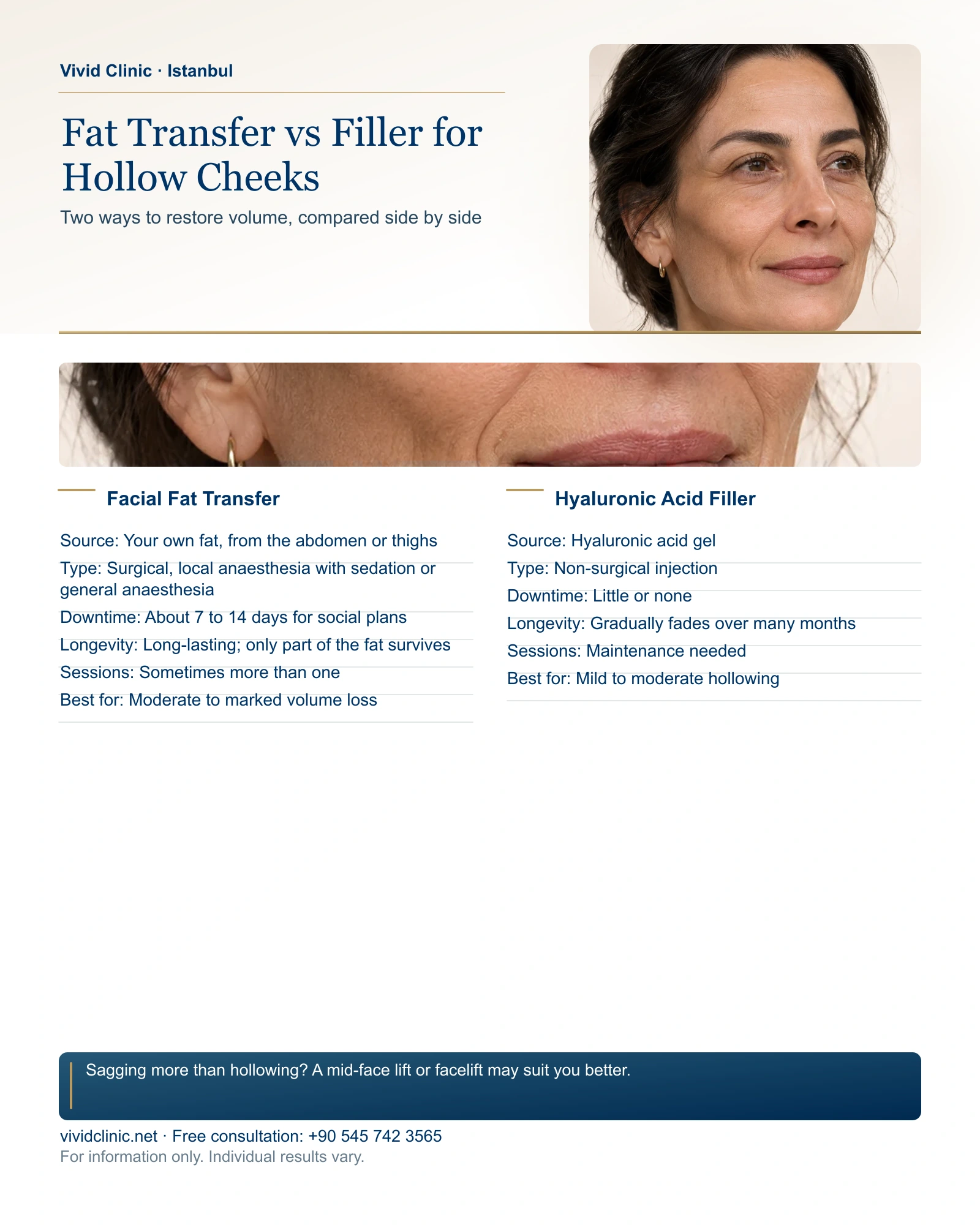
Fat transfer uses your own fat, gently taken from areas such as the abdomen or thighs, purified and injected into the cheeks. It is the main surgical option for restoring lost midface volume.
Results can feel soft and natural. However, only part of the transferred fat survives, and the amount varies from person to person. Some patients need more than one session to reach their goal.
2. Hyaluronic Acid Filler
Dermal fillers made from hyaluronic acid are the main non-surgical option. A doctor injects small amounts to support the cheek and soften hollows, with little or no downtime.
Results are immediate and fade over many months, so maintenance is needed. Most hyaluronic acid fillers can be dissolved if needed, which makes them a flexible first step.
3. Mid-Face Lift
When the cheek fat has slipped downwards rather than disappeared, lifting it back may help more than adding volume. An endoscopic mid facelift repositions the cheek tissue through small, well-hidden incisions. You can see examples in the mid face lift before and after page.
4. Facelift When Sagging Is the Main Issue
If hollowing comes with jowls, loose neck skin and deep folds, a facelift addresses the deeper structures and skin of the lower face and neck. On its own, a facelift does not add volume, which is why it is often planned together with fat transfer.
5. A Combined Plan
When a face shows both volume loss and sagging, a surgeon may suggest a lift plus fat transfer to the face in one planned session. Combining procedures adds surgical time and recovery, so it is only recommended when it suits you.
Fat Transfer to Face vs Filler: Which Suits You?
Quick Answer: Filler suits people who want a quick, adjustable, non-surgical improvement with minimal downtime. Fat transfer suits people with moderate to marked hollowing who prefer their own tissue and longer-lasting volume, and who accept a short recovery and the possibility of a second session.
Your surgeon will look at your skin, donor fat and goals before suggesting either for your hollow cheeks.
How Facial Fat Transfer Works
It is usually done under local anaesthesia with sedation, or general anaesthesia if combined.
Step 1: Gentle Fat Harvesting
Through tiny incisions, the surgeon gently removes a small amount of fat from a donor area with a thin cannula.
Step 2: Purification
The fat is processed to separate healthy fat cells from fluid and damaged cells. Only the purified fat is prepared for injection.
Step 3: Precise Placement
The surgeon injects tiny amounts of fat in several layers across the hollow cheeks. Small deposits give the fat the best chance of finding a blood supply and help create a smooth contour.
Procedure Overview Table: Facial Fat Transfer
| Aspect | Details |
|---|---|
| Duration Process | 1 to 2 hours, longer if combined with a lift |
| Hospitalization Duration | Usually same day discharge; 1 night if combined with other surgery |
| Mobility Duration | Walking the same day |
| Return to Activity | 7 to 14 days for desk work and social plans; strenuous exercise after about 3 to 4 weeks |
| Complete Recovery | 2 to 3 months for most swelling to settle |
| Anticipated Results | Early fullness that settles over the first months; final assessment around 3 to 6 months |
Timings are general estimates. Results vary by individual.
Recovery Timeline After Facial Fat Transfer
First 48 Hours
Swelling and bruising in the cheeks and donor area are expected, and the cheeks may look fuller than the final result. Rest with your head elevated.
First Week
Swelling peaks in the first few days and then eases. Most bruising fades this week, and gentle walking is encouraged.
Weeks Two to Four
Many people return to work and social plans as swelling settles.
Months Three to Six
The fat that has survived settles into place. This is when your surgeon can judge the final result and discuss whether a top-up session would help.
Benefits of Treating Hollow Cheeks
- A fresher, more rested appearance
- Softer shadows under the cheekbone and around the eyes
- Restored balance between the midface and jawline
Benefits vary between patients. Treating hollow cheeks refreshes your look; it does not change who you are.
Possible Risks and Side Effects
Every option carries risk. Fat transfer can lead to swelling, bruising, uneven absorption, lumps or asymmetry, and some people need touch-up sessions. Infection and fat cysts are uncommon.
Filler can cause swelling, bruising, lumps or migration. A rare but serious risk is filler entering a blood vessel, which can damage the skin and, very rarely, affect vision, so experience and anatomy knowledge are essential. Lifting surgery carries scarring, numbness, hair changes near incisions and, rarely, nerve weakness. Your surgeon will explain the risks that apply to your plan.
How to Prepare for Treatment
- Reach a stable weight before fat transfer.
- Share your full medical history, medicines and supplements.
- Ask whether to pause blood-thinning medicines or supplements.
- Stop smoking well ahead of surgery, as advised.
Aftercare Tips
- Sleep with your head elevated for the first week.
- Avoid pressure, massage or tight masks on the treated cheeks unless advised.
- Wear any compression garment on the donor area as instructed.
- Avoid strenuous exercise and heavy lifting until cleared.
- Keep your weight stable, since transferred fat changes with weight.
- Seek urgent advice for increasing pain, fever or skin colour change.
Cost Factors in Istanbul, Turkey
The cost of treating hollow cheeks depends on your plan, not a fixed number. The main factors are:
- Whether you choose filler, fat transfer, a lift or a combined plan
- The amount of filler or fat needed, and the number of areas treated
- Anaesthesia type, operating time and hospital setting
- The possibility of a second fat transfer session
- Accommodation, transfers and follow-up included in your package
For an early idea, try the surgery price calculator, then confirm details during your consultation.
Why Choose Vivid Clinic for Hollow Cheeks?
Quick Answer: Vivid Clinic offers anatomy-led planning in Istanbul, Turkey, an honest view on whether you need volume, lifting or nothing at all, and organised support for international patients from the first message to remote aftercare.
You can meet our doctors, browse the before and after gallery, and begin with a free consultation with a plastic surgeon before you decide anything.
What International Patients Can Expect
Filler fits into a short stay of a few days. Facial fat transfer usually needs around five to seven days in Istanbul before flying home, and a lift or combined plan may need about seven to ten days, depending on healing. Expect clear written aftercare, a checkup before departure and a direct line to the team once you are home.
Operation Process Overview at Vivid Clinic
Your journey with Vivid Clinic begins when you arrive in Istanbul, where a VIP airport transfer takes you to your 5-star hotel for check-in and time to rest. Next comes your one-on-one consultation, where the surgeon examines your cheek volume, skin quality, donor fat and goals, and explains whether fat transfer, filler, a lift, a combined plan or no treatment suits you. On surgery or treatment day, every step is planned carefully for comfort and a natural result. Post-operative care, with written instructions and a direct contact line, follows straight away. A checkup visit before your departure confirms that healing is on track, and remote aftercare follow-up continues once you are back home.
FAQs
How long should I stay in Istanbul for treatment of hollow cheeks?
It depends on the treatment you choose for your hollow cheeks. Filler is quick, so a stay of two to four days usually allows time for the consultation, treatment and a short review. Facial fat transfer generally needs around five to seven days in Istanbul, so the surgeon can check early healing before you fly. A combined plan with a mid-face lift or facelift may need about seven to ten days. Swelling can make the cheeks look fuller at first, so allow a little extra time before important events. Vivid Clinic helps you plan your dates, hotel and transfers around your treatment, and remote aftercare follow-up continues once you are home.
How long does fat transfer for hollow cheeks last?
Fat transfer for hollow cheeks is considered long-lasting, though not unchanging. Once transferred fat establishes a blood supply, it tends to behave like the fat around it. However, not all of the fat survives, and the amount varies between people, which is why some patients need a second session a few months later. The fat that remains continues to age with you and responds to weight changes, so gaining or losing weight can change the result. Natural ageing also continues. Keeping a stable weight and healthy habits helps you enjoy the result for longer. Your surgeon will explain realistic expectations during your consultation.
Can buccal fat removal cause hollow cheeks later?
It can in some faces. Buccal fat removal reduces fullness in the lower cheek, which can look elegant in a round face. But if the face is already slim, or if too much fat is removed, natural age-related volume loss may later add to the effect and create hollow cheeks. This is why careful patient selection and a conservative approach matter. If you already feel your cheeks look sunken after buccal fat removal, facial fat transfer or filler may help restore some balance. A surgeon can assess your midface, skin and bone structure and suggest whether volume restoration is suitable for you.
Are hollow cheeks after weight loss better treated with filler or fat transfer?
For hollow cheeks after weight loss, the first step is reaching a stable weight, because further loss changes the face again. After that, the choice depends on the amount of volume lost and your preferences. Filler suits mild to moderate hollowing and offers quick, adjustable results without surgery, but it needs maintenance. Fat transfer suits moderate to marked volume loss, uses your own tissue and tends to last longer, but it is a surgical procedure and may need more than one session. If the skin has become loose, a lift may also be considered. This article does not give medication advice; discuss any weight-loss medicine with your prescribing doctor.
What affects the cost of treating hollow cheeks in Turkey?
The cost of treating hollow cheeks depends on the plan rather than the concern itself. Filler cost is shaped mainly by the amount of product and the number of areas treated. Fat transfer adds surgical time, anaesthesia and the hospital setting, and a possible second session should be part of your planning. A mid-face lift, facelift or combined plan changes the total further. Package inclusions, such as hotel nights, VIP transfers and follow-up appointments, also matter. Vivid Clinic provides a personalised quote after reviewing your photos and goals, and the online price calculator can give you an early idea before your consultation.
Conclusion
Hollow cheeks are a natural part of life for many adults, shaped by ageing, weight loss, genetics or past procedures. They are not a problem you must fix. If they bother you, though, there are good options: filler for a quick, adjustable change, fat transfer to the face for longer-lasting volume from your own tissue, and lifting surgery when sagging is the bigger issue.
The best plan starts with an honest look at your anatomy. Vivid Clinic in Istanbul, Turkey offers a free consultation with a plastic surgeon to talk through your options with no pressure. Request your free consultation and get a personal view of what is realistic for you.
Real Before and After Results at Vivid Clinic
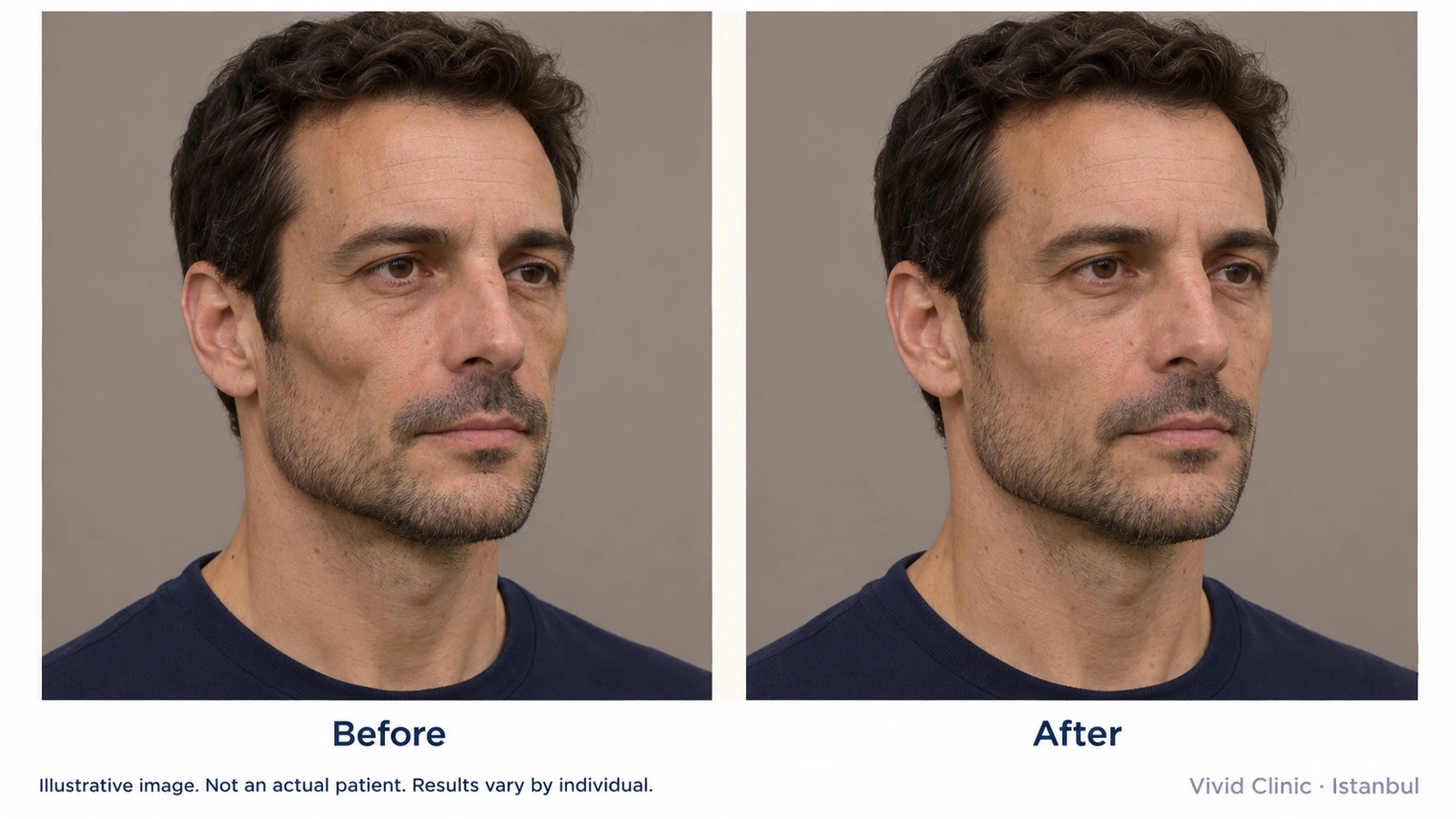
The photos below show real Vivid Clinic patients from the clinic’s own gallery, shared with consent as published on the clinic site. They are full-face contouring filler and surgical facial rejuvenation cases, not specifically hollow cheek or fat transfer cases, and results vary by anatomy, healing and treatment plan.
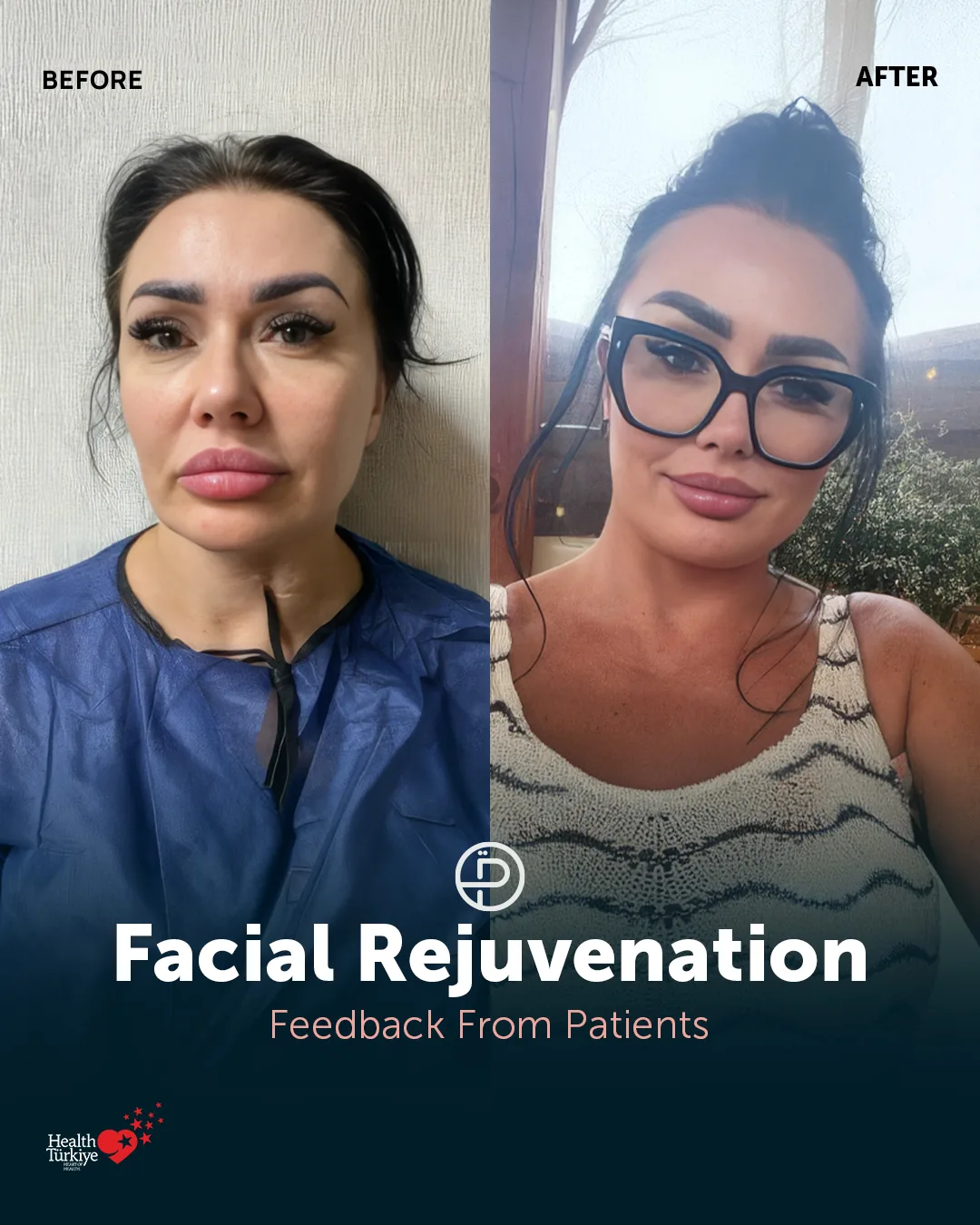
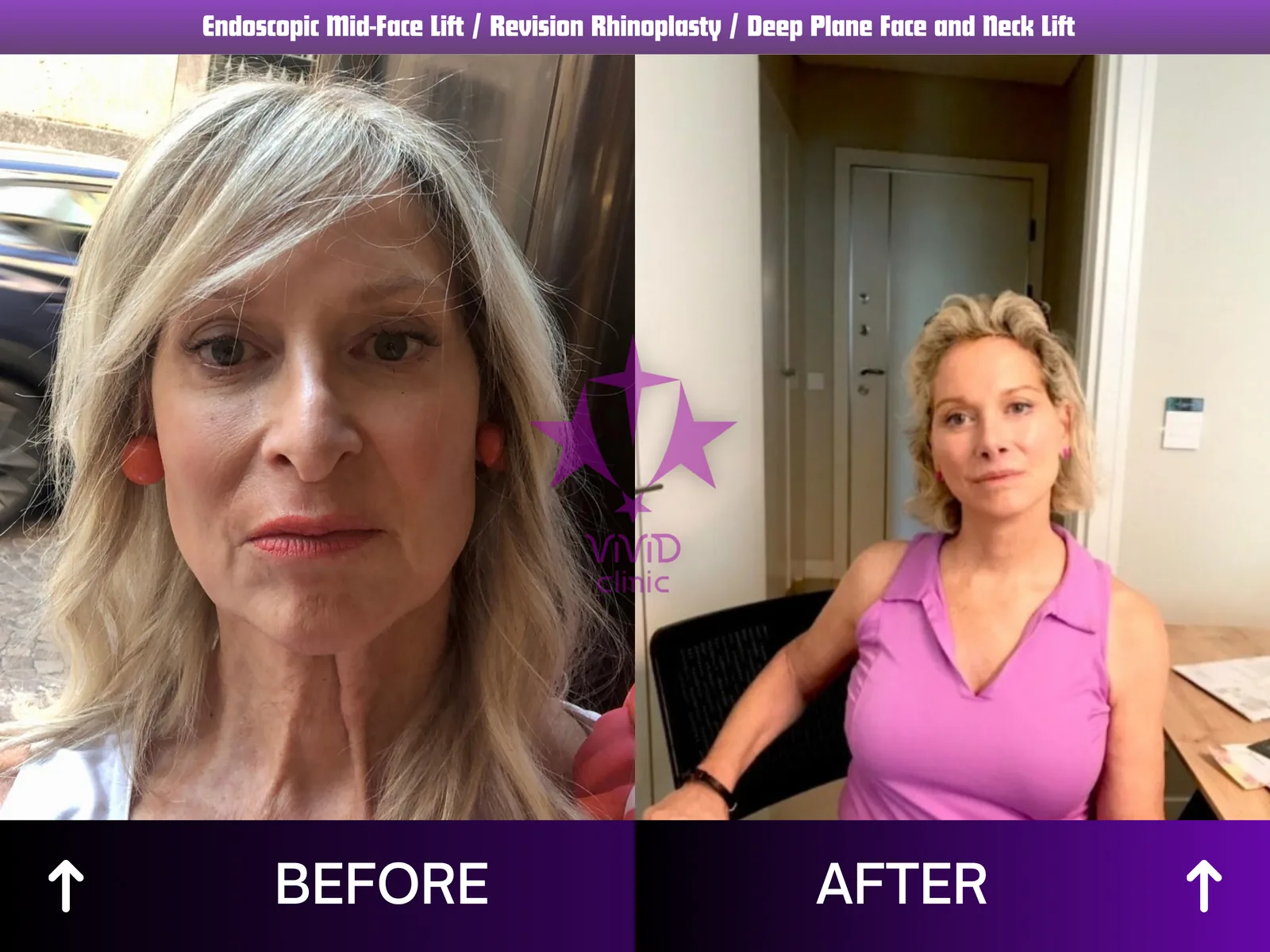
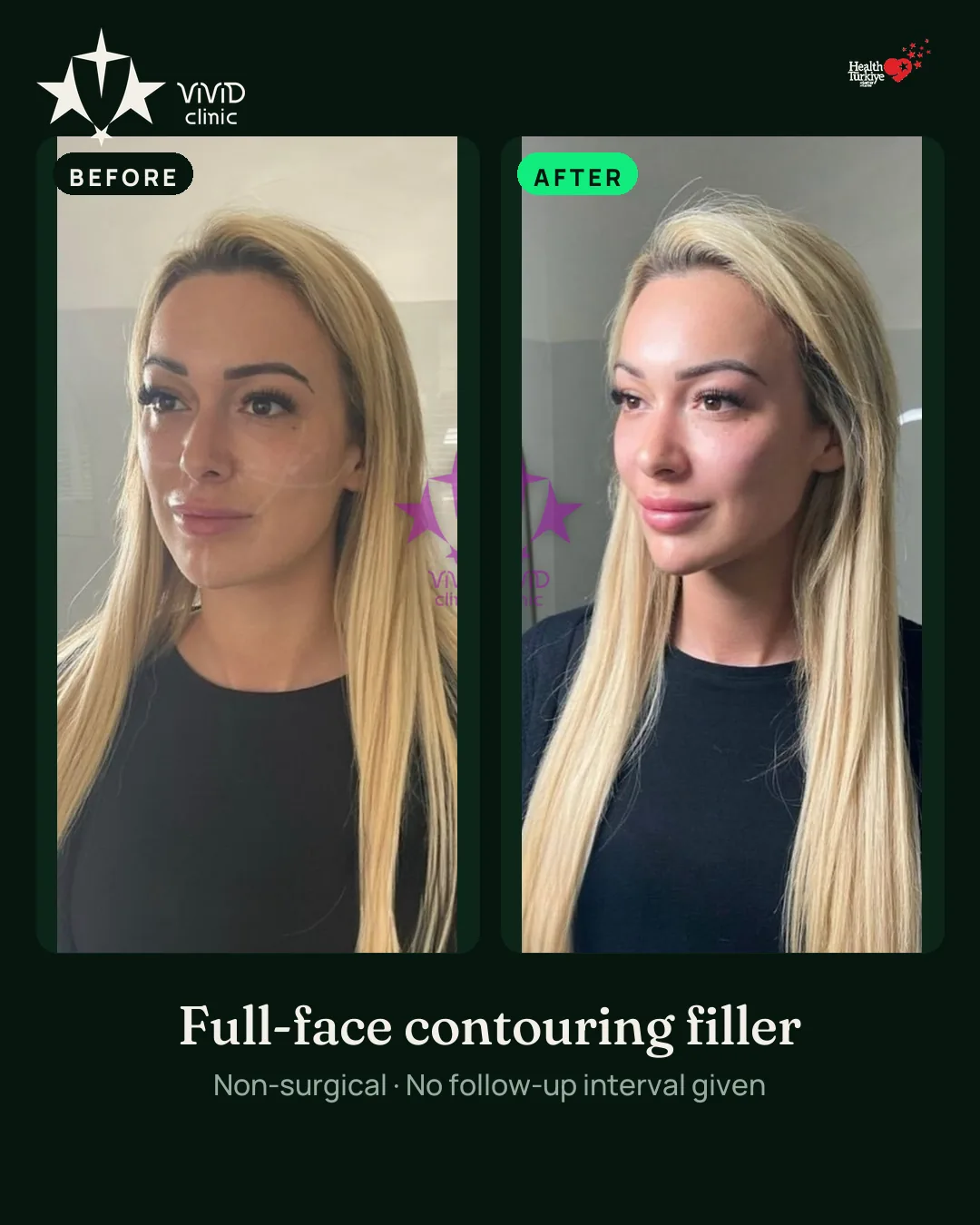
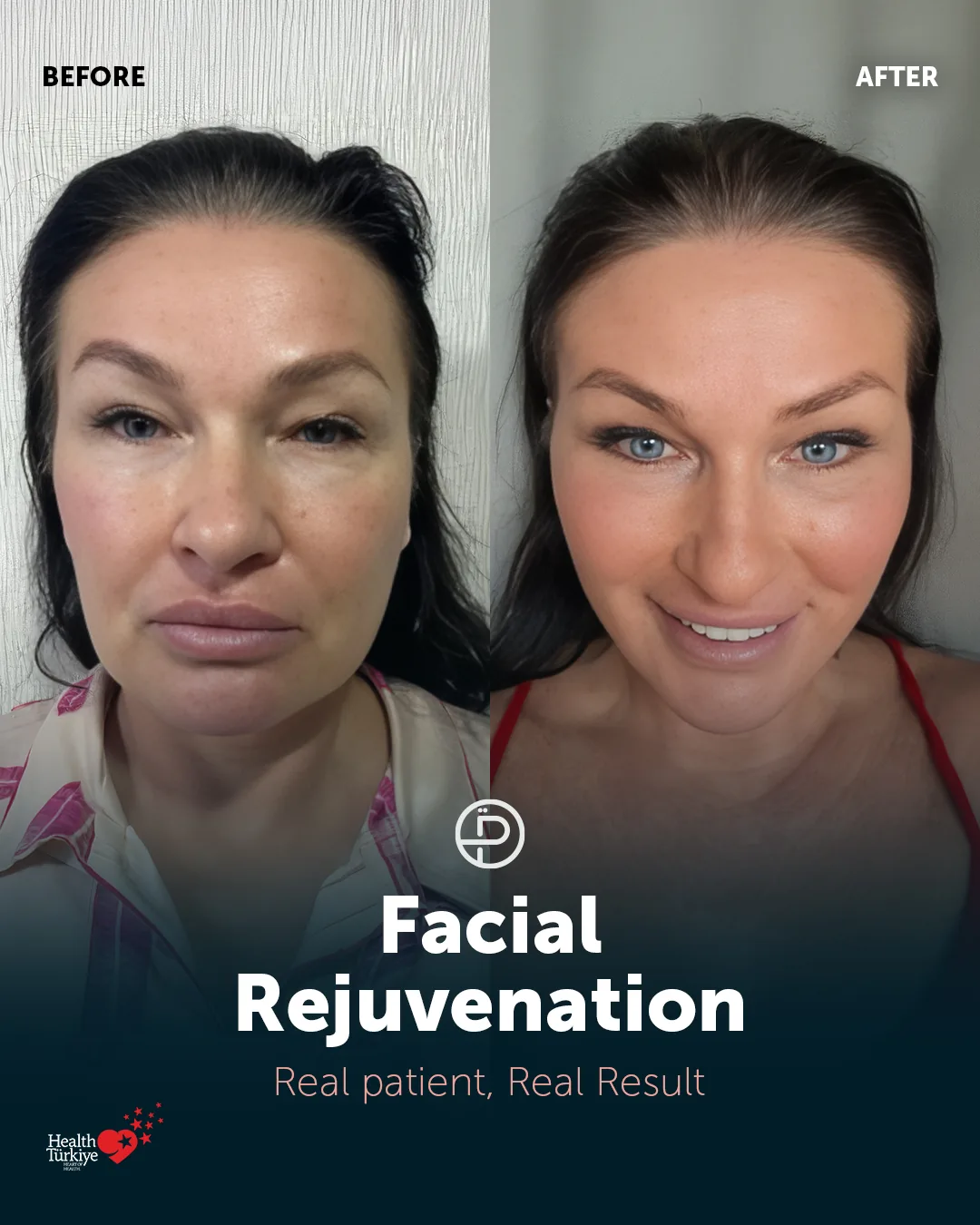
You can explore more cases in the full Vivid Clinic before and after gallery. To discuss your own goals, ask for a free quote and the team will arrange your consultation.
This article is for general information and does not replace a personal medical consultation. Suitability, risks, recovery and expected results should always be discussed with a qualified medical professional. Results vary by individual.