 ChatGPT
When Every Photo Seems to Lean to One Side
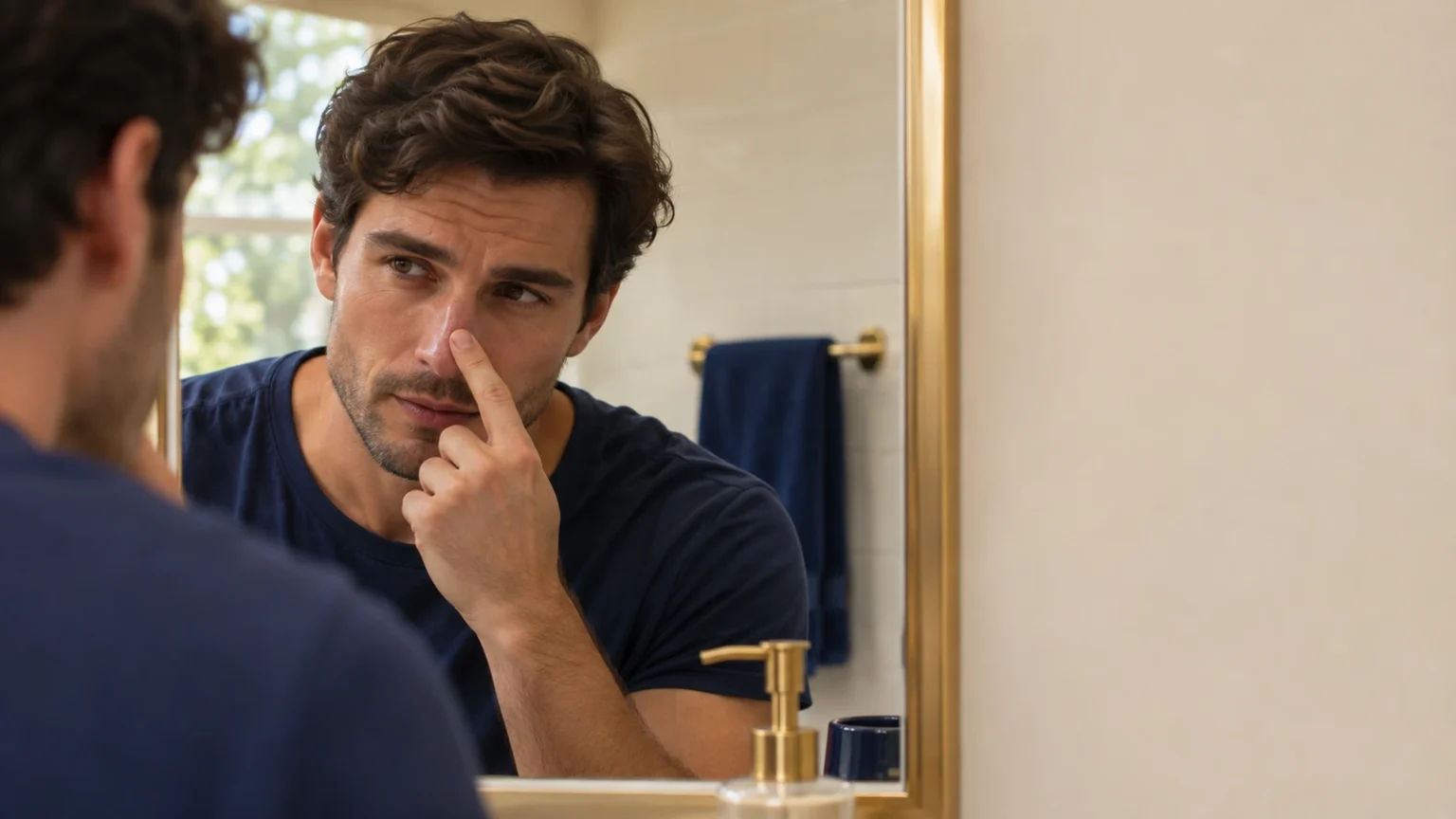
It usually shows up in photos first. You smile for a group picture and later notice that the bridge drifts toward one cheek, or that your face looks different depending on which side the camera is on. A crooked nose can be something you were born with, something that appeared through your teenage years, or the lasting reminder of one bad moment on a sports field.
This guide from Vivid Clinic in Istanbul, Turkey explains why noses deviate, what surgery can and cannot do, and why straightening is among the more demanding tasks in nasal surgery. If you would like a personal opinion, you can request a free consultation with a plastic surgeon before deciding anything.
What Is a Crooked Nose?
Quick Answer: A crooked nose is a nose that does not follow a straight vertical line down the centre of the face. The deviation can sit in the upper bony part, the middle cartilage part, the tip, or all three. It may be purely a matter of appearance, or it may come with a bent septum and difficulty breathing.
Doctors often call it a deviated nose. Almost nobody has an exactly symmetrical nose, so a small lean is normal and rarely needs treatment.
Our overview of nose deformities describes other shape concerns, such as humps and tip problems. This article stays with deviation and straightening.
C-Shaped, S-Shaped and Tilted Deviations
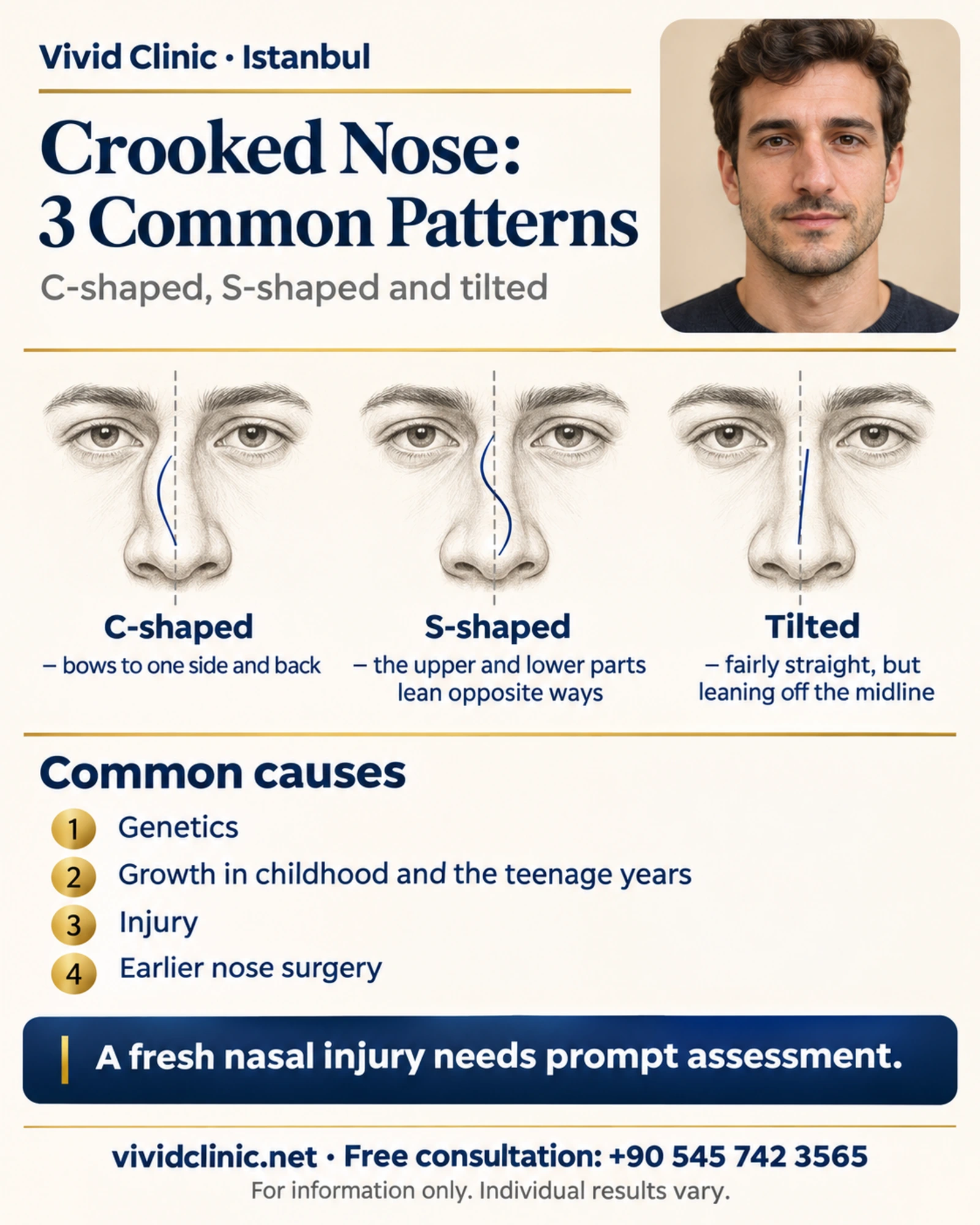
Surgeons tend to describe three broad patterns:
- C-shaped: the nose bows to one side and back again in a single curve.
- S-shaped: the upper part leans one way and the lower part the other, creating a double curve.
- Tilted, sometimes called I-shaped: the nose is fairly straight in itself, but the whole structure leans away from the midline.
These are general descriptions, not strict categories.
What Causes a Crooked Nose?
Most deviations trace back to one or more of four causes: genetics, growth, injury and earlier surgery.
Genetics and Family Traits
The shape and position of the nasal bones and cartilage are largely inherited, and a mild lean often runs in families.
The face around the nose is rarely symmetrical either, and the nose may follow that pattern. Our guide to the asymmetrical face explains why this is normal.
Growth During Childhood and the Teenage Years
The septum, the wall inside the nose, acts as a growth centre for the middle of the face. If it grows unevenly, or if a forgotten childhood knock disturbed it, the nose can drift gradually as the face matures.
Injury and Trauma
Sports collisions, falls and accidents are a common cause. A blow can shift the nasal bones, fracture or dislocate the septum, or do both.
Earlier Nose Surgery
Occasionally a deviation appears, or persists, after a previous nose operation. Correcting this is a form of revision rhinoplasty, which is usually more complex than a first operation.
A Fresh Nasal Injury Needs Prompt Assessment
If your nose has just been injured, arrange a prompt medical assessment, ideally within the first few days. A doctor needs to check for a septal haematoma, a collection of blood inside the nose that needs urgent drainage, and displaced bones can sometimes be reset in the first one to two weeks.
Seek urgent care for heavy bleeding that does not stop, clear watery fluid from the nose, a severe headache or changes in vision.
Crooked Nose vs Deviated Septum: What Is the Difference?
Quick Answer: A crooked nose describes what you see from the outside: the external framework sits away from the midline. A deviated septum describes the inside: the wall that divides the two nasal passages is bent. You can have either alone, but they often coexist, because the septum supports the external nose.
Think of the septum as the central pole of a tent: if the pole is bent, the tent leans with it.
A septoplasty alone straightens the septum to improve airflow and usually does not change how the nose looks. Our deviated septum and septoplasty guide covers the internal problem in detail.
Breathing Symptoms That Deserve a Medical Assessment
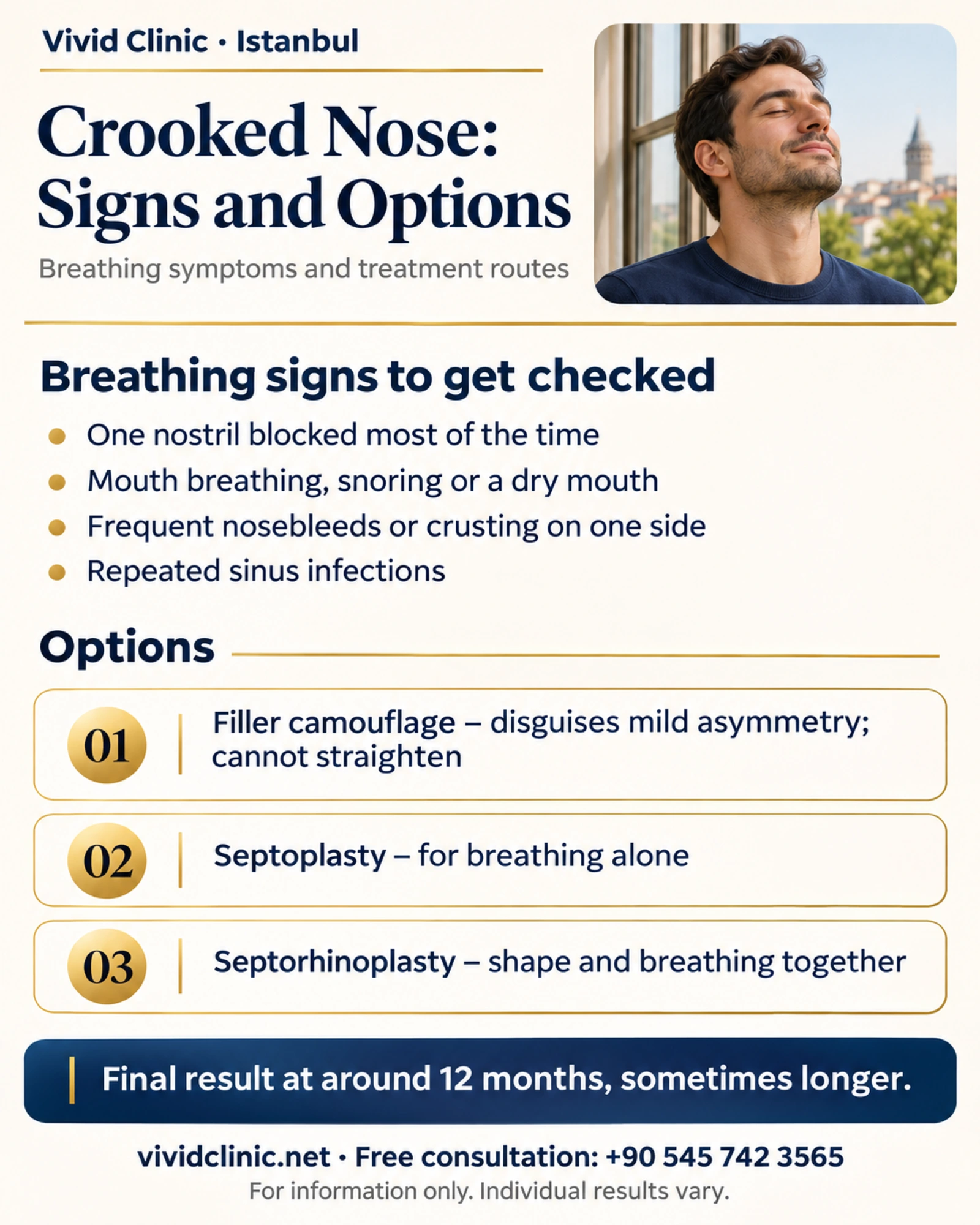
Have your nose examined if you notice:
- One nostril that feels blocked most of the time
- Mouth breathing, snoring or a dry mouth on waking
- Frequent nosebleeds or crusting on one side
- Repeated sinus infections or facial pressure
These symptoms have several possible causes, including allergies, enlarged turbinates and nasal polyps. Only an examination can show whether the structure of the nose is responsible.
Who Is a Good Candidate for Crooked Nose Surgery?
Quick Answer: Good candidates for crooked nose surgery are healthy adults whose facial growth is complete, who are bothered by a visible deviation, a structural breathing problem or both, and who understand that the goal is a straighter, better-functioning nose, not flawless symmetry.
Signs You May Be a Good Fit
- Your nose is visibly off-centre from the front and has been stable for at least a year
- A doctor has linked your breathing difficulty to the structure of your nose
- You are in good general health and do not smoke, or can stop well before surgery
- You accept that improvement, not symmetry to the millimetre, is the realistic aim
When Surgery Is Not the Right Step
Surgery may not be advised, or may need to wait, if:
- The deviation is mild, causes no symptoms and does not truly bother you
- Your nose is still healing from a recent injury or operation
- Your facial growth is not yet complete
- You have uncontrolled medical conditions, or are pregnant or breastfeeding
- You expect a ruler-straight result on a face that is itself asymmetrical
How to Fix a Crooked Nose: Non-Surgical and Surgical Options
If you are searching for how to fix a crooked nose, the options range from doing nothing to full structural surgery. A slight lean with normal breathing is a variation, not a medical problem, and many people choose to leave it alone after a proper assessment.
Filler Camouflage and Its Limits
In selected mild cases, a small amount of hyaluronic acid filler can be placed on the hollow side of the bridge so the nose looks straighter from the front.
It is camouflage, not correction. Filler adds volume, so it cannot truly straighten the nose, it does nothing for breathing, and it fades over months.
The nose is also a higher-risk area for filler. If product enters or presses on a blood vessel, it can injure the skin and, in rare cases, affect vision, so it belongs only with an experienced medical practitioner.
Septoplasty for Breathing Alone
If your only concern is airflow, a septoplasty may be enough. It works inside the nose and usually leaves the external shape unchanged.
Septorhinoplasty for Shape and Breathing Together
When the outside is deviated, and especially when the septum is bent too, the usual answer is a septorhinoplasty. This combines rhinoplasty, which reshapes the external framework, with septoplasty in one operation. You may also see it described as a crooked nose job.
How Crooked Nose Rhinoplasty Works
Crooked nose rhinoplasty is planned in thirds: the bony upper third, the cartilage middle third and the tip. Each may need its own manoeuvre.
Consultation and Planning
Your surgeon examines the nose outside and inside, checks airflow on both sides and studies your facial midline. You should hear what can realistically be improved and what may remain slightly asymmetrical.
Anaesthesia and Surgical Approach
Septorhinoplasty is normally performed under general anaesthesia. Many surgeons prefer the open approach for marked deviations because it shows the whole framework directly. Our comparison of open vs closed rhinoplasty explains the trade-offs.
Osteotomies: Repositioning the Nasal Bones
When the bony upper third is off-centre, the surgeon makes controlled cuts in the nasal bones, called osteotomies, so they can be moved back toward the midline.
Straightening the Septum
The bent parts of the septum are reshaped, repositioned or partly removed, while a strong L-shaped strut is preserved to support the bridge and tip.
Spreader Grafts and Camouflage Techniques
Spreader grafts are thin strips of cartilage, usually taken from your own septum, placed alongside the upper septum like splints. They help hold the middle third straight and can support the internal nasal valve.
Where a small unevenness remains, fine pieces of cartilage or soft tissue can even out a contour without moving the underlying structure.
Why a Deviated Nose Is One of the Harder Rhinoplasty Problems
A deviated nose is widely regarded as one of the more difficult problems in rhinoplasty. Three things make it so.
- Cartilage memory: cartilage that has been bent for years tends to drift back toward its old shape, so some re-deviation can appear months after surgery.
- Several structures at once: bones, septum, upper cartilages and tip may each lean differently, and all must end up aligned.
- The face behind the nose: a nose set straight on an asymmetrical face can still look slightly off-centre.
A small residual deviation is therefore not unusual, and a revision procedure is sometimes needed once healing is complete.
Procedure Overview Table: Rhinoplasty (Septorhinoplasty)
| Aspect | Details |
|---|---|
| Duration Process | About 2 to 4 hours, depending on complexity |
| Hospitalization Duration | Usually 1 night |
| Mobility Duration | Gentle walking the same day or the next day |
| Return to Activity | Desk work after 7 to 14 days; strenuous exercise after 4 to 6 weeks |
| Complete Recovery | Visible swelling settles in 3 to 6 weeks; subtle swelling lasts for months |
| Anticipated Results | Final result at around 12 months, sometimes longer |
Timings are general estimates. Results vary by individual.
Recovery Timeline After Crooked Nose Surgery
Quick Answer: After crooked nose surgery, most people wear an external splint for about a week and return to desk work within one to two weeks. Visible bruising and swelling usually settle over three to six weeks, while the final shape refines for around twelve months.
Our rhinoplasty recovery guide describes each stage in more detail.
First 24 to 48 Hours
Expect a blocked nose, swelling around the eyes and some bruising. Rest with your head raised and take pain relief as prescribed.
First Week
A splint protects the nose, and bruising usually peaks and then fades. The splint is typically removed after about a week.
Weeks Two to Six
Most people look presentable in public by the second or third week, and breathing gradually improves.
Months Three to Twelve
The nose keeps refining as deeper swelling resolves. Any tendency for the cartilage to drift also shows now, so follow-up photos matter.
Benefits of Straightening a Crooked Nose
- A nose that sits closer to the centre of the face
- A more balanced look from the front and in photographs
- Better airflow when a structural blockage has been corrected
Benefits vary and depend on anatomy and healing.
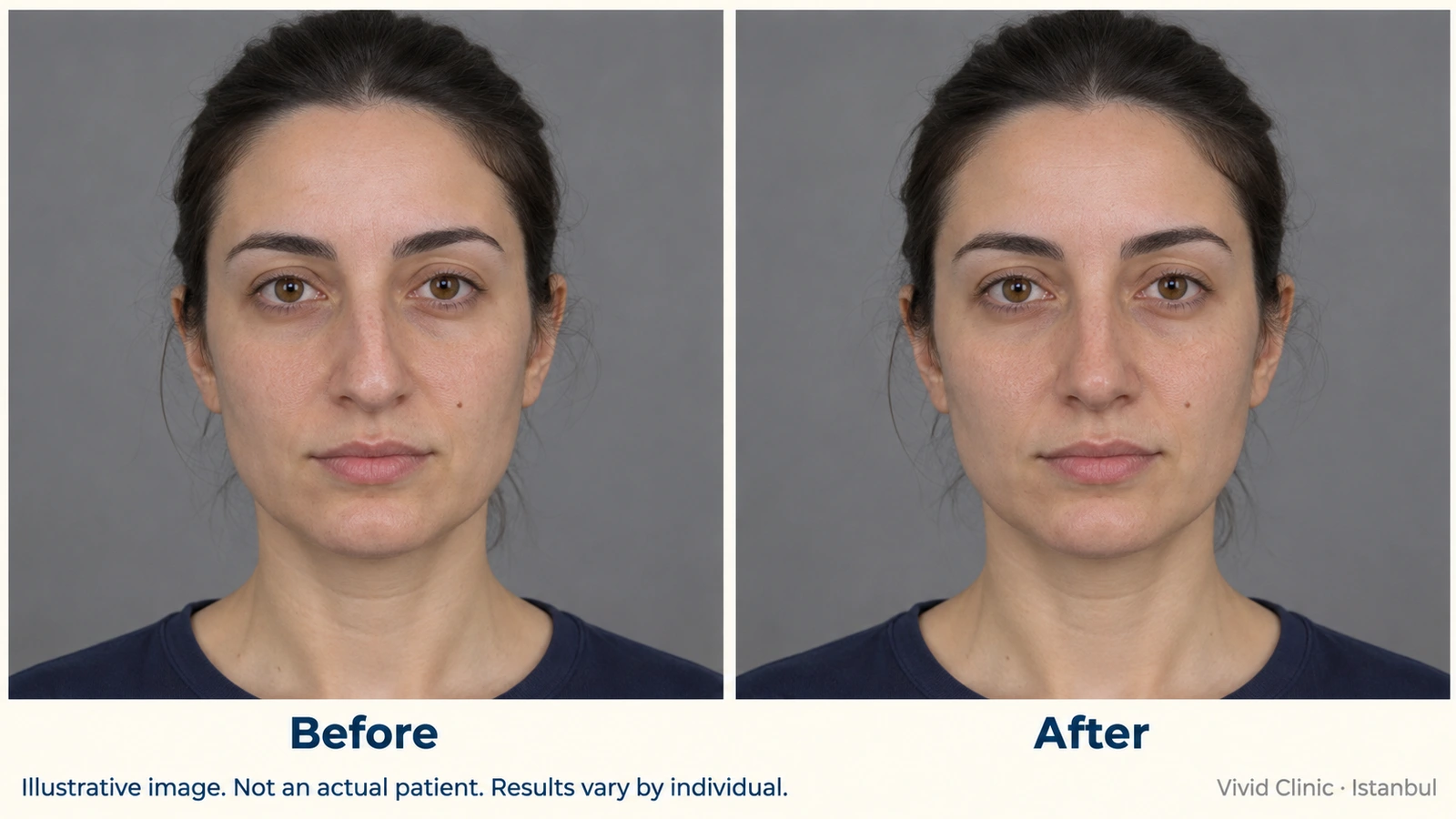
Possible Risks and Side Effects
Every operation carries risk. Common, usually temporary effects include swelling, bruising, nasal blockage and numbness of the tip.
Less common risks include:
- Residual or recurrent deviation, the risk most specific to this operation
- Persistent breathing difficulty or a new blockage
- Bleeding or infection that may need treatment
- Septal perforation, a hole in the septum
- Visible irregularities along the bridge, or a noticeable scar after an open approach
- Anaesthesia-related risks and the possible need for revision surgery
Discuss your personal risk profile with your surgeon before treatment.
How to Prepare for Surgery
- Share your full medical history, including past nasal injuries and operations.
- Ask which medicines and supplements to pause, and follow your doctor’s advice.
- Stop smoking and nicotine products well before surgery, as instructed.
Aftercare Tips for a Smoother Recovery
- Sleep with your head raised for the first one to two weeks.
- Do not blow your nose, and avoid glasses on the bridge, until you are told it is safe.
- Keep the splint dry and do not remove it yourself.
- Seek advice quickly for heavy bleeding, fever, increasing pain or a sudden change in shape.
Cost Factors in Istanbul, Turkey
Quick Answer: The cost of crooked nose surgery depends on how complex the deviation is, whether the septum or cartilage grafts are involved, whether it is a first operation or a revision, the surgeon’s experience, the hospital setting and what your travel package includes. A personalised quote follows your assessment.
Our nose job in Turkey page explains what is usually included for international patients. For an early idea, try the surgery price calculator.
Why Choose Vivid Clinic for Crooked Nose Surgery?
Quick Answer: Vivid Clinic offers structure-led planning in Istanbul, Turkey, candid advice about what straightening can and cannot achieve, attention to breathing as well as appearance, and organised support for international patients.
You can meet our doctors and begin with a free consultation with a plastic surgeon before you commit to anything.
What International Patients Can Expect
Many patients plan around seven to ten days in Istanbul, so the splint can be removed and the nose checked before the flight home. After you return, you send follow-up photos at agreed intervals so the team can watch how the nose settles.
Operation Process Overview at Vivid Clinic
Your journey with Vivid Clinic begins when you arrive in Istanbul, where a VIP airport transfer takes you to your 5-star hotel for check-in. Next comes your one-on-one consultation, where the surgeon examines your nose inside and out and explains what can realistically be straightened. On surgery day, every step is planned carefully for comfort, safety and a natural, balanced shape. Post-operative care starts straight away. A checkup visit before your departure allows the splint to be removed and healing to be reviewed, and remote aftercare follow-up continues with photo reviews once you are back home.
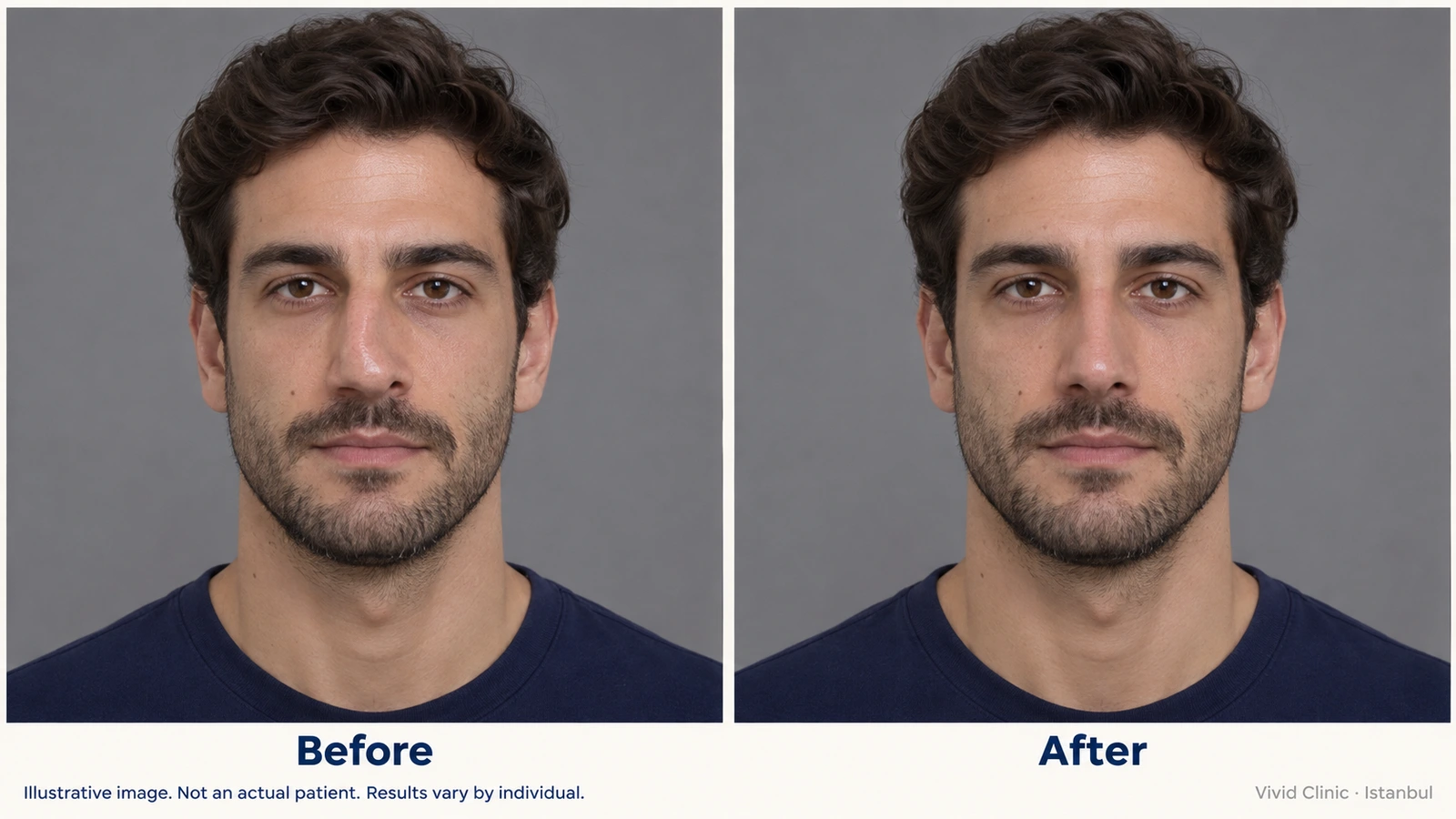
FAQs
How long should I stay in Istanbul for crooked nose surgery?
Many patients plan around seven to ten days in Istanbul for crooked nose surgery. That allows a day for arrival and consultation, the operation itself, usually one night in hospital, several days of early recovery at your hotel, and a checkup at which the external splint is normally removed. If your operation is a revision, your surgeon may advise a slightly longer stay. Your Vivid Clinic coordinator will suggest dates once your surgical plan is clear. Healing differs between individuals, so keep a little flexibility in your return travel.
Can a crooked nose be straightened without surgery?
Only in a limited sense. A crooked nose cannot be structurally straightened without surgery, because the deviation lies in bone and cartilage. In selected mild cases, filler can be placed on the hollow side so the bridge looks straighter from the front. This is camouflage: it adds volume, does not help breathing and fades over months. The nose is also a higher-risk area for filler, with rare but serious complications involving blood vessels, so it belongs only in experienced medical hands. Exercises and shaping devices do not move the nasal framework.
Will crooked nose surgery also improve my breathing?
It can, when the breathing problem is structural. Many people with a deviated nose also have a deviated septum or a narrow internal nasal valve on one side. A septorhinoplasty straightens the septum and supports the valve, often with spreader grafts, during the same operation that realigns the outside. However, blockage also has other causes, such as allergies or enlarged turbinates, and these need their own treatment. Your surgeon will examine the inside of your nose and explain how much improvement is realistic. Breathing often feels worse for the first weeks, then improves gradually.
Can a crooked nose come back after rhinoplasty?
Yes, some re-deviation is possible, and it is one of the main reasons this operation is considered demanding. Cartilage that has been bent for years has a kind of memory and may drift back toward its old shape as it heals. Surgeons reduce the risk with spreader grafts, careful septal reconstruction and precise osteotomies, but a small residual lean is not unusual. If a noticeable deviation remains once healing is complete, usually after about a year, a revision procedure can be discussed. Results vary by individual.
What affects the cost of crooked nose rhinoplasty in Turkey?
The cost depends on your individual plan. The main factors are how severe and complex the deviation is, whether the septum and breathing need treatment at the same time, and whether cartilage grafts are required. A revision operation usually costs more than a first-time procedure because it takes longer and is technically harder. The surgeon’s experience, the hospital stay and anaesthesia also matter, as do hotel nights and VIP transfers. Vivid Clinic provides a personalised quote after reviewing your photos, symptoms and goals.
Conclusion
A crooked nose can come from genetics, growth, an old injury or earlier surgery, and it often sits alongside a deviated septum that affects breathing. Mild deviations may need nothing at all, filler can only disguise a small unevenness, and real straightening means septorhinoplasty planned for your anatomy.
It is also one of the harder operations to get right. Cartilage can drift and revision is sometimes needed, so honest planning matters more than promises.
Vivid Clinic in Istanbul, Turkey offers a free consultation with a plastic surgeon to help you understand your options with no pressure. Request your free consultation and get a clear, personal view of what straightening your nose could involve.
Real Before and After Results at Vivid Clinic
The photos below show real Vivid Clinic patients from the clinic’s own gallery, shared with consent as published on the clinic site. They are general rhinoplasty cases, the procedure discussed in this article, not specifically crooked nose corrections, and results vary by anatomy, healing and treatment plan.
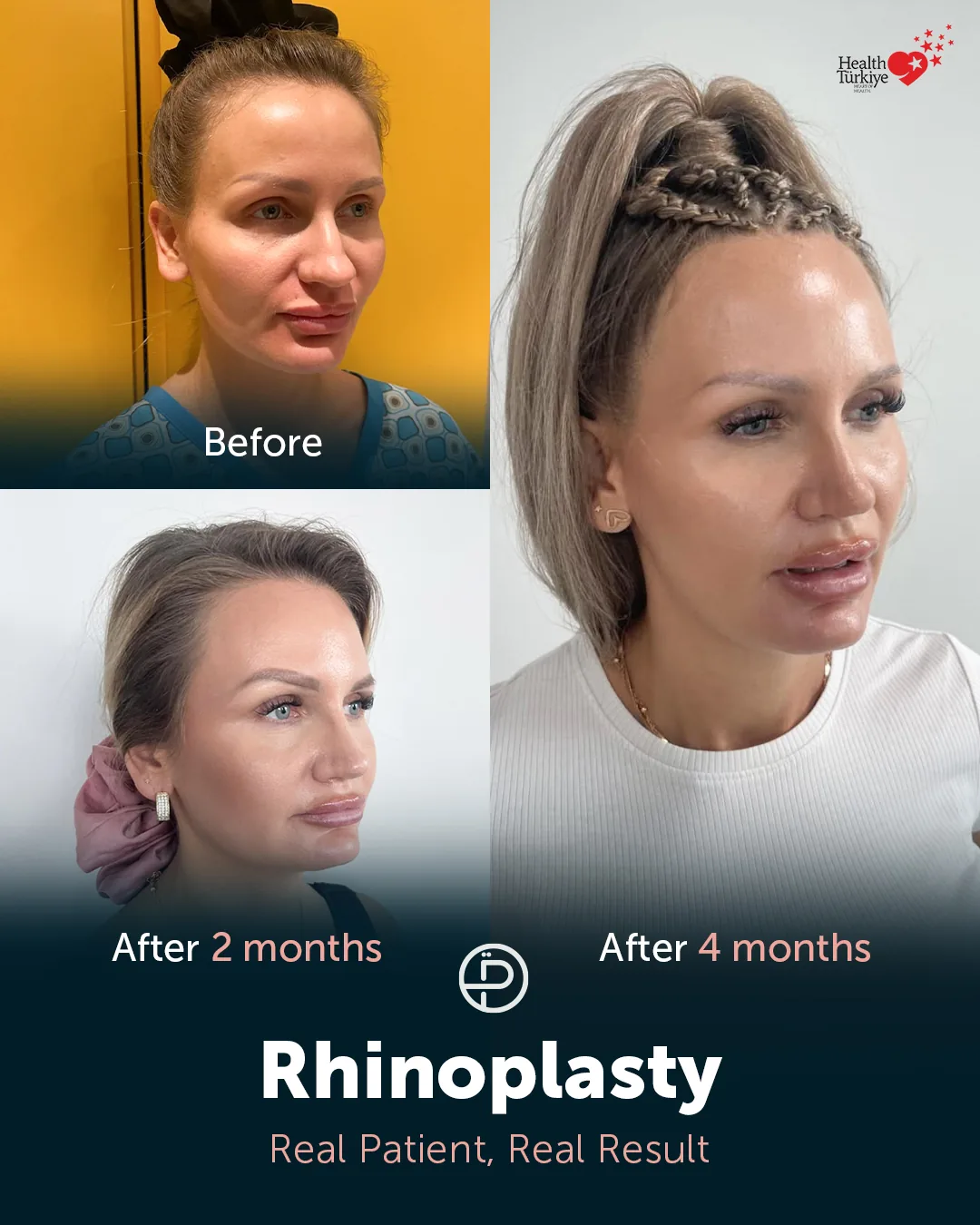
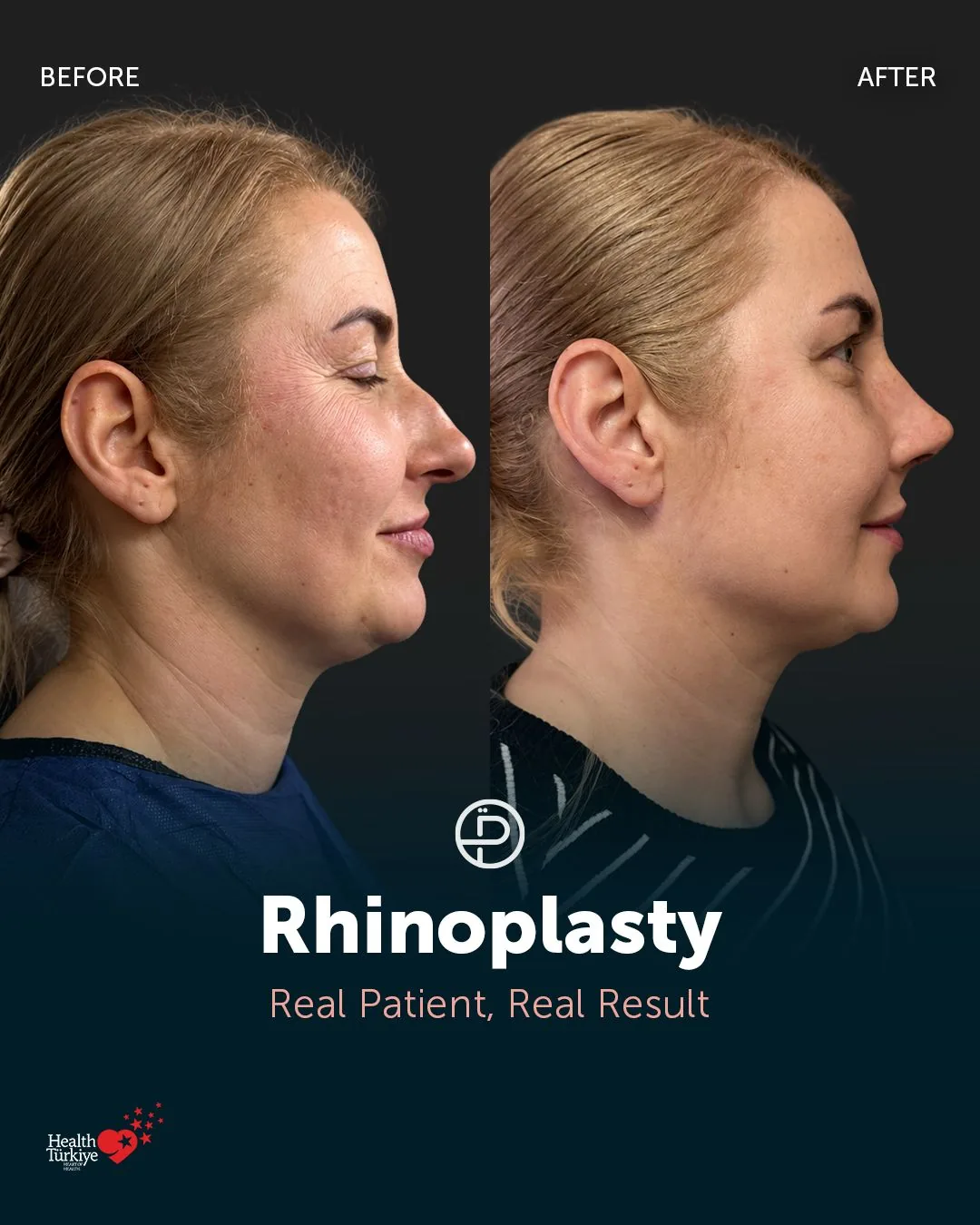
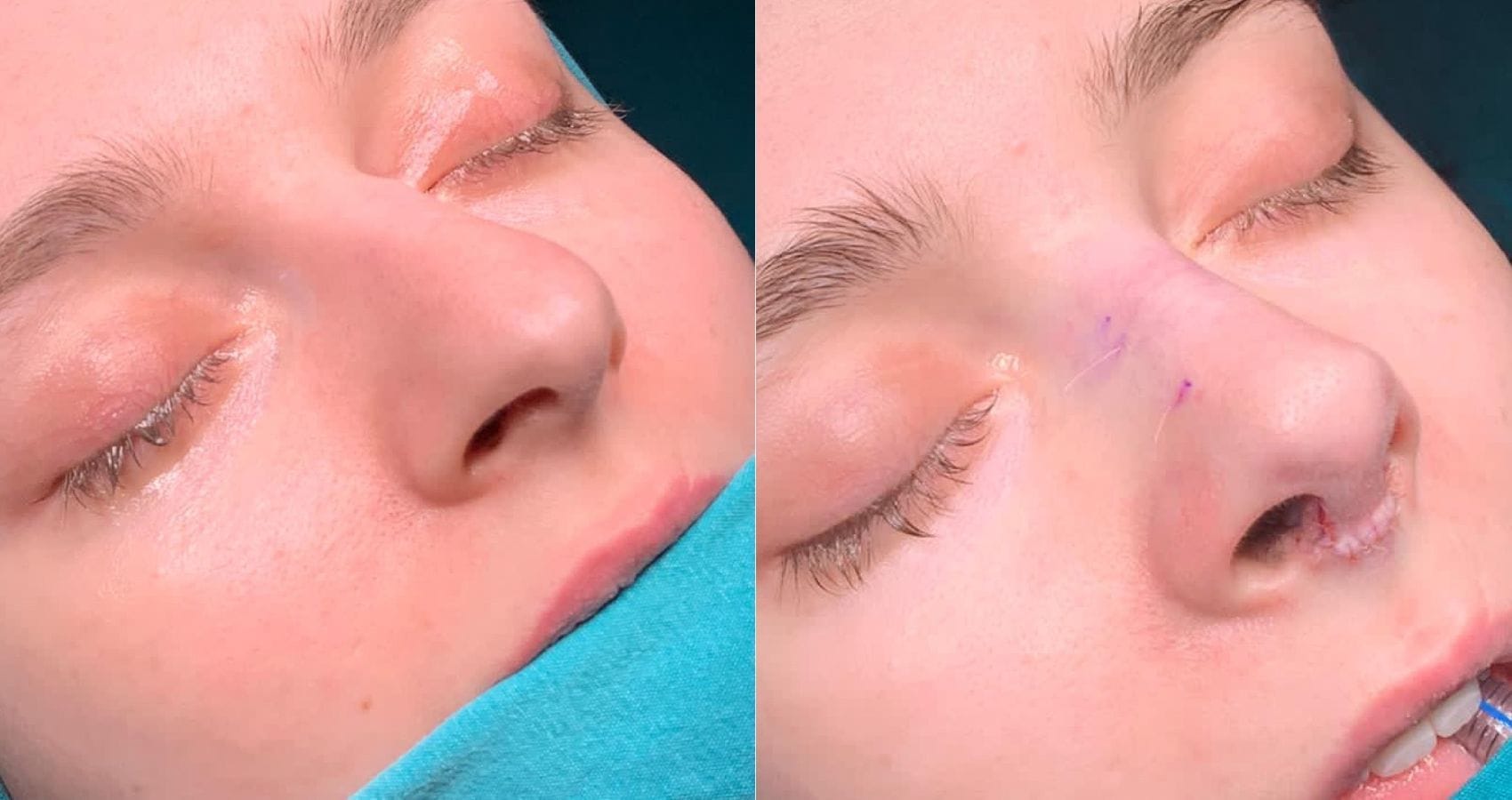

You can explore more cases in the full Vivid Clinic before and after gallery. To discuss your own nose, ask for a free quote and the team will arrange your consultation.
This article is for general information and does not replace a personal medical consultation. Suitability, risks, recovery and expected results should always be discussed with a qualified medical professional. Results vary by individual.