 ChatGPT
Noses come in a remarkable range of shapes and sizes, and few features shape facial balance as strongly. Whether you are curious about the nose shapes female patients ask about most, want to understand the classic male nose types, or are quietly wondering how your own nose would look after a subtle refinement, this guide covers every type of nose in one place. Below, the surgical board at Vivid Clinic in Istanbul walks you through 15 types of nose shapes for women and men, including the Greek nose, celestial nose, Nubian nose, snub nose and rarer shapes such as the noble and Gallic nose, together with a nose shapes chart, nose bridge types, nostril shapes and what each one means if you are considering rhinoplasty.
Quick answer
There are around 15 commonly recognised types of nose shapes. The most frequently searched are the celestial (upturned) nose, Greek (straight) nose, Nubian nose, concave nose, convex or Roman nose, snub nose, button nose, bulbous nose, hawk (eagle) nose, aquiline nose and fleshy nose. Women’s noses tend to be smaller with a softer, slightly upturned tip; men’s noses are typically larger with a straighter or more convex bridge.
Every one of these shapes can be refined with rhinoplasty. Vivid Clinic in Istanbul offers a free plastic surgeon consultation to assess which changes would suit your face.
Why Nose Shape Matters for Facial Harmony
The nose sits at the centre of the face, so even a small change in its bridge, tip or nostrils changes how the eyes, cheekbones, lips and chin are perceived. Surgeons describe this in terms of proportions: the ideal nose is usually about one fifth of the facial width, the bridge follows a gentle line from the brow, and the angle between the nose and upper lip sits around 95 to 100 degrees in women and 90 to 95 degrees in men. Different nose shapes fall on either side of these ideals, which is why understanding your type of nose is the first step in any conversation about rhinoplasty at Vivid Clinic.
Types of Female Noses: The Most Popular Nose Shapes for Women
When it comes to female nose types, there are many varieties, each with its own traits. The nose types female patients ask about most in our Istanbul consultations are the celestial, Greek, Nubian, concave and convex shapes, followed by the snub and button nose. Here is how each one looks and why women choose it.
1. Celestial Nose (Upturned Nose Shape)
Also known as the upturned nose, the celestial nose has a small dent in the middle of the bridge and a tip that angles gently upwards. It is widely regarded as youthful and delicate, and it is the single most searched nose shape in the world. Many women find the celestial nose appealing for its soft, feminine appearance, and it is a frequent goal in tip-refinement rhinoplasty, where the surgeon rotates the tip slightly upward without making it look surgical.

2. Greek Nose (Straight Nose)
The Greek nose female profile is defined by a perfectly straight bridge without curves, humps or dips, and a tip that continues that line. Women with Greek noses often have a refined, symmetrical look linked to classical sculpture, and Greek nose women are frequently described as having a regal facial structure. Because it is so balanced, the Greek nose is one of the most requested outcomes in rhinoplasty: patients with a dorsal hump often ask their surgeon to “make it straight,” which in practice means creating a Greek nose profile.
3. Nubian Nose
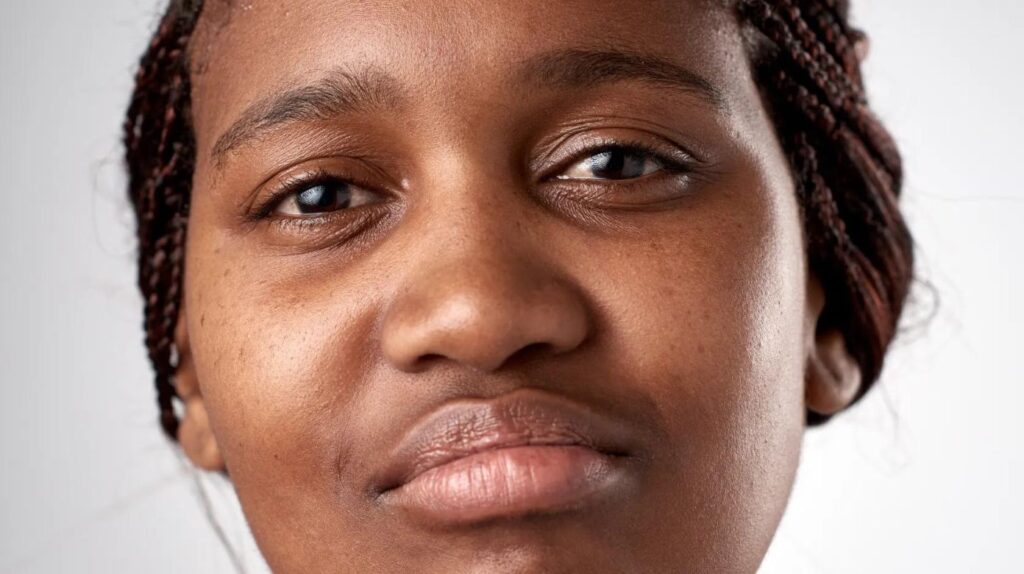
A Nubian nose has a wide base, larger nostrils and a longer bridge that is often relatively flat. This nose shape is common among women of African heritage and is seen as a sign of strength and character. Nubian nose women who consult us usually do not want a “different” nose; they want a narrower base or more tip definition while keeping the features that make their face recognisably their own. That is the goal of ethnic rhinoplasty, a specialised approach we discuss in our guide to facial balancing in Turkey.
4. Concave Nose
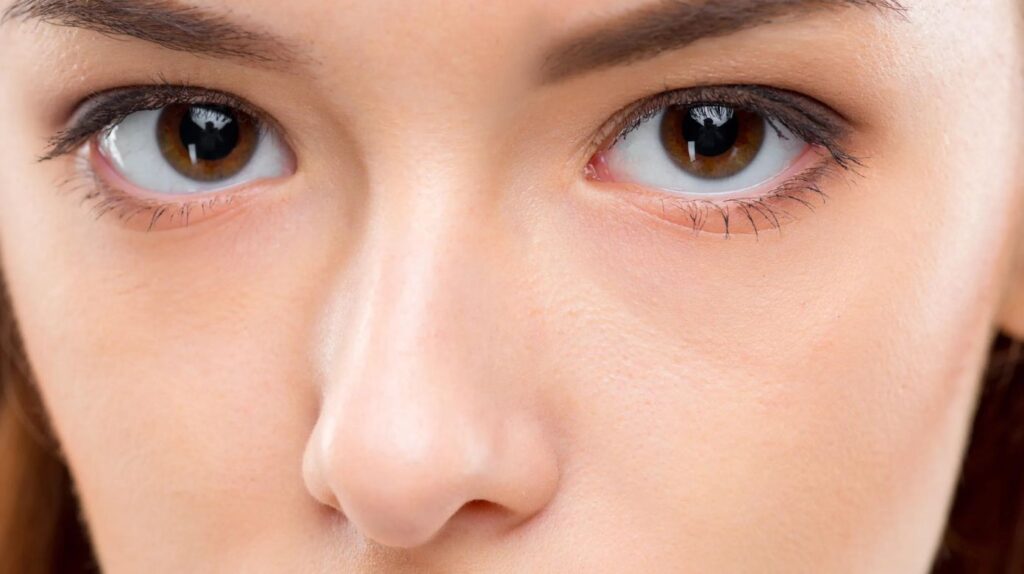
A concave nose features a dip along the bridge, so the profile curves slightly inward before reaching the tip. It reads as delicate and soft, which is why it is a common request in cosmetic rhinoplasty. It can also be the unintended result of an over-aggressive nose job elsewhere, in which case cartilage grafts are used to rebuild the bridge; you can see how that is planned in our revision rhinoplasty before and after case.
5. Convex Nose (Roman Nose)
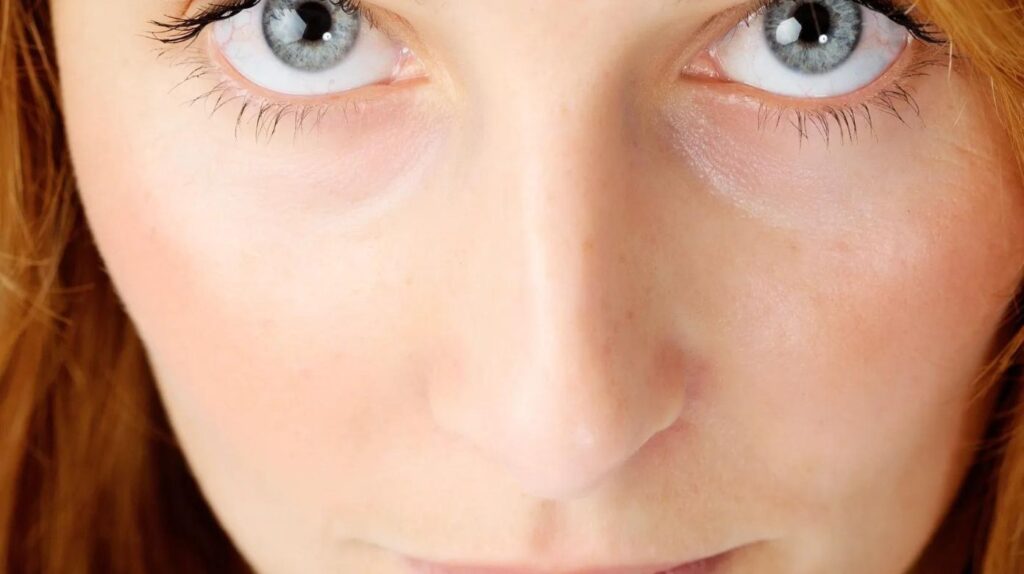
Unlike the concave nose, a convex nose has a pronounced outward curve or hump on the bridge. It is often called a Roman nose because of its association with classical Roman statues and Italian profiles. While it is prominent, this nose shape can create a striking, powerful facial feature, and many women keep it deliberately. For those who do not, hump reduction is the most frequently performed element of rhinoplasty worldwide, and Istanbul surgeons perform it thousands of times a year.
6. Snub Nose Shape
A snub nose is characterised by a shorter bridge, slightly rounded nostrils and a tip that turns upward, giving it a compact, “elvish” charm. Picture the gentle uplift seen on Tinkerbell or actress Emma Stone. Often associated with a youthful and playful look, the snub nose shape remains one of the most recognisable nose types among delicate, petite features. The difference between a snub nose and a celestial nose is subtle: the snub is shorter overall, while the celestial has a longer bridge with a dip before the upturned tip.
7. Button Nose (Baby Nose)
A button, or baby nose, is small, rounded and slightly upturned, with a short nasal bridge that creates a soft profile. It is associated with femininity and delicacy, and it is common in people of Asian and Eastern European heritage. Button nose men exist too, though on a male face the same shape can look under-projected, and some men ask for augmentation to add height to the bridge rather than reduction.
Not sure which nose shape you have, or which one would suit you?
Send two photos (front and profile) and a Vivid Clinic plastic surgeon in Istanbul will assess your nose type and what rhinoplasty could realistically change. Free, confidential, no obligation.
Get my free nose assessment or chat on WhatsApp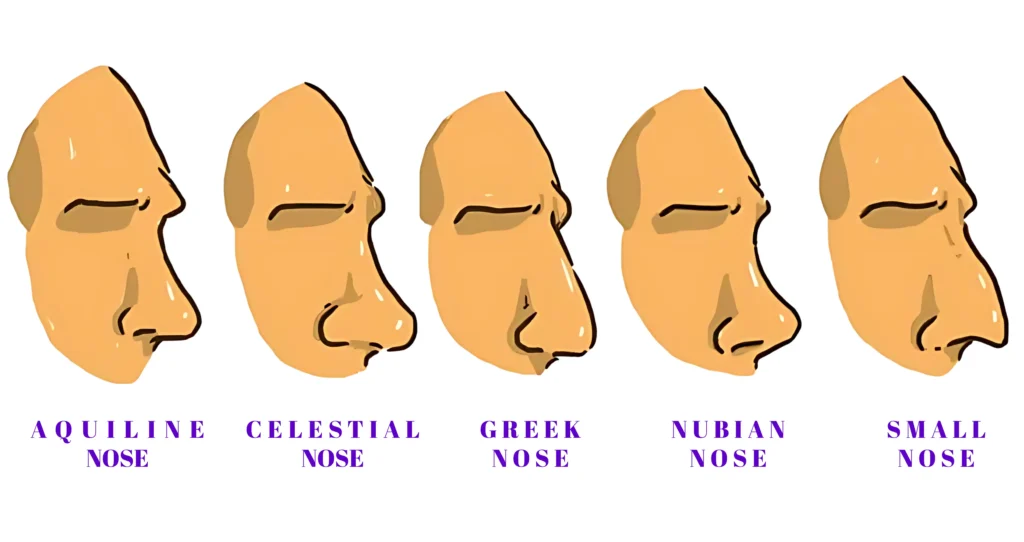
Types of Male Noses: Common Nose Shapes for Men
Male nose shapes vary mostly in size and sharpness. Many nose types men have are shared with women, but the overall structure tends to be larger, with a higher bridge, thicker skin and a less rotated tip. In rhinoplasty for men, the aim is almost always to keep a strong, straight profile rather than to feminise the nose.

8. Greek Nose Male
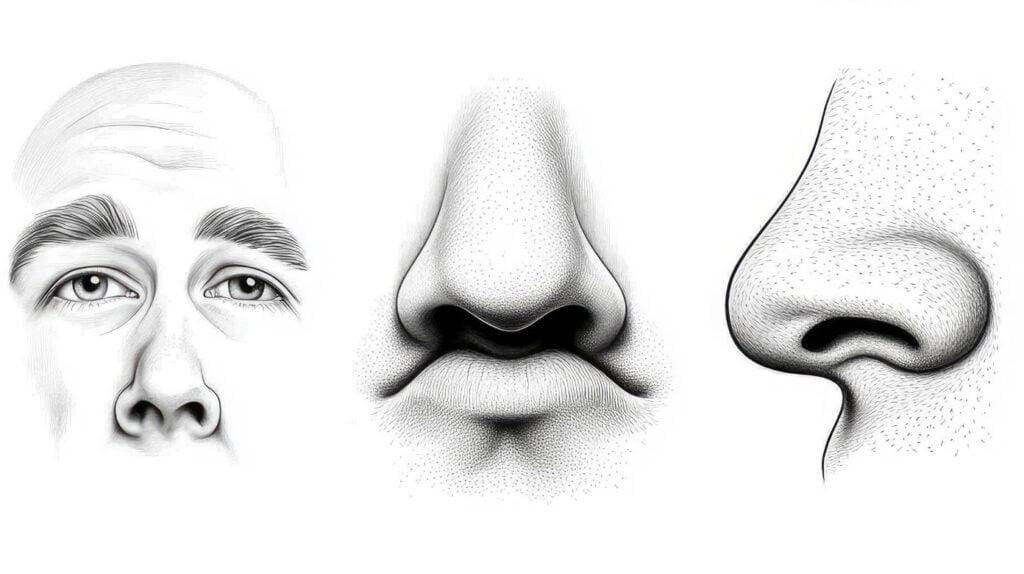
Just like in women, the Greek nose male is defined by its straight bridge and absence of curves or bumps. For men, this type of nose signals balance and strength, and Greek nose men are often perceived as having symmetrical, sharp features. It is the reference profile most male rhinoplasty patients bring to their consultation: strong, straight and unmistakably masculine.
9. Convex Nose (Male)
The convex nose is even more common in men than in women. It is a strong nose shape associated with masculinity and authority, and many men choose to keep a modest hump. When the hump is large enough to make the nose look hooked from the side, a conservative hump reduction that keeps a straight (not scooped) bridge gives the most natural male result.
10. Large Straight Nose
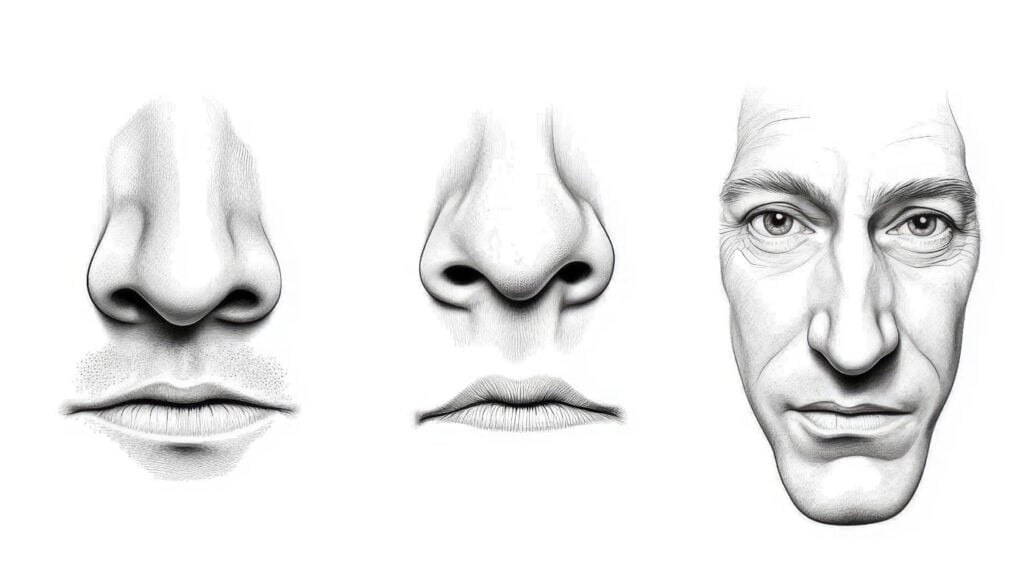
Men with a large straight nose have a prominent, long bridge with no curve. It is bold and imposing, and it is often left alone. When a patient does want change, the surgeon typically shortens the nose slightly and refines the tip rather than lowering the whole bridge, because a lowered bridge on a large male face can look disproportionate.
11. Concave Nose (Male)
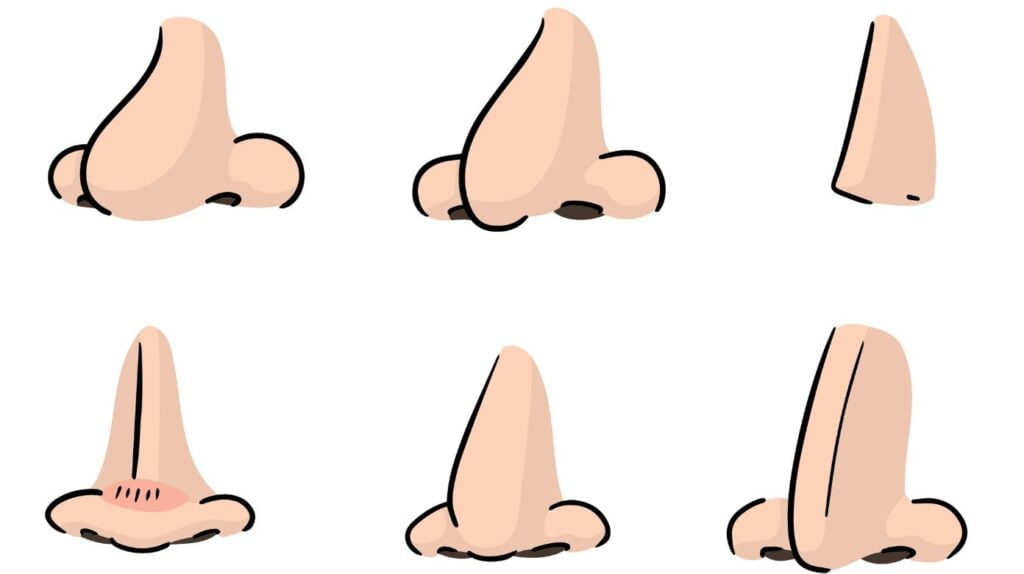
The concave nose shape features a slight inward curve along the bridge, similar to its appearance in women. This nose type is less common in men, and on a male face it can read as slightly under-projected. Some men with a concave nose ask for dorsal augmentation with their own cartilage to create a straighter, stronger line.
Rarer Nose Shapes and Names You Should Know
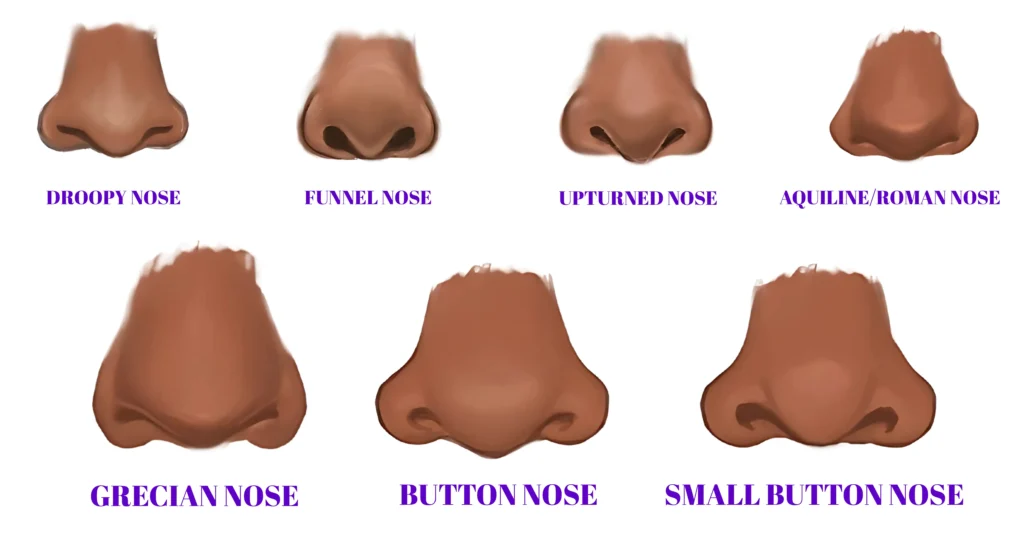
12. Hawk Nose (Eagle Nose) and Aquiline Nose
A hawk, or eagle nose, has a pronounced arched shape that draws parallels to a hawk’s beak: an extended length, a prominent bridge and a noticeable downward curve at the tip. The aquiline nose (from the Latin for “eagle-like”) is closely related and is often used interchangeably, although the aquiline nose usually describes a high, elegant bridge with a less dramatic droop. Both are bold, distinguished features, and in rhinoplasty the goal is usually to lift the drooping tip and soften the hump while keeping the character of the profile.
13. Noble Nose and Gallic Nose
The noble nose is a long, straight or slightly convex nose with a high bridge and a well-defined tip, historically associated with aristocratic portraits. The Gallic nose, named after the ancient Gauls of France, is similar but longer and more pointed, sometimes with a slight downward tip. Both are considered elegant and are rarely reduced; when patients with these nose shapes seek surgery, it is usually to correct a deviation or to lift a tip that has drooped with age.
14. Bulbous Nose and Fleshy Nose
A bulbous nose is identified by a larger, rounder tip, usually due to wide or thick tip cartilage in the lower third of the nose. Skin conditions such as rosacea and rhinophyma can also add volume over time. The fleshy nose is broader: it has thicker skin and more soft tissue overall, with a rounded tip and a wider base. Both are among the most common reasons people book a consultation, because they respond very well to tip refinement, in which the surgeon reshapes and narrows the tip cartilages to create a more defined profile.
15. Crooked Nose
A crooked nose deviates from the centre line of the face. It can be inherited, caused by a deviated septum, or the result of an injury such as a sports accident or fall. Because a crooked nose frequently comes with blocked breathing, it is often treated with septorhinoplasty, which straightens the outside of the nose and the septum inside in one operation. Our guide to deviated septum and septoplasty explains the symptoms and how recovery works.
Nose Shapes Chart: A Visual Guide to All Nose Types
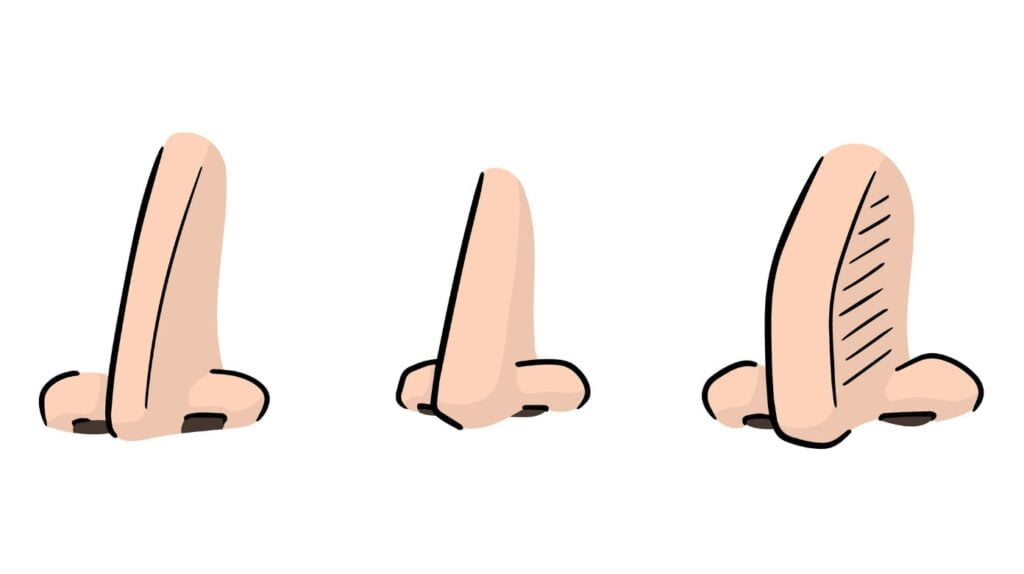
A nose shapes chart groups all nose types by the line of the bridge, the shape of the tip and the width of the base. Use the table below as a types of noses chart to identify your own nose shape and the rhinoplasty technique that usually suits it.
| Nose shape | Bridge and tip | Seen most in | Typical rhinoplasty goal |
|---|---|---|---|
| Celestial (upturned) | Slight dip, upturned tip | Women | Often the goal, not the problem |
| Greek (straight) | Straight bridge and tip | Both | Reference profile for hump removal |
| Nubian | Long, flatter bridge, wide base | African heritage | Base narrowing, tip definition |
| Concave | Inward curve, fine tip | Women | Sometimes augmented |
| Convex / Roman | Hump, straight or drooping tip | Both, more in men | Hump reduction |
| Snub | Short bridge, rounded upturned tip | Women | Rarely changed |
| Button | Short, low bridge, small round tip | Asian, Eastern European | Bridge augmentation (men) |
| Hawk / eagle / aquiline | High arched bridge, drooping tip | Both | Tip lift, hump softening |
| Noble / Gallic | Long, high bridge, pointed tip | European | Deviation or tip correction |
| Bulbous / fleshy | Any bridge, round thick tip | Both | Tip refinement |
| Crooked | Deviated bridge, off-centre tip | Both | Septorhinoplasty |
| Large straight | Long, straight bridge and tip | Men | Shortening, tip refinement |
Nose Bridge Types, Nose Tip Types and Nostril Shapes
Surgeons analyse a nose in three parts, and each part has its own set of shapes. Knowing them helps you describe exactly what you want to change.
Nose Bridge Types
- Straight bridge: the Greek profile; the goal of most hump reductions.
- Convex bridge (dorsal hump): Roman, hawk and aquiline noses.
- Concave bridge (saddle or scooped): celestial and concave noses; can also follow injury or over-resection.
- Low or flat bridge: common in East Asian and some African noses; treated with augmentation rather than reduction.
- Wide bridge: the bones sit far apart; narrowed with controlled osteotomies.
Types of Nose Tips
- Bulbous or boxy tip: wide, rounded cartilages; refined with suturing techniques.
- Drooping (ptotic) tip: points downward, especially when smiling; lifted with tip-support grafts.
- Upturned tip: rotated upward, as in celestial and snub noses.
- Pinched tip: too narrow, usually after previous surgery; rebuilt with cartilage grafts.
Nostril Shapes and Their Role in Nose Aesthetics
Nostril shapes are the most overlooked part of nose aesthetics. Wide nostrils are typical of Nubian and broader nose shapes and can be narrowed with alar base reduction, a small incision hidden in the crease of the nostril. Narrow nostrils are common in Greek and other refined nasal shapes. Flared nostrils widen visibly when smiling, and asymmetric nostrils often accompany a crooked nose. From below, a well-proportioned nose forms a soft triangle with nostrils roughly the shape of a teardrop.
What Determines Your Nose Shape? Bone, Cartilage and Genetics
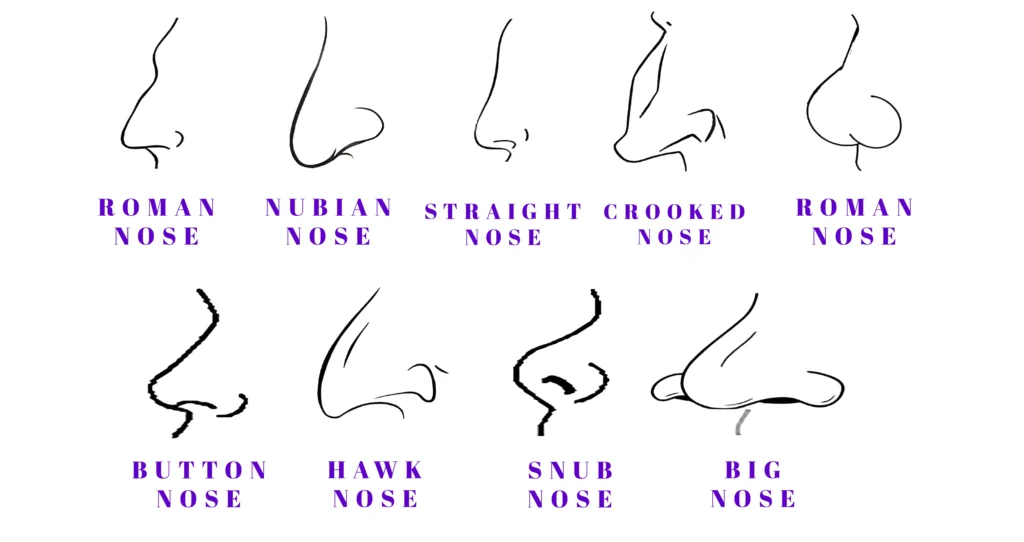
Your nose shape is set by three things. The nasal bones form the upper third: a higher bridge gives a more pronounced profile, a lower bridge a flatter one, and the width of the bones decides how broad the nose looks from the front. Cartilage forms the lower two thirds, including the tip and nostrils; it is firm but flexible, which is why no exercise, tape or massage can change your nose shape. Genetics decides both. The genes that govern nostril width, bridge height and tip length vary across ethnic groups, which is why nose shapes cluster in families and populations. Only surgery changes bone and cartilage, which is why rhinoplasty remains the definitive treatment when someone wants a different nose shape.
Which Procedure Fits Your Nose Shape? Rhinoplasty Options Compared
Once you know your nose type, the next question is which procedure changes it. The comparison below reflects how Vivid Clinic’s surgeons in Istanbul match techniques to nose shapes; the right option for you is confirmed at consultation.
| Procedure | Best for these nose shapes | What it changes and how long it takes | Downtime and results |
|---|---|---|---|
| Closed rhinoplasty | Convex / Roman hump, minor tip changes | Hump reduction and mild narrowing through incisions inside the nose; general anaesthesia, 1.5 to 2.5 hours | Splint 7 days, social in 10 to 14 days; permanent, final at 12 months |
| Open rhinoplasty | Bulbous, fleshy, hawk, crooked, large straight | Full reshaping of bridge and tip through a hidden columella incision; general anaesthesia, 2 to 3.5 hours | Splint 7 days, social in 2 weeks; permanent, final at 12 to 18 months |
| Ethnic rhinoplasty | Nubian, button, low or flat bridge | Base narrowing, tip definition, bridge augmentation with own cartilage; general anaesthesia, 2.5 to 4 hours | Similar to open rhinoplasty; permanent, preserves heritage features |
| Septorhinoplasty | Crooked nose, deviated septum | Straightens the nose and corrects breathing in one operation; general anaesthesia, 2 to 3.5 hours | Splint 7 days, breathing improves by week 3; permanent, functional and cosmetic |
| Tip rhinoplasty (tip-plasty) | Bulbous, drooping or pinched tip with a good bridge | Refines and rotates the tip only; local with sedation or general, about 1 hour | 3 to 7 days; permanent |
| Non-surgical (filler) rhinoplasty | Small dips, mild hump camouflage, slight tip lift | Adds volume, cannot make a nose smaller; topical numbing, 15 to 30 minutes | None to 1 day; temporary, 9 to 18 months |
| Revision rhinoplasty | Any shape with an unsatisfactory previous result | Rebuilds structure with rib or ear cartilage; general anaesthesia, 3 to 5 hours | 2 to 3 weeks; permanent, final at 18 months |
Every surgical option above is available as part of a nose job in Turkey package at Vivid Clinic, and you can compare real outcomes for each technique in our before and after gallery.
Ready to see your nose shape refined by an Istanbul surgeon?
Vivid Clinic offers a free plastic surgeon consultation, a transparent all-inclusive quote and 5-star hotel plus VIP transfer on selected rhinoplasty packages.
Book my free rhinoplasty consultation or use the price calculatorRhinoplasty in Istanbul: Your Patient Journey with Vivid Clinic
Patients who travel to Istanbul for rhinoplasty at Vivid Clinic follow a clear, concierge-managed path. It starts online: you send front, profile and base photographs, and one of our board-certified plastic surgeons identifies your nose shape, explains what can realistically change and provides a fixed, all-inclusive quote. On arrival at Istanbul Airport you are met by a VIP transfer and taken to your hotel in Ataköy, a short drive from the clinic. Day one is a face-to-face consultation with 3D simulation, blood tests and a final surgical plan; surgery takes place on day two in our JCI-aligned partner hospital under general anaesthesia, with one night’s stay. Over the following days our medical team checks you daily at your hotel, and the splint is removed on day six or seven, at which point you are cleared to fly home. Most international patients spend seven to eight nights in Istanbul in total, and our patient coordinators continue follow-up by WhatsApp and video call at one, three, six and twelve months while the swelling settles and your new nose shape reaches its final form. Multilingual coordinators support patients from more than 47 countries, and the clinic’s 4.9-star rating from over 250 reviewed patients reflects the care taken at every step.
Before Rhinoplasty: What to Consider for Any Nose Shape
- Health conditions: heart disease, diabetes or clotting disorders need clearance from your physician before surgery.
- Breathing issues: if you have nasal blockage, ask for septorhinoplasty rather than a purely cosmetic nose job so both are corrected together.
- Skin thickness: thick, fleshy skin hides fine tip definition and takes longer to settle; thin skin shows every detail of the cartilage.
- Realistic expectations: you return to work in about ten days, but the final nose shape takes six to twelve months, longer for revision cases.
- Surgeon selection: choose a surgeon who shows healed results for your specific nose type, not just generic transformations. Our guide to rhinoplasty in Turkey lists the questions to ask.
The Greek Nose and Its Personality Traits
Popular culture assigns personality traits to nose shapes, and the Greek nose personality is the most discussed: confidence, balance, calm and leadership. Roman and hawk noses are said to signal ambition and decisiveness, snub and button noses playfulness and warmth, and the Nubian nose openness and curiosity. There is no scientific basis for any of this, but it explains why the Greek nose is admired across both genders and why it remains the benchmark profile in rhinoplasty.
Camouflaging Nose Shapes with Makeup and Hair
If surgery is not on your agenda, contouring can visually narrow or straighten most nose shapes. Apply a matte contour powder two shades darker than your skin along both sides of the bridge, highlight a thin line down the centre, and blend thoroughly; a slightly angled highlight can even mimic a Greek line on a convex nose. Hair helps too: a side parting draws attention away from the centre of the face, and volume or face-framing layers balance a prominent nose. These techniques change perception, not structure, so if a permanent result is what you want, only rhinoplasty changes the nose itself.
Think beyond the nose: the smile completes the profile. Facial balance is judged as a whole, and the teeth and smile line sit right beneath the nose in every photograph. That is why a growing number of our rhinoplasty patients combine their surgery with cosmetic dentistry at Vivid Clinic in Istanbul, whether that means dental crowns, veneers or affordable full mouth dental implants in Turkey, so the nose and smile are planned together in one trip.
Conclusion: Every Nose Shape Has Its Own Beauty
Nose shapes are as diverse as the people who have them. Whether you are exploring nose types female or curious about male nose shapes, each of the 15 types of nose shapes in this guide, from the Greek nose to the concave nose, carries its own beauty and character. Understanding your nose type, its bridge, tip and nostril shape helps you appreciate the role it plays in your appearance and, if you choose, describe precisely what you would like to change. Vivid Clinic’s plastic surgeons in Istanbul are happy to help you take that next step with a free, no-obligation consultation.
FAQs: Nose Shapes and Rhinoplasty in Istanbul
How much does rhinoplasty in Istanbul cost for different nose shapes?
Rhinoplasty in Istanbul cost depends on the nose shape and technique: a closed hump reduction for a convex nose is the least involved, open or ethnic rhinoplasty for Nubian, bulbous or hawk noses takes longer, and revision rhinoplasty using rib cartilage is the most complex. Vivid Clinic quotes a fixed, all-inclusive price after reviewing your photos, covering surgeon, hospital, anaesthesia, hotel and VIP transfers, so there are no surprises on arrival. Use the surgery price calculator or request a free consultation for an exact figure.
Who is the best rhinoplasty surgeon in Istanbul for my nose type?
The best rhinoplasty surgeon in Istanbul for you is one who regularly operates on your specific nose shape, whether that is an ethnic rhinoplasty for a Nubian or button nose, a structural open rhinoplasty for a bulbous tip, or a septorhinoplasty for a crooked nose, and who can show healed twelve-month results for that type. Vivid Clinic’s surgical board is ISAPS and TSAPS certified and will match you to the surgeon whose case history best fits your nose type at your free consultation.
What is included in a nose job Turkey package at Vivid Clinic?
A nose job Turkey package at Vivid Clinic includes the surgeon’s fee, general anaesthesia and one night in a JCI-aligned partner hospital, all pre-operative tests, medication, the splint and dressings, seven nights in a hotel in Istanbul, VIP airport and clinic transfers, a personal multilingual patient coordinator, daily nurse checks at your hotel and twelve months of online follow-up. Selected rhinoplasty packages also include a 5-star hotel upgrade during our seasonal campaign.
Can I see rhinoplasty Turkey before and after results for my nose shape?
Yes. Vivid Clinic’s before and after gallery is organised by procedure, and during your free consultation the surgeon will show rhinoplasty Turkey before and after results from patients with the same nose shape as yours, for example a Roman hump reduction, a Nubian ethnic rhinoplasty or a bulbous tip refinement. Always ask for matched front, profile and base views taken at least twelve months after surgery, as explained in our revision rhinoplasty case study.
Is ethnic rhinoplasty in Istanbul suitable for a Nubian or button nose?
Ethnic rhinoplasty in Istanbul is specifically designed for Nubian, button, low-bridge and other non-Caucasian nose shapes. Rather than reducing the nose to a European template, the surgeon narrows the nostril base, adds tip definition and, where needed, raises the bridge with the patient’s own cartilage, so the result harmonises with the face while keeping the features that reflect your heritage. Istanbul surgeons perform a high volume of these cases because of the city’s international patient mix, and Vivid Clinic’s team will show you comparable healed results at your free consultation.
Medically reviewed by the Vivid Clinic Surgical Board, Istanbul. This article is for information only and does not replace an individual consultation. Book your free consultation to discuss your nose shape with a board-certified plastic surgeon.