

Medically reviewed by Prof. Dr. Özgür Pilancı, Plastic, Reconstructive & Aesthetic Surgeon — August 2026
Quick answer (updated August 2026): There are two main ways to change a chin surgically. A sliding genioplasty cuts the chin bone and repositions it — forward, backward, upward or sideways — which can both add and subtract projection and correct asymmetry. A chin implant adds a shaped silicone or porous implant over the existing bone, which can only add. Chin reduction surgery removes bone by burring or by taking out a segment. Most patients resume normal activities within 7 to 10 days, with swelling settling over several weeks. Which operation suits you depends less on preference than on what your bone is actually doing.

Chin surgery is a bone question first
The single most useful thing to understand before reading anything else: a chin’s appearance comes from two separate layers, and they need different treatments.
The bone sets projection, height, width and symmetry. If your chin is short, recessed, over-long or crooked, the bone is where the problem lives, and only bone surgery — or an implant sitting on it — will genuinely change it.

The soft tissue — muscle, fat and skin — sits over the top. Sagging under the chin, a double chin, or the descent that produces chin ptosis are soft-tissue problems, and no amount of bone work will fix them. Conversely, tightening soft tissue does nothing for a recessed jaw.
A surgeon who examines only your photographs, and never your bite or your bone, is not in a position to tell you which of these you have. Assessment usually includes looking at your teeth and occlusion, because a chin problem is sometimes a jaw problem — and a genuine bite discrepancy belongs with orthognathic surgery rather than a chin operation.

Sliding genioplasty
A sliding genioplasty — also called osseous genioplasty — repositions your own chin bone. The surgeon works through an incision inside the lower lip, so there is no external scar, cuts a segment of the chin bone with a surgical saw, moves it into the planned position, and fixes it there with plates and screws.
Its great advantage is versatility. The segment can be brought forward for a recessed chin, moved backward for an over-projected one, shortened or lengthened vertically, or shifted sideways to correct asymmetry — and combinations of these in a single operation. It is the only chin procedure that can address all of those problems.
Because it uses your own bone, there is no implant to become infected, shift or need replacing decades later, and the bone heals into its new position permanently.
Recovery. Most patients return to normal activities within 7 to 10 days. Swelling and bruising can persist for around two weeks, and a liquid or soft diet is usual at first because the incision is inside the lip. Numbness of the chin and lower lip is common early on as the mental nerve recovers, and it usually resolves — though it can take months, and occasionally a small area of altered sensation is permanent. Risks include bleeding, bruising, infection, scarring and persistent numbness.
Chin implants
A chin implant is a pre-shaped implant — usually silicone, sometimes a porous material such as Medpor — placed over the front of the chin bone, through either an incision inside the lower lip or a small one under the chin.

It is a shorter, technically simpler operation than a genioplasty, and it comes in a range of sizes and shapes, including extended versions that carry the contour back along the jawline. For a straightforward case of modest under-projection with a normal bite, it is a reasonable and popular choice.
The trade-offs are real and worth stating. An implant can only add projection, never reduce it, and it cannot correct vertical height or significant asymmetry. It is a foreign body, so infection — although uncommon — means removal. Implants can shift if not fixed securely, and over years they can cause some resorption of the bone underneath, which is one reason many surgeons prefer genioplasty for larger movements. An implant is also removable and exchangeable, which some patients regard as an advantage.
Which to choose. Broadly: implants suit small to moderate forward augmentation in a patient with a normal bite; genioplasty suits larger movements, vertical changes, asymmetry, reduction, and anyone who would rather not carry an implant. The honest answer is that a surgeon who offers only one of the two will recommend that one.
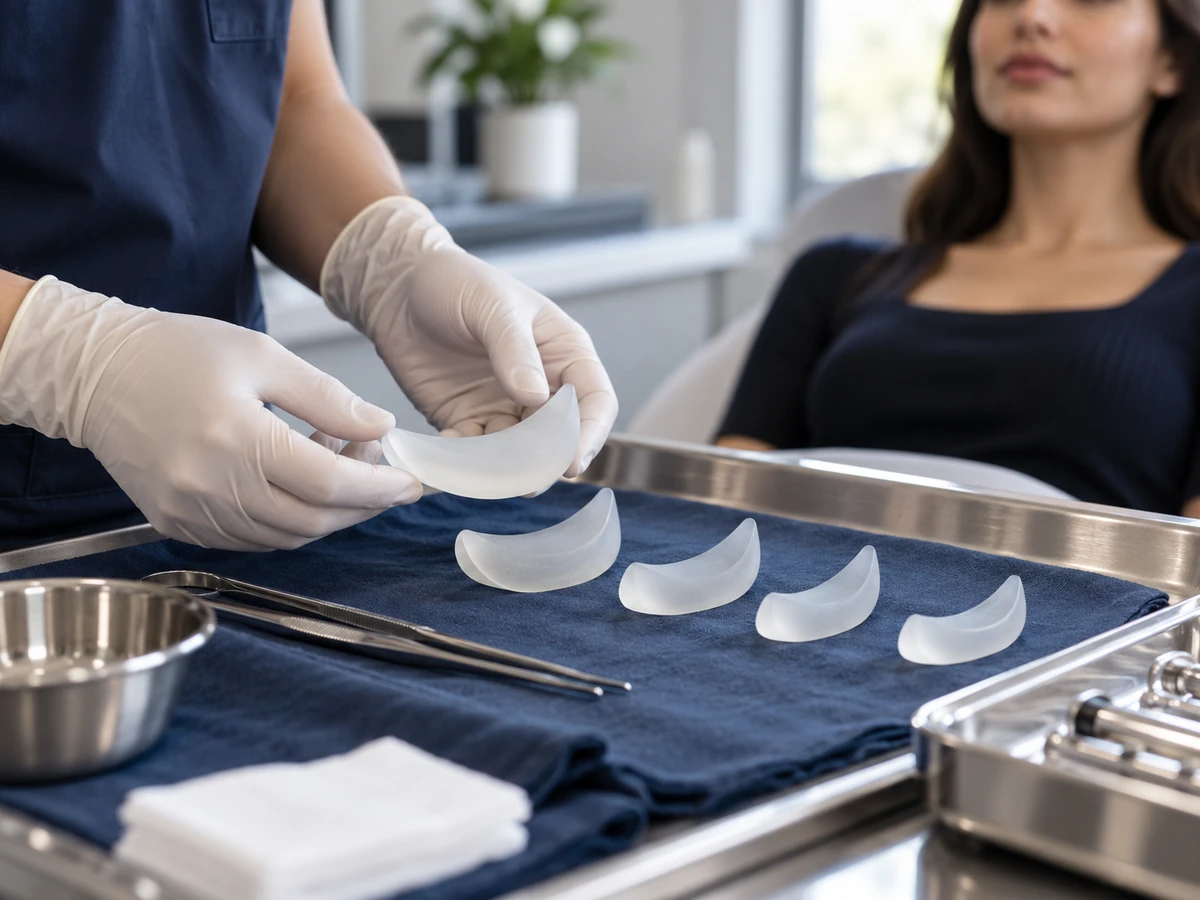
Chin reduction surgery
Chin reduction surgery makes a chin smaller, and there are two ways to do it.
Burring uses a rotary bur to shave down bone, which works well for reducing width or softening a prominent point but is limited in how much projection it can remove. Ostectomy — removing a segment of bone, effectively a genioplasty set backward or shortened — is what larger reductions require, particularly for an over-long chin where the goal is to reduce height rather than width.
Chin shaving surgery usually refers to the burring technique. It is often searched alongside jaw contouring, and it is a component of facial feminisation surgery for some patients, where reducing chin height and width and softening the square contour is part of a broader plan.
An important limit: reducing the bone does not reduce the soft tissue covering it. Take away bony support and the overlying tissue can drape loosely, which is why substantial reductions are often combined with soft-tissue management. This is precisely the mechanism that produces chin ptosis.
Chin ptosis and the "chin lift"
Chin ptosis — sometimes called witch’s chin — is descent of the soft tissue pad over the chin bone, producing a drooping, separated look with a deepened crease above it. It can be age-related, from loss of soft-tissue support, or it can follow surgery, particularly over-aggressive chin reduction or a poorly supported genioplasty.

This is where the search term chin lift gets confusing, because people use it for at least three different things: soft-tissue lifting of a ptotic chin pad, tightening under the chin as part of neck-lift surgery, and non-surgical skin tightening. They are not interchangeable.
True chin ptosis is corrected by resuspending the soft tissue, often through the same intra-oral approach used for genioplasty, and frequently as part of a wider procedure. Sagging under the chin along the jawline is a neck problem rather than a chin problem, and it is addressed with neck-lift surgery — our neck lift page covers that. Getting the diagnosis right matters: neck surgery will not lift a ptotic chin pad, and chin surgery will not tighten a slack neck.
Non-surgical chin augmentation
Non-surgical chin augmentation uses dermal filler — typically hyaluronic acid, sometimes calcium hydroxylapatite — injected along the chin to add projection and definition. It takes minutes, needs no downtime, and is reversible when hyaluronic acid is used.
It genuinely works within its limits. For a mild deficiency, for a patient who wants to preview the direction of a change before committing to surgery, or for someone who simply does not want an operation, it is a legitimate option.
Its limits are equally real. The effect is temporary — commonly around a year, varying by product and patient — and the cost recurs. It adds volume rather than structure, so it cannot correct vertical height, significant asymmetry or a substantially recessed jaw, and large volumes in the chin can look diffuse rather than defined. Filler cannot reduce anything.
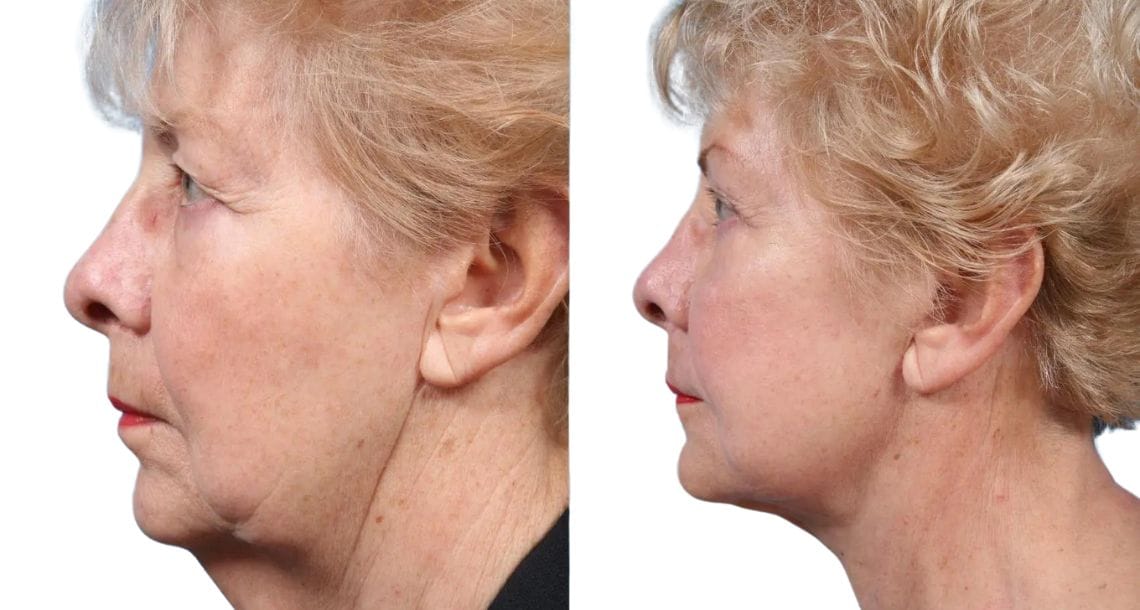
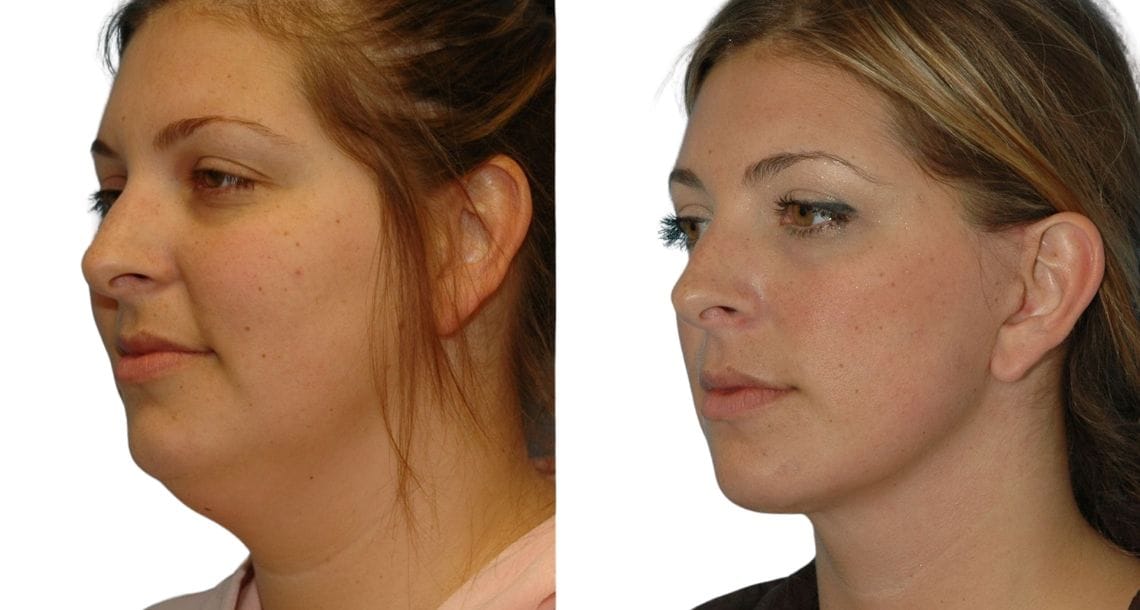
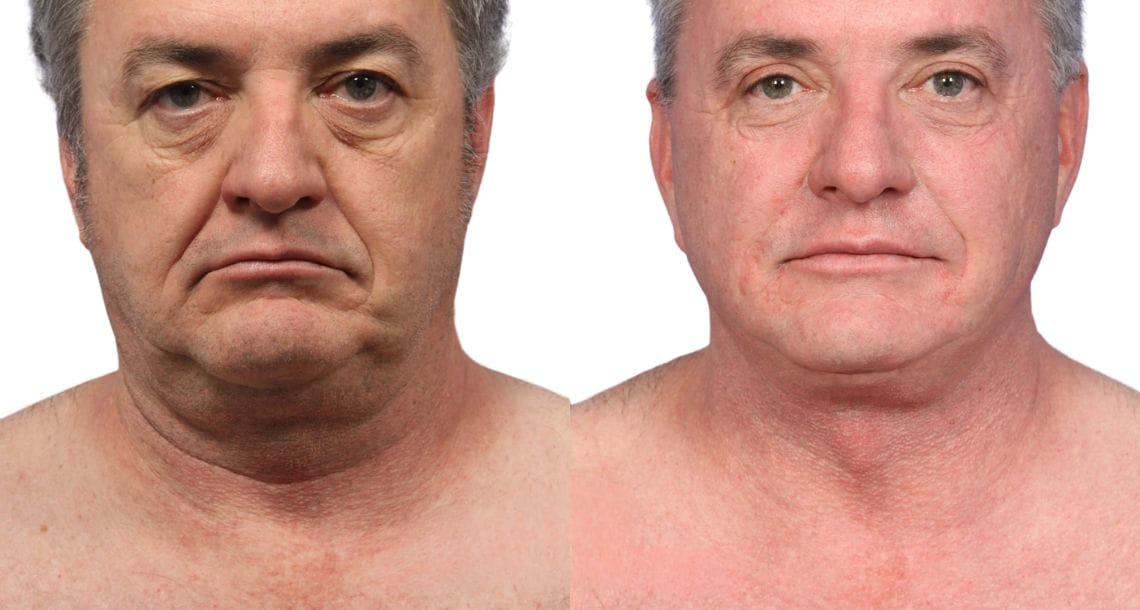
What genioplasty and chin surgery results look like
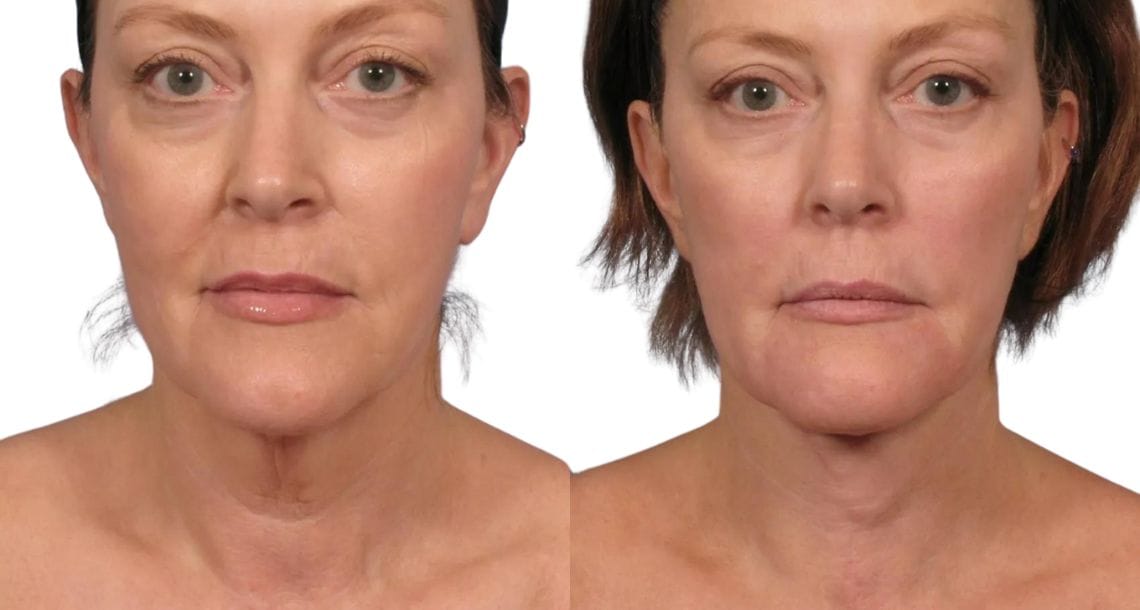
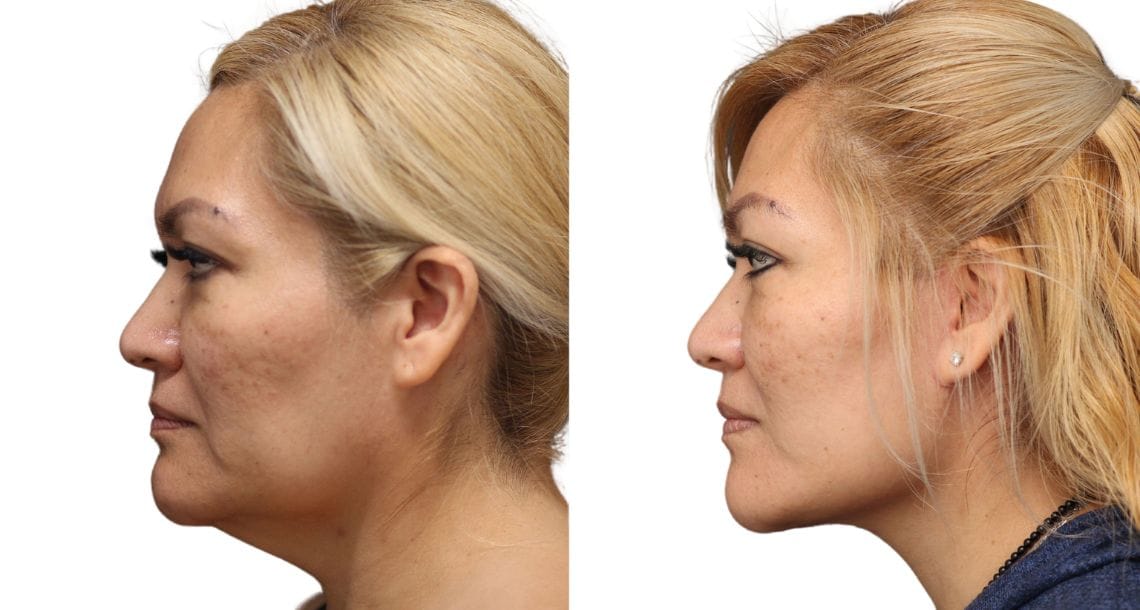
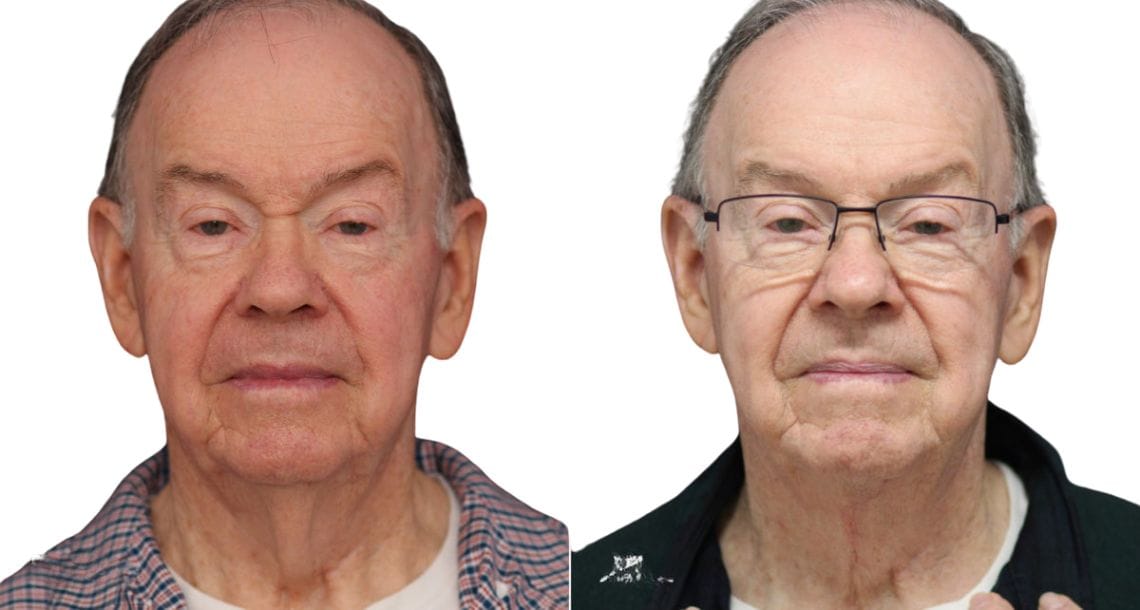
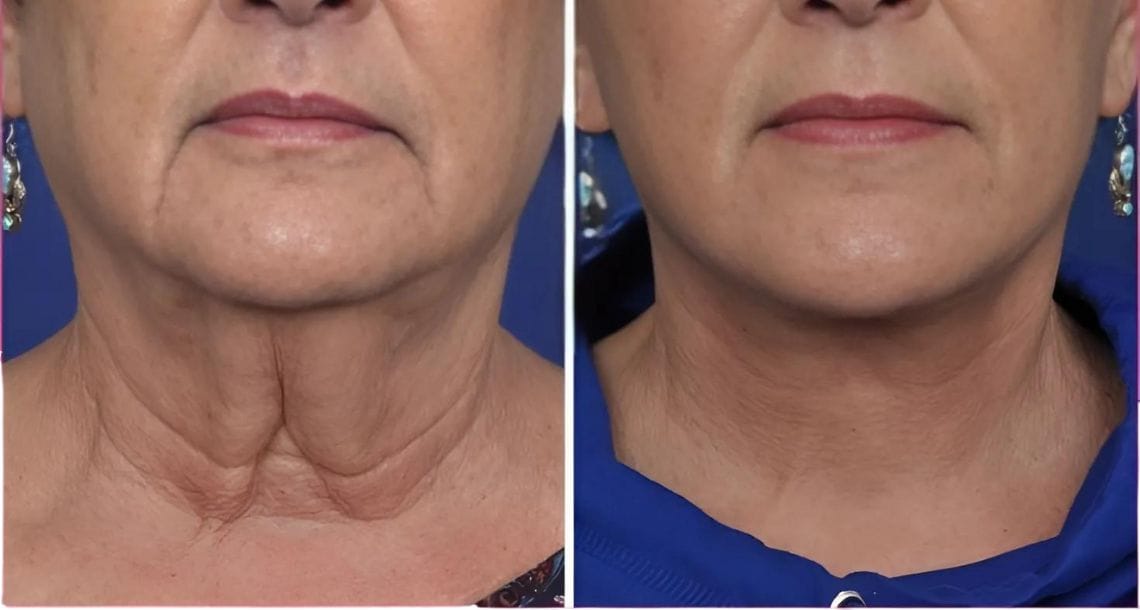
Searching genioplasty before and after is one of the most sensible things a prospective patient does, and it is worth knowing how to read what you find.

Look at profile views taken at the same angle and distance, because chin projection is enormously sensitive to head tilt — a photograph taken with the chin slightly raised can manufacture a result that surgery did not produce. Look for results at three months or later, since early photographs are swollen. Look at the lip position and the labiomental fold, not just the chin point, because a good chin result reads as balance across the lower face rather than a bigger chin. And look for patients whose starting anatomy resembles yours.
Timeline-wise: most swelling settles over the first two to three weeks, the shape looks broadly right by six weeks, and the final contour settles over about three months as residual swelling resolves and any numbness recovers. You can see how facial balancing decisions read on real faces in our before-and-after gallery.
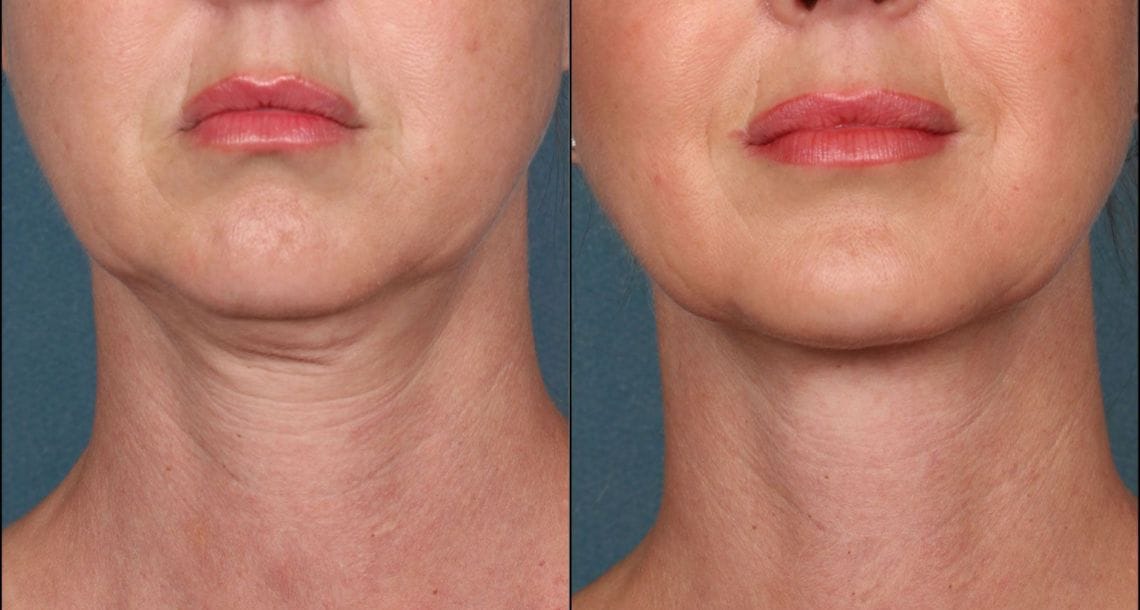
Jawline and Neck Lift Before & After Results at Vivid Clinic
Frequently Asked Questions
What is the difference between a sliding genioplasty and a chin implant?
A sliding genioplasty cuts and repositions your own chin bone, fixing it with plates and screws; a chin implant places a shaped silicone or porous implant over the existing bone. Genioplasty can move the chin forward, backward, up, down or sideways, so it can both augment and reduce and can correct asymmetry. An implant can only add forward projection. Genioplasty uses your own tissue with no foreign body; implants are simpler, quicker, and removable or exchangeable.
How much does chin reduction surgery involve, and how long is recovery?
Chin reduction removes bone either by burring it down — good for width and prominence — or by removing a segment, which is needed for larger reductions or for shortening an over-long chin. It is usually performed through an incision inside the lower lip, so there is no external scar. Most patients are back to normal activities within 7 to 10 days, with swelling and bruising lasting around two weeks and the final contour settling over about three months.
Does chin surgery leave a visible scar?
Usually not. Both genioplasty and most implant placements are performed through an incision inside the lower lip, which leaves no external scar. Some surgeons place chin implants through a small incision under the chin instead, which does leave a scar, though it sits in a shadowed area under the jawline and typically fades well. Ask which approach your surgeon plans to use.
What is chin ptosis?
Chin ptosis, sometimes called witch’s chin, is descent of the soft tissue pad over the chin bone, giving a drooping appearance with a deepened crease above it. It can develop with age as soft-tissue support weakens, or follow surgery — particularly a chin reduction that removed bony support without addressing the tissue over it. It is corrected by resuspending the soft tissue rather than by changing the bone, which is why an accurate diagnosis matters before any operation.
Can filler replace chin surgery?
For mild under-projection, filler is a real option, and it is also a useful way to preview the direction of a change before committing to an operation. It cannot replace surgery for larger changes: it adds volume rather than structure, so it cannot correct vertical height, significant asymmetry or a substantially recessed jaw, and it cannot reduce anything at all. It is also temporary, commonly lasting around a year, so the cost recurs.
Will chin surgery fix a double chin?
No, and this is one of the most common misunderstandings. A double chin is fat and lax skin under the jawline — a soft-tissue problem — while chin surgery changes bone. Advancing a recessed chin does often improve the appearance of the under-chin area by stretching the tissue over a longer jawline, which is why the two get conflated, but it does not remove fat. If your concern is fullness under the chin rather than the chin’s projection, the treatments to look at are neck and under-chin procedures instead.
Is chin surgery done under general anaesthesia?
Sliding genioplasty is generally performed under general anaesthesia. Chin implants can be done under general anaesthesia or under local anaesthesia with sedation, depending on the surgeon, the approach and whether other procedures are being performed at the same time. Chin surgery is very often combined with rhinoplasty or facial contouring, since the two together produce a more balanced profile than either alone.
Not sure whether your concern is bone, soft tissue, or both? Send photographs for a free online assessment and get a straight answer about what is actually driving the appearance — including when the honest answer is that no surgery is needed.