 ChatGPT

The Photo That Made You Look Twice
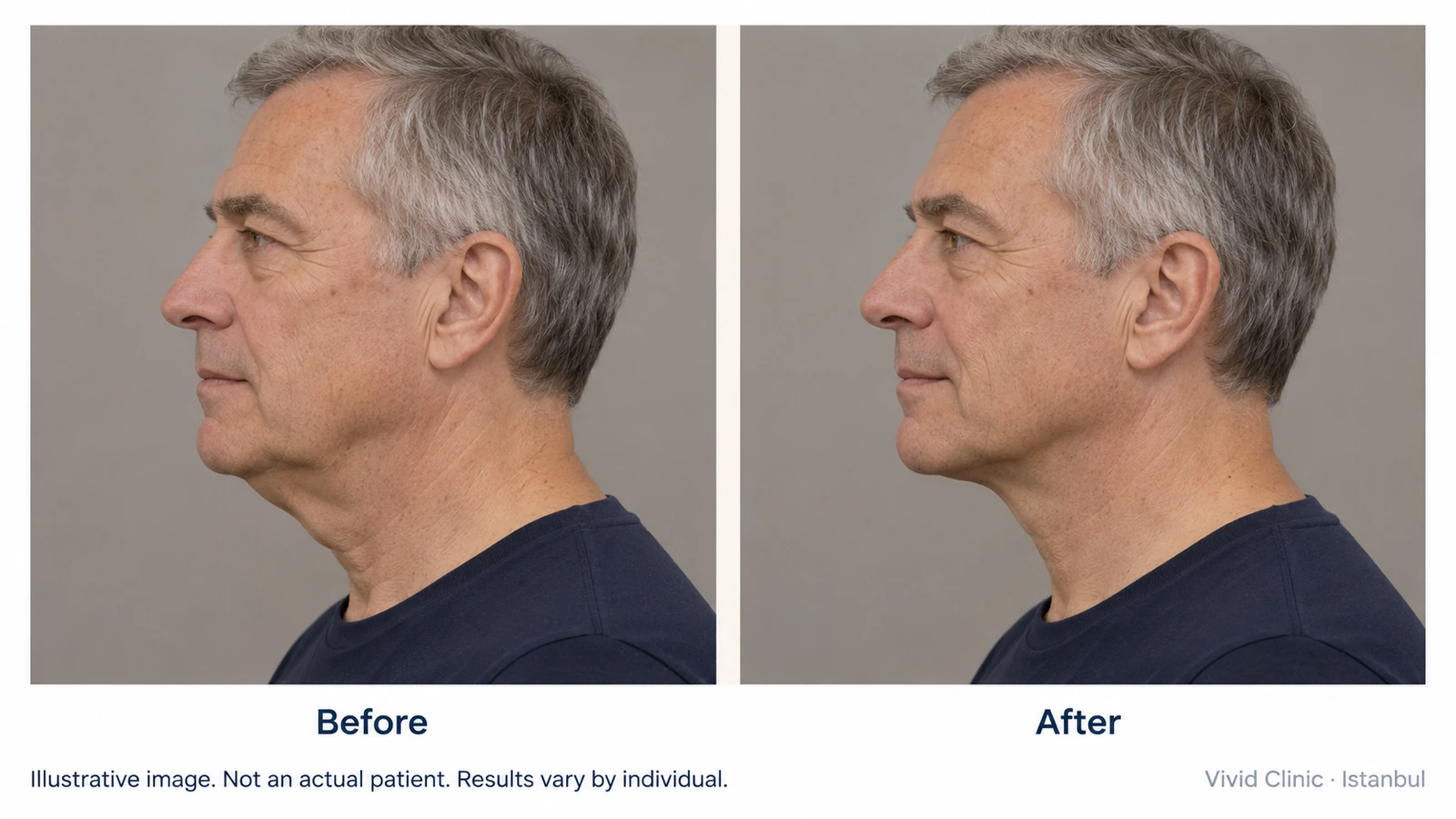
It is rarely the mirror that tells you. It is a photo taken from the side at a family dinner, or your own face on a video call. The jawline you remember as one clean line now has a small soft bulge on each side of the chin.
Those are jowls, and noticing them can feel like a quiet betrayal. You feel the same inside, yet the lower face has started to tell a slightly older story.
The good news is that there is a clear ladder of options. At Vivid Clinic in Istanbul, Turkey, every plan begins with a free consultation with a plastic surgeon. This guide walks through all eight rungs, honestly.
What Are Jowls?
Quick Answer: Jowls are folds of skin and soft tissue that sag below the jawline on either side of the chin. They form when facial fat, ligaments and skin loosen and slide downward with age, breaking up the smooth line between the chin and the angle of the jaw.
Almost everyone develops some jowling, often from the 40s. Jowls are not simply “extra skin”. They are tissue that used to sit higher on the cheek and has moved, which explains why some treatments help and others only disguise the problem.
Jowls, Marionette Lines and Turkey Neck: Related but Different
These three often arrive together. Marionette lines are the creases running from the corners of the mouth toward the chin. A turkey neck is loose skin and muscle banding below the jaw.
Jowls sit between the two, right on the jaw border. Treating only one of the three can leave the others more obvious, so surgeons assess the lower face and neck as a single unit.
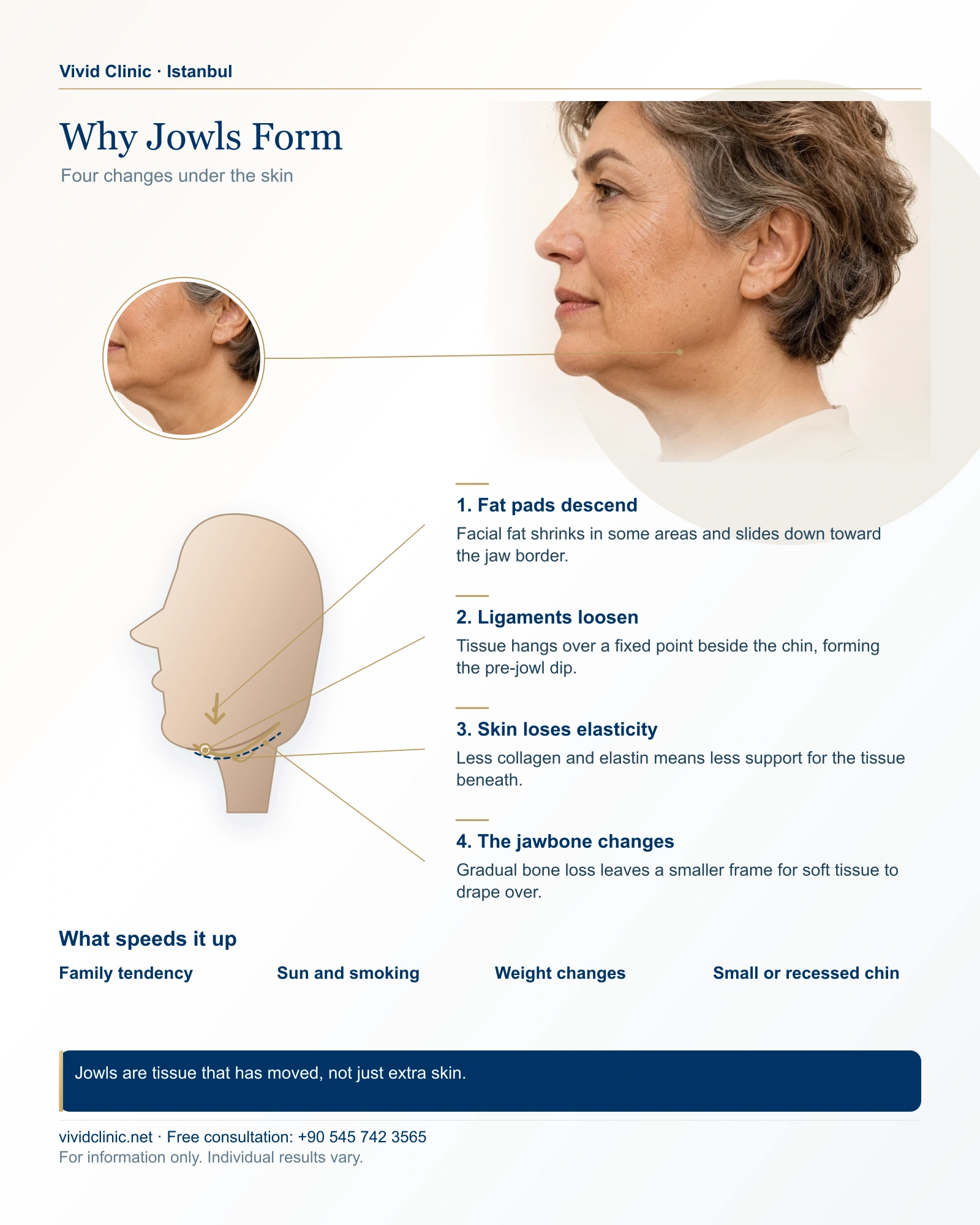
Why Jowls Appear: The Four Changes Under the Skin
A sharp jawline depends on four things: fat in the right place, ligaments holding it there, elastic skin, and a strong bony frame. With time, all four shift.
1. Fat Pads Descend
Facial fat sits in separate compartments. Over the years, some shrink while others slide downward, and fat collects just above the jaw border.
2. Retaining Ligaments Loosen
Small fibrous ligaments anchor soft tissue to bone, and one sits just beside the chin. As neighboring tissue drops, it hangs over this fixed point like fabric over a curtain tie, creating the dip known as the pre-jowl sulcus.
3. Skin Loses Elasticity
Collagen and elastin decline gradually from early adulthood, faster after menopause. Thinner skin cannot hold the heavier tissue beneath it in place.
4. The Jawbone Changes
The jaw gradually loses some bone volume, so the soft tissue has less of a frame to drape over.
What Speeds Sagging Jowls Up?
- Family tendency and thin skin
- Sun exposure and smoking
- Large or rapid weight changes
- A small or recessed chin, which gives less support
Early, Moderate or Advanced: Where Are You?
Surgeons loosely grade jowls into three stages, because the stage decides which treatments are worth your time.
- Early: slight softening, visible mainly when you look down.
- Moderate: a visible bulge beside the chin at rest, often with marionette lines.
- Advanced: heavy tissue below the jaw border, usually with a loose neck.
A simple check: place your fingertips in front of your ears and lift gently upward and back. If the jawline cleans up with a few millimeters of movement, you are probably early. If it takes a centimeter or more, a lift is likely to be discussed.
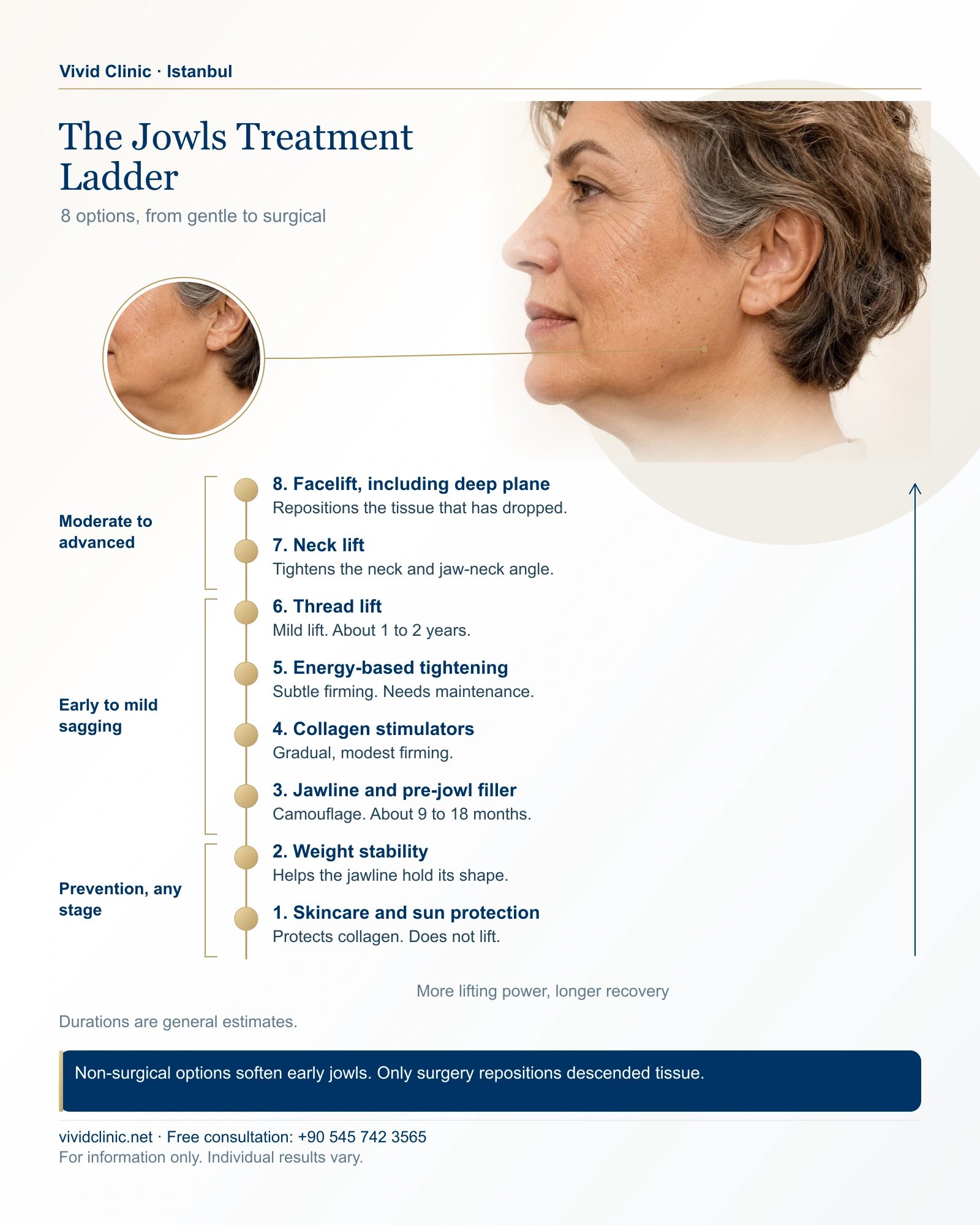
How to Get Rid of Jowls: 8 Treatments From Gentle to Surgical
Quick Answer: Mild jowls can be softened with skincare, stable weight, fillers, collagen stimulators or energy-based tightening. Moderate to advanced sagging usually needs lifting surgery, most often a facelift with a neck lift, because only surgery repositions the tissue that has dropped. Results vary by individual.
The options run from least to most invasive. Each has a role, and each has a ceiling.
1. Skincare and Sun Protection
Daily broad-spectrum sunscreen, a retinoid at night and not smoking protect the collagen you still have. This can slow further laxity and improve texture. It cannot lift tissue that has already descended.
2. Weight Stability
Repeated weight gain and loss stretches skin and changes facial fat, so a steady, healthy weight helps the jawline hold its shape. In slim faces, losing more weight can make sagging jowls look looser, not tighter.
3. Fillers Along the Jawline and Pre-Jowl Area
Hyaluronic acid filler placed in the pre-jowl hollow, along the jaw border or in the chin can straighten the line by filling the dips beside the bulge. The effect typically lasts around 9 to 18 months.
This is camouflage, not lifting. It works well in early cases. In heavier faces, added volume can make the lower face look wider, so a careful injector will sometimes advise against it.
4. Collagen-Stimulating Injectables
Biostimulators such as poly-L-lactic acid or calcium hydroxylapatite prompt your skin to build new collagen over several months. They suit thin skin with early laxity. Several sessions are usually needed, and the firming is gradual and modest.
5. Energy-Based Tightening
Radiofrequency, radiofrequency microneedling and focused ultrasound heat the deeper skin layers to stimulate tightening, with only a few days of redness or swelling.
Expect subtle firming that develops over two to six months and needs maintenance. These devices help early laxity. They do not reposition formed jowls.
6. Thread Lift
Dissolvable barbed threads are passed under the skin to hitch the tissue upward under local anesthesia, with little downtime.
The lift is mild and tends to fade within roughly one to two years as the threads dissolve. Dimpling, asymmetry and thread visibility can occur. Threads suit a narrow group with early sagging and good skin.
7. Neck Lift
When the main issue is loose skin, muscle bands or fullness under the chin, a neck lift tightens the platysma muscle and redrapes the skin for a cleaner jaw-neck angle. Our guide to neck lift in Turkey explains the options.
A neck lift alone improves the area below the jaw. When jowls hang over the jaw border from above, it is usually combined with a facelift.
8. Facelift, Including Deep Plane Technique
A lower facelift operation is the surgical jowl lift. The surgeon works on the SMAS, the strong layer beneath the skin, to move descended tissue back toward the cheek and restore the jaw border.
In a deep plane facelift, the surgeon releases the retaining ligaments and lifts skin and deeper tissue as one unit. Surgery is the most powerful jowls treatment on the ladder, and the one with the longest recovery.
When You Do Not Need Surgery
If your jowls are early, your skin is still firm, and the fingertip test needs only a tiny lift, non-surgical care is usually the sensible choice. A good surgeon will say so.
Operating too early gives a small improvement for a full surgical recovery. Equally, years of devices and filler for advanced laxity can still disappoint.
Who Is a Good Candidate for a Surgical Jowl Lift?
Quick Answer: Good candidates have visible jowling and neck laxity in a relaxed position, are in good general health, do not smoke or are willing to stop, keep a stable weight, and expect a natural improvement, not a different face.
Age matters less than anatomy. Most patients are between their mid-40s and late 60s, and both men and women are suitable, with incisions planned around the hairline and beard pattern.
Who May Not Be Suitable?
Surgery may be postponed or advised against if you have uncontrolled blood pressure or diabetes, a bleeding disorder, or cannot stop smoking. Patients who are still losing weight are usually asked to wait until it is stable. Expectations matter too: a lift restores contour, but it does not change skin texture or stop the clock.
How a Facelift With Neck Lift Corrects Jowls
Modern facelifts do not rely on pulling skin tight. The work is done in the deeper layer, and the skin is redraped without tension.
Incisions are placed in the natural creases around the ear and into the hairline. A short incision under the chin may be added to tighten the neck muscle bands.
SMAS methods fold or reposition the deeper layer, while the deep plane method goes beneath it and releases the ligaments first. Our comparison of deep plane vs SMAS facelift covers the differences, and our overview of facelift types shows where mini and full lifts fit.
Procedure Overview Table: Facelift (Deep Plane or SMAS) With Neck Lift
| Aspect | Details |
|---|---|
| Duration Process | 3 to 6 hours |
| Hospitalization Duration | 1 to 2 nights |
| Mobility Duration | Gentle walking from the first day |
| Return to Activity | About 2 to 3 weeks |
| Complete Recovery | 2 to 3 months |
| Anticipated Results | Presentable at 3 to 4 weeks; final contour at 6 to 12 months |
Operation Process Overview at Vivid Clinic
After your arrival in Istanbul, a VIP airport transfer takes you to your 5-star hotel for check-in. The next step is a one-on-one consultation, when your surgeon examines you in person and confirms the plan discussed online. On surgery day you are admitted to hospital, and the operation is performed under general anesthesia. Post-operative care follows, with dressing changes and regular visits from the patient care team. Before you travel, a checkup visit confirms that healing is on track and that you are fit to fly. After your departure, remote aftercare follow-up continues with scheduled photo reviews and direct contact with your coordinator.
Recovery Timeline After Surgery for Jowls
Quick Answer: Most patients walk the same day, look presentable at about three to four weeks, and see the final contour between six and twelve months. Healing speed varies by individual.
Days 1 to 3
Swelling, bruising and tightness around the ears and neck are expected. You rest with your head raised.
Days 4 to 7
Bruising starts to fade, and the first sutures may be removed.
Weeks 2 to 3
Many patients return to desk work and feel comfortable in public.
Weeks 4 to 12
Swelling and numb patches settle. Exercise returns gradually once your surgeon agrees.
Months 6 to 12
Scars mature and fade, sensation returns, and the jawline reaches its settled shape.
Benefits of Surgical Correction
- Repositions jowls instead of disguising them
- Restores a continuous line from chin to jaw angle
- Results typically last many years, although aging continues
- Aims for a rested, natural look
Benefits vary between patients.
Risks and Safety Considerations
Every operation carries risk. Possible complications include hematoma, infection, delayed wound healing, visible or thickened scars, hair thinning near incisions, asymmetry, prolonged numbness and, rarely, weakness of a facial nerve branch, which is usually temporary. General anesthesia has its own risks.
Injectables and threads carry risks too, including bruising, lumps, infection and rare vascular complications with filler. A qualified surgeon and careful aftercare reduce these risks but do not remove them.
How to Prepare
- Stop smoking and nicotine products at least four weeks before and after surgery
- Tell your surgeon about every medication and supplement, and pause blood thinners only as advised
- Complete the blood tests and health checks requested
- Arrange two weeks off work and help at home
Aftercare Tips for a Smoother Recovery
- Sleep on your back with your head elevated for the first weeks
- Wear the support garment as directed
- Avoid bending, lifting and strenuous exercise until cleared
- Protect incisions from the sun for several months
Cost Factors in Istanbul, Turkey
The cost of treating jowls depends first on which rung of the ladder you are on. For surgery, the main factors are the technique chosen, whether a neck lift or other procedures are combined, operating time, surgeon experience, hospital and anesthesia fees, and medical tests.
For international patients, the package may also include hotel, transfers and aftercare. You can get an initial idea with the surgery price calculator, and read more about planning a facelift in Turkey. Estimates are confirmed only after consultation.
What International Patients Should Expect
Most patients plan to stay in Istanbul for roughly seven to ten days, so early healing and the first checks happen close to the surgical team.
Before you travel, you send clear photos and your medical history. Expect some swelling and bruising on the flight home.
Why Choose Vivid Clinic in Istanbul, Turkey?
Vivid Clinic is an international clinic focused on natural-looking, personalized facial surgery. You receive an honest opinion on whether your jowls need surgery or whether non-surgical care would be enough for now.
The team coordinates transfers, hotel, hospital care and follow-up. You can meet our doctors before deciding, and your first step is always a free consultation with a plastic surgeon.
FAQs
Can jowls be treated without surgery?
Yes, when they are early. Skincare, sun protection and a stable weight slow further sagging. Filler in the pre-jowl hollow and along the jaw border can straighten the line for around a year, while collagen stimulators and energy-based devices give gradual, modest firming. Thread lifts offer a mild lift that fades as the threads dissolve. None of these repositions the deeper tissue, so the effect is limited once a clear bulge hangs below the jaw at rest. Results vary, and a surgeon’s assessment is the reliable way to know.
Which facelift technique works best for jowls: deep plane or SMAS?
Both techniques treat the deeper support layer, which is what corrects the lower face. A SMAS facelift tightens or repositions that layer, while a deep plane facelift releases the retaining ligaments and lifts skin and deeper tissue together. The deep plane approach is often chosen for heavier tissue, while SMAS methods can suit lighter tissue or limited laxity. Neither is right for everyone. At Vivid Clinic, the technique is decided after examination, and your surgeon explains the reasoning, the recovery and the limits before you commit.
How long should I stay in Istanbul after surgery for jowls?
Most international patients plan around seven to ten days in Istanbul after a facelift with neck lift. This covers one to two nights in hospital, the first dressing changes, early suture removal and a checkup visit before departure. Your surgeon confirms that you are fit to fly, so a flexible ticket is wise. Expect some swelling and bruising when you travel home. After you leave, Vivid Clinic continues with remote aftercare follow-up through photo reviews and direct contact with your coordinator.
At what age do jowls usually need a facelift?
There is no set age. Most facelift patients are between their mid-40s and late 60s, but the decision depends on anatomy, not birthdays. Someone of 45 with heavy tissue and a small chin may be a good surgical candidate, while someone of 60 with firm skin may do well with non-surgical care. General health and smoking status matter as well. A free consultation with a plastic surgeon at Vivid Clinic in Istanbul, Turkey can tell you which stage you are at and which options are realistic.
What affects the cost of surgery for jowls in Turkey?
Cost depends on your personal plan. The main factors are the technique used, whether a neck lift, eyelid surgery or fat grafting is combined, the length of the operation, the surgeon’s experience, the hospital and anesthesia, and pre-operative tests. For patients travelling from abroad, hotel nights, transfers, medications, garments and aftercare visits may be part of the package. Because these elements differ from person to person, Vivid Clinic provides a personalized quote after a surgeon has reviewed your photos and medical history.
Conclusion
Jowls are not a sign that you did something wrong. They respond best when the treatment matches the stage. Early softening may need only skincare, filler or tightening. A formed bulge with a loose neck is usually a job for a facelift with neck lift. What matters most is an honest assessment.
Vivid Clinic in Istanbul, Turkey offers a free consultation with a plastic surgeon to help you find your place on the ladder. Get a Free Consultation and take the first step toward a jawline that looks like you again.
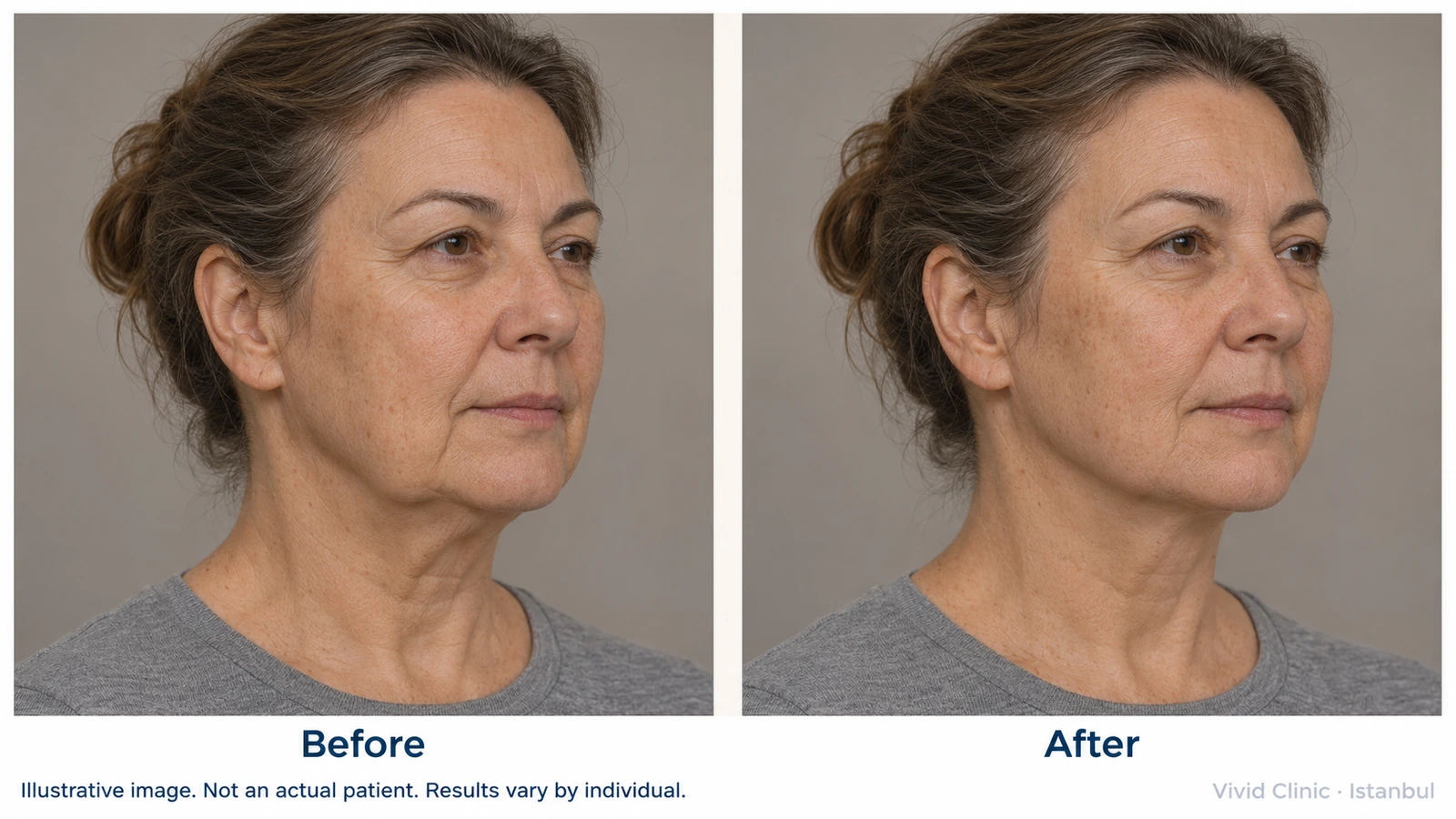
Real Before and After Results at Vivid Clinic
The photos below show real Vivid Clinic patients from the clinic’s own gallery, shared with consent as published on the clinic site. The clinic labels the first four as facial rejuvenation and the last two as neck lift, the exact technique is not recorded, and results vary by anatomy, healing and treatment plan. Lighting differs between some photos, so compare contours, not skin tone.
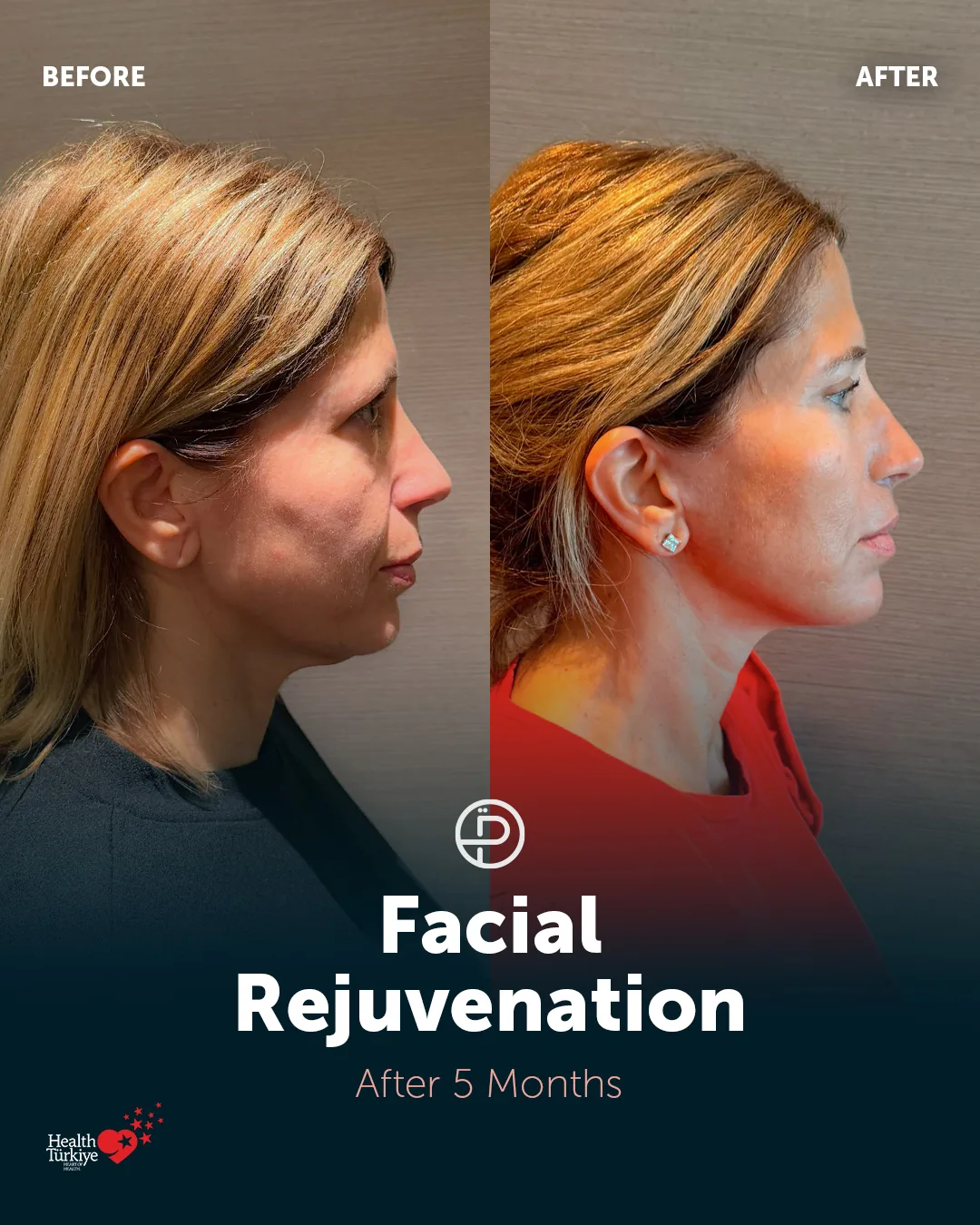
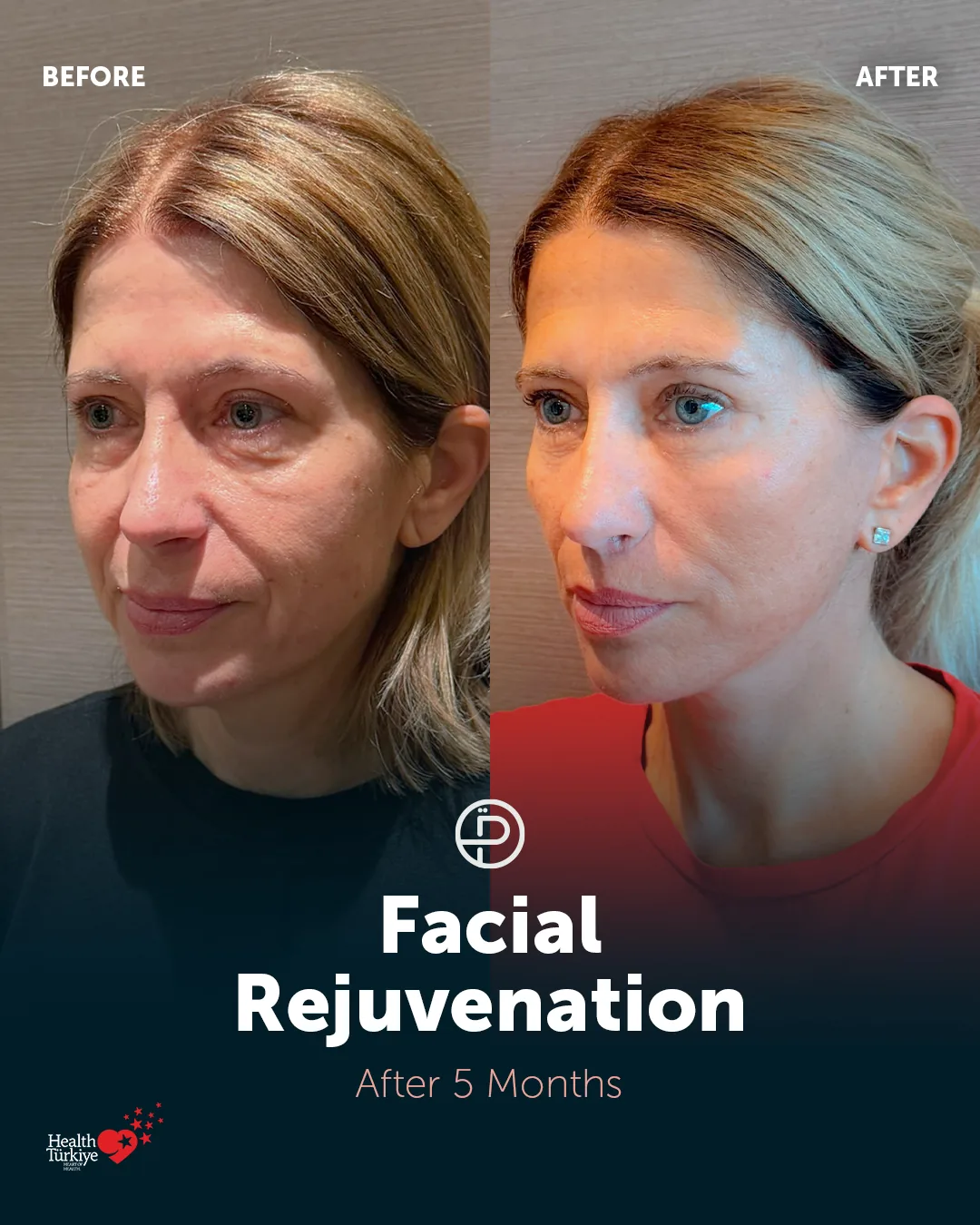
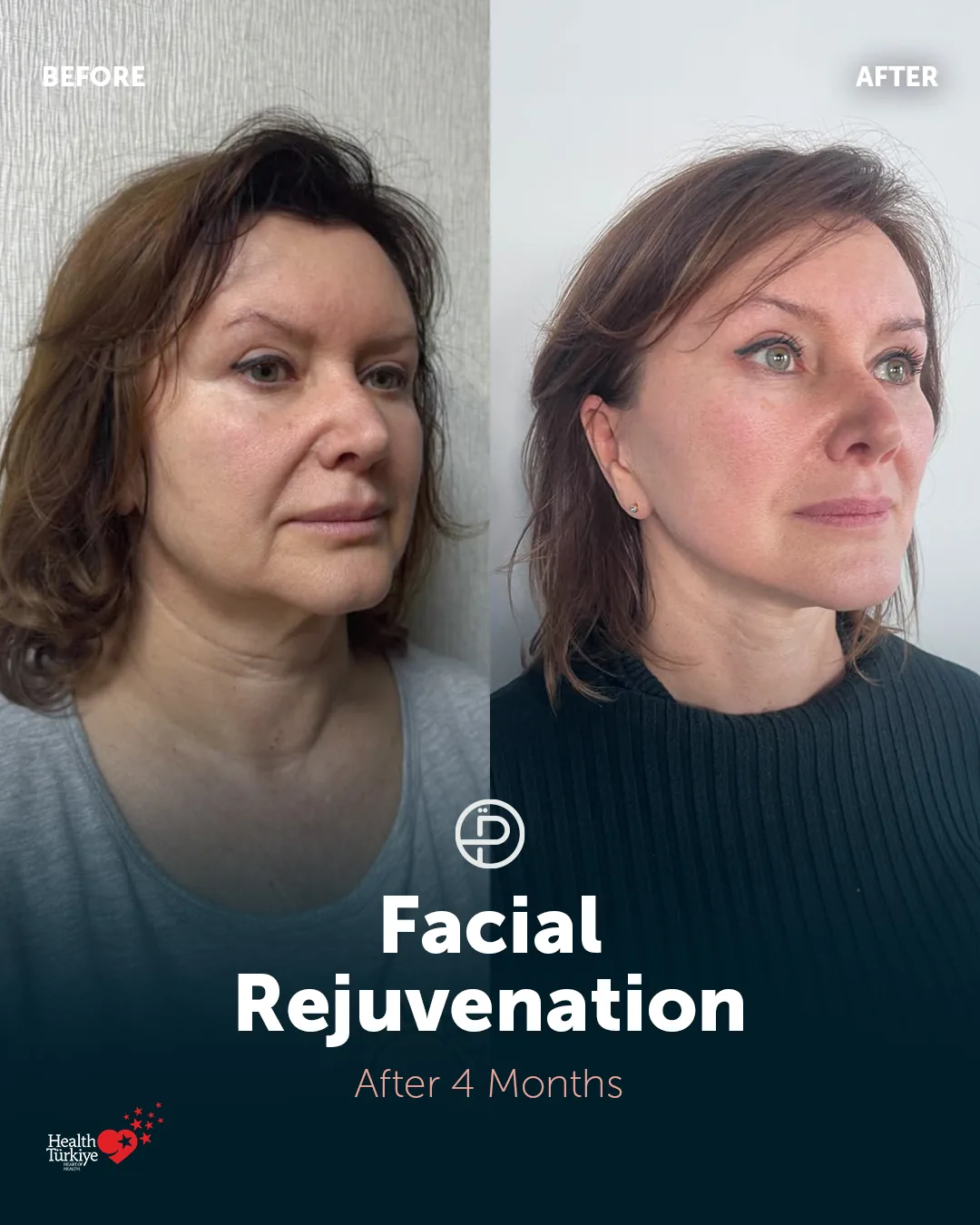
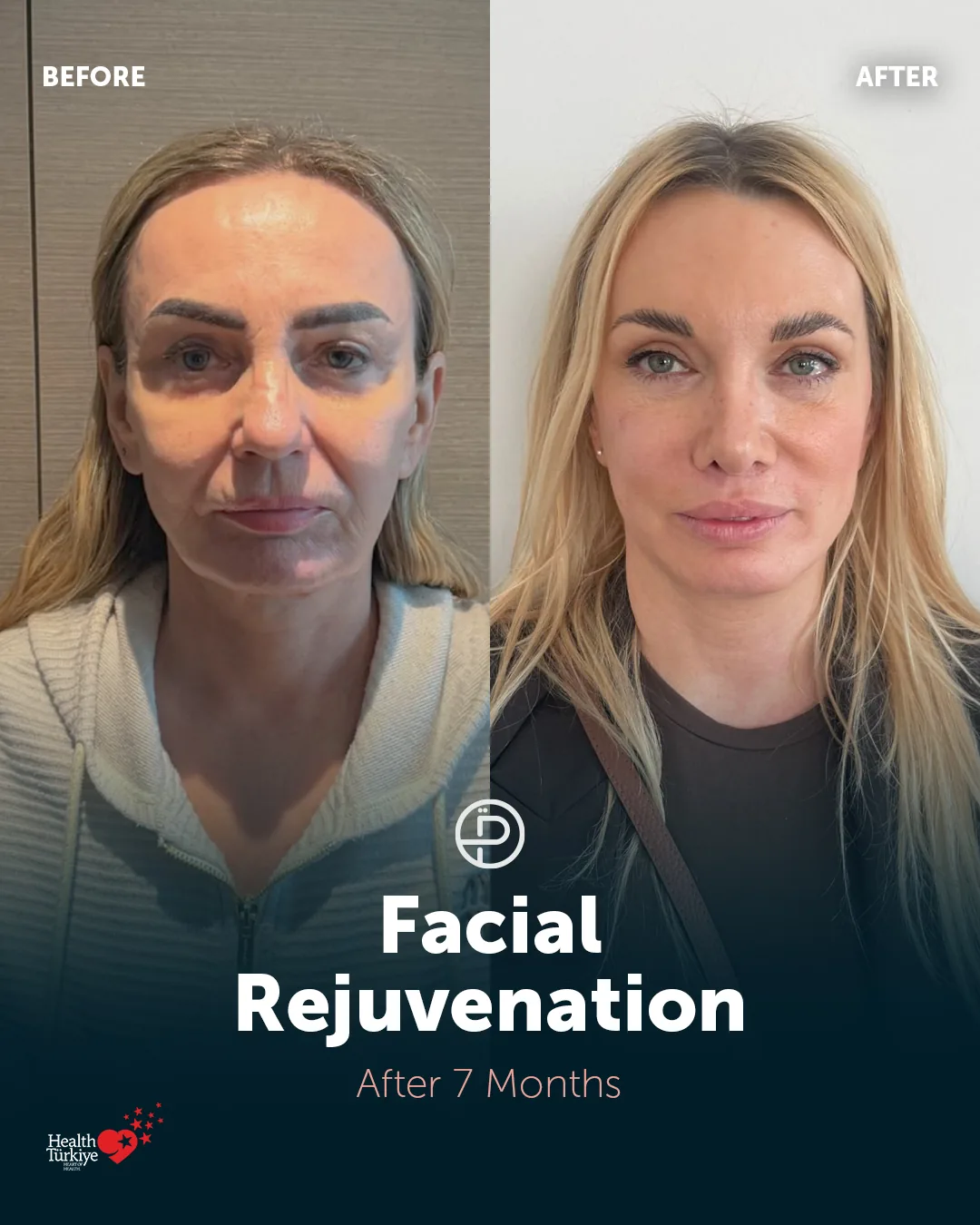
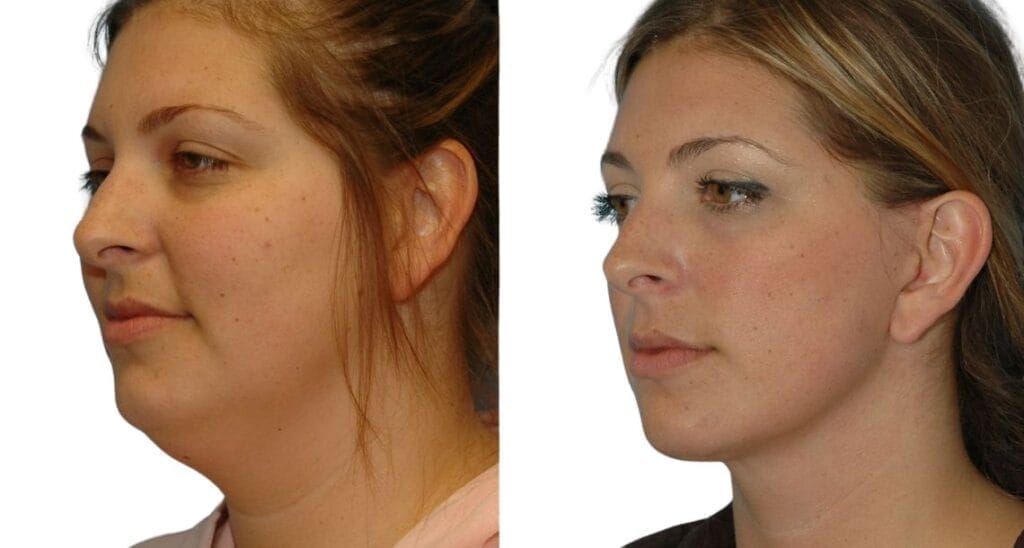

You can see more in the full before and after gallery and in the neck lift before and after gallery. If you would like to know what is realistic for your own face, send your photos to Vivid Clinic and request a free consultation with a plastic surgeon.
This article is for general information and does not replace a personal medical consultation. Suitability, risks, recovery and expected results should always be discussed with a qualified medical professional. Results vary by individual.