
 ChatGPT

Medically reviewed by Prof. Dr. Özgür Pilancı, Plastic, Reconstructive & Aesthetic Surgeon — August 2026
Quick answer (updated August 2026): Sunken or hollow eyes describe lost volume and bony support around the eye socket, mainly in the tear trough, which lets the orbital rim show through and casts a shadow on the cheek. In most adults the cause is ordinary: aging, inherited deep-set anatomy, poor sleep or weight loss. But sunken eyes are also a recognized sign of dehydration and of a few medical conditions, so hollowing that appears suddenly, affects one eye, or shows up in a baby or an unwell older adult needs a doctor, not a cosmetic treatment.

Sunken eyes vs normal eyes: what is actually happening
The eyeball sits in a bony socket, cushioned by pads of orbital fat and supported from below by the cheek. “Sunken” is what you see when that cushioning thins, or when the eye naturally sits further back: the bony rim reads as a ridge, the dip inside it as a dark crescent. The groove running from the inner corner along that rim is the tear trough, tethered to bone by a true osteocutaneous ligament identified in cadaver work in Plastic and Reconstructive Surgery — which is why it deepens rather than smooths.
A shallow hollow, though, is normal. In most adult faces the lid–cheek junction is a visible transition rather than a smooth curve, and a faint groove at the inner corner exists at every age, including in children. Light does the rest: a concavity need not be deep to look dramatic, only to catch a shadow — hence a face that looks fine by a window and alarming under a ceiling light.
Deep-set eyes are also different from volume-loss hollowing, and confusing the two sends people toward treatment they do not need. Deep-set eyes are an inherited proportion that looks the same at 12 as at 32 and matches on both sides. Volume-loss hollowing is acquired: absent from old photographs, progressive, usually alongside thinner lid skin or a flatter cheek. Compare a photograph from ten years ago in similar light; if the contour is unchanged, leave it alone.

Aging: the single biggest cause of hollow eyes
Aging accounts for more hollow-eye appearance than every other cause combined, and it is not simply “losing fat.” Four processes stack up, which is why products aimed at one of them disappoint.
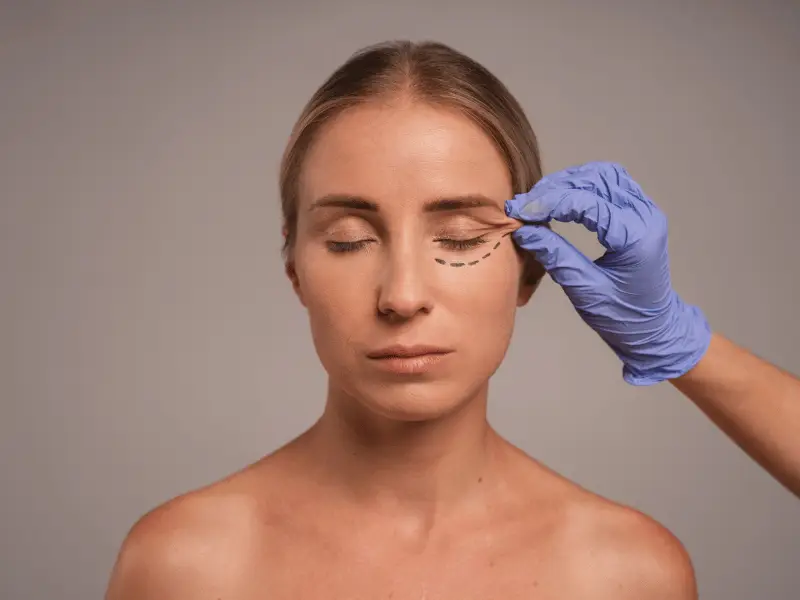
Orbital and midface fat pads atrophy and descend as their retaining ligaments slacken, producing the combination that confuses people: a hollow and a bulge, where fat herniated forward sits above a deepened trough. The cheek deflates too, removing the platform the lower lid rests on.
Third — the part most articles miss — the bone changes. A three-dimensional CT study of 60 adults across three age groups, published in Aesthetic Surgery Journal, found orbital aperture width and area increased significantly with age in both sexes. The socket gets bigger as its contents get smaller.
Fourth, eyelid skin — the thinnest on the body — loses collagen and turns translucent. Hence the usual trajectory: a faint trough in the thirties, a defined lid–cheek junction in the forties, a fuller hollow from the fifties. Genetics, sun and weight history move that timeline either way.
Everyday causes: genetics, dehydration, sleep, weight and eye-rubbing
Most non-aging hollowing traces to a short list of ordinary things, several reversible within days.
Genetics. If your parents have the same eyes, this is heredity, not a deficiency. Deep-set eyes are a normal variant in every population, and nothing about them requires correcting.
Dehydration. The NHS lists sunken eyes among the symptoms of dehydration in adults, alongside thirst, dark urine and light-headedness. Mild dehydration resolves with fluids; significant dehydration is covered below.
Rapid or substantial weight loss. Facial fat compartments shrink with everything else, and the face often looks more changed than the scale suggests.
Sleep deprivation. A controlled study in SLEEP photographed people after normal sleep and after 31 hours awake; raters reliably identified hanging eyelids, dark circles and paler skin in the deprived images. Pallor deepens an existing hollow, but does not create volume loss.
Smoking and sun exposure degrade collagen in already-thin lid skin. Allergies and chronic eye-rubbing add inflammation and trauma to the same tissue; treating the allergy properly is among the higher-yield options.

Medical causes of sunken eyes — and when to see a doctor promptly
A smaller group of causes are medical, and some are urgent. Cleveland Clinic’s overview of enophthalmos — an eye sitting further back in its socket — groups them by changes in the socket, its contents, or the eye.
See a doctor promptly if any of these apply:
- Hollowing that appeared suddenly, over days or weeks
- Hollowing affecting one eye only, or new facial asymmetry
- Eye pain, double vision, or any change in sight
- A baby or child with sunken eyes, a sunken soft spot, no tears when crying, or fewer wet nappies — the NHS treats these as urgent
- An older adult who is unwell and cannot keep fluids down
- Sunken eyes with unexplained weight loss, fever or feeling unwell
- Any hollowing after a blow to the face — an orbital floor fracture can present this way
Two causes get missed often. Prostaglandin glaucoma drops — latanoprost, bimatoprost, travoprost, tafluprost — can cause prostaglandin-associated periorbitopathy: a deepened upper lid sulcus, periorbital fat atrophy and loss of lower-lid fullness. It usually reverses within weeks of changing the drug. Never stop glaucoma drops yourself — untreated glaucoma causes permanent sight loss. Raise it with your ophthalmologist.
Thyroid eye disease more often pushes eyes forward, but its treatment, particularly orbital decompression, can leave the eye sitting further back. Facial fat loss also occurs in HIV-associated lipoatrophy, after radiotherapy, in Parry-Romberg and silent sinus syndromes, and rarely as a first sign of an orbital tumour. Sustained undernutrition from an eating disorder does the same; if food or weight feels like it is in control, raise it with a doctor — confidential support exists, and it is treated first.

Dark circles or hollows? They are not the same thing
Searchers use these interchangeably, but the causes and treatments differ completely — which is why people so often spend money on the wrong one. Cleveland Clinic separates three mechanisms; working out which dominates comes first.

Pigmentation is melanin in the skin, common in deeper skin tones and worsened by sun, rubbing and eczema. It looks brown rather than blue and stays dark when you stretch the skin. Sun protection and dermatologist-directed topicals help; filler does not.
Vascular show-through is the bluish tone of vessels and muscle seen through translucent lid skin. It worsens with tiredness and congestion, improves with sleep and cold, and worsens if filler sits too superficially.
Structural hollowing is the true tear trough: a shadow cast by a concavity, which shifts with the direction of light and disappears when you tilt your head back. Only this one responds to volume replacement.
Most people have a mix, and a plan that does not identify which component dominates is a guess.
What actually helps: habits, skincare and honest expectations
Start with the reversible things; they are free, and they change how much of the rest you need. Rehydrate properly. Protect sleep for a fortnight, then reassess in the same light and mirror. Get allergies treated and stop rubbing your eyes — that habit change does more for periorbital skin than most products. Wear sunglasses and sunscreen. If you wake puffy, sleeping with your head raised helps fluid drain.
Then be realistic about topicals. Cold compresses constrict vessels for hours, not days. Caffeine products reduce puffiness modestly and briefly. Retinoids and vitamin C have reasonable evidence for improving skin quality and pigmentation over months, softening how a hollow reads by making skin less translucent. None of them, whatever the packaging says, replace lost volume or rebuild bone.
No vitamin fixes sunken eyes either. Iron-deficiency anaemia can leave you pale enough to deepen shadows — worth a blood test if you have other symptoms — but it does not explain a tear trough.
Tear-trough filler: what it can do, and the risks that matter
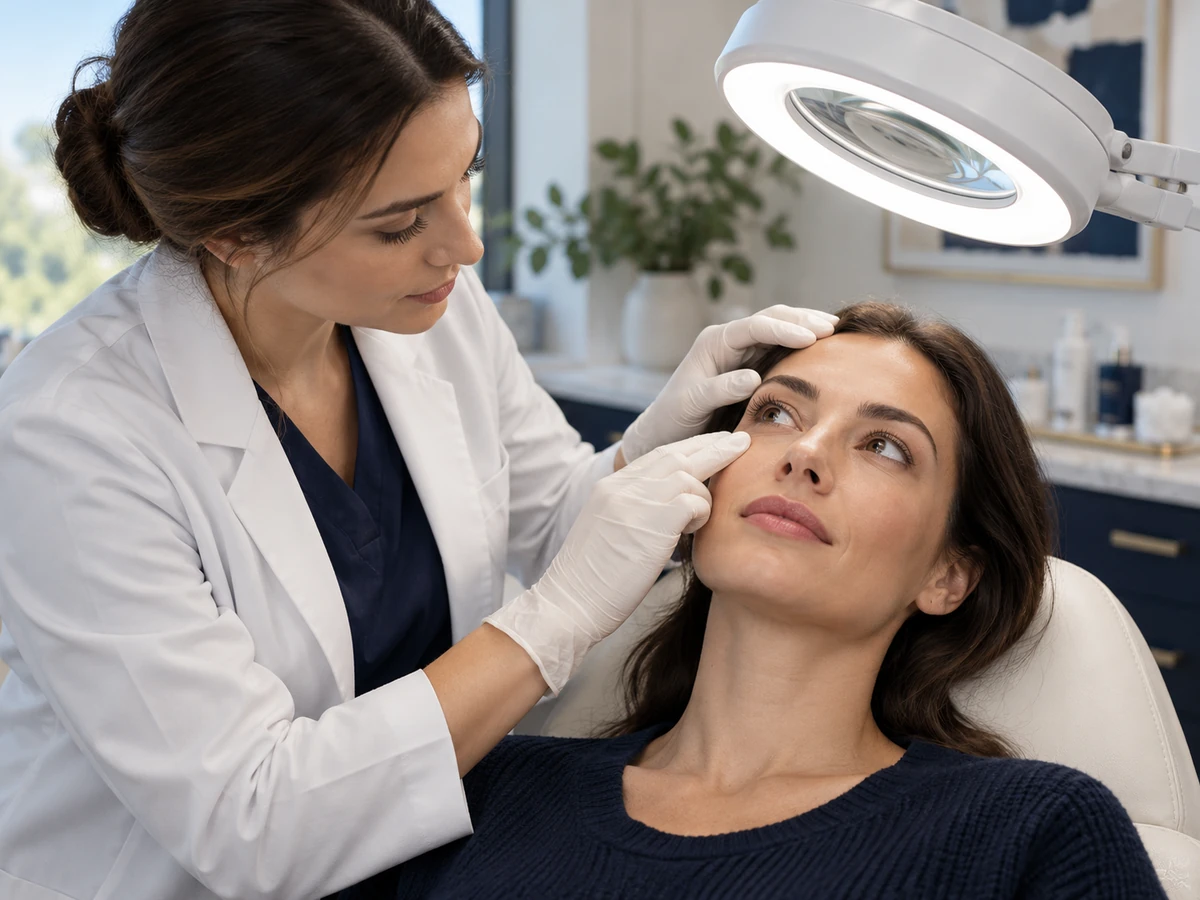
Hyaluronic acid filler along the orbital rim can soften a structural hollow, and in the right patient — a shallow-to-moderate trough, good skin, no significant fat herniation — the improvement is real. It is also the highest-risk site on the face for injectables.
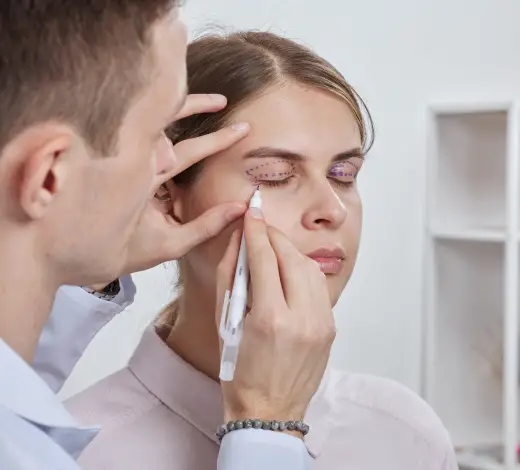
The risks are not theoretical. Vascular occlusion can cause skin necrosis or, rarely, permanent blindness; a review of 93 published cases of vascular complications after facial filler found blindness in 61%. The American Academy of Ophthalmology puts central retinal artery occlusion at roughly one in 10,000 injections — small, but catastrophic and irreversible. Commoner problems include the Tyndall effect, a bluish cast when product sits too superficially; malar oedema lasting months; lumpiness; and migration.
Technique reduces risk without eliminating it. AAO guidance favours a blunt cannula over a needle, placement deep on the bone, small retrograde aliquots at low pressure, and deliberate under-correction. Use hyaluronic acid only, never permanent filler, so it can be dissolved with hyaluronidase — which any clinic injecting near the eye should have on hand. Choose the injector, not the price; our guide to natural-looking injectables covers that.
Surgery — and why doing nothing is a legitimate choice
Surgery is for hollowing filler cannot address well: deep troughs, herniated lower-lid fat above the hollow, or significant midface descent. The modern approach does not remove fat. In lower eyelid surgery with fat repositioning, herniated fat is released and transposed over the orbital rim to fill the trough. Removing it — the older technique — often deepens the hollow and produces a skeletonised look ten years on.

Fat grafting adds volume where there is none to reposition. A meta-analysis of 39 studies and 4,046 patients found an overall complication rate of 7.9% for periorbital fat grafting — 6.1% in aesthetic cases — mostly minor swelling, chemosis and contour irregularity, with satisfaction around 91%. Retention is unpredictable. Where the cheek has descended, midface support may address the cause rather than the shadow, sometimes with lateral canthal procedures.
And doing nothing is a legitimate choice. Hollow eyes are not a health failure — for most people they are an anatomical inheritance, or the ordinary arithmetic of a face used for several decades. Plenty of people look into this, learn their eyes are deep-set, and stop thinking about it.
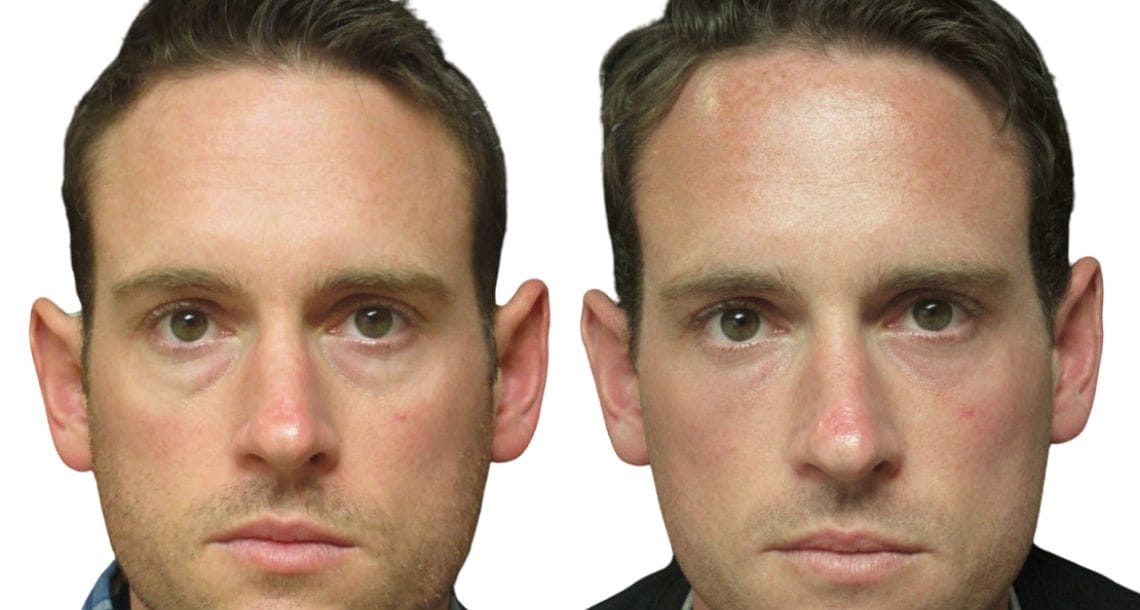
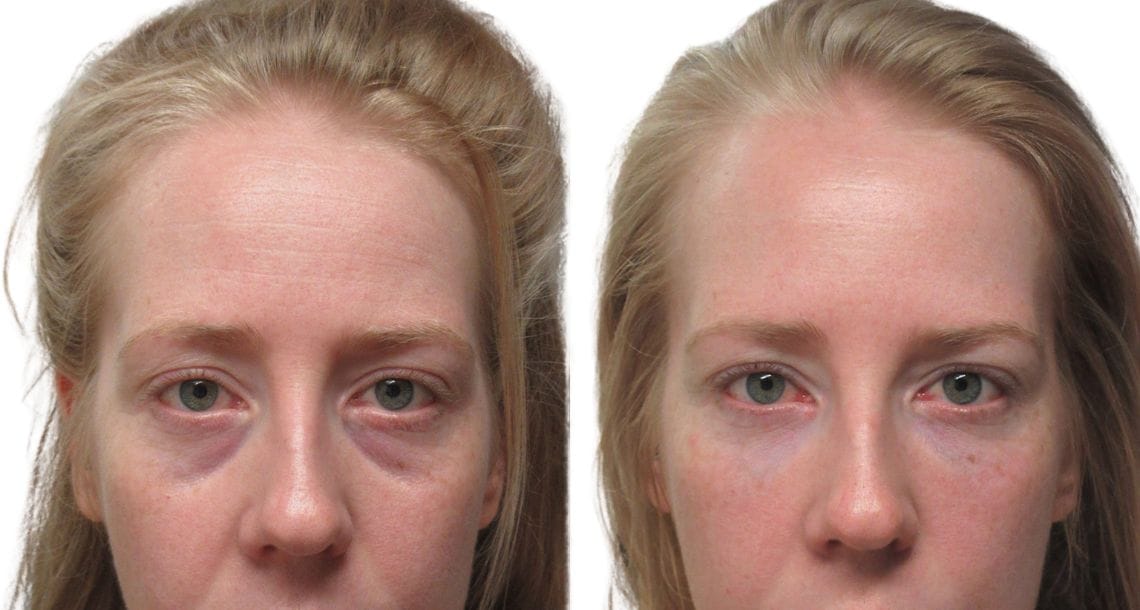
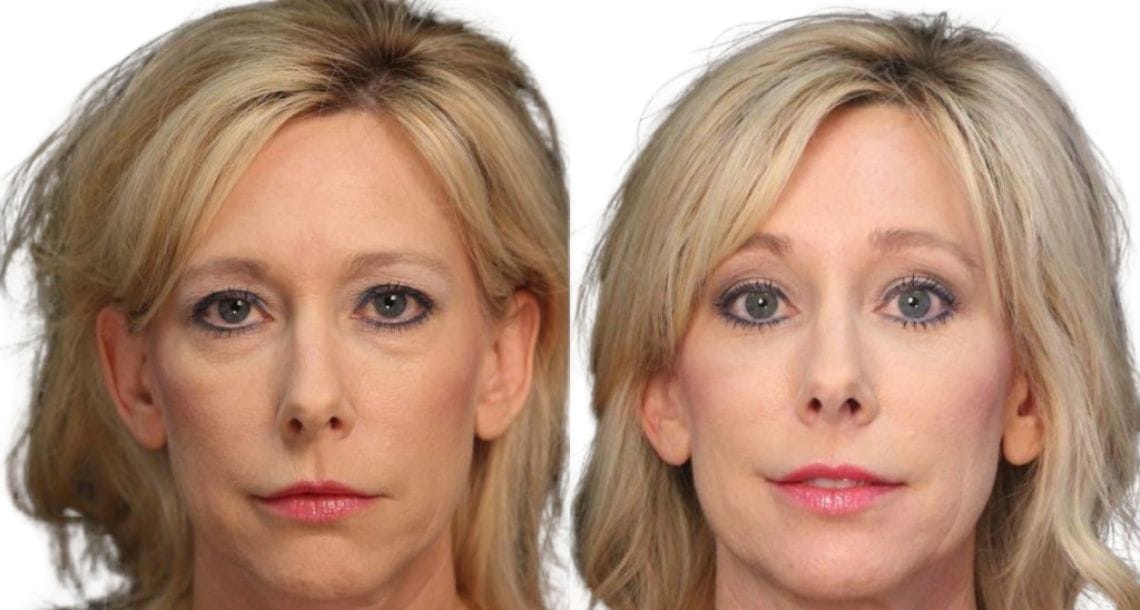
Sunken Eyes Before and After Results at Vivid Clinic
These before-and-after photos show real Vivid Clinic patients treated in Istanbul, shared with their consent. Photos are matched for angle and lighting wherever possible. Individual results vary. Browse the full Before & After Gallery.



Frequently Asked Questions
Are sunken eyes always a sign of dehydration?
No. Dehydration is one recognized cause and the NHS lists sunken eyes among its symptoms, but in adults the commoner explanations are aging, inherited anatomy, tiredness and weight loss. If rehydrating for a few days changes nothing, it was probably not the cause.
Are sunken eyes in a baby an emergency?
They need urgent assessment. The NHS lists sunken eyes, a sunken soft spot, few or no tears when crying, fewer wet nappies and drowsiness as signs of dehydration in babies. Seek emergency help if a child is unusually drowsy, confused, cold or blotchy, or breathing fast.
Can sunken eyes go back to normal on their own?
It depends on the cause. Hollowing from dehydration, bad sleep or short illness usually improves within days once corrected. Hollowing from aging, genetics or long-term volume loss does not reverse on its own; treatment may soften it, but lifestyle changes will not.
What vitamin deficiency causes sunken eyes?
No vitamin deficiency specifically causes sunken eyes, despite how often the claim circulates. Iron-deficiency anaemia can cause pallor and fatigue that make existing shadows look deeper. If you have other symptoms too, ask your doctor for blood tests rather than buying supplements.
Can glaucoma eye drops cause sunken eyes?
Yes. Prostaglandin analogue drops — latanoprost, bimatoprost, travoprost and tafluprost — can cause prostaglandin-associated periorbitopathy: a deepened upper eyelid sulcus, periorbital fat atrophy and a mildly sunken look. It usually reverses once the medication changes. Never stop glaucoma drops yourself: untreated glaucoma causes permanent sight loss.
Not sure whether your hollow eyes are structural, vascular, or simply how your face is built? That question decides everything else, and it is hard to answer from a mirror. Send photographs for a free online assessment and our face aesthetics team will tell you which layer is responsible — including, often, that no treatment is warranted.