 ChatGPT

The Profile You Notice in Every Side-On Photo
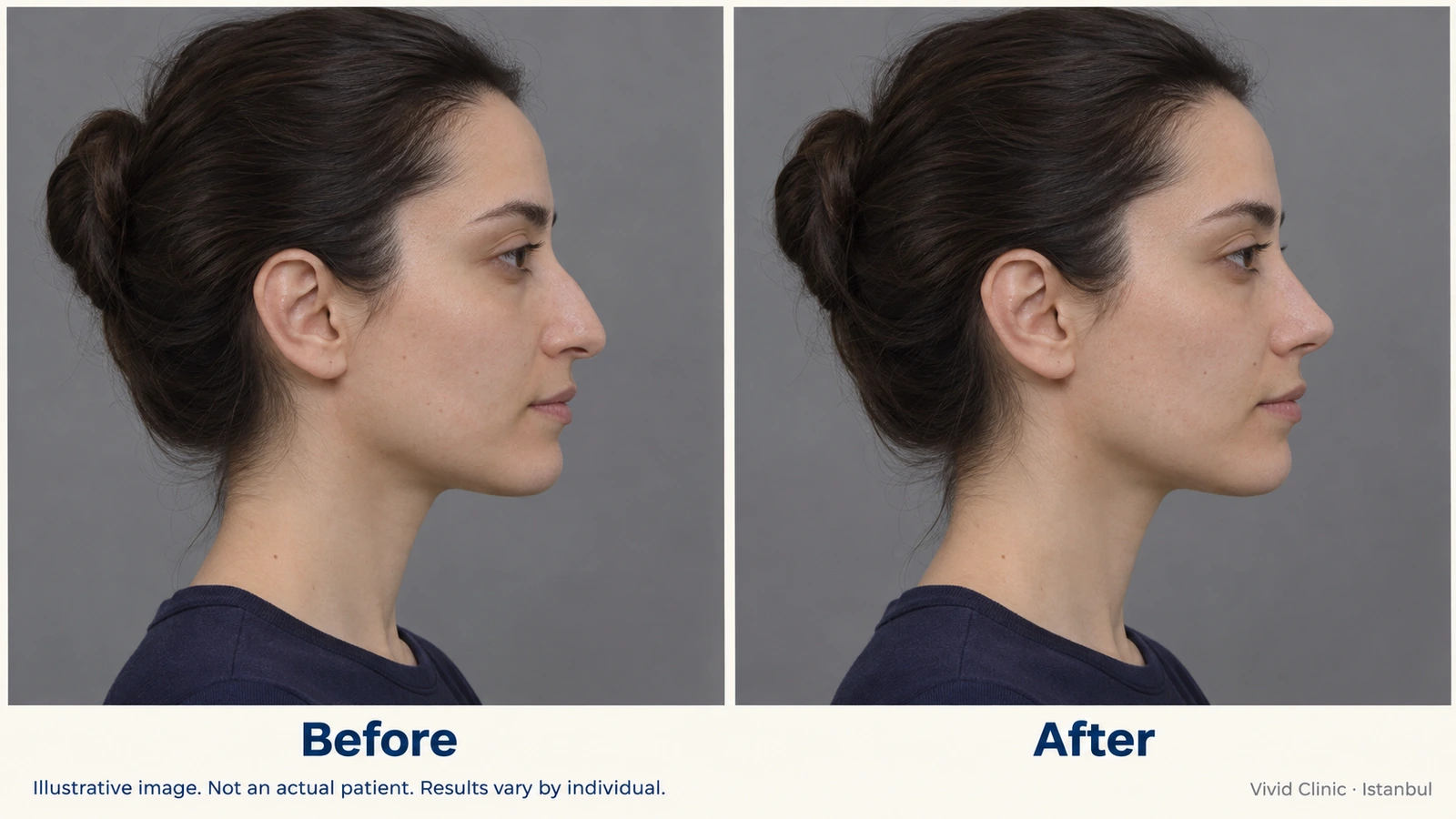
Some people spend years wishing they had an upturned nose, with a tip that lifts just a little more in profile. Others catch their reflection in a shop window and wonder whether their own tip sits too high. A third group never thought about it until an earlier operation left the tip higher than they asked for.
All three are looking at the same feature. A tip that tilts gently upward is a completely normal variation of human anatomy, not a flaw.
This guide from Vivid Clinic in Istanbul, Turkey explains what the shape actually is, how it differs from a button nose, and how rhinoplasty can raise or lower a tip when someone truly wants a change. If you would like a personal opinion on your own profile, you can request a free consultation with a plastic surgeon before deciding anything.
What Is an Upturned Nose?
Quick Answer: An upturned nose is a nose whose tip angles slightly upward, so that a little more of the nostrils shows from the front. Surgeons describe this as higher tip rotation. It is a natural variation seen in every population, and it only becomes a medical or cosmetic question when the tilt bothers the person or follows surgery or injury.
Tip Rotation and Projection in Plain Words
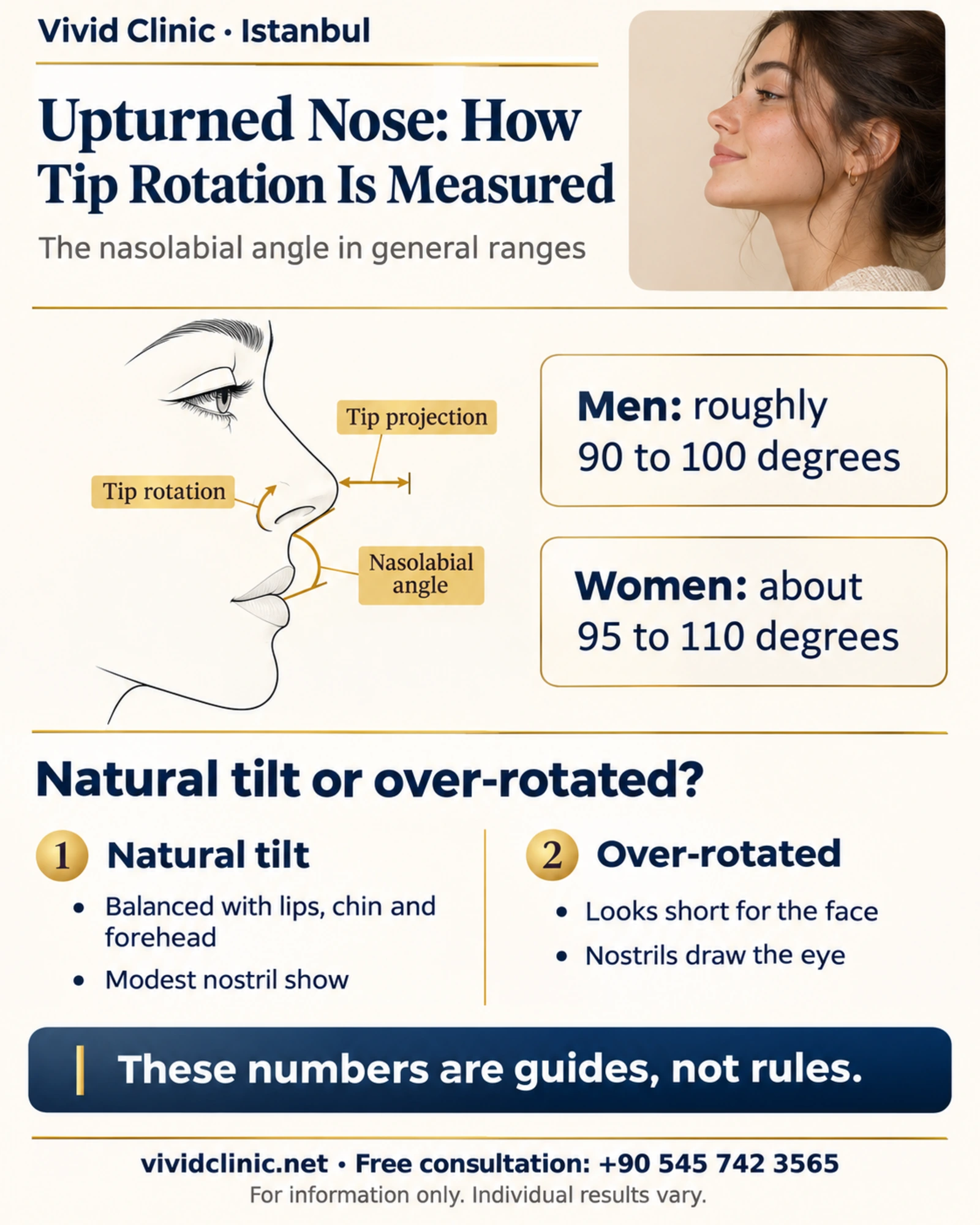
Rotation is the direction the tip points: turned up toward the forehead or turned down toward the lip. Projection is how far the tip stands out from the face.
The two are independent, which is why similar tilts can look very different in profile.
The Nasolabial Angle in General Ranges
Surgeons measure rotation with the nasolabial angle, the angle where the strip of skin between the nostrils (the columella) meets the upper lip. Textbooks commonly quote roughly 90 to 100 degrees for men and about 95 to 110 degrees for women.
These numbers are guides, not rules. Proportions that suit a face depend on height, facial shape, ethnic background and personal taste. A tip at the upper end of the range, or a little above it, usually reads as upturned.
Other Names: Turned Up Nose and Celestial Nose
You will also hear the phrase turned up nose, which means the same thing. The older term celestial nose usually describes a tip that lifts upward together with a slight inward curve of the bridge. See our guide to types of noses for other common profiles.
Upturned Nose vs Button Nose: What Is the Difference?
Quick Answer: Upturned describes the direction of the tip, while button describes its size and shape. A button nose is small and short with a rounded tip, and it may or may not tilt upward. A longer or more defined nose can also be upturned, so the two labels overlap but are not the same.
The comparison of upturned nose vs button nose matters in planning. A button shape means a smaller, rounder tip, while a slight upturn means a change of angle, which involves different cartilage work.
As our roman nose explainer shows, most real noses mix features from several named shapes.
What Causes a Turned Up Nose?
Natural Anatomy
An upturned nose is usually inherited. The shape and position of the lower nasal cartilages, the length of the septum that supports them and the overall length of the nose all set the angle of the tip.
Over-Rotation After Earlier Surgery or Injury
A tip can also become too rotated after a previous rhinoplasty. This can happen when too much cartilage or septum was removed, when the nose was shortened more than planned, or when scar tissue tightens during healing and pulls the tip upward.
Injury or loss of septal support can shorten the nose in a similar way.
Natural Tilt or Over-Rotated Tip: How to Tell
A natural upturned nose looks balanced with the lips, chin and forehead, and the nostril show from the front is modest.
An over-rotated tip tends to look short for the face, with nostrils that draw the eye in a straight-on view. A history of earlier surgery, a tip that feels stiff or pinched, or new breathing difficulty are reasons to ask for a specialist assessment.
Does an Upturned Nose Need Treatment?
In most cases, no. An upturned nose is a healthy shape, widely seen as youthful and open, and many people request exactly this look.
Surgery is optional and personal, and a responsible surgeon will say so when your nose already suits your face.
Who May Consider Upturned Nose Rhinoplasty?
Quick Answer: Upturned nose rhinoplasty may suit healthy adults who want either a subtle upward refinement of a flat or drooping tip, or the lowering and lengthening of a tip that is over-rotated by nature or by earlier surgery. Good candidates have finished facial growth and realistic expectations.
Signs You May Be a Good Candidate
- You are an adult in good general health with a fully developed face
- Your concern has been steady for a long time, not a reaction to a trend
- If you had earlier nose surgery, about a year has passed and the tissues have settled
When Surgery Is Not the Right Choice
Surgery is usually not advised during pregnancy, with uncontrolled medical conditions, or when expectations cannot be met safely.
People who feel intense distress about a feature that others barely notice may be better helped by psychological support first.
Can Filler Change an Upturned Nose? Non-Surgical Limits
Filler adds volume. It cannot remove cartilage, move the tip or lengthen a short nose in a reliable way, so it cannot truly bring an over-rotated tip down.
What it can sometimes do is camouflage. A small amount placed along the bridge or at the base of the nose can change how the angle reads in profile. The effect is temporary and adds size instead of reducing it. Our page on liquid rhinoplasty explains what the treatment can and cannot offer.
The nose is also one of the higher-risk areas of the face for filler because of its blood supply. Rare but serious complications include skin injury and loss of vision, and the risk is higher in a nose that has been operated on.
How Rhinoplasty Changes Tip Rotation
Surgical change of the tip is carried out within rhinoplasty, the operation that reshapes the cartilage and bone of the nose. Bridge height, deviation and nostril width can be treated in the same procedure, but this guide stays with rotation and projection.
Consultation and Planning
Your surgeon studies your profile and front view, feels the strength of the tip cartilages, checks skin thickness and examines the septum and breathing. Digital imaging can illustrate a plan, but it does not promise an exact outcome.
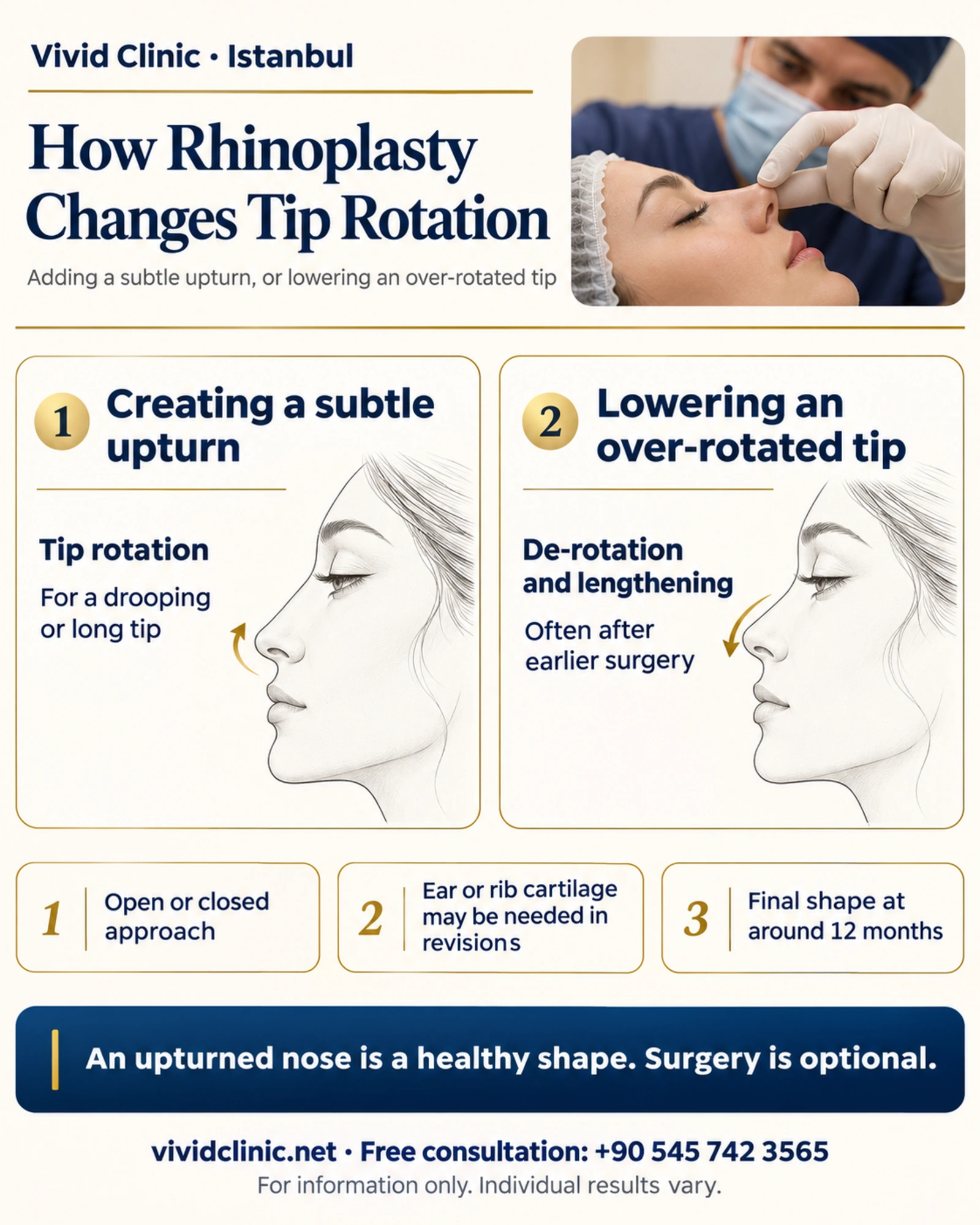
Creating a Subtle Upturn: Tip Rotation
To lift a flat or drooping tip, the surgeon reshapes and repositions the lower cartilages. Common steps include conservative trimming, fine sutures that turn the tip upward, a small adjustment of the lower edge of the septum and a supporting cartilage strut so the new position holds.
Restraint matters: a few degrees too many creates an over-rotated result, so most surgeons plan a modest lift with firm support.
Lowering an Over-Rotated Tip: De-Rotation and Lengthening
Bringing a tip down is generally harder than lifting it, because the nose has to be lengthened. That usually means adding structure with grafts of your own cartilage, such as a septal extension graft or extended spreader grafts, which hold the tip in a longer, lower position.
Cartilage comes from the septum when enough is available, or from the ear or rib when it is not. The skin and inner lining must stretch over the longer framework, and that sets a safe limit on how much change is possible.
Open or Closed Approach
Tip work can be done through an open approach, with a small incision across the columella, or a closed approach with incisions inside the nostrils. Complex de-rotation and grafting are often performed open for visibility. Our comparison of open vs closed rhinoplasty covers the trade-offs.
Revision Cases: When the Tip Was Over-Rotated by Earlier Surgery
An upturned nose created by earlier surgery, with the tip left too high, is one of the more demanding reasons for revision rhinoplasty. Scar tissue, missing cartilage and tighter skin all make the second operation less predictable than the first.
Surgeons usually advise waiting around 12 months after the earlier surgery so that swelling and scarring can settle. Planning often includes rib or ear cartilage, a longer operating time and a frank discussion about what degree of improvement is realistic.
Procedure Overview Table: Rhinoplasty
| Aspect | Details |
|---|---|
| Duration Process | About 1.5 to 3 hours for a primary case; revision or rib graft cases can take longer |
| Hospitalization Duration | Same day discharge or 1 night, depending on the plan |
| Mobility Duration | Gentle walking the same day or the next day |
| Return to Activity | Desk work after about 7 to 14 days; strenuous exercise after 4 to 6 weeks, once cleared |
| Complete Recovery | Most visible swelling settles within 4 to 8 weeks; the tip keeps refining for months |
| Anticipated Results | Final shape at around 12 months, sometimes longer for thick skin or revision cases |
Timings are general estimates. Results vary by individual.
Rhinoplasty Recovery Timeline for Tip Work
Quick Answer: Most people wear a splint for about a week and return to desk work within one to two weeks. The tip is the last area to settle, so its final rotation and definition become clear over roughly 12 months.
First 24 to 48 Hours
Expect a blocked nose, swelling around the eyes and a feeling of pressure. Rest with your head raised and take the prescribed medication.
First Week
A splint and tapes protect the new shape. At the end of the week the splint and any stitches are usually removed, and the tip often looks swollen and slightly higher than the planned final position.
Weeks Two to Six
Most people feel comfortable in public again. The tip can feel firm and numb, and it gradually relaxes downward a little as swelling leaves.
Months Three to Twelve
Fine swelling in the tip resolves slowly, and definition improves month by month. Our rhinoplasty recovery timeline describes each stage in more detail. Healing varies from person to person.
Benefits of Tip Rotation Surgery
- A tip angle that sits in better balance with the lips, chin and forehead
- Less nostril show from the front when an over-rotated tip is lengthened
- A gently lifted profile when a drooping tip is supported
Benefits vary by individual.
Possible Risks and Side Effects
Every operation carries risk. Common, usually temporary effects include swelling, bruising, a blocked nose and numbness or stiffness of the tip.
Less common risks include:
- Bleeding or infection that may need treatment
- Asymmetry or contour irregularities as swelling settles
- Under-correction or over-correction of the tip angle
- Breathing difficulty if internal support is affected
- A visible scar on the columella after an open approach
- Graft problems such as visibility, movement or warping
- The need for revision surgery, more likely in previously operated noses
Discuss your personal risk profile with your surgeon before treatment.
How to Prepare for Surgery
- Share your full medical history, medications and supplements.
- Bring reports and photos from any earlier nose surgery.
- Ask whether to pause blood-thinning medicines, and follow your doctor’s advice.
- Stop smoking and nicotine products well before surgery, as instructed.
Aftercare Tips for a Smoother Recovery
- Sleep with your head raised for the first one to two weeks.
- Avoid blowing your nose until you are told it is safe.
- Seek advice quickly for heavy bleeding, fever, increasing pain or spreading redness.
Upturned Nose Rhinoplasty Cost Factors in Istanbul, Turkey
Quick Answer: The cost of rhinoplasty depends on whether it is a first operation or a revision, how much grafting is required, the surgeon’s experience, the hospital setting, the anaesthesia and what your travel package includes.
The main factors are:
- Primary surgery or revision surgery
- The need for ear or rib cartilage grafts
- Hospital facility and length of stay
- Accommodation, VIP transfers and the length of your trip
For an early idea, try the surgery price calculator, then confirm the details after your evaluation.
Why Choose Vivid Clinic for Upturned Nose Rhinoplasty?
Quick Answer: Vivid Clinic offers surgeon-led planning in Istanbul, Turkey, honest advice about when a nose is better left alone, and organised support for international patients from first contact to remote aftercare.
At Vivid Clinic, planning starts with your face as a whole, not with a template shape. If your tilt already suits you, you will hear that plainly. You can meet our doctors, read more about rhinoplasty in Turkey and begin with a free consultation with a plastic surgeon before you commit to anything.
What International Patients Can Expect
Most people plan around 7 to 10 days in Istanbul for a primary rhinoplasty, and revision cases may need a little longer. Expect a photo-based assessment before you travel and written aftercare instructions.
Operation Process Overview at Vivid Clinic
Your journey with Vivid Clinic begins when you arrive in Istanbul, where a VIP airport transfer takes you to your 5-star hotel for check-in and time to rest. Next comes your one-on-one consultation, where the surgeon studies your tip rotation, projection, skin and breathing, reviews any earlier surgery and explains whether rhinoplasty, a revision, or no surgery at all suits you. On surgery day, every step is planned carefully for comfort, safety and a natural profile. Post-operative care starts straight away, with your splint, written instructions and a direct contact line. A checkup visit before your departure confirms that healing is on track, and remote aftercare follow-up continues once you are back home.
FAQs
Is an upturned nose considered attractive, or should it be corrected?
An upturned nose is a normal, healthy variation, and many people consider it youthful and open. There is nothing to correct unless the shape bothers you personally or it followed surgery or an injury. A surgeon should judge how your tip sits with your lips, chin and forehead, not compare it with a trend. If the balance is already good, the honest advice is usually to leave it alone. A consultation can show what a modest change would and would not achieve for your face.
Can rhinoplasty create a slightly upturned nose that still looks natural?
Yes, in suitable candidates. To create a slightly upturned nose, the surgeon repositions the tip cartilages with careful trimming, sutures and a supporting cartilage strut, aiming for a lift of only a few degrees. The plan depends on your skin thickness, cartilage strength, the length of your nose and your other facial proportions. Most surgeons favour a conservative lift, because the tip settles over many months and an exaggerated angle is hard to reverse. Results vary by individual, and your surgeon will explain what is realistic for you.
Can an over-rotated upturned nose be fixed after a previous rhinoplasty?
Often it can be improved, although revision is more complex than a first operation. An over-rotated upturned nose after surgery usually needs lengthening, which means rebuilding support with your own cartilage from the septum, ear or rib. Scar tissue and tight skin limit how far the tip can safely be brought down, so the aim is meaningful improvement, not an exact return to your earlier nose. Surgeons generally recommend waiting about 12 months after the previous procedure before operating again. Bring earlier reports and photos to your consultation.
Can filler fix an upturned nose without surgery?
Only to a limited degree. Filler cannot lower the tip or lengthen the nose, so it does not truly correct an upturned nose. In selected cases a small amount along the bridge or at the base can soften how the angle looks in profile, but the effect is temporary and it adds volume. The nose is also a higher-risk area for filler, with rare but serious complications such as skin injury or loss of vision, and that risk rises in a nose that has had surgery. An experienced medical injector should assess you first.
How long should I stay in Istanbul for upturned nose rhinoplasty?
For a primary upturned nose rhinoplasty, most international patients plan around 7 to 10 days in Istanbul. That covers arrival and consultation, the operation, the first days of rest and the visit at about one week when the splint and stitches are usually removed. Revision cases, especially those using rib cartilage, may need a slightly longer stay. Your surgeon confirms when you are fit to fly. After you return home, the Vivid Clinic team continues to follow your healing remotely with photos and messages.
Conclusion
An upturned nose is a natural variation, and for most people it needs nothing more than appreciation. For those who want a subtle lift, or who are living with a tip left too high by earlier surgery, rhinoplasty can adjust rotation and projection in a measured, structural way.
Vivid Clinic in Istanbul, Turkey offers a free consultation with a plastic surgeon to help you understand your options. Request your free consultation and get a clear, personal view of what is possible for your nose.
Real Before and After Results at Vivid Clinic
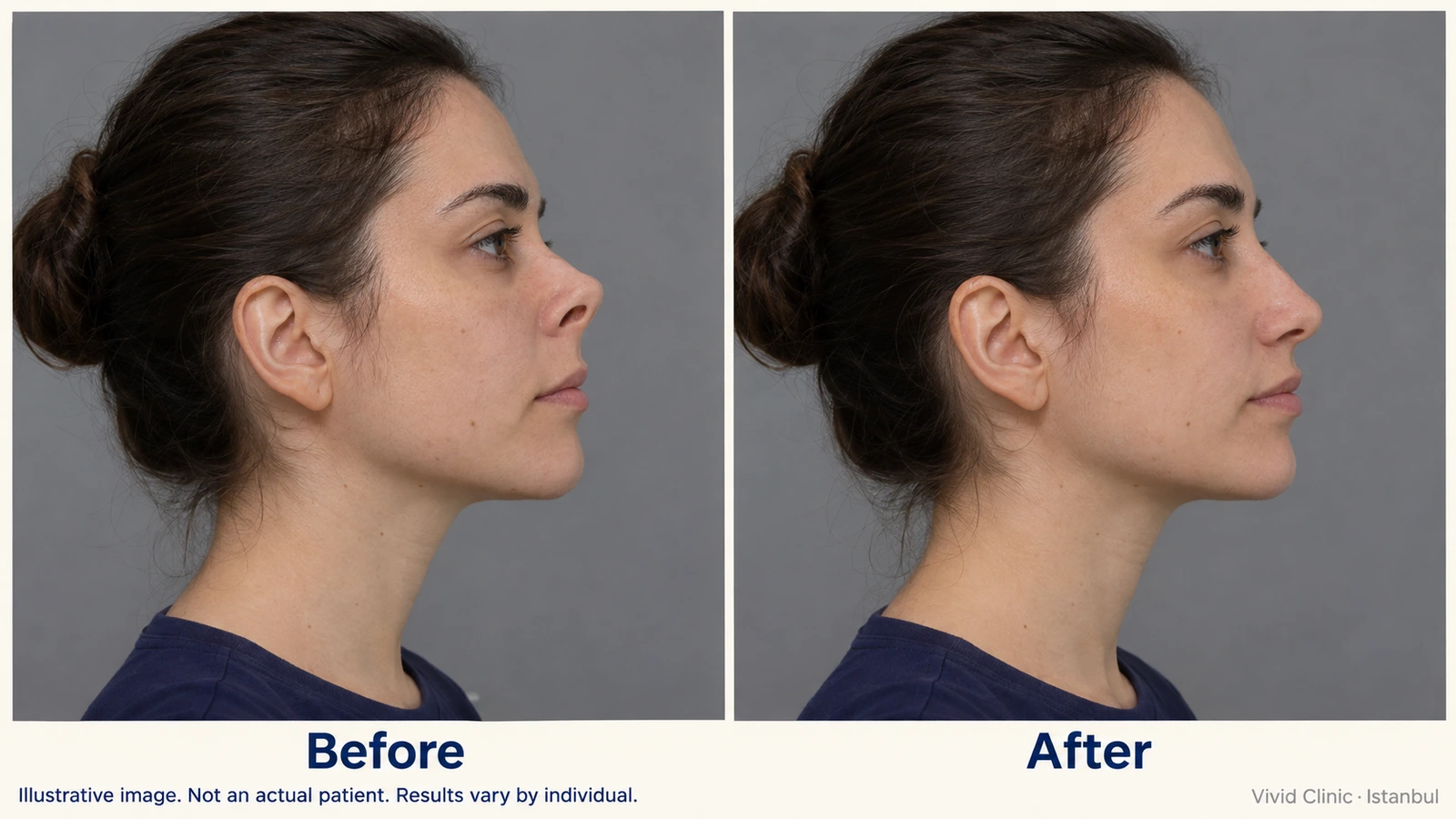
The photos below show real Vivid Clinic patients from the clinic’s own gallery, shared with consent as published on the clinic site. They are general rhinoplasty cases, the procedure discussed in this guide, and not specifically upturned nose cases; results vary by anatomy, healing and treatment plan.
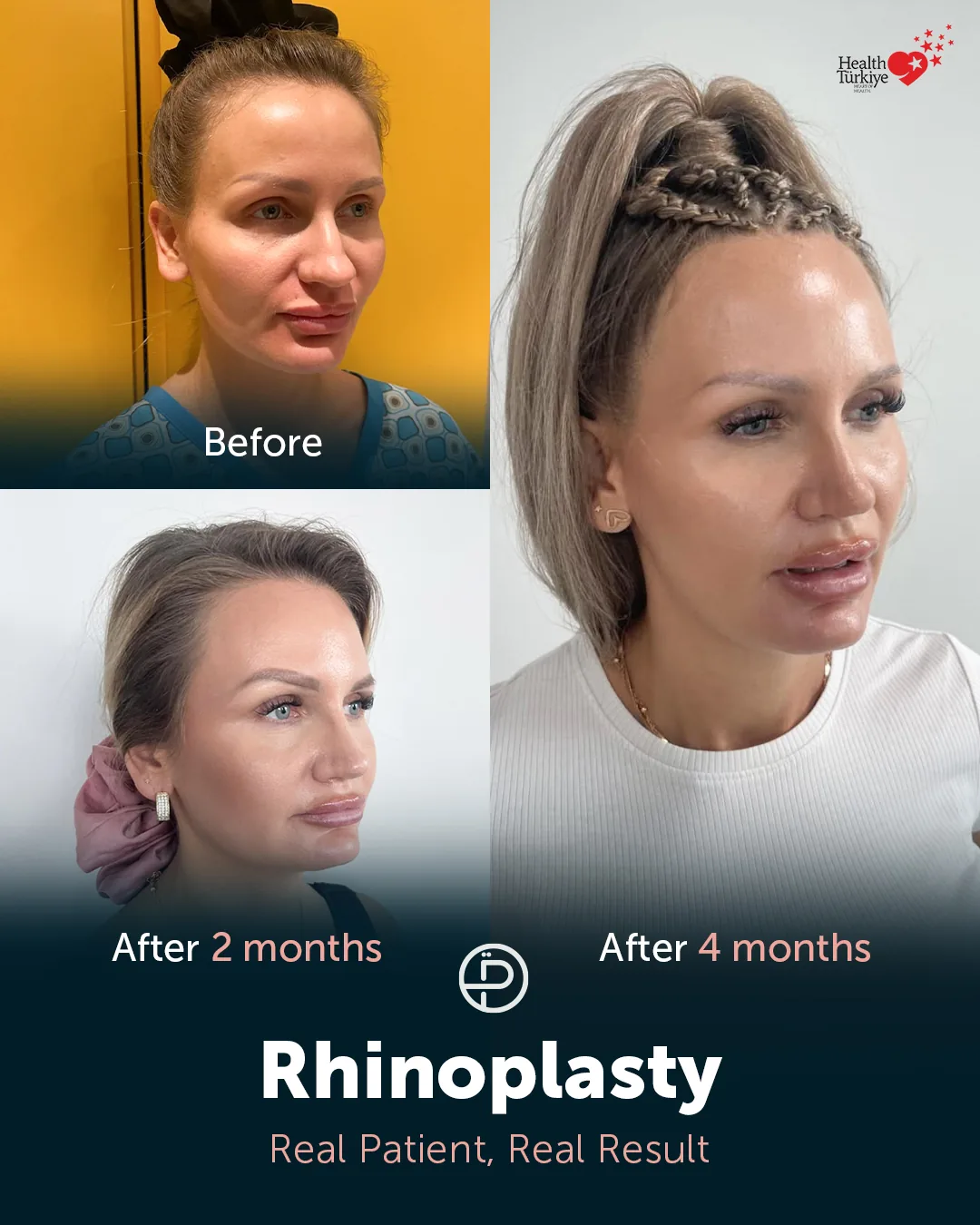
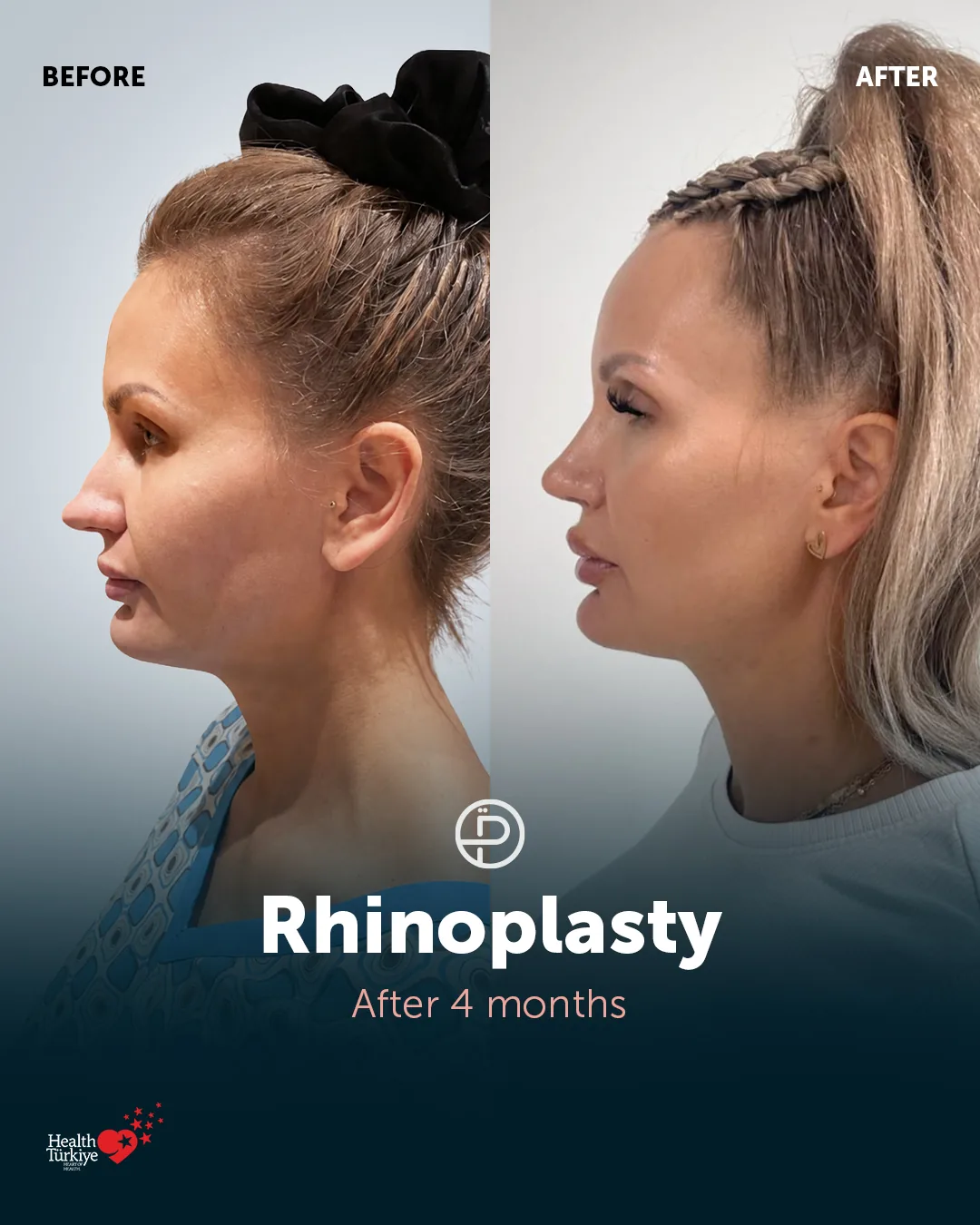
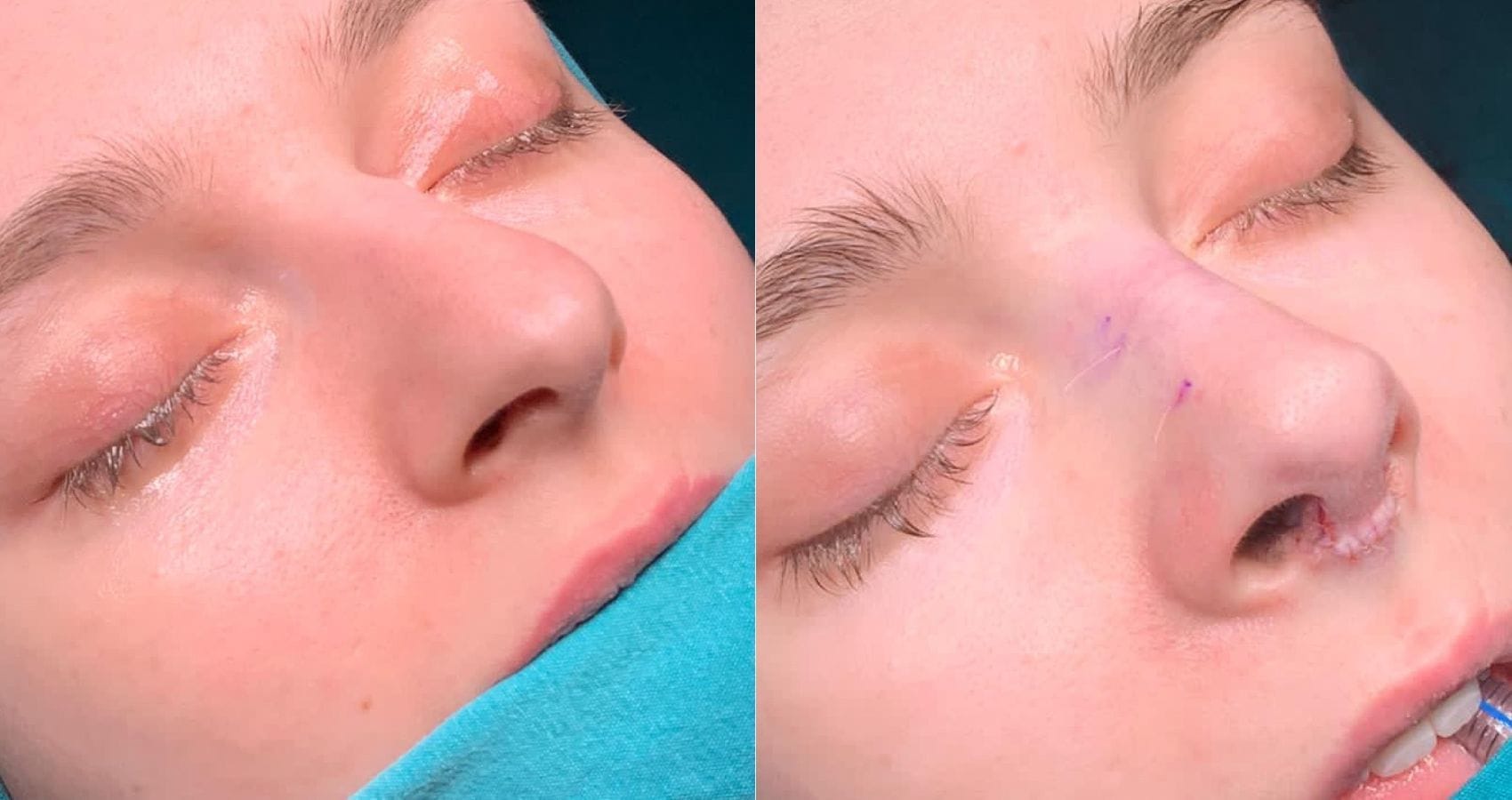

You can explore more cases in the full Vivid Clinic before and after gallery. To discuss your own profile, ask for a free quote and the team will arrange your consultation.
This article is for general information and does not replace a personal medical consultation. Suitability, risks, recovery and expected results should always be discussed with a qualified medical professional. Results vary by individual.