
Medically reviewed by Prof. Dr. Özgür Pilancı, Plastic, Reconstructive & Aesthetic Surgeon — August 2026
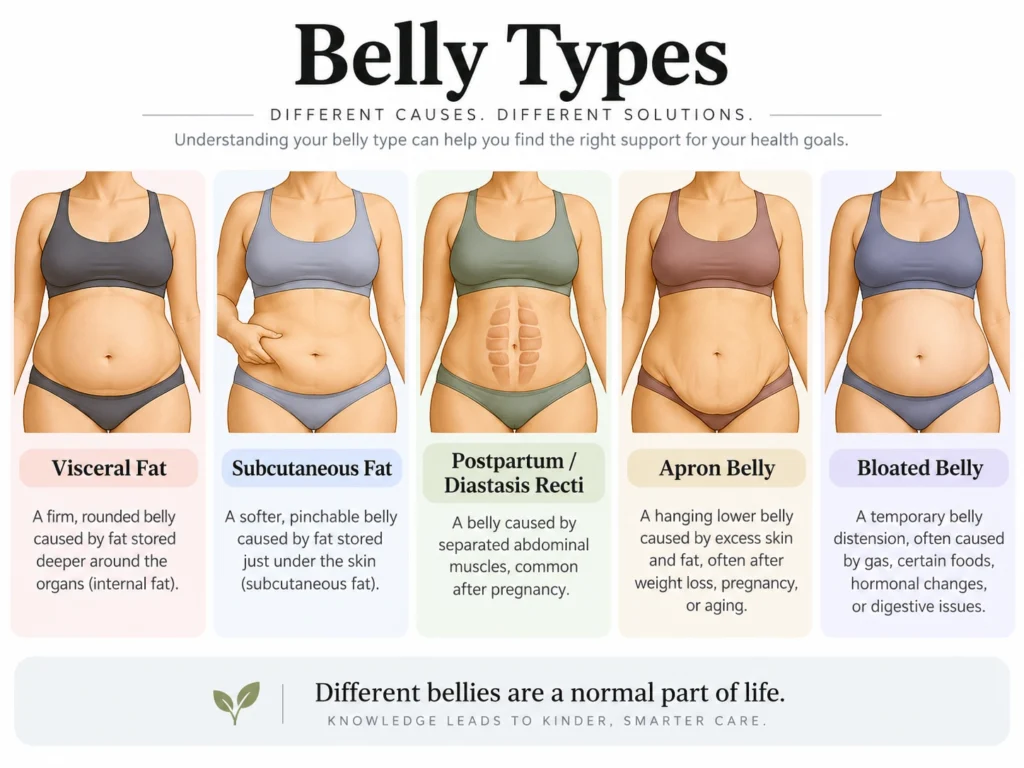
Quick answer (updated September 2026): Different belly types exist because four different things shape them: deep visceral fat behind the muscle wall, pinchable subcutaneous fat in front of it, the condition of the muscles and skin themselves (stretched apart after pregnancy, or left loose after weight change), and transient bloating that is not fat at all. Each has a different cause and a different fix — diet and exercise shrink visceral fat readily, subcutaneous fat is slower to move but can be treated, separated muscles and loose skin respond to repair and surgery, and bloating needs a digestive answer. Working out which combination you are looking at is the whole game; treating the wrong one is why so much effort goes unrewarded.
Why belly types look so different: the four-layer answer
Between your skin and your organs sit distinct layers, and every “belly type” on the internet is really a statement about which layer dominates. From outside in: skin, then subcutaneous fat (the soft layer you can pinch), then the abdominal muscle wall with its central seam, and finally — inside the abdominal cavity, packed around the organs — visceral fat, which you cannot pinch at all.
Two people of identical weight can carry completely different bellies because these layers are distributed by genetics, sex and hormones. Men and post-menopausal women preferentially store visceral fat (the firm, forward “beer belly”); pre-menopausal women store more subcutaneously on the belly, hips and thighs. Pregnancy stretches the muscle layer and skin; large weight swings stretch the skin. And on top of all of it, the gut inflates and deflates through the day. Once you can name the layer you are looking at, most of the confusing advice online sorts itself into “relevant to me” and “not my problem.”
The firm, rounded belly: visceral fat
A belly that projects forward, feels firm rather than squeezable, and comes with a waistband that grew before the rest of you did is usually visceral fat — fat stored deep in the abdominal cavity around the organs. This is the belly type worth taking seriously, and not for cosmetic reasons: visceral fat behaves like an endocrine organ, releasing inflammatory signals linked to type 2 diabetes, cardiovascular disease and other chronic conditions. Physicians treat waist circumference as a rough proxy: above about 35 inches (89 cm) in women or 40 inches (102 cm) in men, measured at the navel, visceral fat is likely elevated (Houston Methodist).
The genuinely good news: visceral fat is the most responsive fat in the body. It is typically the first store the body draws down when diet improves and activity rises — sustained calorie balance, resistance and aerobic exercise, decent sleep and less alcohol shrink it measurably within months.
The equally important flip side for anyone browsing a cosmetic clinic’s site: visceral fat cannot be treated by liposuction or any body-contouring procedure, because it sits inside the abdominal cavity, behind the muscle, where no cosmetic instrument goes. A firm visceral belly is a lifestyle-and-doctor project, and any clinic that suggests otherwise is selling you the wrong operation.
The soft, pinchable belly: subcutaneous fat
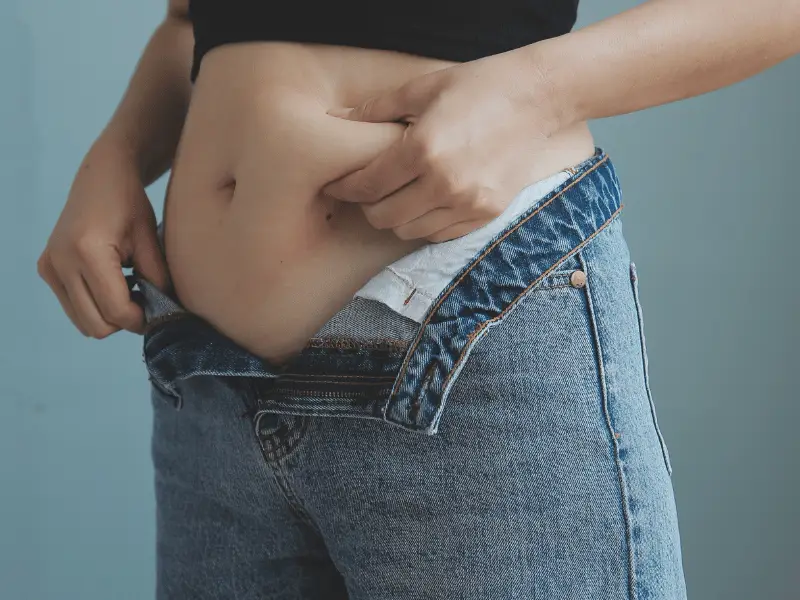
If you can grab a fold of your belly in your hand, that fold is subcutaneous fat — the layer in front of the muscle wall. It is the least dangerous fat you own; metabolically it is far quieter than visceral fat, and a soft lower-belly layer is a normal feature of healthy bodies, especially female ones. The flat-stomach imagery that dominates social media represents a body-fat level many women cannot healthily maintain, and “women stomach” searches are full of people pathologizing what is simply anatomy.
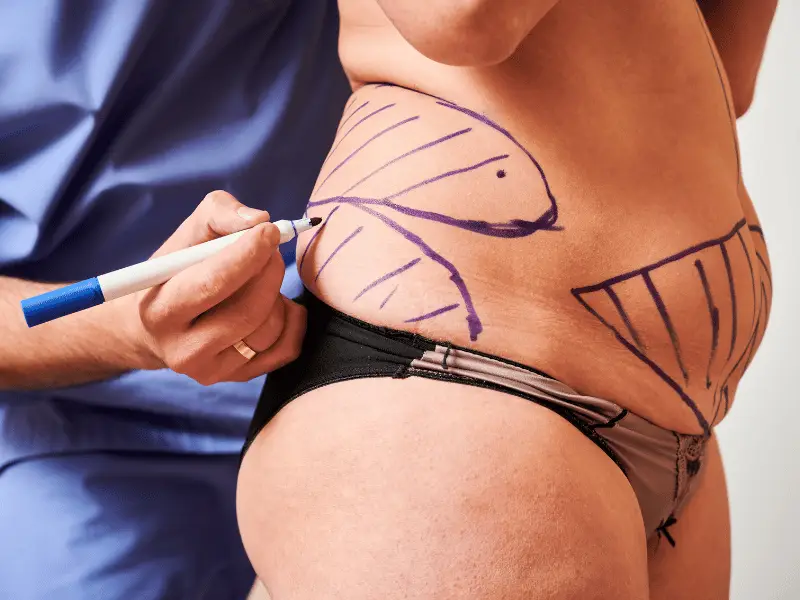
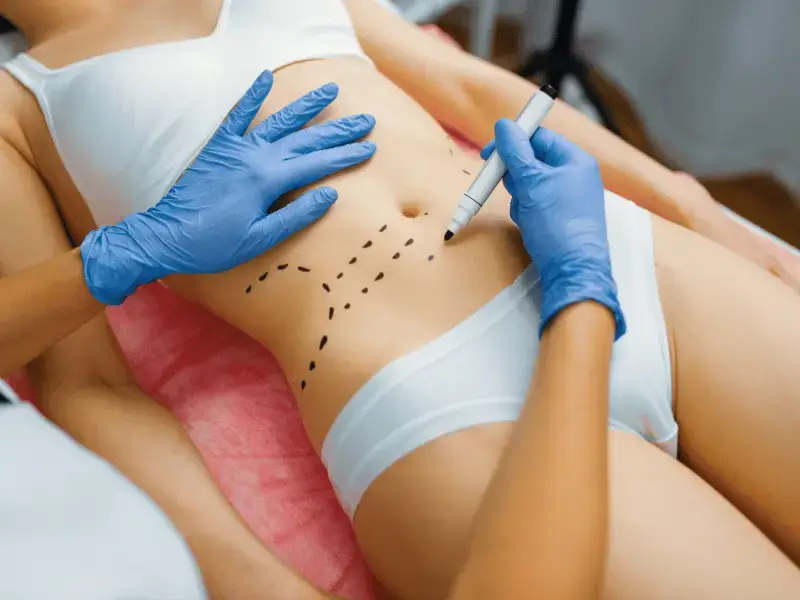
Subcutaneous fat is also the stubborn layer. It responds to overall fat loss, but slowly and last — the “little pooch” that outlasts every diet is classic subcutaneous distribution, held in place by genetics. This is the one layer where body contouring legitimately enters the conversation: liposuction removes localized subcutaneous fat directly (the principles are on our liposuction page), branded variations like AirSculpt are marketing names for the same category of procedure, and cryolipolysis offers a smaller, slower non-surgical reduction. The honest prerequisites: stable weight, realistic expectations, and skin with enough elasticity to shrink back — removing fat from under loose skin trades a bulge for a drape.
Postpartum belly types: when muscles separate
A belly that stays rounded and “pregnant-looking” months or years after childbirth — especially one that domes or cones down the middle when you sit up — is often not fat at all but diastasis recti: separation of the paired rectus muscles at the midline seam that pregnancy stretched. It is extremely common — around 6 in 10 women have it after childbirth, and roughly 45% still show separation at six months postpartum (Cleveland Clinic). Men and people who strain chronically can develop it too. A gap wider than about 2 cm — roughly two finger-widths — counts.
The self-check takes a minute: lie on your back, knees bent; lift your head and shoulders slightly; press your fingers flat just above the navel and feel for a soft gap between two firm muscle edges; count how many fingers sink in. Doming on effort, a soft trench along the midline, and lower-back ache are the usual companions.
What helps: postpartum-specific core rehabilitation (a pelvic-floor or women’s-health physiotherapist is the right professional), while conventional crunches and sit-ups can make doming worse and are best avoided early on. When the gap is wide, symptomatic or accompanied by a hernia, the definitive repair is surgical — the muscle-tightening step of a tummy tuck, which stitches the separated edges back together and deals with the stretched skin at the same time. It is the core of most mommy makeover plans, and the reason no amount of exercise fully closes some bellies: you cannot shorten overstretched connective tissue with repetitions.
The apron belly: skin and fat that hang
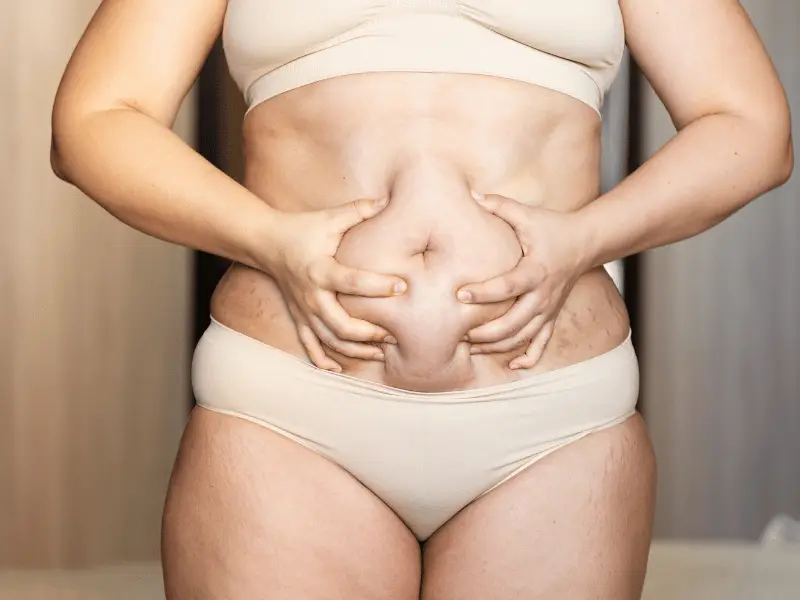
An apron belly — a fold of skin and subcutaneous fat that hangs over the waistband or the C-section scar line — is medically called a panniculus. It follows pregnancy and significant weight loss, and it is a structural problem: the skin envelope is now larger than its contents, so no further dieting shrinks the fold — often weight loss makes the drape more obvious. Beyond appearance it can cause genuine trouble: chafing, rashes and skin infections in the fold, and interference with clothing and exercise.
Skin that hangs does not retract. Creams and “tightening” gadgets do nothing measurable at this scale, and exercise firms the muscle underneath without shortening skin. The fixes are surgical: a panniculectomy removes the hanging apron for functional relief, and a full tummy tuck (abdominoplasty) removes the excess skin and tightens the muscle wall and remaining contour — our guide to a hanging belly after a C-section covers this scenario in detail. Which operation, and whether now is the right time (weight stability matters more than the number itself), is a consultation question.
The bloated belly: the one that isn’t fat
A belly that is flat in the morning and distended by evening is not a fat problem — fat does not fluctuate over hours. That pattern is bloating: gas, fluid and gut-content shifts from meals, salt, hormones (many women bloat cyclically), swallowed air, or food intolerances. It deserves its own entry because so many people diet at a belly that was never fat in the first place.
Most bloating is benign and pattern-based, and settles with unremarkable measures — slower eating, identifying trigger foods, regular movement. The exceptions belong with a doctor, not a clinic, and not with a diet: bloating that is persistent (most days for three weeks or more), progressive swelling that does not come and go, bloating with blood in the stool, unexplained weight loss, vomiting, or new severe pain all warrant medical assessment to rule out conditions that can masquerade as “a bigger belly.” No cosmetic treatment has any role in a distended abdomen — and a reputable clinic will say exactly that.
Belly types explained: diastasis recti or belly fat? B-belly or apron?
Because the layers stack, real bellies mix types — here are the three comparisons people actually search. Diastasis or fat? Lie down: subcutaneous fat spreads sideways and stays soft, while diastasis shows as a midline gap or ridge you can press into, and it domes when you lift your head. Most postpartum bellies are some of each.
B-belly or apron? A “B stomach shape” — a belly with a horizontal crease at the navel making an upper and lower curve — is usually a subcutaneous distribution pattern plus a skin fold, common at higher weights and in pregnancy; an apron belly hangs as one fold from below the navel. Hard or soft? A uniformly firm, forward belly points visceral; a soft, grabbable one points subcutaneous. Cheap tests, but they sort perhaps 80% of cases — the rest is what examination is for.
One more thing worth naming: a sharp, localized pain in the abdominal wall after effort — worse when you contract the muscles or twist, sometimes with bruising — is what a torn (strained) stomach muscle feels like, and a bulge at a weak point that appears on straining may be a hernia. Both are medical, not cosmetic; a hernia in particular needs a surgeon’s assessment, and is often repaired alongside abdominoplasty when the two coexist.
What actually changes each belly type
Match the fix to the layer and the noise falls away. Visceral fat: diet quality, calorie balance, aerobic and resistance exercise, sleep, less alcohol — measurable in months, and medical support (including, where appropriate, weight-loss medication or bariatric surgery) for higher weights. Subcutaneous fat: overall fat loss first; liposuction for stubborn, localized deposits at a stable weight. Muscle separation: guided core rehab first; surgical repair via abdominoplasty when the gap is wide or symptomatic.
Loose skin and apron: surgery is the only fix that changes skin quantity — panniculectomy or tummy tuck (that link covers what it costs in Istanbul). Bloating: eating pattern, trigger identification, and a doctor for the red-flag list.
Spot-reducing exercises, waist trainers, sweat belts and detox teas change nothing in any layer; a flat tummy, where it is achievable at all, comes from the boring combination above — and for many healthy bodies, a gently rounded lower belly is simply the design.
Frequently Asked Questions
What are the main types of belly fat?
Two: visceral fat, stored deep inside the abdominal cavity around the organs, and subcutaneous fat, the pinchable layer under the skin. Visceral fat is the health risk and responds well to lifestyle change; subcutaneous fat is largely cosmetic, slower to lose, and the only kind that liposuction can treat.
How do I know if my belly is fat or diastasis recti?
Lie on your back with knees bent, lift your head slightly, and press your fingers along the midline above your navel. A soft gap wider than about two finger-widths between firm muscle edges — or a ridge that domes when you sit up — points to diastasis recti. Soft, pinchable fullness without a gap points to subcutaneous fat. Many postpartum bellies have both.
Why is my stomach big but I’m not overweight?
The usual suspects are posture, bloating, muscle separation after pregnancy, or a genetically forward-projecting visceral store. If your belly is flat in the morning and grows through the day, think bloating. If it domes when you sit up, check for diastasis. If it is firm and constant with a thickening waist, measure your waist and talk to your doctor about visceral fat.
What does a torn stomach muscle feel like?
A sharp, localized pain in the abdominal wall — usually after lifting, twisting or a hard workout — that worsens when you contract the muscles, cough or get up from lying down, sometimes with tenderness or bruising at one spot. Mild strains settle with rest over days to weeks. A bulge that appears on straining could be a hernia and should be examined by a doctor.
Can liposuction remove belly fat?
Only the subcutaneous layer — the fat in front of the muscle wall. Visceral fat, which sits inside the abdominal cavity, cannot be reached by liposuction or any cosmetic procedure and responds to diet, exercise and medical weight management instead. This is why an honest assessment starts by working out which layer your belly actually is.
How do I get a flat stomach after pregnancy?
Give it time first — the uterus, muscles and skin keep changing for months. Then: postpartum core rehabilitation for muscle separation, gradual return to overall activity, and patience with subcutaneous fat. If a wide diastasis, loose skin or a hanging fold persists beyond a year despite that, exercise has done what it can — surgical repair (abdominoplasty, often within a mommy makeover) is what changes structure.
Not sure which belly type you are looking at? That single question decides whether your answer is the gym, a physiotherapist, a GP or a surgeon — and it is hard to judge from above. Send photographs for a free online assessment and get a straight answer about which layer is responsible and what, if anything, would change it.