 ChatGPT

A Smooth, Unbroken Line of Lid
Picture the clean sweep of skin from lash line to brow, catching the light without a fold to interrupt it. Many people grow up seeing that shape on parents and grandparents. Others only notice it when a makeup tutorial assumes a crease they simply do not have.
If that sounds familiar, you may have monolid eyes, one of the most common eyelid shapes in the world. They are not a flaw, a problem or something that needs fixing. They are simply a variation in how the upper eyelid is built, and they can look striking, soft, bold or understated depending on how you choose to wear them.
This guide from Vivid Clinic in Istanbul, Turkey explains what a monolid is, how it compares with hooded and ageing eyelids, makeup ideas, temporary tape and glue methods, and surgical options for those who are curious. Whatever you decide, you can request a free consultation with a plastic surgeon for an honest, no-pressure opinion.
What Are Monolid Eyes?
Quick Answer: Monolid eyes have no visible upper eyelid crease, so the lid looks like one smooth surface from the lashes to the brow. The shape comes from how the eyelid’s skin, fat and lifting muscle connect. It is a normal anatomical variation, not a medical condition.
In many eyelids, fine fibres from the lifting muscle reach up into the skin and pull it inward when the eye opens, forming a fold. In monolid eyes, those connections sit lower or are less pronounced, and a little more fat often sits in front of the lid. The result is a smooth, even lid surface.
Monolids are common in people of East Asian heritage, but they appear across every background. Some people have one monolid and one creased lid, or a faint crease that shows only at certain ages.
Is a Monolid the Same as an Epicanthic Fold?
Not quite. An epicanthic fold is a small fold of skin at the inner corner of the eye. It often appears alongside monolid eyes, but the two are separate features, and either can exist without the other.
Monolid vs Hooded Eyes: How to Tell the Difference
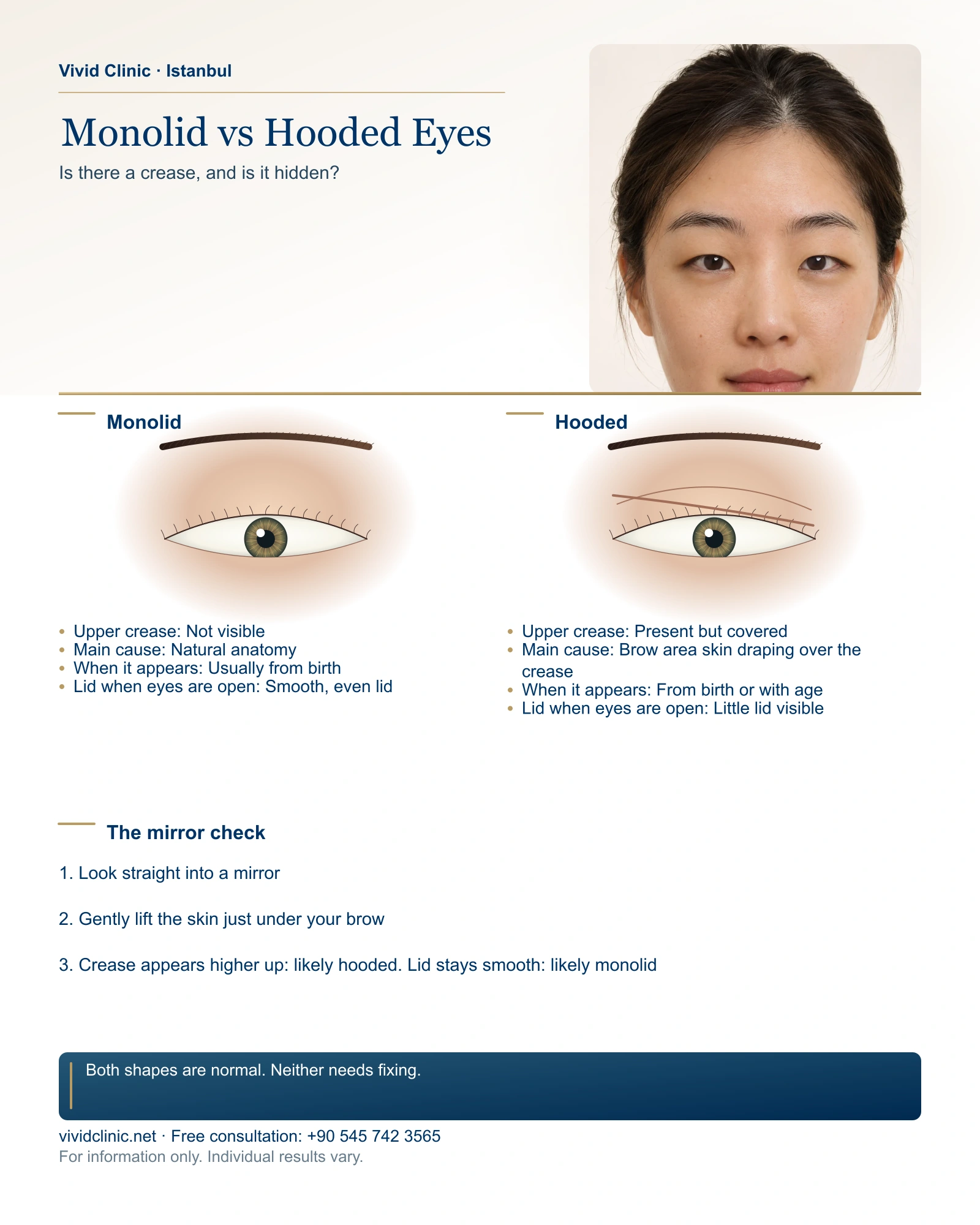
Quick Answer: In monolid vs hooded eyes, the key question is whether a crease exists. A monolid has no crease at all. A hooded eye does have a crease, but a fold of skin from the brow area drapes over it and hides it when the eyes are open.
Try this simple check. Look straight into a mirror, then gently lift the skin just under your brow with a fingertip. If a crease appears higher up on the lid, your eye is likely hooded. If the lid stays smooth, you probably have monolid eyes.
| Feature | Monolid | Hooded |
|---|---|---|
| Upper crease | Not visible | Present but covered |
| Main cause | Natural anatomy | Brow area skin draping over the crease |
| When it appears | Usually from birth | From birth or with age |
| Lid space when eyes open | Smooth, even lid | Little lid visible under the hood |
For a deeper look at the second shape, see our guide to blepharoplasty for hooded eyelids. You can also compare other shapes in our overview of types of eyes and our feature on almond eyes.
Monolid Eyes and Age-Related Changes
Ageing changes every eyelid shape over time. Skin loses elasticity, the brow can sit a little lower, and fat may bulge or hollow. In monolid eyes, these changes can make the lid feel heavier, and some people notice extra skin resting on their lashes.
This matters because goals differ. A younger adult may be curious about a crease, while an older adult may want to remove skin that blocks their view.
Celebrating the Beauty of Monolid Eyes
Beauty media now feature monolids far more widely than before, and many makeup artists see them as a wonderful canvas. The smooth lid shows colour evenly and holds graphic liner well.
Choosing to keep your natural shape is a confident choice in its own right. Surgery is a personal option for some adults, never a requirement, and nobody should feel pressure from trends, partners or family to change their eyes.
Makeup Tips for Monolid Eyes
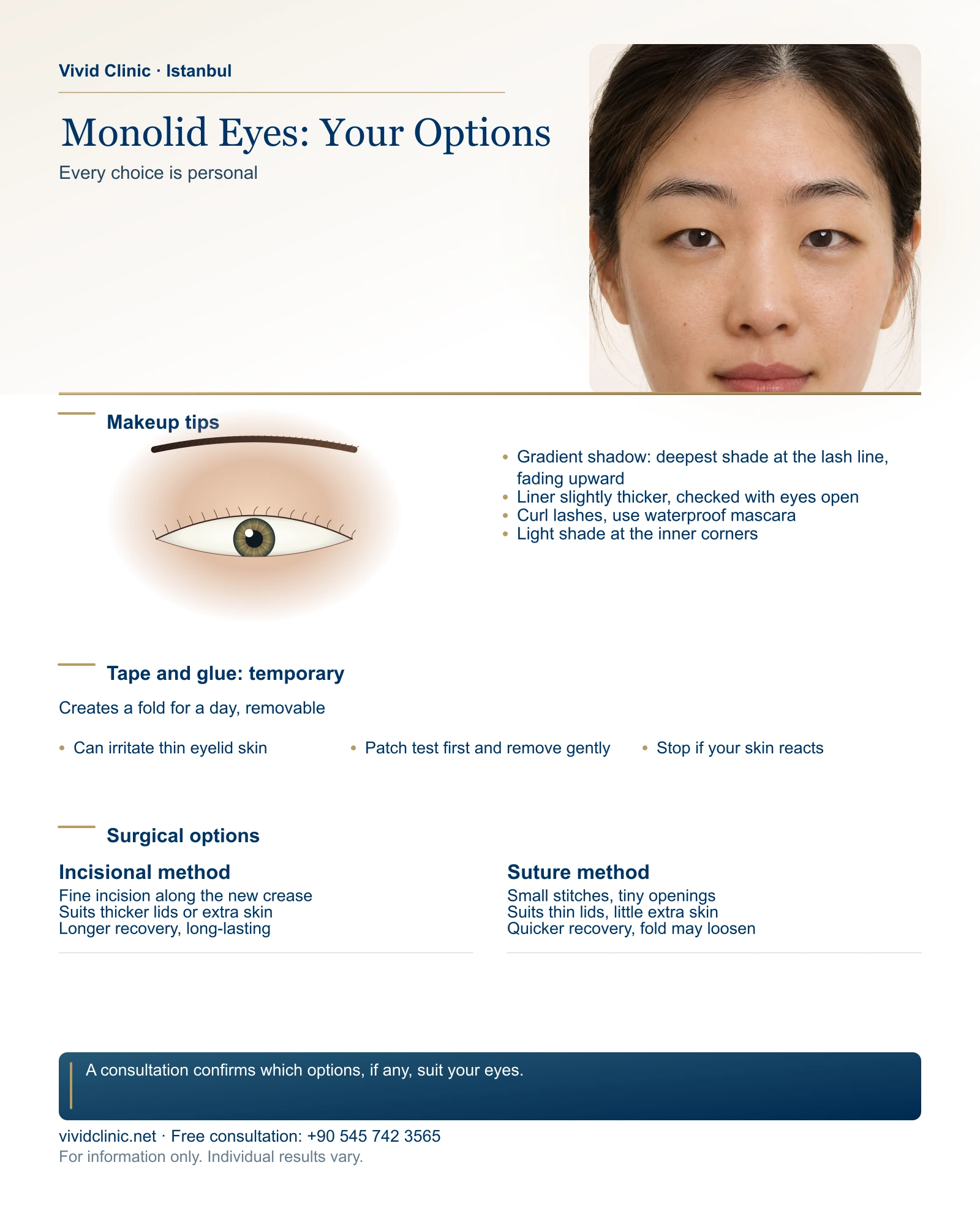
Quick Answer: Makeup for monolid eyes works best with gradient shadow that fades upward, tightlining or a slightly thicker liner, and lash curling with a waterproof formula. Check every look with your eyes open, since that is how other people see it.
Gradient Eyeshadow
Place your deepest shade close to the lash line and blend it upward into lighter shades. This creates depth without needing a crease. Matte and satin textures usually look smoother than chunky glitter on a flat lid.
Eyeliner That Shows
Thin liner can disappear when you open your eyes. Draw it slightly thicker than you think you need, then check with your eyes open. Tightlining, which means lining the upper waterline, adds definition without taking up lid space.
Lashes and Primer
Straight lashes are common, so a heated or gentle mechanical curler and waterproof mascara can help them stay lifted. A light eyelid primer reduces transfer, which matters because a smooth lid touches the brow bone more often.
Eyelid Tape and Glue: Temporary Methods and Honest Caveats
Eyelid tape and glue create a temporary fold by holding the skin in place for a day. Some people use them for special occasions or to preview how a crease might feel.
They do have downsides worth knowing:
- Skin irritation: adhesives can cause redness, itching, dryness or allergic contact dermatitis on thin eyelid skin.
- Stretching concerns: daily pulling over many years may stretch the skin for some people.
- Eye safety: glue near the lashes can sting or get into the eye, so careful use matters.
- Unpredictable look: the fold may slip or look uneven by the end of the day.
Patch test any product first, remove it gently with an oil-based cleanser, and stop if your skin reacts. Persistent irritation is a reason to see a doctor.
Can Monolid Eyes Change Without Surgery?
Not in a lasting way. Exercises, massage and creams cannot create a crease, because the fold depends on internal connections in the lid. Surgery is the only structural option, and it is entirely optional.
Who Might Consider Double Eyelid Surgery?
Quick Answer: Double eyelid surgery may suit healthy adults with monolid eyes who have a clear personal reason, realistic expectations and stable eye health. It is not suitable for anyone feeling pressured, and it is not right during active eye infection or with certain medical conditions until a doctor has assessed them.
Good Candidates
- Adults who want the change for themselves, not for anyone else
- People who understand that a crease will look natural, not like someone else’s eyes
- Those with healthy eyes and no uncontrolled medical conditions
- Older adults with excess lid skin that weighs on the lashes
When Surgery Is Not Advisable
Surgery is usually postponed with active dry eye, eye infection, uncontrolled thyroid eye disease, bleeding disorders or unrealistic goals. A good surgeon will also say clearly when treatment is not needed.
Double Eyelid Surgery for Monolid Eyes: Techniques Explained
Double eyelid surgery is a form of upper blepharoplasty that creates a crease. There are two main approaches worldwide. Vivid Clinic offers eyelid surgery in Turkey, and a consultation will confirm which options, if any, are suitable for your eyes.
Incisional Method
A fine incision is made where the new crease will sit. The surgeon may remove a small amount of skin, fat or muscle, then attach the skin to deeper tissue so it folds as the eye opens. This method is often chosen for thicker lids, extra skin or fuller fat, and it tends to be long-lasting.
Suture or Non-Incisional Method
Small stitches are placed through tiny openings to create a fold without a full incision. Swelling is often milder and recovery quicker. However, the crease can loosen or fade over time, and it is usually better suited to thin lids with little excess skin.
Preserving Ethnic Identity and Natural Results
The most respected approach keeps your features recognisably yours. A modest, low crease that follows the natural curve of your eye often looks more harmonious than a high, wide fold. Your surgeon should listen to your goals, explain what suits your anatomy, and never push a single template onto every face.
You can learn more about the eyelid lift procedure, and men can read about male blepharoplasty, where a lower, subtler crease is often preferred.
Procedure Overview Table: Eyelid Surgery (Blepharoplasty)
| Aspect | Details |
|---|---|
| Duration Process | 1 to 2 hours, depending on technique and whether both lids need skin removal |
| Hospitalization Duration | Usually same-day discharge; occasionally 1 night |
| Mobility Duration | Walking the same day |
| Return to Activity | 7 to 14 days for desk work and social plans; avoid strenuous exercise for 3 to 4 weeks |
| Complete Recovery | 4 to 8 weeks for most swelling and bruising to settle |
| Anticipated Results | Crease shape visible within weeks, refined over 3 to 6 months, sometimes up to 12 months |
Timings are general estimates. Results vary by individual.
Recovery Timeline After Eyelid Surgery
First 48 Hours
Swelling, tightness and mild bruising are normal. Cold compresses and rest with your head raised help, and the crease looks higher than it will eventually be.
First Week
Bruising usually begins to fade. If stitches were used on the skin, they are often removed around day 5 to 7. Many people feel comfortable going out with sunglasses by the end of the week.
Weeks Two to Six
Most visible swelling settles, and makeup is usually allowed once your surgeon confirms the incision has healed. The crease softens and starts to look more natural.
Three Months and Beyond
Residual swelling continues to fade, especially after the incisional method, and any incision line usually matures into a fine line within the crease.
Benefits of Eyelid Surgery for Monolid Eyes
- A crease that some people find makes makeup routines easier
- Relief from heavy lid skin in age-related cases
- Freedom from daily tape or glue for those who used it often
- A personalised plan that respects your natural shape
Benefits vary between patients, and many people are equally happy without surgery.
Possible Risks and Side Effects
Every surgery carries risk. Possible issues include swelling that takes months to settle, asymmetry between the two creases, a crease that looks too high, dry eyes, temporary difficulty closing the eyes fully, infection, visible scarring and, with suture methods, a fold that loosens. Rare risks include bleeding behind the eye. Revision surgery is sometimes needed, and your surgeon will explain your personal risk profile.
How to Prepare for Eyelid Surgery
- Share your full medical history, medications and supplements.
- Mention dry eye, contact lens use or previous eye surgery.
- Stop smoking several weeks before and after surgery.
- Pause blood-thinning supplements only as your doctor advises.
- Bring photos of the look you like, and the look you do not.
Aftercare Tips for Better Healing
- Use cold compresses for the first days as instructed.
- Sleep with your head raised for about a week.
- Avoid rubbing your eyes and wear sunglasses outdoors.
- Skip contact lenses and eye makeup until cleared.
- Contact your team quickly about increasing pain, vision changes or bleeding.
Cost Factors for Eyelid Surgery in Istanbul, Turkey
Cost depends on your individual plan rather than your eye shape. The main factors are:
- The technique, incisional or suture
- Whether skin, fat or brow concerns are also addressed
- The surgeon’s experience and the hospital setting
- Anaesthesia type and any combined procedures
- Accommodation, transfers and follow-up included in your package
For an early idea, try the surgery price calculator, then confirm details after your consultation.
Why Choose Vivid Clinic for Eyelid Surgery?
Quick Answer: Vivid Clinic offers respectful, personalised planning in Istanbul, Turkey, an honest view on whether surgery is right for you, and organised support for international patients from the first message to remote aftercare.
You can meet our doctors, browse the before and after gallery, and start with a free consultation with a plastic surgeon before deciding anything.
What International Patients Can Expect
Most patients plan around a week in Istanbul for eyelid surgery, allowing time for consultation, procedure and a check before flying. Pack sunglasses and loose clothing, and expect written aftercare and a direct line to the team.
Operation Process Overview at Vivid Clinic
Your journey with Vivid Clinic begins when you arrive in Istanbul, where a VIP airport transfer takes you to your 5-star hotel for check-in and a chance to rest. Next comes your one-on-one consultation, where the surgeon examines your eyelids, discusses your goals and explains whether an incisional method, a suture method or no surgery at all makes the most sense for you. On surgery day, the plan is carried out carefully with a focus on comfort and a natural, personal result. Post-operative care, including cold compresses, eye drops and written instructions, follows straight away. A checkup visit before your departure confirms that healing is on track, and remote aftercare follow-up continues once you are home.
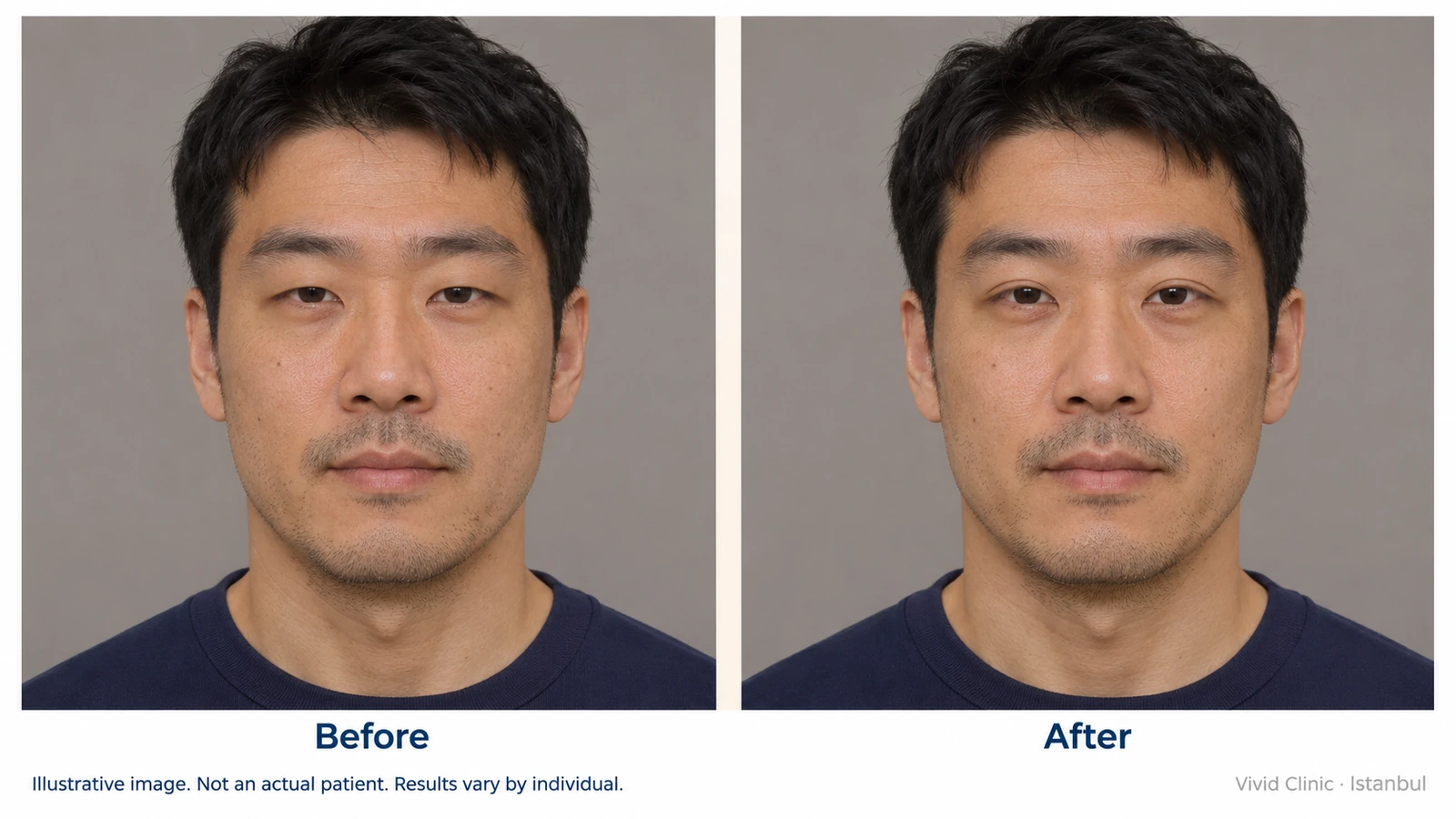
FAQs
How long should I stay in Istanbul for double eyelid surgery on monolid eyes?
For surgery on monolid eyes, most international patients plan to stay around five to seven days. This allows time for the consultation, the procedure and a checkup before flying, often after any skin stitches are removed. Suture methods may need a slightly shorter stay, while incisional methods or combined procedures can need a little longer. Flying itself is usually fine once your surgeon has checked healing, though swelling can feel stronger in the cabin, so cold packs and eye drops in your hand luggage help. Your Vivid Clinic coordinator will suggest travel dates based on your plan, and remote aftercare continues after you return home. Individual recovery varies.
What is the difference between incisional and suture methods for monolid eyes?
Both methods aim to create a crease on monolid eyes, but they work differently. The incisional method uses a fine incision along the planned crease, allowing the surgeon to remove extra skin or fat and secure the fold to deeper tissue. It suits thicker lids and tends to be long-lasting, but recovery and swelling take longer. The suture method uses small stitches through tiny openings, with milder swelling and quicker recovery, yet the fold can loosen over time. It usually suits thin lids with little excess skin. Your surgeon will recommend an approach only after examining your eyelids, and a consultation will confirm which options are suitable.
Can a surgeon keep my natural look when creating a crease on monolid eyes?
Yes, and preserving your identity should be a central goal when operating on monolid eyes. A natural plan usually means a modest crease height that follows the curve of your eye, rather than a high, wide fold that changes your expression. Your surgeon will look at your lid thickness, brow position, inner corner shape and facial proportions. Bringing photos of creases you like, including people with similar features, helps the discussion. At Vivid Clinic, the aim is a result that still looks like you, and the surgeon will tell you honestly if a change would not suit your face. Results vary by individual.
Who is not a good candidate for eyelid surgery on monolid eyes?
Surgery on monolid eyes is not advisable for anyone feeling pressured by others or hoping to look like a different person. It is usually postponed for people with active eye infection, significant dry eye, uncontrolled thyroid eye disease, bleeding disorders or other unmanaged health conditions. Smoking slows healing and raises complication risk, so stopping well before and after surgery matters. Anyone with unrealistic expectations, such as wanting an identical crease to a celebrity, may be disappointed. A consultation with a plastic surgeon includes a medical and eye history review, and the surgeon will explain clearly if non-surgical options or no treatment at all would serve you better.
What affects the cost of eyelid surgery for monolid eyes in Turkey?
The cost of eyelid surgery for monolid eyes depends on your personal plan rather than the eye shape itself. Key factors include the technique, whether incisional or suture, and whether excess skin, fat or brow position also need attention. The surgeon’s experience, the hospital setting and the anaesthesia type all play a part, as do combined procedures. Package elements such as hotel nights, VIP transfers and follow-up appointments in Istanbul also affect the total. Vivid Clinic provides a personalised quote after reviewing your photos and goals, and the online surgery price calculator gives an early estimate before your free consultation with a plastic surgeon.
Conclusion
Monolid eyes are a beautiful, natural eyelid shape shared by millions of people across many backgrounds. Whether you celebrate them with bold liner, try tape for a night out, or wonder about a subtle crease, the choice is yours alone.
If you would like a professional view, Vivid Clinic in Istanbul, Turkey offers a free consultation with a plastic surgeon with no pressure to proceed. Request your free consultation and get honest, personal advice about your eyes.
Real Before and After Results at Vivid Clinic
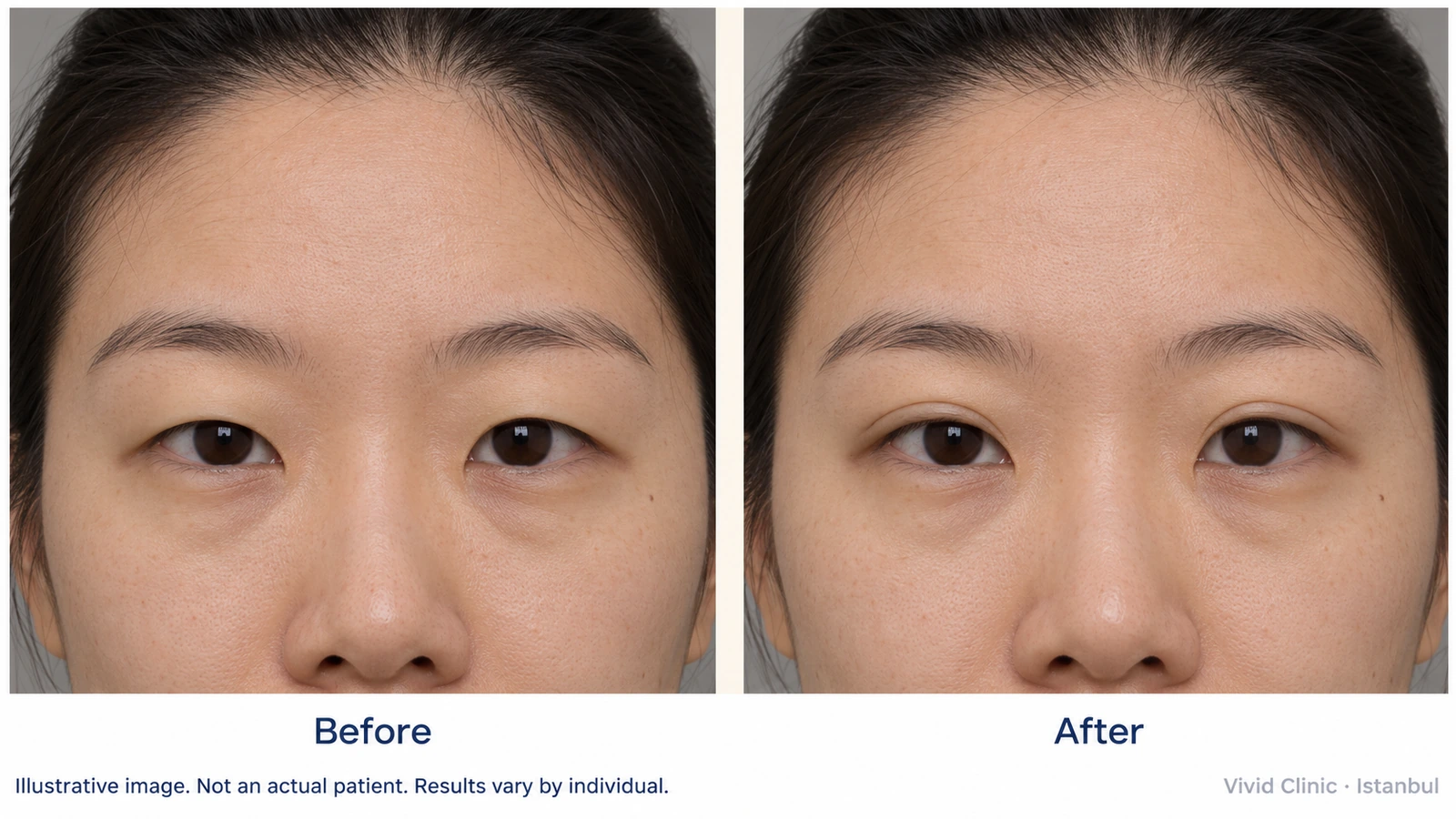
The photos below show real Vivid Clinic patients from the clinic’s own gallery, shared with consent as published on the clinic site. They are general eyelid surgery cases, not double eyelid (monolid) surgery, and results vary by anatomy, healing and treatment plan.

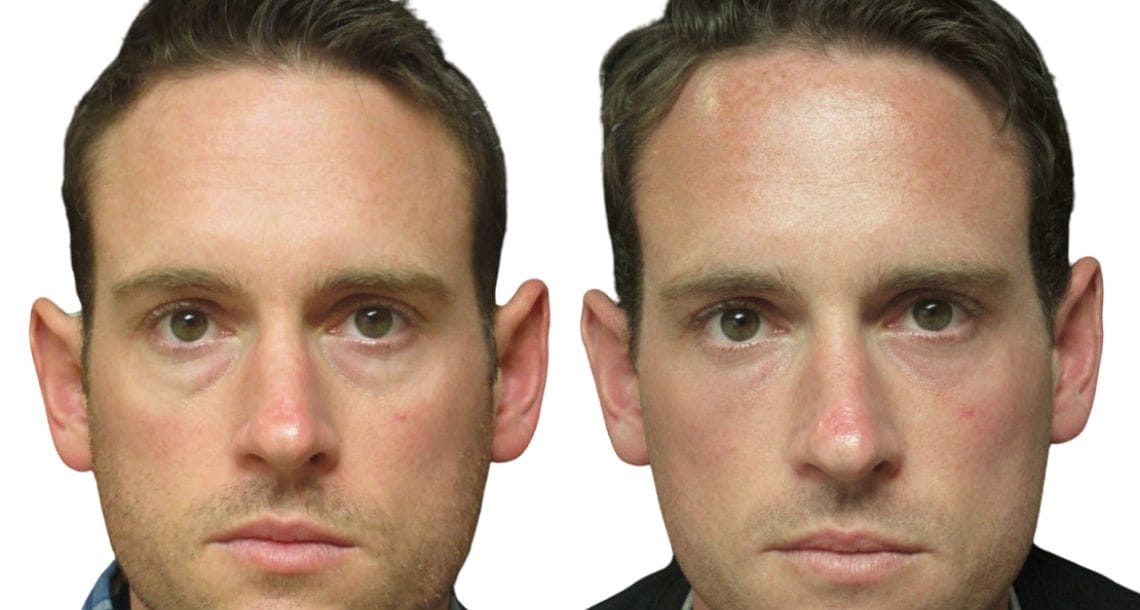
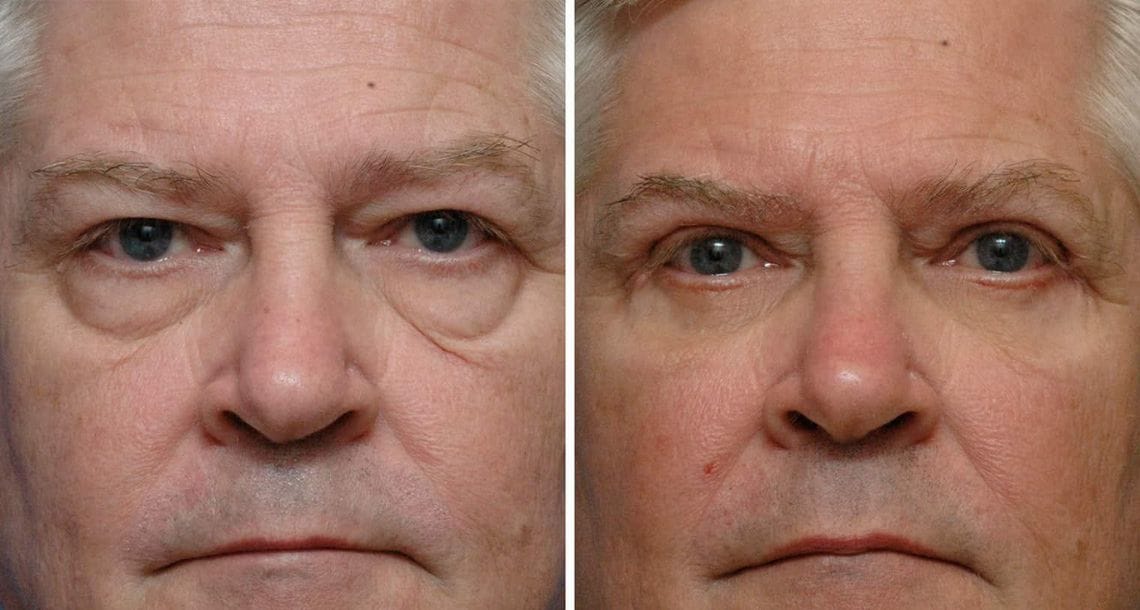
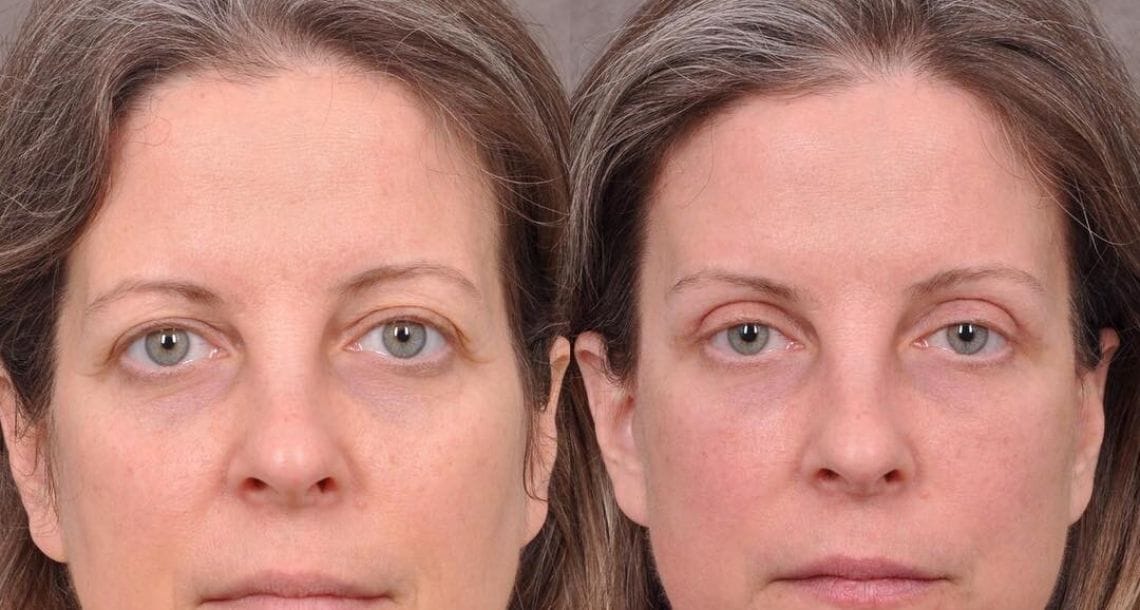
You can explore more cases in the full Vivid Clinic before and after gallery and the blepharoplasty before and after gallery. To discuss your own goals, ask for a free quote and the team will arrange your consultation.
This article is for general information and does not replace a personal medical consultation. Suitability, risks, recovery and expected results should always be discussed with a qualified medical professional. Results vary by individual.